
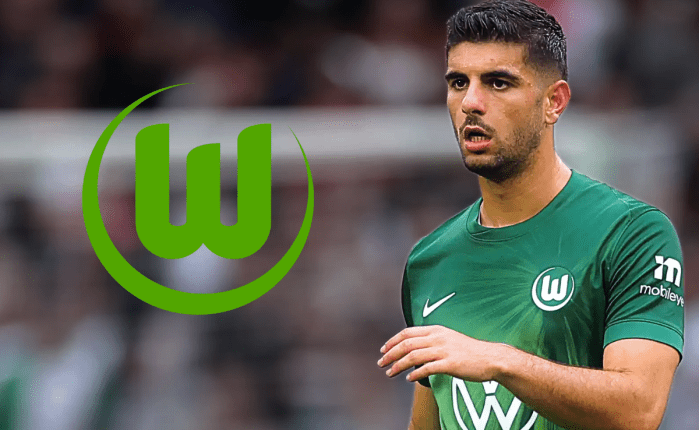
In the last few years, VfL Wolfsburg has masterfully cultivated a reputation for their savvy manoeuvres in the transfer market, where they have consistently showcased their skill in identifying and developing talent. Their most remarkable achievements lie in the profitable sales of centre-backs, where they have adeptly turned promising players into lucrative transactions.
With a keen eye for potential, the club has not only strengthened their own squad but has also capitalised on the high demand for skilled defenders, earning impressive sums and reinforcing their status as a shrewd player in the transfer market.
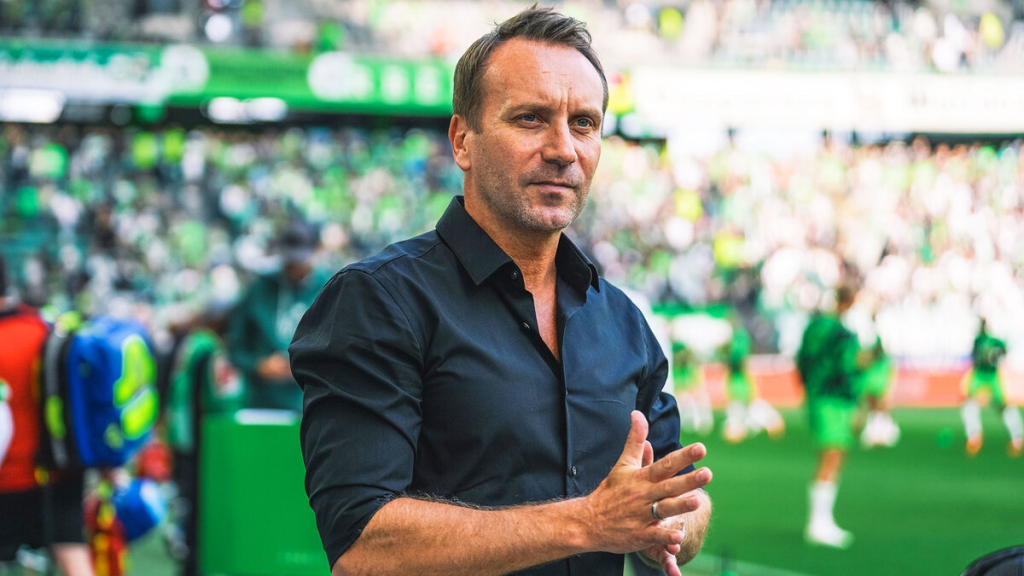
The German Bundesliga outfit have overseen the rise and profitable sales of both Micky van de Ven and Maxence Lacroix, both of whom developed from unknown quantities to burgeoning defensive talents over the course of a few years, and were rewarded with big moves abroad to the Barclays Premier League.
At the start of the 2023/24 campaign, Die Wolfe sold van de Ven to Tottenham Hotspur for €40m (£34.6m), their second-highest sale after Kevin De Bruyne, when he joined Manchester City in 2015.

At the start of last season, they sold Maxence Lacroix to Crystal Palace for €18m (£15.6m). At the time of writing, both players have not only firmly established themselves as pivotal cogs at their respective clubs but have also developed into two of the best of their position in the Premier League and in Europe.
This positive trend for Wolfsburg could well have continued into the summer transfer window for a third consecutive year, after yet another of their promising young defenders in Greece international Konstantinos Koulierakis, who only joined the club in August 2024 from PAOK FC, attracted significant interest from Liverpool and Real Madrid throughout the off-season.
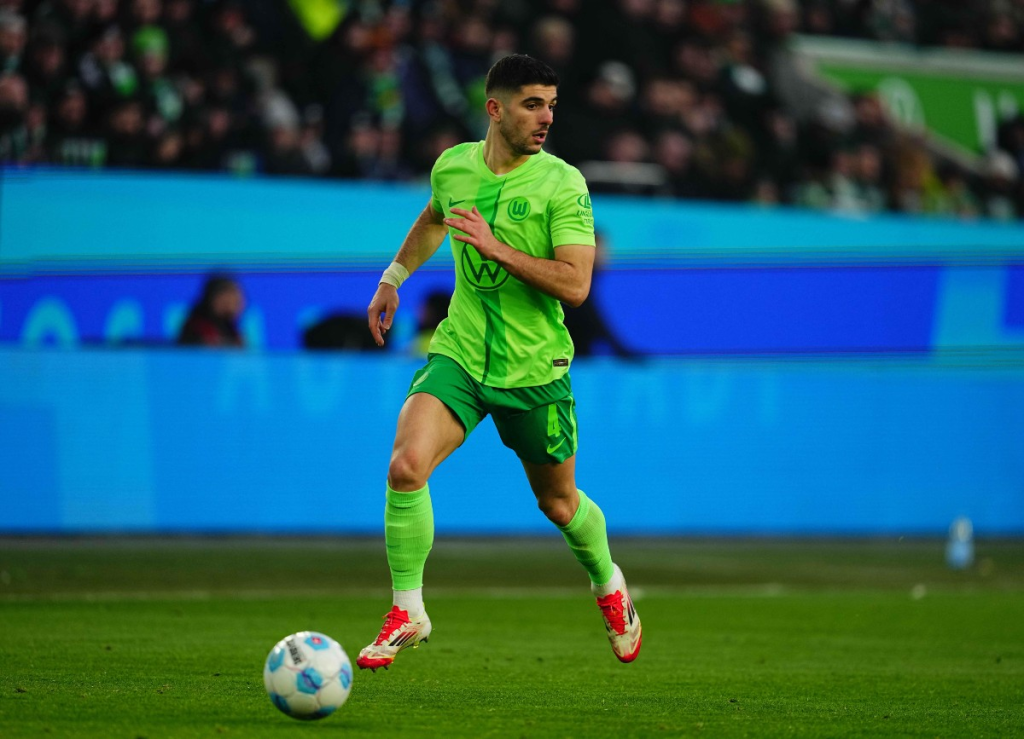
Wolfsburg should be applauded for their brilliant scouting and recruitment.
In 2021, they gambled on a 20-year-old Van de Ven from the second tier of Dutch football, sanctioning the €8m (£7m) signing from FC Volendam. It seems like the risk will also pay off with Koulierakis. It is simply a question of how quickly the £10m fee they paid to PAOK turns into yet another £36m+, not a matter of when.
To ask the usual #AnthonyScouts analysis questions: How good is Koulierakis, how has he gotten to this pre-lofty position in his career, and what does the future hold for him, even if it is not only bright but potentially immediate?
Who is Konstantinos Koulierakis?
Born in Chania, Crete, Greece. Koulierakis joined the PAOK academy as a 13-year-old in 2017. It wouldn’t be long before top European clubs sent scouts to watch and inquire about this impressive young centre-back, who was dominating in PAOK’s academy. The club quoted a price tag of around €15m.
After spending a successful year with the B team, Koulierakis was allowed to join the first team, and he never looked back, making 31 appearances in the 2022/23 season, including being named to the league’s official team of the season at the end of the campaign.
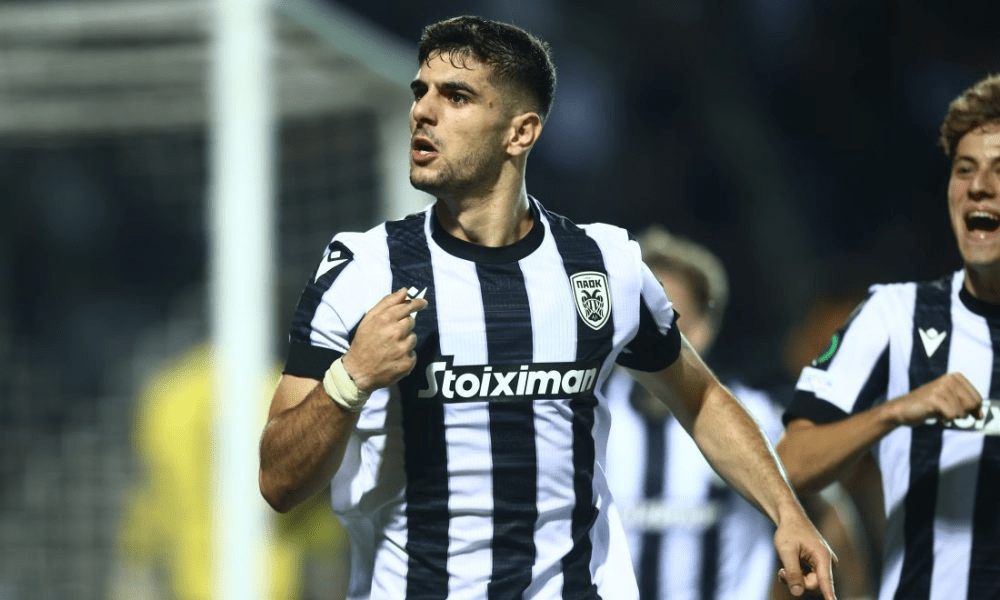
The Greek talent was the subject of interest from Italian Serie A side Fiorentina during the summer window, which was knocked back by PAOK.
While it may have unsettled many other talents his age, not being given the opportunity to chance his arm at a club in a top European league, Koulierakis used that as fuel to better himself and develop further.
He would follow that up with yet another impressive campaign in 2023/24, helping PAOK to the league title and scoring key goals in their run to the UEFA Conference League quarter-finals as well.

After a successful season, both individually and collectively, he would be handed the opportunity to make the move across Europe in the summer of 2024. Wolfsburg officially came calling, and the Greek defender would put pen to paper on 20 August, but PAOK delayed the transfer for Koulierakis to help them qualify for the Europa League via the play-offs.
Nine days later, the deal was completed.
Across 73 appearances for PAOK, Koulierakis scored nine times and assisted four times, underlining his importance not just as a defender but also as an impact-maker in the opposition box.
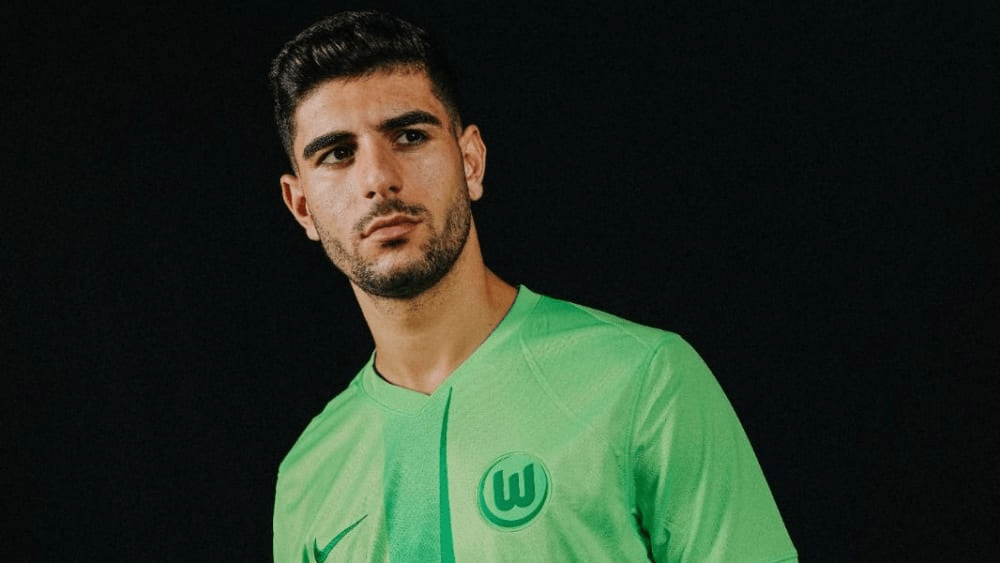
Since his arrival in Germany, the 21-year-old has continued his stunning upward trajectory, quickly establishing himself as one of the best young defenders in the Bundesliga and in Europe.
The 2024/25 campaign would prove a hugely successful one for him individually, even if it was a mixed bag for the club as a whole.
Under manager Ralph Hasenhuttl, he quickly cemented himself as an undisputed starter in a Wolfsburg team aiming to push for the European places, which proved fruitless, finishing in 11th place and ultimately costing the former Southampton coach his job towards the end of the campaign.
Koulierakis’s crucial importance to Die Wolf has carried straight through into the new Bundesliga campaign, featuring in all six of their games so far at the time of writing.

On the international stage, the Chania-born talent has also become a vital figure in a hugely refreshing and rejuvenated Greek national team, possessing such highly coveted young stars such as Koulierakis himself, Konstantinos Karetsas, Christos Zafeiris, Christos Tzolis, Giannis Konstantelias and Christos Mouzakitis.
After just 16 caps for his country, Koulierakis has already become a real focal point and leader at the heart of the defence alongside West Ham United defender Konstantinos Mavropanos.
A fine example of the understanding and strength of that partnership would certainly be evident in arguably the highlight of his international career so far, the memorable 2-1 win over England at Wembley in October 2024.
Koulierakis looked at home on the biggest stage, a composed, measured and immovable presence up against the likes of Harry Kane and Jude Bellingham.
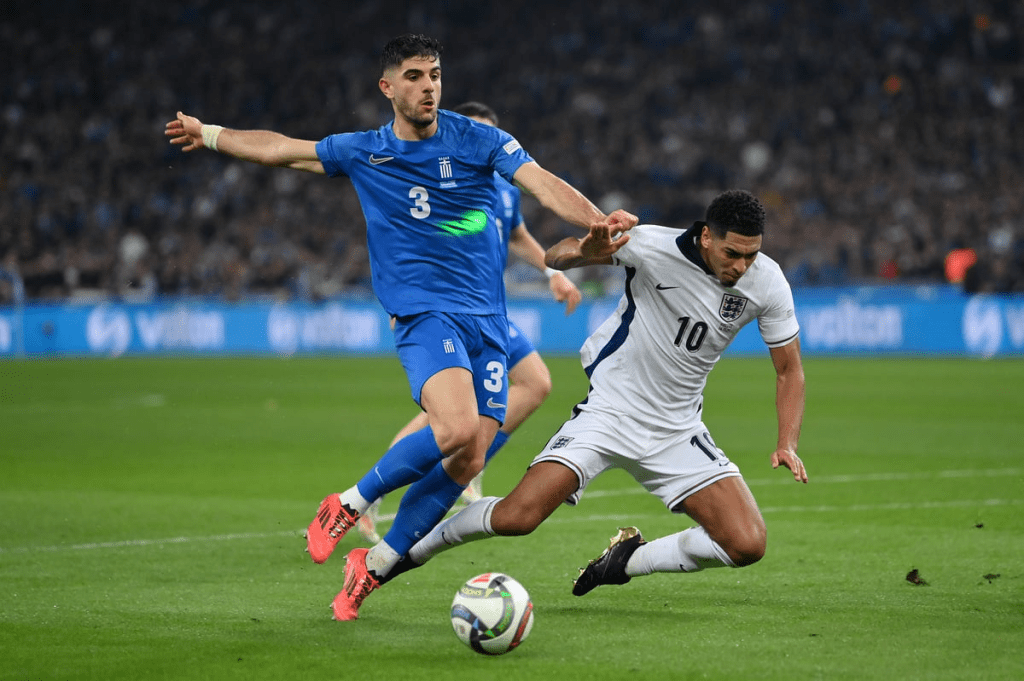
Such performances and characteristics are what made him an attractive prospect for the elite European clubs over the summer, with Juventus, AC Milan and Borussia Dortmund also joining Liverpool and Real Madrid in admiring his profile.
The PAOK academy graduate is certainly an intriguing and exciting defensive profile, one who could blossom into a generational superstar, especially within the context of his nation. But why?
How good is Konstantinos Koulierakis?
Standing at 6’1″, Koulierakis evokes memories of a former graceful young Bundesliga defender who has since established himself at the highest level: Manchester City’s Josko Gvardiol.
Much like Gvardiol, Koulierakis possesses an imposing presence, characterised by his impressive athleticism and striking physical attributes that suggest he was crafted for the sport. His powerful build allows him to dominate both his aerial and ground duels, showcasing remarkable leaping ability and strength.
As a Greek international, he approaches his defensive responsibilities with a fierce intensity, often disrupting opposing attackers with his relentless pursuit and aggressive tackling. This combination of skill, size, and tenacity makes him a formidable force at the heart of defence.
But, he can make telling contributions the other way.
Attacking outlier
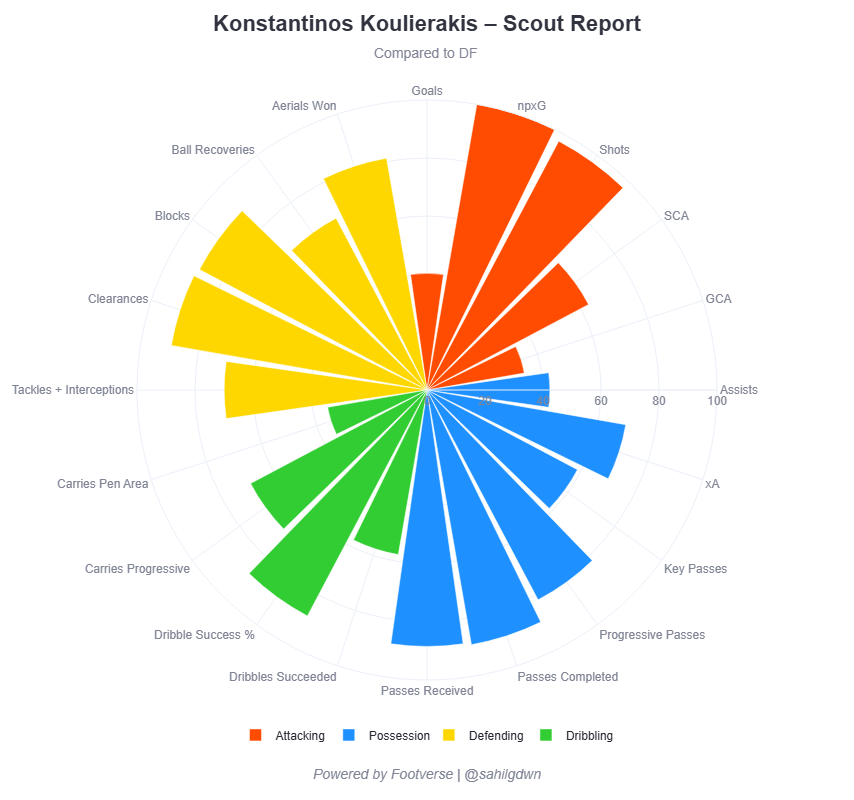
The above graphic, which compares his performance across different data metrics in attack, defence and in possession among other players in his position in the Bundesliga over the past year, certainly paints a picture of Koulierakis’s unique and impressive profile.
First and foremost, despite him being a defender, his attacking metrics certainly stand out at first glance, particularly in shots per 90 and touches in the opposition penalty area per 90, ranking in the 90th and 76th percentiles, respectively.
This highlights that he is one of the most threatening centre-backs in the German Bundesliga, even though he is yet to score a single goal in Wolfsburg colours so far.
However, he did bag an impressive seven goals during his last campaign in Greece, six of which came in European competitions, which suggests that he does and will have the propensity to crop up with the crucial goals when the time comes.
Ultimately, though, where he’s judged is in how he keeps the ball out of the net at the other end, and as is the case for centre-backs in the modern game, his ability and comfort in possession. So let’s address the latter first.
Progressive Line-Breaking Passing
In the modern game, the role of the centre-back has evolved dramatically. These defenders are now not just stalwarts of the backline; they are pivotal playmakers who initiate attacks from deep within their own half. The expectation is to exhibit exceptional passing abilities, allowing them to seamlessly transition from defence to offence.
In addition to technical prowess, modern centre-backs must possess keen tactical awareness, demonstrating the ability to read the game and make split-second decisions, even under immense pressure when their team is building from the back. They must exhibit keen confidence in possession, composure and good pass selection to seamlessly get their team into the attacking phase of play.
Wolfsburg are not known for being one of the possession-focused teams in the German Bundesliga. Last season, they ranked 12th in the league for possession percentage (FBRef) as a collective unit, and so far this season, they still remain around that ballpark after six games. Therefore, evaluating Koulierakis’s passing ability may not provide a complete picture.
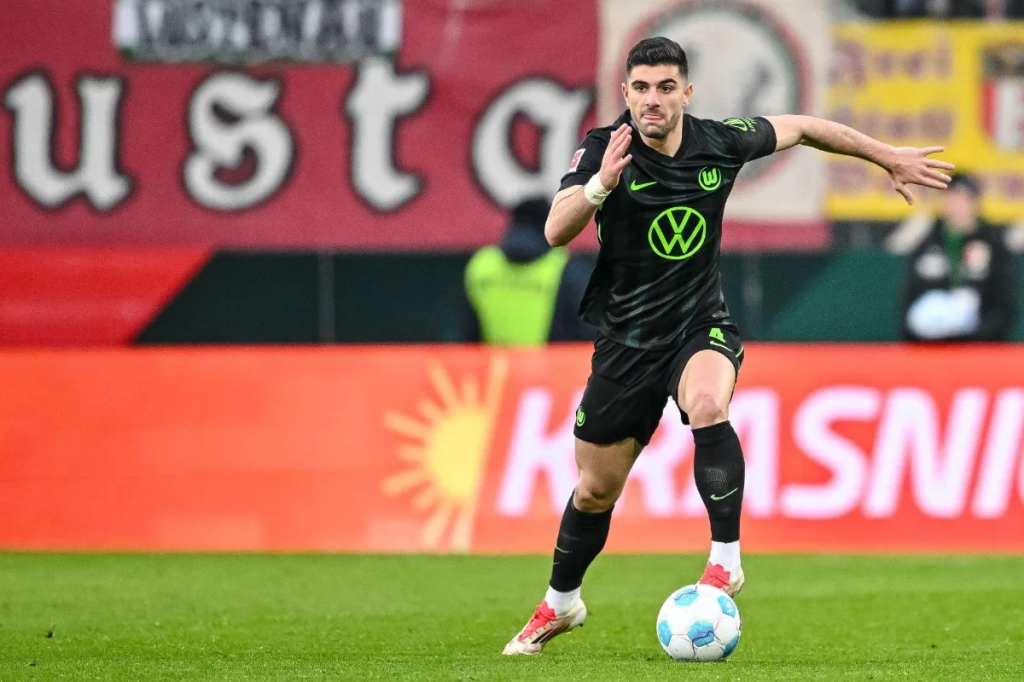
However, statistically, he is amongst the best in the Bundesliga amongst his positional peers when it comes to passing and bringing the ball out of defence.
As per Footverse, Koulierakis ranks in the 86th percentile for passes attempted, 85th for passes completed, 86th for passes into the final third and in the 82nd percentile for progressive passes. All of these metrics certainly show the 21-year-old’s progressive intent in possession, and he isn’t afraid to hit the long, risky pass too. The Crete-born centre-back ranks in the 97th percentile for long passes attempted and 96th for long passes completed.
Some might argue that these impressive metrics are due to Koulierakis being used as the main progressive hub when building from the back. Both Wolfsburg and Greece prefer to initiate their build-up play through him rather than his defensive partners. This is further supported by his ranking in the 88th percentile for passes received and the 95th percentile for touches in the defensive third.
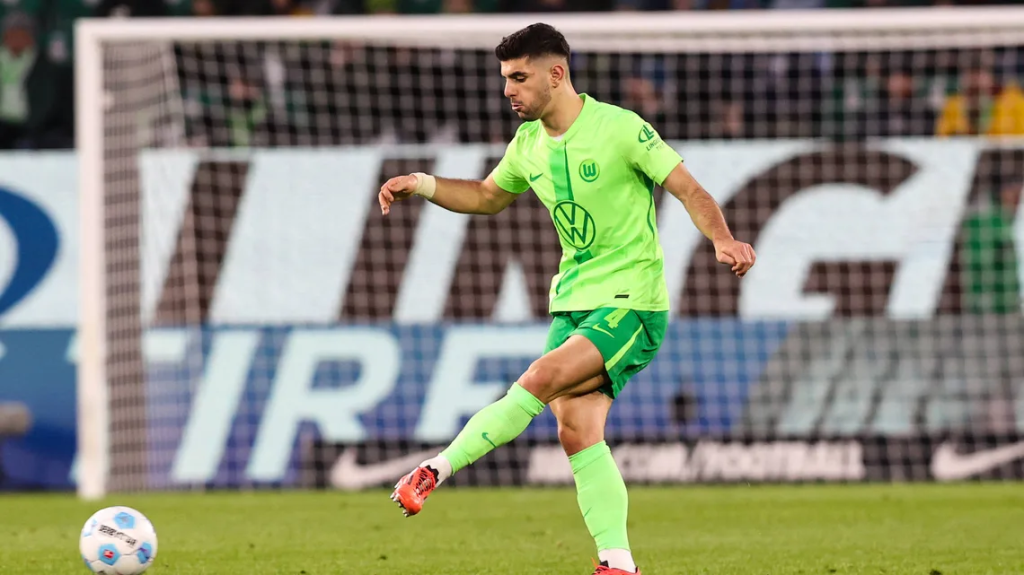
Regardless of this argument, which the numbers seem to validate, the 21-year-old demonstrates an ability to take on this responsibility effectively. He consistently shows reliable ground technique with precise, crisp, and sharp passing, executed with a keen understanding of his teammates’ positions.
He can penetrate and break opposition lines, often finding his more advanced teammates in creative and dangerous areas, whether in the left half-space, central zones, or setting up his deep-lying midfielders for simple wall passes.
For example, in the image below, Koulierakis receives the ball from his defensive partner, Denis Vavro. He looks up to scan and find a teammate in an advanced zone…
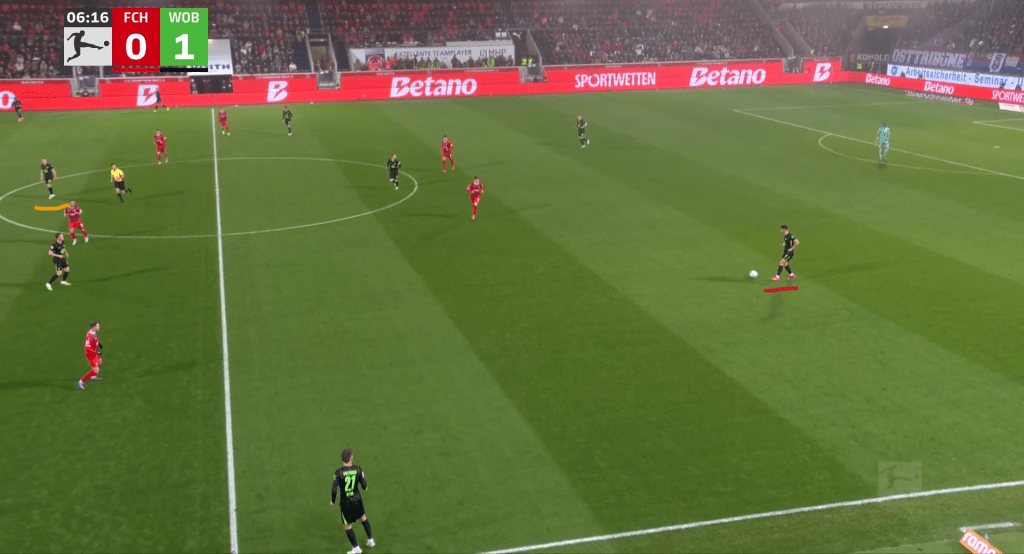
…before executing a sublime line-breaking pass for him in a bit of space…
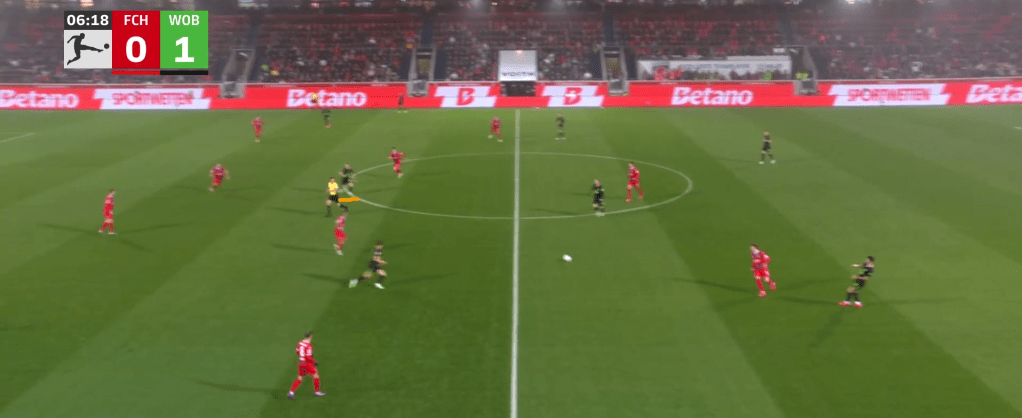
…but it comes to nothing due to his teammate failing to control the pass. However, it’s a fine example of Koulierakis taking responsibility and his intent in progressing the ball for his team.
In another instance, we see the talented centre-back taking on the responsibility, this time for Greece, against England at Wembley back in October. However, this time, he’s in the left centre-back position in a back three tasked with finding a teammate from a totally different angle…
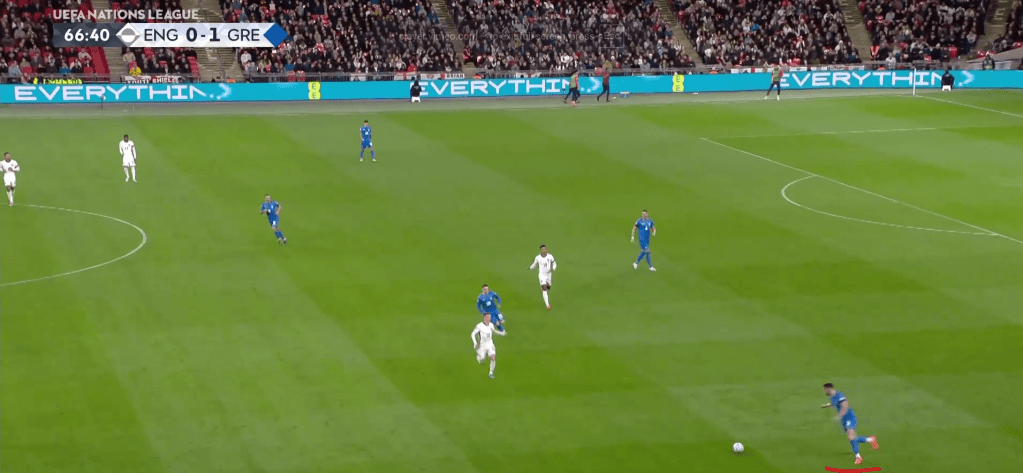
With Phil Foden bearing down on him and Ollie Watkins following, he has to make a snap decision to bypass that line of pressure and get the ball to a teammate in space.
In the image below, it may look like the Greek defender is just hoofing the ball up the pitch to avoid the danger of losing possession under pressure…
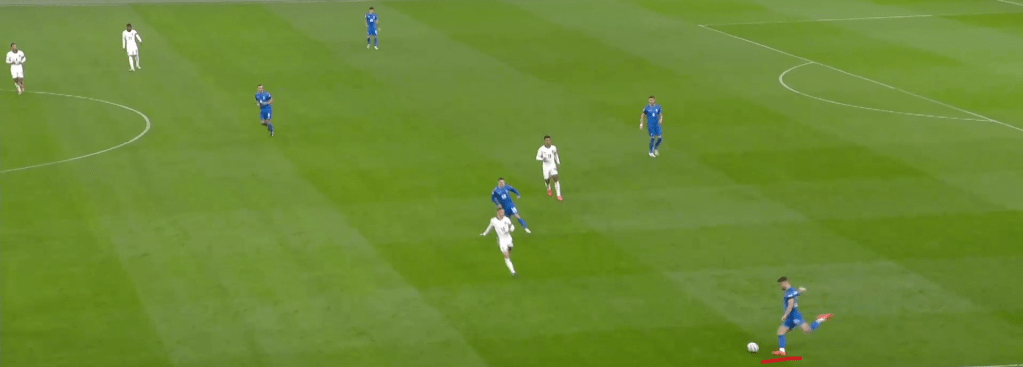
…but that’s not Koulierakis’ style.
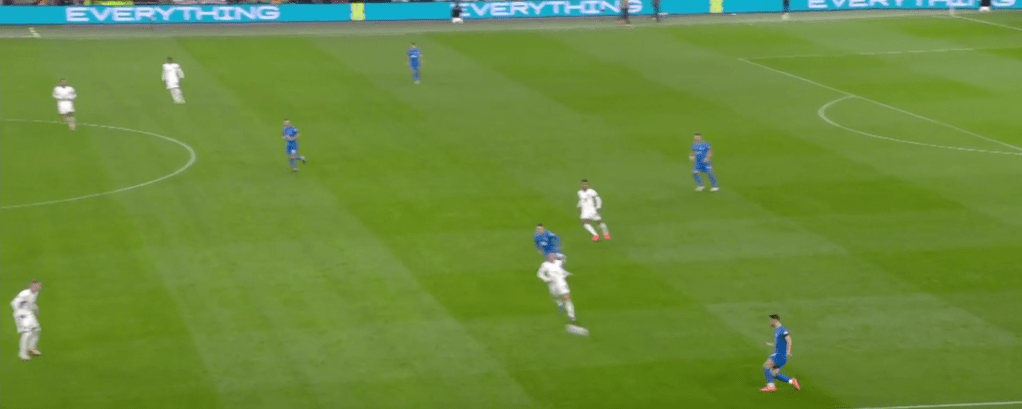
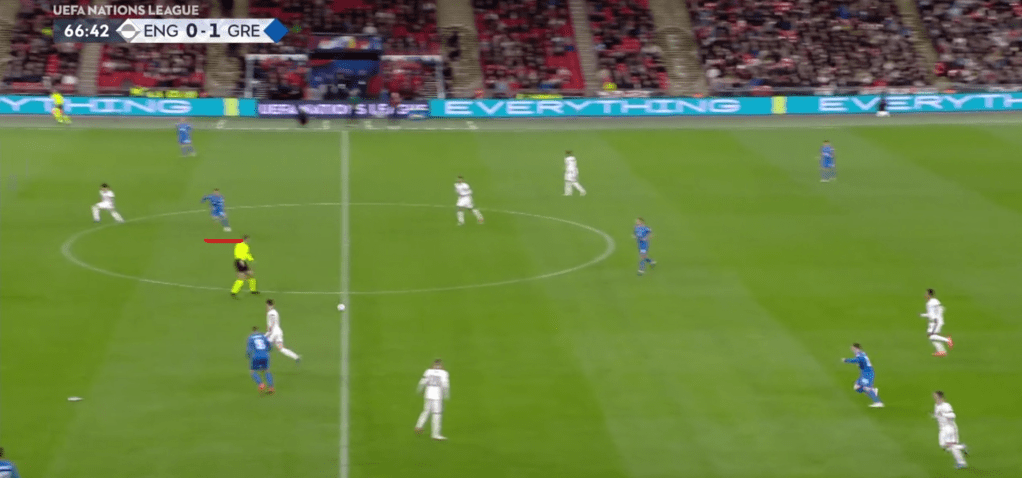
He excellently picks out his teammate in space to run at the opposition defence, completely dissecting England’s gaping midfield.
While England’s press and shape leave a lot to be desired in this scenario, giving Koulierakis ample opportunity and ease to exploit it, there is no discounting, once again, his intent and purposeful passing in order to progress play for his team. He completely turns a near-awkward situation for his team into one filled with goalscoring opportunities.
Front-footed proactive defender
While the Greek international’s passing ability has quickly become one of his greatest assets, it is his defensive nous that will face the most scrutiny. Much of Koulierakis’ evolution this past year, and the reason he is certainly turning heads in Europe, is a result of his stark improvement in defending.
First and foremost, just because he’s a smooth operator in possession does not detract from his bullish, aggressive, and immovable nature when defending.
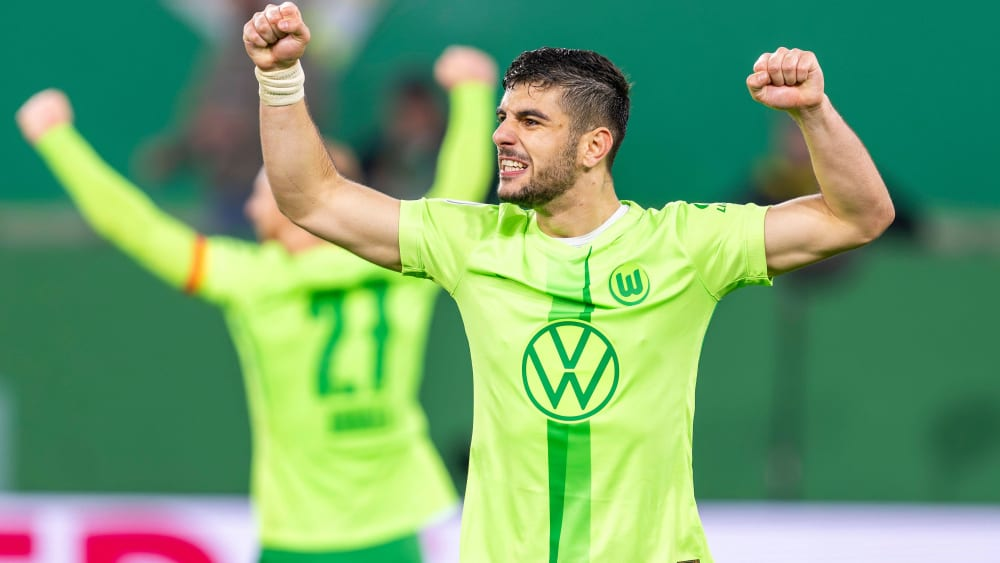
Standing at nearly 6’2″, Koulierakis commands attention with his impressive physique and striking presence. He is exceptional physically, possessing excellent athleticism and flexibility when covering ground within his defensive zones or engaging in duels.
You can almost categorise him as a stopper-type. A no-nonsense centre-back who takes no prisoners when duelling, isn’t afraid to do the dirty work when sweeping, in clearing the ball out of danger and engaging attackers on the ball even before approaching his zone.
Koulierakis shines as a proactive, front-footed centre-back. His timing in challenges and reading of situations is consistently precise, and as highlighted previously, he approaches duels with aggression and unwavering conviction.
He frequently positions himself strategically to win possession in advanced areas of the field, either through skilful interceptions or by stepping into action when his midfield is breached. This readiness to act as a defensive ‘firefighter’ creates opportunities for his team to initiate swift and efficient counter-attacks, turning defensive situations into moments of offensive advantage.
For instance, in the image below, the opponent attempts to progress the ball to his teammate in the attacking third…
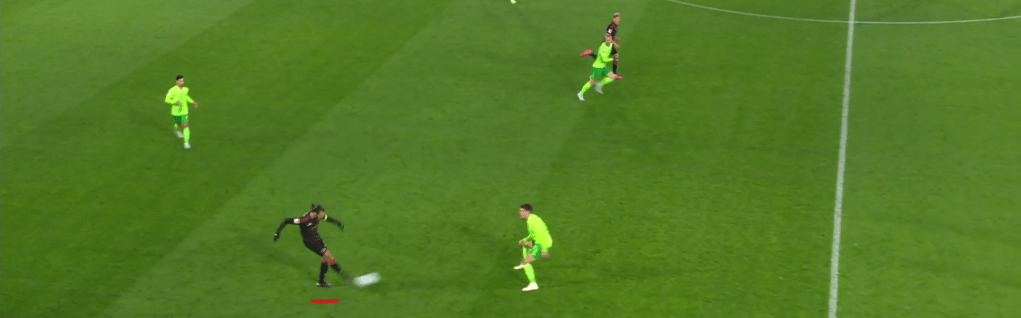

The pass turns out to be a bad one, but Koulierakis still takes responsibility in stepping out of his defensive line,…

…intercepts the pass before launching a swift counter, going past his man and progressing the ball to an advanced teammate in space…
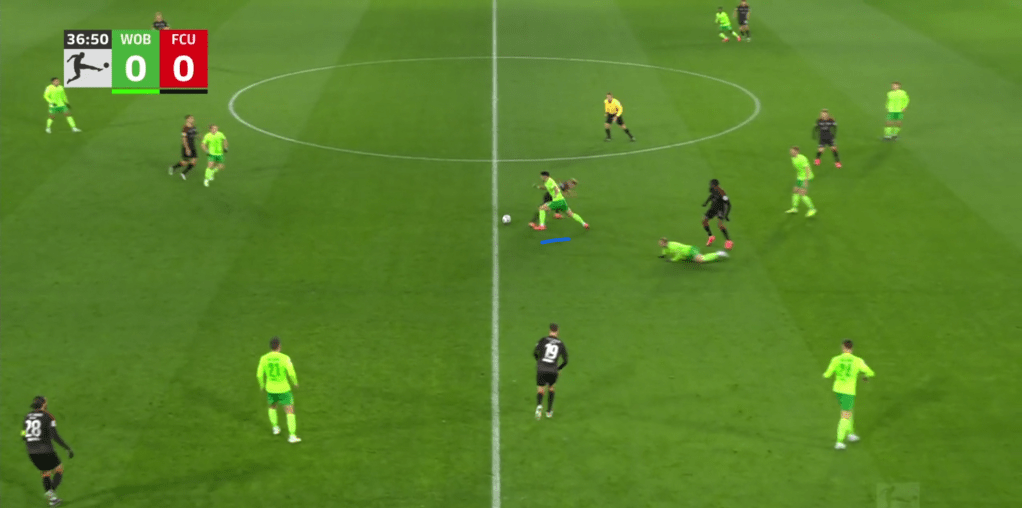
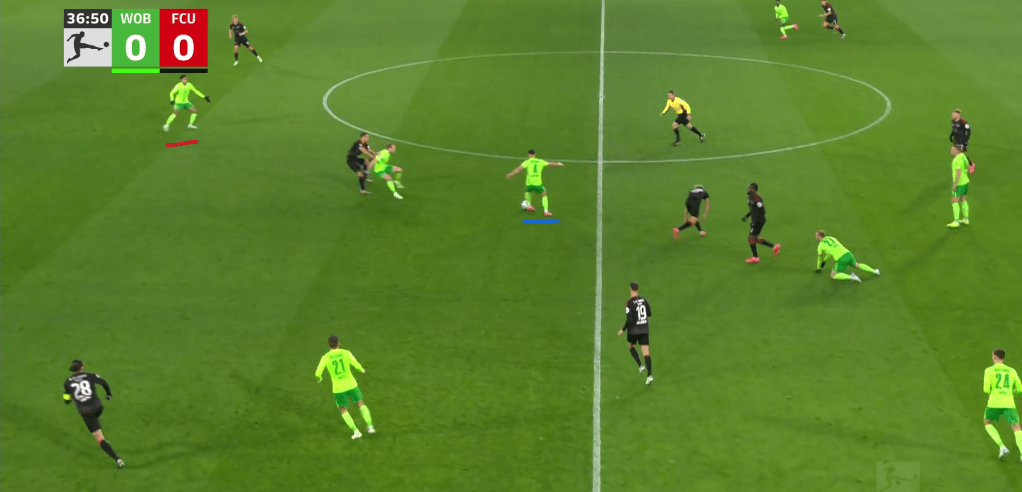
This instance certainly exemplifies the centre-back’s proactive and progressive nature all in one scenario.
He even joins the attack, following his pass.
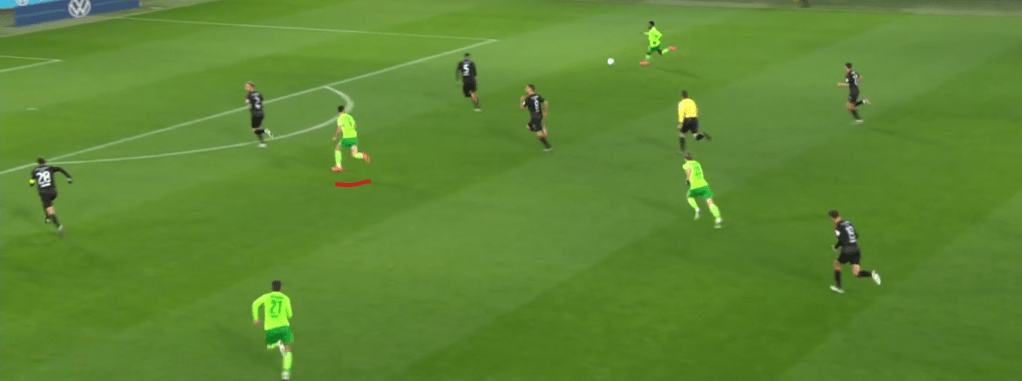
Had his teammate Maximillian Arnold intercepted the initial pass while on the ground, Wolfsburg would not have had the chance to launch a counter, as once the German midfielder got back up with the ball, Union Berlin would have retreated quickly into their defensive shape or, more crucially, pressed Arnold and exploited the gap in Wolfsburg’s defence.
It was imperative Koulierakis take responsibility in that particular moment.
In another fine example of the Greek international’s excellent proactive approach, the opponent receives the ball with his back to goal, with Koulierakis tracking him into midfield as soon as he controls the ball.
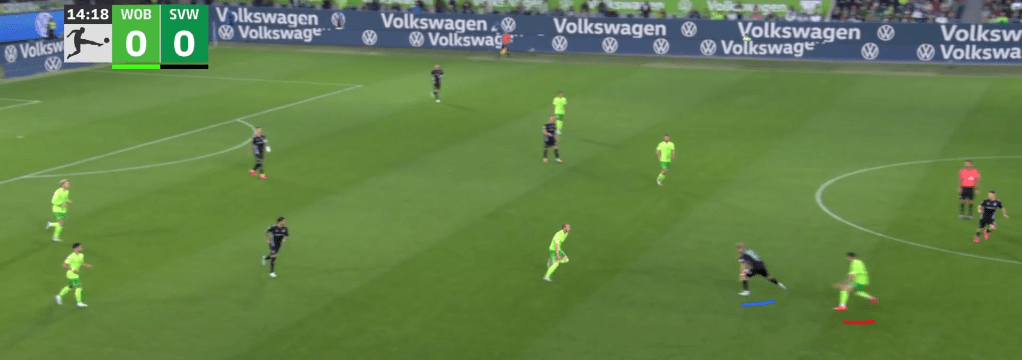
The Werder Bremen player attempts to bypass the surrounding pressure, but has nowhere to turn given Koulierakis’ excellent positioning, anticipation and his nearby teammates covering each direction…
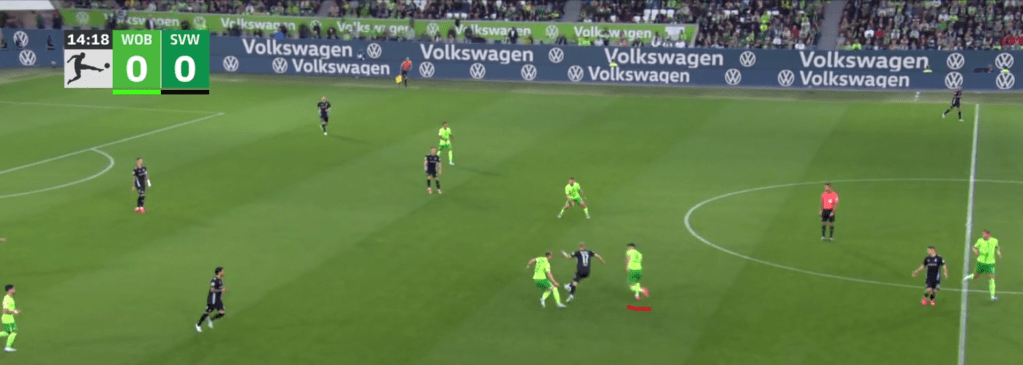
As a result of the pressure, the Greek colossus reads the situation…
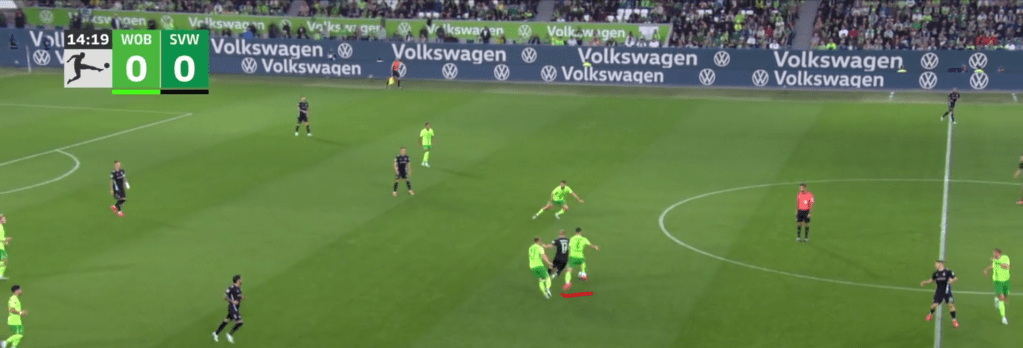
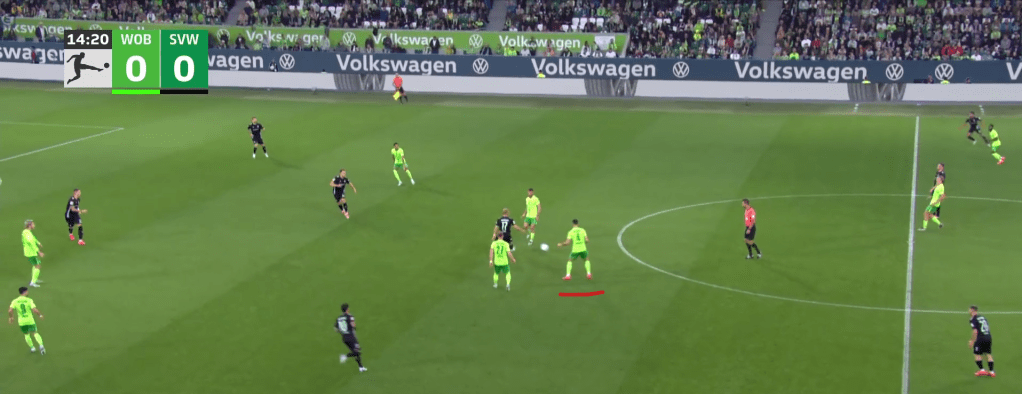
and wins the ball back for his team.
While many centre-backs have the ability to track their markers into midfield, they frequently fall short in terms of aggression and anticipation. They often miss the chance to use their imposing stature and commanding presence to encircle the opponent and reclaim possession. Consequently, the gaps left behind can be gracefully capitalised on by the opposing team, creating dangerous opportunities.
That isn’t the case for Koulierakis. The defender’s imposing stature and freakish athleticism mean he almost always holds the advantage in those risky situations, not allowing his forward marker the opportunity to turn and progress towards his goal.
Koulierakis exhibits very good defensive intelligence, not only in his proactive duelling but also across all phases of defence. He consistently anticipates play, positioning his body optimally to neutralise incoming threats and shut down dangerous situations with great awareness.
For example, in the image below, the FC Heidenheim player in possession attempts to punch a pass into the feet of his teammate at the edge of the penalty area. It certainly seems Koulierakis (RED) won’t be able to intervene…

…but once again, the 21-year-old’s presence of mind, athleticism and flexibility mean he is very well capable of snuffing out the danger, getting across before the ball arrives…
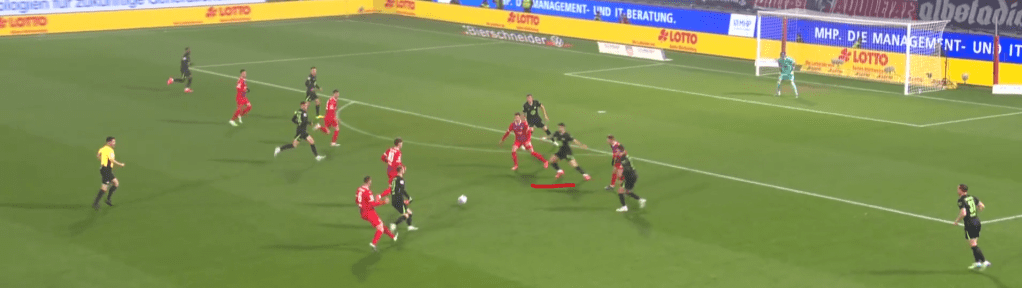
…before reaching a leg out to intercept. Not only did he intercept it, given the volume of danger around him,…
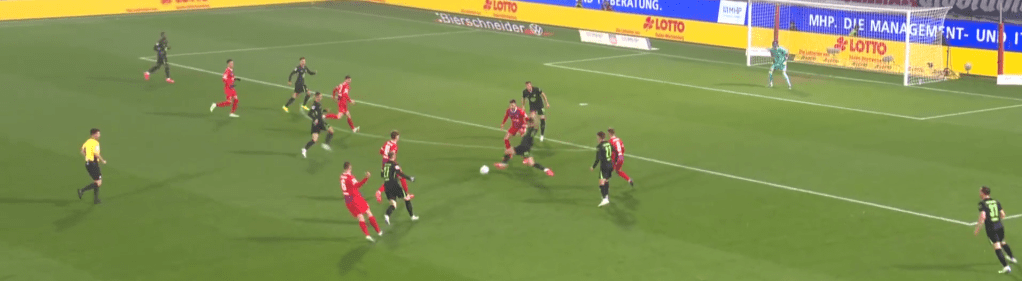
…but he manages to clear it out of the immediate danger too, in the same motion.
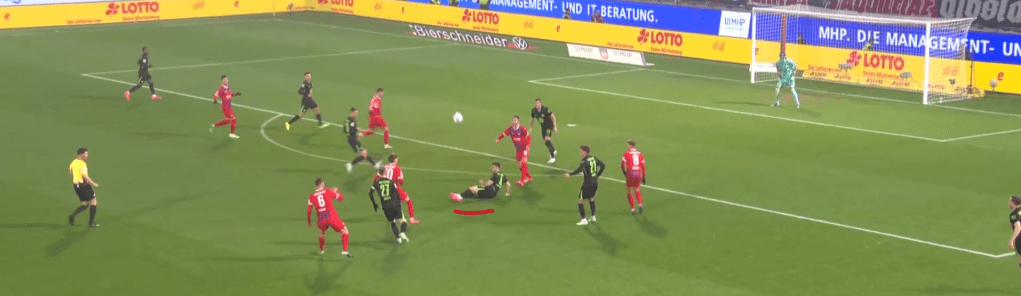
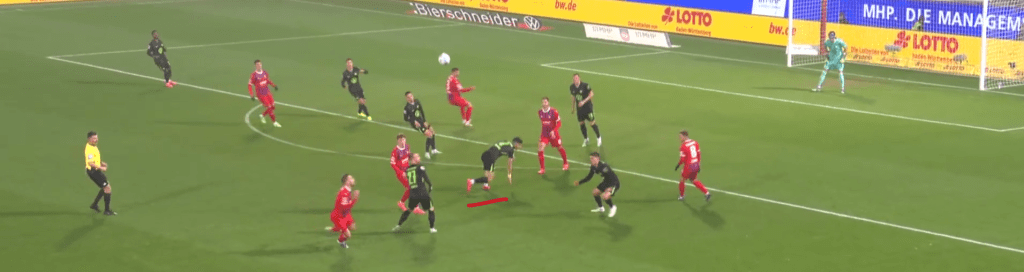
Defenders who possess the presence of mind and consistency to read situations before they become dangerous are a rarity in the modern game.
Koulierakis certainly possesses this in abundance, and it’s easy to see why he’s becoming an attractive proposition for the elite clubs in Europe, including Liverpool.
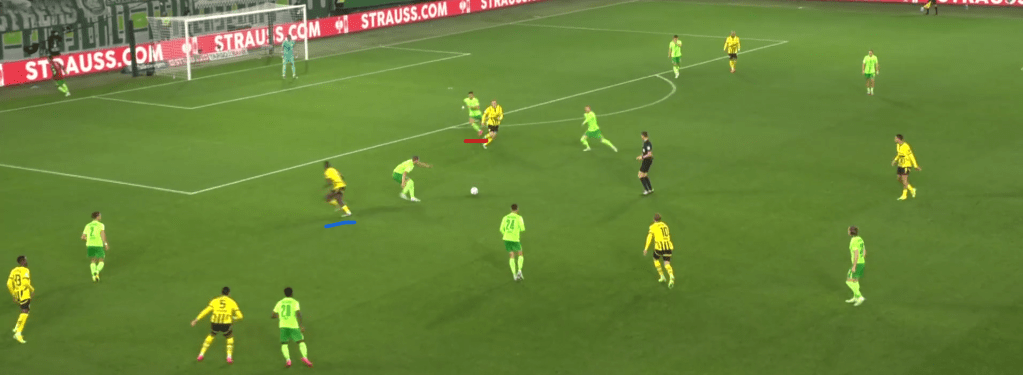
Another stunning example of this comes up against one of the best strikers in Europe over the past year, Borussia Dortmund’s Serhou Guirassy (BLUE).
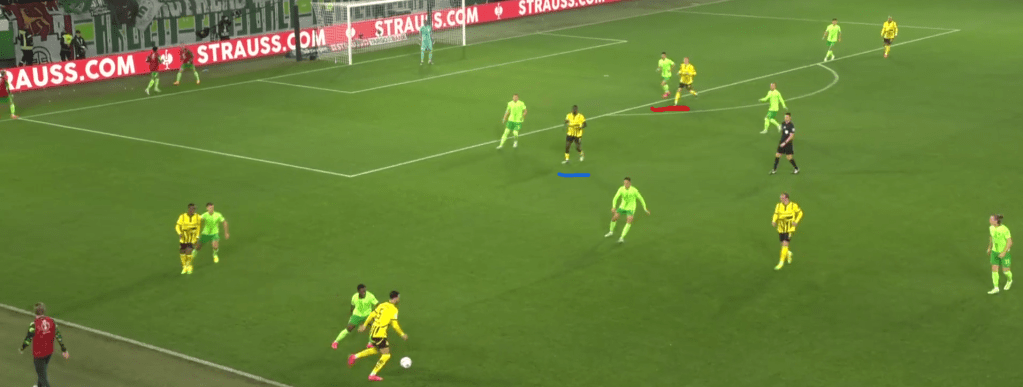
To start with, Koulierakis’ positioning (RED) in this situation is excellent.
He’s goal-side of his marker, in perfect view of the action in front of him, allowing him ample time and opportunity to engage any situations that come in his zone.
However, as the play progresses, one piece of skill from the intelligent and cunning predatory instincts of Guirassy attempts to disrupt it all.
The ball is played to the Guinea international…
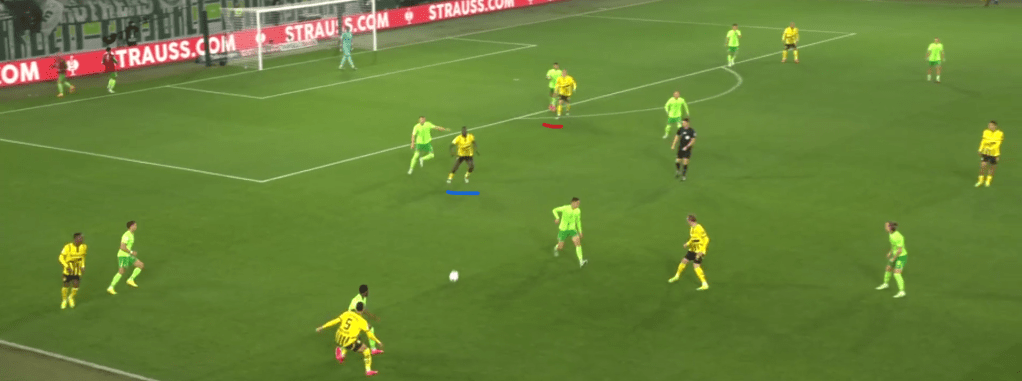
… but Guirassy is aware of what’s immediately behind him, Koulierakis’ marker. Which means the Greek international will need to instantly engage and read whatever occurs…
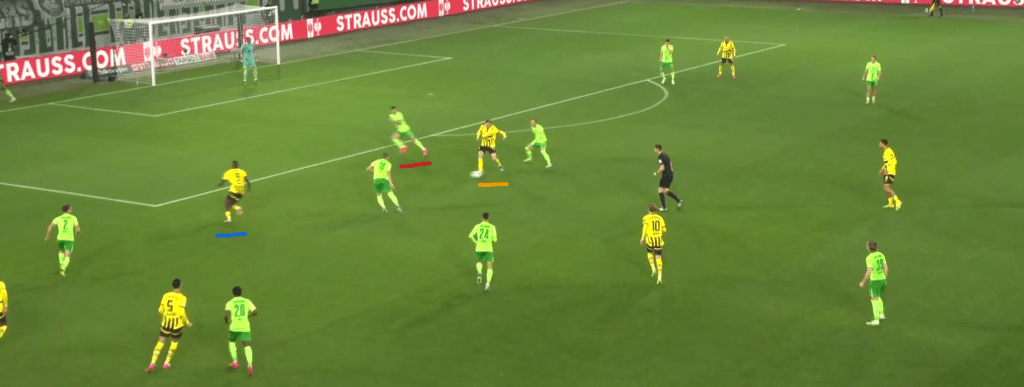
Guirassy brilliantly dummies the pass, fooling Koulierakis’ defensive partner, taking him out of the game and expecting the return…
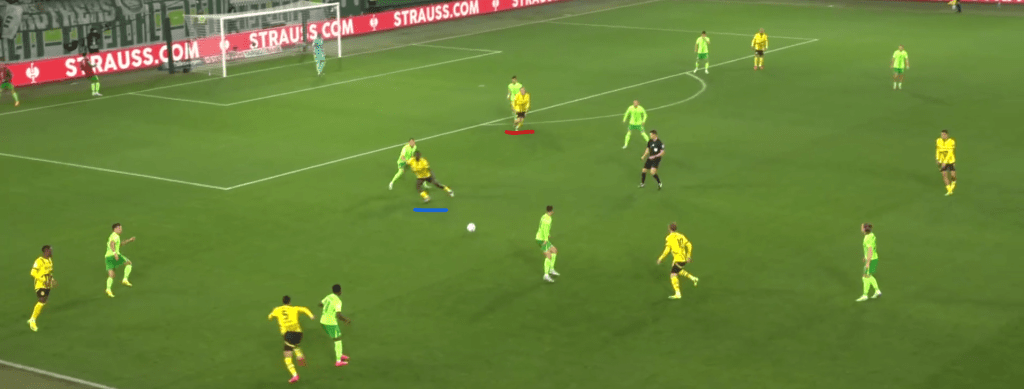
As a result of Guirassy’s smartness, Wolfsburg’s defensive line has been instantly dissected, with Koulierakis their only hope of avoiding being breached.
In this instance, it would be easy for Koulierakis to follow his initial marker towards the ball. However, he excellently reads what Maximilian Beier is intending to do, return the pass to Guirassy, who is through on goal once executed.
Rather than follow Beier, Koulierakis once again is tremendously aware of what’s coming and instantly attempts to engage Guirassy’s run, knowing that the run is more dangerous than Beier’s positioning.
As a result of his excellent awareness and reading of the situation, he’s able to meet and stand up to the tricky Guirassy once he receives the return pass and snuff out the danger…
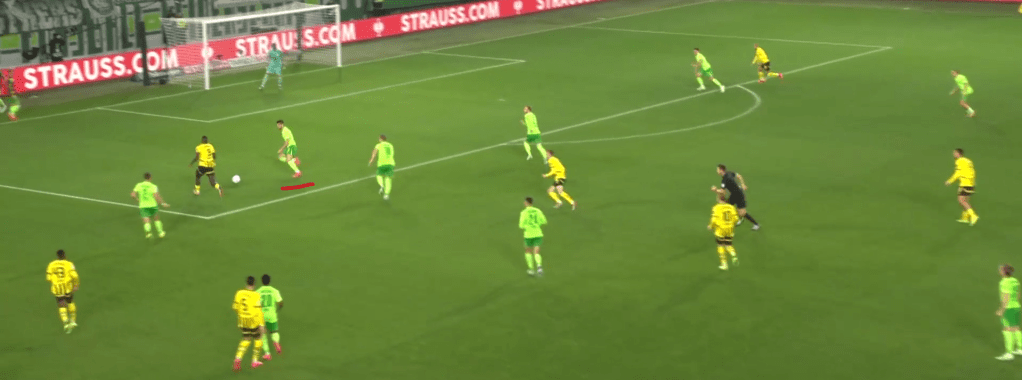
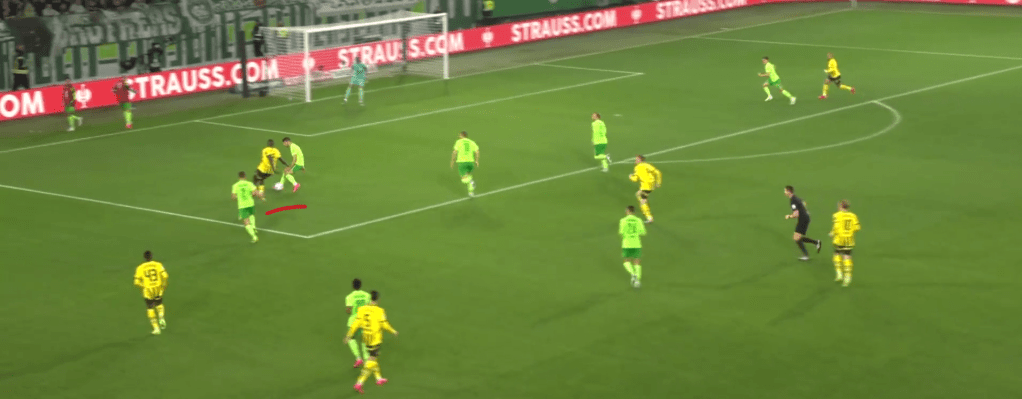
The above scenario also paints a picture of Koulierakis’ wide defending and coverage. When faced with an attacker who’s exploiting wide spaces left by his full-backs, he’s more than capable of matching that opponent for pace and engaging at the right time to dispossess and stop the attack from progressing further.
Koulierakis demonstrates exceptional agility and explosive power over short distances, enabling him to cover ground quickly and recover from dangerous situations not only for himself but also for his teammates, as illustrated in the above example.
A backline leader & shield
Another defining facet of the Greek international’s game is his fearlessness, leadership and bravery in defensive situations, embodying qualities of a dominant defender but more importantly, a backline leader.
He’s a defender who constantly takes responsibility and initiative, and that is shown in his willingness to make first contact for every cross into his own penalty area, his fighter’s mentality to winning crucial duels in the 18-yard box, and his no-nonsense approach to getting rid of danger.
If a loose ball demands a swift, unglamorous and unrefined clearance to safety – a rare commodious trait in centre-backs in the modern game – he’ll execute that task with swift decisiveness, ensuring that no threat lingers in his zone.
The former PAOK defender is also incredible at putting his body on the line to stop opponents’ shots at goal. In fact, the underlying stats certainly paint a picture of his no-nonsense approach when defending.
Amongst centre-backs in Europe, the Greek international ranks in the 98th percentile for blocked shots, 94th percentile for blocks, 89th for clearances and 84th for passes blocked and dribblers tackled per 90 [Footverse].
Koulierakis commands the penalty area with authority, decisiveness and immense bravery. For instance, in the scenario below.
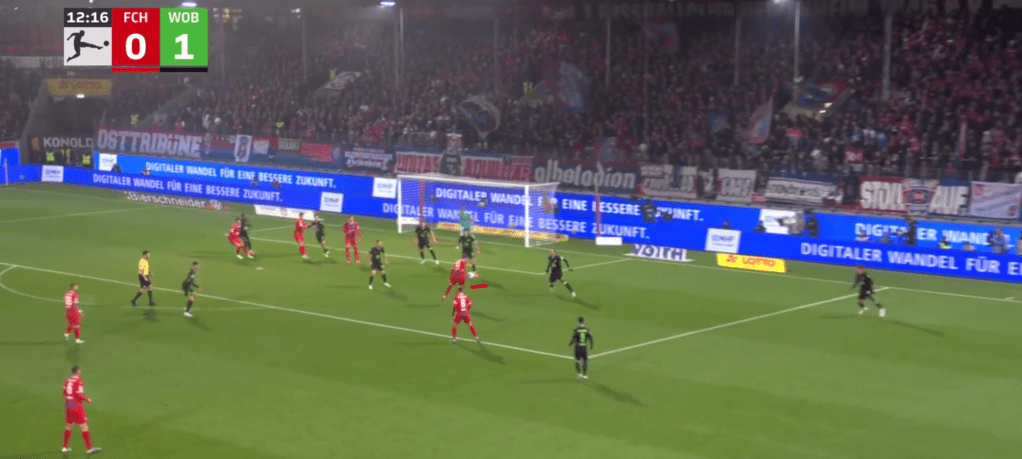
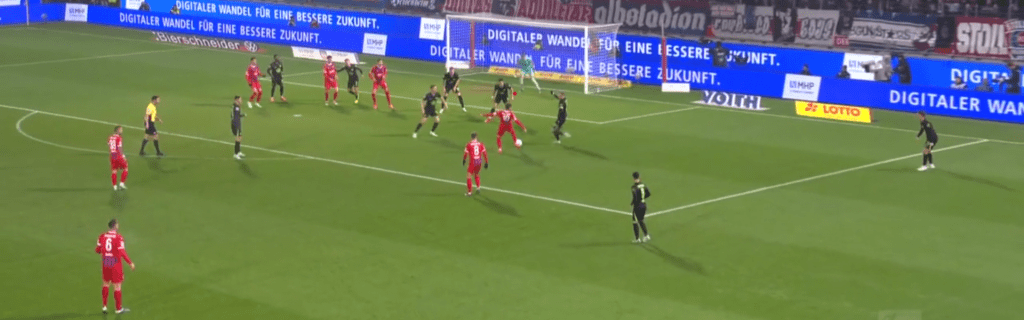
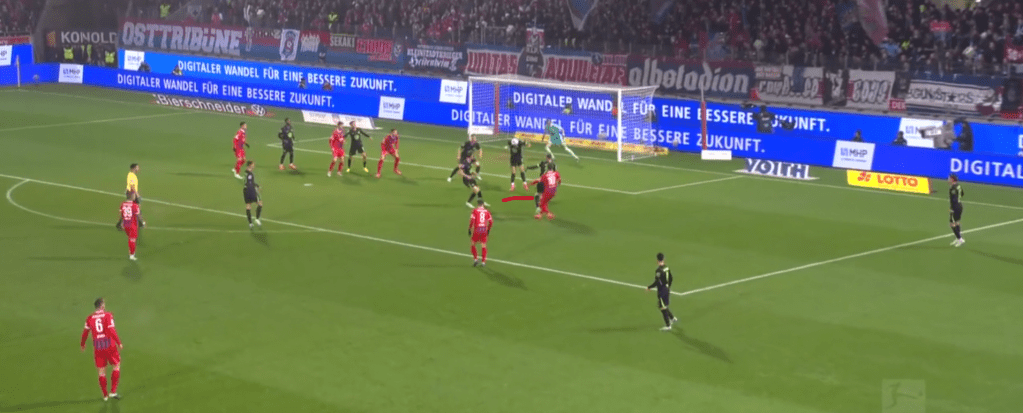
With his side camped in their own box, desperately defending an early lead, it’s Koulierakis who puts himself on the line to keep his opponents at bay.
He excellently and bravely anticipates an incoming shot, positions himself in front of it to block, albeit with his head. Immediately afterwards, another shot is lined up, but Koulierakis gets in the way once again, this time with his shoulder.

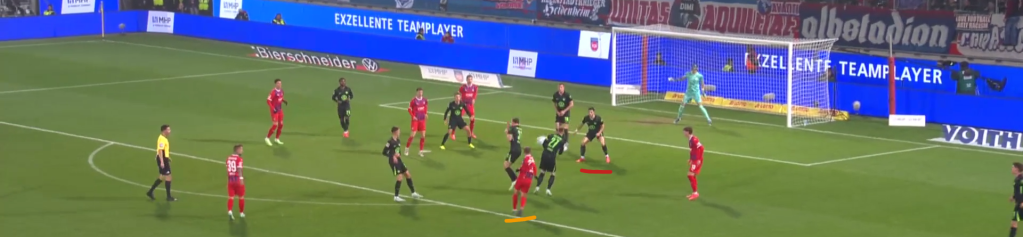
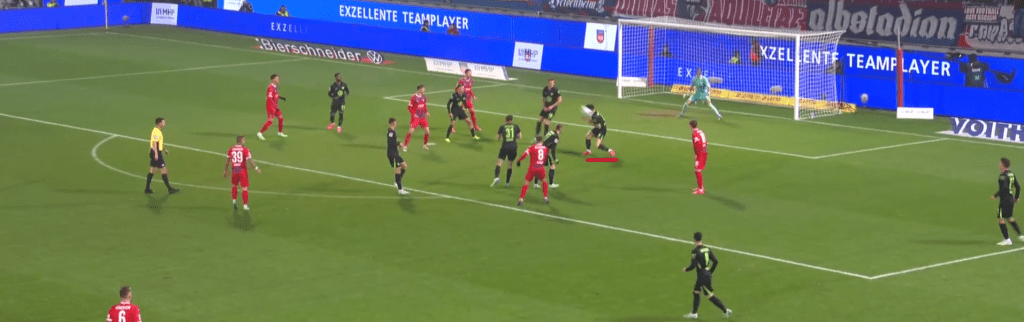
Certainly, it’s unconventional, but we’re talking about a “by any means necessary“-type centre-back, always willing to put his body on the line to ensure his side has the best chance of winning. More crucially, it’s his reading of dangers before they occur that allows him to stand out.
Areas of Improvement
Aerial duelling
He’s always alert and ready through his body positioning and defensive awareness to engage at any moment, but that will also have to aid him in his aerial duelling, which, as stats show, needs some work.
Standing at 1.88m, Koulierakis may not be the tallest centre-back, and the way he oozes confidence going in for ground duels and putting himself on the line for blocks and clearances, as we’ve highlighted, the numbers show he’s not as authoritative in the air.
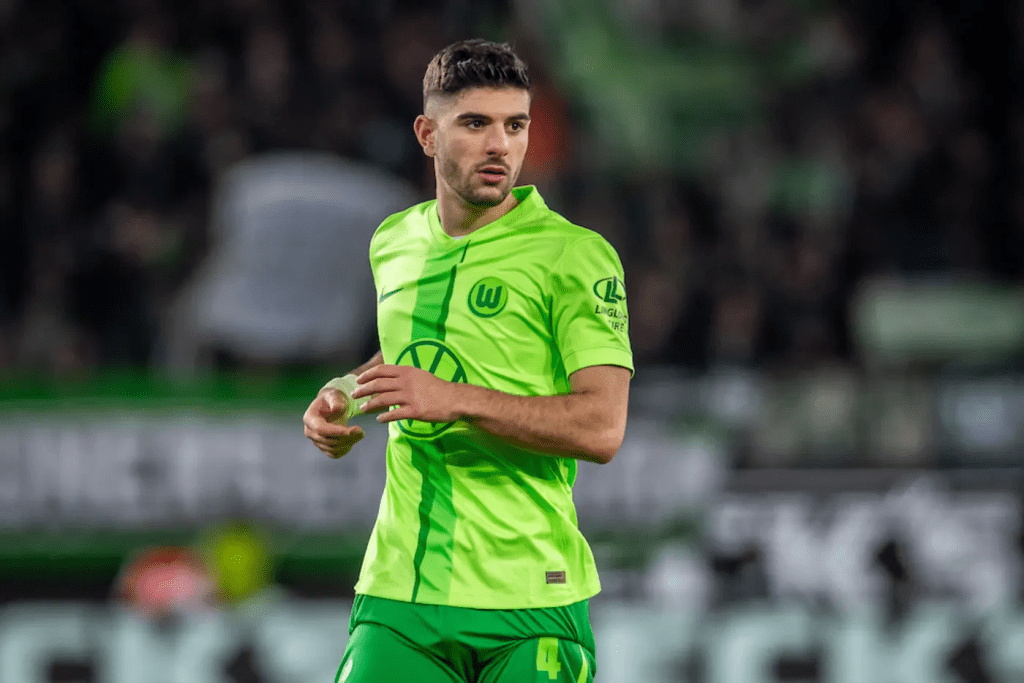
As per Footverse, he ranks in the 69th percentile of centre-backs in Europe’s top five leagues for aerials won. By no means does that make for terrible reading; in fact, it’s decent. However, his leaps and the timing of them are very good, which raises an expectation that he should win most of his aerial duels.
According to SofaScore, he has a win rate of 44% so far this season, which again, isn’t bad but could be better given the authority he exerts in his duels and the sheer presence he possesses amongst his teammates.
Turning radius & mobility in tight situations
We pointed out Koulierakis’ weakness in playing out from the back when faced with an opponent’s press, and another facet of that is his inability to play with his back to goal in certain situations, due to his lack of turning radius and mobility.
While those kind of scenarios are rare for a club like Wolfsburg who aren’t well-versed in a possession-based and fluid back-to-front style, should he make the big move to a Liverpool, Madrid or another elite side, for that matter, those skills will certainly come in handy.
The Greek talent boasts impressive agility and vertical explosiveness, but he faces some limitations when weaving his way out of tight areas. His imposing, athletic and powerful frame can occasionally hinder the fluidity and flexibility required for such tight and pressurised scenarios.
Decision-making in possession, and the quality of pass amidst pressure
While Koulierakis’ line-breaking and progressing passing have become a notable calling card in his game, there are some elements in his decision-making with the ball at his feet which could use more refining. One of those is his pass selection and accuracy, or even the timing of his long passing. He can often try to force the play too prematurely and look to choose the more difficult option in going long rather than playing it short and keeping things simple for his team.
Also, the on-ball scenarios highlighted in this piece show the Greek defender with time to pick a pass, but at times, he can lack the composure needed in certain situations when pressed by an opponent, which leads to those hurried and inaccurate long balls mentioned, ceding possession back to the opposition.
Possessing the ability to retain the ball under pressure is an essential attribute for any player performing in key sensitive areas of the field, especially the zones which centre-backs take up in the build-up phase, where losing the ball can lead to dangerous consequences.
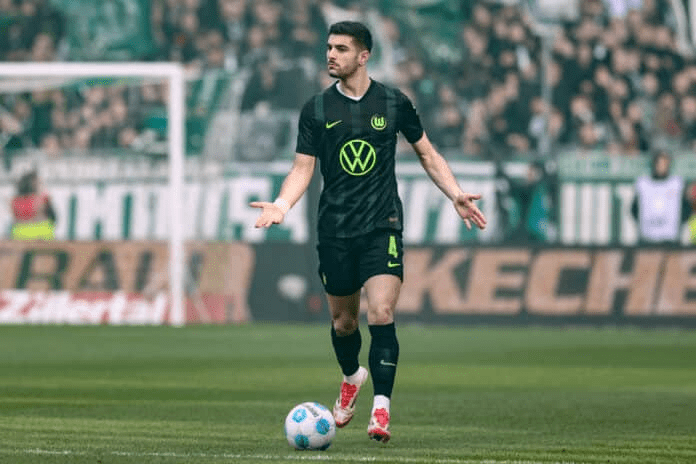
Given that the big teams that are hunting down major silverware are also high-possession-based sides and place a lot of demands on their centre-backs on the ball, this is certainly something the Greek defender will need to develop and improve on if he is to make that expected big jump in the near future.
The issue is not so much with his technical acumen as we’ve pointed out, but more with his decision-making and quality control when pressed, which requires more learning and improvement, but these aspects are crucially addressable with the right coaching and environment.
What does the future hold for Koulierakis?
Konstantinos Koulierakis is an exceptionally versatile defender, embodying all the qualities that modern elite clubs covet in a centre-back.
His game is a masterful blend of technical finesse and precision passing, seamlessly combined with an impressive athleticism characterised by speed, strength, and agility.
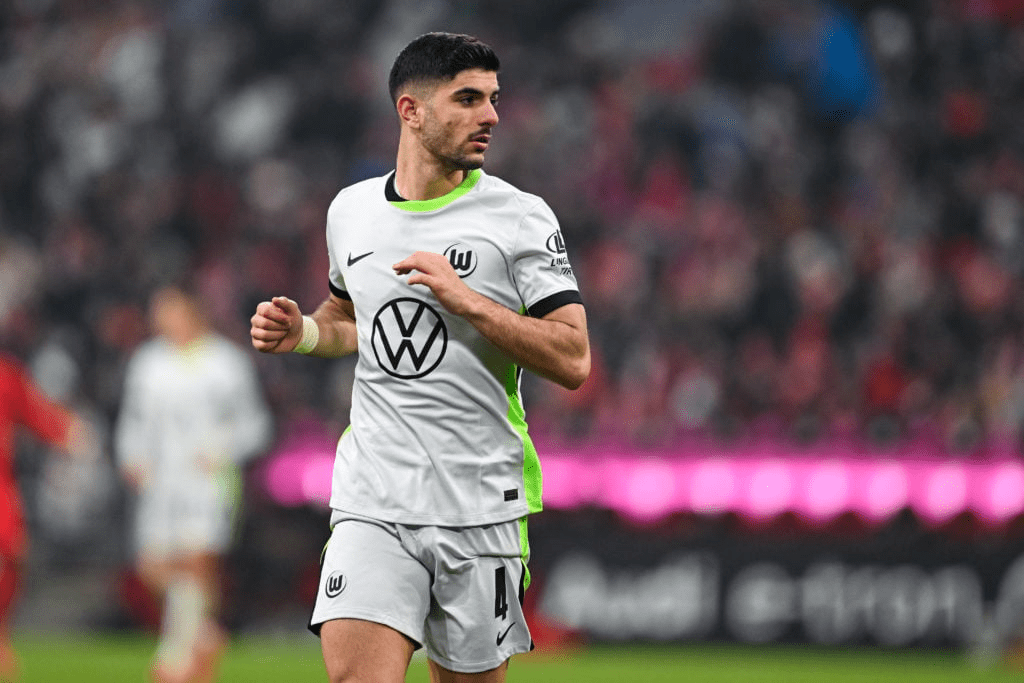
Koulierakis exhibits sharp defensive instincts through his astute tackling, impeccable positioning, and eagle-eyed anticipation of opponents’ moves. Moreover, he adds an exciting dimension to the attack during set pieces, making him a constant double threat on the pitch. This comprehensive skill set leaves no room for concern; there are no glaring weaknesses in his performance.
Given these attributes, he stands out as a prime candidate for a significant transfer to a club vying for glory at the highest levels of competition.
However, the pivotal question now hovers around timing. Despite the absence of a blockbuster move during the summer transfer window, speculation lingers about whether powerhouse clubs like Liverpool, Real Madrid, AC Milan, or Borussia Dortmund will circle back to him next summer or even as soon as January. Yet, such uncertainties are beyond Koulierakis’ influence.
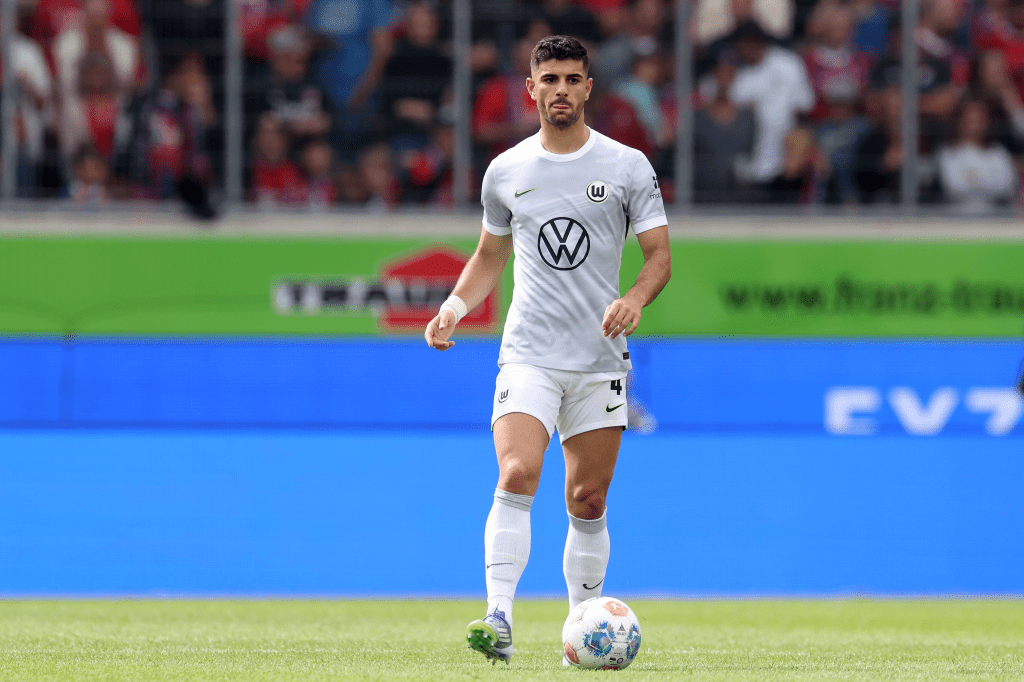
What he can control is his commitment to excellence, focusing on delivering outstanding performances and relentless development. He must continue to shine for Wolfsburg and his national team, just as he has consistently done over the past year.
If he sustains this upward trajectory, there’s every reason to believe that the aforementioned elite clubs will soon line up to present formal offers for his exceptional talents in the near future. Nonetheless, he is ultimately in charge of his destiny.

 anthonyscouts.co.uk