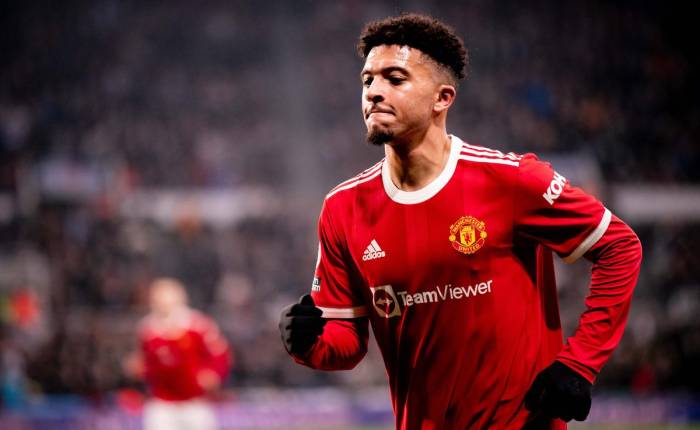
Jadon Sancho finally proving his worth to become a key player for Manchester United

Jadon Sancho finally proving his worth to become a key player for Manchester United

With this current Manchester United squad you just simply have no idea what you are going to get from one week to the next.

One moment they’ll reel you in with some sublime attacking displays and the next, they’ll leave you bewildering and in total disbelief. One constant has been the inexcusable contrast between first-half performances and second-half capitulations, as was again the case at Elland Road at the weekend, regardless of the calibre of the opposition or position of superiority they assume.

It’s become a regular pattern in recent weeks, but also telling representation that this United side may have a wealth of attacking talent, but as a unit they lack the street-smartness and composure to control games to their favour. They can be devastating but unbelievably frail, lacking the panache to control and dominate opponents over 90 minutes.

It’s evidently clear the squad needs some injection of control and bite in midfield, though something that Ralf Rangnick has increasingly been able to rely upon amid the chaos elsewhere in his side has been the performances of £73m summer capture Jadon Sancho.

The England forward is finally adding some goals and assists to his Premier League repertoire helping decide another pulsating mini War of the Rose battle.

You’d be lying if you had said Sancho hasn’t endured a difficult start to life in a Manchester United shirt. Of course, it hasn’t been plain sailing. At Borussia Dortmund, Sancho played in a team with a high-octane style where the general levels of the Bundesliga are slower and tailored perfectly to his flamboyant and jinky style, and though he has grounding of English football from his time at Watford and Manchester City, the English top flight is a significant step for a player still so young.

It took him all of six months to get his first Premier League goal for the club, against Southampton at Old Trafford. Fans have looked at his relatively hefty price tag, rather unfairly expecting him to hit the ground running but even the best of players in this division have found it incredibly difficult to make a swift impact upon arrival, and Sancho is no different.

At times the 21-year-old has been criticized for playing too safe, not showing off his usual mazy dribbles, tricks and deceptive movements but rather playing the ball back when faced 1v1 with his marker. It’s perfectly understandable though, when you’re still trying to adapt to your new surroundings, being too safety-first and cautious under pressure rather than taking risks.

Some even wondered earlier on in the season whether Ole Gunnar Solskjaer’s football, which gave licence to individual flair and creativity, really suited Sancho, and as a result found his place in the team limited. Indeed, Sancho seemed to be the collateral damage of the crisis engulfing Solskjaer, with the former United manager turning to the safety-first of a 3-4-1-2 system that had no room for wingers.
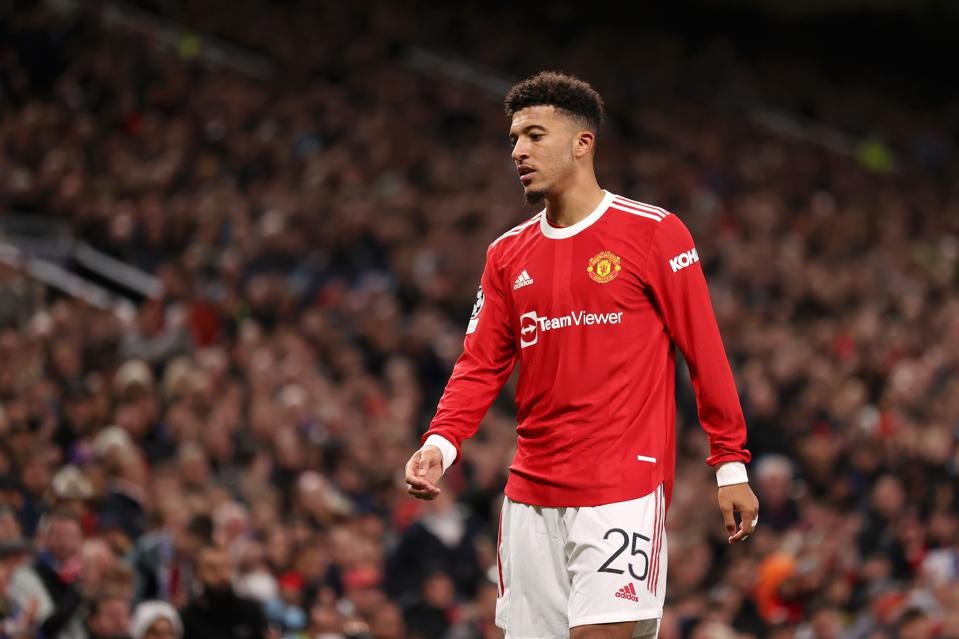
Such uncertainty in style and cohesion in United’s play ultimately led to the sacking of the Norwegian, and rather strangely led to Sancho’s immediate future at Old Trafford being under threat, even after Solskjaer had strongly advocated for the club to sign him last summer.

However, in all honesty, it can be argued that Solskjaer was the man holding him back. Since his departure, Sancho’s performance levels and adaptation to the team has markedly improved. His first goal for the club – under the stewardship of interim boss and former first team coach Michael Carrick – against Villarreal in the UEFA Champions League group stage finale, certainly showed a player finally beginning to get into his groove. The 21-year-old was superb on the night as United ran out 2-0 winners in the east of Spain.

Since Ralf Rangnick’s arrival though, Sancho is not just starting to show why United so desperately coveted him for two years, but is also fast becoming one of the few leading lights the club can depend upon to make crucial difference in matches.

The goals and assists may not have arrived until recently but it was clear Sancho was finally getting into the swing of things, accumulating more minutes under his belt, regaining his confidence, Rangnick almost simplifying his game and the tactical freedom around him and he’s now showing more glimpses of why Manchester United paid so much money for him.

Reports within the club in November during his difficult period were positive, with many believing Sancho would finally come good as the season progressed and that he has.

Against Leeds United, the weather helped set the scene and tone for Sunday’s ensuing battle, with incessant heavy rain leaving parts of the pitch sodden, making the trudging through no man’s land to reach your opponent that bit heavier underfoot.

With Leeds defenders bursting with rage and steam streaming from their nostrils bearing down on him, Sancho often remained calm and composed when clipping a sumptuous first time cross onto the head of Bruno Fernandes, who could not miss to put United 2-0 up.

It was the theme throughout the match surrounding Sancho’s performance. While others were slipping and sliding in treacherous conditions, Sancho used it to his advantage gliding across the pitch with such unerring grace and confidence.
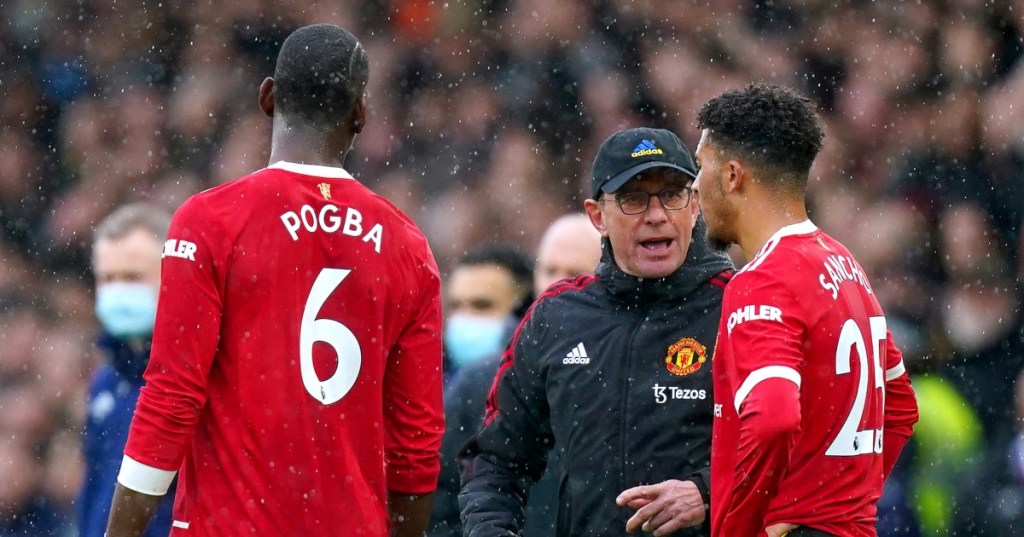
Sancho has worked himself into such positions to create openings on plentiful occasions this season, but failed to find that killer pass. Now, he finally had that first elusive Premier League assist, on his 14th start, to prove the 11 he recorded in the German top flight, and the 18 he laid on in all competitions last season were no fluke.

Though, all his good work were about to be undone in a matter of moments in the second-half. Manchester United these days are never comfortable at 2-0 up, if you need any reminders just ask Aston Villa.

Infact, in three of their previous four league games, they had failed to earn victory having been leading by one goal at the break but, they instead conceded two quick-fire goals in 59 seconds early in the second half to allow Leeds back into it, and give the fans around Elland Road hope they could grab all three points.

With pandemonium still ensuing, and emotional embraces lasting longer than when a son or daughter returns home from university for the first time after a long period away, the quality and grace of Jadon Sancho once again dragged his teammates out of the mire and set them on the road to a crucial success.

With options either side of him, the weight on the pass for substitute Fred was something that only the very best can produce, and the Brazilian made no mistake. It was game, set and match from then on in.

Sancho didn’t stop there though, almost laying on another for Anthony Elanga after one of the most stupendous mazy runs and trickery down the touchline to get past three Leeds United players, but Elanga could only fire Sancho’s finely weighted pass straight at Illan Meslier in the Leeds goal.

Whenever Sancho is faced with creative decisions in an around the final third, he always delivers executing them with such wonderful composure, calmness and class that so few in Europe’s top-five leagues can match. It’s almost as if time stands still.

Sancho has now been involved in four goals in his last five games in all competitions – two goals and two assists – twice as many as he was in his first 23 appearances. He completed more progression actions (10) against Leeds than any other United player and he also made the third-most possession recoveries (9), only bettered by Luke Shaw and Aaron Wan-Bissaka (11).

Credit must be given to Ralf Rangnick for providing Sancho with the tools and tactical freedom to express himself, almost unburdening him with needless responsibilities but ensuring he performs at maximum capacity.

The German discussed his extensively relationship with Sancho from former years before he chose to move to Borussia Dortmund and that bond and trust is certainly being reflected on the pitch.

In fact, in a matter of months Sancho ranks amongst the best for creativity in the final third amongst Rangnick’s crop of players.

So far this season, the former Dortmund wizard ranks 2nd for key passes per 90 (2.17), 2nd for passes into the penalty area (23), 2nd for shot-creating actions per 90 (4.20) (the two offensive actions leading to a shot, such as passes, dribbles and drawing fouls), he ranks 1st for progressive carries (140), carries into the final third (51) and 18-yard box (36). He’s also recorded the most successful dribbles (33) out of any United player too.

Whoever said Jadon Sancho isn’t making an impact at Old Trafford? The above numbers emphatically tells us he is. When United are in need of creativity in the final third, its not just Fernandes they are looking to, but Sancho also. The 21-year-old has almost lifted the creative burden off his Portuguese teammate.

The 21-year-old is playing with real style and confidence again, and it was only a matter of time and opportunity. With all the uncertainty, negative press and rumours engulfing the club in past couple months, Sancho has provided United fans with the hope and optimism that the future is indeed bright at Old Trafford.

From struggling to be considered for a starting berth a few months ago to being one of the first names on the team sheet. Rangnick was always going to look favourably on a player he knows so well from his time in Germany, but in this current form, he simply cannot ignore the man who should be front and centre of this up and coming United revolution.

Where are the Sancho doubters at now?
3 defensive midfield options Manchester United should look to sign this month

3 defensive midfield options Manchester United should look to sign this month

It’s been evidently clear for a long period of time that Manchester United are in desperate need of investment and improvement at the base of their midfield if they are to match the likes of Manchester City, Chelsea and Liverpool.

The club have made slight improvements under German revolutionary and tactician Ralf Rangnick, but those those glaring issues still rear its ugly head, and its costing United a place in the Premier League top four.

In Rangnick’s 4-2-2-2, he’s had to use a combination of Fred, Scott McTominay, and Nemanja Matic as his midfield base, none of whom are ideal fits for what Rangnick requires in his engine room, although McTominay has impressed there in recent weeks.

Against Burnley, the pairing of Matic and McTominay worked well, with the Serbian acting as a deep-lying progressor of the ball and the Scotsman providing the dynamism and energy to push up the pitch and support attacking moves. At 33-years of age, Matic cannot be relied on long-term to be United’s main midfield anchor, while his lack of mobility could also pose issues against teams who offer more of an attacking threat.

While both Fred and McTominay both bring energy, tenacity and aggression to the midfield, neither are reliable ball distributors, players who can break lines, feeding the ball to teammates in much more dangerous areas like that of the two no.10s behind the two forwards. And as a result, United are unable to penetrate teams with the preciseness and ruthlessness as their rivals and control games the way Rangnick wants.

According to The Athletic, Ralf Rangnick has already identified the midfield area as a point of addressing, so might we finally see some investment from Manchester United in that area in January?

If so, Iet’s have a look at three potential options Rangnick could look at to address the problem and how might they fit in at Old Trafford.

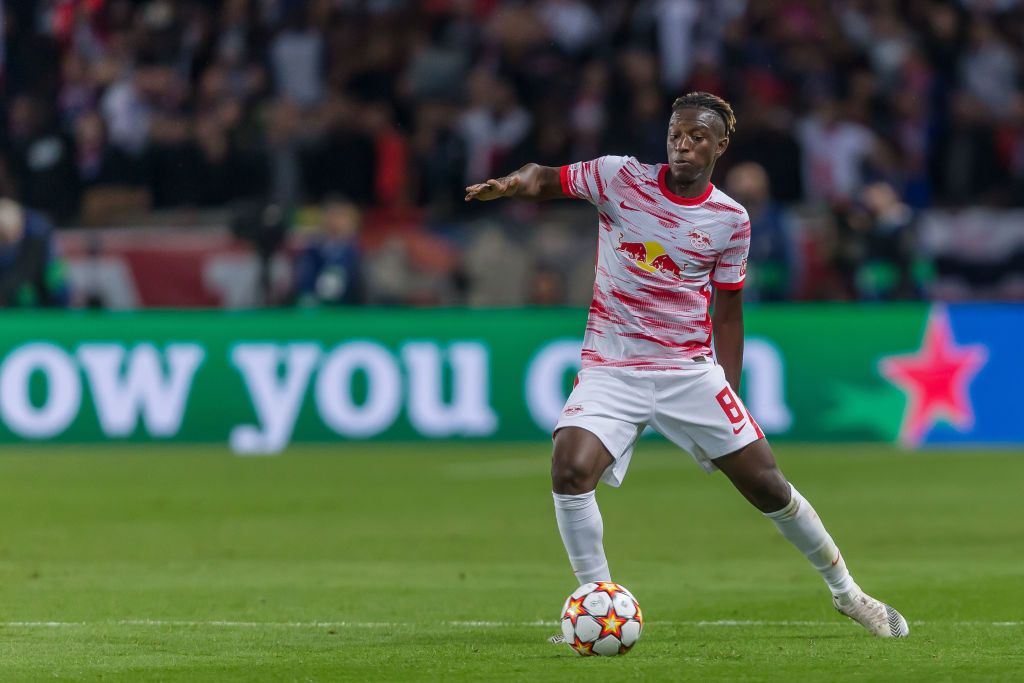
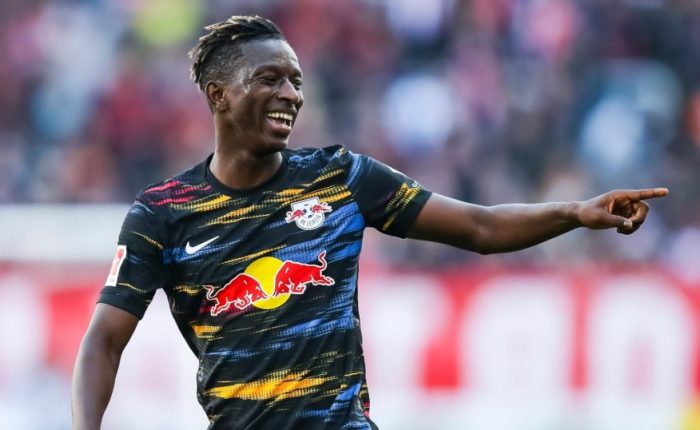
Amadou Haidara, RB Leipzig

(Photo by Harry Langer/DeFodi Images via Getty Images)

Given the weaknesses in United’s existing options in midfield, their reported interest in RB Leipzig’s midfield dynamo Amadou Haidara makes perfect sense. However, this may be a difficult deal to pursue as Haidara will be on international duty for Mali at the African Cup of Nations. If United still go ahead with trying to acquire his services, he may not be available until late January, which could prove costly for United if they desperately want to address their glaring issue in midfield.

The 23-year-old midfielder still makes for smart and astute piece of business. The Malian credits Rangnick with pushing for his transfer from RB Salzburg to Leipzig in 2019, proving a key figure for the German during his time at the Red Bull Arena. Haidara is crucially the sort of all-round central midfield who has thrived in the system Rangnick is attempting to implement at Old Trafford.

During his three years at Leipzig, Haidara has wonderfully developed his craft and effectiveness in Leipzig’s high-intensity style, becoming the well-rounded midfielder who can adapt well to the specific roles he is given. Upon his arrival at Leipzig, the 23-year-old impressed as an energetic ball-winning midfielder primed in breaking up attacking play, counter-attacks (a problem United suffered against Newcastle during Christmas) as well as supporting the press, and progressing the ball through bulldozing running and fine passing.

His ball-carrying was initially the foremost way he could break opposition lines, which he still does with such impressive precision. The Malian has successfully completed 75% of his dribbles, performing 1.55 successful dribbles per 90 minutes so far this season. Haidara has also recorded 4.12 progressive carries and 1.24 carries into the final third highlighting his knack of breaking through opposition lines to progress his team up the pitch.

However, its his passing that has proving increasingly incisive, and a trait Rangnick will not be able to ignore. Haidara holds a short passing success rate of 88%, and his long passing 68% showing his incredible distribution of the ball. So far this season per 90, he averages 6.32 progressive passes placing him in the 92nd percentile of midfielders across Europe’s top-five leagues. Also, he averages 3.30 final third passes, and 1.44 passes into the penalty areas showing he is very adept at finding his more forward-thinking teammates in more dangerous areas of the pitch.

If he were to move to Old Trafford, he would of course be playing with either of Fred or McTominay in Rangnick’s 4-2-2-2. Given the caliber of offensive talent ahead of him, Haidara will be tasked in fulfiling more defensive duties. In possession, his technical quality and acumen and desire to progress the ball will be extremely pivotal for United’s patterns of play.

Almost a third of Haidara’s passes travel more toward the opposition goal, significantly more than both Fred and McTominay, in which he performs significantly more progressive passes (6.32) than the Brazilian (5.06) and the Scotsman (4.56) and also performs more passes into the opposition penalty area. Clearly, Haidara would add much more needed ball retention and progression to the United midfield.

However, Haidara’s defensive metrics are, while reasonably solid, not paticularly impressive. Though, much of that will be down to the inconsistent form of RB Leipzig this season, rather than his own struggles. He averages a quite impressive 6.70 successful pressures per 90, 10.2 in the middle third and 3.30 in the attacking third highlighting that he is very effective when playing a pressing game. Still, his tackles and interceptions are not particularly the highest (2.27) amongst the most dominant midfielders in the English top-flight but Haidara would still so much more elite dynamism, aggression and most of all ball progression that United so desperately need in their engine room.

Provided Rangnick earmarks his former player as a target in January, United are likely to swoop in and pay his £33m release clause to acquire his services from RB Leipzig. However, having already inherited an excess number of players, the German will be aware of shipping out players ahead of demanding new signings over the coming transfer window.

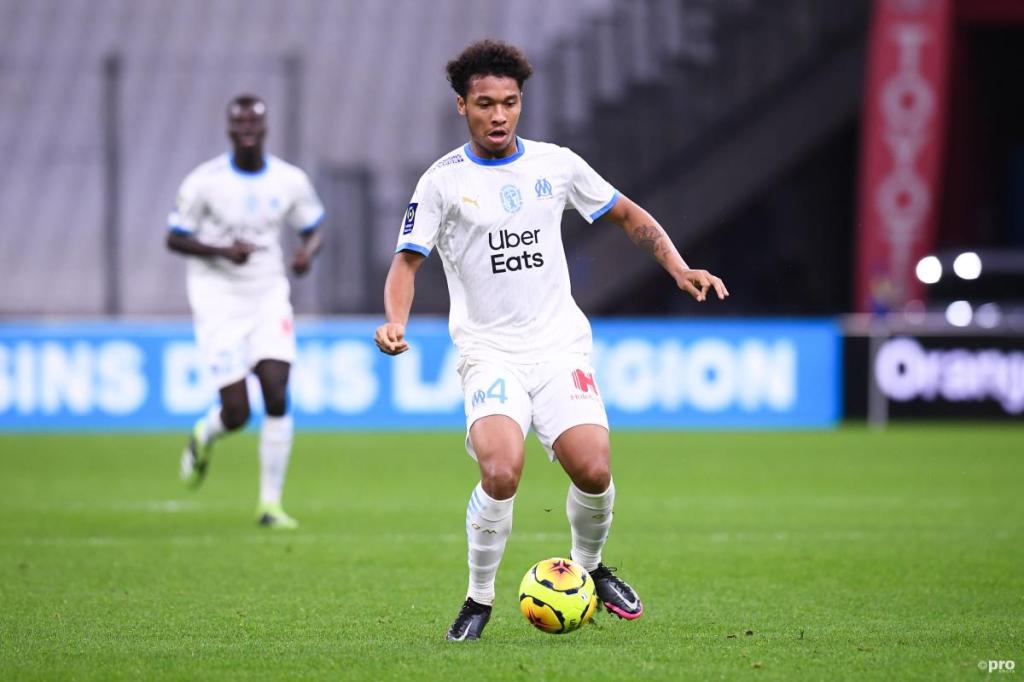
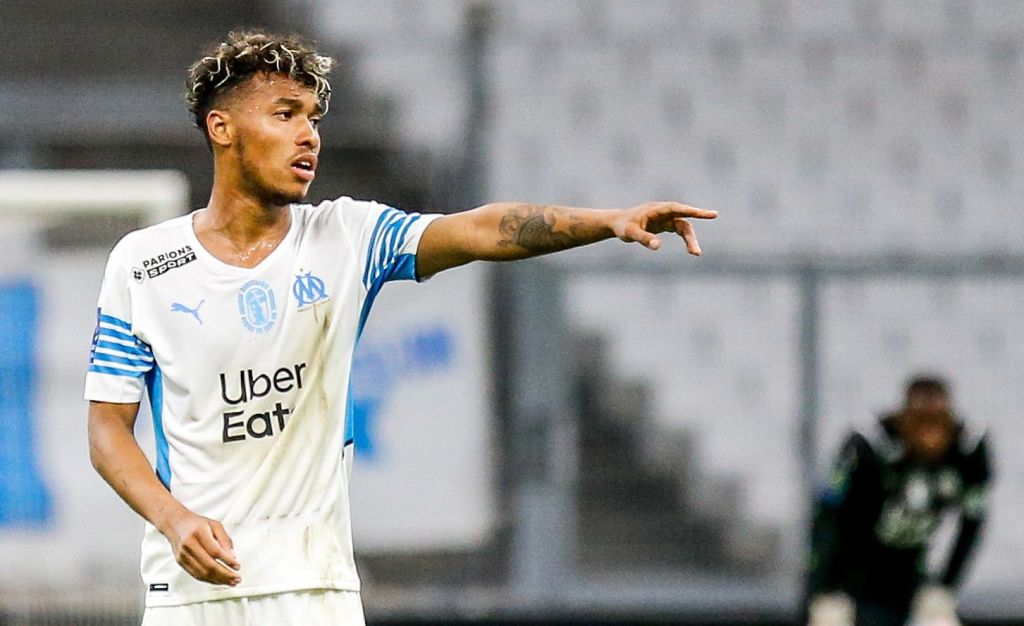
Boubacar Kamara, Olympic de Marseille

Amongst the many exciting talents waiting on a big move next summer, Boubacar Kamara is likely to attract many suitors over the coming transfer windows. The midfielder has undergone remarkable development, having come through the French club’s academy, and remains amongst the most coveted defensive-midfield prospects in Europe.

Despite only being 21, the midfielder has already amassed 107 Ligue 1 appearances, playing close to 8,000 minutes across five seasons in the French top-flight. A ball-winner in multiple forms – a presser, a dueler and interceptor – but he’s also as comfortable against the press as he is when pressing himself. The 21-year-old is typically Marseille’s deepest midfielder in possession of the ball, very comfortable in drawing opponents in through ball retention, then bypassing them through silky footwork, mazy runs or passing combinations with his teammates.

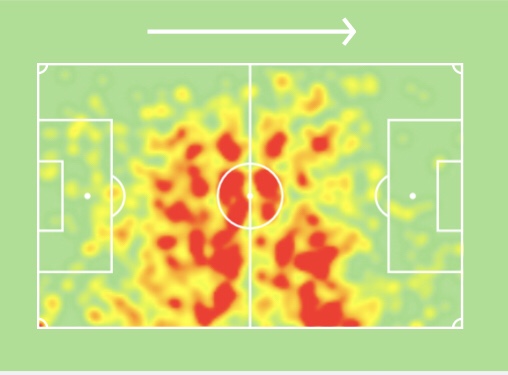
Largely deployed in a double-pivot under Jorge Sampaoli this season in a 4-2-3-1 formation, Kamara has excelled under the tutelage of the former Chilean head coach. In a system which allows for much freedom and rotation positionally, Kamara is the one player who’s position remains constant although he does hold the tactical intelligence to perform those free-roaming roles when required.

Sampaoli’s system strongly requires the full use of Kamara’s skill-set. He is extremely composed in possession, dictating the tempo at his own pace possessing the ability and understanding to know when the slow the game down, and when to speed it up. A skilled and well-timed passer of the ball, with a good first touch, but without the ball he’s a tenacious, aggressive and methodical ball-winner who is strong in the tackle.

At Marseille, Kamara is used as the pivot point, keeping the ball moving with short simple passes, creating angles for the centre-backs or central midfield players like his partner Matteo Guendouzi. Kamara’s role is incredibly integral to Sampaoli’s positional play as he’s always available for a pass acting as a short passing outlet allowing his side to transition into their attacking pattern of play.

Boubacar Kamara’s season heatmap

More importantly, if given the space, Kamara is so good at breaking opposition lines with decisive swift passes, but also progressing it over long distances with a lovely range and superb vision and scanning of his surroundings. Kamara holds a short passing success rate of 94.7% and a long passing rate of 73.8%, highlighting how pivotal he is to Marseille’s build-up play, whilst also averaging a stunning 5.93 passes into final third per90.

He’s just as good in his reading of the game, often the man to help out his defence when dealing with the threat of attacking moves, winning the ball with strong standing tackles, but also having the speed of thought to distribute to his teammates and start attacking moves. While he does often drop deep, he’s very adept in the mid-block situations engaging opposition receivers and intercepting them from behind.

During the past year, Kamara has been successful with 36.9% of his pressing which ranks him in the 97th percentile for central midfielders across Europe’s top-five leagues. A stat Rangnick will certainly be proud of. He also wins 2.04 tackles per 90, ranking in the 87th percentile of midfielders, also winning 46% of his challengers against dribblers ranking 91st percentile amongst midfielders in Europe’s top-five leagues. Despite standing at 5’10, he’s also a very good aerial ball-winner winning on average 1.4 aerial duels per 90 with a 61.7% win percentage ranking him in the top 13% of central midfielders across Europe.

With him in the team, United could potentially have another promising prospect on the books, capable of developing into a world-class footballer, thus, lessening their need to spend big money on future transfers for the position. United are in dire need of an adept ball-winner but also a player who is just as effective and as incisive with his ball-progression. Boubacar Kamara fits the bill.

Although the Frenchman remains likely to leave in the summer with his contract at Marseille expiring in June, United are reportedly hopeful of luring him to the club as early as January. Provided the Red Devils see an opening, given Rangnick’s preference for developing youngsters as opposed to seasoned players, Kamara could potentially prepone his plans of moving clubs this month.

Joining Manchester United now seems as attractive as ever, considering the amount of potential in the squad.

Aurelien Tchouameni, AS Monaco

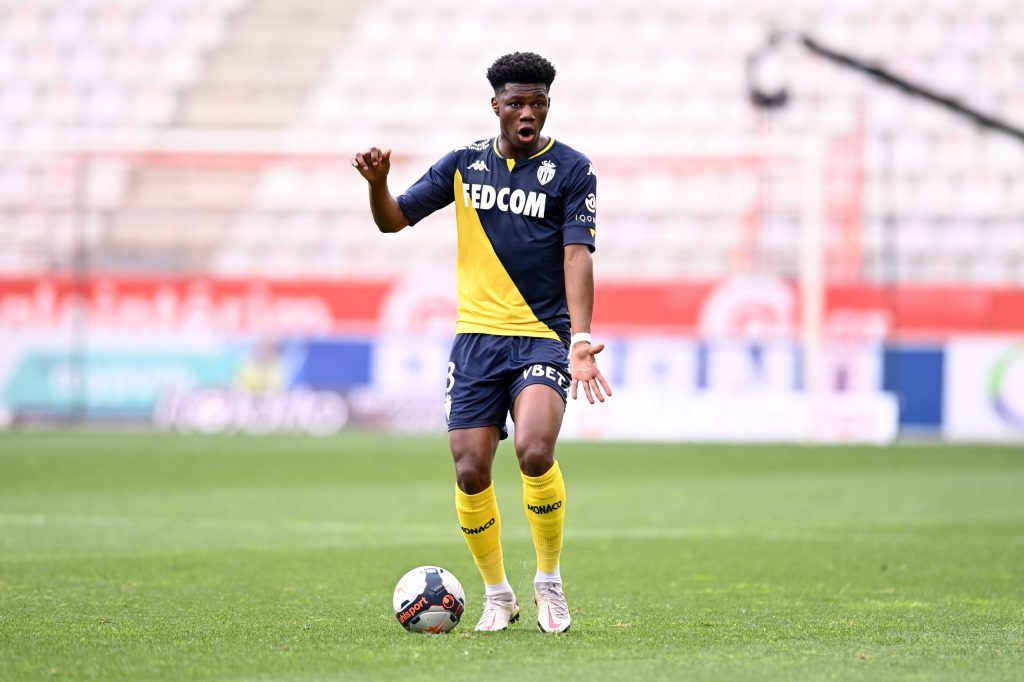
Like his fellow French compatriot, Aurélien Tchouaméni is amongst the most highly coveted young central midfielders in Europe, let alone the French Ligue 1. The 21-year-old has enjoyed a remarkable season at AS Monaco under now former coach Niko Kovac, and is reportedly on the list of a lot of top clubs around Europe for his signature.

If Manchester United are indeed serious about addressing their serious issues in midfield then acquiring the services of Tchouaméni should be priority number 1. However, it will take big bucks to prize him away mid-season from Monaco who still remain in Europe’s second competition, the UEFA Europa League and still remain in the hunt for Champions League football next season.

But, the club are in a state of flux right now, and Manchester United should take advantage of the ongoing issues currently plaguing such a decorated club in France, after Niko Kovac’s surprise sacking.

The midfielder is earning such glittering praise in France right now, simply because of his expert performances at the base of Monaco’s midfield in the French top-flight. Not only has he garnered exceptional praise at club level, but in his native France colours too, aiding their Nations League success earlier this season.

Tchouaméni is superbly athletic, dynamic workhorse of a midfielder who combines his sharp turn of pace with a fine-tuned and unique anticipation and reading of the game.

As a result, he is perfectly capable of fulfilling a number of positions in the midfield making him one of the most complete performers in the French top-flight: no.8, no.6, or no.4, you name it. He is right at home in each of those positions dominating, harrassing his opponents but also providing Monaco’s frontmen with the perfect platform to attack without any real concern of what may occur behind them.

Tchouaméni is an absolute nightmare to play against. Just when attackers think they’ve broken clear of the Monaco midfield, he quickly and consummately arrives out of nowhere to snap at their heels and win back possession.

Not only does he win the ball back for Monaco with astonishing regularity, but he moves it along beautifully once he has, with an impressive range of passing allowing the midfield runners in front of him to dart into space in advanced areas knowing that possession, and therefore the space behind them, won’t be ceded.

Standing at just 6ft, 2in Tchouaméni may not at first viewing look the dominating and imposing figure that he cuts out to be, but the aura and confidence at which he performs in midfield means he is every player’s nightmare when coming up against him.

Astonishingly, Tchouaméni made more tackles than (133) than other player in Europe’s top-five leagues in 2021.

In fulfilling his role as a capable defensive midfielder, Tchouaméni performs it with such expert assuredness and brimming confidence. He is an exceptional tackler and reader of the game making him so appealing to clubs who are in dire need of the safety he brings, clubs like Manchester United.

So far this season, he ranks in the 99th percentile for midfielders in the top 5 European leagues with 3.97 tackles per 90 meaning he is in the best of the best company with the likes of Fabinho, Casemiro and N’Golo Kante combining his aggressive nature in defending and his awareness of attacking situations developing around him meaning he can time his challenges well in order to halt opponent’s attacks.

With a unique combination of size, strength, timing, and coordination, he is quite proficient at cleanly dispossessing his markers at an exceptional rate. He is a very athletic and mobile, imposing presence, who stands at 1.87 meters (6’2”), and has extremely long legs which help him with many defensive actions – like tackling. Furthermore, his long legs mean he has a big stride when covering long distances, covering all areas in front of his defence both on and off the ball.

He would be the perfect component for Rangnick’s high-intensity style not because of his assuredness in the tackle but his ability cover all areas of the midfield pivot in the 4-2-2-2 system. He is a naturally fast player with a great engine meaning that much of the work isn’t overwhelming for him. So far this season, he’s won 1.85 tackles per 90, and performed 3.33 interceptions. In fact, his tackles + interceptions average reads at 6.42 per 90. All of it makes for superb reading, he is very adept and efficient in his role.

Even though he shows excellent balance and agility on the ball, Tchouaméni isn’t much of a ball carrier, a progressive one in that fact – he attempts 4.88 progressive carries per game, though on the rare occasion where he attempts to carry the ball over and progress it over larger distances, he seems fairly uncomfortable able to dribble out of tight areas, or muscle his way out of opponent’s pressure, though working under better elite coaches means that will only improve vastly. He holds tremendous ball control, agility and technical qualities when on the ball meaning it is incredibly difficult to dispossess him.

In terms of pass progression, Tchouaméni also operates at such a high level. Once he receives a pass, the 21-year-old always knows where he play before he even receives it, or his body positioning when he receives means he is more than capable of progressing even when it seems difficult. As stated previously, he is excellent technically and his range of passing is amongst the best in Europe, let alone Ligue 1.

Tchouaméni completes 90.9% of his short passes and 77.1% of his long passes making him a superb outlet when progressing the ball to players in more advanced areas – a trait United could do well in acquiring in the near future. He is better than Fred (87% & 77%) and partly better than McTominay (89% & 81%) at progressing the ball, averaging 5.37 progressive passes per 90, and an 5.43 final third passes. Once he receives the ball, he is not afraid to attempt to find his attacking teammates in more dangerous areas or pockets of space.

With his blend of size, mobility, dynamism, defensive intelligence, and progressive passing that will surely improve, he would be an excellent addition for a number of top teams all over Europe including Manchester United, becoming the complete performer for the here and now and at just 21 years of age, he looks to be a player who could be one of the best defensive midfielders in world football within the next 5-10 years. 

A no-brainer addition to fully complement Ralf Rangnick’s style of football.

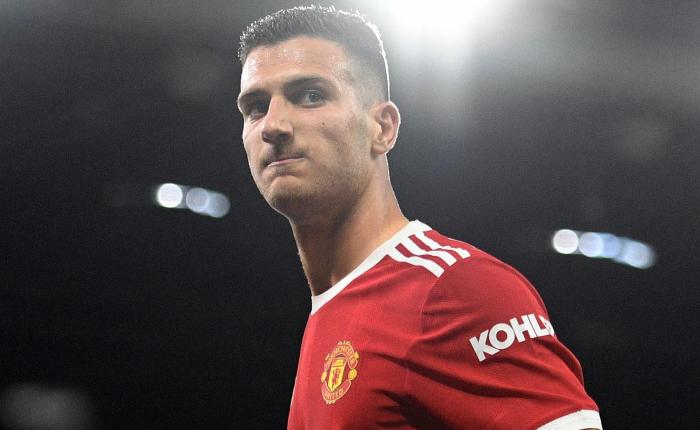
Diogo Dalot may be Rangnick’s go-to man and that’s bad news for Aaron Wan-Bissaka

Diogo Dalot may be Rangnick’s go-to man and that’s bad news for Aaron Wan-Bissaka

The tide is certainly changing at Manchester United. The road forward is looking much more optimistic and clearer after the debacle that had been their final weeks under former manager Ole Gunnar Solskjaer.

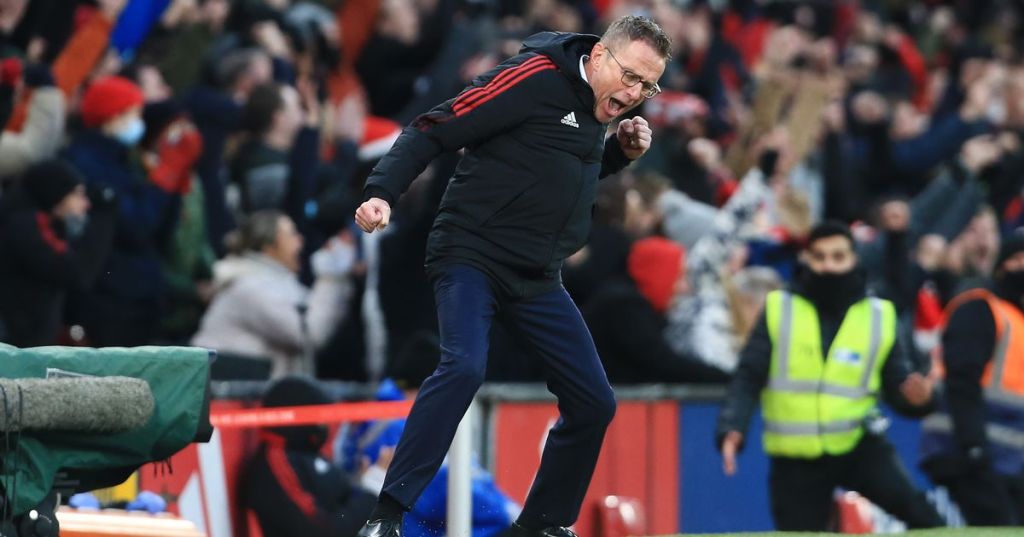
In just a couple weeks since Ralf Rangnick’s interim appointment, the uncertainty and doubts that swept through Old Trafford has been completely wiped away. The small changes and progression may be difficult to pinpoint from the outside looking in but, certainly the German tactician and revolutionary has already made quite a drastic impact within the United camp.

Finally the club possess a leader who can imprint a vision, philosophy and an intriguing style of play that has been somewhat lost on the red side of Manchester, while the blue half continues to capture the imagination of every football fan in the country, even those in support of United.

Despite their impressive third and second placed finishes under Ole Gunnar Solskjaer, there was still the feeling that Manchester United were missing that telling ingredient that immediately would catapult them to the same levels as their rivals Liverpool and Manchester City.

Well, those inside the Theatre of Dreams for Ralf Rangnick’s maiden match as Manchester United’s new interim manager were treated to a number of novel sights, especially on the tactical side. 

For starters, United played in a 4-2-2-2 shape. They pressed from the front and saw a different side to Fred, the much-maligned chaos merchant who scored the winner in a 1-0 victory over Crystal Palace.

More significantly, it was the sight an attack-minded full back marauding up the right wing, putting in piercing crosses into the box as well as providing a ruthless threat on that flank for the whole game.

Under Solskjaer, that sight had simply gone amiss, with the Norwegian favouring the more defensive Aaron Wan-Bissaka in the position. Against Palace, Rangnick opted for Diogo Dalot instead and the transformation, balance and enthusiasm in United’s attacking play was stark.

As shown in Dalot’s individual stats against Palace, the Portuguese full-back proved a constant menace down that right-flank. For some 90 minutes, United fans thought they’d seen a reincarnation of the Old Trafford legend and former player Gary Neville.

Dalot as well as a rejuvenated Alex Telles, was pivotal to the way Manchester United played in Rangnick’s first match. Primarily, his role was to offer width and an outlet in a system that is otherwise narrow forcing play through the middle of the pitch. 

The Portuguese international was given a lot of space to stride into with out-an-out wingers Marcus Rashford and Jadon Sancho tucked inside, and offering threat in the half-space.

On top of this, Dalot proved a stunning supply line, passing the ball into the opposition penalty box five times, more than any other player on the pitch. He also made nine successful long passes, six ball recoveries and two successful crosses, putting in the sort of performance Rangnick cries out for from his full backs.

Manchester United’s performance had Rangnick’s fingerprints all over it, and it was quite considering he had a day’s worth of training to get stuck into his new job. The German has been hired to impose a new style of play a team that has been lacking such cutting edge front-foot football for a long-while and the full back position could be where we see the greatest changes between the Solskjaer-era and the new regime.

And this spells bad news for £50 million man Aaron Wan-Bissaka.

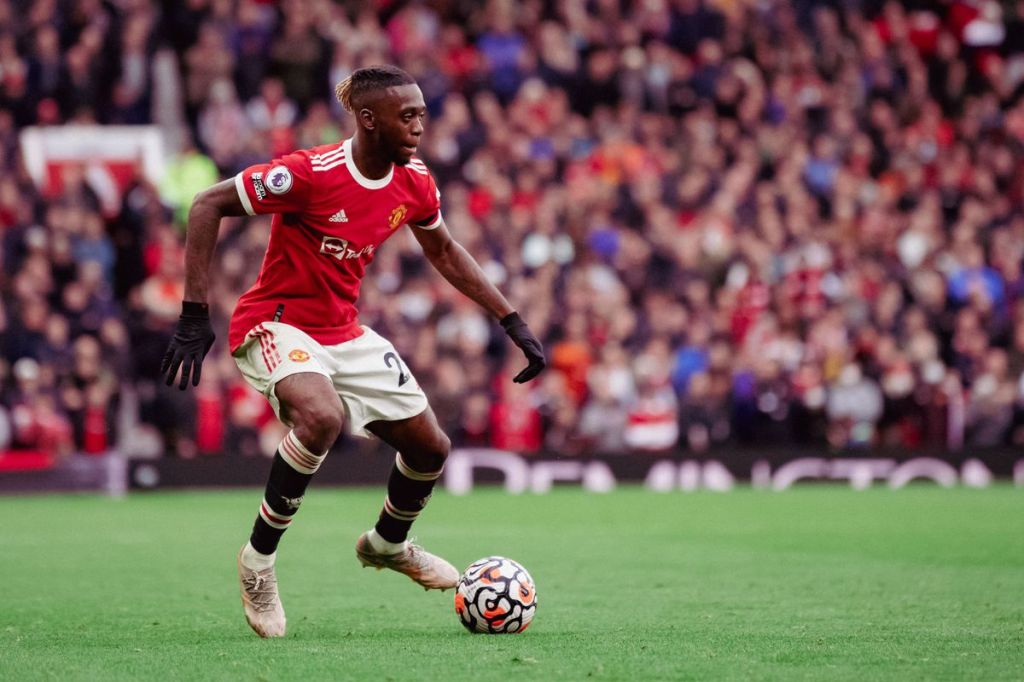
While there is no doubting the 24-year-old’s ability and defensive style as one of the best one-on-one defenders in the Premier League, he is supremely limited in his attacking output.

Wan-Bissaka has tried to adapt his natural game, but it’s clear that anything beyond the halfway line pushes him outside of his comfort zone. At times, he’s looked clueless, somewhat awkward and lacking in any real urgency when attacking in the final third areas.

That was the case in United’s latest game under Rangnick, their 1-1 draw against Young Boys in their final UEFA Champions League group stage bow. Diogo Dalot, who was rested for the game will have watched his English teammate’s performance and not feel threatened one bit.

Wan-Bissaka, who came in after missing the Arsenal game with a hand injury and after being dropped for the Crystal Palace match, had an evening to forget. The right-back unfortunately failed his audition in front of his new manager.

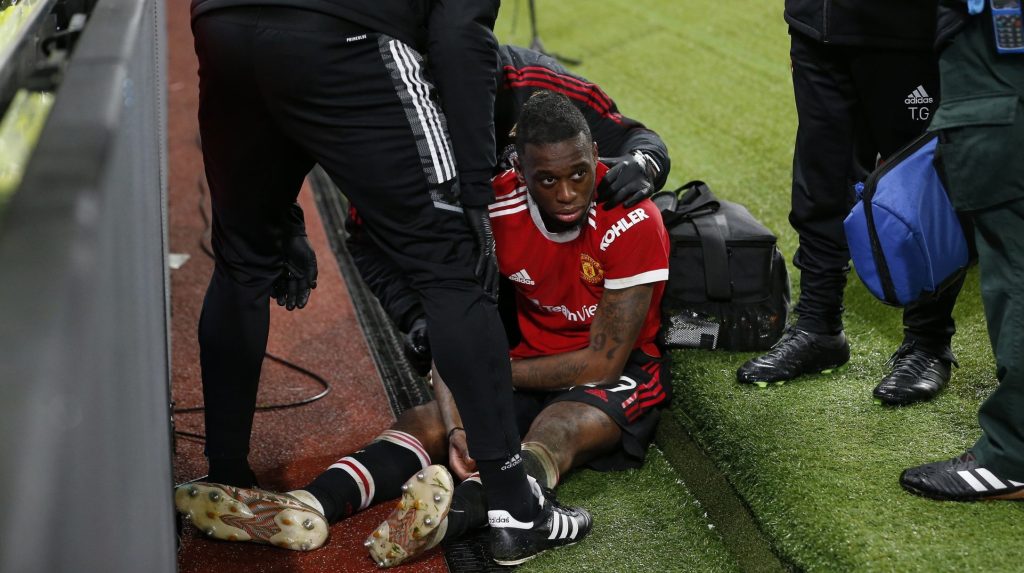
He received a bang to the face, another knock to his wrist and left the pitch on a stretcher after clattering into the advertising hoardings as he raced for the ball on the slippery surface in second-half stoppage time. It was a sorry sight for a player who has impressed on occasion, but doesn’t seem the reliable outlet United have needed and are crying out for when attacking down that right-flank.

Under Solskjaer, Wan-Bissaka’s limitations were masked somewhat due to the presence of a wide attacker, whether that be Mason Greenwood, Jadon Sancho or someone else, ahead of him on the right side. Simply stopping opponents from getting in behind often proved enough for the former Crystal Palace man.

It’s even gotten to a point where much of Manchester United’s opponents aren’t as worried or tested when Wan-Bissaka attacks down the right-flank. When Solskjaer’s team had the ball, they were almost forced to go down the side they felt weakest as a result of Wan-Bissaka’s frailties as an attacking full-back.

It’s also a position where United have fallen well behind their main rivals: Chelsea possess the qualities of Reece James, Manchester City have Joao Cancelo and Kyle Waker, while Liverpool possess the extraordinary creative abilities of Trent-Alexander-Arnold. It was simply no secret when Solskjaer was reportedly interested in the services of Atletico Madrid and England full-back Kieran Trippier last summer to provide the club with a much more complete and well-rounded full-back.

A failed move in which United had to make do with what they had.

Rangnick has a strong reputation for honing the skills of young players but the 24-year-old put in another ponderous and nervy display against Young Boys.

Wan-Bissaka, who was sent off in the reverse fixture back in September, failed to find a team-mate with any of his two crosses, did not play a single key pass and made the majority of his touches in deep areas.

His performance was the polar-opposite to the one Dalot put in at Old Trafford at the weekend, with the Portugal international showing he can excel in Rangnick’s preferred 4-2-2-2 formation.

With Rangnick at the helm, though, Manchester United will certainly need more dynamism from their full backs on both flanks. For Luke Shaw and Alex Telles, this won’t be much of a problem with both possessing the propensity to provide that telling impact in the final third.

Dalot, who’s attacking play has somewhat gone unnoticed at Old Trafford will add plenty to United’s new and reformed attacking play. The 22-year-old proved himself as a reliable option on loan at AC Milan last season and even forced his way into Portugal’s squad for Euro 2020.

So far in a matter of weeks, the 22-year-old has proven he isn’t out of his depth at this level.

For Wan Bissaka, the doubts still remain whether he can cut it at the elite level.

Wan-Bissaka has his qualities, of that there is no question. If humanity ever needs a sliding tackle or a vital block to save the world, then Wan-Bissaka’s the man. When it comes to one-versus-one defending, he is arguably the best in the country.

However, there are still facets of his defending that needs work, at times he too often drifts off when defending crosses from the opposite flank, and he hasn’t nailed down yet exactly when to press or hold his ground in a whatever shape United’s defence is taking, something Rangnick will be poised to help him solve.

Solskjaer and his coaching staff just did not have the qualities and skills to iron out the kinks in Wan-Bissaka’s game, but as we have seen already, Rangnick can spot a flaw and take the necessary steps to rectify it, he’s spent his whole career shaping young talents.

Certainly, Dalot has weaknesses in his defending too. Though, once Rangnick has United controlling games the way he wants, Dalot may not be tasked in fulfilling defensive duties as much as he has been previously.

In the attacking sense, Dalot is averaging an impressive 2.33 passes per 90 into the opposition box. Joao Cancelo is on 2.55; Trent Alexander-Arnold is averaging 2.76; Reece James’ average per 90 is 2.35. Wan-Bissaka’s stands at 0.69. He has attempted nine passes into the box in 13 starts this season; Dalot trails by two in just two starts and four substitute appearances, the differences where it matters most in attack are very clear.

The Portuguese international has also recorded 2.31 shot-creating actions per 90, while Wan-Bissaka sits at 1.62. Also Dalot averages more passes into the final third, more progressive passes, more passes into the penalty as well as crosses, exactly what an attacking full-back needs in his role. Dalot’s qualities supersede Wan-Bissaka’s in every sense of the role.

That’s one of the many reasons why Rangnick will continue to call on Dalot, as Manchester United’s permanent attacking full-back for now. Wan-Bissaka will almost certainly be given a chance to prove himself to Rangnick between now and the end of the season, but the pressure for him to improve his game really is on.

If the former Palace man doesn’t adapt his style, if he doesn’t absorb the exciting ideas and methods of his new boss, he may find his United career at serious risk.