What will Erik ten Hag bring to Manchester United?

What will Erik ten Hag bring to Manchester United?

Manchester United are a club in crisis, an institution that has been steeped in mediocrity for the best part of the last nine years and change is strongly required at Old Trafford.

According to The Athletic, Manchester United have reached an agreement in principle with Erik ten Hag to become their next permanent manager.

It is believed to be a verbal agreement. He is expected to join on a contract to run for up to four years.

This article will aim to analyse Ten Hag’s principles of play, and how it will fare in line with United’s squad and expectations:

Ten Hag’s rise to arguably the biggest job in football might feel fairly swift but his progress has been steady, meticulous and thoughtfully planned in order to maximize his impressive skill-set. At 52, he has been a youth coach and head of education, an assistant coach at home and abroad, and a manager at various other levels.
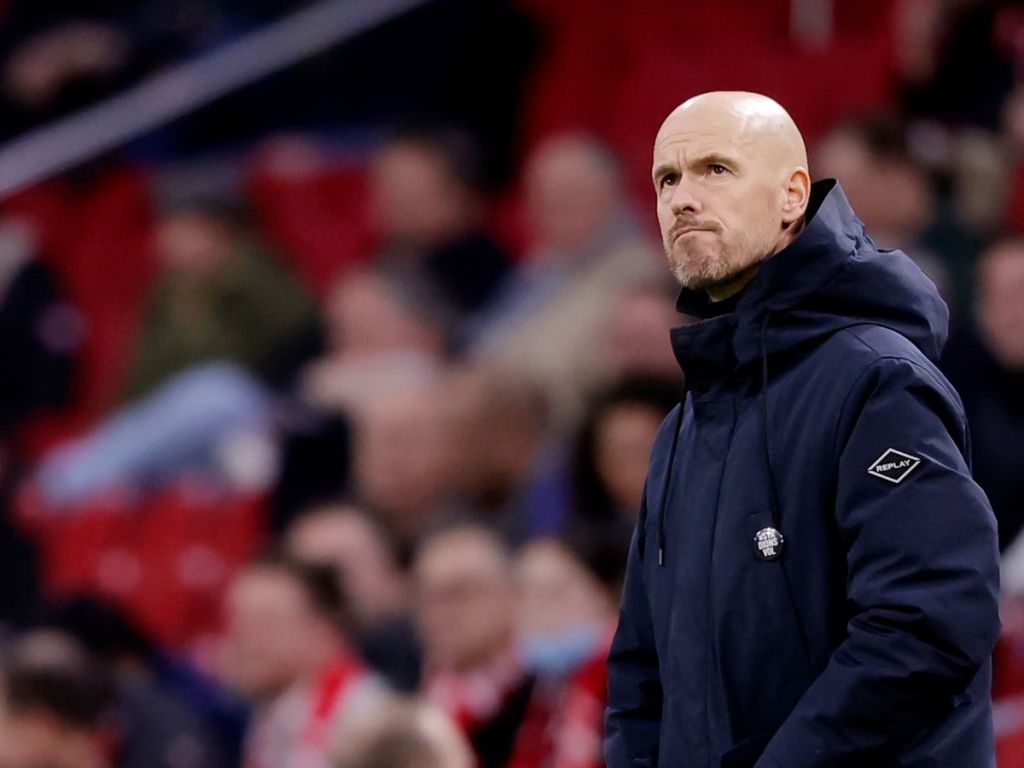
Erik ten Hag has impressed during his time at Ajax. He’s picked up two Eredivisie titles and historically reached the semi-finals of the UEFA Champions League during the 2018/19 campaign for the first time since the 1996/97 season.

That campaign, he comfortably overcame the giant challenge current holders at that time Real Madrid 4-1 at the Santiago Bernabéu in round 16, and also played Juventus off the par in the quarter-final before their unfortunate defeat to Tottenham Hotspur in the semi-final.

Since his appointment in 2019, he has had an extremely impressive win percentage of over 70%, a true sign of the significant impact and transformation he’s embarked on that the club since he became manager in 2017.

Considering the change in philosophy, identity and impact he’s made in Amsterdam, the former Utrecht coach could oversee a long-term rebuild at Old Trafford, providing the much-maligned Manchester United hierarchy allows him the opportunity to do so.

So what will Ten Hag bring to Old Trafford?

Erik ten Hag has typically lined his Ajax side up with a possession-based 4-3-3 system.

erik-ten-hag-ajax-formation-lineup

The practices most widely associated with his team are width, verticality (for example counter-movements), decoy runs and manipulation of opposition presses and deep blocks.

From goal-kicks, Ten Hag’s Ajax build from a deep position with the keeper plus two centre backs. This setup offers a conventional build-up structure with which the centre-backs are required to be typically comfortable in possession, and have the capabilities to be progressive with their passing.

The centre-backs and goalkeeper, and of one of the fullbacks dropping in, Ajax can regularly enjoy positional dominance in build-up against an opposition block; particularly if the opposition uses a front one or two – both of which are very common in the Dutch Eredivisie.

Ajax often drop one of the fullbacks – either Daley Blind or Noussair Mazraoui – into a deeper and more vertical position to aid their build-up play. It allows either of the fullbacks to become a deep-lying orchestrator as they are allowed the ample time and space to find the vertical options on their side of the pitch.

This is very similar to how Pep Guardiola uses his fullbacks in the 4-2-4 build up positional setup, where either Cancelo on the left-flank or Kyle Walker at RB are at times tasked in sitting alongside Rodri when City build up in possession, allowing them to be more accessible against an opposition’s defensive shape, but also providing the team with an extra body in midfield when in possession.

Ajax also frequently stagger their deep midfielders too, pushing one higher, to create a single pivot. The single pivot (Lisandro Martinez) acts as an anchor, holding the opponent’s front line to a narrower berth, and distributing play, again similar to how Pep utilizes Rodri, or how he used Busquets at Barcelona.

Ajax are currently the best defensive performing team in Eredivisie with just 15 goals conceded all campaign at the time of writing, displaying high awareness, composure and consistency. The team’s well-measured actions and anticipation skills result in a high success rate in almost every aspect.

They are proficient in winning their challenges clearly, despite actually having the highest challenge intensity (duels, tackles and interceptions per minute of opponent possession) in the league.

The foundations of Ten Hag’s build-up are very solid, free-flowing and really quite conventional. But where the value lies, is not only how Ajax are able to progress the ball and begin to create, but how they can utilise well-coached movements and problem solving to adapt against various opposition shapes.

In terms of ball progression, the keys, once in settled possession, are: opening up passing lanes to exploit, having time and space to make the pass and lastly, allowing the receiver to consistently receive in an optimal manner.

When Ajax form their conventional build-up structure, the fullbacks tend to drop into a narrower position. To oppose this, the wingers move wider to open a diagonal lane.

This means the wingers (who are typically inverted) such as Tadic and Antony can receive in a consistent manner, back to touchline providing them the full view and width of the pitch so they can create freely and move into areas (in half-spaces) where they feel they can affect attacking phases of play and hurt the opposition.
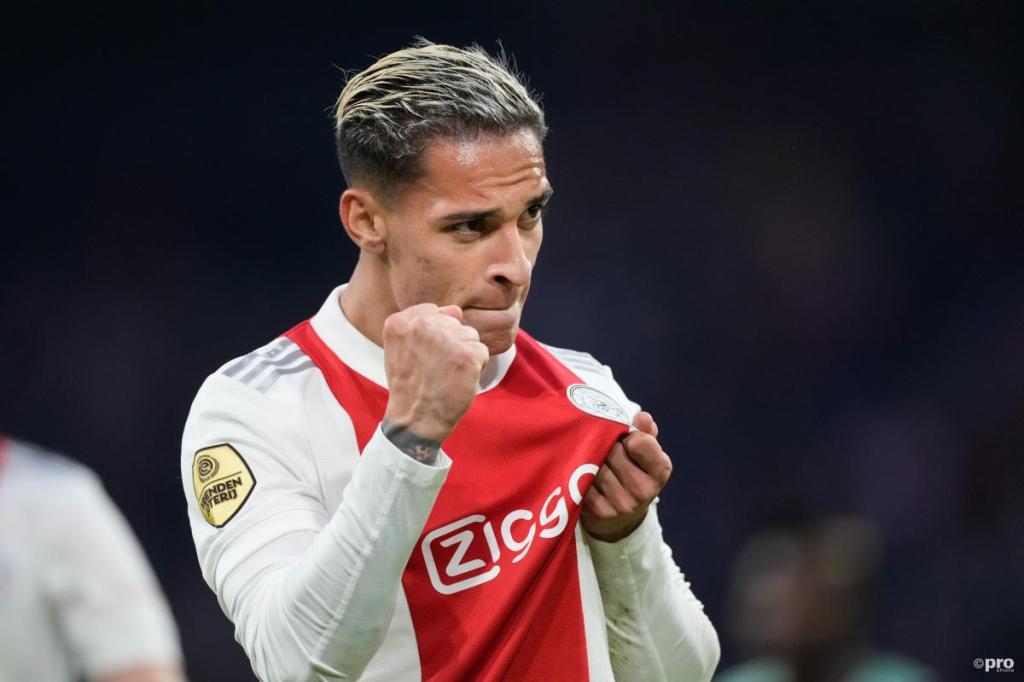
Antony & Mazraoui share a strong relationship on the right-flank, with the full-back knowing when to leave the winger in a 1v1 situation against the opposition.

Within Ten Hag’s system, every player holds the confidence in themselves and in their teammates when creating chances, and that is proved in how each component works in tandem to disrupt a deep opposition block.

Rather like Pep, his teams look to open up the pitch and penetrate opposition lines by exploiting the sides of the pitch. United are currently lacking in the winger department, with Jadon Sancho arguably being the only out-and-out winger the team possesses at the moment, this is something ten Hag will be looking to address providing he is confirmed as the United head coach.
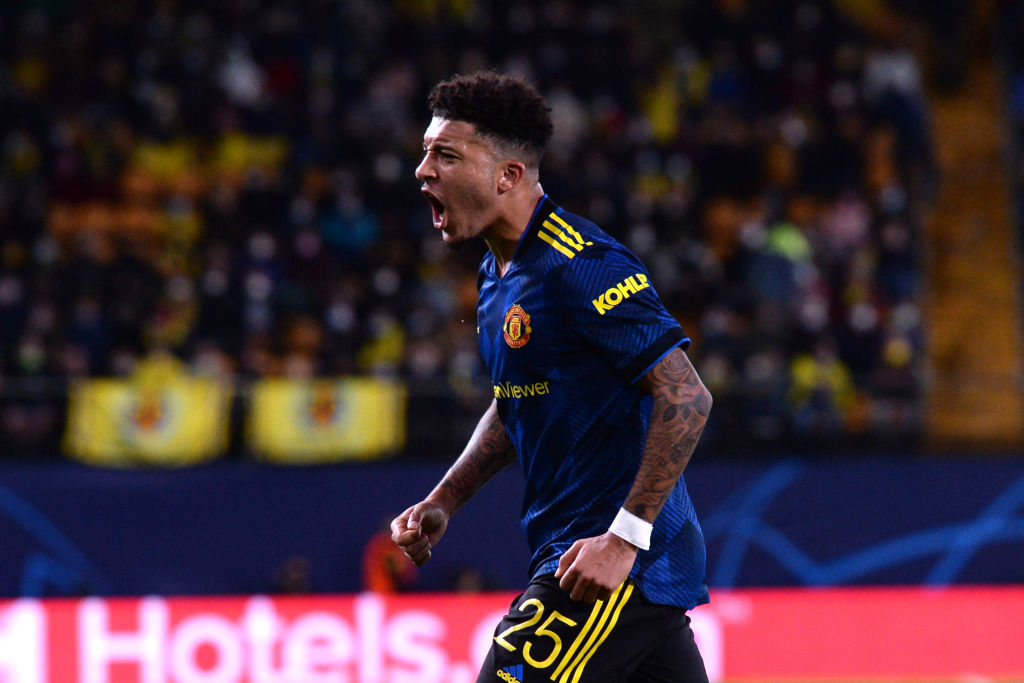
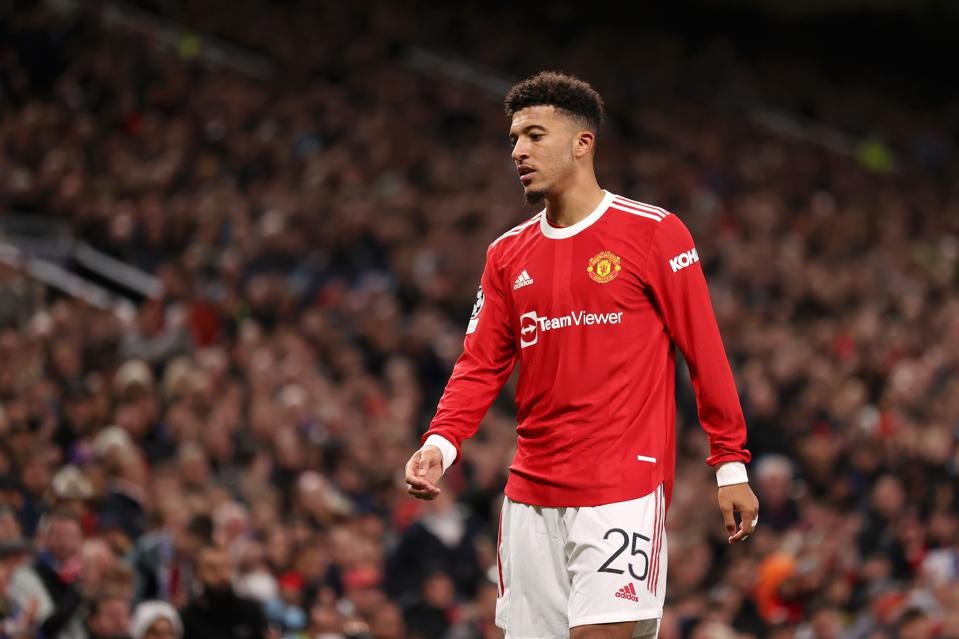
Jadon Sancho could play a key role in Ten Hag’s Old Trafford revolution (Photo by Aitor Alcalde/Getty Images)

Possessing a player of Antony’s qualities could be incredibly useful at Old Trafford, seeing as he is not only an effective out-an-out winger, but an extroadinary creative force via his wand of a left-boot and his ability to link-up effectively with his teammates. So far this season, the forward has registered eight goals and four assists in the Dutch top-flight, building up from his nine goals and eight assists last term.

Like Raphinha at Leeds United, he is just as good creating and forming chances out of nothing than he is scoring them, a unique weapon and surely one which Ten Hag will be looking to add to dramatically improve United’s attacking play.

Ajax often play so the Brazilian can receive 1v1 in a deep and wide position. His distribution from here is excellent – particularly his in-swinging crosses. He also enjoys being in a 1v1 scenario regardless of whether Mazraoui is overlapping or standing off.

Whist in these systems the attacking threat comes from the wings, the midfield also helps out and are positioned quite high up the pitch in attack.

The three central midfield players all have their own unique roles; the central midfield player, previously occupied by United outcast Donny van de Beek and now performed by Steven Berghuis, always maintains a higher position on the pitch in support of the attack.

The two remaining midfield players generally have more defensive responsibilities: the other midfielder – nominally operates in a box-to-box role helping out both in defence and attack, with the remaining midfielder – the single pivot tending to be more composed in possession and confident on the ball.
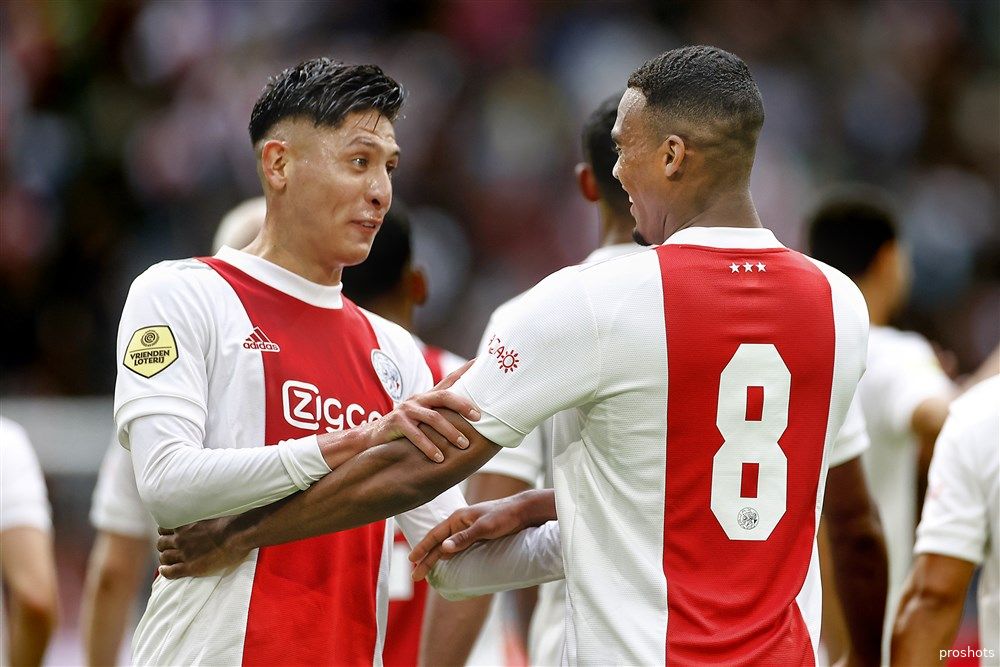
Edson Alvarez and Ryan Gravenberch have been Ten Hag’s go-to midfield pairing

The overarching point regarding creating chances, is that the distortion through movement and width facilitates the individual quality, which ultimately adds another layer to the level of attacking threat ten Hag’s Ajax produce. They are not based off on individual quality alone, but on the system incorporated, qualities Manchester United just cannot claim to possess currently.

In terms of defensive transitions, Ajax generally perform reasonably, despite a system which makes having a consistent shape rather tedious. They often pack areas near the ball, thus, upon losing possession they are able to nip transitions in the bud with a counter-press.

However, this is where their weakness could lie: their reliance on their full-backs. Blind and Mazraoui are not only vital to build-up, progression, and (decoy) overlaps/underlaps in the final third, but are also integral to their defensive play.

Erik ten Hag’s team is a tactically complete side, evidenced by their impressive performances on the pitch throughout his reign. The opposite can be said of United: The Theatre of Dreams has at times this season become nightmarish. The club must act quickly and decisively and have a manager in place as soon as the season finishes, so the rebuild can commence as soon as possible.
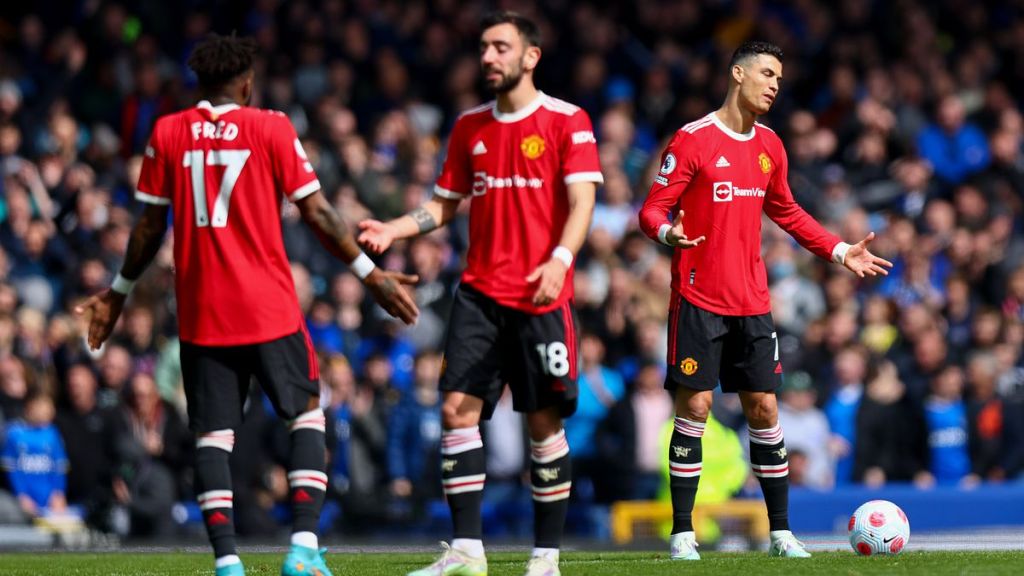
If the Dutchman was named manager, it remains to be seen if any of the current starting XI would fit the bill for such a free-flowing system. Many suspect a large majority of the current squad would be moved on at the end of the season.

Providing Ten Hag moves to Old Trafford, we can expect a strong brand of possession-based football, where the players have a high level of clarity in terms of their role and how to break down the opponent, systematically, as a team – a far cry from what’s been produced by the team in recent years.

AND IN OTHER NEWS, check out this scout report on a tremendous young talent excelling under Ten Hag’s tutelage
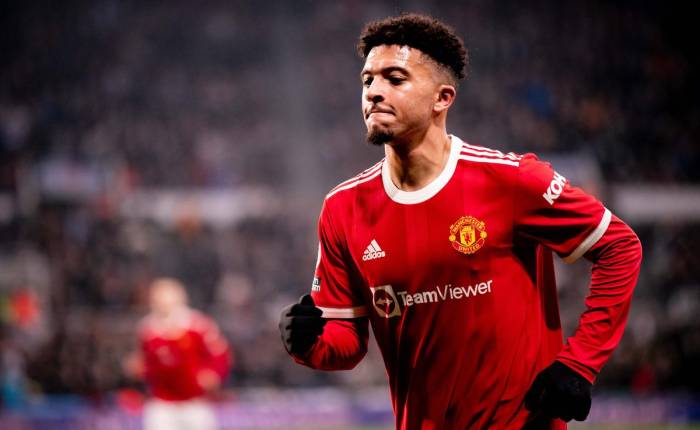
Jadon Sancho finally proving his worth to become a key player for Manchester United

Jadon Sancho finally proving his worth to become a key player for Manchester United

With this current Manchester United squad you just simply have no idea what you are going to get from one week to the next.

One moment they’ll reel you in with some sublime attacking displays and the next, they’ll leave you bewildering and in total disbelief. One constant has been the inexcusable contrast between first-half performances and second-half capitulations, as was again the case at Elland Road at the weekend, regardless of the calibre of the opposition or position of superiority they assume.

It’s become a regular pattern in recent weeks, but also telling representation that this United side may have a wealth of attacking talent, but as a unit they lack the street-smartness and composure to control games to their favour. They can be devastating but unbelievably frail, lacking the panache to control and dominate opponents over 90 minutes.

It’s evidently clear the squad needs some injection of control and bite in midfield, though something that Ralf Rangnick has increasingly been able to rely upon amid the chaos elsewhere in his side has been the performances of £73m summer capture Jadon Sancho.

The England forward is finally adding some goals and assists to his Premier League repertoire helping decide another pulsating mini War of the Rose battle.

You’d be lying if you had said Sancho hasn’t endured a difficult start to life in a Manchester United shirt. Of course, it hasn’t been plain sailing. At Borussia Dortmund, Sancho played in a team with a high-octane style where the general levels of the Bundesliga are slower and tailored perfectly to his flamboyant and jinky style, and though he has grounding of English football from his time at Watford and Manchester City, the English top flight is a significant step for a player still so young.

It took him all of six months to get his first Premier League goal for the club, against Southampton at Old Trafford. Fans have looked at his relatively hefty price tag, rather unfairly expecting him to hit the ground running but even the best of players in this division have found it incredibly difficult to make a swift impact upon arrival, and Sancho is no different.

At times the 21-year-old has been criticized for playing too safe, not showing off his usual mazy dribbles, tricks and deceptive movements but rather playing the ball back when faced 1v1 with his marker. It’s perfectly understandable though, when you’re still trying to adapt to your new surroundings, being too safety-first and cautious under pressure rather than taking risks.

Some even wondered earlier on in the season whether Ole Gunnar Solskjaer’s football, which gave licence to individual flair and creativity, really suited Sancho, and as a result found his place in the team limited. Indeed, Sancho seemed to be the collateral damage of the crisis engulfing Solskjaer, with the former United manager turning to the safety-first of a 3-4-1-2 system that had no room for wingers.

Such uncertainty in style and cohesion in United’s play ultimately led to the sacking of the Norwegian, and rather strangely led to Sancho’s immediate future at Old Trafford being under threat, even after Solskjaer had strongly advocated for the club to sign him last summer.

However, in all honesty, it can be argued that Solskjaer was the man holding him back. Since his departure, Sancho’s performance levels and adaptation to the team has markedly improved. His first goal for the club – under the stewardship of interim boss and former first team coach Michael Carrick – against Villarreal in the UEFA Champions League group stage finale, certainly showed a player finally beginning to get into his groove. The 21-year-old was superb on the night as United ran out 2-0 winners in the east of Spain.

Since Ralf Rangnick’s arrival though, Sancho is not just starting to show why United so desperately coveted him for two years, but is also fast becoming one of the few leading lights the club can depend upon to make crucial difference in matches.

The goals and assists may not have arrived until recently but it was clear Sancho was finally getting into the swing of things, accumulating more minutes under his belt, regaining his confidence, Rangnick almost simplifying his game and the tactical freedom around him and he’s now showing more glimpses of why Manchester United paid so much money for him.

Reports within the club in November during his difficult period were positive, with many believing Sancho would finally come good as the season progressed and that he has.

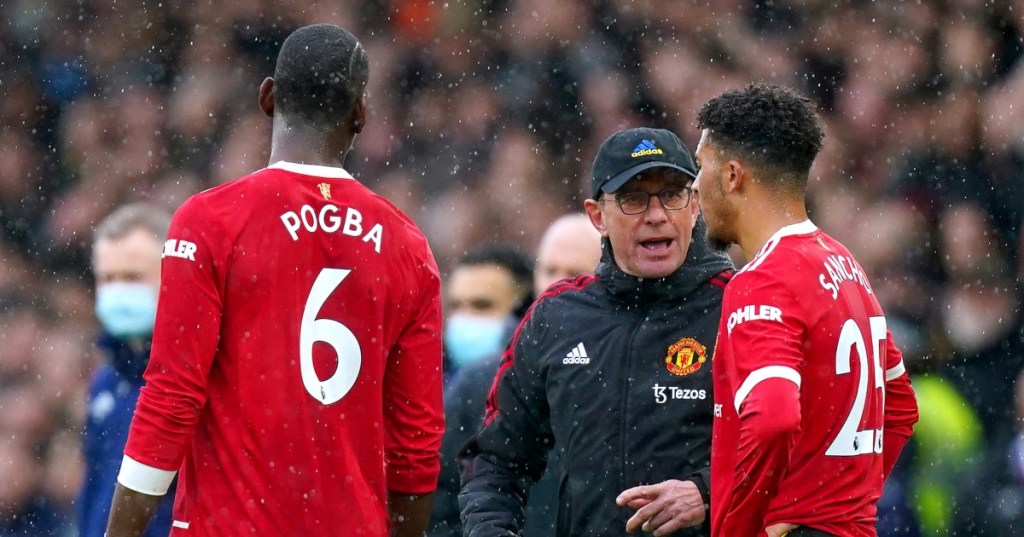
Against Leeds United, the weather helped set the scene and tone for Sunday’s ensuing battle, with incessant heavy rain leaving parts of the pitch sodden, making the trudging through no man’s land to reach your opponent that bit heavier underfoot.

With Leeds defenders bursting with rage and steam streaming from their nostrils bearing down on him, Sancho often remained calm and composed when clipping a sumptuous first time cross onto the head of Bruno Fernandes, who could not miss to put United 2-0 up.

It was the theme throughout the match surrounding Sancho’s performance. While others were slipping and sliding in treacherous conditions, Sancho used it to his advantage gliding across the pitch with such unerring grace and confidence.

Sancho has worked himself into such positions to create openings on plentiful occasions this season, but failed to find that killer pass. Now, he finally had that first elusive Premier League assist, on his 14th start, to prove the 11 he recorded in the German top flight, and the 18 he laid on in all competitions last season were no fluke.

Though, all his good work were about to be undone in a matter of moments in the second-half. Manchester United these days are never comfortable at 2-0 up, if you need any reminders just ask Aston Villa.

Infact, in three of their previous four league games, they had failed to earn victory having been leading by one goal at the break but, they instead conceded two quick-fire goals in 59 seconds early in the second half to allow Leeds back into it, and give the fans around Elland Road hope they could grab all three points.

With pandemonium still ensuing, and emotional embraces lasting longer than when a son or daughter returns home from university for the first time after a long period away, the quality and grace of Jadon Sancho once again dragged his teammates out of the mire and set them on the road to a crucial success.

With options either side of him, the weight on the pass for substitute Fred was something that only the very best can produce, and the Brazilian made no mistake. It was game, set and match from then on in.

Sancho didn’t stop there though, almost laying on another for Anthony Elanga after one of the most stupendous mazy runs and trickery down the touchline to get past three Leeds United players, but Elanga could only fire Sancho’s finely weighted pass straight at Illan Meslier in the Leeds goal.

Whenever Sancho is faced with creative decisions in an around the final third, he always delivers executing them with such wonderful composure, calmness and class that so few in Europe’s top-five leagues can match. It’s almost as if time stands still.

Sancho has now been involved in four goals in his last five games in all competitions – two goals and two assists – twice as many as he was in his first 23 appearances. He completed more progression actions (10) against Leeds than any other United player and he also made the third-most possession recoveries (9), only bettered by Luke Shaw and Aaron Wan-Bissaka (11).

Credit must be given to Ralf Rangnick for providing Sancho with the tools and tactical freedom to express himself, almost unburdening him with needless responsibilities but ensuring he performs at maximum capacity.

The German discussed his extensively relationship with Sancho from former years before he chose to move to Borussia Dortmund and that bond and trust is certainly being reflected on the pitch.

In fact, in a matter of months Sancho ranks amongst the best for creativity in the final third amongst Rangnick’s crop of players.

So far this season, the former Dortmund wizard ranks 2nd for key passes per 90 (2.17), 2nd for passes into the penalty area (23), 2nd for shot-creating actions per 90 (4.20) (the two offensive actions leading to a shot, such as passes, dribbles and drawing fouls), he ranks 1st for progressive carries (140), carries into the final third (51) and 18-yard box (36). He’s also recorded the most successful dribbles (33) out of any United player too.

Whoever said Jadon Sancho isn’t making an impact at Old Trafford? The above numbers emphatically tells us he is. When United are in need of creativity in the final third, its not just Fernandes they are looking to, but Sancho also. The 21-year-old has almost lifted the creative burden off his Portuguese teammate.

The 21-year-old is playing with real style and confidence again, and it was only a matter of time and opportunity. With all the uncertainty, negative press and rumours engulfing the club in past couple months, Sancho has provided United fans with the hope and optimism that the future is indeed bright at Old Trafford.

From struggling to be considered for a starting berth a few months ago to being one of the first names on the team sheet. Rangnick was always going to look favourably on a player he knows so well from his time in Germany, but in this current form, he simply cannot ignore the man who should be front and centre of this up and coming United revolution.

Where are the Sancho doubters at now?