How good is Lucas Digne and what will he bring to Steven Gerrard’s Aston Villa?

How good is Lucas Digne and what will he bring to Steven Gerrard’s Aston Villa?

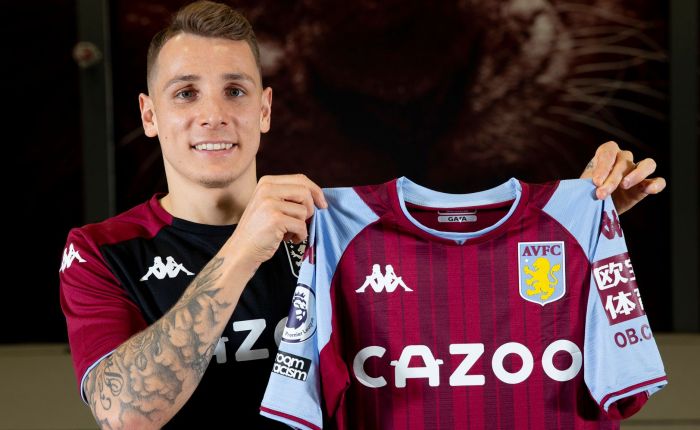
Aston Villa have completed their second signing of the January transfer window securing the signature of Everton’s French international left-back Lucas Digne for a fee of around £25m, following the signing of former Liverpool midfielder Philippe Coutinho on-loan from Barcelona.

It is understood Digne travelled to Birmingham for a medical on Wednesday before signing a four-and-a-half year deal.
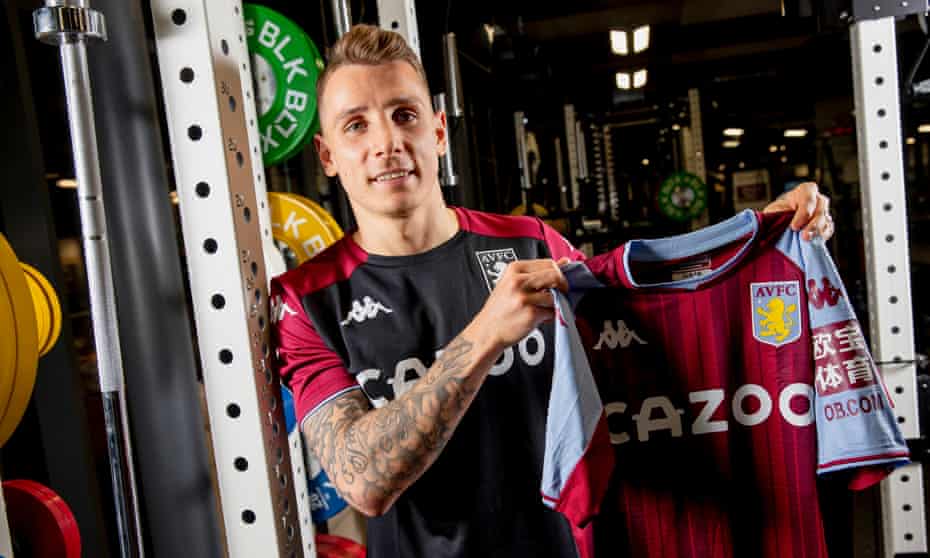
On Wednesday night, Digne posted on Instagram: “Sometimes it only takes one person from outside to destroy a beautiful love affair” ahead of his move to Villa Park. Digne, 28, was the top target for manager Steven Gerrard who looked to increase Villa’s full-back options this month.

He was linked with Newcastle but the Frenchman did not want to move to a club who was threatened with relegation. Digne was also reportedly of interest to Chelsea with Ben Chilwell out for the season with a knee ligament injury. The Champions League winners wanted a loan move only, though, which was not something Everton were interested in.

Digne’s fallout with Rafael Benitez ended up clouding what were his final weeks, with a club he joined in 2018 from Barcelona but over the past three and a half seasons he has been a key player for Everton.

Since he joined in 2018, he has recorded more assists (18) than any other Everton player and led the way for his team in assists and chances created (46) last season.

Everton signed 22-year-old Vitaliy Mykolenko earlier this month as a replacement and while the Ukraine international has experience playing in the Champions League and at the Euros last summer, he clearly cannot match Digne’s quality. So many will of course argue, that Aston Villa have got the better of the two deals considering the Frenchman’s abilities and influence in attack.

Digne, after all, has over 40 caps for France and has experienced title wins with Barcelona and Paris Saint-Germain. However, it will be his attacking numbers from left-back which will excite the Villa faithful.

At 28, Digne is in his prime and at a level where his attacking output ranks among the best by full-backs in the Premier League. In fact, Digne’s tally of 18 assists in the last three and a half seasons puts him behind only Andrew Robertson (35) as the second-highest goal provider among his positional counterparts — and well ahead of nearest rivals Ben Chilwell (13), Aaron Cresswell and Luke Shaw (both 10).

Also, since the start of last season only Liverpool pair Trent Alexander-Arnold and Andy Robertson have created more clear-cut chances among Premier League defenders.

Looking at his expected assists (xA) per 90 minutes – measuring the expected goals value of the shot that is assisted – it provides a more useful understanding of how creative Digne really is.

When considering minutes played at left-back and left wing-back since 2018-19, Digne’s 0.18 expected assists per 90 is also the second-highest rate within his positional group, which means for Everton he has been creating chances worthy of an assist once every five games since he arrived at Goodison Park in 2018.

Image provided by Sky Sports

As seen in the image above, off-the-ball, Digne isn’t quite as effective – ranking 46th among Premier League defenders since the start of last season for winning possession, well behind his more creative counterparts Alexander-Arnold, Robertson, Shaw and Chilwell. One of the facets of Gerrard’s game is his demand on his full-backs to be as effective and influential in defence as they are in attack, and its certainly an area where Digne will need to improve.

However, with the ball at his feet, whether high-and-wide in the attacking areas, or from dead-ball situations, Digne is at his masterful best delivering crosses that most full-backs can only dream of, and his record of 18 assists since his introduction in the English top-flight in 2018 tells its own story.

Aston Villa currently rank fourth in the Premier League this season for goals created from crosses, and Digne will further strengthen them in this department. That’s not to say Matt Targett hasn’t been effective so far under Gerrard. In fact, Targett has two goal involvements this season (1 goal, 1 assist) compared to Digne’s 0 involvements.

The Frenchman will need to reach top levels again if he is to surpass his new teammate at Villa Park. Targett has rapidly improved in his creativity this season, he’s recorded more passes into the opposition penalty area (1.45 to 0.92), more final third passes (4.21 to Digne’s 2.23) and more progressive passes (5.85 to 3.77) per 90 minutes.

This season, Digne has not been able to showcase his strengths to quite the same degree.

One reason for this is that the team dynamic has been sorely affected by key injuries to Richarlison and Calvert-Lewin. The latter the key focal point in their attack — and build-up play — in recent seasons, the England international was out of action from late August until early this month. Richarlison, Digne’s partner on the left flank has also suffered various injuries this season meaning Digne could perform at his consistent best due to constant chopping and changing. Also, Everton have largely been playing as a counter-attacking unit under Rafael Benitez meaning Digne isn’t as effective as he should be.

The Everton players are asked to stay compact in a deeper block before springing forward at pace, with less focus on considered build-up play towards the attack. Given the technical qualities Digne possesses, you can understand why Digne feels that his skill set is not being maximized by such a strategy, hence the difference in opinion with Benitez.

Having a relationship with a team-mate ahead of him down the left-hand side has been crucial in getting the best out of Digne and that could be with any of Ollie Watkins, Philippe Coutinho or Emi Buendia at Aston Villa. Gerrard deploys a much more expansive and fluid system than his former tutor Rafa Benitez, where the full-backs sit high-and-wide provide width and quality on the flanks while the two no.10s – flanking the mobile striker – tuck into the half-space to disrupt opposition lines and their organisational shape, but also to become the creative force that Gerrard requires of them.

How Villa could line-up and operate under Gerrard

So not only will Villa have resources for goals in their duo of number 10s but also in the wide areas where both full-backs from opposite flanks can provide the telling crosses and passes into the box.

As a result of this difference in tactics, Digne will of course be looking to improve on his exploits this season under Gerrard. The only key creative area Digne performs more than Targett this season is his chances created, (1.69) to Targett’s (1.32), and his key passes in which the Frenchman averages 1.54 key passes per 90 while Targett averages just 1.38.

Targett is a couple of years younger than Digne and has been a reliable and ever-present performer for Villa, playing every game in the Premier League for them last season and picked up the players’ player of the season prize, underlining how well regarded he is at Villa Park.

Digne does edge him in some key stats for full-backs this season as evidenced above and including tackles per 90 minutes, but Villa’s move for the Frenchman isn’t because there is any kind of crisis at left-back but instead part of Gerrard’s plan to create competition for places right across the pitch.

Digne represents the perfect acquisition for Gerrard to boost levels of performance in his squad but also to add piercing quality to a squad that growing increasingly during his tenure.

Villa spent significant money in the summer to add to their options and the moves for Philippe Coutinho and Digne at the start of this transfer window are further signs of the club’s intent to kick on and move up the table. The signs are really promising for Gerrard and his new and improved team.
Diogo Dalot may be Rangnick’s go-to man and that’s bad news for Aaron Wan-Bissaka

Diogo Dalot may be Rangnick’s go-to man and that’s bad news for Aaron Wan-Bissaka

The tide is certainly changing at Manchester United. The road forward is looking much more optimistic and clearer after the debacle that had been their final weeks under former manager Ole Gunnar Solskjaer.

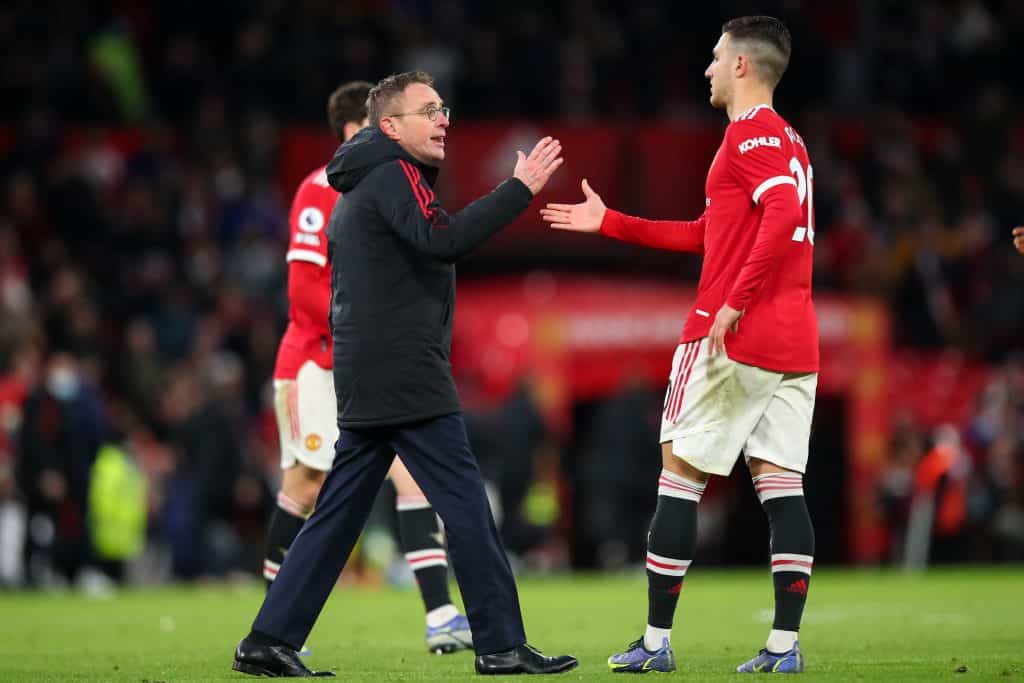
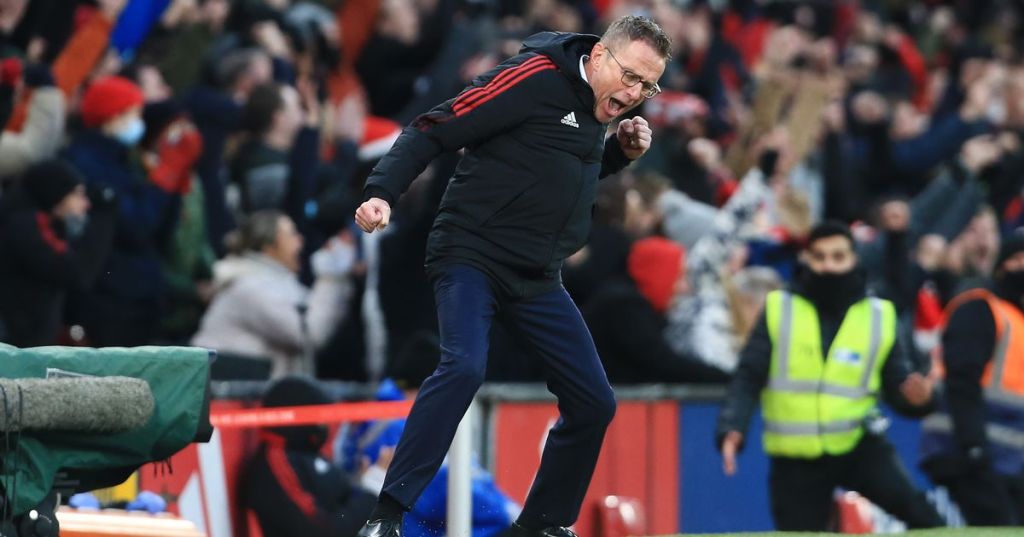
In just a couple weeks since Ralf Rangnick’s interim appointment, the uncertainty and doubts that swept through Old Trafford has been completely wiped away. The small changes and progression may be difficult to pinpoint from the outside looking in but, certainly the German tactician and revolutionary has already made quite a drastic impact within the United camp.

Finally the club possess a leader who can imprint a vision, philosophy and an intriguing style of play that has been somewhat lost on the red side of Manchester, while the blue half continues to capture the imagination of every football fan in the country, even those in support of United.

Despite their impressive third and second placed finishes under Ole Gunnar Solskjaer, there was still the feeling that Manchester United were missing that telling ingredient that immediately would catapult them to the same levels as their rivals Liverpool and Manchester City.

Well, those inside the Theatre of Dreams for Ralf Rangnick’s maiden match as Manchester United’s new interim manager were treated to a number of novel sights, especially on the tactical side. 

For starters, United played in a 4-2-2-2 shape. They pressed from the front and saw a different side to Fred, the much-maligned chaos merchant who scored the winner in a 1-0 victory over Crystal Palace.

More significantly, it was the sight an attack-minded full back marauding up the right wing, putting in piercing crosses into the box as well as providing a ruthless threat on that flank for the whole game.

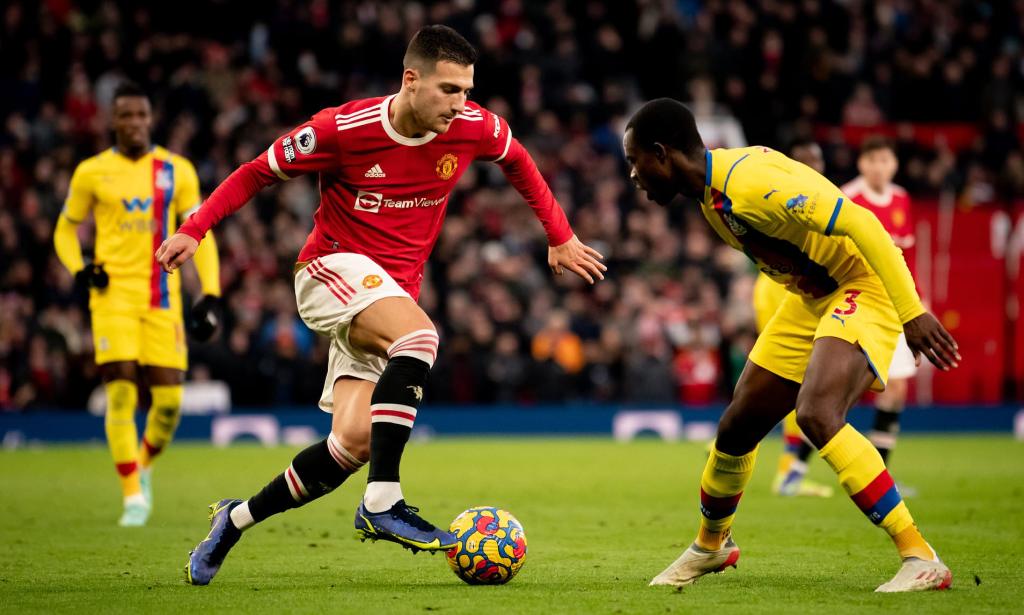
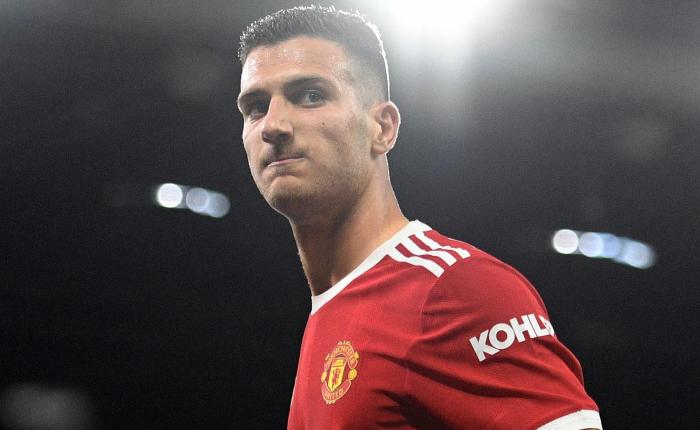
Under Solskjaer, that sight had simply gone amiss, with the Norwegian favouring the more defensive Aaron Wan-Bissaka in the position. Against Palace, Rangnick opted for Diogo Dalot instead and the transformation, balance and enthusiasm in United’s attacking play was stark.

As shown in Dalot’s individual stats against Palace, the Portuguese full-back proved a constant menace down that right-flank. For some 90 minutes, United fans thought they’d seen a reincarnation of the Old Trafford legend and former player Gary Neville.

Dalot as well as a rejuvenated Alex Telles, was pivotal to the way Manchester United played in Rangnick’s first match. Primarily, his role was to offer width and an outlet in a system that is otherwise narrow forcing play through the middle of the pitch. 

The Portuguese international was given a lot of space to stride into with out-an-out wingers Marcus Rashford and Jadon Sancho tucked inside, and offering threat in the half-space.

On top of this, Dalot proved a stunning supply line, passing the ball into the opposition penalty box five times, more than any other player on the pitch. He also made nine successful long passes, six ball recoveries and two successful crosses, putting in the sort of performance Rangnick cries out for from his full backs.

Manchester United’s performance had Rangnick’s fingerprints all over it, and it was quite considering he had a day’s worth of training to get stuck into his new job. The German has been hired to impose a new style of play a team that has been lacking such cutting edge front-foot football for a long-while and the full back position could be where we see the greatest changes between the Solskjaer-era and the new regime.

And this spells bad news for £50 million man Aaron Wan-Bissaka.

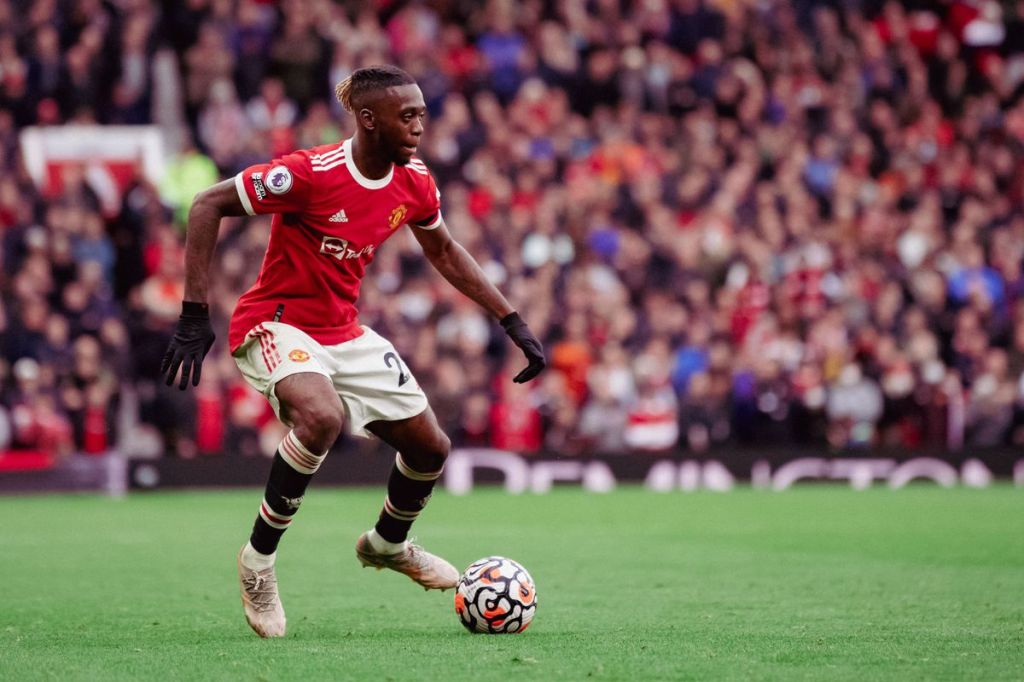
While there is no doubting the 24-year-old’s ability and defensive style as one of the best one-on-one defenders in the Premier League, he is supremely limited in his attacking output.

Wan-Bissaka has tried to adapt his natural game, but it’s clear that anything beyond the halfway line pushes him outside of his comfort zone. At times, he’s looked clueless, somewhat awkward and lacking in any real urgency when attacking in the final third areas.

That was the case in United’s latest game under Rangnick, their 1-1 draw against Young Boys in their final UEFA Champions League group stage bow. Diogo Dalot, who was rested for the game will have watched his English teammate’s performance and not feel threatened one bit.

Wan-Bissaka, who came in after missing the Arsenal game with a hand injury and after being dropped for the Crystal Palace match, had an evening to forget. The right-back unfortunately failed his audition in front of his new manager.

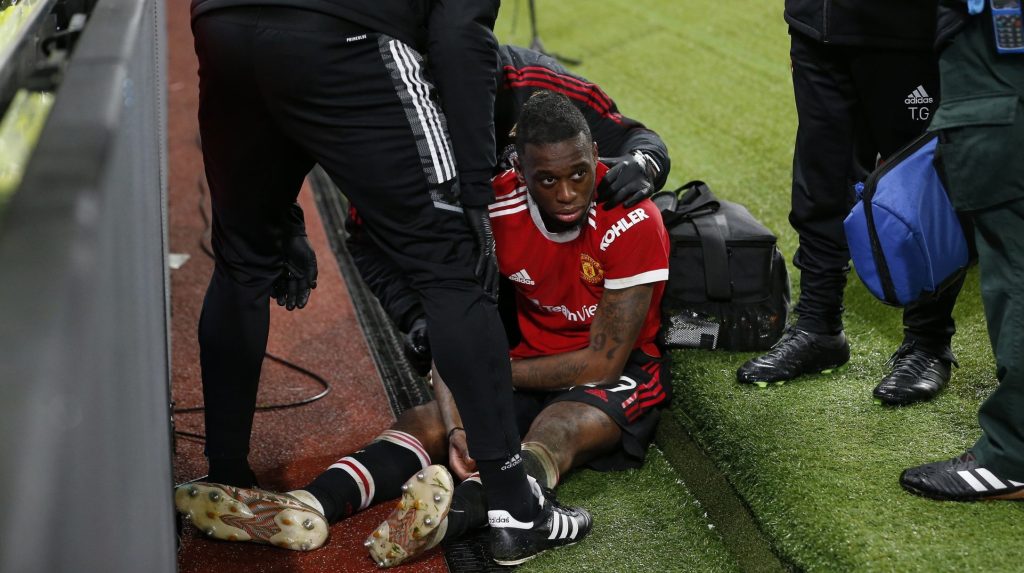
He received a bang to the face, another knock to his wrist and left the pitch on a stretcher after clattering into the advertising hoardings as he raced for the ball on the slippery surface in second-half stoppage time. It was a sorry sight for a player who has impressed on occasion, but doesn’t seem the reliable outlet United have needed and are crying out for when attacking down that right-flank.

Under Solskjaer, Wan-Bissaka’s limitations were masked somewhat due to the presence of a wide attacker, whether that be Mason Greenwood, Jadon Sancho or someone else, ahead of him on the right side. Simply stopping opponents from getting in behind often proved enough for the former Crystal Palace man.

It’s even gotten to a point where much of Manchester United’s opponents aren’t as worried or tested when Wan-Bissaka attacks down the right-flank. When Solskjaer’s team had the ball, they were almost forced to go down the side they felt weakest as a result of Wan-Bissaka’s frailties as an attacking full-back.

It’s also a position where United have fallen well behind their main rivals: Chelsea possess the qualities of Reece James, Manchester City have Joao Cancelo and Kyle Waker, while Liverpool possess the extraordinary creative abilities of Trent-Alexander-Arnold. It was simply no secret when Solskjaer was reportedly interested in the services of Atletico Madrid and England full-back Kieran Trippier last summer to provide the club with a much more complete and well-rounded full-back.

A failed move in which United had to make do with what they had.

Rangnick has a strong reputation for honing the skills of young players but the 24-year-old put in another ponderous and nervy display against Young Boys.

Wan-Bissaka, who was sent off in the reverse fixture back in September, failed to find a team-mate with any of his two crosses, did not play a single key pass and made the majority of his touches in deep areas.

His performance was the polar-opposite to the one Dalot put in at Old Trafford at the weekend, with the Portugal international showing he can excel in Rangnick’s preferred 4-2-2-2 formation.

With Rangnick at the helm, though, Manchester United will certainly need more dynamism from their full backs on both flanks. For Luke Shaw and Alex Telles, this won’t be much of a problem with both possessing the propensity to provide that telling impact in the final third.

Dalot, who’s attacking play has somewhat gone unnoticed at Old Trafford will add plenty to United’s new and reformed attacking play. The 22-year-old proved himself as a reliable option on loan at AC Milan last season and even forced his way into Portugal’s squad for Euro 2020.

So far in a matter of weeks, the 22-year-old has proven he isn’t out of his depth at this level.

For Wan Bissaka, the doubts still remain whether he can cut it at the elite level.

Wan-Bissaka has his qualities, of that there is no question. If humanity ever needs a sliding tackle or a vital block to save the world, then Wan-Bissaka’s the man. When it comes to one-versus-one defending, he is arguably the best in the country.

However, there are still facets of his defending that needs work, at times he too often drifts off when defending crosses from the opposite flank, and he hasn’t nailed down yet exactly when to press or hold his ground in a whatever shape United’s defence is taking, something Rangnick will be poised to help him solve.

Solskjaer and his coaching staff just did not have the qualities and skills to iron out the kinks in Wan-Bissaka’s game, but as we have seen already, Rangnick can spot a flaw and take the necessary steps to rectify it, he’s spent his whole career shaping young talents.

Certainly, Dalot has weaknesses in his defending too. Though, once Rangnick has United controlling games the way he wants, Dalot may not be tasked in fulfilling defensive duties as much as he has been previously.

In the attacking sense, Dalot is averaging an impressive 2.33 passes per 90 into the opposition box. Joao Cancelo is on 2.55; Trent Alexander-Arnold is averaging 2.76; Reece James’ average per 90 is 2.35. Wan-Bissaka’s stands at 0.69. He has attempted nine passes into the box in 13 starts this season; Dalot trails by two in just two starts and four substitute appearances, the differences where it matters most in attack are very clear.

The Portuguese international has also recorded 2.31 shot-creating actions per 90, while Wan-Bissaka sits at 1.62. Also Dalot averages more passes into the final third, more progressive passes, more passes into the penalty as well as crosses, exactly what an attacking full-back needs in his role. Dalot’s qualities supersede Wan-Bissaka’s in every sense of the role.

That’s one of the many reasons why Rangnick will continue to call on Dalot, as Manchester United’s permanent attacking full-back for now. Wan-Bissaka will almost certainly be given a chance to prove himself to Rangnick between now and the end of the season, but the pressure for him to improve his game really is on.

If the former Palace man doesn’t adapt his style, if he doesn’t absorb the exciting ideas and methods of his new boss, he may find his United career at serious risk.