Meet Cristhian Mosquera: The Next Elite Graduate From Valencia CF’s Prestigious Academy

Meet Cristhian Mosquera: The Next Elite Graduate From Valencia CF’s Prestigious Academy

Ask any football fan who the most famous clubs in the Spanish La Liga are, and they’d be sure to pick out the usual culprits: Barcelona, Real Madrid, Atletico Madrid and Valencia CF, who will arguably crop up approximately eight or nine times out of ten.

In fact, you won’t be surprised to find that most would name the latter more than the former.

The club from the southeastern Mediterranean coast of Spain has had many great squads and managers in its decorated history.

Remember some of their famous players, David Villa, David Silva, Santiago Canizares, Vincente, David Albelda, Juan Mata, Ever Banega & Pablo Aimar or in their past managerial department, Rafael Benitez, Claudio Ranieri, Ronald Koeman & Unai Emery?

Pretty glowing & decorated indeed.

Their peak was at the start of the 2000s when they reached two UEFA Champions League finals and won the UEFA Cup and La Liga in 2004 under Benitez.

Valencia CF celebrate winning the 2003/04 edition of the UEFA Cup under Rafael Benitez’s management.

However, the club fell into somewhat of a great depression because of a series of bad financial decisions and the 2008 financial crisis.

They never managed to recover and, therefore, were sold to investor Peter Lim.

In the early stages of the takeover, things seemed upward, with the club qualifying for the Champions League multiple times.

Under manager Marcelino, the team finished fourth in La Liga in consecutive seasons, 2017/18 and 2018/19, and even reached the semi-final of the UEFA Europa League in 2019, also winning the Copa del Rey that year.
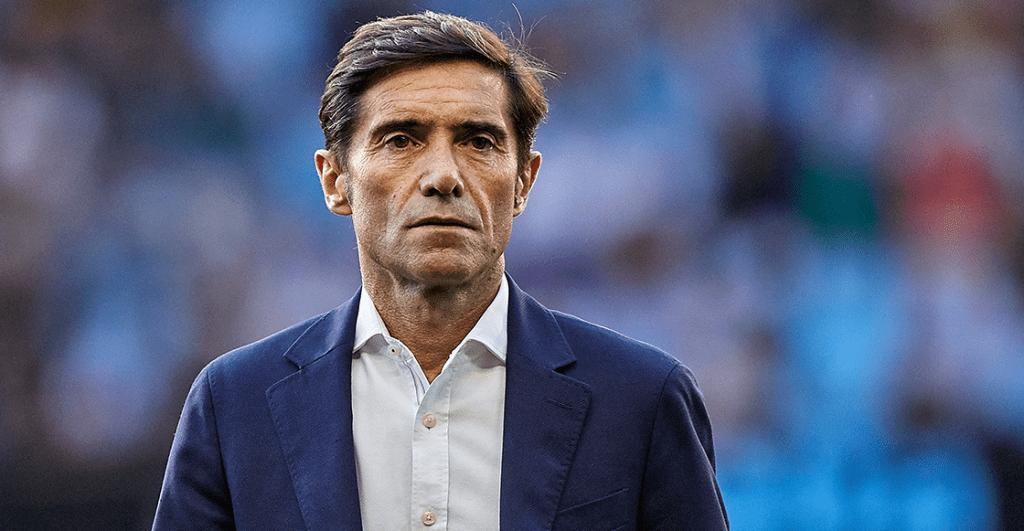
Marcelino guided Valencia to Spanish Copa Del Rey success in 2019 before being sacked the following season.

After that, Marcelino was fired by Peter Lim himself, and the club found itself in a downward spiral, being forced to sell star talent like Carlos Soler, Ferran Torres or club legend Dani Parejo and only being able to replace them for cheap or through their academy, which is one of the best in Europe.

Ever since Marcelino’s sacking, Valencia’s league positions have fluctuated, finishing 9th, 13th, 9th, 16th and 9th over the last five years whilst having to rummage through a handful of managerial appointments to find out its best fit, but to no avail.

The current 2024/25 campaign has proven to be arguably their most tumultuous.

After only winning two out of their last 24 league games, legendary Valencia midfielder Rubén Baraja was relieved of his duties as manager with the club steeped in the relegation zone.

At Christmas, desperate times called for desperate financial measures as they activated a release clause of between £3-4 million to acquire talented West Brom head coach Carlos Corberan. Four months on from that decision, Los Che have enjoyed an upward trajectory on the field.
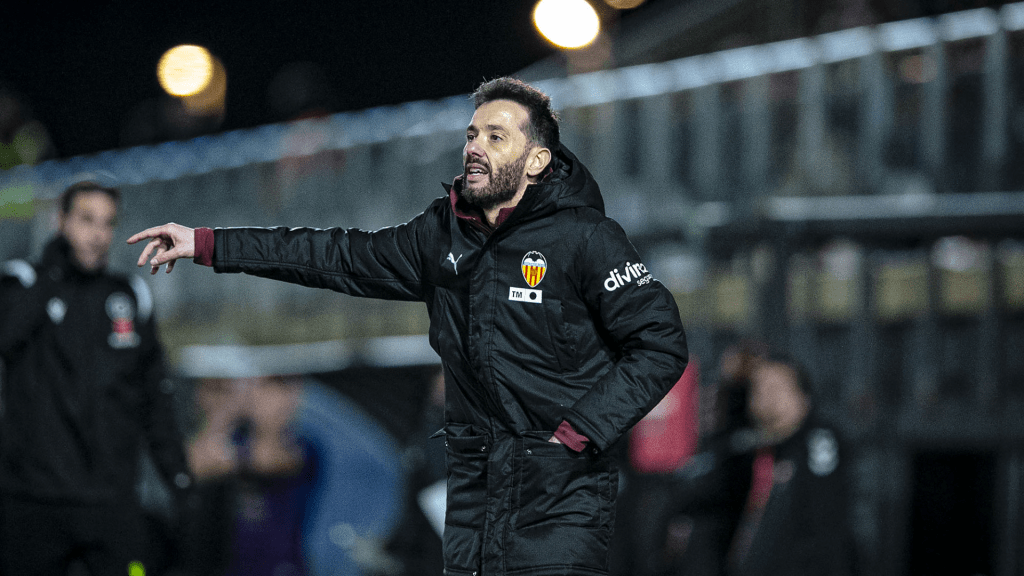
Former West Bromwich Albion coach Carlos Corberan has made a considerable impact at the Mestalla Stadium since his appointment in December.

At the time of writing, they’ve won the second-most points total (25) [Transfermarkt] of any club in La Liga since Corberan’s appointment, and now currently sit 14th in the table, seven points off the drop zone.

Since the Spanish coach took over at his dream job, Valencia have lost just four out of 16 games, against Real Madrid, Atlético Madrid and twice against Barcelona. They’re unbeaten against everyone else they’ve faced, and that’s down to Corberan’s impact both tactically and in his personable management.

Valencia also recently beat Real Madrid on their own turf – the first time they’ve done so since 2008 and their first away win of the campaign – another massive signifier of Corberan’s stellar impact at the Mestalla in just four months.
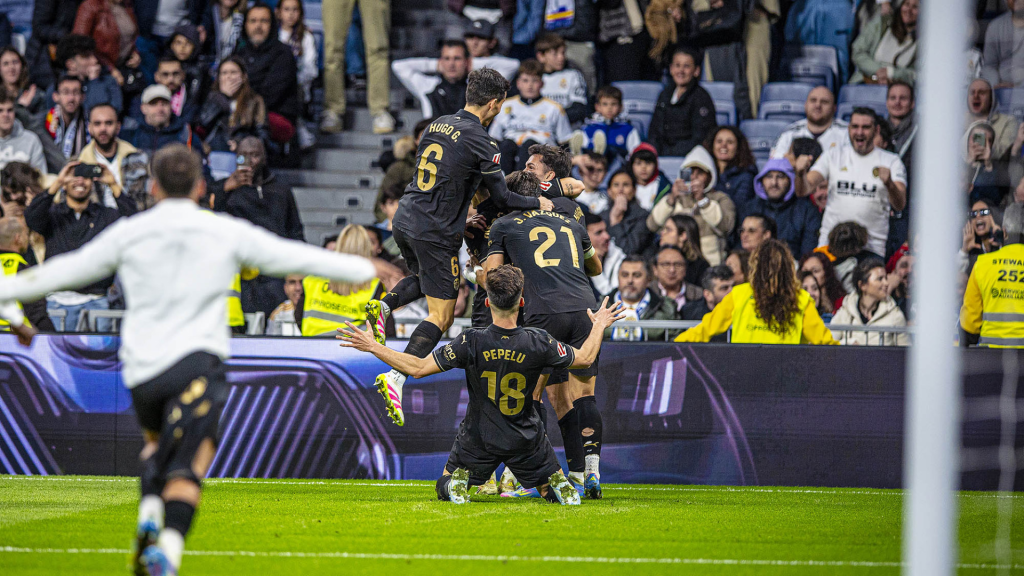
Even if the club’s off-field matters continue to plague the club’s standing amongst the elite in Spain and their reputation in Europe, their current form under Corberan is certainly providing a light at the end of an incredibly dark tunnel.

One element Valencia continue to find some sense of pride in is its flawless academy, with a number of their young talents currently thriving under Corberan’s tutelage.

Javi Guerra, Yarek Gasiorowski, Fran Perez, Jesús Vázquez and Diego Lopez are a few of their most exciting academy graduates, but one player arguably garnering the most attention both domestically and within Europe’s elite is young, uniquely gifted centre-back Cristhian Mosquera.

The current campaign is Mosquera’s second as an established first-team player at Valencia, and he is already showcasing why he is considered one of the most complete young centre-backs in Europe.

As a result, he’s attracting a whole host of interest with the likes of Barcelona, Real Madrid, Juventus, AC Milan, Bayern Munich, Liverpool and AS Roma all rumoured to be casting an eye on him over the past year.

It won’t be long before the Spanish under-21 international is Valencia’s next big sale in the transfer market. So, how has the 20-year-old gotten to this stage in his career & what will he offer potential suitors?

Who is Cristhian Mosquera?

The story of Cristhian Mosquera starts in Alicante, Spain, a coastal city in the south of the Valencian Community.

He was born to Colombian parents and, at a young age, picked up the sport of basketball instead of football.

Mosquera grew up during the NBA’s global rise when Pau Gasol was winning championships with the late Kobe Bryant.

Given the Spaniard’s height and physique, it’s no surprise to find that he could well have been donning an LA Lakers jersey rather than a Valencia CF had he gotten his own way.

But it was on a Futsal pitch where Mosquera started, developed and honed the unique footballing qualities that we see in his game today.

He joined a local youth team for the sole reason that his cousin played for the team, and they needed a player due to being a man short.

Whatever happened during that period certainly persuaded Mosquera to try out a full eleven-a-side pitch, and it all led to him making his move to the Valencia CF youth team.

He then moved up the ranks quickly, making his full first-team debut in a January 2022 Copa del Rey victory over CD Atlético Baleares.

At 17 years, 6 months, and 23 days, Mosquera became the eighth youngest debutant for Los Che in their club’s history, as well as the youngest ever centre back.

Since then, the now 20-year-old has become the bedrock and heartbeat of the club’s defensive line ever since his La Liga debut against Sevilla in 2022, continually growing and developing to become one of Spain’s most prestigious young footballers.

He’s yet to feature for Luis de la Fuente’s European champions, continuing his development and maturity for the youth teams, but it certainly won’t be long before he’s performing at the highest level not only at club level but for Spain.

However, Mosquera also holds a Colombian passport, making him eligible to feature for Los Cafeteros should he find his opportunities for the Spanish senior side limited.
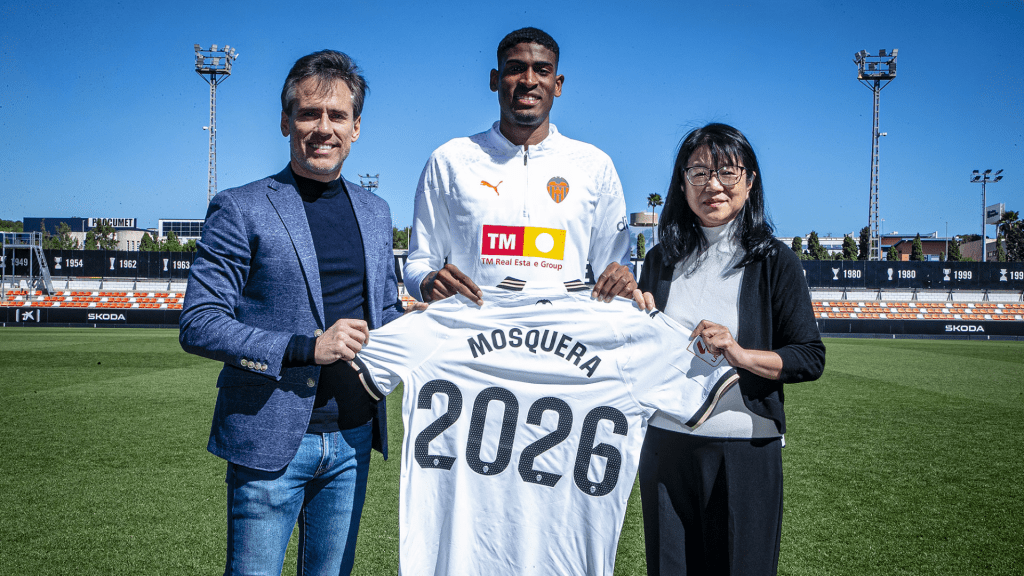
So far this campaign, he’s clocked just under 3000 minutes of football for Valencia. Last season, he registered 3,252 minutes, highlighting his incredible durability and availability for the club- a unique characteristic that elite clubs will be looking for when trying to sign a young, reliable and workaholic centre-back.

Mosquera, without a shadow of a doubt, will fit the bill for several of Europe’s best.

Dissecting the Cristhian Mosquera Hype / Style of Play

There’s the old saying, ‘Never judge a book by its cover, ‘ but in Mosquera’s case and for the sake of this analysis piece, we simply have to go against the old adage because the Spaniard’s cover arguably makes up for his exceptional footballing gifts.

At face value, when looking at the 20-year-old, the first characteristics you’d notice are his striking physical attributes.

Standing at 6’2″, Mosquera commands attention with his impressive physique and striking presence. With broad shoulders, a lanky frame and a solid build, he resembles a centre-back that could have been designed in a lab to meet the ideal specifications of modern football.

The Los Che academy graduate embodies the quintessential traits of a contemporary centre-back, perfectly blending physical prowess with a refined understanding of the game.

Mosquera’s height and strength enable him to dominate in aerial duels, while his keen tactical awareness and agility add to his imposing on-field persona.

Antonio Rudiger Regen?

The young Spaniard is drawing compelling comparisons to the formidable Real Madrid centre-back Antonio Rudiger.

Each match you watch intensifies the similarities, revealing a blend of poise, strength, and tactical awareness that echoes Rudiger’s commanding presence on the pitch. The parallels in their playing styles are becoming increasingly striking and undeniable, adding depth to the admiration for this emerging talent.

Should Real Madrid be looking at potential Rudiger replacements in the near future, Mosquera should certainly be at the top of their list.

Like the German, Mosquera is a commanding presence, a true backline leader, and an unstoppable force and given his knowledge and understanding of the Spanish top flight, he’d fit right in at the Santiago Bernabeu.

There’s a reason Mosquera is highly regarded amongst Europe’s elite, and before we can delve into his attributes/abilities, let’s see what the stats say.

Stats a fact

Immediately, two attributes stand out for Mosquera: defensive action volume and duel success rate.

The defensive actions component is encouraging but can be influenced heavily by possession, and with Valencia sitting 14th in the La Liga for possession of the ball [FBRef] this season, it explains a good bit of his success. 

Los Che under Carlos Corberan have improved considerably defensively. Their freak 7-1 defeat to Barcelona in late January should arguably be considered an outlier since the change in management.

The only other time they’ve conceded more than twice in a game since then came in their 3-0 defeat to Atletico Madrid a month later. Yes, it’s only hypothetical, but if not for those two results, Valencia would hold one of the best defensive records in the league since the turn of the year.

Corberan has moulded and shaped Valencia into a more dogged, organised and determined defensive unit, just like he did for Sky Bet Championship side West Brom during his tenure in Birmingham. Los Che may not have the ball all the time, but they are well-versed in controlling their opponents regardless.

Throughout his tenure, the Spaniard has alternated between 3-4-2-1 and a 4-2-3-1 formation, with his wingers dropping back out of the 4-2-3-1 to form a back-three with two wing-backs early on.
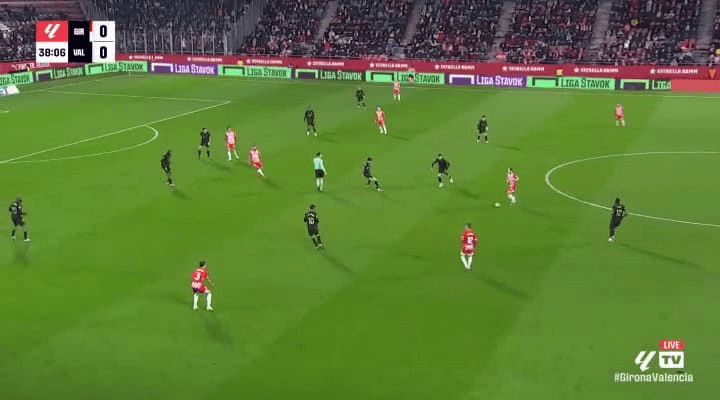
In the above image, we can see their defensive shape up against Girona with five defenders forming the last line with the three centre-backs, including Mosquera, and the wing-backs marking Girona’s attackers.

André Almeida and Diego López, the attacking midfielders or wingers per se, are dropping to the height of the two central midfielders to create another line in front of the defensive line.

This line is focused on defending the centre of the field and is aligned to cover the gaps in Valencia’s backline.

Mosquera’s role [the second to last man – from right to left – in the Valencia backline] is to engage and track his marker in front whenever the player receives in between the lines but also he’s tasked in sweeping up any loose balls in his zone while also providing strong coverage to the central centre-back César Tárrega.

This campaign, he has been instrumental for Valencia, contributing to seven clean sheets so far. His defensive prowess is evident, as he averages 1.1 interceptions and 1.4 tackles per match. Remarkably, he recovers an astonishing 5.4 balls and has been dribbled past a mere 0.3 times. With 3.1 clearances per game, his impact across the defence is undeniable, mastering the art of last-ditch, timely defending.

You’ll find in this article that Mosquera is, in fact, a pleasing-on-the-eye modern-day defender due to his progressive and unique attributes in possession, but he’s also

Wide Defending/Coverage

Mosquera stands out due to his remarkable versatility and positional intelligence. He exudes confidence as he seamlessly navigates any position across the back three.

His extraordinary focus and keen sense of anticipation allow him to read the game with uncanny accuracy, often predicting threats before they materialise. Coupled with his striking physique—tall, lean, and agile—he showcases surprising quickness over short distances, making him a formidable presence on the pitch.
The Alicante-born colossus has so far won almost 70% of his ground duels, again highlighting his dominance when engaging in duels. Amongst centre-backs in Europe’s top five leagues, he ranks in the top eight per cent for balls recovered per 90.

As pointed out previously, he is so comfortable sitting in one of the wide centre-back roles either on the left or on the right.

Mosquera showcases an impressive versatility on the field, displaying no bias toward his dominant right foot. This means that despite being right-footed, he skillfully patrols the left side, seamlessly tracking and engaging with attackers. Whether they attempt to race past him on the outside or cut inside toward his stronger foot, he stands unfazed, ready to counter their moves.

His one-on-one defending ranks among the elite in his position. With a powerful, athletic build, Mosquera exudes an imposing presence that poses a formidable challenge for any attacker, no matter their speed or finesse.

At just 20 years old, he faces each defensive situation with a blend of confidence and authority that belies his youth. His adeptness is particularly evident in his wide defending, where he showcases both poise and precision, making him a critical asset to his team’s defensive line.

In the defensive situation below, Mosquera is faced with an opponent who thinks he can get the drop on him by bringing him over to a tight situation…

The Spaniard’s body positioning to read the danger and what comes next is excellent at first…
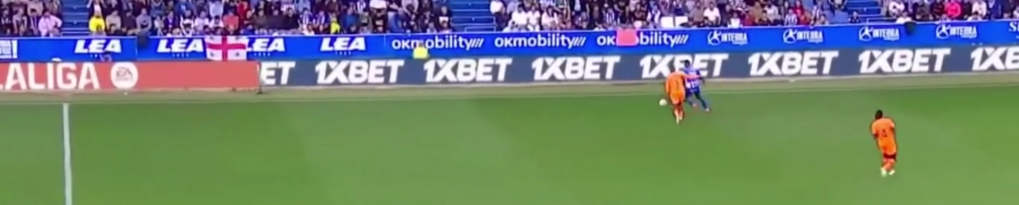
However, it looks like he’s engaged the situation too early. Rather than standing goal side and not allowing him room to drive the ball towards the goal, he attempts to retrieve the ball on the wrong side.

The Spaniard recovers expertly.

The attacker may have got a yard on Mosquera because of him engaging early, but the 20-year-old uses his strength, anticipation and speed of thought to get himself goal side, marshal his opponent off the ball..

… snuff out the danger and take control of the situation.

He is excellent at matching his opponents for pace, standing up to them with his lanky and striking frame before possessing the quickness of thought and anticipation to read what his opponent will do next.

But as shown above, even when a situation appears hopeless, the Spaniard demonstrates quick thinking, speed, and agility to recover and eliminate danger.

Unbreachable force in the box

Without a doubt, the most important expectation or responsibility of a centre-back is being able to safeguard the penalty area and control central positions on the pitch. Mosquera exemplifies this duty with remarkable finesse and authority.

His defensive nous is characterised by an uncanny ability to intercept passes and foreshadow the moves of opposing attackers, often positioning himself as a formidable barrier against advancing forwards.

With a keen eye for the game, he reads situations meticulously, anticipating threats and stepping in decisively to thwart them.

Mosquera’s commanding presence instils a sense of confidence in his teammates, as he consistently organises the defence while ensuring that no opposing striker can find a comfortable passage into dangerous areas.

As pointed out in this piece, Valencia are a much more dogged, organised and stout defensive unit under Carlos Corberan, with Mosquera becoming one of the focal points of their recent success under the former West Bromwich Albion coach.

The Spaniard’s frame, size, incredible physicality, aggression, and striking athleticism make him an immovable object at the heart of the Valencia defence.

Opposition attackers simply don’t like coming up against him in the box because he’s so hard to bypass. He’s a defender who loves to defend via winning his individual duels, battling up against the strongest or quickest #9s, sweeping up loose balls in front of or behind the back-line, or just simply becoming literally the last line of defence.

His impeccable timing in last-ditch tackles and clearances underscores his commitment to protecting his territory.

In the instance below, Mosquera and his defensive teammates face an attacking threat. One pass to the attacker on the Spaniard’s right shoulder and he’d be in through on goal…

It’s important to note, though, that Mosquera’s positioning in this scenario is excellent. He has a view of the play and threat before him and is aware of the threat behind him…


…because of that, he’s perfectly able to intercept the pass and get Valencia on the attack.

In the defensive scenario below, the opposing attacker looks like he’s got the run on Mosquera and looks through on goal…

…but such situations don’t seem that relatively easy and plain-sailing when the 20-year-old is around. The Spaniard is quick, agile, and confident enough to stop the attacker getting a shot on goal…
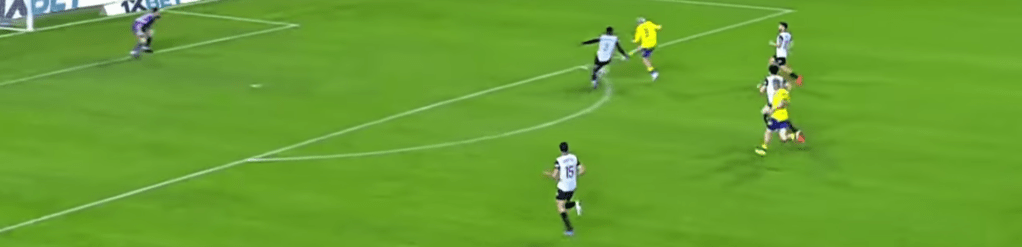
Any kind of threat being formed in the Spaniard’s vicinity, he is always there to mop it up and deal with it.

An example of his excellent last-ditch defending through blocks is shown below.

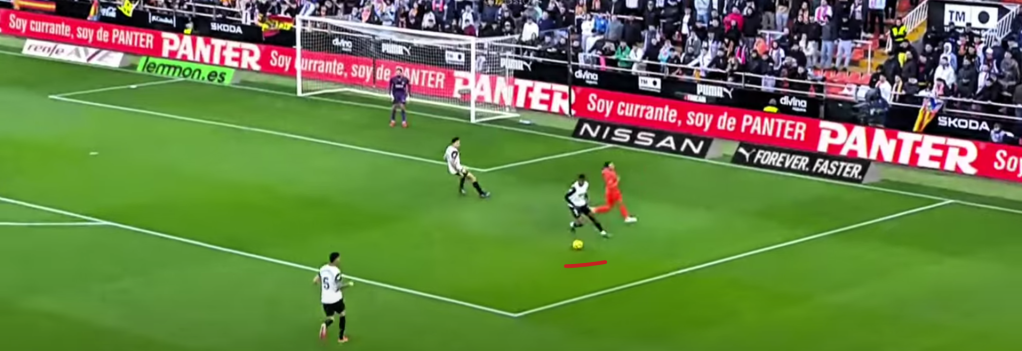
The opposing attacker (ORANGE) has all the time and space in the D outside the penalty area to line up a shot on goal…
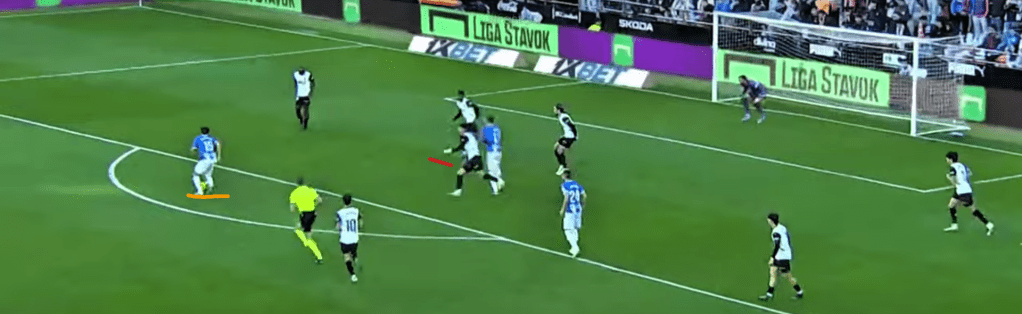
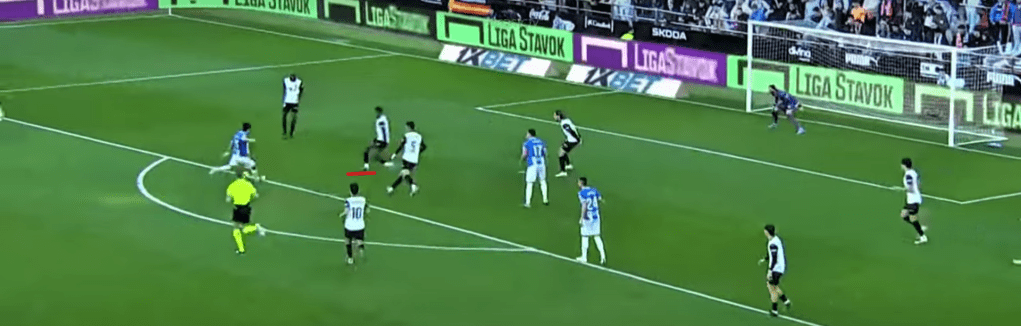
…but look at how quick Mosquera gets out to his man to stop him having an easy route to goal. His imposing frame and size, instant anticipation and reading of the situation completely diffuses the situation.

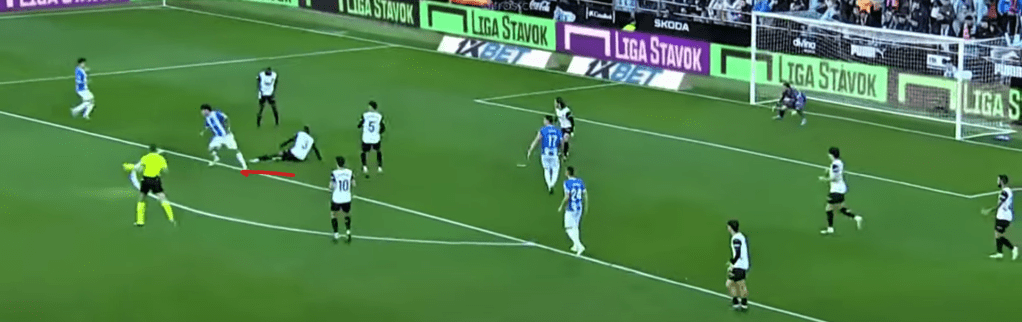
Take a look at the next example of Mosquera’s box defending, which is just as impressive.

The Spaniard is literally Valencia’s last hope as three of his teammates have been taken out of the scenario with a piercing run into the penalty box by an onrushing attacker…
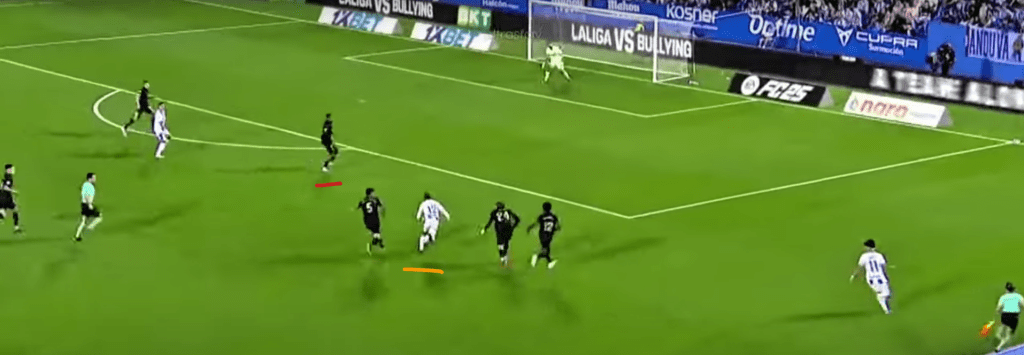
However, as he approaches the box, his line of sight on goal decreases, once again because of Mosquera’s imposing frame, athleticism, speed and defensive reading…
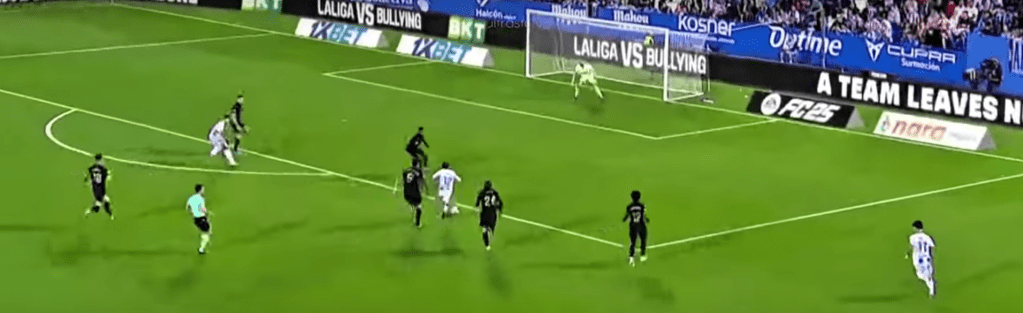
The attacker tries to position himself to get a shot off, but Mosquera’s is always primed and ready to engage…

… and he does, blocking the shot and completely dispelling the danger.
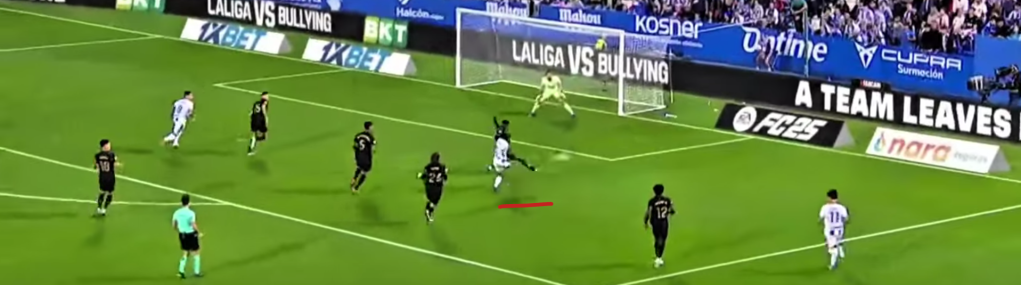
Critics could argue that it’s a situation which many defenders should be dealing with, but trying to anticipate what an attacker does in that moment, whilst also possessing the presence of mind and quickness to follow the speed of the situation, is incredibly difficult.

But Mosquera makes it look relatively easy.

When faced with a striker playing with his back to goal, Mosquera stays tight and uses his size, strength and defensive nous to stop that forward getting any room for manoeuvre. When faced with a dangerous low cross into his penalty area he is, nine times out of ten, always the first one to deal with the cross.

For example, looking at his positioning below (RED).
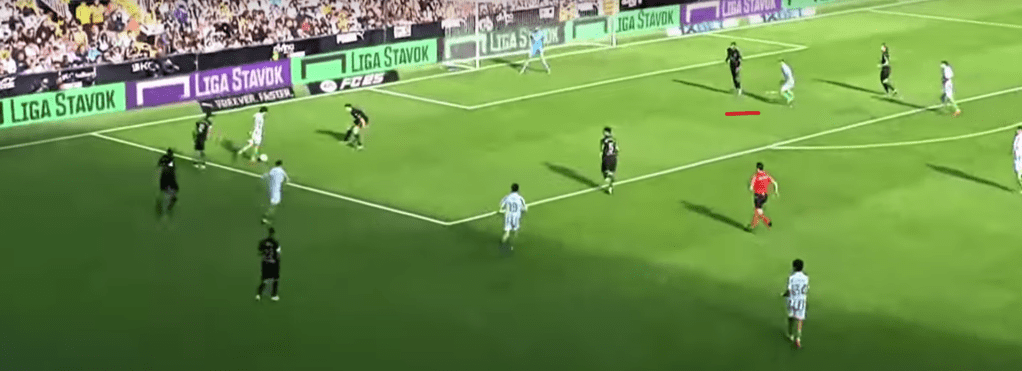
Mosquera is positioned well and has excellent body alignment. He has a clear view of the ball as well as a complete view of his marker, which allows him to anticipate their efforts to get ahead of him for a potential cross.

Such defensive and positional understanding means he is primed and ready to deal with the cross…
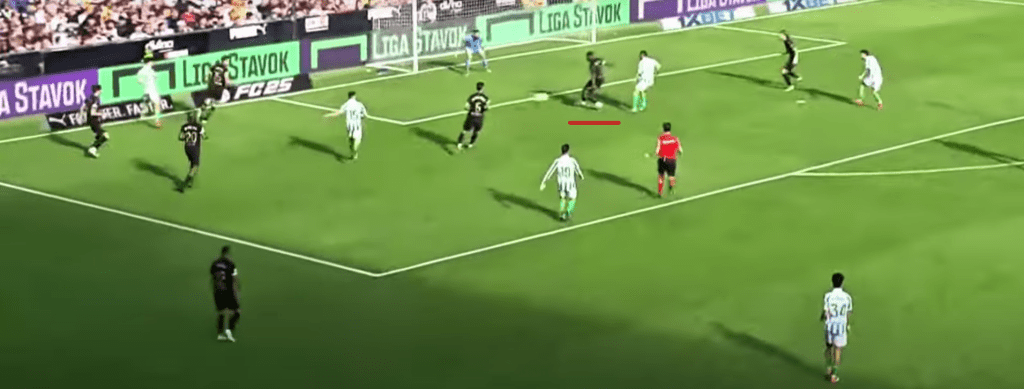
What about dealing with situations when running towards his own goal? Well, you probably know the outcome.

In the instance below, once again, Mosquera’s positioning here is really good. He’s aware of what’s around him.

The player with the ball has a lot of space in behind Valencia’s defence to play a through pass for his teammate on Mosquera’s left shoulder…

Mosquera’s speed, positioning, anticipation and reading are once again put to the test, but it’s a test he passes with flying colours.

He’s always in control of the situation, and that’s down to his flawless speed when covering large spaces and also the speed at which he eats ground.

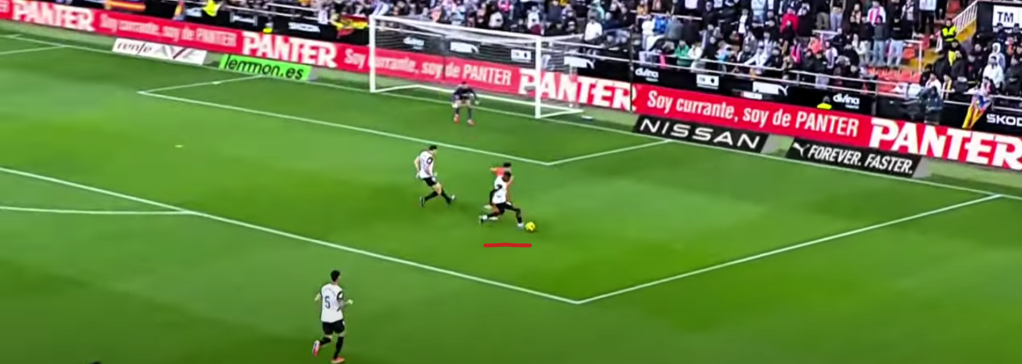
If the Spaniard had dabbled in a sport beyond basketball before his football career, one would inevitably envision him sprinting in the electrifying world of athletics or track and field.

With his explosive speed, athleticism and striking frame, he could undoubtedly rival Usain Bolt, making the race a breathtaking spectacle.

In any defensive situation, Mosquera is more than capable of fulfilling his responsibilities.

At just 20 years old, having such confidence, poise and decisiveness in his defending is truly remarkable and illustrates the journey and trajectory towards greatness that Mosquera is currently on.

The Art of Recovery

Mosquera’s prowess in recovery defending is undoubtedly one of his standout features, showcasing an impressive blend of athleticism and tactical awareness.

There are moments when the Spaniard’s eagerness to thwart onrushing attackers can lead him to leap out of his defensive line, passionately striving to eliminate the threat. While this intensity demonstrates his commitment, it can sometimes leave both him and his teammates vulnerable to counterattacks, creating gaps that opponents can exploit.

However, what truly elevates a centre-back to elite status is the ability to quickly reassess and respond to dangers that arise after making a miscalculation—whether that’s his own or due to a teammate’s error.

Take, for instance, elite centre-halves like Rudiger or Liverpool’s Virgil Van Dijk, who embody this skill with remarkable finesse. They possess an uncanny ability to read the game, allowing them to recover seamlessly and mitigate threats, turning potential crises into manageable situations.

Mosquera, with his keen instincts, aspires to master this crucial aspect of his game, positioning himself among the top young defenders in Europe.

As mentioned previously, the Valencia academy product possesses incredible athleticism and speed; the way he eats ground when matching an attacker for pace is a phenomenal sight, utilising these attributes consistently to his advantage when eliminating threats or getting his team out of trouble.

In the below instance, the Spaniard is caught out by a long ball, hoping his teammate Dimitri Foulquier bails him out of trouble..
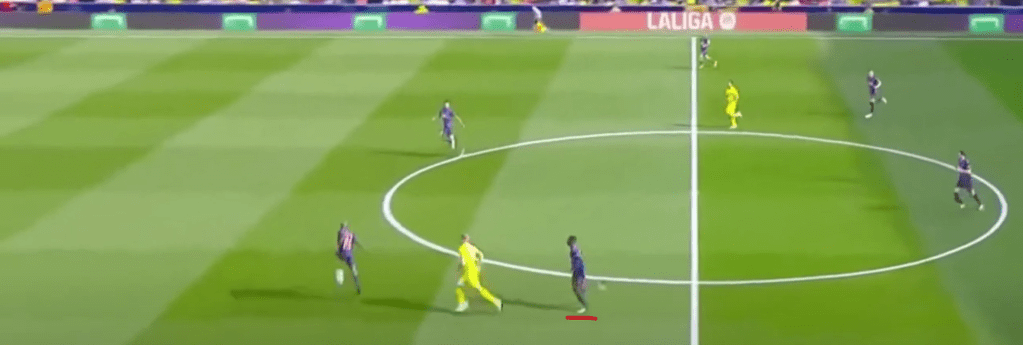
Foulquier fails to get rid of the ball, which squirms under him, giving the opposing attacker a chance to take advantage…

However, look at Mosquera’s recovery.

What seemed like a lost opportunity for the Spaniard to deal with the danger, he more than makes up for, rapidly eating up ground through excellent speed and agility and locking himself in a duel with the attacker…
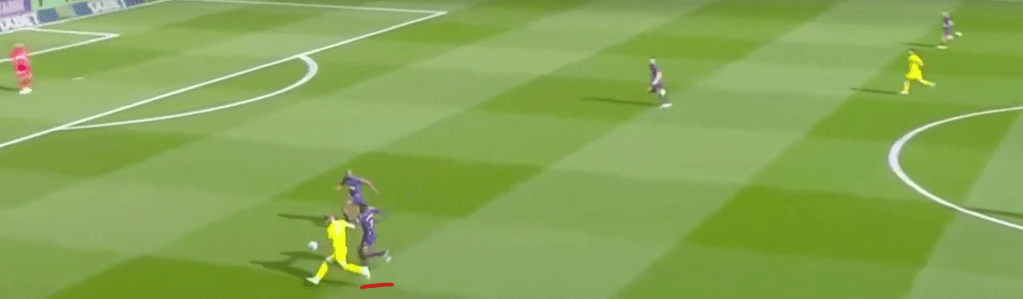
A duel Mosquera wins with relative ease and confidence…
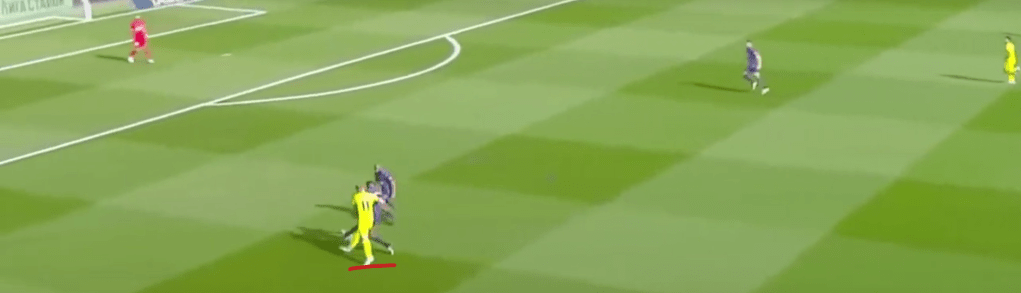
In another instance, against Atletico Madrid, Mosquera gets caught out of position with Antoine Griezmann, given ample time in between Valencia’s midfield and defence to exploit the gap in the last line and pick out Memphis Depay…
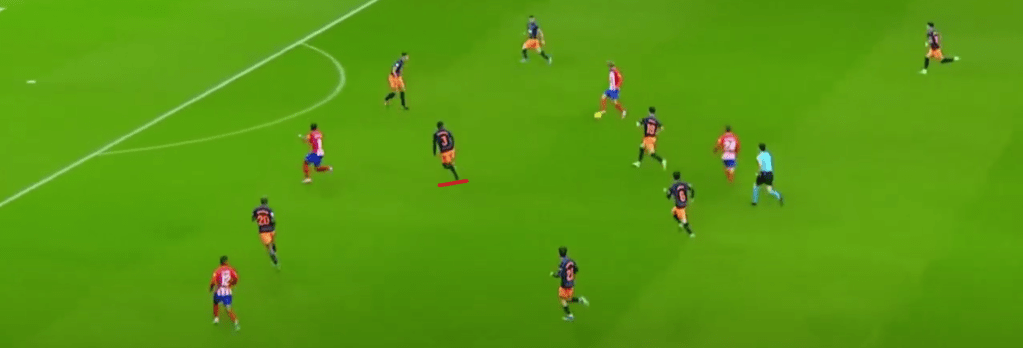
The Dutchman looks like he has all the time in the world to take his chance on goal, but once again, Mosquera bears down on his opponent quickly and precisely…

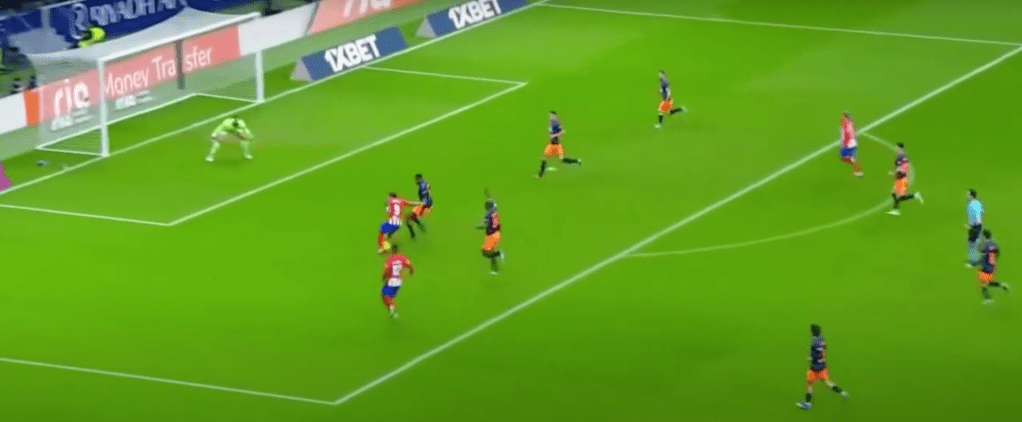
Instead of going for a left-foot shot, Depay tries to chop back onto his right – a skill he’s done time and time again throughout his decorated career – but Mosquera reads it brilliantly, deflecting the ball off his opponent for a goal kick.


The Spaniard is excellent at reading situations and dealing with them, but he’s also become a master at quickly rectifying individual mistakes due to his tremendous anticipation, athleticism and defensive awareness.

As of matchweek 31 in La Liga 2024/25, Mosquera recorded the most ball recoveries (180) of any player in the Spanish top-flight (ValenciaCF.com)

While many critics may insist that Mosquera must eliminate the occasional lapse in judgment—like the mistakes noted earlier, reminding us that it’s often better to prevent problems than to solve them—it’s important to recognize that these experiences will only serve to enhance the growth and development of the Los Che academy graduate.

Every error is a stepping stone on his path to becoming an even more formidable defender. Every defender makes mistakes, though, it’s almost part and parcel of the job description, just ask some of the best around, like Van Dijk or Antonio Rudiger. It’s how a defender responds in that moment to rectify them, or after the deed has been done, that defines their legacy.

Mosquera is certainly well on his way to writing his own given his stunning trajectory since his emergence on the scene, but still has a long way to go given he’s only 20 years of age.

Aerial efficiency or deficiency?

Aerial duels stand out as a significant concern in his overall performance profile, a point of worry that persists even when factoring in his age. Typically, athletes experience improvement in their aerial skills as they mature, which aligns with the natural biological progression of the human body.

During the teenage years, athletes undergo substantial physical development, and this maturation process continues well into their late 20s.

When we look at Mosquera’s aerial statistics, the situation becomes even more troubling. He consistently ranks among the lowest in the category of aerial duels won per 90 minutes across Europe’s top five leagues, placing him in the bottom six percentile among his positional counterparts.

This statistic is particularly perplexing, especially considering his impressive physique and athletic build. He possesses a long, rangy frame that suggests he should excel in aerial contests. Additionally, he demonstrates remarkable leaping ability for someone of his stature, often appearing poised in the air. Despite these physical advantages, he tends to be more effective at making crucial connections while defending against early crosses, ensuring he often gets the first touch.

As previously noted, his ability to read the game is already highly developed, showcasing an understanding of positioning and timing that belies his youth. His jumping prowess inspires confidence that he should be a strong contender in aerial situations.

Despite the current statistics falling short of expectations, it is important to remember that at just 20 years old, Mosquera has ample time to refine his skills. With continued development, he will likely rank among the elite in aerial defending, transforming potential into consistent performance.

Ball-progression/passing

In the modern game, the role of the centre-back has evolved dramatically. These defenders are now not just stalwarts of the backline; they are pivotal playmakers who initiate attacks from deep within their own half. The expectation is to exhibit exceptional passing abilities, allowing them to seamlessly transition from defence to offence.

In addition to technical prowess, modern centre-backs must possess keen tactical awareness, demonstrating the ability to read the game and make split-second decisions, even under immense pressure when their team is building from the back. They must exhibit keen confidence on the ball, composure and good pass selection to seamlessly get their team into the attacking phase of play.

Valencia are not known for being one of the possession-focused teams in La Liga, and they rank among the lowest in terms of time spent on the ball as a collective unit. Therefore, evaluating Mosquera’s passing ability may not provide a complete picture.

However, according to the statistics, the Spaniard is a safe, low-risk passer. He ranks in the 44th percentile among centre-backs in Europe’s top five leagues for progressive passes per 90 minutes, indicating he falls into the lower bracket for this particular attribute. There is a case to argue that the system deployed at Valencia may be the cause for him not being as progressive as he should be.

Once he makes the move to an elite side in the near future, those progressive attributes may be exerted with much more confidence and comfort.

Nonetheless, Mosquera excels in pass completion percentage, ranking in the top 15% with a remarkable completion rate of 90.9% over the past year.

Just because Mosquera may not exert as many proactive qualities in his passing at Valencia, given his deceptive technical acumen, doesn’t mean he isn’t a progressive outlet.

The Spaniard is proactive through other means and arguably the rarest attribute for a centre-back, his dribbling/ball-carrying.

If the situation presents itself, the 20-year-old possesses the presence of mind, athleticism and excellent ball control to travel with the ball at his feet to force his team up the pitch or evade a tight situation.

Like the instance below…

Mosquera, playing for the Spanish under-21s, has the ball deep in his own half with an onrushing attacker attempting to press him and force a mistake.

The Spaniard can’t pass to his teammate alongside him as he is also being pressed. He may have to switch it across to find a teammate in space…

Instead, Mosquera does exceptionally well to con and evade his marker with excellent body deception and movement…
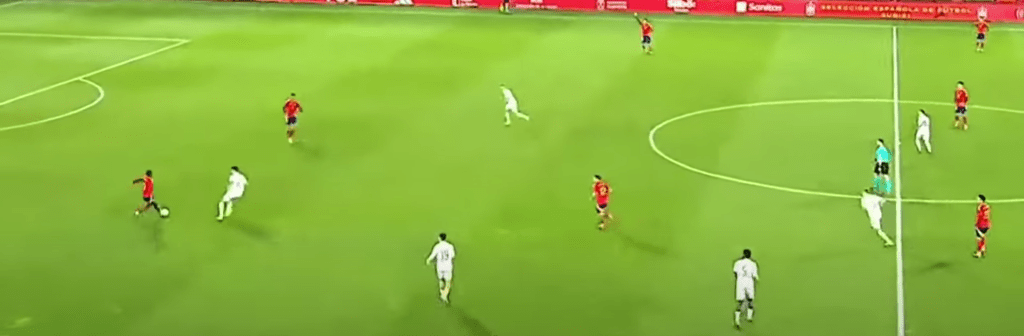
…opening up a passing lane to find his teammate in midfield, aiding ball progression by working around the opponent’s press…


In another similar instance, Mosquera holds the ball in a pressurised situation..
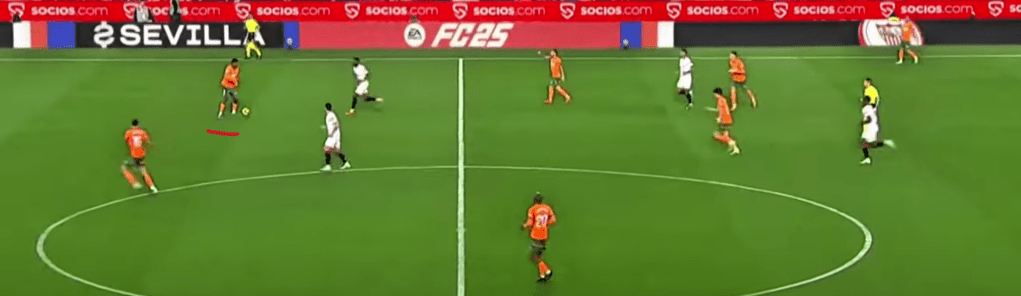
…but has no problem bypassing his opponent, showing him one way before shifting the ball quickly the opposite way and driving forward…
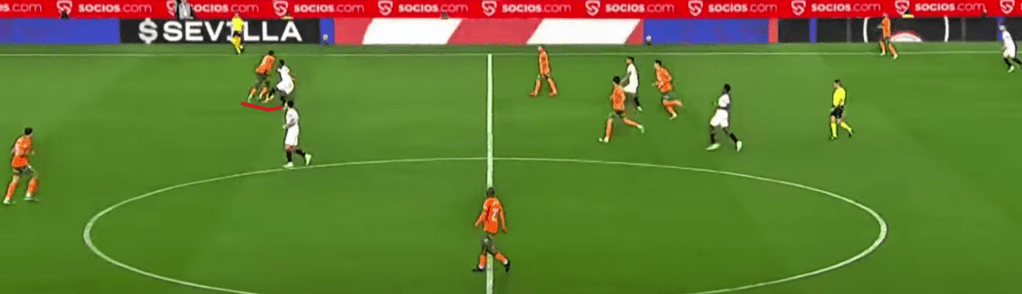
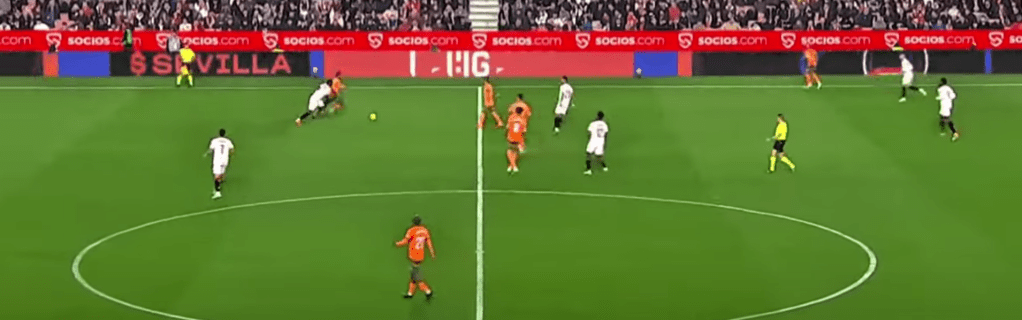
The Spaniard then has to pick his pass right, but isn’t given the best of options to aid progression, with his teammates all bunched up in the same vicinity, but it’s no problem…

He drives forward a few yards more…

…before picking out his attacking teammate in a bit of space to build an attacking scenario.
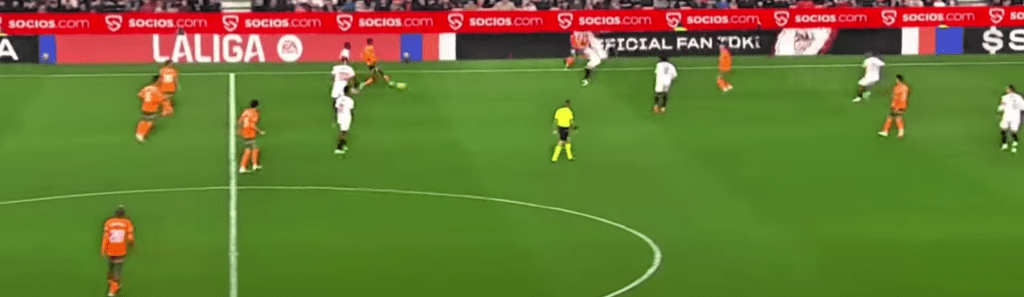
Mosquera’s dribble take-on success rate stands at 63%, which is a very decent mark for a centre-back ranking in the 69th percentile, showing he is more selective when he dribbles the ball out with his feet, choosing to take players on and carry the ball when it is most opportune.

Again, the above instances are only too small a sample size to fully judge Mosquera on, but it’s a small indication that he holds all the attributes to be a top-level progressive centre-back, capable of getting the ball forward quickly through quick thinking and incisive decisions once being pressed.

Future Mosquera Forecast

In a matter of two seasons, Cristhian Mosquera has already established himself as one of the best defenders in La Liga.

Boasting a formidable physique, exhilarating athleticism, and lightning-fast speed, Mosquera is an immovable force at the heart of defence. His remarkable physical strength and astute defensive awareness set him apart as the quintessential modern-day centre back.

It’s no wonder that he is frequently compared to the likes of Antonio Rudiger from Real Madrid, as both share an impressive ability to dominate their opponents and command the defensive line with authority.

And the way his current trajectory is heading right now, it won’t be a surprise to see the Spaniard surpass the former Chelsea man.

At 20 years old, he’s already got some of Europe’s biggest names tracking his progress at the Mestalla Stadium, including AC Milan, Juventus, Atletico Madrid and FC Bayern Munich (Sky Sports journo Florian Plettenberg).

Judging by the way he’s excelling so far, especially under Carlos Corberan’s management, he’d certainly fit right in at any of those clubs.

When considering the potential of a young talent like Mosquera to integrate into elite football clubs, it’s essential to analyse the tactical frameworks employed by these teams.

Each club’s style of play, formation, and player roles can significantly influence whether Mosquera can flourish in that environment.

A club like Bayern Munich is certainly more progressive and positional focused than the others, but the Spanish youngster has shown he can fulfil the role of a progressive centre-back. At a club like Atletico Madrid, where Diego Simeone expects his CBs to dominate their box, be physical up against the markers, and defend at all costs more than a progressive outlet, Mosquera certainly fits the bill.

Whatever role you want Mosquera to fill, he’d have no problems acclimatising himself.

In a back three as a wide-centre-back or a central one or as one of the two centre-backs in a back four, the Spaniard is incredibly versatile and adaptable, making him one of the most attractive options in the market for any potential suitor.

He will certainly need to continue to make giant strides in his passing and aerial duels, but there is reason to believe all three areas will improve as his play evolves. 

It won’t be long before we see this incredibly gifted young talent playing at the highest levels, both at club and on the international stage. When coming through Valencia’s academy, that’s certainly the expectation for its young academy products, as seen throughout the club’s decorated history.

Mosquera is up next and ready to take that giant step towards the elites.
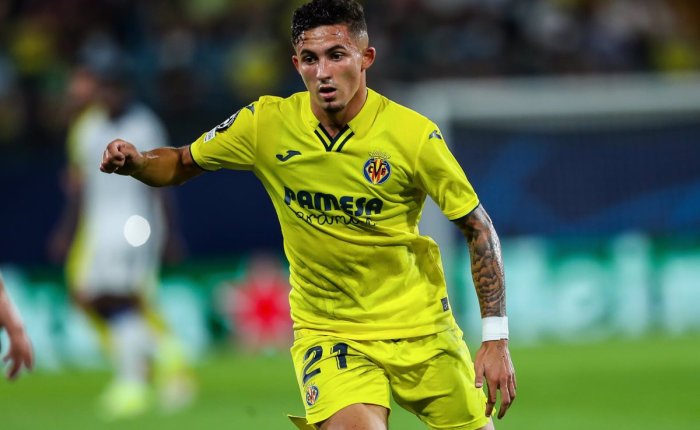
Yeremi Pino 2021/22 – Scout Report

Yeremi Pino 2021/22 – Scout Report

The future of Spanish football is looking spectacularly bright and in very good hands.

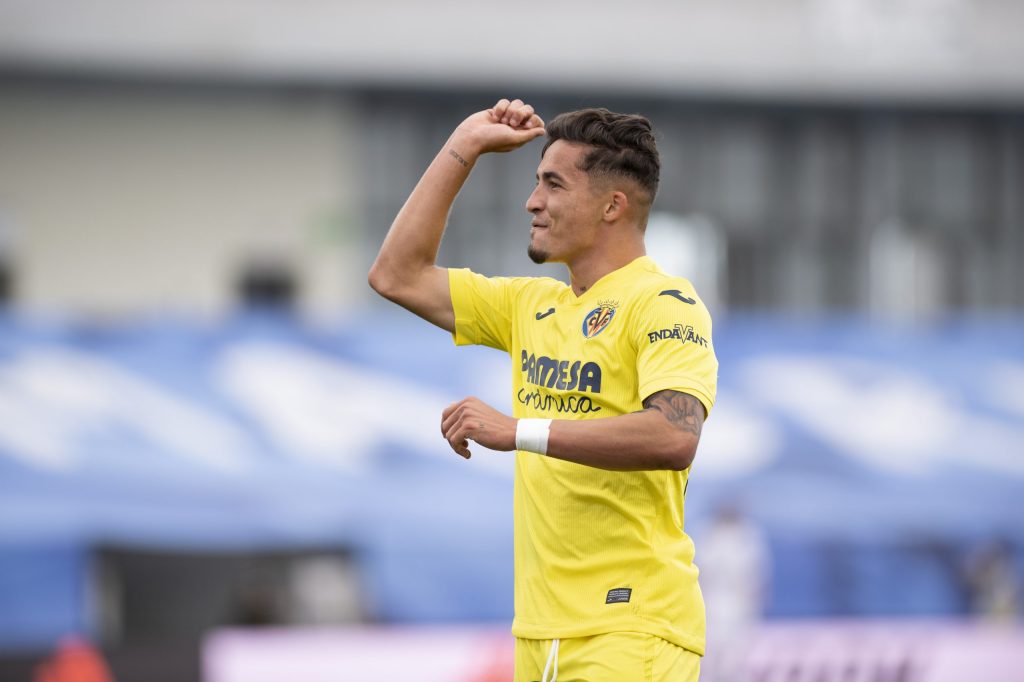
While all the talk and praise have been heaped on the likes of Pedri, Gavi, Oyarzabal, Olmo and Ferran Torres, all of whom have received first and regular call-ups to the Spanish squad under Luis Enrique and have become key figures for their clubs, there is yet another prestigious and flawless young talent quietly going about his business, slightly under the radar, and that young star is Villarreal’s Yeremi Pino.

After his four-goal haul against Espanyol at the weekend, Pino became the first player to score four goals in a La Liga game since Lionel Messi two years ago. He also became the youngest-ever player to score a first half hat-trick in the Spanish top-flight.

The record-breaking doesn’t stop there, Pino is also the youngest player to score a La Liga brace for Villarreal at the age of 19 years and 130 days.

The teenage Spanish international completed a perfect hat-trick in the first half — left foot, right foot, header — and added his fourth after the break in an emphatic 5-1 win over Espanyol.

The 19-year-old has earned rave reviews since his breakthrough in the Villarreal first team, and also became the first teenager to start a Europa League final, and win the competition as the ‘Yellow Submarine’ triumphed over Manchester United on penalties last season.

Pino has enjoyed yet another tremendous breakthrough campaign for Villarreal, and even made his Champions League debut for the club playing against the likes of Manchester United, and Atalanta. His four goal haul against Espanyol took his overally tally for the season to seven goals and four assists in 23 starts.

So who is Yeremi Pino?

Born and raised in Las Palmas, Canary Islands. Pino joined UD Las Palmas’ youth setup in 2014, after representing outfits AD Huracán and Barrio Atlántico CF.

In June 2017, Pino was offered the chance to join Barcelona, a dream move for many young academy products across the country, but interestingly turned down the move and chose to join Villarreal instead.

He made his debut with the C-team in August 2019, coming on as a second-half substitute for Fer Niño and scoring the third goal in a 3-0 victory over CF Recambios Colón in the Tercera División. After finishing his first senior season with three goals in 20 appearances for the Villarreal C-team, he was promoted to the reserves in Segunda División B. A seamless and impressive transition.

It wasn’t long before Pino impressed and caught the eye of the Villarreal coaches in the first team. After spending the pre-season with the first team under Unai Emery, Pino made his professional debut on 22 October 2020, replacing Francis Coquelin in a 5–3 UEFA Europa League win over Sivasspor. He made his La Liga debut three days later, again from the bench in a 0–0 draw at Cádiz CF.

Pino bagged his first professional goal for the club in October 2020, netting the equalizer in a 3–1 away success over Qarabağ FK in the UEFA Europa League. On 12 November that year, he renewed his contract at the club until 2024, with many believing he’d go on to become a leading player for Villarreal in the near future.

In May 2021, Pino was rewarded for his stunning performances, with Emery entrusting him to start the 2021 UEFA Europa League Final against Manchester United, becoming the youngest Spanish player to start a major European final, aged 18 years and 218 days, breaking the previous record of Iker Casillas in the 2000 UEFA Champions League Final, aged 19 years and 4 days. 

He also became the youngest player to win the competition, eclipsing the record set by Robin van Persie in the 2002 UEFA Cup Final.

The 19-year-old has represented his country Spain across all levels, even captaining the under-18s. Due to the isolation of some national team players following the positive COVID-19 test of Sergio Busquets, Spain’s under-21 squad were called up for the international friendly against Lithuania on 8 June 2021, in which Pino featured.

Since then, Pino has gone on to make two appearances so far for Luis Enrique’s talented side, making his senior debut for the senior side on October 2021 in the Nations League semi-final against Italy.

What’s so good about Yeremi Pino?

Standing at just 1.72 metres (5ft8in) and 63kg, Pino is a small winger with flair, pace, trickery and a low centre of gravity. Even though he is a right-footer and prefers to be deployed as an inside winger, the 18-year-old can play on both sides of the pitch, showcasing a lot of versatility despite his tender age.

He’s also been deployed up front in a 4-4-2 system also, but prefers being deployed out wide where he can showcase his 1v1 abilities, make the most of space out wide and assist his teammates.

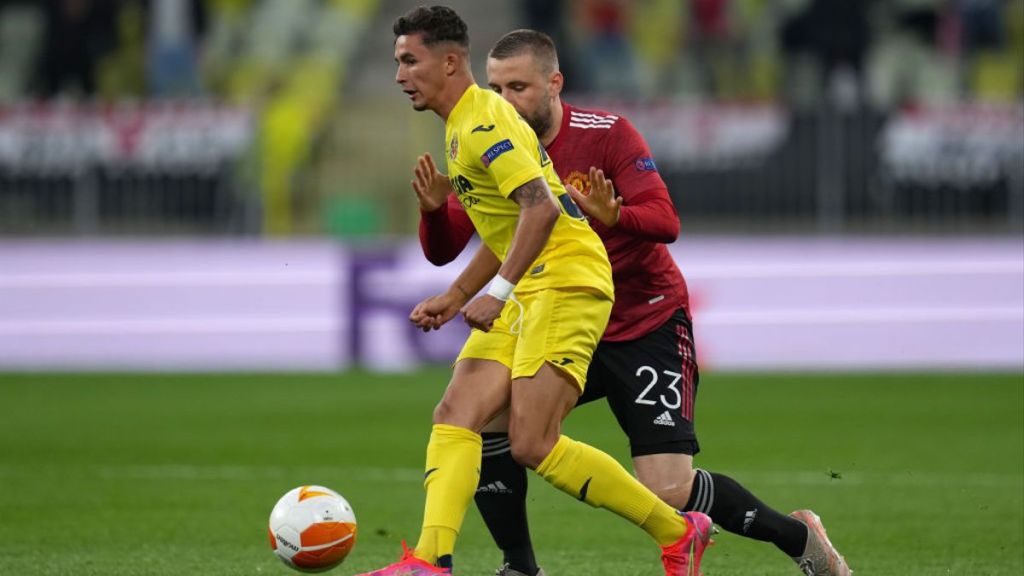
Pino’s main strengths include pace, dribbling and high technical abilities, an eye for a goal, acceleration, agility and, perhaps the most surprising of them all, genuine defensive discipline and work rate as shown through his performance against Manchester United in the Europa League final, tasked in keeping his defensive shape and halting Luke Shaw’s threat on his flank whilst also providing a telling threat on the counter.

Throughout the past year, Pino’s influence and importance to Emery’s organised and compact system has grown. He’s started 17 of his 25 La Liga outings, compared to just starting 6 out of 24 appearances. Whilst he recorded impressive stats in terms of his dribbling and ball-carrying per90 last season, 51.2% dribbles success rate, 2.36 successful dribbles per90, and 7.30 progressive carries per90, his numbers have dropped considerably this season, but that may not be any fault of his own but down to Villarreal’s inconsistencies for large parts of the campaign.

However, that hasn’t stopped him becoming an influence when he is on the field. What is impressive, is his finishing as despite not tallying too many shots per 90 minutes (1.45), the 11th most out of the whole squad and the least out of Unai Emery’s attacking weaponry. Though, Pino is extremely accurate and lethal, even currently outperforming his expected goals (xG) value of 5.4, with 6 goals so far in La Liga. His shots on target % of 54.5 is the 6th best in the Spanish top-flight. He’s also outperforming his expected assists (xA) value of the same figure, with 4.

Without a doubt, one of Pino’s greatest weapons in his arsenal is his dribbling. In the 2020/21 campaign and across all competitions, he registered 6.59 dribbles per 90 minutes with a 60.4% success rate, rating him as one of the more efficient dribblers in La Liga. As stated previously, that figure has dropped this season, but it’s no fault of his own, or to say his abilities and influence are decreasing.

He still attempts 3.36 dribbles per 90 with a success rate of 45%, but more interestingly, through those numbers, his influence is actually increasing. He’s so far averaging 2.64 shot creating actions per 90 (meaning the two offensive leading to a shot or goal including live-ball passes, dead-ball passes, successful dribbles, shots which lead to another shot, and being fouled), which is an improvement of his 2.60 for last season, and Pino is also averaging and considerably topping his goal-creating actions figure (0.66) – the eighth best in the division – from last season (0.23).

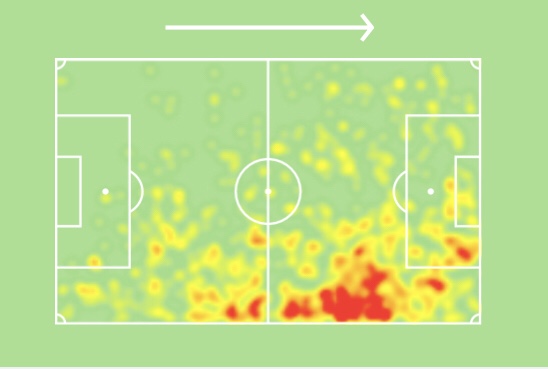
Yeremi Pino’s heat-map this season

As shown through the above heatmap, Pino has been regularly deployed as right-winger for Unai Emery this season, and that’s where we regularly see the best of him.

Pino can effectively dribble from the halfway line onward but is most effective when entering the final third. Interestingly enough, as a true inverted winger, he will cut inside as he gets closer to the box and this is usually where he’ll try to beat his man to create the biggest advantage for himself.

It’s vital to note, that Unai Emery’s system ensures that the winger is isolated with his marker in large and open spaces, which always benefits him rather than the defender. We’ve seen how effective this is through the consistent performances of new signing Arnaut Danjuma, but Pino is also following suit. In these areas Pino can use his incredible acceleration and pace to cover a lot of ground, carrying the ball at his feet.

After that, he engages in and wins the duel against his marker, finishing the action with a brilliantly executed shot or an action that ultimately leads to a chance for his teammates. While he is certainly not a volume shooter since he’s only registered a total of 21 shots so far in 2021/22, his shot selection is great and the youngster has a keen eye for goal.

Considering he has scored six La Liga goals from a 5.54 xG, we can conclude his finishing has been at the required level. After all, 54.5% of his shots have ended up on target, which is impressive despite a lower overall volume.

All of his goals this season and last have come from a very similar position inside the 18-yard-box. This comes as a direct result of his marauding runs and dribbles, both of which we’ve already concluded originate around that same area. Against Espanyol at the weekend though, Pino showcased his incredible potency scoring from 4 of his 5 shots in an around the penalty area.

His fourth and final goal, arguably the pick of the lot, latching onto a through ball from Arnaut Danjuma before instinctively and skillfully knocking the ball past Diego Lopez in the Espanyol goal, and slotting home. A goal truly encompassing Pino’s sharp trickery, audacity and stunning courageousness when faced with pressured situations.

Passing might not be among Pino’s greatest weapons but when combined with some of his other traits, it makes for a deadly tool at his disposal. He is becoming a player skilful at setting his teammates up as much as finishing the actions himself. Of course, we shouldn’t forget that with only 27.8 passes per 90 minutes, he is not a volume passer and in general, can still be risk-averse in most situations. Pino’s passing can be safe but is also used in lay-offs and quick combinations out on the flanks, showing that he always wants to be on the move, which means his passing isn’t going to be one of his strongest suits.

Overall, with an 79.1% pass success rate, we can say that he’s fairly confident in possession and won’t give away the ball carelessly that often, which speaks volumes about any young, flair winger such as himself. Usually, this is exactly what young players struggle with the most but Pino seems to be mature on the ball, especially for his age. He isn’t afraid of the risky passes either, and it can be devastating when it derives from a mazy dribble and into an area where he can hurt opposition defences.

His 1.18 key passes per 90 so far this season is an improvement on his 0.90 figure from all of last season.

Finally, we’ll will finish with a quick overview of Pino’s contribution to Villarreal’s defensive tactics. In general, Emery’s men are a team that fluctuates between a high press and a mid-block and the youngster is a hard worker in both systems. On average, he engages in 26.08 duels per 90 with a success rate of 47.8%.

The youngster won’t always press as high and be successful at it but tracking back and maintaining the team’s structure is certainly a part of his repertoire. Of course, his success rate will vary from game to game but with almost 50% of his duels being successful on average, we can conclude that he plays a big part in ensuring the flank is not breached.

But when and if he’s asked to press high, Pino will gladly do it and will generally stick well to his man once the second line of press is activated. Emery has him either as part of the front two in a 4-4-2 or as part of the second line in the wider areas. In any case, with 2.89 tackles + interceptions per 90 minutes, he won 7 out of his 10 defensive duels against Espanyol, so there’s an argument to be made about Pino’s tremendous and admirable work rate.

He is a willing runner and defender when asked to but when given the freedom to express himself in attacking areas, he’s a player who certainly won’t shy away from performing the extraordinary.

Forecasting the Future

At 19-years of age, Yeremi Pino is an incredible young talent. The future certainly seems bright.

Pino has proven a blessing for Unai Emery and Villarreal because he does everything asked of him. Give him an in-game task, and he won’t deviate from it. He’s a willing learner, so mature for his age but also a player not shy to express himself on the pitch.

There’s no telling where his long-term future lies but it will certainly be at Villarreal after signing a new deal at the Estadio de la Cerámica, taking him to 2027. The Yellow Submarine will provide him with the perfect platform to grow, learn, develop and maybe become one of the club’s most prestigious every players in the coming future.

Let’s not forget, he could be a key figure not just for his club, but for the Spanish national team also along with the likes of Pedri, Gavi, Mikel Oyarzabal, Ferran Torres. Yeremi Pino is certainly amongst that prestigious list of flawless young Spanish talents.

5 strikers Arsenal could sign this summer to spearhead their promising attack

5 strikers Arsenal could sign this summer to spearhead their promising attack

With so much uncertainty surrounding Arsenal’s striker trio, Mikel Arteta’s search for a long-term target has arguably become more urgent in recent weeks.

Pierre-Emerick Aubameyang has not played for the club since he returned late from a trip to France in early December, and as a result being stripped of the club captaincy. He is currently away representing Gabon at the African Cup of Nations.

It remains to be seen whether he’ll be included in a Arsenal matchday squad again.

Even if there is some sort of making up between player and manager, he is still a 32-year-old with 18 months on his current contract. Arteta admitted recently that there was a “cloud” over the striking situation at the club, and that is true.

Alexandre Lacazette is in fine form, and Arteta’s current leading man up front, but is already 30 and has six months remaining on his current deal. Eddie Nketiah is another whose deal expires in six months. If an offer arrives for him in this months transfer window, it will be considered.

Gabriel Martinelli is thriving on the left-wing – an area Arsenal were intending to strengthen long-term – while Folarin Balogun appears to be on the brink of a loan move to Middlesborough in the Sky Bet Championship.

It is evident that Arsenal will need a striker in the summer. The Aubameyang and Lacazette situation could act as catalysts to accelerate the pursuit of a forward for the long-term.

So, who might Arteta and his recruitment staff be looking to fill the potential void at the Emirates?

In the last summer transfer window, the club made six signings aged 23 or under. A clear plan and identity in attempting to shape and rejuvenate an ailing squad.

So that will probably be the same route Arsenal take in their striker search. A player who is young, with a high-ceiling in terms of potential, one who could be moulded to be the club’s main-man for years to come:

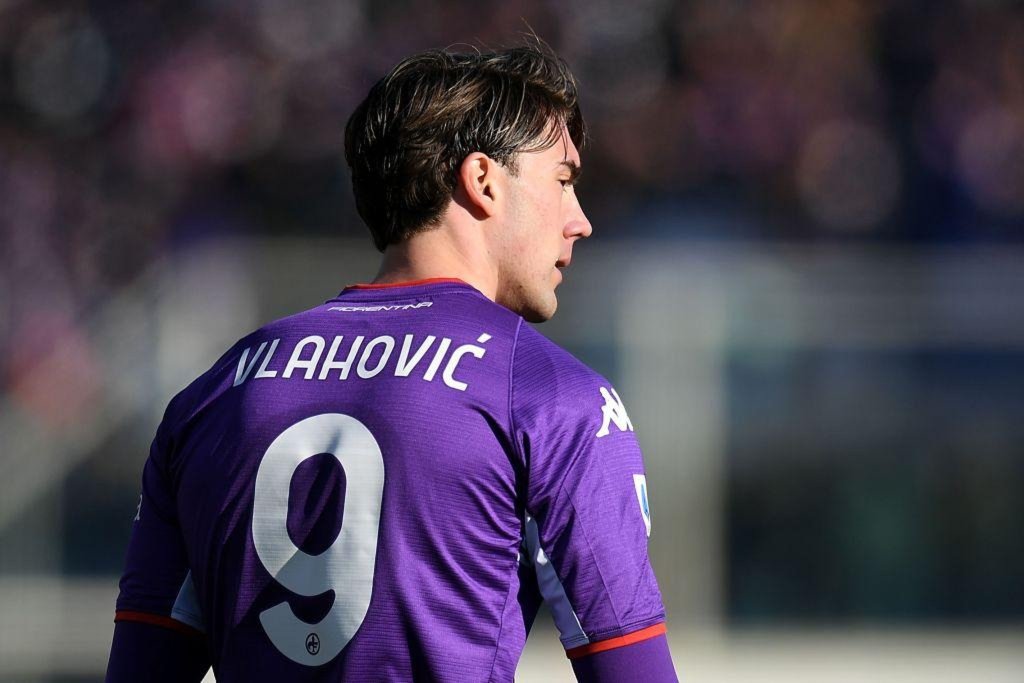
Dusan Vlahovic, Fiorentina

Arguably one of Europe’s most potent goalscorers right now.

21-year-old Dusan Vlahovic is currently being touted around with some of the continent’s biggest clubs linked with a move for the Serbian hotshot.

It’s easy to see why: his record in front of goal this season is simply astonishing, with 17 Serie A goals from 20 appearances. Only Robert Lewandowski has scored more goals in Europe’s top five leagues.

One of the first striking elements of Dušan Vlahović’s characteristics is his striking size. At 6’3”, he stands quite literally, head and shoulders above others, especially some defenders who are tasked with taming him during a game. This has all the makings of a familiar fairytale story when it comes to young prodigy’s especially strikers, that their size immediately strikes fear into their opponents.

Like Erling Braut Haaland, Dušan Vlahović is built of a similar ilk.

Vlahović is a potent and clinical penalty box presence, a devastating finisher and his 16 goals in Serie A this season showing that at the tender age of just 21, he’s got so much to give in goal scoring situations. It’s also worth noting that this figure is backed up by four penalty goals.

He is a very deadly penalty taker, with 17 goals from 17 career attempts to date.

While Vlahović possesses the frame and tenacity to impose himself, he is certainly not short of pace, in fact, the quickness at which he reaches top speed is superb, and that element coupled with a fire in his belly is a frightening sight for even the best defenders in Serie A.

He offers such a dynamic threat in behind. For a striker of his stature and presence, his movement is surprisingly very effective. Intelligent and varied, and it is certainly possible that he learns to adapt his movement to suit the demand that derives from Fiorentina’s attacking play. He is so skilled at timing his runs beyond the defensive line to keep himself onside. He is a real danger when he is through on goal too, and is very content to shoot once the opportunity presents itself – his xG per 90 (0.59) is truly indicative of a forward who gets into dangerous areas, as one would expect from a player with such incisive movement.

Good movement, clinical finishing – Vlahović already looks the complete young package. As a bonus, he works hard off the ball too, he is tenacious, and plays the game like his life depends on it. He is not the type of player to be around when you have the ball, he will hustle and bustle until he regains possession, a real terrier-like performer.

All things considered, Vlahović has quickly morphed into a well-rounded forward, one well suited to the demands of the modern game. He holds a lot of rawness in his game for managers to work with, whether at Fiorentina or elsewhere. While there is a lot of hype surrounding his future at the top-level, one should in fact wonder how well he would transition at this stage to a more stringent and methodical tactical framework.

Vlahovic’s contract with Fiorentina is due to expire in 2023, and the indications are that he will not be signing a new one. That means the Italian side know they need to sell in the next two transfer windows if they are to maximise their return. 

With his potential to get even better, its a proposition that Arsenal simply cannot afford to ignore.

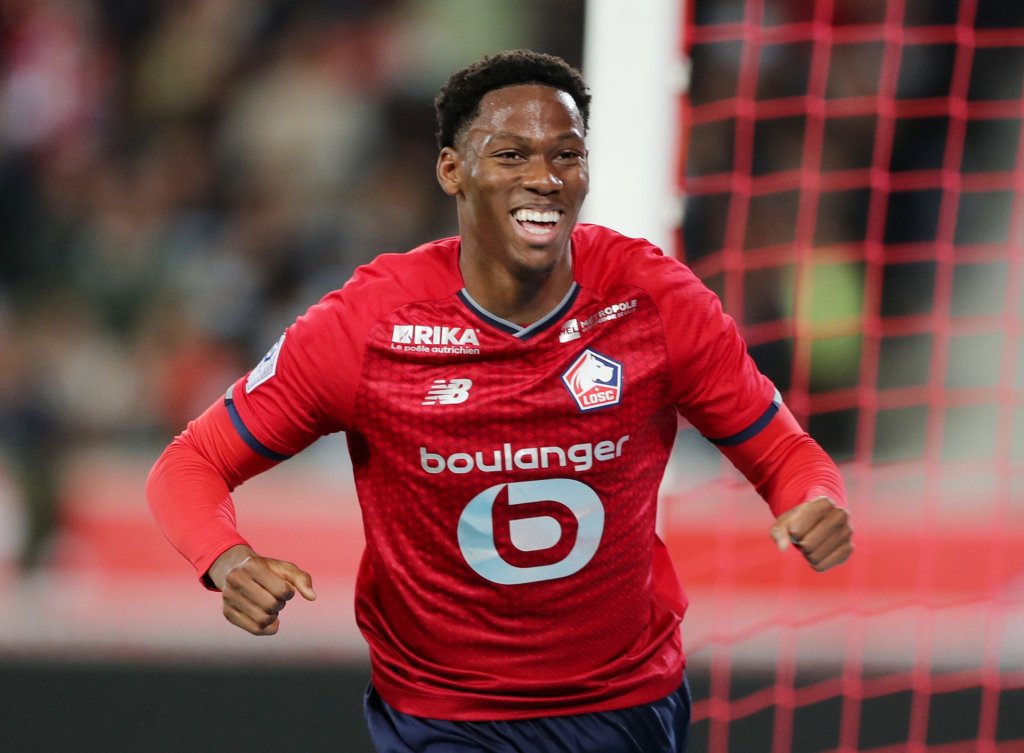
Jonathan David, LOSC Lille

The 21-year-old Lille forward has been on Arsenal’s radar for some time, but the North London club aren’t the only ones with Liverpool, West Ham and Paris Saint-Germain also scouring for his services.

Since his move to Lille from Belgium outfit Gent in the summer of 2020, the Canadian has never looked back, although he did endure a difficult start – going on a run of seven games without a goal. However, in the second half of last season, his form picked up. Eleven of his 13 league goals in 2020-21 came after the turn of the year, as Lille done the unthinkable, finishing the campaign as French Ligue 1 champions.

This season, Lille have struggled to maintain their form as they currently sit in mid-table in Ligue 1. However, Jonathan David has continued his tremendous development. He is Ligue 1’s current top scorer with 12 goals from 19 appearances. In a league including Kylian Mbappe, Neymar and Lionel Messi, that is a superb feat.

An extraordinary forward, blessed with great pace, skill, tenaciousness, trickery and acceleration. The Canadian is tremendously versatile too, capable of playing anywhere in attack; as a no.9, right-winger, left-winger, and a no.10. If fast and speedy players are your type, then Jonathan David is your man. A player whose game is based on an exciting blend of technique, mental sharpness and tremendous physical attributes.

The Canadian has excelled in his work-rate and off-the-ball attributes. So far this campaign, he is recording 5.39 successful pressures per 90minutes. He is in the top 10 percent of forwards in Europe’s top five leagues when it comes to pressures off the ball owing to his tremendous energy, enthusiasm and work rate. David has traded off some of that defensive work, and remodeled himself as a poacher in front of goal. A record of 0.48 non-penalty goals per 90 is brilliant and is simply going to get better.

He possess the mobility, intensity, and defensive know-how in both positioning and angling to excel for a club like Arsenal, and only grow in his pressing ability.

In possession, David is more than capable of dropping deep in the build up and linking up with speedy runners sprinting in behind. Even if he’s not as creative as Lacazette, he could easily grow into that type of player under the influence of a possession based coach like Arteta. Further, his desire to play with an open body shape rather than with his back to goal would serve Arsenal in their quest to score more goals.

David’s scoring form in Ligue 1 over the past two seasons, and for Canada where he’s been the top CONCACAF scorer in World Cup Qualifying, suggests he could score more goals for Arsenal than their current forwards. David’s movement in the box is superb, particularly in finding little pockets of space in which he can finish off chances created by speedy, dribbling wingers, which Arsenal possess to an even greater degree than Lille. 

Jonathan David’s attacking stats this season compare well to Lacazette and far surpass Aubameyang. 

Notably, David hasn’t scored from outside of the box this season, and the vast majority of his goals (9) have been scored in the eighteen yard box. This suits Arsenal’s current attacking abilities, where they look to build up play from back-to-front, looking to score a high number of their chances in the penalty box through incisive and intricate passing moves, including their counter attacking prowess, which he would flourish in due to having a very direct, vertical style of play with his raw dribbling and running power.

At 21-years-old, the potential is clear. It is unbelievably exciting to imagine what the Canadian forward might achieve in the coming years. Arsenal paid Lille big money for Nicolas Pepe in 2019 – so could they return to the Stade Pierre Mauroy in search of another new hitman?

Alexander Isak, Real Sociedad

(Photo by ANDER GILLENEA/AFP via Getty Images)

Another one of Europe’s most exciting forwards, and a player Arsenal will of course be closely monitoring in the coming months.

Sweden international Alexander Isak signed a new contract in July that not only removed Borussia Dortmund’s €35 million buy-back option, but extended his commitment with Real Sociedad until 2026.

Which means any club looking to prize him away from the Reale Arena, would need to pay big bucks for Sociedad to consider selling. However, Arsenal showed in the summer that they are able and willing to flex some financial muscle in transfer fees to get their targets, and Isak will be no different.

The 22-year-old caught the eye at the European Championships last summer – but those who watch the Spanish La Liga closely will be familiar with his extraordinary abilities long before that. Last season, he hit 17 league goals in 34 games as Real Sociedad finished in a Europa League place.

With a rate of 0.65 non-penalty goals per 90 — the fourth-highest in La Liga and level with Atletico Madrid’s Luis Suarez — it’s no wonder Arsenal’s scouts have been following his progress. This season, however, his goals have dried up somewhat, with only four goals from 16 appearances so far, though considerations will need to be taken given his age and development.

He still offers his team much more than his goals, and that has shown in La Liga this season. Isak’s technical ability is largely fantastic. Despite often receiving possession with his body too square to the ball, his ability to spin and open his posture up is great, as is his awareness to make first-time layoffs and combine with close-by team-mates.

Although his first touch lacks consistency, as do some of his short passes, he showcases consistently excellent close control in tight spaces and an ability to shift the ball and his body in alternate directions very sharply – a skill made all the more impressive when you appreciate his tall, rangy frame. This can also be seen in some of his one-on-one attempts, where he is comfortable shifting possession onto either side of his body.

His positioning and movement for the ball are exemplary too. His sense of how and when to drop closer to the ball are great for linking play from side to side and creating overloads from the flank. Equally impressive is his use of this technique in executing double movements to make sharp runs into the drawn-open channels, putting to use his blistering levels of acceleration.

One intriguing aspect of Arsenal’s interest in the forward is his good on-field relationship with Martin Odegaard during the Norwegian’s spell at Sociedad in 2019/20. They both combined effectively on several occasions, with Odegaard often the provided and a source of Sociedad’s goals with his tremendous creative abilities.

Isak has also proven himself to be a formidable counter-attacking threat. He is comfortable offering and operating down both the left and right sides of the pitch, a testament to his mobility and technical quality; his link play and speed with and without the ball add up to him being a clinical target up front.

A bigger team prying him away almost feels like an inevitability for the 21-year-old, and there is no doubt many clubs would benefit from his presence up front, including Arsenal and Mikel Arteta.

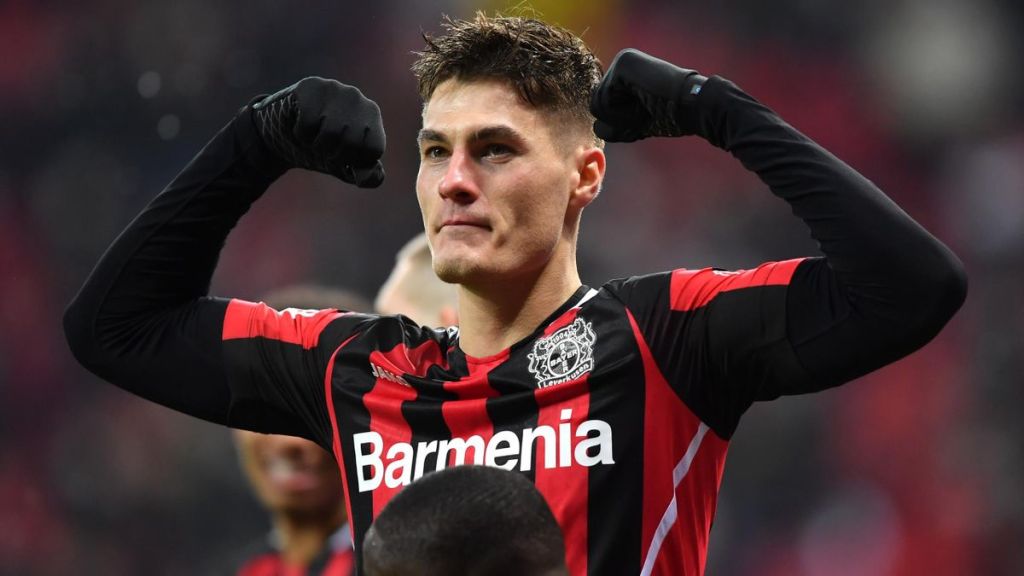
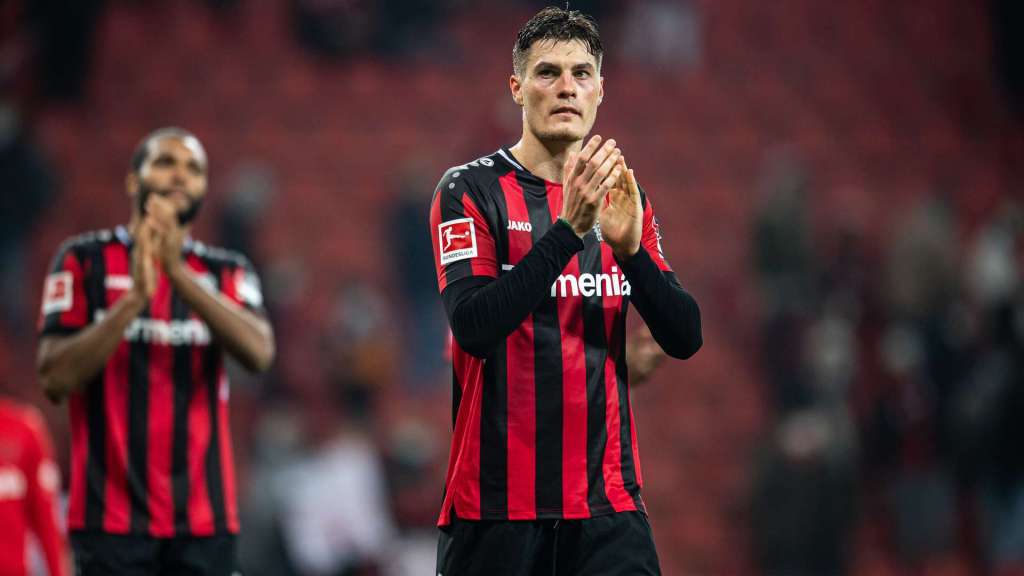
Patrik Schick, Bayer Leverkusen

One of the stars of last summer’s European Championships and one of the leading lights in the German Bundesliga this season, Bayer Leverkusen’s Patrik Schick is a player who deserves rapturous acclaim these past six or seven months.

The Czech hitman has scored an astonishing 18 goals in 15 Bundesliga matches this season, with an expected goals rate at 0.82 goals per 90, and his non-penalty xG sitting at an 0.77 pitting him in the top 3 strikers in Europe’s top-five leagues. A goalscorer Arsenal could do well in possessing next season.

Many will remember Schick’s name in relation to his stunning goal from just over the half-way line against Scotland in the Euros.

In fact, his performance at the Euros where he hit 5 goals in as many games finishing as the tournament’s joint top-scorer with Cristiano Ronaldo, many argued Schick should have been in the team of the tournament rather than Romelu Lukaku, and rightly so. The 25-year-old was a true attacking force to be reckoned with at the Euros, as Scotland sadly found out. Schick is already on the list of several clubs around Europe, and yet another flawless Leverkusen talent who could be on the move in the near future.

Given Schick’s large frame, he naturally fits the bill of a traditional target man. Not since Olivier Giroud, have Arsenal possessed a true target-man, and Schick certainly has the assets to back this statement up too. Statistically, he performs respectably winning 46.3% of his 3.63 aerial duels per 90 in all competitions this season.

If players are willing to run off of Schick’s shoulder, then he will oblige by winning headers and helping the ball on. However, he shows excellent awareness of where his teammates are as the ball is in the air, as well as the positioning of the defenders and specifically the proximity of his marker.

Schick can adjust accordingly and can bring the ball down and hold up play when many forwards would simply look to head the ball on. The Czech forward is a tremendous outlet when using his as a focal point in attack, holding the ball up whilst bringing his fellow attackers into play.

Schick is able with the ball on the floor too. Whilst he provides a viable option to hit the ball too aerially, he has a good first touch and can play first time with either foot. He doesn’t panic in possession which will of course be useful in Arteta’s possession-based philosophy and he can receive, hold play up, and find a nearby teammate whilst under pressure. 

Schick is far from being some kind of uber-physical and immobile centre-forward. He has a lean frame, and a deft touch in possession. He can receive line-breaking passes and play first time, as already mentioned, but he can also unlock defences with innovative passes and good vision. It’s why his partnerships with the likes of Florian Wirtz and Moussa Diaby has proven so devastating for Leverkusen this season.

Schick has quality holding the ball up with dribbling ability as well. He keeps the ball close as he dribbles, and is better at navigating tighter areas than he is driving forward on the ball.

Under Gerardo Seoane, Bayer Leverkusen have opted for 4-2-3-1, and in that set up he’s looked to take advantage of the strength of his wide players and the emergence of Florian Wirtz. Spearheading that attack is Patrik Schick. At 6’3” with a lean but strong frame, you’d be forgiven for assuming that Schick operates as a traditional target man. That would be a disservice to him as he is far more well-rounded, and more complete.

With Arsenal trying to play a fluid style, the movement of the forwards is essential to pulling that off. A striker in this system must be able to perform single or double movements to either become part of the build-up play centrally or create space for others to run in to.

One of the first things you notice about Schick is that despite his frame, he’s not just living by sitting up on the back line. He will, if needed drop into space and make himself available to receive the ball, and bounce it either to Wirtz or a wide player and then advance into space to become an option further up field, and its in the penalty box where he comes to life, scoring all types of goals but more importantly showcasing why he has got to be considered as one of the best strikers on the continent.

With any forward coming into the Premier League you do worry about the physical attributes of the player and that should be no concern for the Patrick Schick. He is a player Arteta should consider signing this summer to boost their quota in attack, Schick is a player ready for the next step in his career and Arsenal who are progressively improving under Arteta’s stewardship may prove to be the perfect move for the incredibly promising forward.

Ivan Toney, Brentford

A big wildcard pick in comparison to the players on this list, but Brentford’s Ivan Toney is certainly a player Arsenal should seriously be watching. The 25-year-old certainly proved himself last season, scoring a record 31 goals in the Championship.

With more eyes on him this year, he set the tone for what he would bring to the Premier League on the opening day against Arsenal.

Despite not scoring on the day, he was arguably the most influential player on the pitch — as highlighted at the time. Prepared to play with his back to goal, he bullied and dominated Ben White and Pablo Mari to build a platform for Brentford to attack from.

Toney has grown considerably since then, and continues to be a true worthy opponent for the Premier League’s best defenders, just ask Virgil Van Dijk, Raphael Varane and Ruben Dias.

Although Toney has six goals to Mbeumo’s three in the Premier League, the latter has hit the woodwork seven times to Toney’s zero. (Brentford have hit the woodwork 10 times as a team. Only Arsenal, 12, have done it more often in the division this season).

Toney had also made the most open-play passes leading to shots (25) for the club this season, showing that he is an incredibly creative forward. Whether it be winning aerial duels, retaining the ball himself or winning fouls from long balls up to him, he is laying the groundwork for Brentford to be such a competitive force so far this campaign. For progressive passing, he’s given a 98 out of 99 rating by smarterscout.

His defensive contributions also display he is a well-rounded striker who could lead the line in many respects, Certainly a player Arsenal could do with. He is in the top percentile amongst strikers in Europe’s top five leagues for Aerial duels won per 90 (4.65), clearances per 90 (1.24) and interceptions per 90 (0.71).

Certainly the next step is for him to get more goals in the big time, but that can’t be considered as a fault of his, but more so a problem of Brentford’s in terms of the quality of their attacking play. If Toney was at Arsenal, he’d be guaranteed goals with the likes of Saka, Odegaard, Smith-Rowe and Martinelli creating goal opportunities for him.

Though in fairness, he quality of chances the 25-year-old has had this season have not been great, as he only had an xG of 4.4 (2.8 when excluding penalties) after Brentford’s first 19 matches. In short respect, with four goals scored, he had as many goals as the quality of his chances determine he should at this point in the season – a tally he would need to improve if he does harbour any ambitions of playing for one of the big teams in the country.

According to many reports, Toney is being strongly considered by Gareth Southgate for England. If the striker wants to break into squad ahead of the 2022 World Cup in November and December, he may consider whether a move to a bigger club will help his progress.

Toney being a very good profile for what Arsenal could need post-Lacazette-and-Aubameyang and Brentford being willing to sell are two different conversations altogether, however. Though, Brentford do hold a model in which they develop their talents and sell them for big money and Toney is no different, considering his vital importance to Thomas Frank and Brentford.

#AnthonyScouts🕵🏾‍♂️ pick: Dusan Vlahovic

Vinicius Jr the Young Star Real Madrid Can Now Rely On

Vinicius Jr the Young Star Real Madrid Can Now Rely On

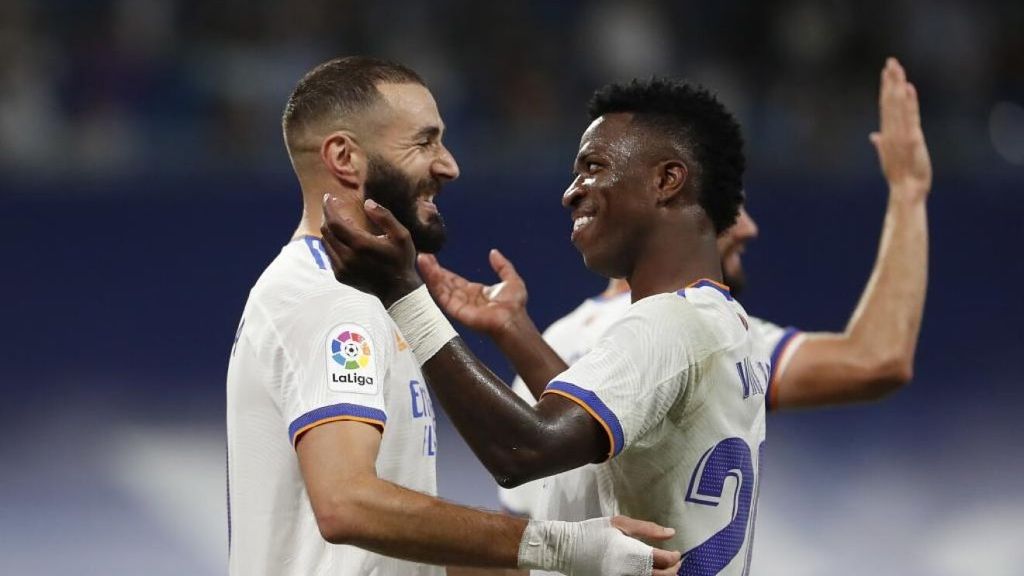
It was exactly over a year ago – at half-time in Real Madrid’s UEFA Champions League group-stage tie against German outfit Borussia Mochengladbach – that Karim Benzema complained to teammate and French counterpart Ferland Mendy and instructed him not to pass to Brazilian Vinicius Jr as a result of the youngster’s greed and immaturity in the final third.

As ruthless and as rude as it was for Benzema to behave in such a way, the incident reflected the difficulties and struggles Vinicius Jr endured at this period in his Real Madrid career.

Certainly, he’s young, showing levels of immaturity at such a level, over-exuberant at times but it was expected especially in the context of where he came from, the branch offices of Flamengo, in the neighborhood of Mutuá, in São Gonçalo.

An area where he was taught to showboat, to express himself and to become the best trickster no matter if it came at the cost of his own team.

When Vinícius Júnior joined Real Madrid, he had it all. Well, almost. His all-round game was exciting. Dribbling second to none. Pace better than any of his opponents. Skill-set unmatched. No-one could keep up with him.

That’s who we was, a flamboyant footballer who always tried the audacious tricks, shots and pieces of skill not knowing how it could affect his teammates around him, and you’d be sure a player as experienced and decorated as Benzema is, he’d understand the nature of such a footballer seeing as he grew up in similar circumstances in France.

But when you’re as celebrated and successful as Benzema is, you expect the players around you to be hold similar mindsets and a winning mentality and it was evidently clear Vinicius Jr didn’t, which was no fault of his own.

It’s as if every time the Brazilian got to the final third, he’d slip up, either by shooting wayward when a pass to a fellow teammate would have sufficed or his over-exuberance getting the better of him attempting one or two tricks too many.

It was a recurring theme in Vinicius’ game, proving a tough cycle for him to grow out of.

But, things are much different now, fast forward a year and a month or so, you’d be delighted at the growth and maturity that the former Flamengo wing-wizard is currently performing at.

Under new coach Carlo Ancelotti, the change in his game has been magnificent, spellbinding, fearless, you name it. Vinicius Jr is a different animal and Karim Benzema now cannot get enough of him.

With ten goals and five assists in 17 appearances in all competitions, Vinicius has already surpassed his best goals and assists tally in just 17 games, only a third of the number of appearances he made in the 2020/21 season with Zinedine Zidane.

(Photo by Quality Sport Images/Getty Images)

In truth, the turnaround and maturity in his decision-making and all-round game has been nothing short of phenomenal. In 2020/21, he underperformed xG by a remarkable 3.82. For context, that’s twice as bad as anyone else in the Real Madrid squad. In 2021/22, he’s overperforming by 2.04 xG, a figure more than twice as good as anyone else, excluding Karim Benzema.

Benzema-dependencia, as the Spanish media like to call Real Madrid’s reliance on Karim Benzema for goals, well that phrase has been thrown out the window as a result of Vinicius Jr’s sudden purple patch. Now, Karim Benzema who didn’t approve of the Brazilian over a year ago, simply cannot perform without him.

While its a testament and credit to the 21-year-old, the credit must also be given to Carlo Ancelotti who has totally unleashed the Brazilian with undying belief and faith in his abilities.

This is what the Real Madrid faithful had been waiting for all along, even more so, president Florentino Perez who initially desired Neymar to fulfil his galactico-type gratification but instead had to make do with Vinicius Jr.

Vinícius scored five in La Liga’s opening five games. By matchday six, he’d already been involved in eight goals and was stepping up as one of LaLiga’s most influential players, while also racking up six goal involvements in four Champions League appearances.

Injuries have played their part. Rodrygo Goes, Eden Hazard and Gareth Bale have all struggled with fitness, while Vinícius has shone on the field while staying fit. While all three have had long-term issues, Vini has only missed one game since May 2019, but his improvements have gone far beyond just keeping fit.

I think Vinícius has a lot of quality in one-on-ones,” the Italian coach said after the 21-year-old single-handedly tore apart Alavés. “I’ve told him that to score goals he has to take one or two touches, it’s difficult to score with four or five touches. He’s a very young player, he’s going to improve.

It’s become a common theme so far this season; the Brazilian wing-wizard tormenting defences and tearing apart opposition defenders with peerless pieces of skill, but all of that is down to the confidence rewarded to him from players like Benzema, but more importantly the extra training sessions and his ability to heed to the advice given to him by his coaches.

Vinicius is no longer that naïve, overconfident and inexperienced raw talent that arrived through the Real Madrid doors in 2018. He’s now more an assured, mature and decorated performer, still possessing bags of potential to become even greater and that spells such great news for Real Madrid, a healthy return on their risky investment.

Vinicius has shown this season whatever the situation, he can and will create – whether it be scoring or assisting, he is quickly becoming a central protagonist within Carlo Ancelotti’s side.

Since the departure of Cristiano Ronaldo, Real lacked a character that was the focal point, a player who constantly threatened the opposition, and a target for opposition supporters. For all the brilliance of Benzema, the Frenchman is in actual fact universally loved and respected for his more silent and respectful demeanor.

Many thought it’d be Eden Hazard when he arrived from Chelsea, but his move hasn’t quite worked out because of injuries and lack of fitness. Gareth Bale was supposed to be the chosen one after Ronaldo left, but fans haven’t still taken quite a liking to him.

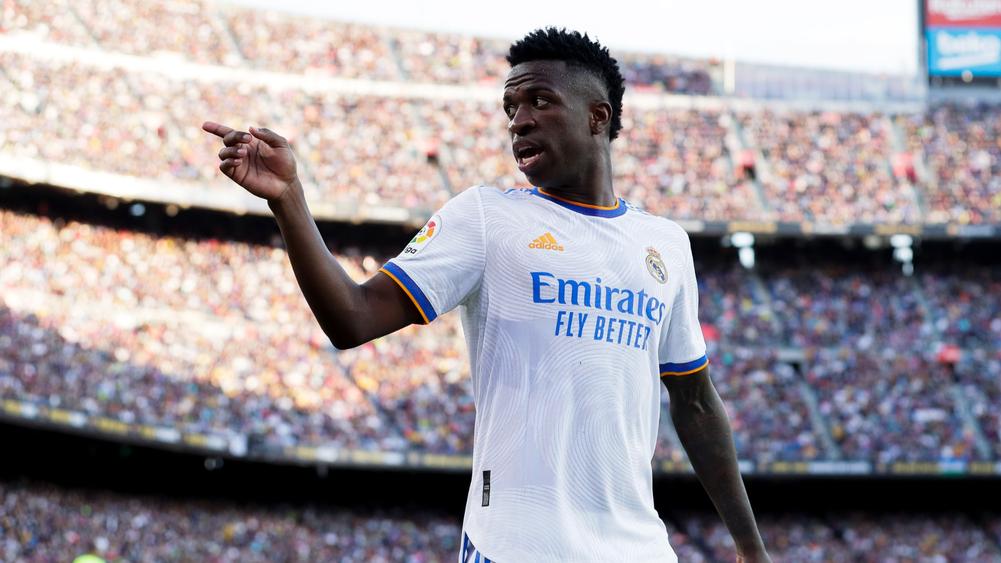
Vinicius looks the perfect candidate, he thrives in the chaos he creates, he’s comfortable with the attention he is garnering. The Brazilian is willing to stand up and wave the flag for the club, whether it be at the Mestalla, Wanda Metropolitano or Camp Nou.

The Clàsico earlier this season proved the perfect example of the mentality monster Vinicius has become. In enemy territory, in the face of much abuse, booing and jeering, he proved all-throughout to be a thorn in Barcelona’s side.

The Brazilian destroyed Barca’s right-hand flank, so much so that former boss Ronald Koeman withdrew Oscar Mingueza at halftime as a result. He may not have registered a goal or an assist, but it was clear throughout his time on the pitch, Vinicius was at the centre of Real’s attacks – a constant outlet and his teammates thrived off it.

Against Granada over the weekend, Vinicius stepped up when Real needed him most. Los Blancos were seemingly unsettled by the hosts, struggling to create and break through their stubborn backline. After the half-time break, it was Vinicius who proved the decisive contributor once again.

He played a part in a move which he finished off, within ten minutes of that, he had forced Monchu to desperately lunge at him after the Brazilian left him in his wake. The Granada midfielder was correctly sent off as a result as Vinicius lay on the turf, a smile on his face winning the battle and making his contribution toward winning the war.

All of that came just seconds after the Brazilian completed mazy jinking run ghosting past a hatful of Granada defenders, and fouling him in such a manner is now the only way defenders can stop him, yet the Brazilian would always finish the game having the last laugh.

The Brazilian finished the Granada match with a goal, 61 touches, a key pass, five dribbles, 3 shots on target with a WhoScored rating 8.58. Those stats only merely scratch the surface when analysing the kind of influence he is having on his teammates.

Amongst players in La Liga, Vinicius Jr ranks first for progressive distance carried per 90 (250.9), first for progressive carries (13.3), first for carries into the final third (3.67) and first for carries into the penalty area (3.94) highlighting his amazing dribbling efficiency but also incredible knack of taking on the responsibility in driving Real Madrid up the pitch.

He ranks second for goal-creating actions (9) and third for shot-creating actions (62) once again showing that he is being trusted with leading Real Madrid’s attacks and the growing responsibilities afforded to him.

This season, Vinícius is more incisive and clinical, no longer doubting, hesitating or waiting for that split second. While in both 2019/20 and 2020/21 he made an average of 1.2 shots per 90 minutes, the number has risen to 2.8 per 90 in 2021/22. Much of that is down purely to confidence and a greater sense of urgency in Real Madrid’s all-round play.

Vinicius Jr has certainly grown and matured into one of Europe’s most complete performers right now, and that is showing through his performances but also more importantly his goal returns have taken a huge boost and that’s a credit to him recognizing the areas in which to improve on in the final third, and its now reaping its just rewards.

The question is now, can he translate this sort of form on a consistent basis for years to come or will it drown out like so many of other young talents before him? That’s for him to decide, but the ball is totally in his flawlessly talented court.

Those previous doubts surrounding Vinicius’ naivety and recklessness in the attacking areas are fading away. There can be little doubt over his raw talent. His passion and abilities is almost trademark Brazilian, and his drive is unrivalled in the modern game. His technical ability is magnificent, and he now appears to have the finishing skills to match. He’s proven that he’s more than a young winger with flair, he’s a man who can make a difference and win a game on his own.

Real Madrid have always possessed a talent capable of taking games by the scruff of the neck, and Vinicius Jr is now the latest in a very long line of decorated and pure footballing talents. Long may his stunning form continue.

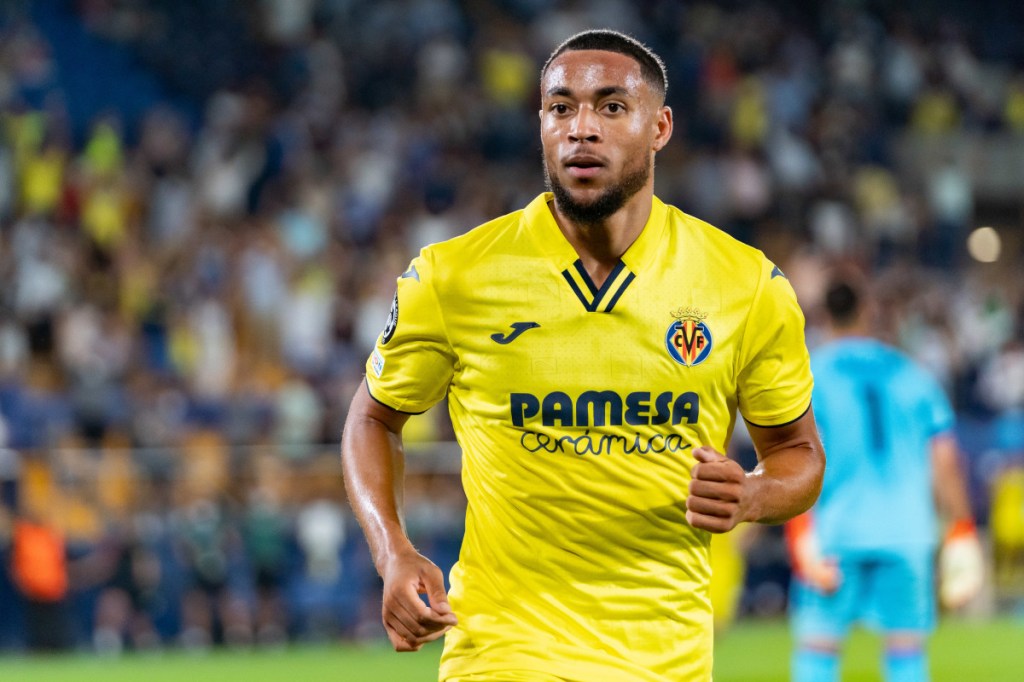
Arnaut Danjuma proving a key figure for Villarreal

Arnaut Danjuma proving a key figure for Villarreal

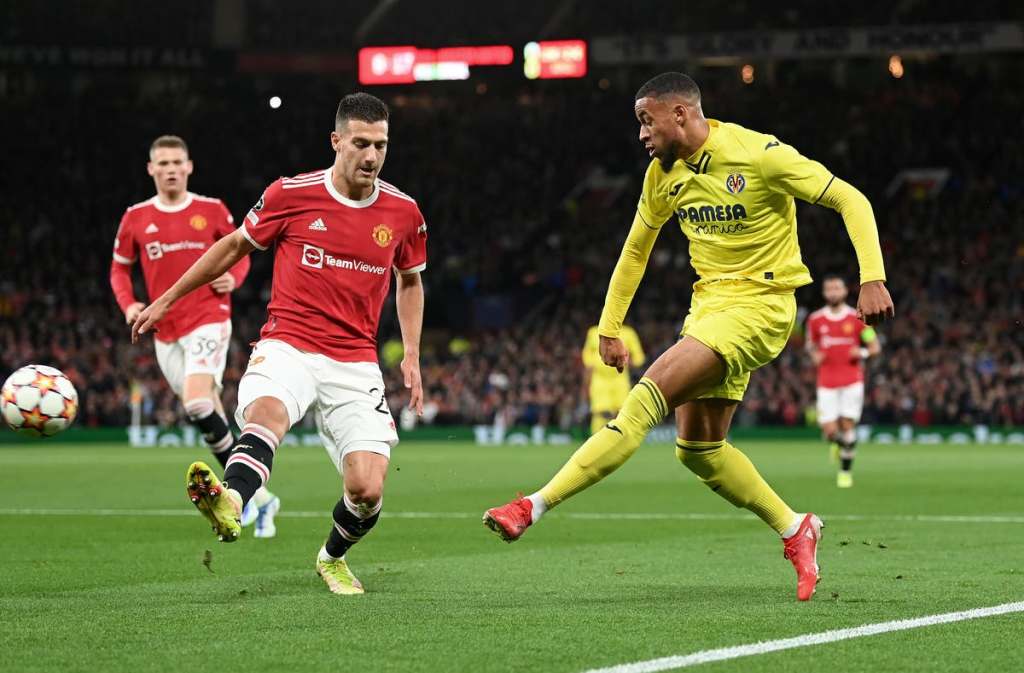
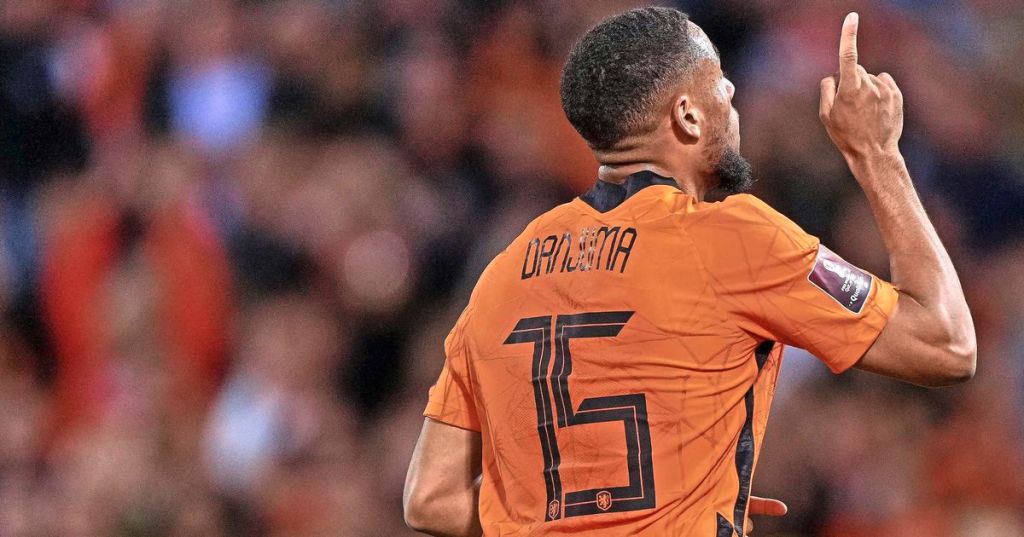
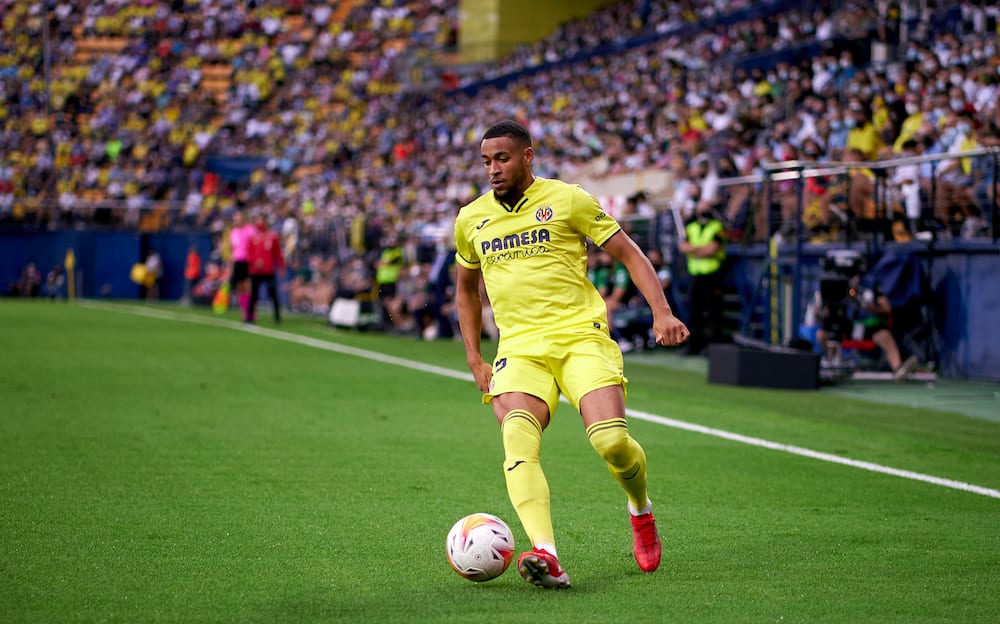
When Arnaut Danjuma joined Villarreal from AFC Bournemouth last summer for €25m, little did we know he’d make such a telling impact in Unai Emery’s progressive side so soon.

A few months into his Spanish top-flight career and the recently-made Netherlands international is a man of fire, and one of La Liga’s blossoming individuals so far this season.

After hitting 17 goals and 7 assists in the Sky Bet Championship last season, the former Club Brugge forward was always destined for bigger and better things but many thought he’d make that step up in the Barclays Premier League rather than beyond borders.

With several clubs interested in his services last summer, it was Villarreal who took a punt on his flawless abilities, and its safe to say the 24-year-old hasn’t looked back.

He did state recently, he felt he was too good for the Championship and he needed to get out, and after his first few months under Unai Emery’s tutelage, Arnaut Groeneveld Danjuma’s has supremely backed up his lofty statement with some show-stopping, electric and superb performances for the Yellow Submarines.

14 appearances, 7 goals (5 in La Liga), and 3 assists Danjuma has certainly showed he is good enough and ready to cut it amongst the most elite footballers in Europe. The slippery Dutchman has gone from the Championship to the Champions League without batting an eyelid at the transition.

Danjuma’s trajectory over the past year has been nothing short of sensational, and already he is showing his talents on the most prestigious of footballing stages in the UEFA Champions League. If you need any pieces of evidence as to how good he is, not only that, but how invaluable he’s become to Unai Emery’s side in short space of time, check out his performance against Manchester United at Old Trafford.

It was simply jaw-dropping.

The forward was the most electric player on the Old Trafford pitch, despite sharing it with five-time Ballon d’Or winner Cristiano Ronaldo, Jason Sancho, Bruno Fernandes, Paul Pogba and other stars.

The former Bournemouth man had United full-back and Portuguese international Diogo Dalot on toast, cutting through him with such expert but thrilling ease. Solskjaer’s defence simply could not handle his pace, acceleration, unerring trickery and swift close-control and deceptive movement. He finished the game with an assist to his name, but also four shots, 2 key passes, 3 dribbles and with a WhoScored rating of 7.42.

There’s no doubt about it, Danjuma is amongst the most devastating forwards in Europe right now.

Danjuma’s instant impact in Spain has surprised many, but probably not coach Unai Emery, who asked club president Fernando Roig to sign the winger this summer.

The former Arsenal manager must have made a strong case because Villarreal splashed out €25 million (£21m) on the Bournemouth man – a large transfer fee by recent Spanish standards.

While giants Real Madrid and Barcelona picked up David Alaba and Memphis Depay on free transfers, Villarreal made Danjuma the second-most expensive signing in their history, behind Paco Alcacer.

Danjuma may have been one of La Liga’s most expensive transfers this summer, but is currently proving he’s worth every penny spent. The Europa League winners were looking for a player who could help them jump forward to the next level tactically and in attack and Danjuma is keeping his part of the bargain.

Unai Emery’s men are clearly more efficient, potent and exciting on the attack and much of that is down to Danjuma’s unpredictable nature on the left-flank.

The Dutchman is one of La Liga’s most aggressive and destructive dribblers in La Liga, averaging 2.4 dribbles per game so far this campaign, per 90 he completes on average almost 2 dribbles per game, 7.76 progressive carries, 1.34 carries into the final third and an outstanding 3.43 carries into the 18-yard box showcasing just how vital he is to Villarreal’s attacking phases of play.

Danjuma also averages 9.30 touches in the opposition’s penalty box, again highlighting that he is arguably La Liga’s most effective wingers alongside the rejuvenated Real Madrid Brazillian superstar Vinicius Jr. His non-penalty XG of 0.66 is in the 99th percentile amongst Europe’s top-five leagues making him one of the most efficient scorers so far on the continent.

The 24-year-old has certainly shown up for Emery so far this season, he netted in the thrilling 2-2 draw with Atletico Madrid at the Wanda Metropolitano – a stadium he knows well from his Club Brugge days – lashing past Jan Oblak in a 2-2 draw for his first goal for the club.

Clinically netting in a 2-2 draw with Atalanta in Villarreal’s Champions League opener, he was also a livewire against Elche in a 4-1 win, bursting through the defence and scoring after an hour, and also put in a brilliant showing at the Santiago Bernabeu against Real Madrid.

That was followed by two more in the 2-0 win over Real Betis, the first coming after he cut inside from the left and cleverly slipped the ball back inside the near post. He rounded the goalkeeper for his second, showing poise and good judgement. He again came to his side’s rescue against forcing a late leveller in the closing minutes against Cadiz in a 3-3 draw.

His tremendous form so far this season earned him a late Netherlands call up under Louis van Gaal in October, and the winger duly delivered.

“Can anyone stop Danjuma?” asked Spanish newspaper Marca after he dazzled from the bench in a 6-0 win for the Netherlands against Gibraltar.

The coach called him spectacular and pointed out that his team-mates still have to adapt to his explosive balls across the face of goal. 

“He had very nice and impressive dribbles, but his team-mates were not yet geared to his hard crosses,” said Van Gaal.

With time, things will only get better in that aspect, but its clear that Danjuma has given both Louis Van Gaal and Unai Emery reasons to stand up and take notice at his incredible gifts.

His Villarreal team-mates have already given him the nickname ‘Danjumagic’, although the player humbly credits his coach for his superb start in Spain.

“I need to give a massive thanks to Unai Emery,” he told Villarreal’s website. “The coach is very busy (working) with me and he really helps me perform.”

The 24-year-old has proven the star of the show at the Estadio de la Cerámica, but has most of all proven that he can be amongst the best forwards in Europe after the tremendous campaign he enjoyed last year in the English second-division. Arnaut Danjuma was always primed for much more, and he has his sights set on much bigger things which may cause some worry amongst the Villarreal fanbase.

“I came to Villarreal to prove myself again but I’m definitely visualising the next step,” he told Mail Online in September.

It’s no surprise that the forward is already drawing interest from Jurgen Klopp at Liverpool with the former Borussia Dortmund coach reportedly sending scouts to watch Danjuma in action, who knows, the flying Dutchman may well be Sadio Mane’s heir on that left-flank at Anfield, and he’s certainly good enough to take over the role.

Danjuma is serious joy to watch in action with his blindingly quick feet, deceptive body movement and jaw-dropping trickery so it won’t only be Liverpool scouring for his services in the near future. Villarreal have already taken kindly to the 24-year-old wing wizard, and they should enjoy his magic while it lasts because the sky really is the limit for such a truly decorated footballer.