What will Erik ten Hag bring to Manchester United?

What will Erik ten Hag bring to Manchester United?

Manchester United are a club in crisis, an institution that has been steeped in mediocrity for the best part of the last nine years and change is strongly required at Old Trafford.

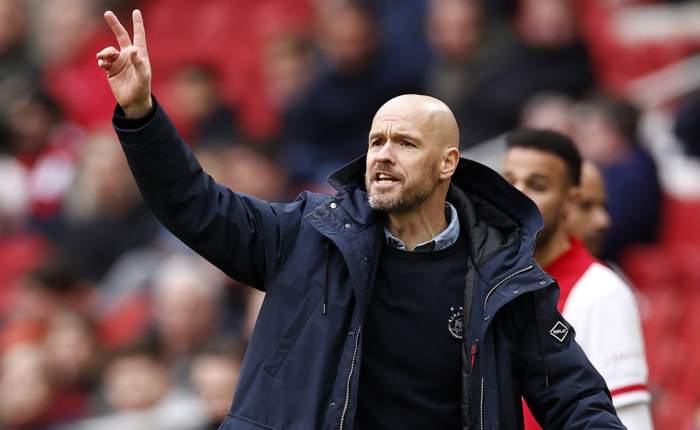
According to The Athletic, Manchester United have reached an agreement in principle with Erik ten Hag to become their next permanent manager.

It is believed to be a verbal agreement. He is expected to join on a contract to run for up to four years.

This article will aim to analyse Ten Hag’s principles of play, and how it will fare in line with United’s squad and expectations:

Ten Hag’s rise to arguably the biggest job in football might feel fairly swift but his progress has been steady, meticulous and thoughtfully planned in order to maximize his impressive skill-set. At 52, he has been a youth coach and head of education, an assistant coach at home and abroad, and a manager at various other levels.
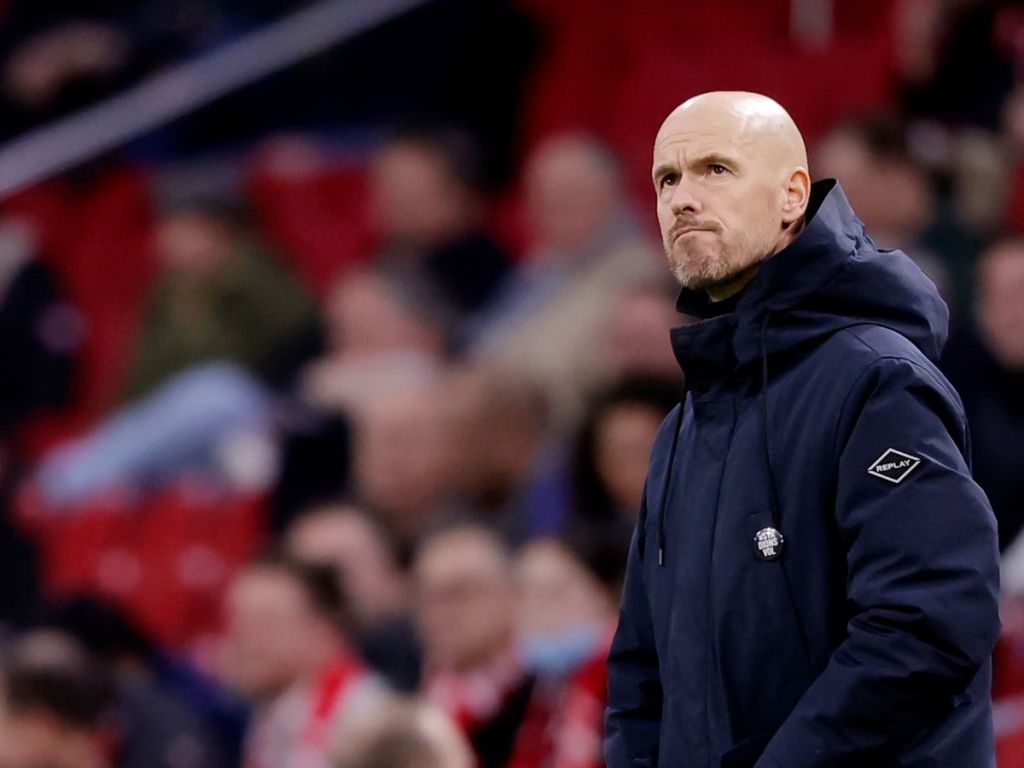
Erik ten Hag has impressed during his time at Ajax. He’s picked up two Eredivisie titles and historically reached the semi-finals of the UEFA Champions League during the 2018/19 campaign for the first time since the 1996/97 season.

That campaign, he comfortably overcame the giant challenge current holders at that time Real Madrid 4-1 at the Santiago Bernabéu in round 16, and also played Juventus off the par in the quarter-final before their unfortunate defeat to Tottenham Hotspur in the semi-final.

Since his appointment in 2019, he has had an extremely impressive win percentage of over 70%, a true sign of the significant impact and transformation he’s embarked on that the club since he became manager in 2017.

Considering the change in philosophy, identity and impact he’s made in Amsterdam, the former Utrecht coach could oversee a long-term rebuild at Old Trafford, providing the much-maligned Manchester United hierarchy allows him the opportunity to do so.

So what will Ten Hag bring to Old Trafford?

Erik ten Hag has typically lined his Ajax side up with a possession-based 4-3-3 system.

erik-ten-hag-ajax-formation-lineup

The practices most widely associated with his team are width, verticality (for example counter-movements), decoy runs and manipulation of opposition presses and deep blocks.

From goal-kicks, Ten Hag’s Ajax build from a deep position with the keeper plus two centre backs. This setup offers a conventional build-up structure with which the centre-backs are required to be typically comfortable in possession, and have the capabilities to be progressive with their passing.

The centre-backs and goalkeeper, and of one of the fullbacks dropping in, Ajax can regularly enjoy positional dominance in build-up against an opposition block; particularly if the opposition uses a front one or two – both of which are very common in the Dutch Eredivisie.

Ajax often drop one of the fullbacks – either Daley Blind or Noussair Mazraoui – into a deeper and more vertical position to aid their build-up play. It allows either of the fullbacks to become a deep-lying orchestrator as they are allowed the ample time and space to find the vertical options on their side of the pitch.

This is very similar to how Pep Guardiola uses his fullbacks in the 4-2-4 build up positional setup, where either Cancelo on the left-flank or Kyle Walker at RB are at times tasked in sitting alongside Rodri when City build up in possession, allowing them to be more accessible against an opposition’s defensive shape, but also providing the team with an extra body in midfield when in possession.

Ajax also frequently stagger their deep midfielders too, pushing one higher, to create a single pivot. The single pivot (Lisandro Martinez) acts as an anchor, holding the opponent’s front line to a narrower berth, and distributing play, again similar to how Pep utilizes Rodri, or how he used Busquets at Barcelona.

Ajax are currently the best defensive performing team in Eredivisie with just 15 goals conceded all campaign at the time of writing, displaying high awareness, composure and consistency. The team’s well-measured actions and anticipation skills result in a high success rate in almost every aspect.

They are proficient in winning their challenges clearly, despite actually having the highest challenge intensity (duels, tackles and interceptions per minute of opponent possession) in the league.

The foundations of Ten Hag’s build-up are very solid, free-flowing and really quite conventional. But where the value lies, is not only how Ajax are able to progress the ball and begin to create, but how they can utilise well-coached movements and problem solving to adapt against various opposition shapes.

In terms of ball progression, the keys, once in settled possession, are: opening up passing lanes to exploit, having time and space to make the pass and lastly, allowing the receiver to consistently receive in an optimal manner.

When Ajax form their conventional build-up structure, the fullbacks tend to drop into a narrower position. To oppose this, the wingers move wider to open a diagonal lane.

This means the wingers (who are typically inverted) such as Tadic and Antony can receive in a consistent manner, back to touchline providing them the full view and width of the pitch so they can create freely and move into areas (in half-spaces) where they feel they can affect attacking phases of play and hurt the opposition.
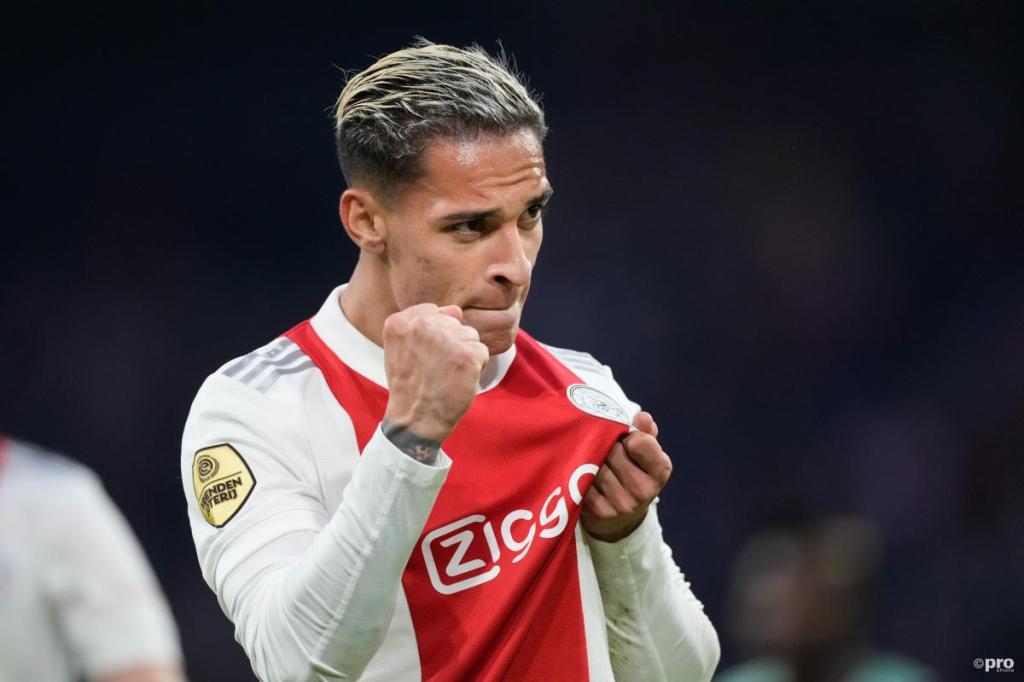
Antony & Mazraoui share a strong relationship on the right-flank, with the full-back knowing when to leave the winger in a 1v1 situation against the opposition.

Within Ten Hag’s system, every player holds the confidence in themselves and in their teammates when creating chances, and that is proved in how each component works in tandem to disrupt a deep opposition block.

Rather like Pep, his teams look to open up the pitch and penetrate opposition lines by exploiting the sides of the pitch. United are currently lacking in the winger department, with Jadon Sancho arguably being the only out-and-out winger the team possesses at the moment, this is something ten Hag will be looking to address providing he is confirmed as the United head coach.
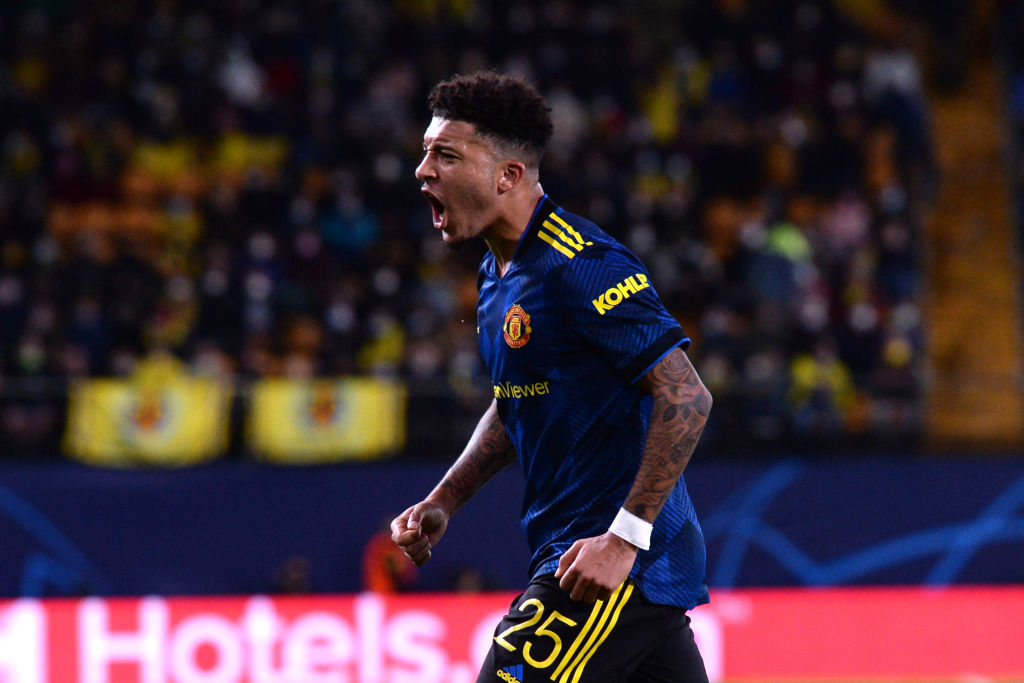
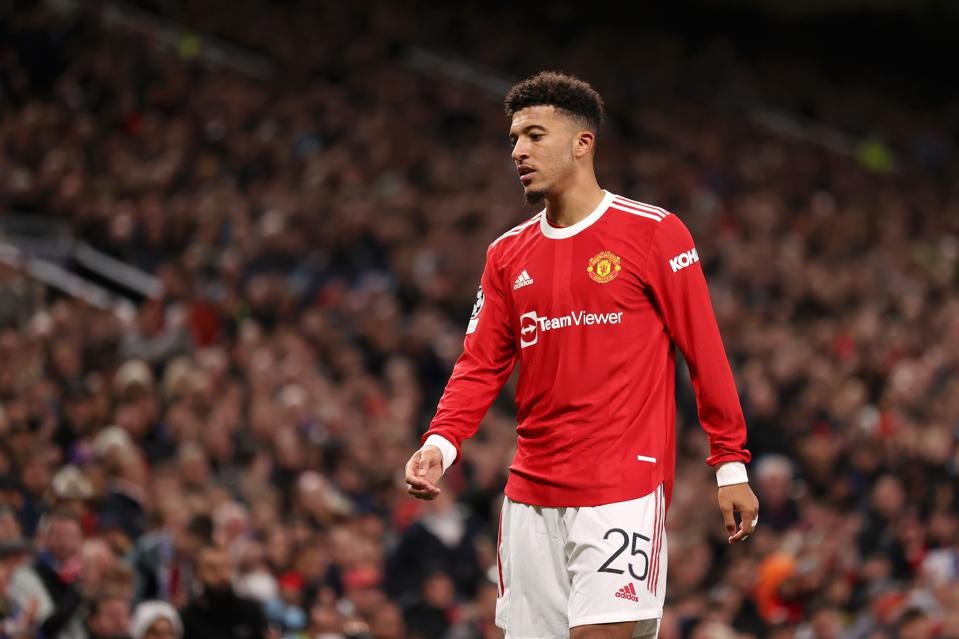
Jadon Sancho could play a key role in Ten Hag’s Old Trafford revolution (Photo by Aitor Alcalde/Getty Images)

Possessing a player of Antony’s qualities could be incredibly useful at Old Trafford, seeing as he is not only an effective out-an-out winger, but an extroadinary creative force via his wand of a left-boot and his ability to link-up effectively with his teammates. So far this season, the forward has registered eight goals and four assists in the Dutch top-flight, building up from his nine goals and eight assists last term.

Like Raphinha at Leeds United, he is just as good creating and forming chances out of nothing than he is scoring them, a unique weapon and surely one which Ten Hag will be looking to add to dramatically improve United’s attacking play.

Ajax often play so the Brazilian can receive 1v1 in a deep and wide position. His distribution from here is excellent – particularly his in-swinging crosses. He also enjoys being in a 1v1 scenario regardless of whether Mazraoui is overlapping or standing off.

Whist in these systems the attacking threat comes from the wings, the midfield also helps out and are positioned quite high up the pitch in attack.

The three central midfield players all have their own unique roles; the central midfield player, previously occupied by United outcast Donny van de Beek and now performed by Steven Berghuis, always maintains a higher position on the pitch in support of the attack.

The two remaining midfield players generally have more defensive responsibilities: the other midfielder – nominally operates in a box-to-box role helping out both in defence and attack, with the remaining midfielder – the single pivot tending to be more composed in possession and confident on the ball.
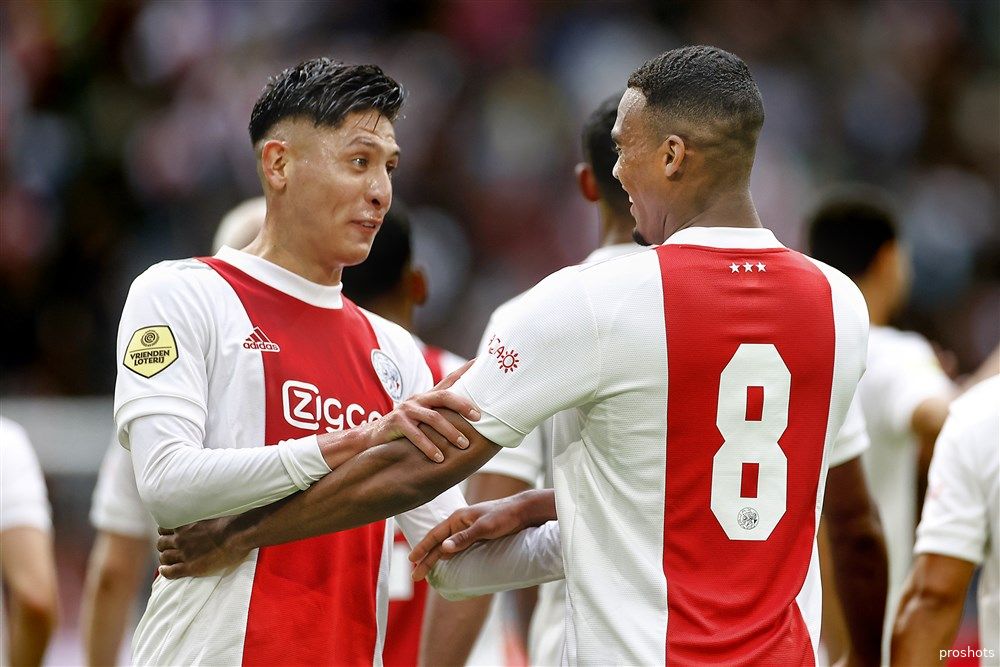
Edson Alvarez and Ryan Gravenberch have been Ten Hag’s go-to midfield pairing

The overarching point regarding creating chances, is that the distortion through movement and width facilitates the individual quality, which ultimately adds another layer to the level of attacking threat ten Hag’s Ajax produce. They are not based off on individual quality alone, but on the system incorporated, qualities Manchester United just cannot claim to possess currently.

In terms of defensive transitions, Ajax generally perform reasonably, despite a system which makes having a consistent shape rather tedious. They often pack areas near the ball, thus, upon losing possession they are able to nip transitions in the bud with a counter-press.

However, this is where their weakness could lie: their reliance on their full-backs. Blind and Mazraoui are not only vital to build-up, progression, and (decoy) overlaps/underlaps in the final third, but are also integral to their defensive play.

Erik ten Hag’s team is a tactically complete side, evidenced by their impressive performances on the pitch throughout his reign. The opposite can be said of United: The Theatre of Dreams has at times this season become nightmarish. The club must act quickly and decisively and have a manager in place as soon as the season finishes, so the rebuild can commence as soon as possible.
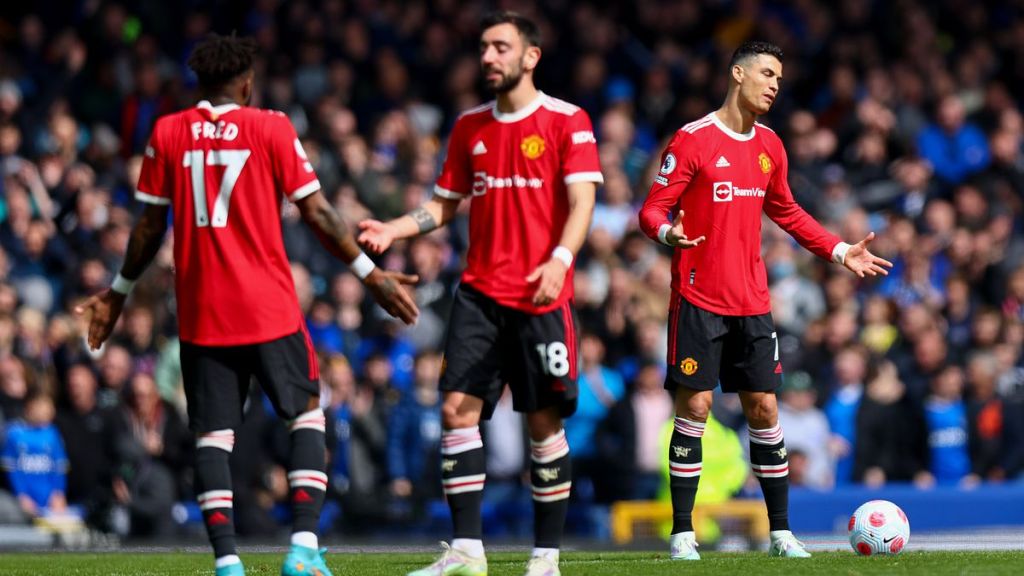
If the Dutchman was named manager, it remains to be seen if any of the current starting XI would fit the bill for such a free-flowing system. Many suspect a large majority of the current squad would be moved on at the end of the season.

Providing Ten Hag moves to Old Trafford, we can expect a strong brand of possession-based football, where the players have a high level of clarity in terms of their role and how to break down the opponent, systematically, as a team – a far cry from what’s been produced by the team in recent years.

AND IN OTHER NEWS, check out this scout report on a tremendous young talent excelling under Ten Hag’s tutelage
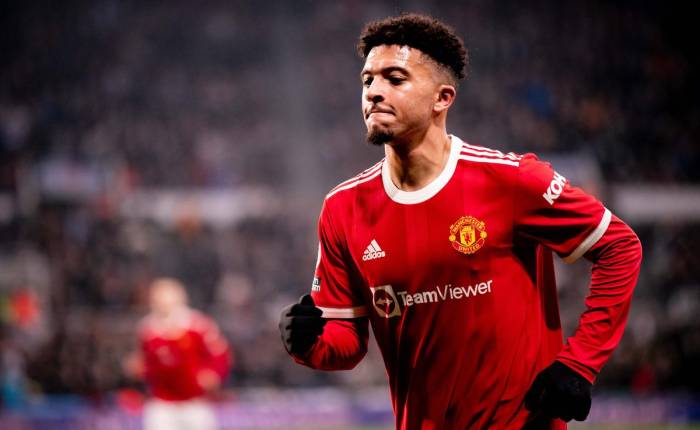
Jadon Sancho finally proving his worth to become a key player for Manchester United

Jadon Sancho finally proving his worth to become a key player for Manchester United

With this current Manchester United squad you just simply have no idea what you are going to get from one week to the next.

One moment they’ll reel you in with some sublime attacking displays and the next, they’ll leave you bewildering and in total disbelief. One constant has been the inexcusable contrast between first-half performances and second-half capitulations, as was again the case at Elland Road at the weekend, regardless of the calibre of the opposition or position of superiority they assume.

It’s become a regular pattern in recent weeks, but also telling representation that this United side may have a wealth of attacking talent, but as a unit they lack the street-smartness and composure to control games to their favour. They can be devastating but unbelievably frail, lacking the panache to control and dominate opponents over 90 minutes.

It’s evidently clear the squad needs some injection of control and bite in midfield, though something that Ralf Rangnick has increasingly been able to rely upon amid the chaos elsewhere in his side has been the performances of £73m summer capture Jadon Sancho.

The England forward is finally adding some goals and assists to his Premier League repertoire helping decide another pulsating mini War of the Rose battle.

You’d be lying if you had said Sancho hasn’t endured a difficult start to life in a Manchester United shirt. Of course, it hasn’t been plain sailing. At Borussia Dortmund, Sancho played in a team with a high-octane style where the general levels of the Bundesliga are slower and tailored perfectly to his flamboyant and jinky style, and though he has grounding of English football from his time at Watford and Manchester City, the English top flight is a significant step for a player still so young.

It took him all of six months to get his first Premier League goal for the club, against Southampton at Old Trafford. Fans have looked at his relatively hefty price tag, rather unfairly expecting him to hit the ground running but even the best of players in this division have found it incredibly difficult to make a swift impact upon arrival, and Sancho is no different.

At times the 21-year-old has been criticized for playing too safe, not showing off his usual mazy dribbles, tricks and deceptive movements but rather playing the ball back when faced 1v1 with his marker. It’s perfectly understandable though, when you’re still trying to adapt to your new surroundings, being too safety-first and cautious under pressure rather than taking risks.

Some even wondered earlier on in the season whether Ole Gunnar Solskjaer’s football, which gave licence to individual flair and creativity, really suited Sancho, and as a result found his place in the team limited. Indeed, Sancho seemed to be the collateral damage of the crisis engulfing Solskjaer, with the former United manager turning to the safety-first of a 3-4-1-2 system that had no room for wingers.

Such uncertainty in style and cohesion in United’s play ultimately led to the sacking of the Norwegian, and rather strangely led to Sancho’s immediate future at Old Trafford being under threat, even after Solskjaer had strongly advocated for the club to sign him last summer.

However, in all honesty, it can be argued that Solskjaer was the man holding him back. Since his departure, Sancho’s performance levels and adaptation to the team has markedly improved. His first goal for the club – under the stewardship of interim boss and former first team coach Michael Carrick – against Villarreal in the UEFA Champions League group stage finale, certainly showed a player finally beginning to get into his groove. The 21-year-old was superb on the night as United ran out 2-0 winners in the east of Spain.

Since Ralf Rangnick’s arrival though, Sancho is not just starting to show why United so desperately coveted him for two years, but is also fast becoming one of the few leading lights the club can depend upon to make crucial difference in matches.

The goals and assists may not have arrived until recently but it was clear Sancho was finally getting into the swing of things, accumulating more minutes under his belt, regaining his confidence, Rangnick almost simplifying his game and the tactical freedom around him and he’s now showing more glimpses of why Manchester United paid so much money for him.

Reports within the club in November during his difficult period were positive, with many believing Sancho would finally come good as the season progressed and that he has.

Against Leeds United, the weather helped set the scene and tone for Sunday’s ensuing battle, with incessant heavy rain leaving parts of the pitch sodden, making the trudging through no man’s land to reach your opponent that bit heavier underfoot.

With Leeds defenders bursting with rage and steam streaming from their nostrils bearing down on him, Sancho often remained calm and composed when clipping a sumptuous first time cross onto the head of Bruno Fernandes, who could not miss to put United 2-0 up.

It was the theme throughout the match surrounding Sancho’s performance. While others were slipping and sliding in treacherous conditions, Sancho used it to his advantage gliding across the pitch with such unerring grace and confidence.

Sancho has worked himself into such positions to create openings on plentiful occasions this season, but failed to find that killer pass. Now, he finally had that first elusive Premier League assist, on his 14th start, to prove the 11 he recorded in the German top flight, and the 18 he laid on in all competitions last season were no fluke.

Though, all his good work were about to be undone in a matter of moments in the second-half. Manchester United these days are never comfortable at 2-0 up, if you need any reminders just ask Aston Villa.

Infact, in three of their previous four league games, they had failed to earn victory having been leading by one goal at the break but, they instead conceded two quick-fire goals in 59 seconds early in the second half to allow Leeds back into it, and give the fans around Elland Road hope they could grab all three points.

With pandemonium still ensuing, and emotional embraces lasting longer than when a son or daughter returns home from university for the first time after a long period away, the quality and grace of Jadon Sancho once again dragged his teammates out of the mire and set them on the road to a crucial success.

With options either side of him, the weight on the pass for substitute Fred was something that only the very best can produce, and the Brazilian made no mistake. It was game, set and match from then on in.

Sancho didn’t stop there though, almost laying on another for Anthony Elanga after one of the most stupendous mazy runs and trickery down the touchline to get past three Leeds United players, but Elanga could only fire Sancho’s finely weighted pass straight at Illan Meslier in the Leeds goal.

Whenever Sancho is faced with creative decisions in an around the final third, he always delivers executing them with such wonderful composure, calmness and class that so few in Europe’s top-five leagues can match. It’s almost as if time stands still.

Sancho has now been involved in four goals in his last five games in all competitions – two goals and two assists – twice as many as he was in his first 23 appearances. He completed more progression actions (10) against Leeds than any other United player and he also made the third-most possession recoveries (9), only bettered by Luke Shaw and Aaron Wan-Bissaka (11).

Credit must be given to Ralf Rangnick for providing Sancho with the tools and tactical freedom to express himself, almost unburdening him with needless responsibilities but ensuring he performs at maximum capacity.

The German discussed his extensively relationship with Sancho from former years before he chose to move to Borussia Dortmund and that bond and trust is certainly being reflected on the pitch.

In fact, in a matter of months Sancho ranks amongst the best for creativity in the final third amongst Rangnick’s crop of players.

So far this season, the former Dortmund wizard ranks 2nd for key passes per 90 (2.17), 2nd for passes into the penalty area (23), 2nd for shot-creating actions per 90 (4.20) (the two offensive actions leading to a shot, such as passes, dribbles and drawing fouls), he ranks 1st for progressive carries (140), carries into the final third (51) and 18-yard box (36). He’s also recorded the most successful dribbles (33) out of any United player too.

Whoever said Jadon Sancho isn’t making an impact at Old Trafford? The above numbers emphatically tells us he is. When United are in need of creativity in the final third, its not just Fernandes they are looking to, but Sancho also. The 21-year-old has almost lifted the creative burden off his Portuguese teammate.

The 21-year-old is playing with real style and confidence again, and it was only a matter of time and opportunity. With all the uncertainty, negative press and rumours engulfing the club in past couple months, Sancho has provided United fans with the hope and optimism that the future is indeed bright at Old Trafford.

From struggling to be considered for a starting berth a few months ago to being one of the first names on the team sheet. Rangnick was always going to look favourably on a player he knows so well from his time in Germany, but in this current form, he simply cannot ignore the man who should be front and centre of this up and coming United revolution.

Where are the Sancho doubters at now?

Diogo Dalot may be Rangnick’s go-to man and that’s bad news for Aaron Wan-Bissaka

Diogo Dalot may be Rangnick’s go-to man and that’s bad news for Aaron Wan-Bissaka

The tide is certainly changing at Manchester United. The road forward is looking much more optimistic and clearer after the debacle that had been their final weeks under former manager Ole Gunnar Solskjaer.

In just a couple weeks since Ralf Rangnick’s interim appointment, the uncertainty and doubts that swept through Old Trafford has been completely wiped away. The small changes and progression may be difficult to pinpoint from the outside looking in but, certainly the German tactician and revolutionary has already made quite a drastic impact within the United camp.

Finally the club possess a leader who can imprint a vision, philosophy and an intriguing style of play that has been somewhat lost on the red side of Manchester, while the blue half continues to capture the imagination of every football fan in the country, even those in support of United.

Despite their impressive third and second placed finishes under Ole Gunnar Solskjaer, there was still the feeling that Manchester United were missing that telling ingredient that immediately would catapult them to the same levels as their rivals Liverpool and Manchester City.

Well, those inside the Theatre of Dreams for Ralf Rangnick’s maiden match as Manchester United’s new interim manager were treated to a number of novel sights, especially on the tactical side. 

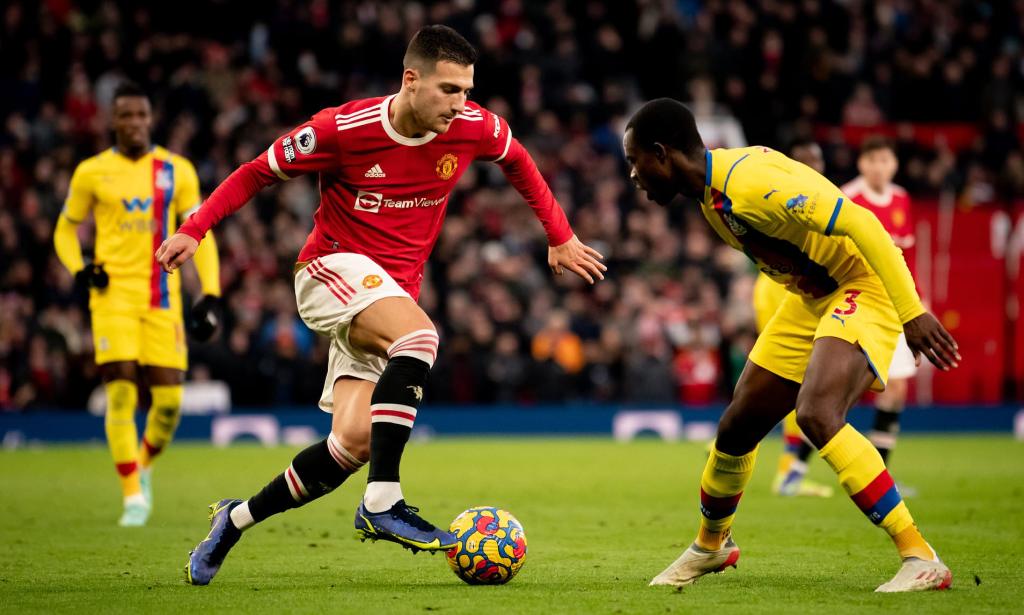
For starters, United played in a 4-2-2-2 shape. They pressed from the front and saw a different side to Fred, the much-maligned chaos merchant who scored the winner in a 1-0 victory over Crystal Palace.

More significantly, it was the sight an attack-minded full back marauding up the right wing, putting in piercing crosses into the box as well as providing a ruthless threat on that flank for the whole game.

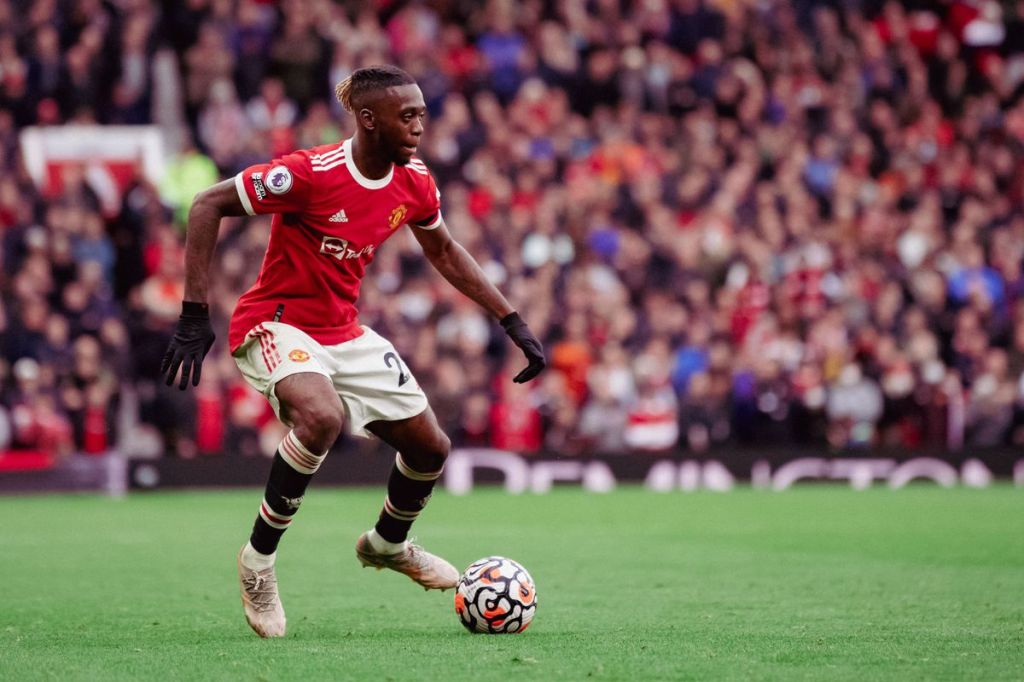
Under Solskjaer, that sight had simply gone amiss, with the Norwegian favouring the more defensive Aaron Wan-Bissaka in the position. Against Palace, Rangnick opted for Diogo Dalot instead and the transformation, balance and enthusiasm in United’s attacking play was stark.

As shown in Dalot’s individual stats against Palace, the Portuguese full-back proved a constant menace down that right-flank. For some 90 minutes, United fans thought they’d seen a reincarnation of the Old Trafford legend and former player Gary Neville.

Dalot as well as a rejuvenated Alex Telles, was pivotal to the way Manchester United played in Rangnick’s first match. Primarily, his role was to offer width and an outlet in a system that is otherwise narrow forcing play through the middle of the pitch. 

The Portuguese international was given a lot of space to stride into with out-an-out wingers Marcus Rashford and Jadon Sancho tucked inside, and offering threat in the half-space.

On top of this, Dalot proved a stunning supply line, passing the ball into the opposition penalty box five times, more than any other player on the pitch. He also made nine successful long passes, six ball recoveries and two successful crosses, putting in the sort of performance Rangnick cries out for from his full backs.

Manchester United’s performance had Rangnick’s fingerprints all over it, and it was quite considering he had a day’s worth of training to get stuck into his new job. The German has been hired to impose a new style of play a team that has been lacking such cutting edge front-foot football for a long-while and the full back position could be where we see the greatest changes between the Solskjaer-era and the new regime.

And this spells bad news for £50 million man Aaron Wan-Bissaka.

While there is no doubting the 24-year-old’s ability and defensive style as one of the best one-on-one defenders in the Premier League, he is supremely limited in his attacking output.

Wan-Bissaka has tried to adapt his natural game, but it’s clear that anything beyond the halfway line pushes him outside of his comfort zone. At times, he’s looked clueless, somewhat awkward and lacking in any real urgency when attacking in the final third areas.

That was the case in United’s latest game under Rangnick, their 1-1 draw against Young Boys in their final UEFA Champions League group stage bow. Diogo Dalot, who was rested for the game will have watched his English teammate’s performance and not feel threatened one bit.

Wan-Bissaka, who came in after missing the Arsenal game with a hand injury and after being dropped for the Crystal Palace match, had an evening to forget. The right-back unfortunately failed his audition in front of his new manager.

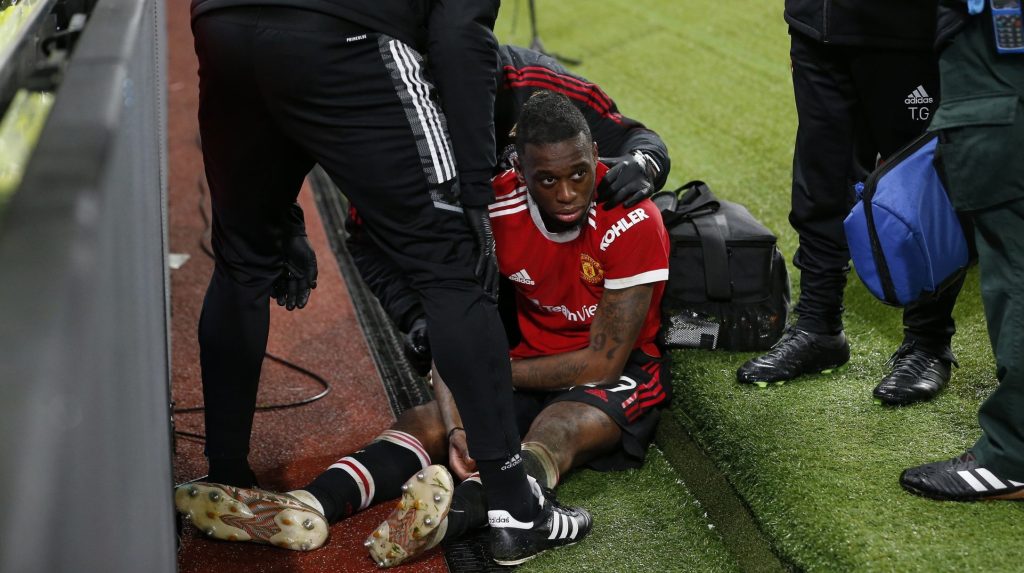
He received a bang to the face, another knock to his wrist and left the pitch on a stretcher after clattering into the advertising hoardings as he raced for the ball on the slippery surface in second-half stoppage time. It was a sorry sight for a player who has impressed on occasion, but doesn’t seem the reliable outlet United have needed and are crying out for when attacking down that right-flank.

Under Solskjaer, Wan-Bissaka’s limitations were masked somewhat due to the presence of a wide attacker, whether that be Mason Greenwood, Jadon Sancho or someone else, ahead of him on the right side. Simply stopping opponents from getting in behind often proved enough for the former Crystal Palace man.

It’s even gotten to a point where much of Manchester United’s opponents aren’t as worried or tested when Wan-Bissaka attacks down the right-flank. When Solskjaer’s team had the ball, they were almost forced to go down the side they felt weakest as a result of Wan-Bissaka’s frailties as an attacking full-back.

It’s also a position where United have fallen well behind their main rivals: Chelsea possess the qualities of Reece James, Manchester City have Joao Cancelo and Kyle Waker, while Liverpool possess the extraordinary creative abilities of Trent-Alexander-Arnold. It was simply no secret when Solskjaer was reportedly interested in the services of Atletico Madrid and England full-back Kieran Trippier last summer to provide the club with a much more complete and well-rounded full-back.

A failed move in which United had to make do with what they had.

Rangnick has a strong reputation for honing the skills of young players but the 24-year-old put in another ponderous and nervy display against Young Boys.

Wan-Bissaka, who was sent off in the reverse fixture back in September, failed to find a team-mate with any of his two crosses, did not play a single key pass and made the majority of his touches in deep areas.

His performance was the polar-opposite to the one Dalot put in at Old Trafford at the weekend, with the Portugal international showing he can excel in Rangnick’s preferred 4-2-2-2 formation.

With Rangnick at the helm, though, Manchester United will certainly need more dynamism from their full backs on both flanks. For Luke Shaw and Alex Telles, this won’t be much of a problem with both possessing the propensity to provide that telling impact in the final third.

Dalot, who’s attacking play has somewhat gone unnoticed at Old Trafford will add plenty to United’s new and reformed attacking play. The 22-year-old proved himself as a reliable option on loan at AC Milan last season and even forced his way into Portugal’s squad for Euro 2020.

So far in a matter of weeks, the 22-year-old has proven he isn’t out of his depth at this level.

For Wan Bissaka, the doubts still remain whether he can cut it at the elite level.

Wan-Bissaka has his qualities, of that there is no question. If humanity ever needs a sliding tackle or a vital block to save the world, then Wan-Bissaka’s the man. When it comes to one-versus-one defending, he is arguably the best in the country.

However, there are still facets of his defending that needs work, at times he too often drifts off when defending crosses from the opposite flank, and he hasn’t nailed down yet exactly when to press or hold his ground in a whatever shape United’s defence is taking, something Rangnick will be poised to help him solve.

Solskjaer and his coaching staff just did not have the qualities and skills to iron out the kinks in Wan-Bissaka’s game, but as we have seen already, Rangnick can spot a flaw and take the necessary steps to rectify it, he’s spent his whole career shaping young talents.

Certainly, Dalot has weaknesses in his defending too. Though, once Rangnick has United controlling games the way he wants, Dalot may not be tasked in fulfilling defensive duties as much as he has been previously.

In the attacking sense, Dalot is averaging an impressive 2.33 passes per 90 into the opposition box. Joao Cancelo is on 2.55; Trent Alexander-Arnold is averaging 2.76; Reece James’ average per 90 is 2.35. Wan-Bissaka’s stands at 0.69. He has attempted nine passes into the box in 13 starts this season; Dalot trails by two in just two starts and four substitute appearances, the differences where it matters most in attack are very clear.

The Portuguese international has also recorded 2.31 shot-creating actions per 90, while Wan-Bissaka sits at 1.62. Also Dalot averages more passes into the final third, more progressive passes, more passes into the penalty as well as crosses, exactly what an attacking full-back needs in his role. Dalot’s qualities supersede Wan-Bissaka’s in every sense of the role.

That’s one of the many reasons why Rangnick will continue to call on Dalot, as Manchester United’s permanent attacking full-back for now. Wan-Bissaka will almost certainly be given a chance to prove himself to Rangnick between now and the end of the season, but the pressure for him to improve his game really is on.

If the former Palace man doesn’t adapt his style, if he doesn’t absorb the exciting ideas and methods of his new boss, he may find his United career at serious risk.

Defining campaign for Manchester United; so what does Solskjaer need to maintain a strong title push?

Defining campaign for Manchester United; so what does Solskjaer need to maintain a strong title push?

According to The Telegraph, Manchester United boss Ole Gunnar Solskjaer has signalled his intention shift to a more forward-thinking and attack-minded approach for his team in the forthcoming season. A move which could disband the McTominay and Fred midfield pivot that has served the Norwegian well during his time as United boss.

Solskjaer has told those players who have returned to pre-season training that he is eager to implement a more adventurous 4-3-3 formation next term as he bids to end the club’s eight-year title drought.

Solskjaer favoured a double defensive midfield pivot of Fred and McTominay last season and invited criticism at times for being too cautious and defensive. Despite the success of such a setup, United fans will of course be expecting a change of formula next season, hence Ole Gunnar Solskjaer’s reported shift in formation and mentality.

The Norwegian’s thinking of a more mobile, dynamic and energetic duo of ‘McFred’ could well have been influenced in part by United’s 6-1 hammering by Tottenham in early October, when a midfield trio of Bruno Fernandes, Paul Pogba and Nemanja Matic were easily bypassed as Spurs ran riot at Old Trafford, and a desire to afford his central defenders more protection against pace.

However, Solskjaer and his staff are understood to have discussed playing two more forward-thinking midfielders ahead of a single defensive midfielder next season and have raised that possibility with the players this summer.

With the arrival of Jadon Sancho, and hopeful signing of Real Madrid centre-back Raphael Varane adds pedigree, and additions which are of high quality and perfectionists in their individual roles. For too long United have been made to fill round pegs in square holes, which has hampered their pursuit of the Premier League title, a trophy that has eluded them since 2013.

Ole Gunnar Solskjaer has been excellent in fixing those issues, but there is indeed more work to be done on a squad that is progressively improving and is also steadily on its way to ideally fitting the Manchester United DNA.

It remains to be seen how adventurous Solskjaer proves to be but he is eager for United to play on the front foot more at home especially, with Old Trafford expected to welcome back capacity crowds next season.

To do that, United do of course need a quality, assured, dynamic and dominant defensive midfielder who is also very good on the ball – similar in the mould of Michael Carrick or Paul Scholes – and is able to progress the ball expertly too, whilst also perfectly fulfilling his screening and shielding duties in front of the back four.

The club have been linked with West Ham captain and England international Declan Rice, however, West Ham continually insist he is not for sale, even a potential swap deal for Jesse Lingard will not be entertained. United also retain an interest in Rennes’ exciting teenage wonderkid Eduardo Camavinga, though his preference is to remain in France, or play in Spain for Real Madrid.

Nemanja Matic, Fred and Scott McTominay have indeed served the club well, but its time for United to go out an address a serious need in that defensive midfield role. All three unfortunately don’t possess the ability or nous to fulfil such a role.

Whether Manchester United have the funds to sign a quality defensive midfielder is unclear, but there is no doubt Solskjaer realizes that in order for his team to progress further this coming season, they must acquire an elite one.

So which players could potentially fit the mould at Old Trafford?

Teun Koopmeiners, AZ Alkmaar

Unquestionably, one of the most exciting and talented young midfielders in Europe right now, Teun Koopmeiners has been one of the hot topic of transfer rumours over the past few months.

Linked with a whole host of top clubs, including Arsenal, Liverpool, AS Roma, Atalanta, Leeds United, Inter Milan, Everton and AS Monaco, the man who joined AZ Alkmaar at 11 appears destined to leave his beloved club. AZ are reportedly resigned to losing him this summer, even for a relatively low fee of around £20million which is pretty much a snip for a player of his stunning qualities.

Having gained so much experience in Europe and domestically over his 150 appearances, there’s no doubting he’s now ready to make the step up to one of the top five European leagues.

First and foremost, Koopmeiners is a leader, a talker and an impressive authoritative figure on the pitch for AZ, and those are the type of players Manchester United need, especially where they are in their evolution under Ole Gunnar Solskjaer.

The 23-year-ol will bring an assured and dominant presence in front of the back, giving Solskjaer a very very strong spine in his starting line-up. As well as his measured and sturdy characteristics on the pitch, its his qualities on the pitch that makes him the complete package.

Adaptable and familiar with a range of systems, the 23-year-old’s primarily deployed as a central midfielder, but is perfectly capable of dropping back to act as a central defender, where his quality on the ball helps massively during AZ Alkmaar’s build up play.

United require a player who can effortlessly progress the ball and break the lines of play, and Koopmeiners is amongst the best midfielders in Europe in doing just that.

Koopmeiners is a true metronome on the ball, controlling possession, dictating the tempo of games and providing his team with the rhythm they need to breach opposing defences. He also hit an impeccable 17 goals and 7 assists last season with 7 of them from the penalty spot owing to his admirable versatility, technical excellence and a cool head when needed.

So comfortable and composed in possession, his exceptional distribution ensures he’s proficient at dictating passing passages and breathing life into attacks. Such an expert at helping his team beat the press with his penetrative line breaking passing, this means he can remove multiple opponents with a single pass. Not only is he a superb passer of the ball and is hugely reliable off it too.

Combative in the tackle, and a really strong presence when standing up to attackers, averaging 2.7 tackles per game.

How Paul Pogba and Bruno Fernandes would love to play with such a player behind them.

Koopmeiners is a low-risk, low-fee acquisition and is a perfect candidate to fulfil that gaping hole in defensive midfield. He provides security, composure, assuredness and a self-belief that few players in his age bracket could match. He’ll be a very sensible addition for Manchester United, a no-brainer.

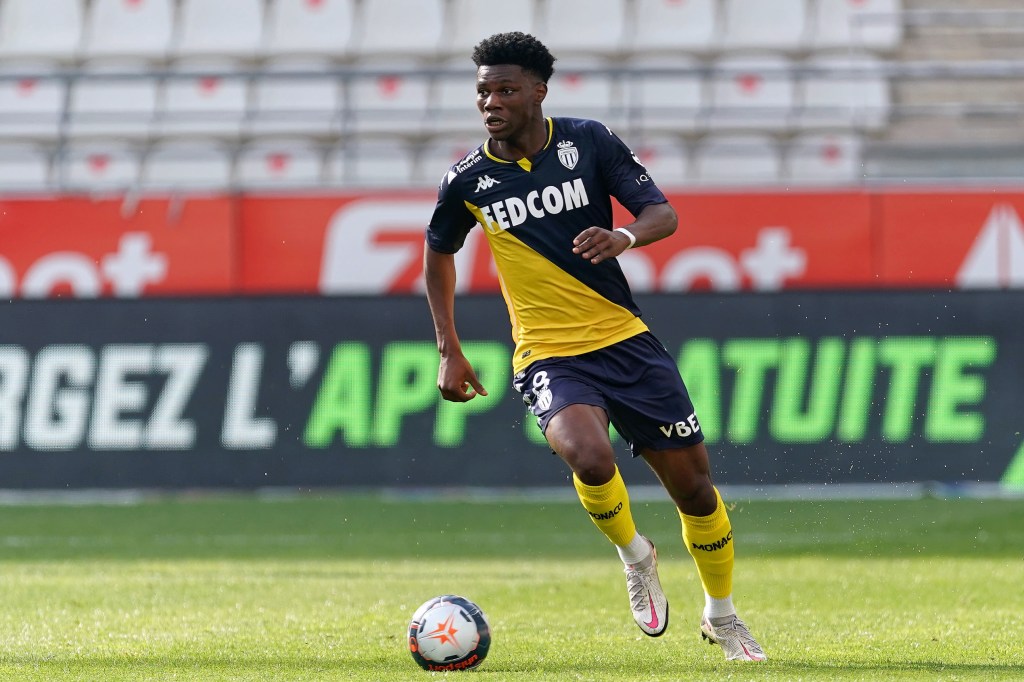
Aurelien Tchouameni, AS Monaco

Arguably Ligue 1’s breakout star of the 2020/21 campaign, Monaco’s French under-21 international Aurelien Tchouameni is on his way to worldwide acclaim. He’s been recently talked up by club teammate and Arsenal legend Cesc Fabregas, who said on Twitter that Tchouameni: “has the potential to become the complete midfielder.”

Indeed he is, Tchouameni is an unstoppable force both on and off the ball, and proved a key figure in Monaco’s tremendous first campaign under Niko Kovac where they finished third five points off new champions LOSC Lille.

Tchouameni ranked second in Ligue 1 last season for successful tackles (142), and ranked fourth for interceptions (64). Per 90 minutes, the French wonderkid registered an astonishing 6.06 tackles + interceptions highlighting his dominant and combative defensive contributions. He is an elegant but also a sturdy midfield destroyer, also averaging a tremendous 7.06 successful pressures per 90.

Manchester United need a destroyer, Fred and McTominay have succeeded as a pair performing that demanding role, but none of them can fulfil that role on their own. Tchouameni holds the ability, energy, defensive positioning, and understanding required for the role, despite his tender age of just 21. He would be incredibly much cheaper than main target Declan Rice and will provide Solskjaer with the reliable solid base needed in front of United’s back four.

Not only is he a imposing figure defensively, he’s also a fine progressor of the ball both in his dribbling and in his passing. Capable of breaking lines, to evade pressure and drive his team up the pitch. He averaged 4.06 progressive passes, 4.44 progressive carries, 1.38 carries into the final third and 4.53 final third passes. His key passes is relatively low in comparison to his counterparts (0.50) but that is not a weakness, but is a result of the position he takes up on the pitch, sitting deep and dictating play as well as breaking it up. He does however, contribute much in the attacking sense, recording two goals and 4 assists in Ligue 1 last season.

He would likely cost around £40 million and at the age of 21 he is a prospect worth pursuing, seeing as he’s also reportedly a target for Chelsea. Tchouameni is a future world star, and would represent a quality addition, especially if Manchester United don’t acquire his international teammate Eduardo Camavinga.

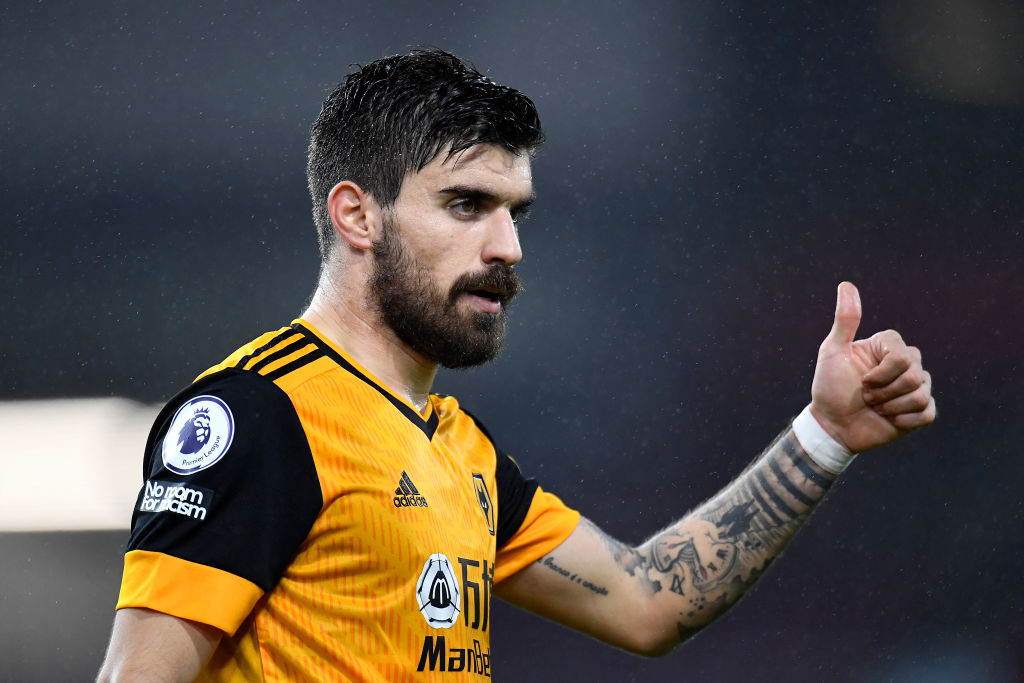
Ruben Neves, Wolverhampton Wanderers

Ruben Neves, has reportedly attracted interest from Arsenal over the past few weeks of the window, but now according to TalksSPORT, Manchester United have reportedly stolen a march on the Portuguese midfielder, with international teammate Bruno Fernandes pushing for the club to sign him this summer.

The Portuguese midfielder is Premier League proven, and sometimes doesn’t get the credit he deserves. A few United fans could well state their reservations over signing Neves, which doesn’t make sense. The midfielder is simply good enough to be playing for a top six Premier League club.

Ruben Neves has become a serial leader and a key figure since his move to Wolves in 2017 and he’d be a tremendous capture for Ole Gunnar Solskjaer. Superb long-raking passes, vision, technical qualities, good positional awareness, tactical understanding and a desire that so few midfielders can match.

Rather than signing a player with no Premier League experience, Neves will provide a ready-made Premier League quality acquisition and a reliable presence in the face of the demands of the English top-flight.

The 25-year-old ranked fifth across the Premier League for tackles won (66) in 2020/21 and also averaged a stunning 6.84 passes into the final third. He would be a welcome upgrade in central midfield for Solskjaer. A player capable of the unimaginative long-raking and eye of the needle passes as well as his scorching efforts from outside the box.

Ruben Neves is certainly ready for that next step in his impressive career.

Yves Bissouma, Brighton

Yves Bissouma has quickly transformed into one of the Premier League’s most destructive midfielders, and any of the top six clubs would do incredibly well in recruiting his services in the near future.

If Solskjaer wasn’t impressed by Bissouma’s performance against his side at Old Trafford earlier this year, then what did he take from that game in April? Yves Bissouma was absolutely tremendous despite Brighton’s close-run defeat, completing six interceptions and winning three tackles.

However, that performance is a reflection of his growth, maturity and dominance all throughout last season. Bissouma is unquestionably one of the best defensive midfielders in the English top-flight. The Malian international made the 2nd most tackles (114), won the 2nd most tackles (74), the seventh most interceptions (60) and committed the fourth most fouls (54) in the Premier League.

You don’t need to read into that too much to understand his important and decisive defensive contributions. He is simply outstanding. He is, like the other players on this list, so good on the ball as well as he is off it. Bissouma averaged 3.55 final third passes, 3.29 progressive passes, completing 88.7% of his distributions. Bissouma is also a unstoppable freight train when moving with the ball at his feet, evading opposition pressure and providing a much needed outlet for Brighton’s build-up play, averaging 4.54 progressive carries, whilst also recording 1.45 successful dribbles.

Bissouma has swiftly morphed into the complete midfield package in the Premier League, and its equally impressive considering how he started out in the English game. How Manchester United could do with his destructive presence in midfield. The 24-year-old looks primed for a big move and passing up on him could be a mistake.

Boubacar Kamara, Olympique de Marseille

The Red Devils’ search for a quality number six has been well documented, and Marseille’s talented 21-year-old defensive midfielder Boubacar Kamara could provide the ideal solution to the McFred pivot problem. He betters both this season in terms of goal-creating actions (seven), press success rate (35%), progressive dribbles (128) and aerial duel win rate (63%). 

Of course, team style and its influence on player outputs must be accounted for, but given he is younger than both and currently statistically outperforming them, the potential long-term value in this signing is huge. It also is valuable that he clocked considerably more minutes than both, as player availability is key currently, and avoiding injuries/burnout in a congested season speaks volumes about the resilience of a player.

United’s problem this season just gone was certainly keeping goals out – Spurs (45) were the only of the super league clubs to conceded more than Solskjaer’s side (44), and they ranked in the bottom six Premier League sides for tackles and pressures in the midfield third, an area where Kamara thrives. StatsBomb data also has United as the third most dispossessed side in the league last season, so the Frenchman could offer some much needed security in-possession.

A superb ball-winner in multiple forms – a presser, dueler and interceptor – but also as comfortable against the press as he is when pressing himself. The 21-year-old is typically Marseille’s deepest midfielder in-possession, comfortable in drawing opponents in through ball retention, then bypassing them through silky footwork or combinations with teammates.

He’s certainly the most risky, outside bet on this list of potential solutions for Manchester United’s lack of a capable defensive midfielder, but he’s a player worth looking at to fill the void. He’d be very cost-effective too, considering his remarkable potential and room to become one of the best in Europe in his position.

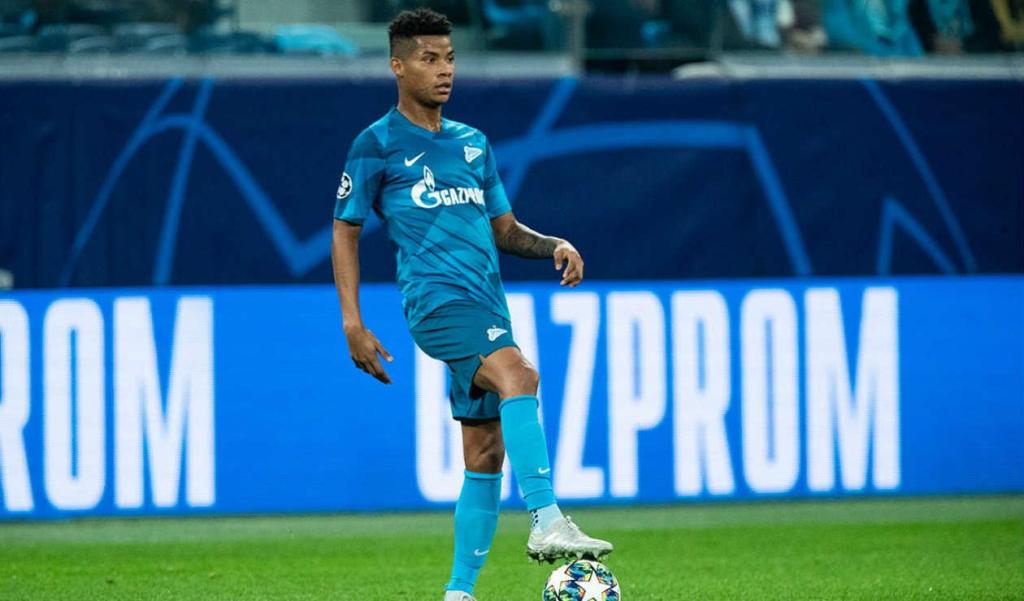
Wimar Barrios, Zenit St Petersburg

Every top club in Europe needs a defensive midfielder who just loves to screen and protect, to do the dirty work, to be destructible. Manchester United have not possessed a player of that ilk since the legendary Paul Scholes or even Roy Keane.

It was the hallmark of Sir Alex Ferguson’s teams, to have that perfect balance between defence and attack, someone who can destroy in the middle of the park, and then allow his more forward thinking teammates to run amok in attack. What was it that Sir Alex famously said back then? “Attack wins you games, defence wins you titles.”

Ole Gunnar Solskjaer is indeed looking to address that lack in his squad for next season, with the pursuit of Raphael Varane, and a quality, elite defensive midfielder will do to, and that brings us to Zenit St Petersburg’s tremendous Columbian destroyer Wilmar Barrios. The 27-year-old is the archetypal midfield destroyer and more.

Barrios has arguably been Columbia’s most important player since his international debut in 2017 and has been a dominant and destructive presence in Zenit’s team, one which has triumphed in the Russian division for three seasons in a row. Much of that has been down to Barrios’ consistency, leadership, and complete performances in front of his back four. It’s a shame, his high levels of consistency has somewhat gone under the radar for too long, and its only right he is placed on this list as a man who could solve United’s deficiencies in the middle of the park.

Barrios is a player with such unerring, wiry strength, great recovery pace and a pure destroyer in midfield. He is indeed a modern day Roy Keane. According to Wyscout, Barrios averages an astonishing 13.4 successful defensive actions per90, whether its a tackle (2.3 per game), an interception (1.8 per game), a pressure or an aerial duel, also he only gets dribbled past 0.6 times per game meaning he is incredibly difficult to get past when attacking. He is a defensive machine.

He also wins 66% of his defensive duels, which is second amongst any defensive midfielder in Europe’s top five leagues. Barrios, as well as his defensive contributions, is also a good ball-progressor too either with his passing or his line-breaking runs evading pressure and operating in tight areas, he is unstoppable when performing these actions making him a perfect Premier League defensive midfielder.

At 27, he’s entering his prime years but also has such prestige experience and history in his career already, winning titles with Boca Juniors and Zenit St Petersburg throughout his impressive career. He’s the perfect candidate, at the perfect age to drive United forward once again.

Wilmar Barrios is a must-have.

Mount, Foden and Grealish could be the defining ingredients for England this summer

Mount, Foden and Grealish could be the defining ingredients for England this summer

Is this the year the England football team finally delivers a major international tournaments to its coveted waters? That’s the million-dollar question so regularly asked before every major tournament England grace. It’s become a tiresome question for many England fans, even for those who have no form of affiliation to England.

Over the past decade, so few managers have tried and unfortunately suffered under the weight of expectation; Sven-Göran Eriksson, Fabio Capello and Roy Hodgson are just three of a considerable list of England managers who failed to successfully build a winning team filled with great individual talents.

Steven Gerrard, Frank Lampard, Wayne Rooney, David Beckham, Ashley Cole, Sol Campbell, Gary Neville, Paul Scholes, Gascoigne, Lineker, and Hoddle are names which garnered such huge optimism and hope that one day England may just match the lofty heights of that fairytale 1966 World Cup winning squad. However, as good as they were, they failed so miserably.

Is it down to the quality of coaching, is it the grueling English media pressure, or is it that our players just simply cannot fulfil their undoubted club potential on a more grandeur international stage?

Whatever the solution may be, current England manager Gareth Southgate – a former unfortunate victim himself of England’s past failures as a player – has marginally managed to navigate and manipulate some of those pressures and expectations and use them for some kind of good, leading England to the semi-finals at the World Cup three years ago, building a side capable of matching the likes of Germany, France, Portugal and Spain.

Now, the question is, heading into this summers Euros, can England finally go that one step further and deliver on the promise that so many of their current footballing prospects and stars bring? It genuinely feels different now and it isn’t just about that usual optimism that we cling to but there’s now an assurance, a confidence springing from the calibre of uniquely gifted footballers that have burst onto the scene over the past few years. Yes, we had the Gerrard’s, the Rooney’s the Lampard’s before but their time came and went.

The players at our disposal now hold a unique kind of ingredient, a confidence that is even greater than before. Gareth Southgate himself admitted this week his head will be on a platter if this England squad fail to reach the latter stages once again. Indeed, it will be.

There is a different feel to this current squad, blessed with players representing a new breed of generational English talents. Players who could finally provide the X-Factor England have been so desperately crying out for, for a long while. Kane, Rashford, Sterling, Maguire, Alexander-Arnold, James, Sancho, Rice, the list goes on. These players are built differently, you could argue they are more “pure” and “street” footballers than those we’ve had before.

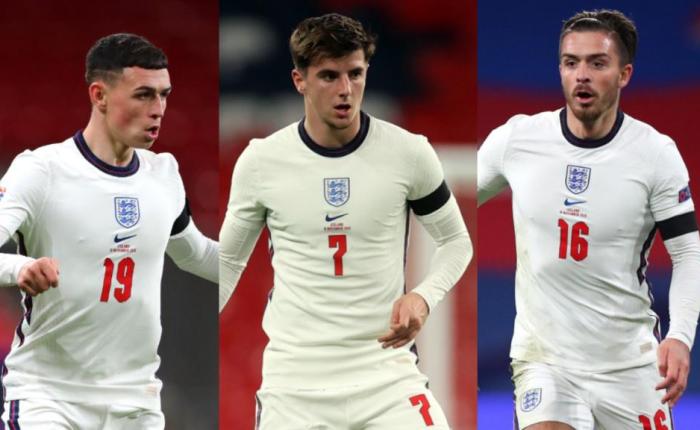
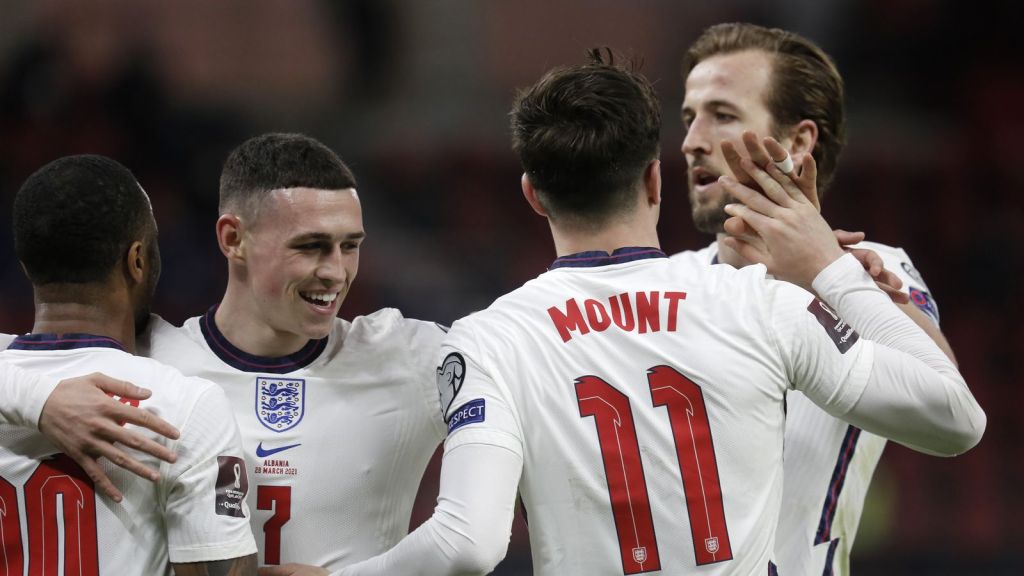
Though, three players who give off those unique characteristics, who fans will be so heavily reliant on this summer, who won’t crumble under such weight and pressure but in fact, have the ability to knuckle down and thrive under it: Mason Mount, Phil Foden and Jack Grealish. How Gareth Southgate manages to maximize their potential and best make use of them this summer is a whole different matter entirely. However, they are such sublime individual talents Southgate and any manager coming after him, just simply cannot ignore.

These three players are indeed the defining ingredients, the difference-makers, the kind of players that could finally lead the nation to glory, if not this summer, then in the near future. What’s so key within England’s current crop of stars is the versatility, the ability to perform and become effective in a range of positions, no matter the system the manager deploys.

England’s best footballers before were, almost without exception, conditioned to play one role and one role alone. Arguably, that’s why the so called “golden generation” failed – they simply could not work together, there was no cohesion, no flexibility and its why England so often flattered to decieve. It remains to be seen how Southgate plans mesh his talents into a winning unit, but its almost impossible to imagine something similar to before – in respect of suitability – happening again. The panache and pizzazz of Foden, Grealish and Mount simply means there can be no room for such ignorance.

Throughout this season, Mount and Foden in particular have flourished in a variety of roles, owing to their excellent tactical awareness and understanding as well as their unique footballing gifts. Their application and adaptation to roles which may be perceived as uncomfortable for them by some, has been nothing short of brilliant this season. Mount has operated as a No.10 behind two forwards, as a left-sided player drifting in the half-space, as a roaming No.8, and most regularly under Thomas Tuchel as an inside-left player in a 3-4-2-1 formation.

For Foden, you can argue has performed in similar roles for Guardiola in a 4-3-3 shape. It may be his future position is that of a No.8 breaking from midfield but he’s become at home from the left-hand side, and even as a false-nine. In City’s mesmerising 4-1 win over Liverpool at Anfield, Foden played expertly in four different positions, including up-front.

Grealish, the same. The Villa superstar can perform in a variety of roles such as a No.8, a No.10 or as an inside-forward on the left and right. He’s so devastatingly effective where ever he is on the pitch. With such options available to Gareth Southgate regarding their versatility and positioning, there’s no room for a Lampard/Gerrard situation to somehow occur.

Mount, Foden and Grealish are, of course, a different breed of footballers.

All three of their defining qualities is the ability to take possession of the ball, and express themselves. The ability to take responsibility when in possession, and force the issue, to make something happen in attack. Also, most notably their appreciation of space. Mason Mount is a defining example. A player who is constantly calculating opponents’ positions and assessing which spaces he needs to operate in order to hurt the opposition. It is a quality and an area of his game that somehow goes unnoticed to many, but certainly not to his manager. That’s why Tuchel has entrusted Mount to take the lead for Chelsea in attack.

Foden, with 14 goals and 8 assists to his name for Manchester City this season – a stunning return – appears less determined to receive ball in space in comparison to Mount but he’s so brilliant and so sublime to watch when taking passes on the half-turn and weaving past his markers with such unerring ease. Indeed, Foden’s quality in those situations is demonstrated by the willingness and confidence of his teammates to feed him even when he’s tightly marked. Mount and Foden’s abilities to scan space, their opponents and their teammates ahead of them are characteristics which are rarely seen in English footballers, or even appreciated.

The same goes for Grealish, although much of his work occurs often in more advanced areas. But, his ability to dribble his team out of trouble or to drive them into the attacking third is just simply a joy to watch. Grealish’s ability to break opposition lines and to influence the efforts and contributions of those around him is an unmatched quality. You’d rarely find such similar talents around Europe.

The confidence, aura, leadership and the audacity at which Grealish operates for Villa makes him without a doubt, one of the best players in the Premier League, and its even more telling that he doesn’t play for any of the division’s “top six” clubs. It’s absurd that Grealish still sat statistically as one of the top players for chances created and successful dribbles even after missing three months of football through injury.

Grealish may not start for England at the Euros due to his recent injury lay off, but he’s a wonderful option to have if things may not be falling England’s way in matches. A player who offers something completely different to Mount and Foden, but yet still offers the same levels of confidence and assuredness that opponents just cannot live with. That’s why England have a greater chance this summer.

In 2018, we didn’t have these luxuries, players who can break opposition lines, and dissect sturdy defences at will. We also have such unique gifts in Jadon Sancho too, lets not forget about his world-class abilities.

England have often failed to live up expectations because they just simply cannot match it with the best sides in major tournaments or that in games where they are expected to win, we just somehow shirk and fall under the weight of expectation. Mount, Foden and Grealish offer such flexibilities in our game to solve these recurring issues, that we simply cannot take them for granted.

It’s obviously questionable whether there is such things as an “English” footballing identity and the unnerving perception that English football “style” of football so often fails to match those of Germany, Spain, Portugal and France. However, the narrative is progressively changing. By virtue of the evolution of Premier League football, due to the identity and philosophies provided and developed by top-level coaches in the English top-flight right now, our players are benefitting heavily from these ideologies. Mount and Foden are fine examples, with both flourishing under the tutelage of Thomas Tuchel and Pep Guardiola respectively, where the emphasis is on patient build-up and tiki-taka football coupled with aggressive pressing. Those ideologies are increasingly being embedded into our current breed of English footballers, and its already benefitting our own understanding towards the game.

There is a chance now, that England, when coming up against the likes of Germany, Spain and France can go toe-to-toe with them on an equal playing field.

Through the unerring and rich talents of Phil Foden, Jack Grealish and Mason Mount, the style and perception of English players is being rewritten. Once England produced energetic and dynamic box-to-box midfielders as well as classic number 9s, now we are producing pure footballers, intelligent, all-round technical attackers who add such a wide range of flexibility and versatility to our game.

The direct comparisons between Mount, Foden and Grealish are inevitable but the pleas to stop the optimism, hope and hype surrounding these fresh and unique footballers are incredibly unnecessary. Why can’t we celebrate such fine and pure footballing prospects? Considering what came before them, its about time we appreciate how much English football has changed for the better.

Lets hope Gareth Southgate can expertly harness the unique footballing ingredients at our disposal and cook up a storm at the Euros this summer.

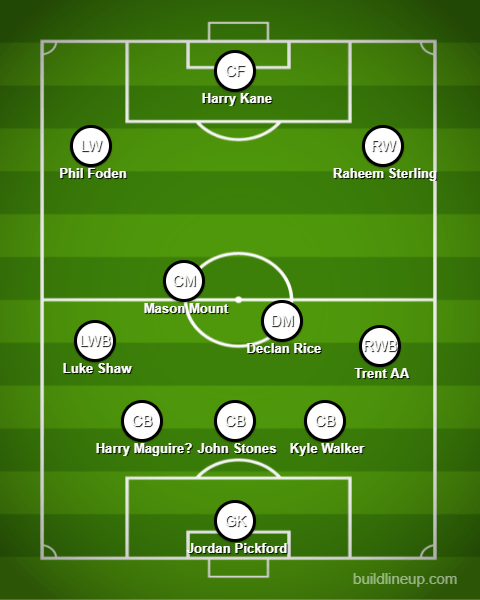
My England XI to start Euros opener against Croatia: