The Outstanding Progression of Declan Rice

The Outstanding Progression of Declan Rice

West Ham United continued their impressive upward trajectory under David Moyes with a superb performance against Aston Villa at Villa Park, powering to a 4-1 win.

It was a triumph which meant they finished gameweek 10 in fourth spot, three points away from fifth-placed Manchester United, but also it was their fourth league win in 5 games and continuing their unbeaten away form so far this season.
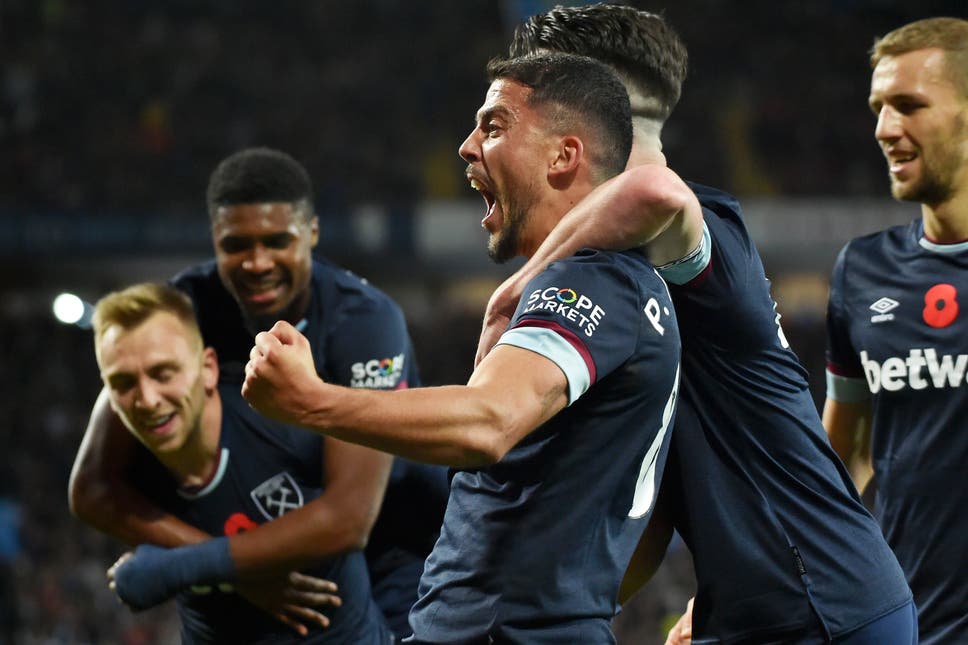
There is plenty of excitement and optimism at the London Stadium, as David Moyes is in the process of moulding and shaping such a well-rounded, organised, fine-balanced and progressive footballing unit.

From 1st choice goalkeeper Lukasz Fabianski right down to lone-hitman Michail Antonio, the former Everton and Manchester United boss is assembling a team seriously capable of laying down a major assault on an unprecedented top-four sport come May, and you certainly wouldn’t put it past them.

Who knows? Maybe, just maybe the Hammers could well end this campaign with their first real competitive trophy since their FA Cup triumph in 1980. The club are still involved in all their cup competitions so far after beating EFL Cup holders Manchester City to make it to the last eight.

Much of West Ham’s fine progression has not only been down to their togetherness, spirited and organised nature on the football pitch, but its a team filled with unlikely individuals playing at the top of their games, like academy product Ben Johnson – grabbing his first professional goal against Villa – Jarrod Bowen, Pablo Fornals, Angelo Ogbonna, Aaron Cresswell, Tomas Soucek, Said Benrahma and the colossal Michail Antonio up front.

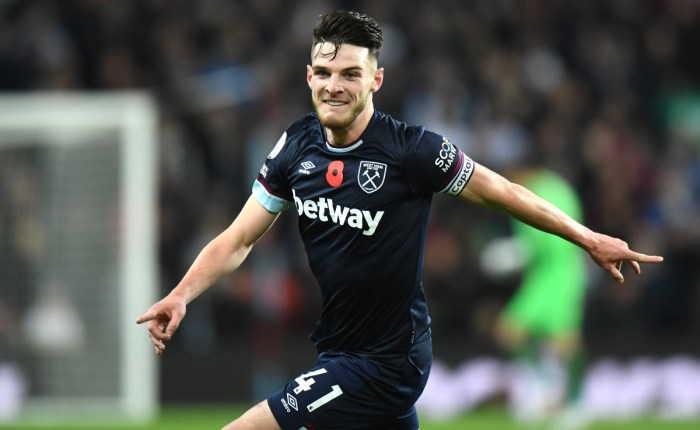
But one man who just simply gets better with every passing game, continuing his stellar progression under David Moyes’ tutelage is club captain and one of England and Gareth Southgate’s trusted lieutenants Declan Rice.

The 22-year-old has been in sensational form over the last couple of campaigns but has taken his game to another level in the opening weeks of the 2021/22 campaign, with pundit and TV host Gary Lineker labelling his latest performance against Aston Villa “magnificent”.

Rice has been central to West Ham’s impressive start to the campaign, putting in some superb performances from midfield alongside Tomas Soucek.

“I don’t think he’s been consistent enough. He doesn’t stay with runners. He’s sloppy in possession… I can go on.” This was the grueling assessment from Roy Keane on Rice in November 2019. But two years on, the Irishman has been forced to eat his previous words and completely alter his assessment of the midfielder: “He’s 22 and I look at where I was when I was 22, and he’s way ahead of me.”

Rightly so, Declan Rice has developed into one of Europe’s most prestigious young midfielders in the space of about a year, or even inside this calendar year. The Hammers academy product has dramatically improved all aspects of his play, in his defensive work but most significantly in his distribution and ball-progression.

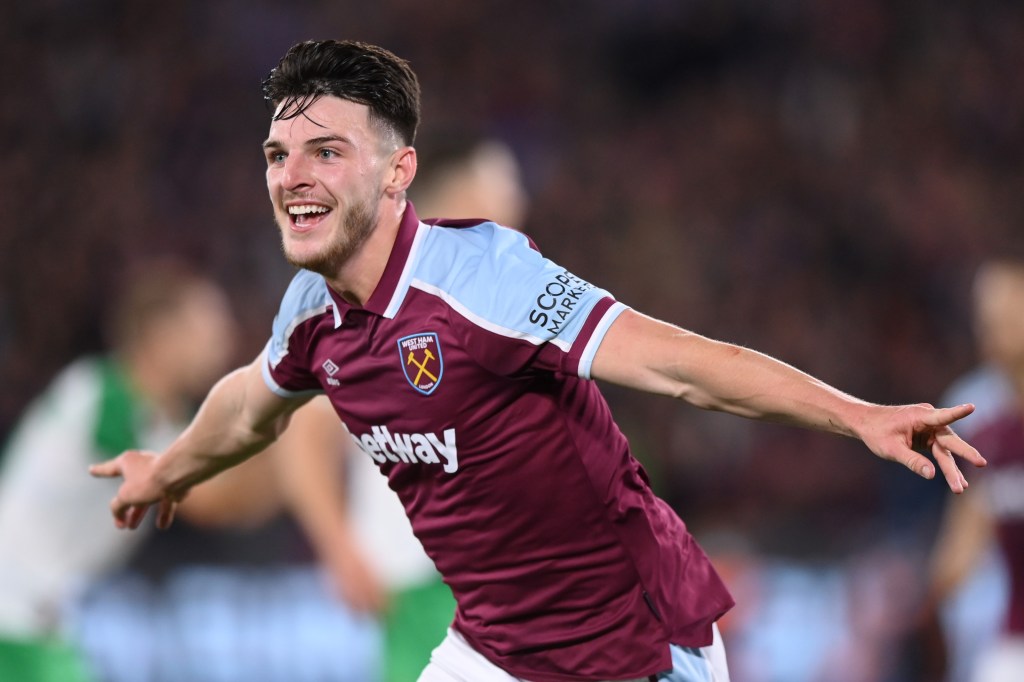
Rice has been the catalyst for much of West Ham’s efficient and devastating counter-attacking goals so far this campaign, and earned the treat of contributing to two of West Ham’s four goals against Aston Villa, setting up Ben Johnson for the opener and taking advantage of Emiliano Martinez’ poor positioning with a 25-yard piledriver into the bottom corner – a true reflection of the kind of confidence and elegant aura that the 22-year-old is currently performing from.

In actual fact, it’s difficult to pin-down Declan Rice’s best role, and that’s testament to the varied quality of the midfielder.

In previous campaigns, the midfielder has been defined as a deep-lying defensive midfielder, tasked in shielding his back-four, disrupting opposition attacking moves while recycling possession to his more forward-thinking teammates.

However, Rice’s game has transcended much beyond that, he is a hybrid midfielder fulfilling a number of roles and duties within the Hammers midfield, its no wonder Chelsea and Manchester United are reportedly stepping up their interest in the so-called “£100m man”.

This season, Rice has maintained and excelled in his defensive anchoring duties. He’s averaged 2.9 interceptions per 90 minutes so far this campaign, the most of any midfielder in the Premier League. Also, the 22-year-old has won on average 1.60 tackles per 90 minutes, 2.00 blocks, 1.10 clearances and completed 4.30 successful pressures.

Although Rice’s defensive work has been correctly lauded prior to this season, it’s something that he has improved upon further since the summer, and his first major international tournament for his country has proven a pivotal experience in his outstanding development.

Though one aspect in which Rice is totally excelling is his distribution of the ball, and he recognises it himself: “This season, one thing I can definitely say I have improved on is my play with the ball.” This is why it is now hard to pin down the English international’s best role – a box-to-box, or deep-lying playmaker? And that’s not a bad thing, in fact its a celebration of how far the midfielder has come under David Moyes.

Rather than simply a defensive midfield anchor, Rice has transformed his passing ability of late. He’s completed 608 passes – the 3rd most of any midfielder in the Premier League behind Manchester City’s Rodri (632) and Liverpool’s Jordan Henderson (635). Also, his contributions to West Ham’s possession play in dissecting defences is simply brilliant too.

He averages 1.20 key passes per 90, 6.80 final-third passes – the third most of any midfielder in the competition also – and 4.20 progressive passes (completed passes which moves the ball towards the opponent’s goal at least 10 yards from its furthest point).

Even more impressively, this has been achieved with a 91% passing accuracy, a figure 5% higher than last season. The West Ham vice-captain has for a long time been considered someone that plays the easy pass. However, the stats clearly show that has not been the case this season.

He also has the 2nd highest figure of Premier League midfielders for total progressive distance of passes. Compared to last season, Rice is making 1.5 more progressive passes per 90. So whilst Rice’s passing accuracy has improved from last season, he is actually making far more progressive, risky passes, making his improved passing accuracy all the more impressive.
(Photo by Justin Setterfield/Getty Images)

Furthermore, his dribbling of the ball, progressing his side up the pitch or evading opponent’s pressure has also represented a stand-out feature of his game. As shown in the image above, according to OptaJoe, only Bernardo Silva has amassed more progressive carries (110) than Rice’s 106 which makes for yet another pleasing reading for the English international.

Per 90, that reads at 7.40 progressive carries, whilst also averaging 3.20 progressive carries into the attacking areas of the pitch. Rice is a driving force, a true metronomic figure on the ball for West Ham whilst also becoming a dominant, sturdy and tough-tackling figure when defending his own goal.

Most notably, Rice’s ability to carry the ball up the pitch can be seen in his remarkable solo goal against Dinamo Zagreb in the UEFA Europa League. After intercepting the ball inside his own half, he shrugs off a challenge before marauding into the Zagreb box and firing past Livakovic. Rice’s headed goal against Rapid Wien signalled the Englishman’s newfound intent to break the lines and get into the box.

Compared to last campaign, Rice is managing more touches all over the pitch highlighting his ever-increasing contributions to West Ham’s play. He’s so far recorded three goals and three assists so far in all competitions. Defensive midfielder? Surely not.

Clearly, he is now more intent and confident in joining the attack while Soucek screens behind him, and vice-versa. It is why both Soucek and Rice have become arguably the Premier League’s most effective and cohesive midfield pivot, and that is a testament to the squad David Moyes is assembling at the London Stadium.

After all, he did a brilliant job of anchoring the England midfield during the recent European Championships in June/July. However, so far this season Rice has elevated his game once again. Not only has he built upon his screening work in front of the defence, but also his ball progression and contributions to West Ham’s attacking play.
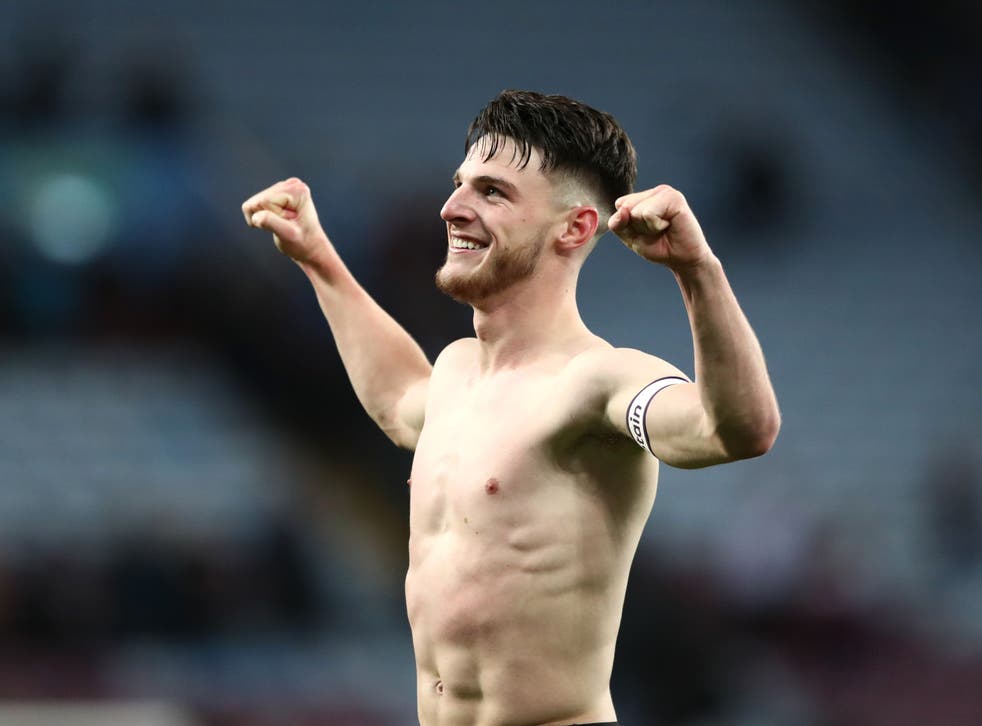
Whether it’s his powerful, driving runs or his crisp passing through the lines, Rice has developed his play on the ball considerably. West Ham now have a unique talent – a hybrid player and arguably one of the most complete midfielders in European football right now.

What a player.

How Jack Grealish could fit in at Manchester City

How Jack Grealish could fit in at Manchester City

Manchester City have completed the signing of Jack Grealish from Aston Villa for £100m in the biggest deal in English football history.

The 25-year-old midfielder joins on a six-year deal after the Premier League champions activated the £100m release clause in his Villa contract on Friday.

The transfer fee also breaks the previous record in English football held by Paul Pogba when he re-joined Manchester United for £93.25m from Juventus in 2016.

It’s a deal which also makes Jack Grealish the most expensive British footballer in football history, surpassing Gareth Bale when he joined Real Madrid from Tottenham in 2013 for £85million.

The deal marks a stunning statement of intent from Pep Guardiola and Manchester City as the Premier League champions embark on retaining their crown next season.

Jack Grealish has proved one of the most creative players in the Premier League since Aston Villa’s promotion three years ago, whether through his passing, his unerring dribbling with the ball, and his sheer will and bravery to take opponents on, its no surprise Pep Guardiola feels he is the right man to refresh his star-studded squad.

The Aston Villa faithful will of course, be gutted and disheartened at this move, after all Grealish has achieved with the club, not least his remarkable gifts and talents that have rescued them out of various difficult situations since his emergence in the first team.

Grealish has indeed become an iconic figure at his boyhood club, but certainly now feels the move to Manchester City, one of the best clubs in Europe and the best in England is one he cannot turn down, especially the lure of playing in Europe’s most prestigious competitions, the UEFA Champions League.

Also, playing under one of football’s most decorated coaches ever in Pep Guardiola is an opportunity many footballers right now would certainly kill for.

At 25 years of age, its an opportunity that doesn’t come around too often, so you’d almost forgive Grealish for making such a huge career decision.

While Aston Villa lick their wounds at the sight of Grealish’s departure, Manchester City and Guardiola will be licking their lips at the sight of possessing one of the best creators in the country and one of the most talented players this great nation has had to offer.

Now, Guardiola will be contemplating with both joy and anguish at how Grealish will fit in at such a talented and world class squad. How do you fit in both Kevin de Bruyne and Jack Grealish in the same XI? How will Guardiola look to improve Jack Grealish? What qualities will Grealish bring, and how will it complement Guardiola’s style?

First and foremost, the 25-year-old will add more of a cutting edge to Manchester City’s play. Guardiola’s side scored 83 goals last season, the most of any team in the division, and possessing someone of Grealish’s ilk will only increase that figure even further.

They do say in a title winning team, that adding more quality to it and improving the following year means even more greatness and sustained success, than just sticking with the same batch of players. The whole squad becomes hungrier, competitive and more vibrant and Guardiola is doing just that with the capture of Jack Grealish.

Aston Villa’s great loss, is Manchester City’s great gain.

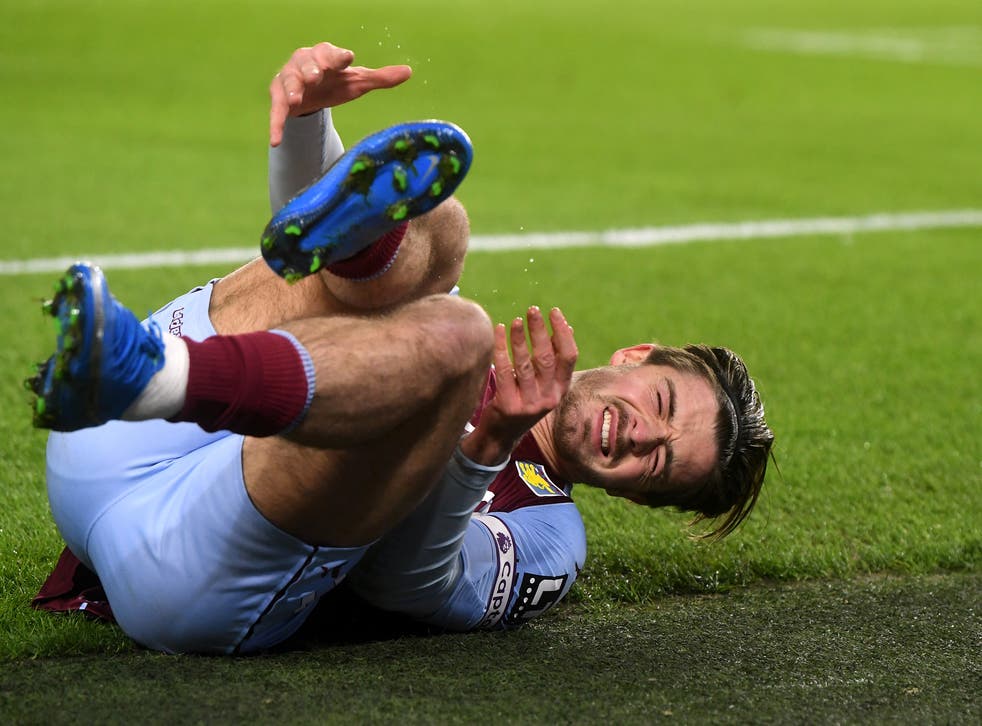
Without Jack Grealish last year, Villa only won three of the 12 games he sat out injured. He is a player of great reward, incision, precision, dynamism, cutting thrust and a skill set that proves so unique and masterful in comparison to his fellow English counterparts.

Grealish’s talent is obvious.

In terms of total chances created, chances created from open play and assists, Grealish is right in the midst of the Premier League’s most devastating creators.

Grealish created 70 chances from open play last season, second only to Manchester United’s Bruno Fernandes (77). He also formed 81 opportunities following ball carries in the last two Premier League seasons as shown above. This is all from just 26 Premier League games last year, even. 6 goals and 10 assists from 26 games is mightily impressive.

3.42 key passes, 3.46 final third passes, 6.91 progressive passes, 6.18 shot-creating actions (the two offensive actions leading directly to a shot, through passes, dribbles or drawing fouls) and 12.6 progressive carries per 90minutes all highlight how effective and influential Jack Grealish was to the Aston Villa cause.

All of those stats may increase at Manchester City, which poses such a scary thought for City’s rivals this coming season.

Many of the chances Grealish creates come after he’s dribbled with the ball, and he led the Premier League standings for 2020/21 in that particular field. Only Harry Kane, Hueng-Min Son and Bruno Fernandes had more assists following a carry and only Son, Marcus Rashford and Harvey Barnes scored more following a carry.

Grealish played far fewer minutes than any of those players, apart from Harvey Barnes, which only goes to show how dangerous Grealish is and just how much he runs with the ball. Progressive carries usually occur in the opposition half, are greater than five metres and move the ball at least five metres towards the opposition’s goal.

Grealish is absolutely devastating at performing such roles. Only three players – Adama Traore, Callum Hudson-Odoi and Pablo Hernandez – completed more per 90 than Grealish last season, but none of them were as devastating and as decisive with their carries as Grealish was.

Last season, Grealish carried the ball into the opposition penalty area a staggering 80 times, 3.29 times per 90mins. 18 more than Raheem Sterling, 32 more than Riyad Mahrez and 48 more than Bernardo Silva, already highlighting how much he offers more than Manchester City’s current options. Again, all of these staggering statistics despite Grealish only playing 26 games. He also ranks third in terms of passes into the box per 90 (2.96), behind his future teammate Kevin De Bruyne (3.56).

Grealish compared to City attackers (2020/21)GrealishSterlingFodenMahrezSilvaDe Bruyne
Games played263128272625
Goals6109926
Assists10756612
Chances created813936442780
Dribbles completed656638454148
Fouls won1104134301831
Provided by BBC Sport

Interestingly, Manchester City were the team who performed the most carries into the penalty area last season with 68, more than second-placed Chelsea. When City players get into the box, they are expected to make things happen, effect the game and Grealish, Foden, Sterling, Silva and Mahrez are all in the top 10 for passes attempted and completed inside the opposition’s penalty area last season.

The ability to carry the ball at long distances, evade pressure, beat opponents at will as well as drawing so many fouls is a trait that appeals so much to Guardiola and the City faithful. Manchester City will be getting a player who will vastly improve their football next season. However, there is a caveat to Grealish’s game that Guardiola may look to alter.

As journalist Miguel Delaney so correctly points out, Grealish is allowed so much freedom and warranty at Villa, in that his game is expressed individually, being able to perform so many actions on his own which drives his team and gets them out of difficult situations. That won’t be the case at City, Guardiola calls on a more structured approach to his attacking play, its all about the collective rather than the individual, and that’s something Grealish will have to adapt to.

He may not be able to just get the ball and dribble all he likes – as he did at Villa – he’ll be asked to keep up the tempo in City’s passing, with breaking opposition lines and carving out opportunities in the penalty area. It will certainly be interesting to see how Guardiola may adapt to Grealish’s style or teaching the Villa talisman to adapt and adhere to his own.

Grealish will need to release the ball quicker than he does, and to be more attentive when working with the likes of Kevin De Bruyne and Raheem Sterling. A major part of City’s superb approach was their ability to slow the game down with their subtle, intricate and decisive passing only to then speed it up at particular moments, taking advantages of spaces when they open up.

Defenders will be drawn to Grealish like he was at Villa, which means him winning free-kicks across the park could frustrate City’s build-up, with opposition teams reverting quickly back into a defensive shape. What’s so devastating about Grealish is his huge decisiveness once dribbling with the ball, which means City will only benefit, but they’d benefit even greater if he works on his game releasing the ball much more efficiently and more sooner.

The question on everybody’s lips will certainly be where Jack Grealish could line-up next season. Sources close to Guardiola say that Grealish could be deployed as a creative no.8 alongside Kevin De Bruyne in their customary and fluid 4-3-3 shape. With Raheem Sterling regularly deployed on the left, Grealish’s regular spot will be occupied, but there’s always a chance for rotation and flexibility.

Grealish in more central areas, as we’ve seen before is of course a devastating sight to behold. As soon as he picks up the ball, its incredibly difficult to get him off it – unless fouling him. At City, he may well be given more space to roam, with opposition midfielders occupied with Kevin De Bruyne’s ability to dissect opposition defences at will. If this is the case, Guardiola will be capable of breaching the most combative of defences from not just one area in the half-space, but two.

Both Grealish and Kevin De Bruyne are both destructive in those areas which gives the opposition much more danger than they bargained for.

Of course, Grealish could also expected to be deployed on the left side of City’s attack, his most common position, although with Sterling and Foden already on that side (and given the left-footed Foden finished last campaign on that flank) it is a very competitive area of the pitch for City.

The prospect of a Grealish and Foden partnership will be mouthwatering for any Manchester City fan, and there’s certainly been flashes of the pair when the two are on duty for England. Their superb ability to combine through delicious first touch passes and swift interchanging of movement could really aid City in cutting through opponent’s steep defences.

They would have no problems switching roles temporarily too.

How about Grealish and Sterling together? Southgate has tried that partnership with ruthless aplomb before, if you need any evidence just ask the Czech Republic.

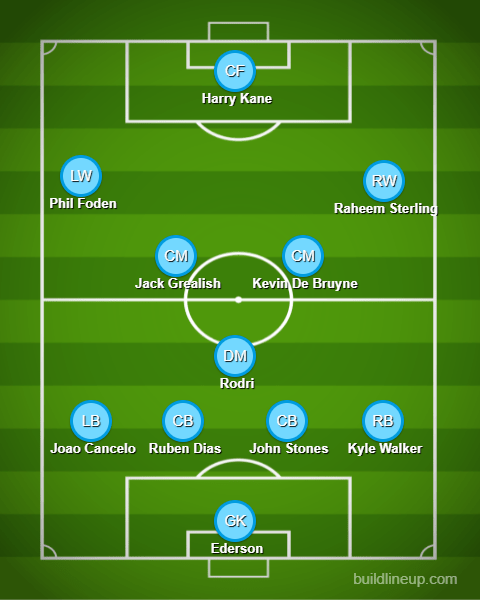
If City don’t get in Harry Kane this summer, and Guardiola opts for a false nine setup, then Grealish could be unleashed in midfield alongside Gundogan with Kevin De Bruyne coming off the front-line. Why not Grealish operating in those false-nine areas too?

The imperious quality at Guardiola’s disposal leaves a lot of room for rotation and flexibility certainly, which means Jack Grealish will be thrust into a much more competitive and much testing dynamic than at Aston Villa.

Some will argue that the grass isn’t always greener, but its a move and challenge that Grealish will relish and be excited by. It will be incredibly intriguing how Guardiola mixes and meshes his various attacking options, especially if they do manage to get in both Jack Grealish and Harry Kane this summer.

Jack Grealish’s move certainly raises as much questions as answers as to how City could line-up next season and how his game could complement the team’s and vice-versa. It’s an exciting headache for Pep Guardiola to have. However, what’s certain is that Jack Grealish will improve City considerably, and on a more personal measure, Grealish’s game may well be taken to a whole new level under Guardiola’s tutelage.

This is a call to Manchester City’s Premier League rivals (not just the red half of Manchester)… be very afraid.

How City could line-up next season with both Kane and Grealish

What will Ben White bring to Mikel Arteta’s Arsenal?

What will Ben White bring to Mikel Arteta’s Arsenal?

Arsenal’s pursuit of Brighton’s highly-rated centre back Ben White has caused a bit of a stir amongst the Arsenal faithful.

For a side who surprisingly finished as the Premier League’s third best defence despite their lowly conclusion in eighth place, many are discussing whether the reported £50m fee would be better spent in other areas of the squad.

That is indeed true, but for a player of Ben White’s qualities, potential impact on Arteta’s team and current market value, its an opportunity the club could not afford to pass up on.

For Arteta, like many of the top coaches in the modern era – especially his managerial mentor at his former club Manchester City – a centre-back’s job description isn’t just to defend their own goal, but to be as effective and influential in distributing the ball upfield, and in doing so become the starting point of team’s attacking play.

Arteta regards playing out from the back as a key tenet of his philosophy, but progressing the ball from one end of the pitch to the other has been a persistent problem during his tenure as coach – particularly when without David Luiz, whose departure this summer has left a ball-playing void in the heart of Arsenal’s defence.

Brazilian and former Lille defender Gabriel does indeed have the qualities to perform the role, averaging 2.39 progressive passes per 90, and 3.69 final third passes with a 91% short pass accuracy, which is impressive data from his first campaign in English football, but he will need someone alongside him to add to that dynamic and provide Arsenal with various modes of building from the back.

Many supporters have wanted to see the returning William Saliba given a chance to fill that void, only for the defender to join Marseille on a season-long loan, his third during his spell as an Arsenal player.

Brighton’s Ben White fits the mould perfectly, and is just the player Mikel Arteta needs to provide an added dimension to his possession-based style.

There can be no disputing Ben White’s calibre and propensity to perform such a key role.

Throughout his time at Leeds United and Brighton, and even during his first international cap for England, Ben White has shown he isn’t afraid in taking on new challenges, and a move to the Emirates represents the perfect step up for him.

The 23-year-old took in the demands and rigours of the Sky Bet Championship with much assuredness and maturity under the tutelage Marcelo Bielsa, he acclimatized brilliantly during his first full campaign in the Barclays Premier League, so who’s to say he wouldn’t immediately capture Arsenal hearts this coming season?

Ben White is a tremendous footballer and defender.

He showed it at Brighton last season, starting all but two of their Premier League games under Graham Potter having made a similarly positive impression on Marcelo Bielsa a year earlier.

The Argentinian was desperate to sign him permanently after he played every minute of their promotion-winning Championship campaign, but the club’s offers – worth as much as £25m – were knocked back. White’s value has swiftly doubled ever since.

Potter and Bielsa, like Arteta, are committed to building from the back and the same is true of Gareth Southgate, who fast-tracked White into the England squad ahead of Euro 2020 and is said to regard him as a key figure in the future of the national side, and rightly so.

White’s burgeoning reputation has a lot to do with his outstanding technical ability and versatility.

He is excellent on the ball and boasts a fine range of passing. His composure and confidence in possession are such that Potter and Bielsa have even used him in central midfield. He is also capable of playing at right-back or at wing-back.

Most of all, he is an excellent and efficient ball-progressor, and distributor – elements of which Mikel Arteta value so highly. Last season, he averaged 3.13 final third passes, 3.27 progressive passes from 41 passes per game with a 90% accuracy.

Arsenal previously looked to David Luiz to initiate their attacks from that position, playing through opposition lines and picking out attacking players in dangerous areas. But it will now fall to White to take on that responsibility and he is well equipped for the task.

Ben White is the composite, modern day centre-back. His smooth transition from League Two level football to the Championship and the Premier League has seen him maintain his unique trait of performing so coolly in possession, and its further helped by the fact that Bielsa, Potter and Southgate’s philosophies are hell-bent on progressive play from the centre-backs. He is steadfast in style, which is perhaps why he is such a good fit for such tactics; he is fast-paced and fearless at times, stepping out to open passing lanes, but equally considered and meticulously calculated.

In fact, despite averaging fewer passes per game than his Arsenal counterparts last season, White played a notably higher percentage of his passes forward reflecting his willingness to send his team on to the attack rather than simply recycle possession.

White contributed handsomely to Brighton’s attacking play not just through his passing but his dribbling too. At times last season, you’d find him running with the ball at full throttle trying to disrupt organised midfield shapes in the opposition or to carry his team up the pitch when there are no options in front of him.

He recorded 0.68 successful dribbles for Brighton last season, better than any of Arsenal’s current options with Pablo Mari coming a distant second with just 0.30. He averaged 3.08 progressive carries per 90 (carries that move the ball towards the opposing goal at least 5yards or into the penalty area) and also recorded 1.04 carries into the final third of the pitch.

White’s dribbling is one of his most unique qualities, recording the most dribbles (24) by a central defender in the Premier League last season, and completed the most carries with take-ons (18) than any other centre back.

Ridiculously impressive.

It’s a testament to his admirable bravery, maturity and ball-playing abilities. It doesn’t stop there, Ben White boasted considerable numbers defensively in comparison to his future Arsenal teammates. More interceptions per90 (1.75), and coming a close second in terms of tackles (1.38) to Rob Holding who recording 1.51 tackles per 90.

White’s dribbling is facilitated by his athletic profile as well as his technical skill. The defender is strong in the duel and boasts impressive pace and acceleration. Together with his close control, those attributes help him glide past opponents with ease and assuredness.

As well as being an astute and capable passer of the ball, he’s a warrior and a rugged defender when he needs to be.

Arteta favours a high line, much like his mentor Pep Guardiola, but a lack of pace among his existing centre-back options leaves Arsenal vulnerable in behind. White’s recovery speed will dramatically improve that.

So too could his ability to read the game. White is relatively inexperienced at 23, but he is always alert to danger – he averaged more interceptions per 90 minutes than any of Arsenal centre-backs last season – and always aware of what’s going on around him. White is also decent aerially, winning 53% of his aerial duels last season.

Ben White may not look the most physically dominant player, but his image is not the whole picture. He is consummate when shepherding out the most physically built players, and standing up to them. His match intelligence is there for all to see when facing up to his opponents, allowing him to position himself well to coax forwards away from threatening positions and make blocks. He times his tackles very well too and a very fine and adept reader of the game.

White’s been dribbled past on average only 0.9 times per game meaning he is so difficult to get past due to his brilliant positional sense and understanding of the differing defensive phases of play.

Brighton finished 16th in the Premier League but defensively they were one of the best sides in the division, keeping 12 clean sheets – the same number as Liverpool and Arsenal – and conceding 46 goals – only two more than second-placed Manchester United. All with White playing more minutes than any other player.

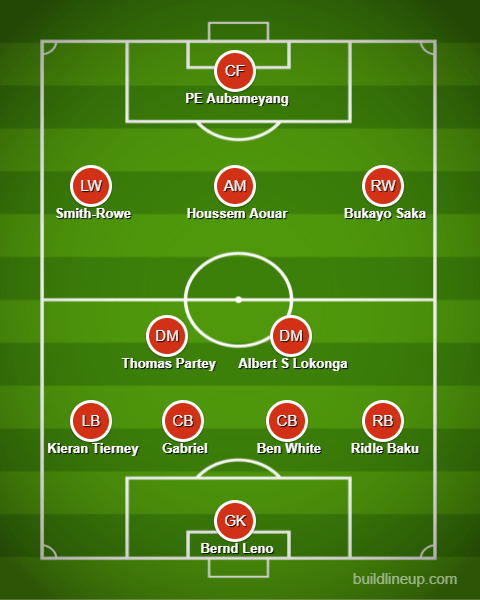
His potential partnership with Gabriel next season looks very enticing as Arteta will possess two capable possession-based, imposing, quick and efficient centre-backs who could potentially be Arsenal’s long-term defensive pairing for a whole number of years to come, and a solid base that Arteta could build for future.

He is ever-so reliable, a silent leader and a consummate professional. At 23-years of age, White already looks somewhere close to the full defensive package. Mikel Arteta will hope his thrilling development continues along the same trajectory at the Emirates Stadium.

£50m in the next few years will look a very worthy investment.

How I Would Like to See Arsenal Line-Up Next Season?

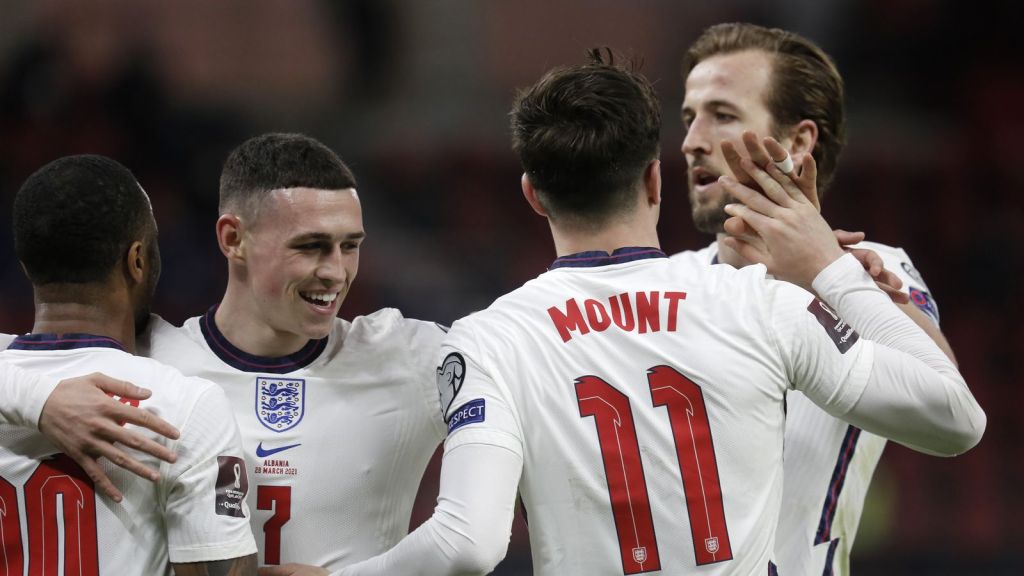
Mount, Foden and Grealish could be the defining ingredients for England this summer

Mount, Foden and Grealish could be the defining ingredients for England this summer

Is this the year the England football team finally delivers a major international tournaments to its coveted waters? That’s the million-dollar question so regularly asked before every major tournament England grace. It’s become a tiresome question for many England fans, even for those who have no form of affiliation to England.

Over the past decade, so few managers have tried and unfortunately suffered under the weight of expectation; Sven-Göran Eriksson, Fabio Capello and Roy Hodgson are just three of a considerable list of England managers who failed to successfully build a winning team filled with great individual talents.

Steven Gerrard, Frank Lampard, Wayne Rooney, David Beckham, Ashley Cole, Sol Campbell, Gary Neville, Paul Scholes, Gascoigne, Lineker, and Hoddle are names which garnered such huge optimism and hope that one day England may just match the lofty heights of that fairytale 1966 World Cup winning squad. However, as good as they were, they failed so miserably.

Is it down to the quality of coaching, is it the grueling English media pressure, or is it that our players just simply cannot fulfil their undoubted club potential on a more grandeur international stage?

Whatever the solution may be, current England manager Gareth Southgate – a former unfortunate victim himself of England’s past failures as a player – has marginally managed to navigate and manipulate some of those pressures and expectations and use them for some kind of good, leading England to the semi-finals at the World Cup three years ago, building a side capable of matching the likes of Germany, France, Portugal and Spain.

Now, the question is, heading into this summers Euros, can England finally go that one step further and deliver on the promise that so many of their current footballing prospects and stars bring? It genuinely feels different now and it isn’t just about that usual optimism that we cling to but there’s now an assurance, a confidence springing from the calibre of uniquely gifted footballers that have burst onto the scene over the past few years. Yes, we had the Gerrard’s, the Rooney’s the Lampard’s before but their time came and went.

The players at our disposal now hold a unique kind of ingredient, a confidence that is even greater than before. Gareth Southgate himself admitted this week his head will be on a platter if this England squad fail to reach the latter stages once again. Indeed, it will be.

There is a different feel to this current squad, blessed with players representing a new breed of generational English talents. Players who could finally provide the X-Factor England have been so desperately crying out for, for a long while. Kane, Rashford, Sterling, Maguire, Alexander-Arnold, James, Sancho, Rice, the list goes on. These players are built differently, you could argue they are more “pure” and “street” footballers than those we’ve had before.

Though, three players who give off those unique characteristics, who fans will be so heavily reliant on this summer, who won’t crumble under such weight and pressure but in fact, have the ability to knuckle down and thrive under it: Mason Mount, Phil Foden and Jack Grealish. How Gareth Southgate manages to maximize their potential and best make use of them this summer is a whole different matter entirely. However, they are such sublime individual talents Southgate and any manager coming after him, just simply cannot ignore.

These three players are indeed the defining ingredients, the difference-makers, the kind of players that could finally lead the nation to glory, if not this summer, then in the near future. What’s so key within England’s current crop of stars is the versatility, the ability to perform and become effective in a range of positions, no matter the system the manager deploys.

England’s best footballers before were, almost without exception, conditioned to play one role and one role alone. Arguably, that’s why the so called “golden generation” failed – they simply could not work together, there was no cohesion, no flexibility and its why England so often flattered to decieve. It remains to be seen how Southgate plans mesh his talents into a winning unit, but its almost impossible to imagine something similar to before – in respect of suitability – happening again. The panache and pizzazz of Foden, Grealish and Mount simply means there can be no room for such ignorance.

Throughout this season, Mount and Foden in particular have flourished in a variety of roles, owing to their excellent tactical awareness and understanding as well as their unique footballing gifts. Their application and adaptation to roles which may be perceived as uncomfortable for them by some, has been nothing short of brilliant this season. Mount has operated as a No.10 behind two forwards, as a left-sided player drifting in the half-space, as a roaming No.8, and most regularly under Thomas Tuchel as an inside-left player in a 3-4-2-1 formation.

For Foden, you can argue has performed in similar roles for Guardiola in a 4-3-3 shape. It may be his future position is that of a No.8 breaking from midfield but he’s become at home from the left-hand side, and even as a false-nine. In City’s mesmerising 4-1 win over Liverpool at Anfield, Foden played expertly in four different positions, including up-front.

Grealish, the same. The Villa superstar can perform in a variety of roles such as a No.8, a No.10 or as an inside-forward on the left and right. He’s so devastatingly effective where ever he is on the pitch. With such options available to Gareth Southgate regarding their versatility and positioning, there’s no room for a Lampard/Gerrard situation to somehow occur.

Mount, Foden and Grealish are, of course, a different breed of footballers.

All three of their defining qualities is the ability to take possession of the ball, and express themselves. The ability to take responsibility when in possession, and force the issue, to make something happen in attack. Also, most notably their appreciation of space. Mason Mount is a defining example. A player who is constantly calculating opponents’ positions and assessing which spaces he needs to operate in order to hurt the opposition. It is a quality and an area of his game that somehow goes unnoticed to many, but certainly not to his manager. That’s why Tuchel has entrusted Mount to take the lead for Chelsea in attack.

Foden, with 14 goals and 8 assists to his name for Manchester City this season – a stunning return – appears less determined to receive ball in space in comparison to Mount but he’s so brilliant and so sublime to watch when taking passes on the half-turn and weaving past his markers with such unerring ease. Indeed, Foden’s quality in those situations is demonstrated by the willingness and confidence of his teammates to feed him even when he’s tightly marked. Mount and Foden’s abilities to scan space, their opponents and their teammates ahead of them are characteristics which are rarely seen in English footballers, or even appreciated.

The same goes for Grealish, although much of his work occurs often in more advanced areas. But, his ability to dribble his team out of trouble or to drive them into the attacking third is just simply a joy to watch. Grealish’s ability to break opposition lines and to influence the efforts and contributions of those around him is an unmatched quality. You’d rarely find such similar talents around Europe.

The confidence, aura, leadership and the audacity at which Grealish operates for Villa makes him without a doubt, one of the best players in the Premier League, and its even more telling that he doesn’t play for any of the division’s “top six” clubs. It’s absurd that Grealish still sat statistically as one of the top players for chances created and successful dribbles even after missing three months of football through injury.

Grealish may not start for England at the Euros due to his recent injury lay off, but he’s a wonderful option to have if things may not be falling England’s way in matches. A player who offers something completely different to Mount and Foden, but yet still offers the same levels of confidence and assuredness that opponents just cannot live with. That’s why England have a greater chance this summer.

In 2018, we didn’t have these luxuries, players who can break opposition lines, and dissect sturdy defences at will. We also have such unique gifts in Jadon Sancho too, lets not forget about his world-class abilities.

England have often failed to live up expectations because they just simply cannot match it with the best sides in major tournaments or that in games where they are expected to win, we just somehow shirk and fall under the weight of expectation. Mount, Foden and Grealish offer such flexibilities in our game to solve these recurring issues, that we simply cannot take them for granted.

It’s obviously questionable whether there is such things as an “English” footballing identity and the unnerving perception that English football “style” of football so often fails to match those of Germany, Spain, Portugal and France. However, the narrative is progressively changing. By virtue of the evolution of Premier League football, due to the identity and philosophies provided and developed by top-level coaches in the English top-flight right now, our players are benefitting heavily from these ideologies. Mount and Foden are fine examples, with both flourishing under the tutelage of Thomas Tuchel and Pep Guardiola respectively, where the emphasis is on patient build-up and tiki-taka football coupled with aggressive pressing. Those ideologies are increasingly being embedded into our current breed of English footballers, and its already benefitting our own understanding towards the game.

There is a chance now, that England, when coming up against the likes of Germany, Spain and France can go toe-to-toe with them on an equal playing field.

Through the unerring and rich talents of Phil Foden, Jack Grealish and Mason Mount, the style and perception of English players is being rewritten. Once England produced energetic and dynamic box-to-box midfielders as well as classic number 9s, now we are producing pure footballers, intelligent, all-round technical attackers who add such a wide range of flexibility and versatility to our game.

The direct comparisons between Mount, Foden and Grealish are inevitable but the pleas to stop the optimism, hope and hype surrounding these fresh and unique footballers are incredibly unnecessary. Why can’t we celebrate such fine and pure footballing prospects? Considering what came before them, its about time we appreciate how much English football has changed for the better.

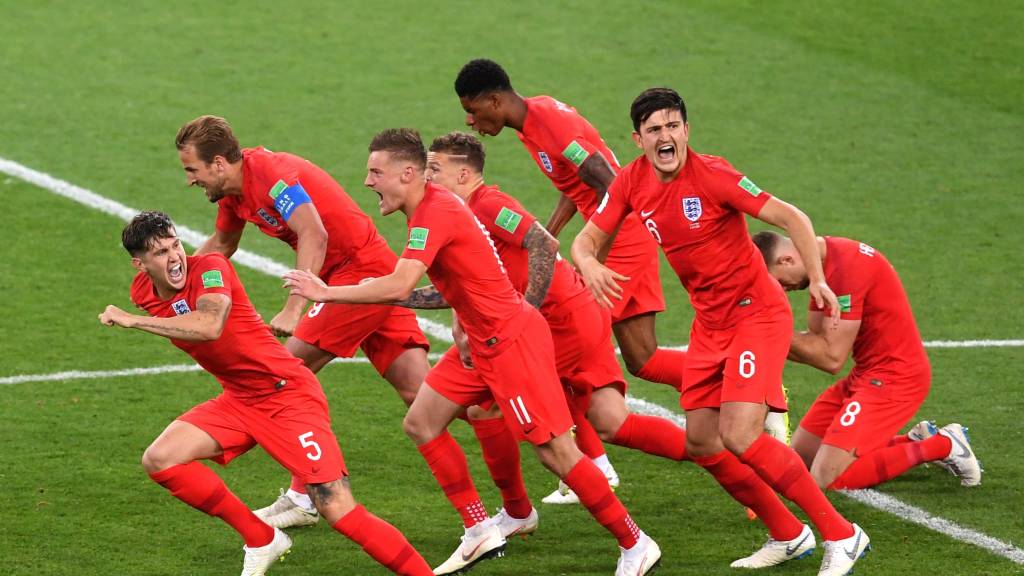
Lets hope Gareth Southgate can expertly harness the unique footballing ingredients at our disposal and cook up a storm at the Euros this summer.

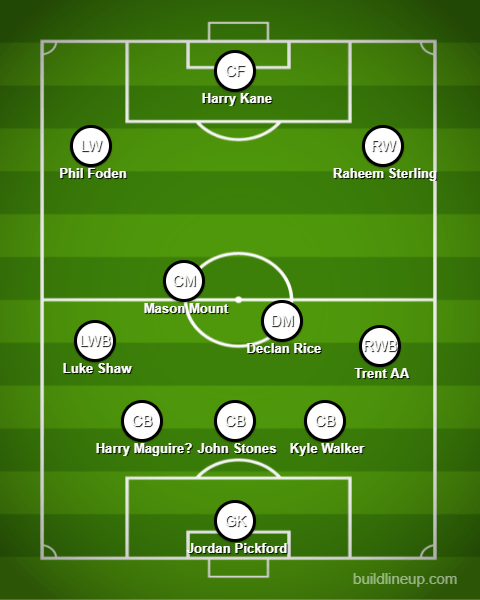
My England XI to start Euros opener against Croatia: