
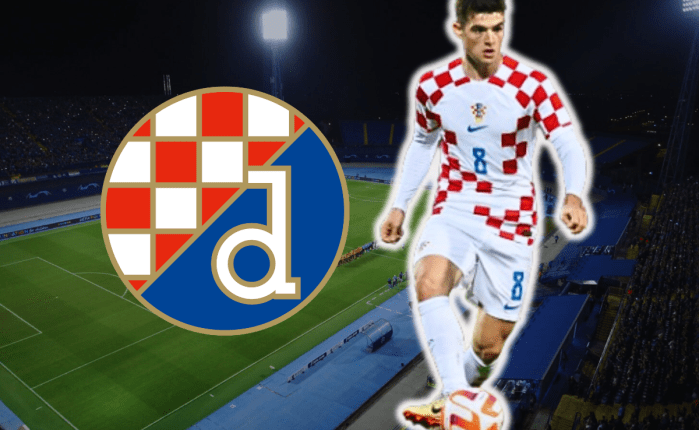
After a runner-up finish in the 2018 World Cup and a third-placed achievement at the 2022 edition, the Croatian national football team have arguably reached the end of their impressive cycle.
Manager Zlatko Dalić has done tremendously in leading his talented group of players to consistently punch above their weight against some of the elite nations in the world but sadly, such achievements have a shelf life in football.
Dalić remains the Croatian manager after nearly seven years in the job and will be entrusted to lead them again for this summer’s upcoming 2024 European Championships and ahead of the 2026 World Cup.

However, whatever happens in Germany, the Croatian Federation and Dalić know they are in for a significant rebuild to ensure the teams stay competitive in future competitions.
Players who have been go-to players for the Croatian coach are certainly on their last stretch at international level; Marcelo Brozovic, Domagoj Vida, Ivan Perisic, Mislav Orsic and Andrej Kramarić have all been crucial components throughout Dalic’s reign.
Though one name considered one of the most decorated performers of all time not just in his beloved country, reaching the latter stages of his fledgling and Ballon d’Or-filled career is one Luka Modric.
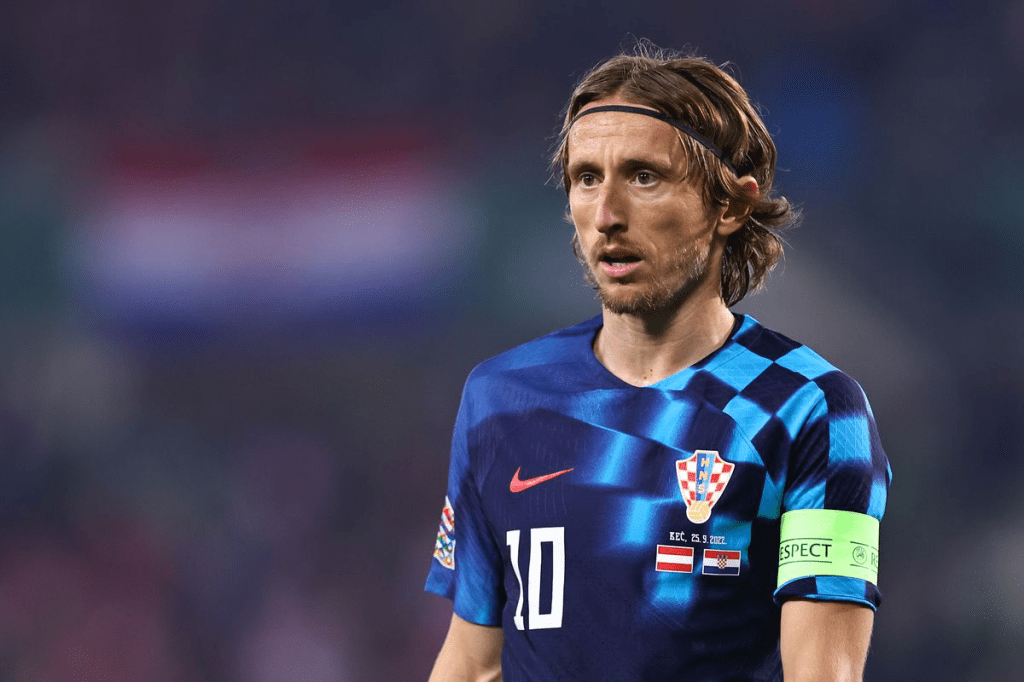
Euro 2024 is sure to be – albeit sadly – the Real Madrid superstar’s last international tournament before hanging up his boots.
Croatia need a viable and quality successor to step into Modric’s shoes and one young prodigious talent making shockwaves across Southeastern Europe is Dinamo Zagreb’s midfield maestro Martin Baturina.
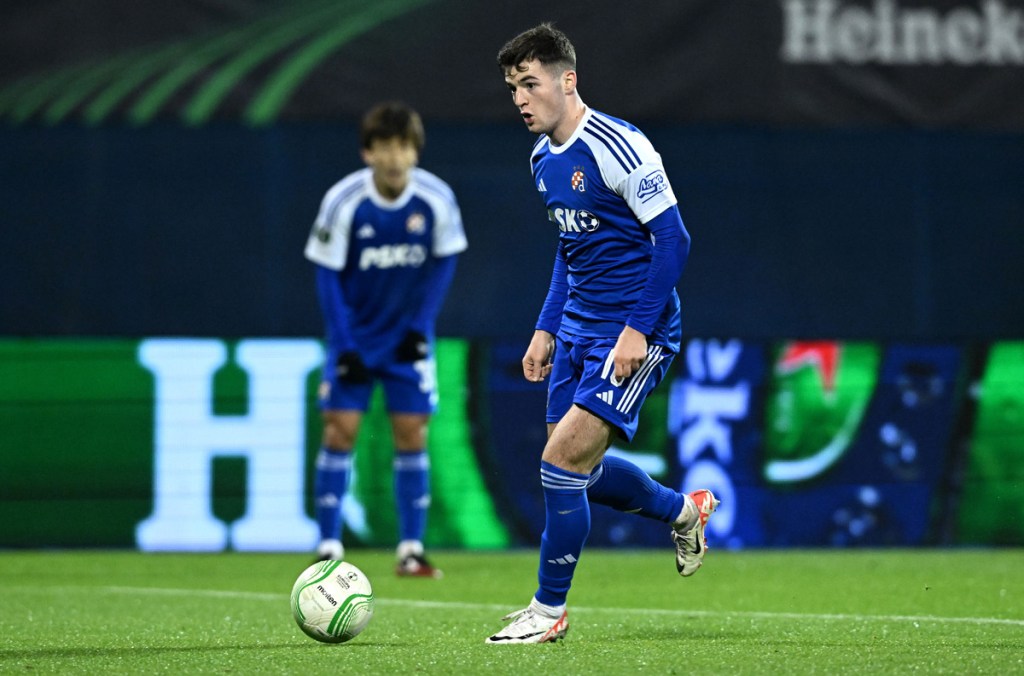
The 21-year-old has already in his short career drawn favourable comparisons to Modric and could yet be the next big-money departure from Zagreb, following in the footsteps of the likes of the Real Madrid icon, Mateo Kovacic and most recent departures in Josip Šutalo (Ajax – £17.6m) to Joško Gvardiol (RB Leipzig – £31.6m & Manchester City – £78m).
The son of former Croatia international Mate Baturina has proven indispensable for a Dinamo Zagreb side that has just claimed its record 25th and seventh straight Croatian top-division title.
The wonderkid has enjoyed another successful campaign in the first team, registering five goals and five assists after a sensational breakthrough season during the 2022/23 campaign where he notched six goals and a whopping 12 assists.
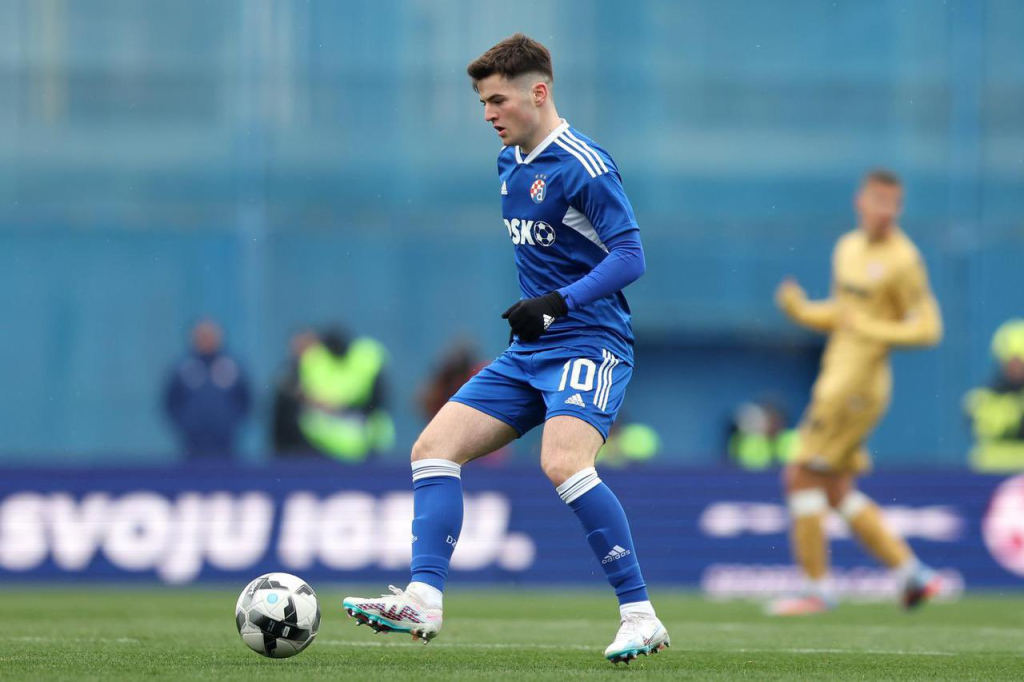
The Zagreb academy graduate has been linked with European giants Arsenal and Juventus over the past year, once again highlighting how highly thought of he is within Europe.
Baturina is now being considered the future of Croatian football and the ideal heir to Modric’s prestigious and decorated thrown.
As pressurising as that may be for the 21-year-old talent, the huge acclaim placed on his shoulders isn’t inflated at all, this is an exceptional talent but how has he got to this position and what makes him so special?
Who is Martin Baturina?
Born in Split, Croatia on 16 February 2003, Baturina is a product of the much-famed Dinamo de Zagreb academy.
Being in the academy since the 2017/18 season, he has been a fast burner, staying only for a season in all the academy squads (junior, U17, U19, second team) before making his debut and establishing himself as a key element and vital player for arguably one of the biggest Croatian clubs in history.
Baturina made his debut for Dinamo Zagreb II in February 2021, in a 1-0 defeat to Bijelo Brdo and it only took a few months before he made his first team bow for Zagreb in May 2021, featuring in a 3-0 league win over Gorica.
The Croat bagged his first goal for the club in March 2022, a 3–0 victory over Šibenik, before playing a significant role in their 2021/22 final matchday 3-1 win over his hometown club Hajduk Split.
He would go on to feature regularly both in the domestic cups and in Europe that year and the 2022/23 campaign was certainly the year, Martin Baturina made his exceptional breakthrough for Zagreb.
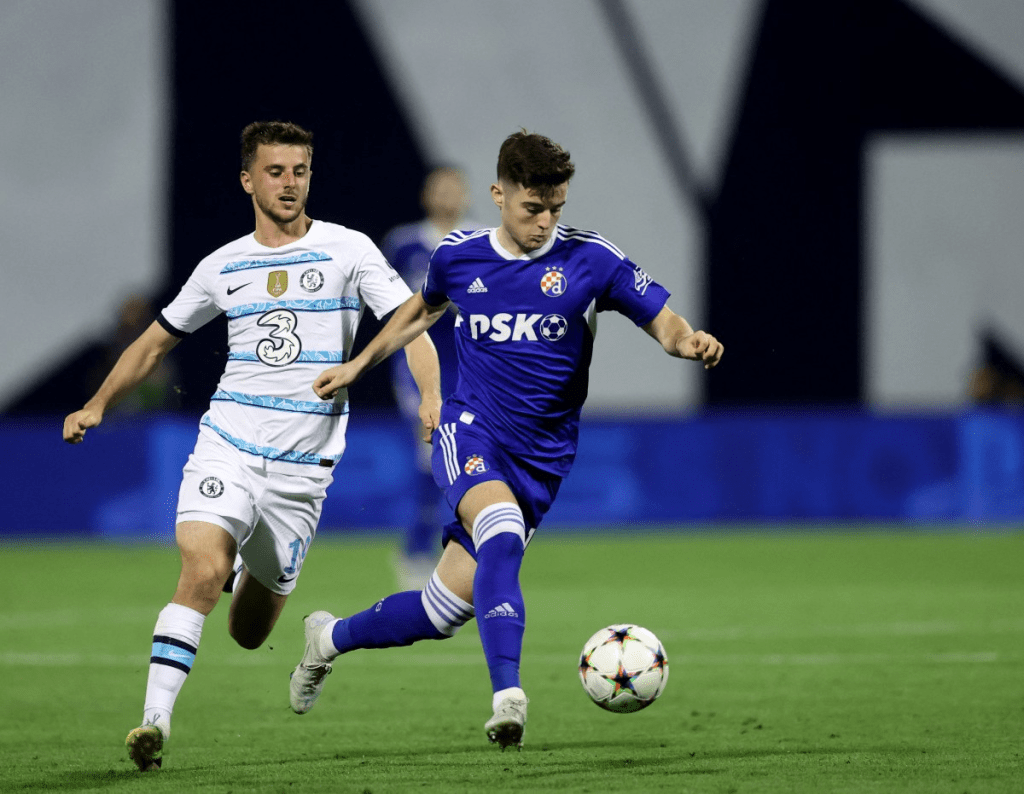
In September 2022, Baturina made his UEFA Champions League bow for the Croatian giants, featuring in a 1-0 win against Thomas Tuchel’s Chelsea, a result which compounded the German to his unfortunate sacking by the new Stamford Bridge co-owners, Todd Boehly and Clearlake Capital’s Behdad Eghbali.
The youngster only made a five-minute cameo for Zagreb but that campaign would go on to be his best for the club, registering seven goals and 13 assists from 49 games in all competitions [Transfermarkt].
The 2022/23 campaign certainly established Baturina as one of Croatia’s most gifted footballing products and he’s carried that on to this season, registering six goals and nine assists, eight of those coming in the league as Zagreb recorded their seventh straight SuperSport HNL league title.
His stunning trajectory and consistent form for Zagreb have deservedly handed the midfielder national acclaim.

Having featured in all of Croatia’s youth groups, including making 14 appearances for the under-21s, Baturina was rewarded with his first call-up to Zlatko Dalic’s senior set-up for the UEFA Euro 2024 qualifiers, making his debut as a substitute in a 2-0 away win against Latvia back in November.
With Dalić set to name his 26-man squad for this summer’s UEFA European Championships in the coming weeks, Baturina is sure to be rewarded with his continued success at club level with a spot on the plane to Germany – a summer which will signal the end of an era for Croatia but the ushering in of a new one, one which Baturina will arguably be the face of.
Martin Baturina’s Style of Play
There’s an intentional reason why Baturina is drawing stark comparisons to Modric and it’s not just because they play the same position on a football pitch.
Standing at 72cm (5’8”) and weighing 68kg (149lbs), the Zagreb wonder is a diminutive and silky technician possessing a skilful right foot and low centre of gravity, which enables him to twist and turn out of pressure and tight spaces.
Remind you of anyone? Modric in his days at Dinamo Zagreb come Tottenham Hotspur held the exact same technical profile and like Baturina, was considered the topic of the whole nation bursting onto the scene on one of Europe’s biggest platforms.
However, when watching the Split-born sensation, he draws even more comparisons to another unique outlet in Croatian football (read on to see or even guess who).
Zagreb’s Linchpin
The 21-year-old has become a dynamic and crucial presence in the Zagreb midfield, usually performing the role of an attacking midfielder, just behind the main striker or in a left-sided advanced #8 role in a 4-3-3 setup with a licence to roam the half-space or find decisive pockets in between the opposition’s defensive line and midfield.
Before delving into Baturina’s style and influence, it’s important to identify the tactical conditions allowing the Croat wonderkid to express himself and fulfil his undoubted potential.
Zagreb are one of the teams in 1. HNL who dominate the ball and control games, and Baturina is often a big part of that possession-heavy approach.
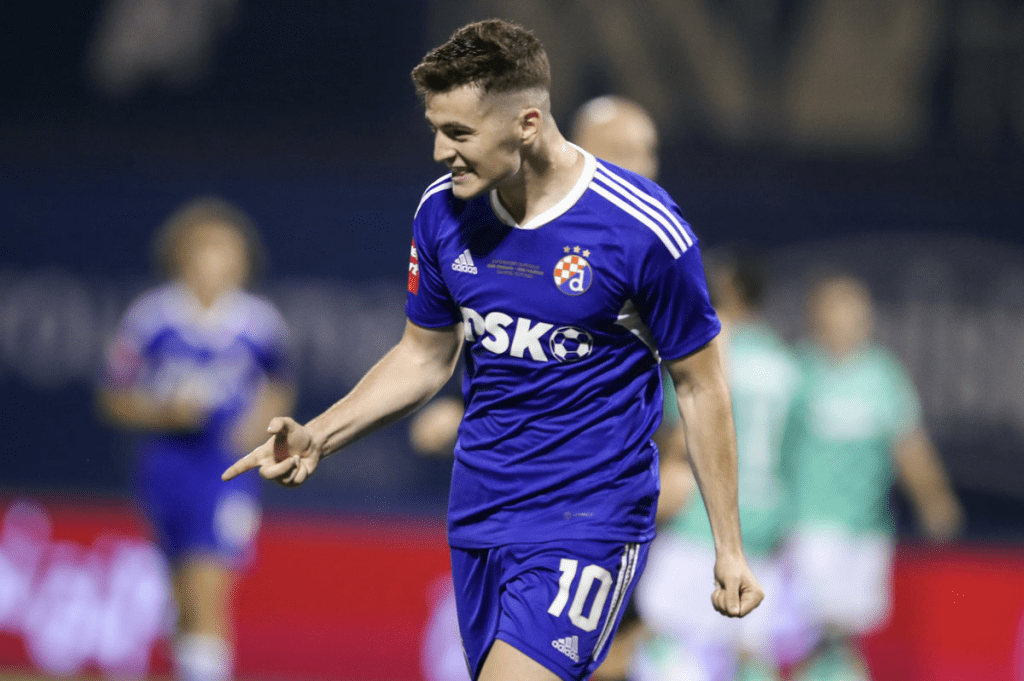
The Croatian giants line up regularly in a flexible and fluid 4-2-3-1 formation, with Baturina at the forefront of the system, becoming the link between midfield and attack. As stated previously, he is handed the license to roam into space/pockets to disrupt and dissect low blocks.
Their system can alternate from a 4-2-3-1 to a 4-3-1-2 but one constant aspect is that Baturina will always remain their creative linchpin.
This is clearly evident through the numbers. Within Europe’s next 14 competitions after the top five leagues, Baturina ranks in the top 13% of attacking midfielders for passes received per 90, pass completion % per 90, and ranks in the top 11% for passes attempted.
While he isn’t necessarily a tempo setter or a deep-lying presence, Baturina certainly likes to be highly involved and needs to touch the ball often to maximise his influence.
It is why he possesses the tendency to drop deep from his #10 position and get involved with the build-up to progress the ball through passing – ranking in the top 9 per cent of attacking midfielders for progressive passes per 90 – or through ball-carrying, also ranking in the top 15% for progressive carries per 90 and top 16% for successful take-ons per 90 highlighting his tremendous bravery and technical acumen.

Looking at Baturina’s season heatmap, it’s clear his influence has come from the left half-spaces, allowing him to find the perfect angles to thread through balls or unleash long-range shots.
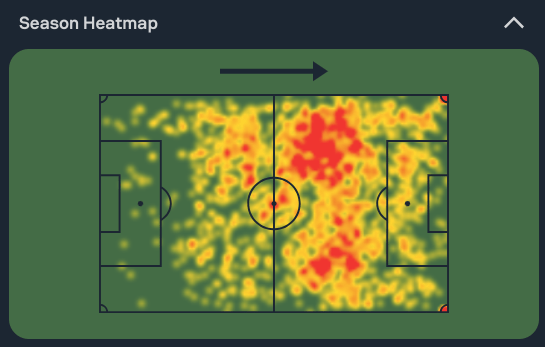
As stated previously, Baturina loves to drop deep and advance high up the pitch, as well as operating centrally or out wide, depending on the team’s needs or where he feels he could make the most impact.
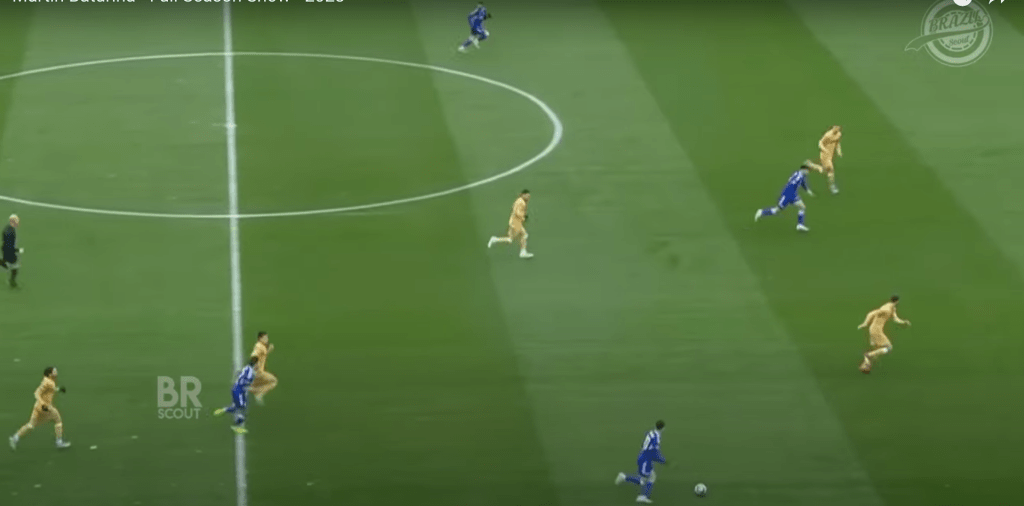
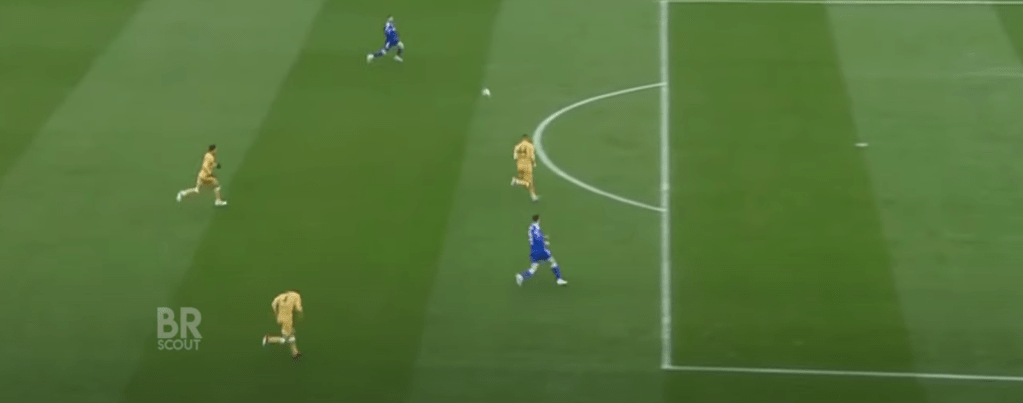
For example, in the image above, Baturina emerges with the ball wide-right with the opposition stretched, he dissects a sublime through ball for Luka Stojkovic at the other end to latch onto and score.
Judging by Baturina’s technical and tactical understanding, movements and selection of positions and space in the middle and attacking third, he is incredibly versatile and flexible in his approach.
It is quite difficult to pin him down solely as a #10 or a #8 but a player of the hybrid mould. To get more out of his game, a deeper role in the #8 seems the way to go for him, just like the great Modric evolved into as his career progressed.
Ball-carrying merchant
Baturina is an all-phase midfielder who likes to be as involved as possible, registering touches across the thirds. Considering he is among the most influential and involved players in his position and considering Zagreb’s possession-orientated approach, it doesn’t surprise us that the Split-born playmaker is also a good recycler and retainer of possession, as the numbers above show.
However, while he likes to come deep to get involved with the play, it wouldn’t be true to define him as an elite ball progressor. Certainly, he can do it, but the midfielder holds a strong preference in his game to receive the ball and beat his marker to break lines through carrying rather than passing – that’s where he probably differs from his potential predecessor, Modric.
Ranking in the 84th percentile of attacking midfielders for successful take-ons per 90, 85th percentile for progressive carries, 93rd percentile for progressive carrying distance and in the 99th percentile for carries into the final third per 90, it is easy to see why Baturina loves his ball-carrying and he is so graceful and classy with it.
Not only does Baturina hold similar characteristics to Modric, but he’s more of a Mateo Kovacic 2.0.
Take the below instance during a Croatia under-21 fixture against England under-21s, Baturina is surrounded by white shirts and looks like he’s about to be swarmed all over and dispossessed.
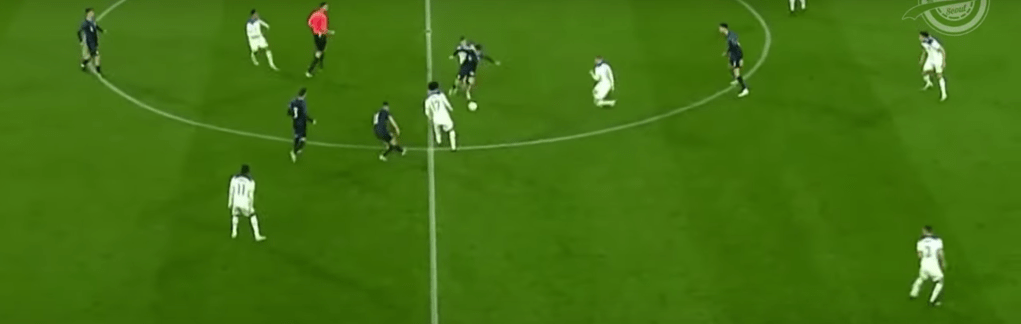
Given Baturina’s dribbling quality, ball control and press resistance, he’s able to weave his way out of the tight spot…
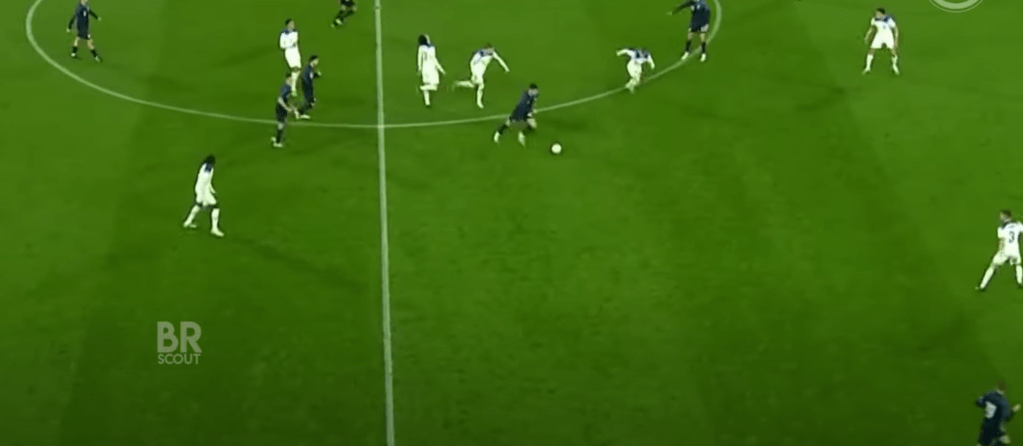
And drive his team into the final third with such class and finesse.
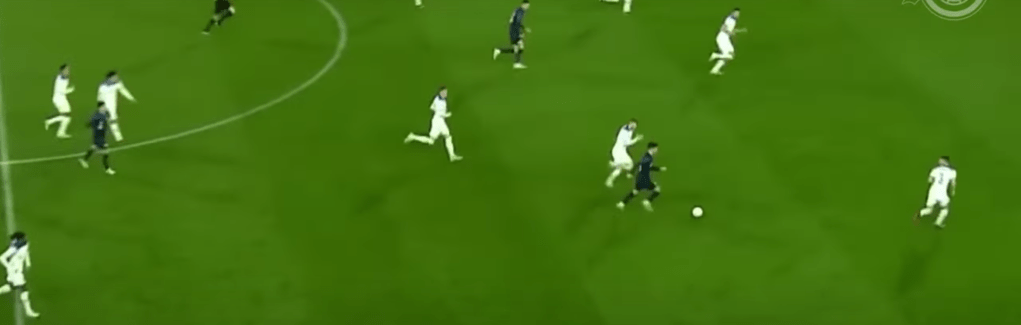
He is the player with the second-most total progressive carries in the 2023/24 campaign in Croatia (55) and third in progressive carries per 90 minutes (3.7) at the moment of writing.
The 21-year-old uses ball-carrying as a progression tool in deeper areas and as a creation tool in higher ones. While he’s clearly intentional and purposeful with his passing, it’s safe to categorize him as a dribble-first progressor.
He’s not only a tremendous dribbler, keeping the ball close to feint past defenders or change direction but he’s also quick, agile and his ball-carrying style is enhanced by his ability to reach top speeds within an instant and his low centre of gravity – it is extremely difficult to possess him, leaving the opposition with the only real option of fouling him.
As a result of these characteristics, Baturina has no problems whatsoever, receiving the ball with his back to goal.
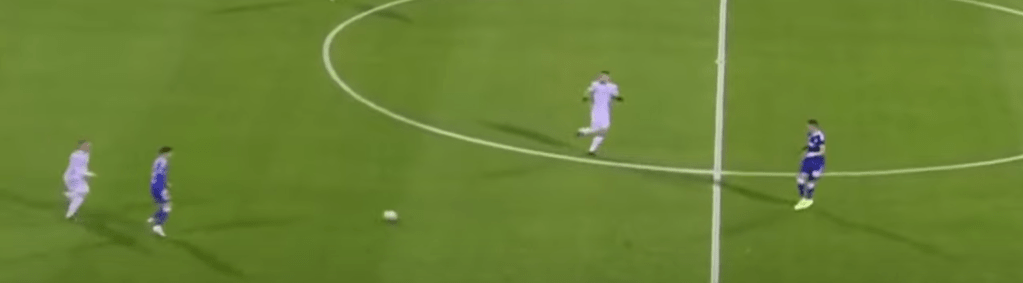
He will twist and turn to evade the pressure, beat the marker and then conquer territory through his carries, as shown below.
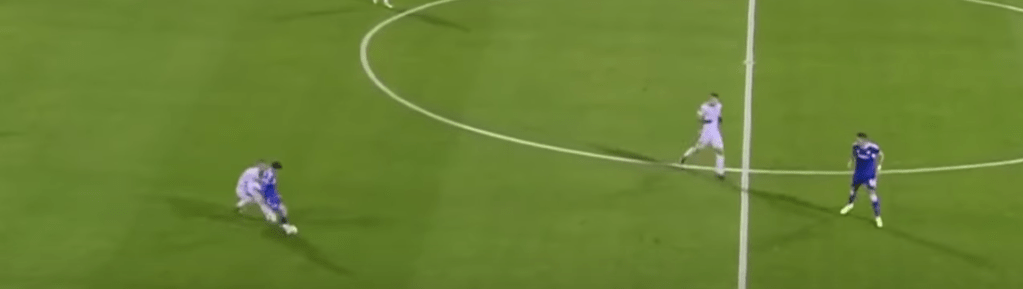

The 21-year-old’s frame gives him agility and flexibility to outmanoeuvre his markers, akin to what Kovacic does so regularly at Manchester City in the Premier League and for Croatia.
It’s how Baturina performs these actions that will stand him in good stead when competing at the elite level every week.
Elite clubs in Europe are always on the prowl for midfielders like Baturina because of his pure and unique ability to evade pressure through the thirds – a very useful tool in disrupting mid-defensive blocks but also allowing for easy and swift access into the attacking third.
Ball progression must equal final-third creation
There’s a reason why Baturina is considered the complete advanced or free #8 package and that’s because of his excellence not just in his mode of ball-progression but that progression leading to goal-scoring scenarios.
He is an effortless creator as much as a unique outlet in his incisive dribbling.
First and foremost, not all of Baturina’s entries into the final third won’t always result in a chance or opportunity but he’s a player who picks his passes well.
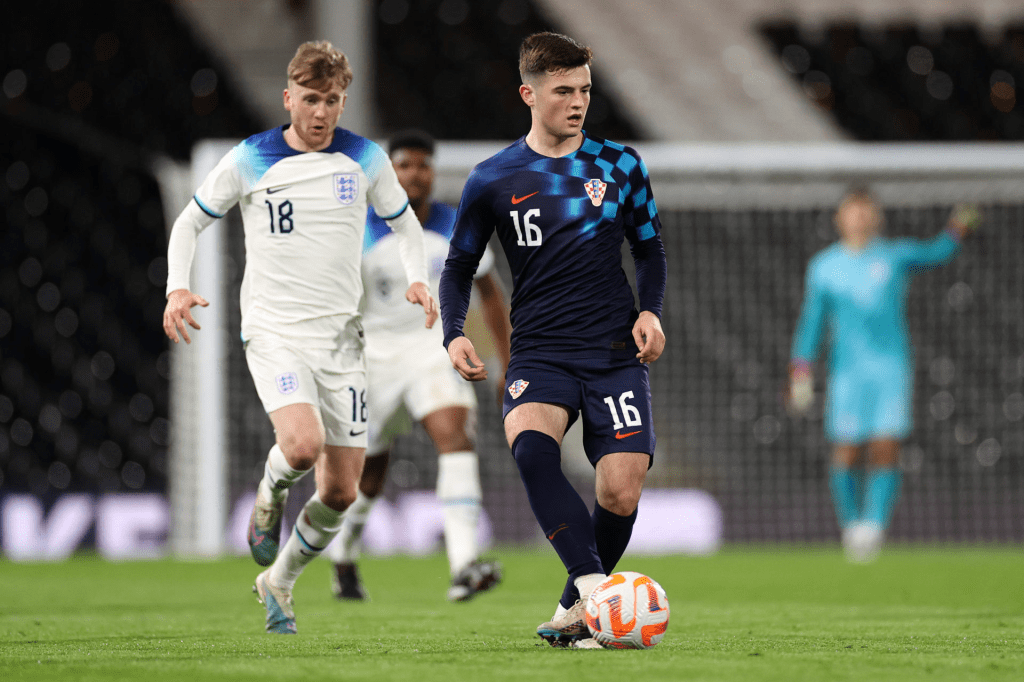
The 21-year-old will sometimes carry the ball before linking up with a teammate out wide and then continue his run to provide the team with another advanced passing option.
Once he eventually receives in a high and wide position, his threat and ability in tight spaces usually means he attracts two markers before retaining the ball nonetheless and laying it off to a teammate who is now free thanks to his efforts.
Baturina is so crucial to Dinamo Zagreb’s progression tactics; he evades pressure, provides and creates advanced passing options, and successfully connects the thirds from deeper to higher zones of the pitch.
The advanced playmaker has a clear skillset to influence play and his team’s tactics higher up the pitch. This season, he’s racked up six goals and nine assists from all competitions, a drop-off from 7 goals and 13 assists from last campaign but his contributions and influence are absolutely clear.
Along with nine assists in all competitions, Baturina averages 2.3 key passes per game in the Croatian top flight, has created seven big chances and ranks in the 76th percentile of attacking midfielders in Europe’s next top 14 leagues for through balls.
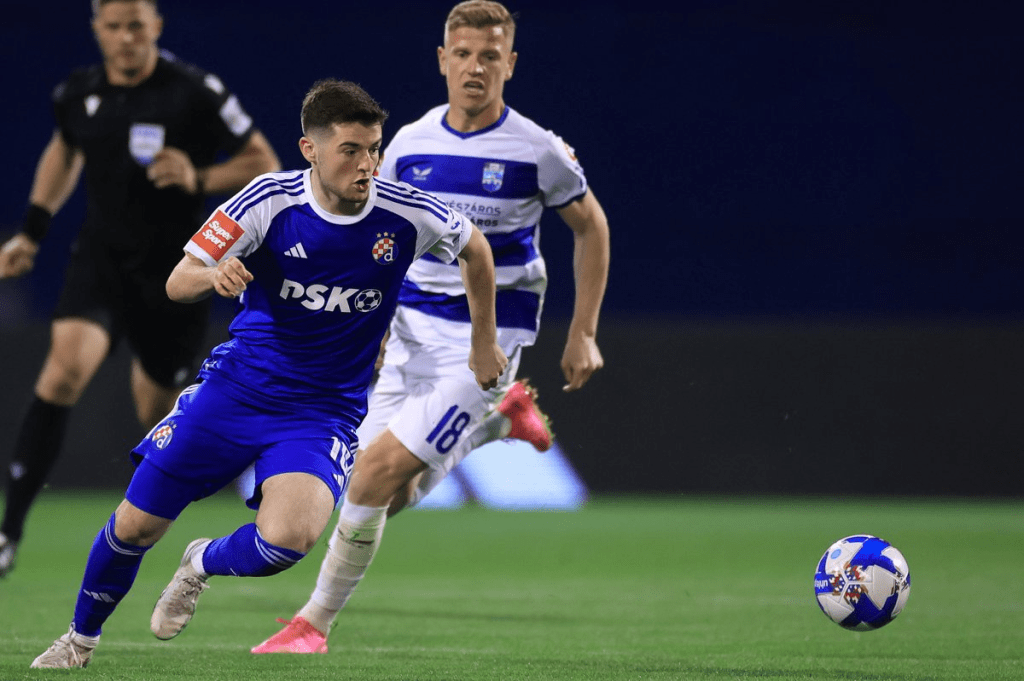
While the 21-year-old cracks the top 30 in 1. HNL in total key passes played in 2023/24 (6), his per 90 return is not as impressive (0.4). He ranks 12th in the league for smart passes (9) and 15th in smart passes per 90 (0.6).
We now know Baturina is a smart passer, a player blessed with tremendous vision and quickness of thought in the middle third, but how does that translate to where it matters most – the final third?
The two-cap Croatian international is pretty versatile in his final third distribution. Often, we will see him distribute from the deep and into the runners, but when he gets higher up the pitch, he has no issues breaking the lines and sending a pinpoint pass to the feet of his teammates.
More crucially, he’s proven decisive and influential with his passing in the attacking third.
In the below image, for instance, Baturina (RED) receives the ball in between a crowd of players. Where some #10s choose to distribute it out wide, the Croat is looking for runners instead.
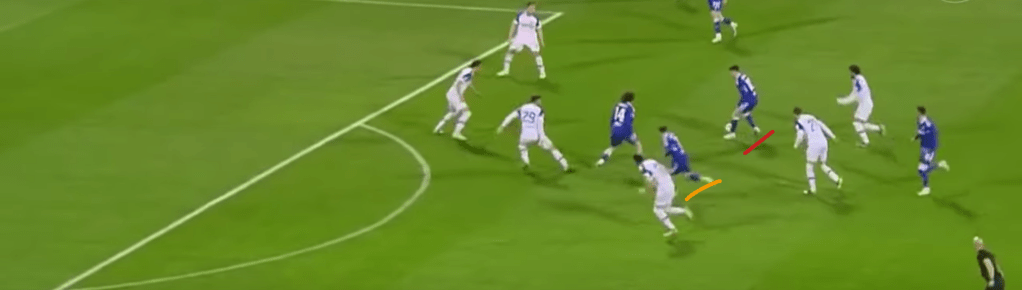
Baturina picks out Stojkovic (ORANGE) with a sublime dinked through ball…

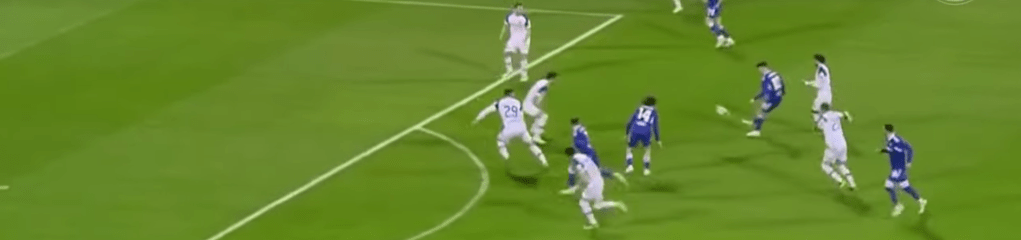
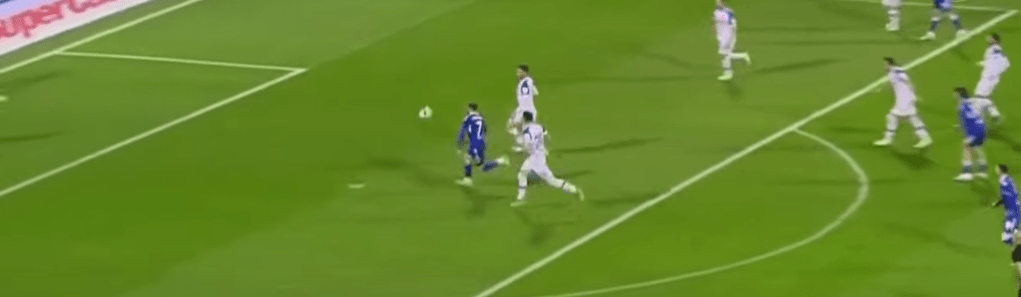
This is what makes Baturina so special and an influential component in the Zagreb team, especially in the higher zones.
He’s not just capable of the penetrating, line-breaking carries through the thirds, but once he gets into the attacking third, he’s composed, agile and adept at selecting the right actions leading to shots. He ranks in the 73rd percentile of attacking midfielders for shot-creating live-ball passes per 90 (live-ball passes that lead to a shot).
The young Blue can also whip in delicious and dangerous crosses, either through set-piece routines or from open play.
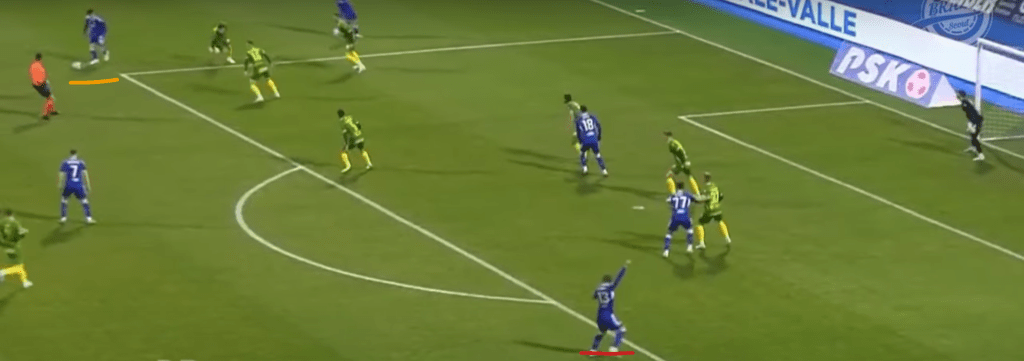
Before the young playmaker gets into this crossing position, he once again finds an opportunity to drift out wide and pull the opposition’s defence to one side which leads to Stefan Ristovski ghosting into the box unmarked…
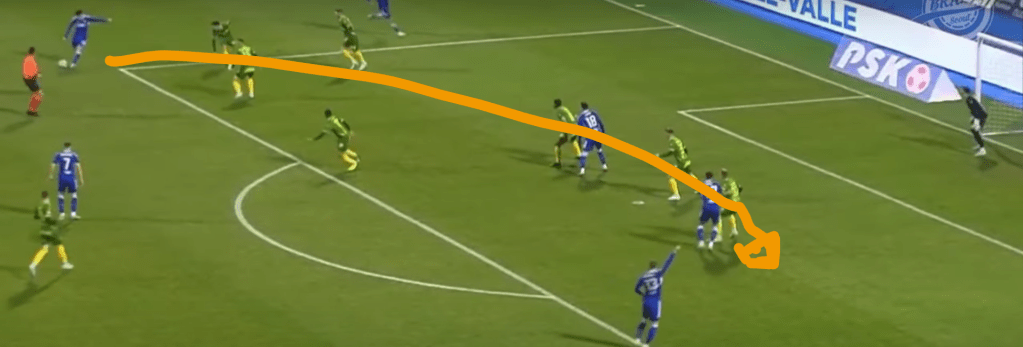
Baturina delivers a picture-perfect cross, evading every one of the opposition’s defenders…
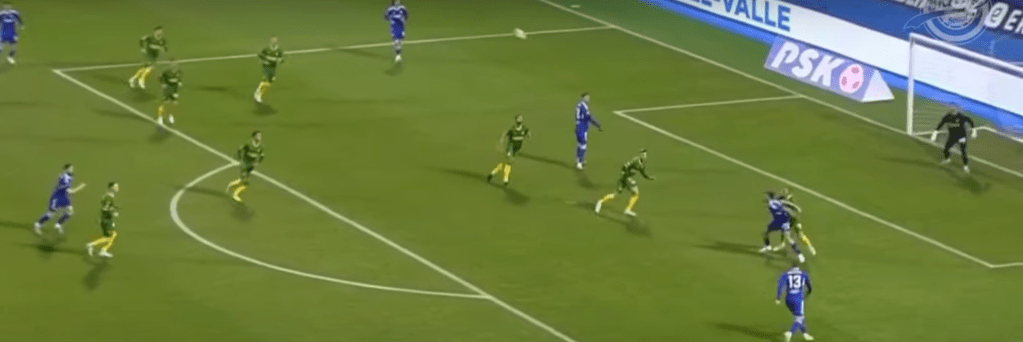
Laid right on the money of Ristovski’s right foot to score beneath a sprawling goalkeeper…
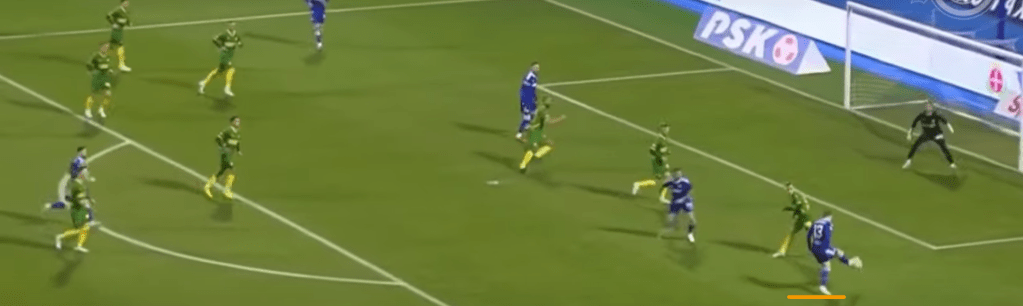
Again, we see the technical acumen of the 21-year-old talent. He’s added so many creative strings to his bow during his two breakthrough seasons at Zagreb making him an attractive midfield proposition for several of Europe’s top clubs.
Shooting
Another strength of Baturina’s game is his long shots. Whenever he finds himself in space on the edge of the box, he’s never afraid to test the goalkeeper from distance, making him a deadly threat from the #10 position.
Whilst he’s more of a creative dynamo, his shooting technique certainly makes him an important factor for his team.
Baturina seems pretty good at finding decent positions to shoot from, and this should, in theory, also predict a positive net return in the near future. His shot type is pretty meticulous and intentional, trying to put some dip to fool goalkeepers and curl when faced with defenders right up in his line of sight as a tool to find the right trajectory and angle for his attempts.
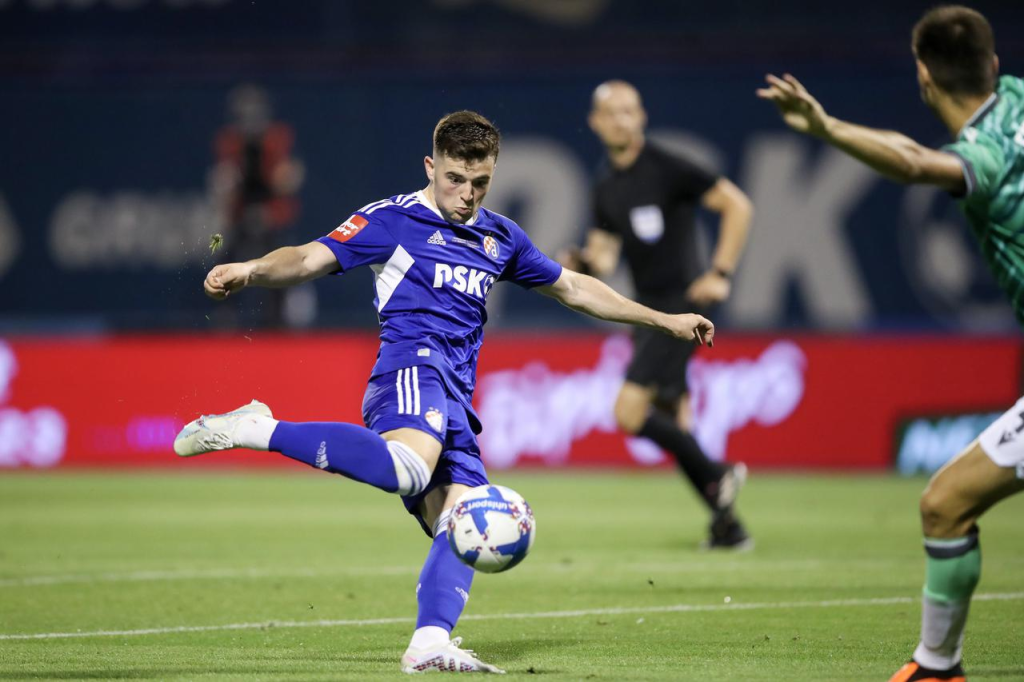
The 20-year-old is very good at manipulating the ball in tight areas, turning and progressing into a good position to shoot from. This is another thing we have to mention that is impacting both his xG per shot and his total output – shooting from a distance.
Last season, he made 13 shots from outside the box in 1. HNL, hitting the target five times and rattling the inside of the net once from those five attempts; all things considered, a decent return.
This season, he’s attempted eight shots outside the box, hitting the target three times, but with no goals to his name. His conversion rate this season compared to last season may well have dipped, but playing in a team that regularly dominates the ball up against deep blocks, Baturina is doing what’s required – taking long shots when necessary, a tool incredibly useful in breaching stout defences.
Off-ball movement
Another tool in Baturina’s unique and heavy artillery is his off-ball movement.
As we’ve pointed out in this piece, Baturina receives the ball in deep zones, directly from the backline and then carries the ball for a certain distance before linking up with a teammate out wide.
However, as all great advanced midfielders do, they’re not supposed to stop there. The Croat possesses the presence of mind to continue his runs, exploiting gaps or little pockets in between the lines or half-spaces to operate in.
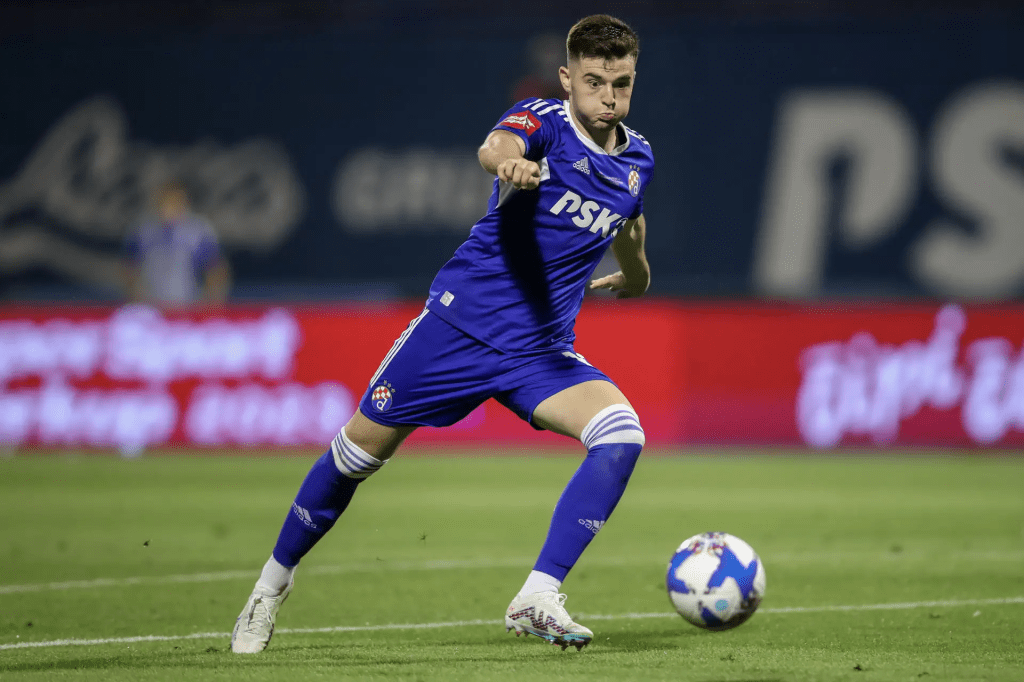
Apart from offering himself as a passing option, he also creates space by dragging his markers away, making a gap in the opposition’s defensive structure for his teammates to exploit.
The 21-year-old operates like a player certainly beyond his years, and it is why the comparisons to Modric and Kovacic are so stark and accurate.
He’s street smart, possessing stunning technical and tactical understanding but a raft of tools in his weaponry that also makes him such a decisive and influential player in the final third.
Forecast for Baturina’s Future
Better consistency with the Croat wonderkid’s output will surely take his game to the next level, but one thing is certain, Baturina will be the next big-money departure from Zagreb.
An exhilarating and tantalising footballing prospect who’s bound to leave Croatia to eventually join one of the European powerhouses, should his development continue following the current trajectory.
Arsenal and Juventus are the previous names linked with his services over the past year, but they certainly won’t be the only ones this summer.
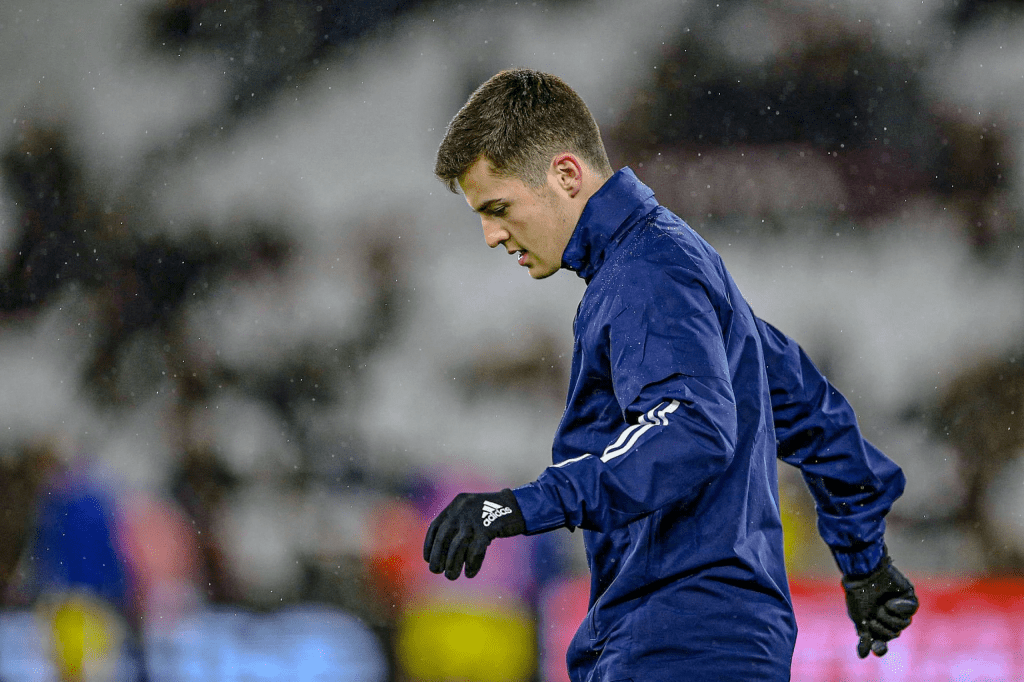
Like many other hot talents, Baturina will need to pick his next destination with careful consideration, providing him with the appropriate and progressive conditions to thrive tactically, mentally and physically.
Joining clubs such as a Borussia Dortmund, Bayer Leverkusen, RB Leipzig, AFC Ajax or a similar-sized outfit in Serie A – where young talents can go to and perform every week without unnecessary pressure and weight of expectation might just be the perfect platform.
Given his burgeoning reputation right now within Croatian football, it will be easy for him to make the huge step to a big club so soon – one he must avoid. Nonetheless, playing within Europe’s top five leagues must be high on his agenda, then he’d be sure to get the international recognition his talents and personality deserve.
Modric 2.0 isn’t a far-fetched label for Martin Baturina. He truly is on course to become the next best thing to come out of Croatia.

 anthonyscouts.co.uk