Meet Cristhian Mosquera: The Next Elite Graduate From Valencia CF’s Prestigious Academy

Meet Cristhian Mosquera: The Next Elite Graduate From Valencia CF’s Prestigious Academy

Ask any football fan who the most famous clubs in the Spanish La Liga are, and they’d be sure to pick out the usual culprits: Barcelona, Real Madrid, Atletico Madrid and Valencia CF, who will arguably crop up approximately eight or nine times out of ten.

In fact, you won’t be surprised to find that most would name the latter more than the former.

The club from the southeastern Mediterranean coast of Spain has had many great squads and managers in its decorated history.

Remember some of their famous players, David Villa, David Silva, Santiago Canizares, Vincente, David Albelda, Juan Mata, Ever Banega & Pablo Aimar or in their past managerial department, Rafael Benitez, Claudio Ranieri, Ronald Koeman & Unai Emery?

Pretty glowing & decorated indeed.

Their peak was at the start of the 2000s when they reached two UEFA Champions League finals and won the UEFA Cup and La Liga in 2004 under Benitez.
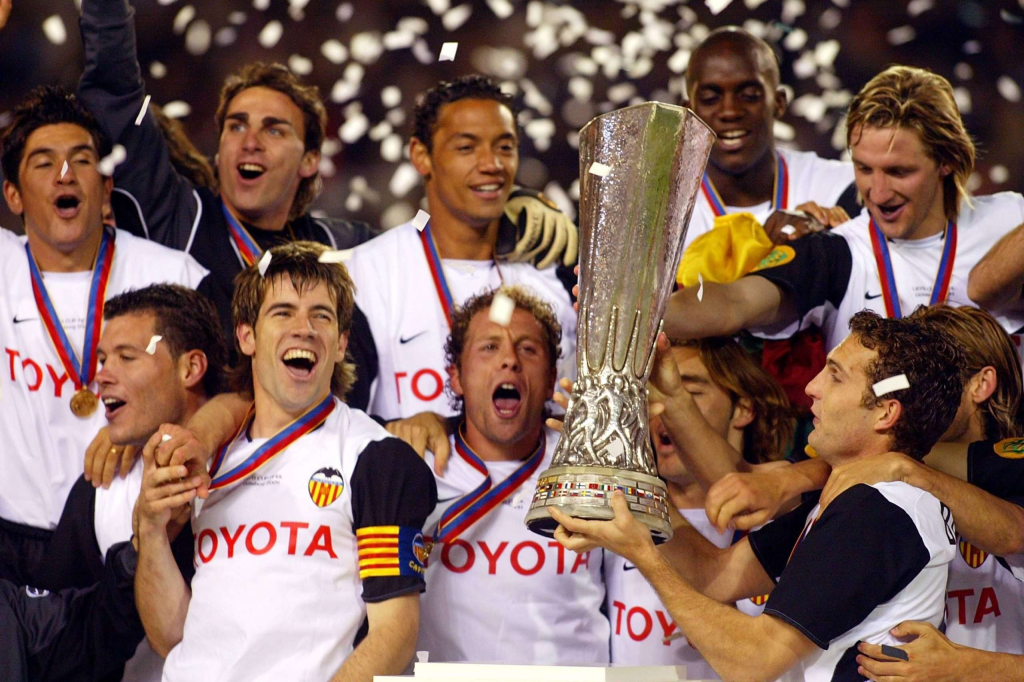
Valencia CF celebrate winning the 2003/04 edition of the UEFA Cup under Rafael Benitez’s management.

However, the club fell into somewhat of a great depression because of a series of bad financial decisions and the 2008 financial crisis.

They never managed to recover and, therefore, were sold to investor Peter Lim.

In the early stages of the takeover, things seemed upward, with the club qualifying for the Champions League multiple times.

Under manager Marcelino, the team finished fourth in La Liga in consecutive seasons, 2017/18 and 2018/19, and even reached the semi-final of the UEFA Europa League in 2019, also winning the Copa del Rey that year.
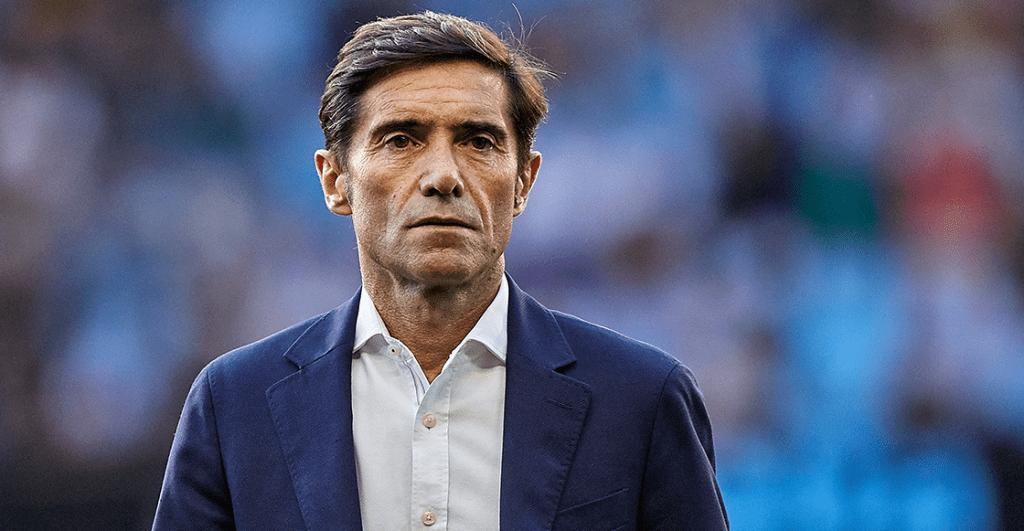
Marcelino guided Valencia to Spanish Copa Del Rey success in 2019 before being sacked the following season.

After that, Marcelino was fired by Peter Lim himself, and the club found itself in a downward spiral, being forced to sell star talent like Carlos Soler, Ferran Torres or club legend Dani Parejo and only being able to replace them for cheap or through their academy, which is one of the best in Europe.

Ever since Marcelino’s sacking, Valencia’s league positions have fluctuated, finishing 9th, 13th, 9th, 16th and 9th over the last five years whilst having to rummage through a handful of managerial appointments to find out its best fit, but to no avail.

The current 2024/25 campaign has proven to be arguably their most tumultuous.

After only winning two out of their last 24 league games, legendary Valencia midfielder Rubén Baraja was relieved of his duties as manager with the club steeped in the relegation zone.

At Christmas, desperate times called for desperate financial measures as they activated a release clause of between £3-4 million to acquire talented West Brom head coach Carlos Corberan. Four months on from that decision, Los Che have enjoyed an upward trajectory on the field.
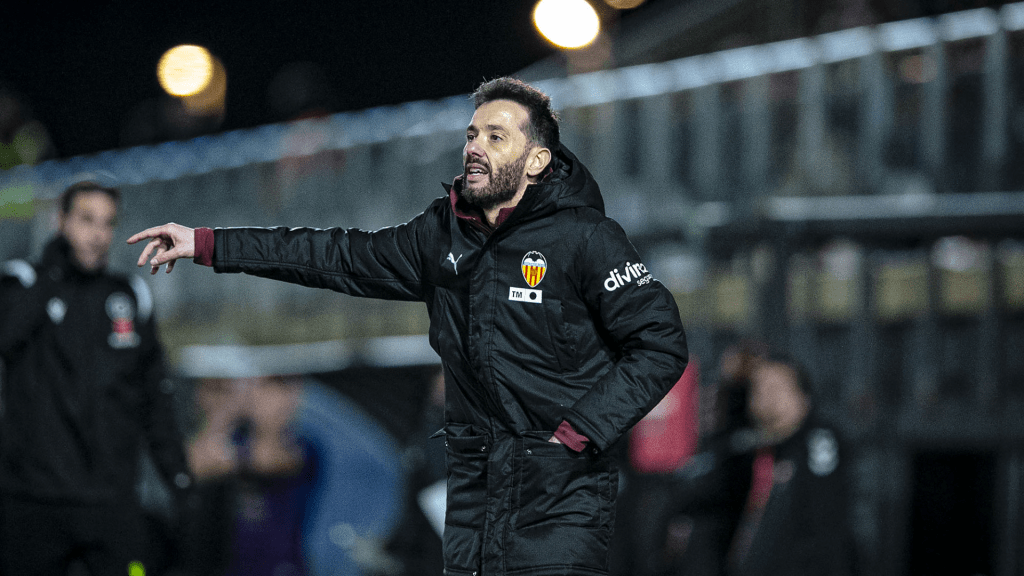
Former West Bromwich Albion coach Carlos Corberan has made a considerable impact at the Mestalla Stadium since his appointment in December.

At the time of writing, they’ve won the second-most points total (25) [Transfermarkt] of any club in La Liga since Corberan’s appointment, and now currently sit 14th in the table, seven points off the drop zone.

Since the Spanish coach took over at his dream job, Valencia have lost just four out of 16 games, against Real Madrid, Atlético Madrid and twice against Barcelona. They’re unbeaten against everyone else they’ve faced, and that’s down to Corberan’s impact both tactically and in his personable management.

Valencia also recently beat Real Madrid on their own turf – the first time they’ve done so since 2008 and their first away win of the campaign – another massive signifier of Corberan’s stellar impact at the Mestalla in just four months.
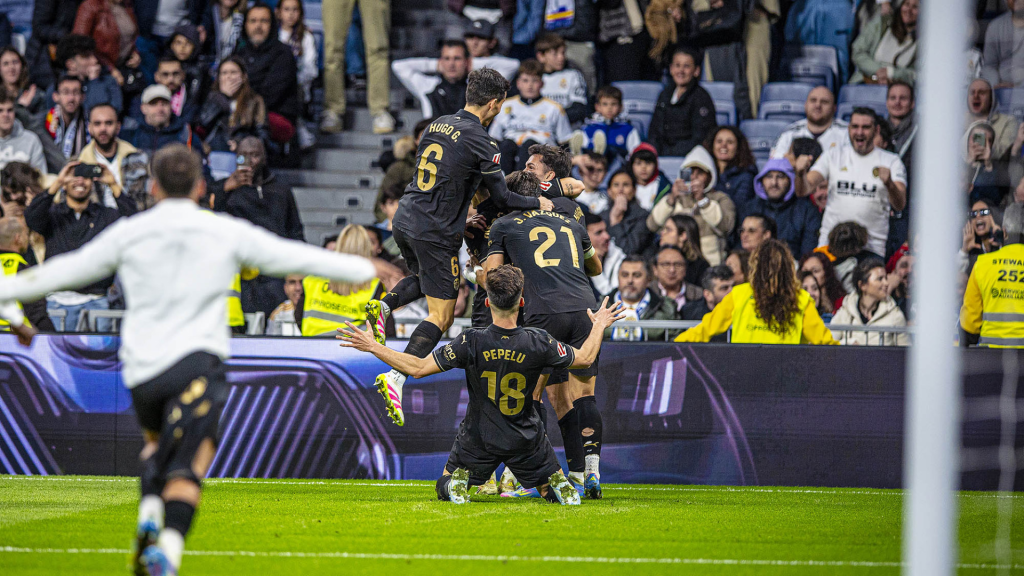
Even if the club’s off-field matters continue to plague the club’s standing amongst the elite in Spain and their reputation in Europe, their current form under Corberan is certainly providing a light at the end of an incredibly dark tunnel.

One element Valencia continue to find some sense of pride in is its flawless academy, with a number of their young talents currently thriving under Corberan’s tutelage.

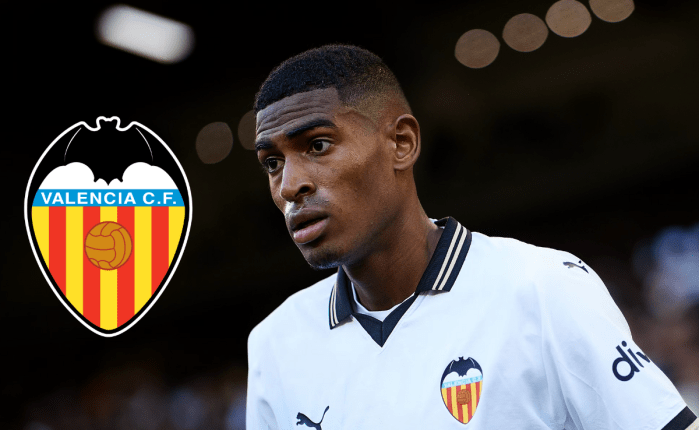
Javi Guerra, Yarek Gasiorowski, Fran Perez, Jesús Vázquez and Diego Lopez are a few of their most exciting academy graduates, but one player arguably garnering the most attention both domestically and within Europe’s elite is young, uniquely gifted centre-back Cristhian Mosquera.

The current campaign is Mosquera’s second as an established first-team player at Valencia, and he is already showcasing why he is considered one of the most complete young centre-backs in Europe.

As a result, he’s attracting a whole host of interest with the likes of Barcelona, Real Madrid, Juventus, AC Milan, Bayern Munich, Liverpool and AS Roma all rumoured to be casting an eye on him over the past year.

It won’t be long before the Spanish under-21 international is Valencia’s next big sale in the transfer market. So, how has the 20-year-old gotten to this stage in his career & what will he offer potential suitors?

Who is Cristhian Mosquera?

The story of Cristhian Mosquera starts in Alicante, Spain, a coastal city in the south of the Valencian Community.

He was born to Colombian parents and, at a young age, picked up the sport of basketball instead of football.

Mosquera grew up during the NBA’s global rise when Pau Gasol was winning championships with the late Kobe Bryant.

Given the Spaniard’s height and physique, it’s no surprise to find that he could well have been donning an LA Lakers jersey rather than a Valencia CF had he gotten his own way.

But it was on a Futsal pitch where Mosquera started, developed and honed the unique footballing qualities that we see in his game today.

He joined a local youth team for the sole reason that his cousin played for the team, and they needed a player due to being a man short.

Whatever happened during that period certainly persuaded Mosquera to try out a full eleven-a-side pitch, and it all led to him making his move to the Valencia CF youth team.

He then moved up the ranks quickly, making his full first-team debut in a January 2022 Copa del Rey victory over CD Atlético Baleares.

At 17 years, 6 months, and 23 days, Mosquera became the eighth youngest debutant for Los Che in their club’s history, as well as the youngest ever centre back.

Since then, the now 20-year-old has become the bedrock and heartbeat of the club’s defensive line ever since his La Liga debut against Sevilla in 2022, continually growing and developing to become one of Spain’s most prestigious young footballers.
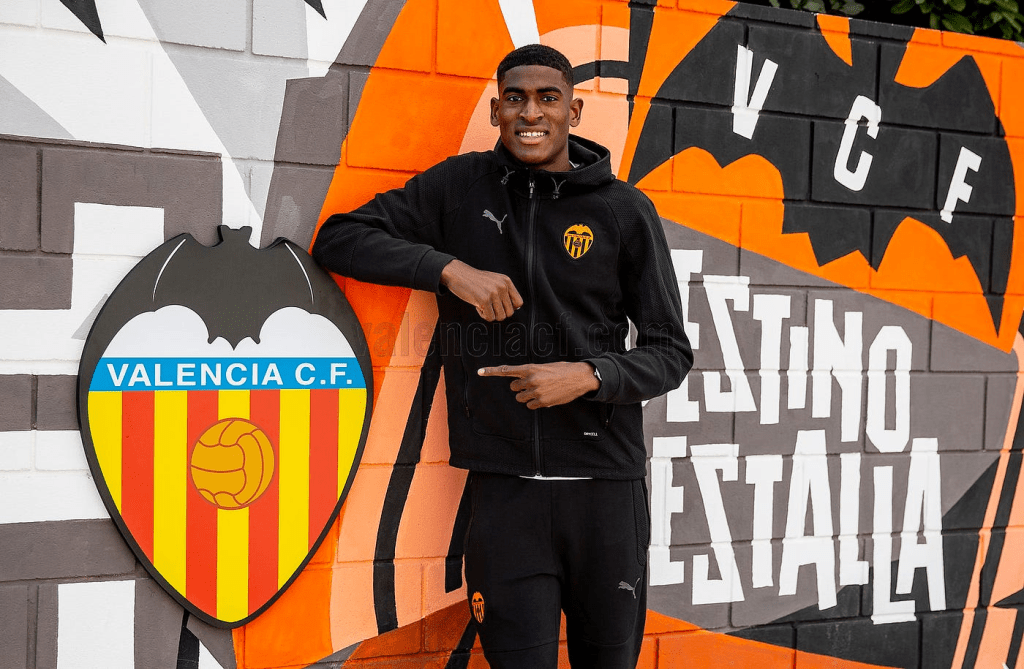
He’s yet to feature for Luis de la Fuente’s European champions, continuing his development and maturity for the youth teams, but it certainly won’t be long before he’s performing at the highest level not only at club level but for Spain.

However, Mosquera also holds a Colombian passport, making him eligible to feature for Los Cafeteros should he find his opportunities for the Spanish senior side limited.
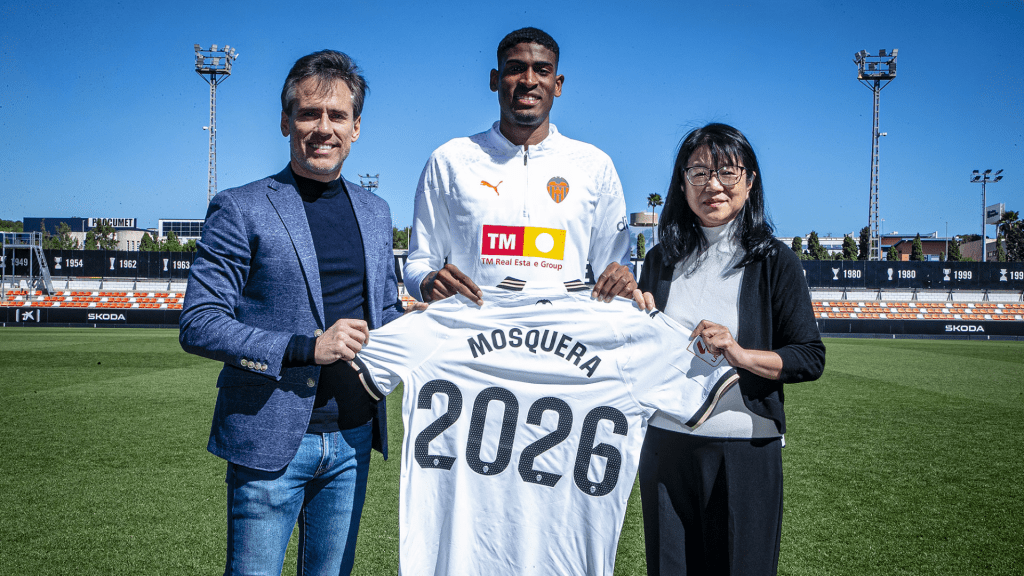
So far this campaign, he’s clocked just under 3000 minutes of football for Valencia. Last season, he registered 3,252 minutes, highlighting his incredible durability and availability for the club- a unique characteristic that elite clubs will be looking for when trying to sign a young, reliable and workaholic centre-back.

Mosquera, without a shadow of a doubt, will fit the bill for several of Europe’s best.

Dissecting the Cristhian Mosquera Hype / Style of Play

There’s the old saying, ‘Never judge a book by its cover, ‘ but in Mosquera’s case and for the sake of this analysis piece, we simply have to go against the old adage because the Spaniard’s cover arguably makes up for his exceptional footballing gifts.

At face value, when looking at the 20-year-old, the first characteristics you’d notice are his striking physical attributes.

Standing at 6’2″, Mosquera commands attention with his impressive physique and striking presence. With broad shoulders, a lanky frame and a solid build, he resembles a centre-back that could have been designed in a lab to meet the ideal specifications of modern football.

The Los Che academy graduate embodies the quintessential traits of a contemporary centre-back, perfectly blending physical prowess with a refined understanding of the game.

Mosquera’s height and strength enable him to dominate in aerial duels, while his keen tactical awareness and agility add to his imposing on-field persona.

Antonio Rudiger Regen?

The young Spaniard is drawing compelling comparisons to the formidable Real Madrid centre-back Antonio Rudiger.
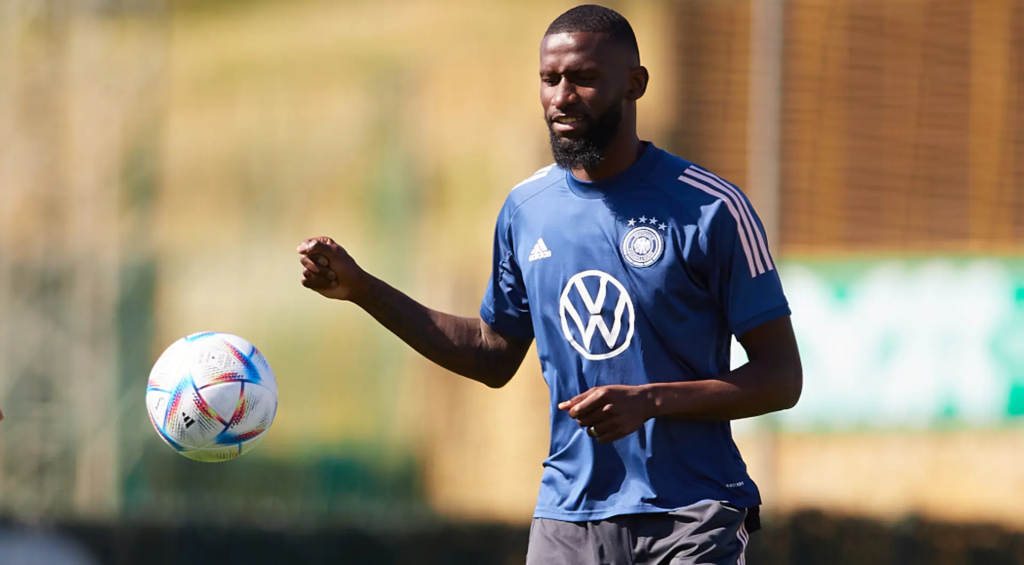
Each match you watch intensifies the similarities, revealing a blend of poise, strength, and tactical awareness that echoes Rudiger’s commanding presence on the pitch. The parallels in their playing styles are becoming increasingly striking and undeniable, adding depth to the admiration for this emerging talent.

Should Real Madrid be looking at potential Rudiger replacements in the near future, Mosquera should certainly be at the top of their list.

Like the German, Mosquera is a commanding presence, a true backline leader, and an unstoppable force and given his knowledge and understanding of the Spanish top flight, he’d fit right in at the Santiago Bernabeu.

There’s a reason Mosquera is highly regarded amongst Europe’s elite, and before we can delve into his attributes/abilities, let’s see what the stats say.

Stats a fact

Immediately, two attributes stand out for Mosquera: defensive action volume and duel success rate.

The defensive actions component is encouraging but can be influenced heavily by possession, and with Valencia sitting 14th in the La Liga for possession of the ball [FBRef] this season, it explains a good bit of his success. 

Los Che under Carlos Corberan have improved considerably defensively. Their freak 7-1 defeat to Barcelona in late January should arguably be considered an outlier since the change in management.

The only other time they’ve conceded more than twice in a game since then came in their 3-0 defeat to Atletico Madrid a month later. Yes, it’s only hypothetical, but if not for those two results, Valencia would hold one of the best defensive records in the league since the turn of the year.

Corberan has moulded and shaped Valencia into a more dogged, organised and determined defensive unit, just like he did for Sky Bet Championship side West Brom during his tenure in Birmingham. Los Che may not have the ball all the time, but they are well-versed in controlling their opponents regardless.

Throughout his tenure, the Spaniard has alternated between 3-4-2-1 and a 4-2-3-1 formation, with his wingers dropping back out of the 4-2-3-1 to form a back-three with two wing-backs early on.
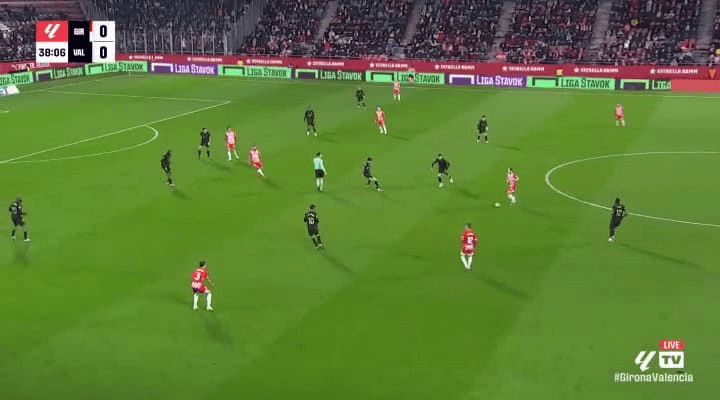
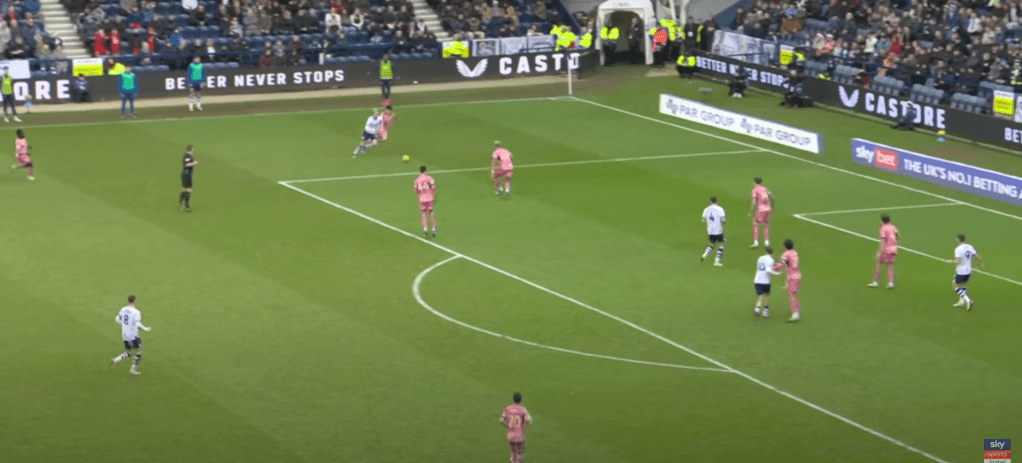
In the above image, we can see their defensive shape up against Girona with five defenders forming the last line with the three centre-backs, including Mosquera, and the wing-backs marking Girona’s attackers.

André Almeida and Diego López, the attacking midfielders or wingers per se, are dropping to the height of the two central midfielders to create another line in front of the defensive line.

This line is focused on defending the centre of the field and is aligned to cover the gaps in Valencia’s backline.

Mosquera’s role [the second to last man – from right to left – in the Valencia backline] is to engage and track his marker in front whenever the player receives in between the lines but also he’s tasked in sweeping up any loose balls in his zone while also providing strong coverage to the central centre-back César Tárrega.

This campaign, he has been instrumental for Valencia, contributing to seven clean sheets so far. His defensive prowess is evident, as he averages 1.1 interceptions and 1.4 tackles per match. Remarkably, he recovers an astonishing 5.4 balls and has been dribbled past a mere 0.3 times. With 3.1 clearances per game, his impact across the defence is undeniable, mastering the art of last-ditch, timely defending.

You’ll find in this article that Mosquera is, in fact, a pleasing-on-the-eye modern-day defender due to his progressive and unique attributes in possession, but he’s also

Wide Defending/Coverage

Mosquera stands out due to his remarkable versatility and positional intelligence. He exudes confidence as he seamlessly navigates any position across the back three.

His extraordinary focus and keen sense of anticipation allow him to read the game with uncanny accuracy, often predicting threats before they materialise. Coupled with his striking physique—tall, lean, and agile—he showcases surprising quickness over short distances, making him a formidable presence on the pitch.
The Alicante-born colossus has so far won almost 70% of his ground duels, again highlighting his dominance when engaging in duels. Amongst centre-backs in Europe’s top five leagues, he ranks in the top eight per cent for balls recovered per 90.

As pointed out previously, he is so comfortable sitting in one of the wide centre-back roles either on the left or on the right.

Mosquera showcases an impressive versatility on the field, displaying no bias toward his dominant right foot. This means that despite being right-footed, he skillfully patrols the left side, seamlessly tracking and engaging with attackers. Whether they attempt to race past him on the outside or cut inside toward his stronger foot, he stands unfazed, ready to counter their moves.

His one-on-one defending ranks among the elite in his position. With a powerful, athletic build, Mosquera exudes an imposing presence that poses a formidable challenge for any attacker, no matter their speed or finesse.

At just 20 years old, he faces each defensive situation with a blend of confidence and authority that belies his youth. His adeptness is particularly evident in his wide defending, where he showcases both poise and precision, making him a critical asset to his team’s defensive line.

In the defensive situation below, Mosquera is faced with an opponent who thinks he can get the drop on him by bringing him over to a tight situation…

The Spaniard’s body positioning to read the danger and what comes next is excellent at first…
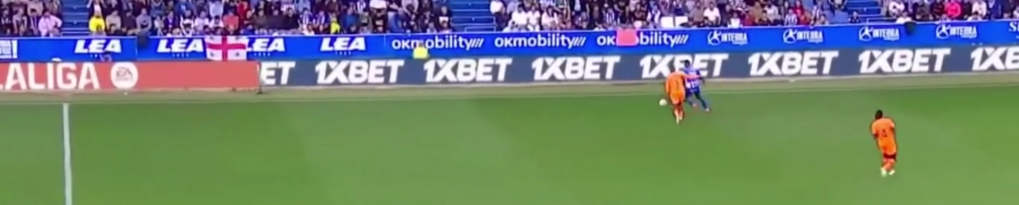
However, it looks like he’s engaged the situation too early. Rather than standing goal side and not allowing him room to drive the ball towards the goal, he attempts to retrieve the ball on the wrong side.

The Spaniard recovers expertly.

The attacker may have got a yard on Mosquera because of him engaging early, but the 20-year-old uses his strength, anticipation and speed of thought to get himself goal side, marshal his opponent off the ball..

… snuff out the danger and take control of the situation.

He is excellent at matching his opponents for pace, standing up to them with his lanky and striking frame before possessing the quickness of thought and anticipation to read what his opponent will do next.

But as shown above, even when a situation appears hopeless, the Spaniard demonstrates quick thinking, speed, and agility to recover and eliminate danger.

Unbreachable force in the box

Without a doubt, the most important expectation or responsibility of a centre-back is being able to safeguard the penalty area and control central positions on the pitch. Mosquera exemplifies this duty with remarkable finesse and authority.

His defensive nous is characterised by an uncanny ability to intercept passes and foreshadow the moves of opposing attackers, often positioning himself as a formidable barrier against advancing forwards.

With a keen eye for the game, he reads situations meticulously, anticipating threats and stepping in decisively to thwart them.

Mosquera’s commanding presence instils a sense of confidence in his teammates, as he consistently organises the defence while ensuring that no opposing striker can find a comfortable passage into dangerous areas.

As pointed out in this piece, Valencia are a much more dogged, organised and stout defensive unit under Carlos Corberan, with Mosquera becoming one of the focal points of their recent success under the former West Bromwich Albion coach.

The Spaniard’s frame, size, incredible physicality, aggression, and striking athleticism make him an immovable object at the heart of the Valencia defence.

Opposition attackers simply don’t like coming up against him in the box because he’s so hard to bypass. He’s a defender who loves to defend via winning his individual duels, battling up against the strongest or quickest #9s, sweeping up loose balls in front of or behind the back-line, or just simply becoming literally the last line of defence.

His impeccable timing in last-ditch tackles and clearances underscores his commitment to protecting his territory.

In the instance below, Mosquera and his defensive teammates face an attacking threat. One pass to the attacker on the Spaniard’s right shoulder and he’d be in through on goal…

It’s important to note, though, that Mosquera’s positioning in this scenario is excellent. He has a view of the play and threat before him and is aware of the threat behind him…

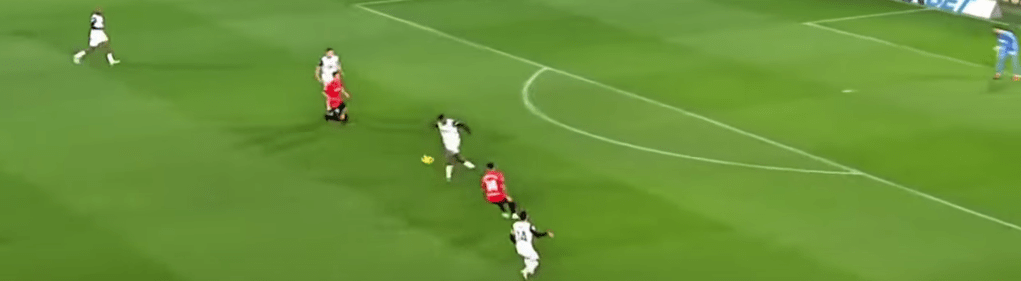
…because of that, he’s perfectly able to intercept the pass and get Valencia on the attack.

In the defensive scenario below, the opposing attacker looks like he’s got the run on Mosquera and looks through on goal…

…but such situations don’t seem that relatively easy and plain-sailing when the 20-year-old is around. The Spaniard is quick, agile, and confident enough to stop the attacker getting a shot on goal…
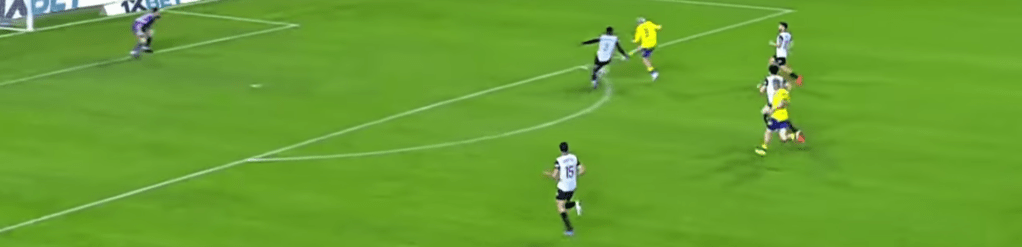
Any kind of threat being formed in the Spaniard’s vicinity, he is always there to mop it up and deal with it.

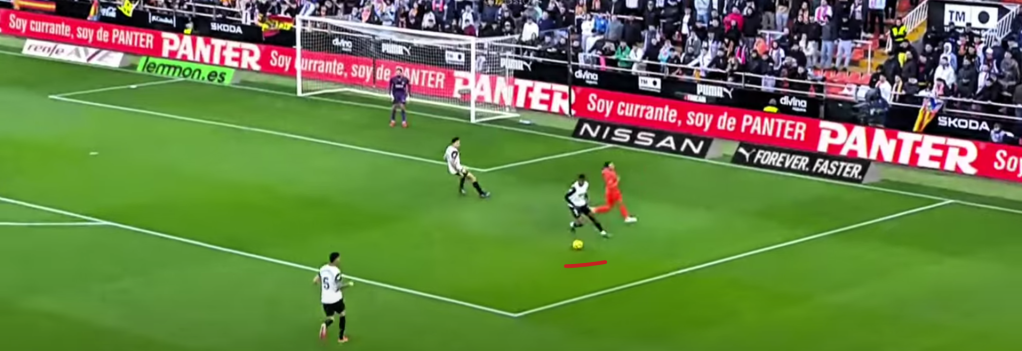
An example of his excellent last-ditch defending through blocks is shown below.

The opposing attacker (ORANGE) has all the time and space in the D outside the penalty area to line up a shot on goal…
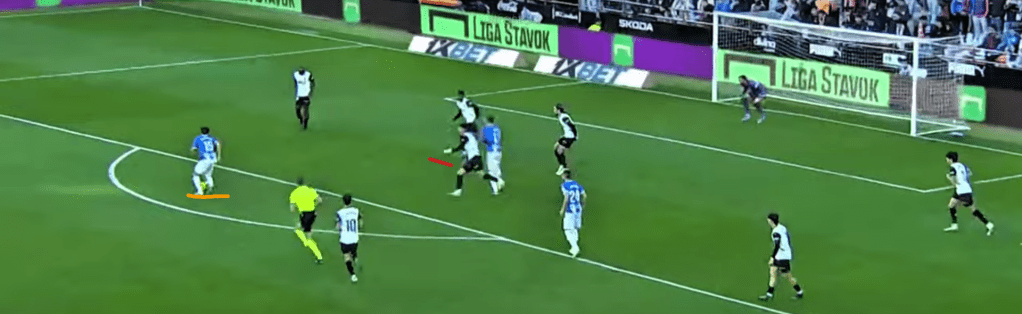
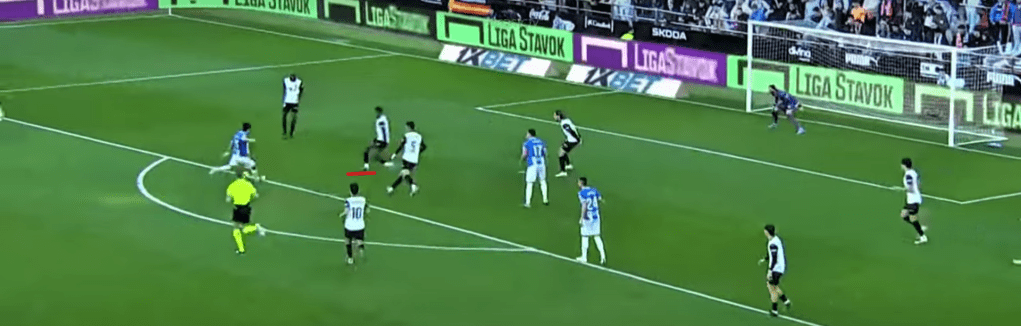
…but look at how quick Mosquera gets out to his man to stop him having an easy route to goal. His imposing frame and size, instant anticipation and reading of the situation completely diffuses the situation.

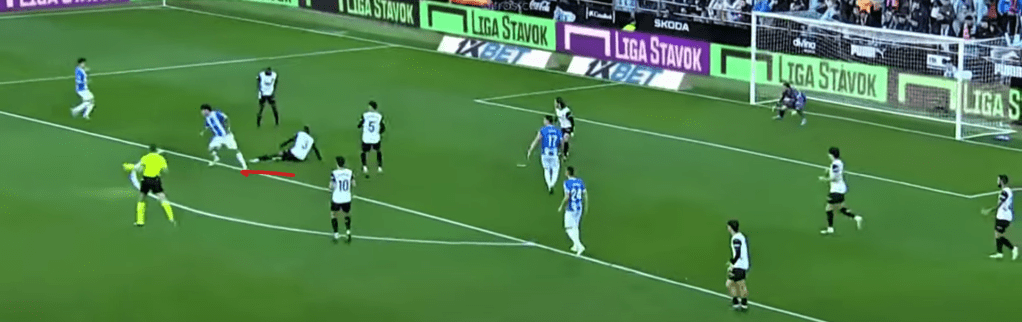
Take a look at the next example of Mosquera’s box defending, which is just as impressive.

The Spaniard is literally Valencia’s last hope as three of his teammates have been taken out of the scenario with a piercing run into the penalty box by an onrushing attacker…
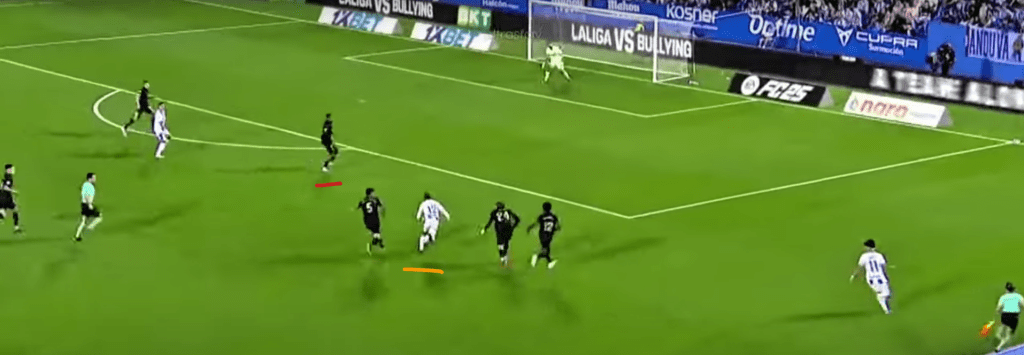
However, as he approaches the box, his line of sight on goal decreases, once again because of Mosquera’s imposing frame, athleticism, speed and defensive reading…
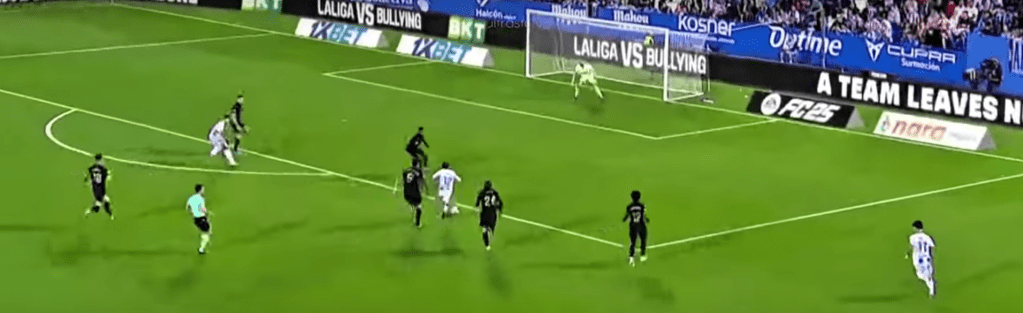
The attacker tries to position himself to get a shot off, but Mosquera’s is always primed and ready to engage…
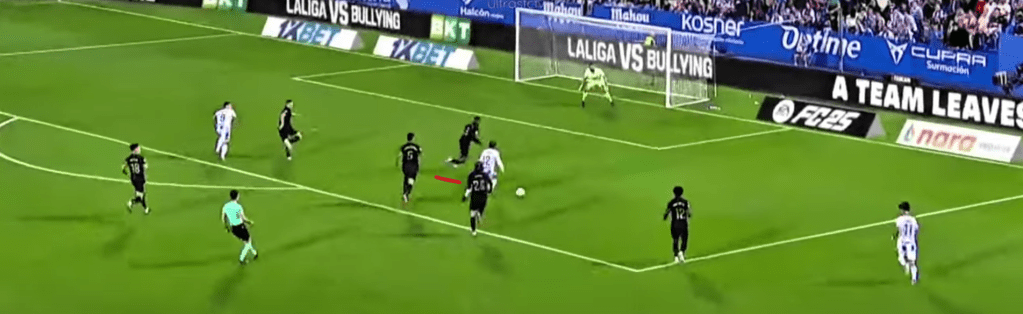
… and he does, blocking the shot and completely dispelling the danger.
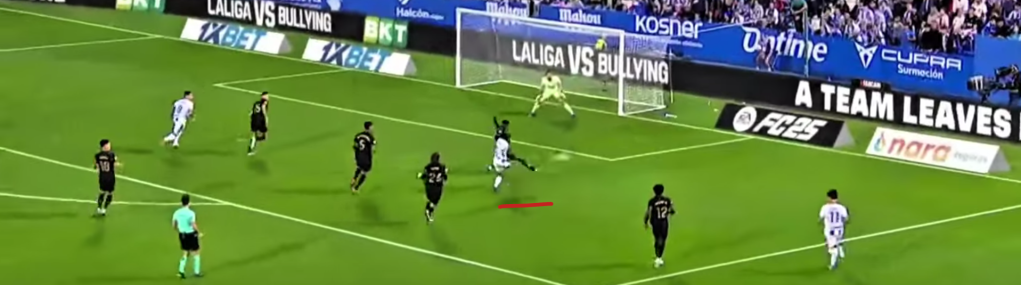
Critics could argue that it’s a situation which many defenders should be dealing with, but trying to anticipate what an attacker does in that moment, whilst also possessing the presence of mind and quickness to follow the speed of the situation, is incredibly difficult.

But Mosquera makes it look relatively easy.

When faced with a striker playing with his back to goal, Mosquera stays tight and uses his size, strength and defensive nous to stop that forward getting any room for manoeuvre. When faced with a dangerous low cross into his penalty area he is, nine times out of ten, always the first one to deal with the cross.

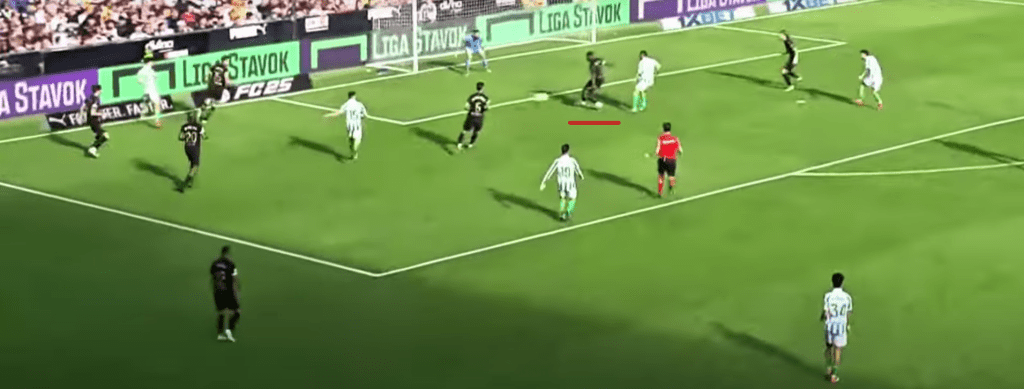
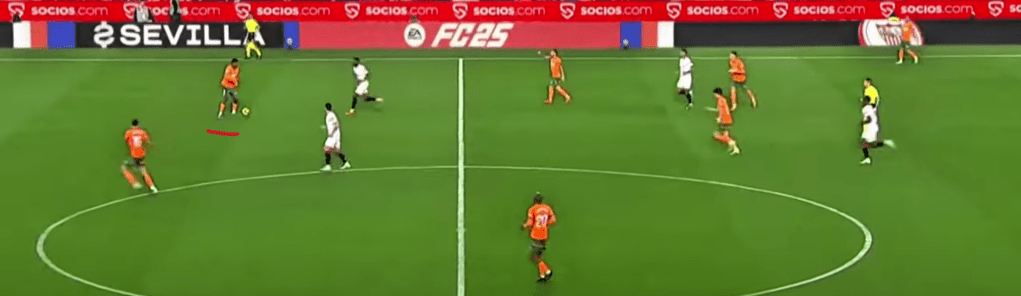
For example, looking at his positioning below (RED).
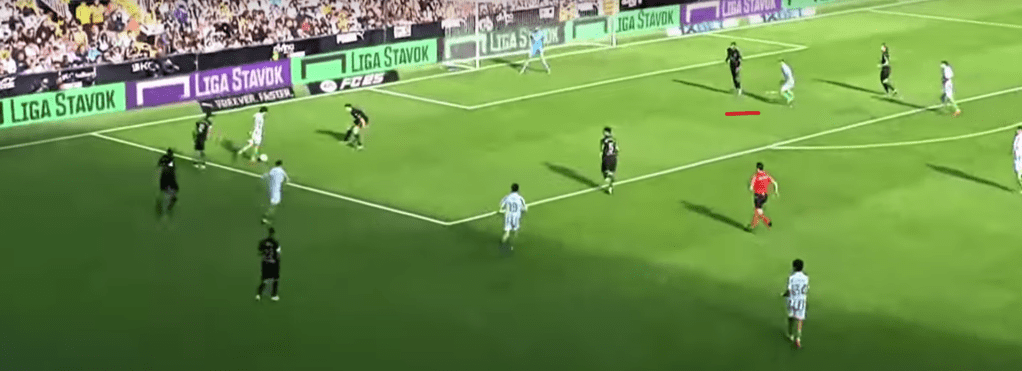
Mosquera is positioned well and has excellent body alignment. He has a clear view of the ball as well as a complete view of his marker, which allows him to anticipate their efforts to get ahead of him for a potential cross.

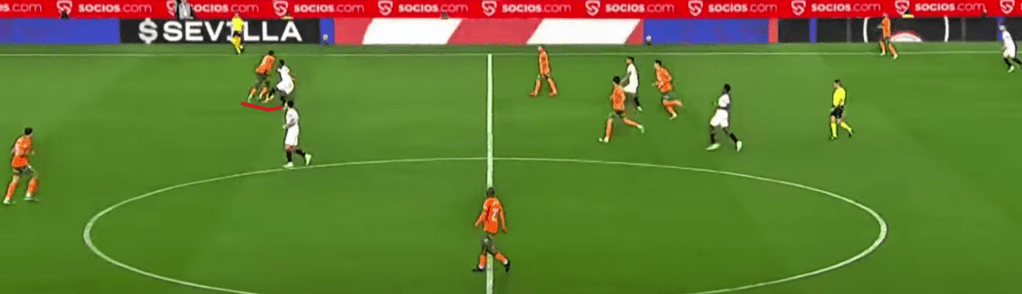
Such defensive and positional understanding means he is primed and ready to deal with the cross…
What about dealing with situations when running towards his own goal? Well, you probably know the outcome.

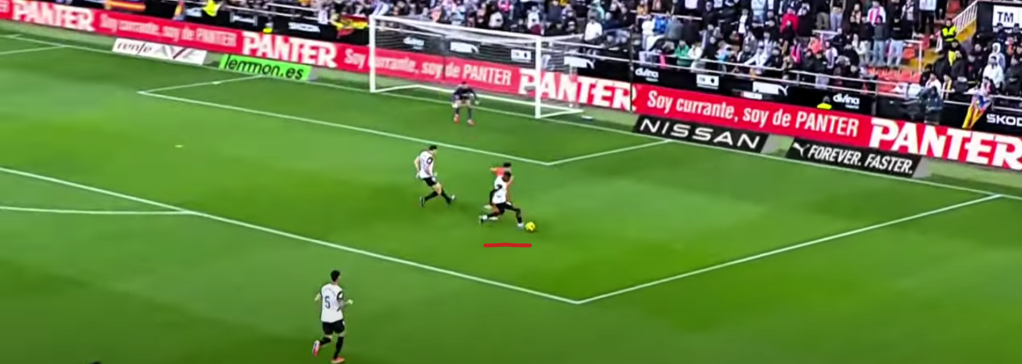
In the instance below, once again, Mosquera’s positioning here is really good. He’s aware of what’s around him.

The player with the ball has a lot of space in behind Valencia’s defence to play a through pass for his teammate on Mosquera’s left shoulder…

Mosquera’s speed, positioning, anticipation and reading are once again put to the test, but it’s a test he passes with flying colours.

He’s always in control of the situation, and that’s down to his flawless speed when covering large spaces and also the speed at which he eats ground.

If the Spaniard had dabbled in a sport beyond basketball before his football career, one would inevitably envision him sprinting in the electrifying world of athletics or track and field.

With his explosive speed, athleticism and striking frame, he could undoubtedly rival Usain Bolt, making the race a breathtaking spectacle.

In any defensive situation, Mosquera is more than capable of fulfilling his responsibilities.

At just 20 years old, having such confidence, poise and decisiveness in his defending is truly remarkable and illustrates the journey and trajectory towards greatness that Mosquera is currently on.

The Art of Recovery

Mosquera’s prowess in recovery defending is undoubtedly one of his standout features, showcasing an impressive blend of athleticism and tactical awareness.

There are moments when the Spaniard’s eagerness to thwart onrushing attackers can lead him to leap out of his defensive line, passionately striving to eliminate the threat. While this intensity demonstrates his commitment, it can sometimes leave both him and his teammates vulnerable to counterattacks, creating gaps that opponents can exploit.

However, what truly elevates a centre-back to elite status is the ability to quickly reassess and respond to dangers that arise after making a miscalculation—whether that’s his own or due to a teammate’s error.

Take, for instance, elite centre-halves like Rudiger or Liverpool’s Virgil Van Dijk, who embody this skill with remarkable finesse. They possess an uncanny ability to read the game, allowing them to recover seamlessly and mitigate threats, turning potential crises into manageable situations.

Mosquera, with his keen instincts, aspires to master this crucial aspect of his game, positioning himself among the top young defenders in Europe.

As mentioned previously, the Valencia academy product possesses incredible athleticism and speed; the way he eats ground when matching an attacker for pace is a phenomenal sight, utilising these attributes consistently to his advantage when eliminating threats or getting his team out of trouble.

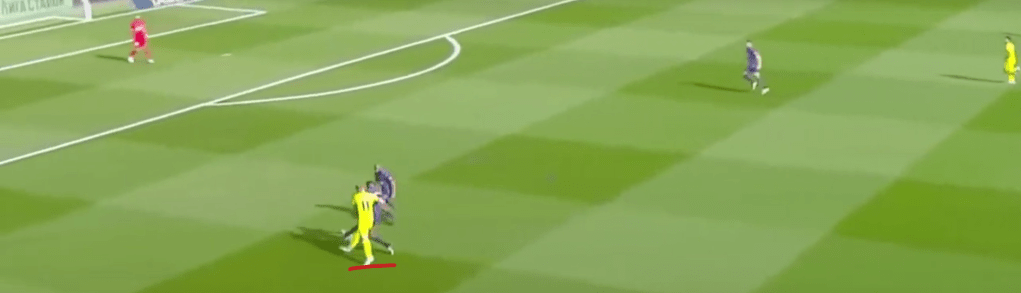
In the below instance, the Spaniard is caught out by a long ball, hoping his teammate Dimitri Foulquier bails him out of trouble..
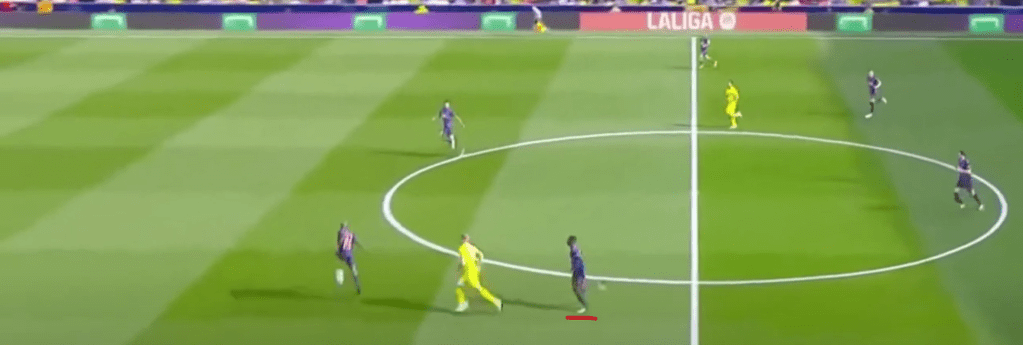
Foulquier fails to get rid of the ball, which squirms under him, giving the opposing attacker a chance to take advantage…

However, look at Mosquera’s recovery.

What seemed like a lost opportunity for the Spaniard to deal with the danger, he more than makes up for, rapidly eating up ground through excellent speed and agility and locking himself in a duel with the attacker…
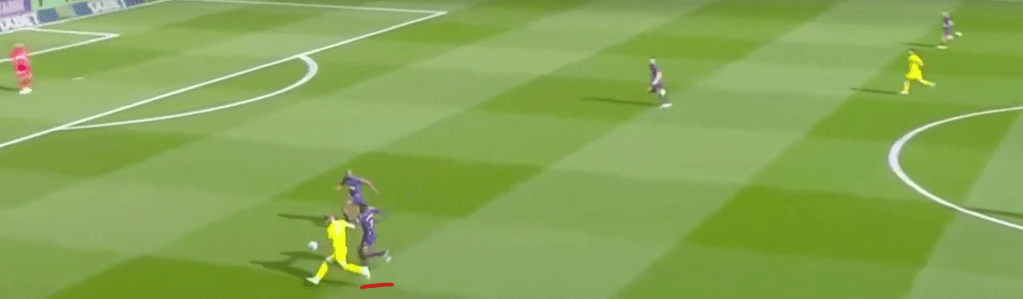
A duel Mosquera wins with relative ease and confidence…
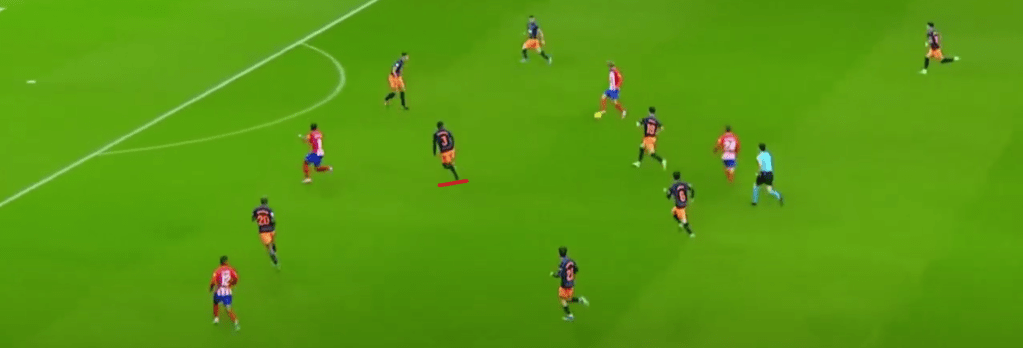
In another instance, against Atletico Madrid, Mosquera gets caught out of position with Antoine Griezmann, given ample time in between Valencia’s midfield and defence to exploit the gap in the last line and pick out Memphis Depay…
The Dutchman looks like he has all the time in the world to take his chance on goal, but once again, Mosquera bears down on his opponent quickly and precisely…

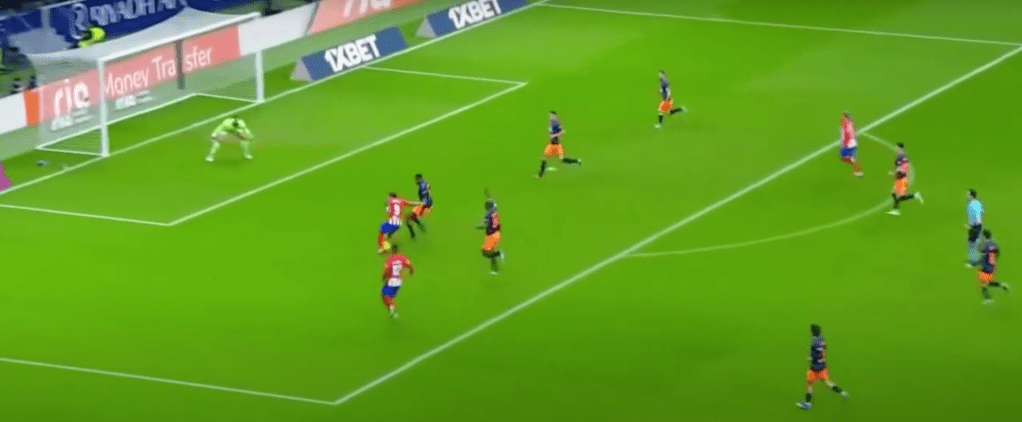
Instead of going for a left-foot shot, Depay tries to chop back onto his right – a skill he’s done time and time again throughout his decorated career – but Mosquera reads it brilliantly, deflecting the ball off his opponent for a goal kick.

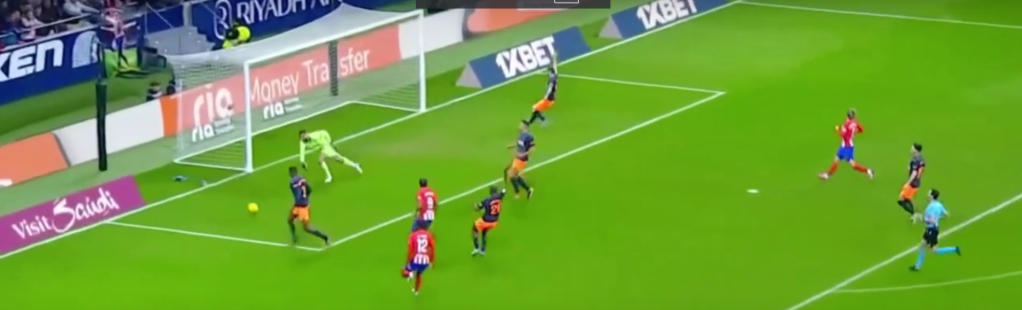
The Spaniard is excellent at reading situations and dealing with them, but he’s also become a master at quickly rectifying individual mistakes due to his tremendous anticipation, athleticism and defensive awareness.

As of matchweek 31 in La Liga 2024/25, Mosquera recorded the most ball recoveries (180) of any player in the Spanish top-flight (ValenciaCF.com)

While many critics may insist that Mosquera must eliminate the occasional lapse in judgment—like the mistakes noted earlier, reminding us that it’s often better to prevent problems than to solve them—it’s important to recognize that these experiences will only serve to enhance the growth and development of the Los Che academy graduate.

Every error is a stepping stone on his path to becoming an even more formidable defender. Every defender makes mistakes, though, it’s almost part and parcel of the job description, just ask some of the best around, like Van Dijk or Antonio Rudiger. It’s how a defender responds in that moment to rectify them, or after the deed has been done, that defines their legacy.

Mosquera is certainly well on his way to writing his own given his stunning trajectory since his emergence on the scene, but still has a long way to go given he’s only 20 years of age.

Aerial efficiency or deficiency?

Aerial duels stand out as a significant concern in his overall performance profile, a point of worry that persists even when factoring in his age. Typically, athletes experience improvement in their aerial skills as they mature, which aligns with the natural biological progression of the human body.

During the teenage years, athletes undergo substantial physical development, and this maturation process continues well into their late 20s.

When we look at Mosquera’s aerial statistics, the situation becomes even more troubling. He consistently ranks among the lowest in the category of aerial duels won per 90 minutes across Europe’s top five leagues, placing him in the bottom six percentile among his positional counterparts.

This statistic is particularly perplexing, especially considering his impressive physique and athletic build. He possesses a long, rangy frame that suggests he should excel in aerial contests. Additionally, he demonstrates remarkable leaping ability for someone of his stature, often appearing poised in the air. Despite these physical advantages, he tends to be more effective at making crucial connections while defending against early crosses, ensuring he often gets the first touch.

As previously noted, his ability to read the game is already highly developed, showcasing an understanding of positioning and timing that belies his youth. His jumping prowess inspires confidence that he should be a strong contender in aerial situations.

Despite the current statistics falling short of expectations, it is important to remember that at just 20 years old, Mosquera has ample time to refine his skills. With continued development, he will likely rank among the elite in aerial defending, transforming potential into consistent performance.

Ball-progression/passing

In the modern game, the role of the centre-back has evolved dramatically. These defenders are now not just stalwarts of the backline; they are pivotal playmakers who initiate attacks from deep within their own half. The expectation is to exhibit exceptional passing abilities, allowing them to seamlessly transition from defence to offence.

In addition to technical prowess, modern centre-backs must possess keen tactical awareness, demonstrating the ability to read the game and make split-second decisions, even under immense pressure when their team is building from the back. They must exhibit keen confidence on the ball, composure and good pass selection to seamlessly get their team into the attacking phase of play.

Valencia are not known for being one of the possession-focused teams in La Liga, and they rank among the lowest in terms of time spent on the ball as a collective unit. Therefore, evaluating Mosquera’s passing ability may not provide a complete picture.

However, according to the statistics, the Spaniard is a safe, low-risk passer. He ranks in the 44th percentile among centre-backs in Europe’s top five leagues for progressive passes per 90 minutes, indicating he falls into the lower bracket for this particular attribute. There is a case to argue that the system deployed at Valencia may be the cause for him not being as progressive as he should be.

Once he makes the move to an elite side in the near future, those progressive attributes may be exerted with much more confidence and comfort.

Nonetheless, Mosquera excels in pass completion percentage, ranking in the top 15% with a remarkable completion rate of 90.9% over the past year.

Just because Mosquera may not exert as many proactive qualities in his passing at Valencia, given his deceptive technical acumen, doesn’t mean he isn’t a progressive outlet.

The Spaniard is proactive through other means and arguably the rarest attribute for a centre-back, his dribbling/ball-carrying.

If the situation presents itself, the 20-year-old possesses the presence of mind, athleticism and excellent ball control to travel with the ball at his feet to force his team up the pitch or evade a tight situation.

Like the instance below…

Mosquera, playing for the Spanish under-21s, has the ball deep in his own half with an onrushing attacker attempting to press him and force a mistake.

The Spaniard can’t pass to his teammate alongside him as he is also being pressed. He may have to switch it across to find a teammate in space…

Instead, Mosquera does exceptionally well to con and evade his marker with excellent body deception and movement…
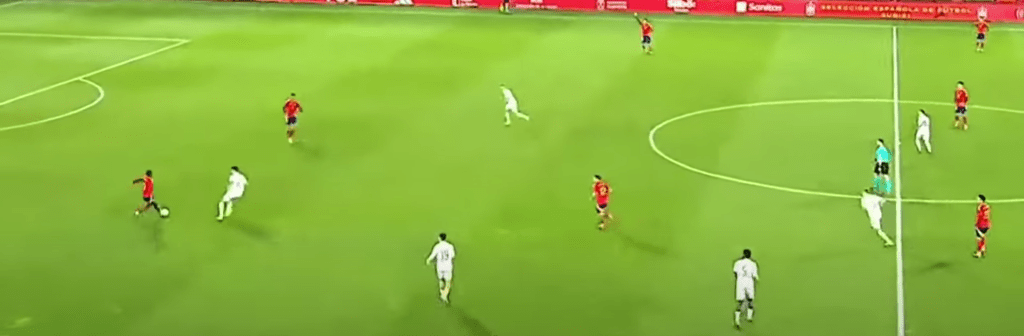
…opening up a passing lane to find his teammate in midfield, aiding ball progression by working around the opponent’s press…

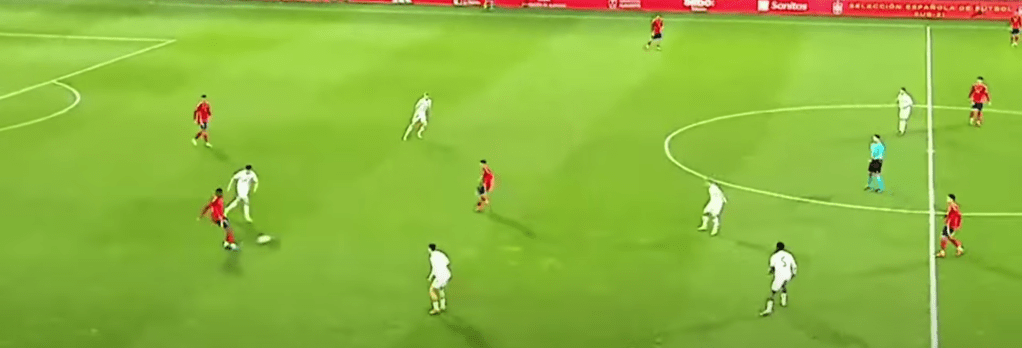
In another similar instance, Mosquera holds the ball in a pressurised situation..
…but has no problem bypassing his opponent, showing him one way before shifting the ball quickly the opposite way and driving forward…
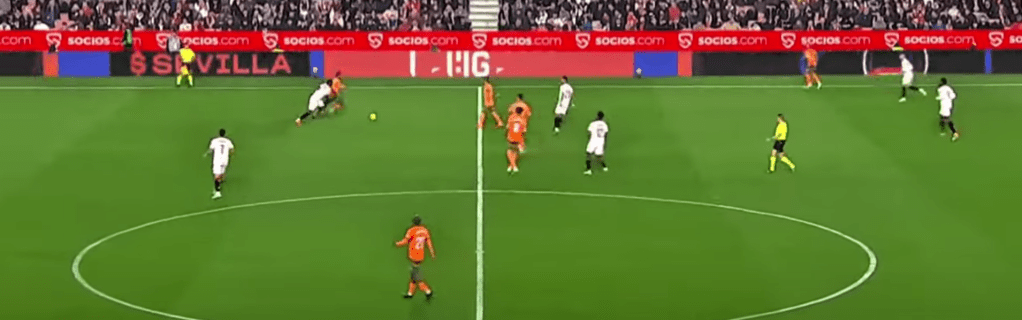
The Spaniard then has to pick his pass right, but isn’t given the best of options to aid progression, with his teammates all bunched up in the same vicinity, but it’s no problem…

He drives forward a few yards more…

…before picking out his attacking teammate in a bit of space to build an attacking scenario.
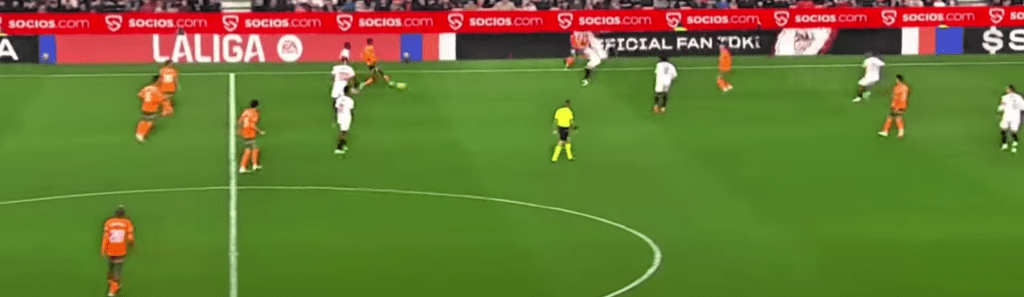
Mosquera’s dribble take-on success rate stands at 63%, which is a very decent mark for a centre-back ranking in the 69th percentile, showing he is more selective when he dribbles the ball out with his feet, choosing to take players on and carry the ball when it is most opportune.

Again, the above instances are only too small a sample size to fully judge Mosquera on, but it’s a small indication that he holds all the attributes to be a top-level progressive centre-back, capable of getting the ball forward quickly through quick thinking and incisive decisions once being pressed.

Future Mosquera Forecast

In a matter of two seasons, Cristhian Mosquera has already established himself as one of the best defenders in La Liga.

Boasting a formidable physique, exhilarating athleticism, and lightning-fast speed, Mosquera is an immovable force at the heart of defence. His remarkable physical strength and astute defensive awareness set him apart as the quintessential modern-day centre back.

It’s no wonder that he is frequently compared to the likes of Antonio Rudiger from Real Madrid, as both share an impressive ability to dominate their opponents and command the defensive line with authority.
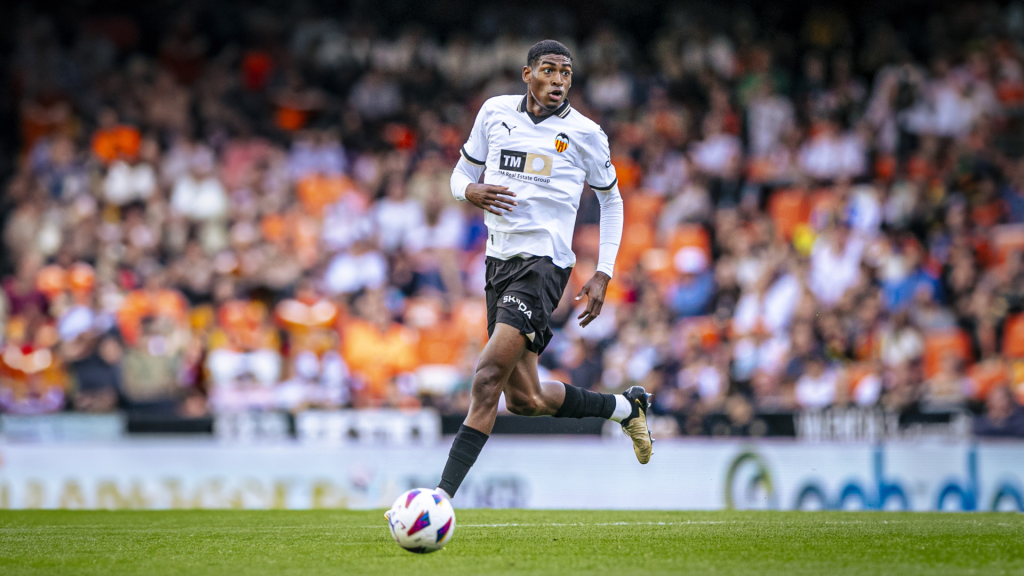
And the way his current trajectory is heading right now, it won’t be a surprise to see the Spaniard surpass the former Chelsea man.

At 20 years old, he’s already got some of Europe’s biggest names tracking his progress at the Mestalla Stadium, including AC Milan, Juventus, Atletico Madrid and FC Bayern Munich (Sky Sports journo Florian Plettenberg).

Judging by the way he’s excelling so far, especially under Carlos Corberan’s management, he’d certainly fit right in at any of those clubs.

When considering the potential of a young talent like Mosquera to integrate into elite football clubs, it’s essential to analyse the tactical frameworks employed by these teams.

Each club’s style of play, formation, and player roles can significantly influence whether Mosquera can flourish in that environment.
A club like Bayern Munich is certainly more progressive and positional focused than the others, but the Spanish youngster has shown he can fulfil the role of a progressive centre-back. At a club like Atletico Madrid, where Diego Simeone expects his CBs to dominate their box, be physical up against the markers, and defend at all costs more than a progressive outlet, Mosquera certainly fits the bill.

Whatever role you want Mosquera to fill, he’d have no problems acclimatising himself.

In a back three as a wide-centre-back or a central one or as one of the two centre-backs in a back four, the Spaniard is incredibly versatile and adaptable, making him one of the most attractive options in the market for any potential suitor.

He will certainly need to continue to make giant strides in his passing and aerial duels, but there is reason to believe all three areas will improve as his play evolves. 
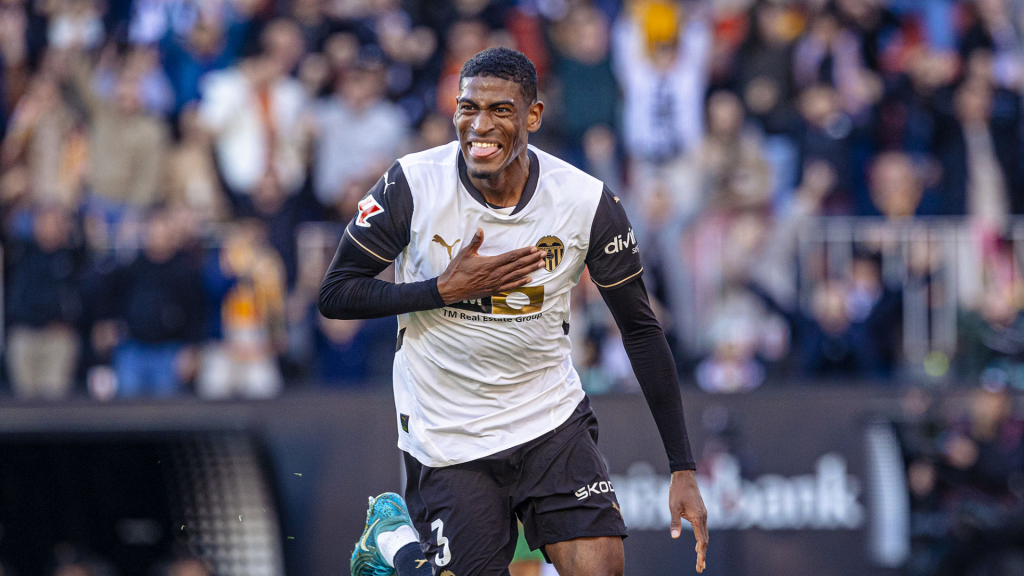
It won’t be long before we see this incredibly gifted young talent playing at the highest levels, both at club and on the international stage. When coming through Valencia’s academy, that’s certainly the expectation for its young academy products, as seen throughout the club’s decorated history.

Mosquera is up next and ready to take that giant step towards the elites.
The Remarkable Journey of Archie Gray: From Leeds United’s Academy to International Stardom

The Remarkable Journey of Archie Gray: From Leeds United’s Academy to International Stardom

The illustrious successes of the Leeds United academy at Thorp Arch means that every year one talent that graduates carries with them the expectations and hopes of becoming the club’s latest hot property.

The Whites have indeed had a few talents to get excited about over the past few years, youngsters such as Joe Gelhardt, Charlie Cresswell, Leo Hjelde and Lewis Bate who have now somewhat gone into unfortunate obscurity.

While most Leeds fans will be left wondering what might have been for those two, their attention has been swept considerably by the emergence of one Archie Gray.

Throw in a surname like Gray in and around the West Yorkshire camp and the expectation to become a superstar on the shores of Elland Road instantly increases.

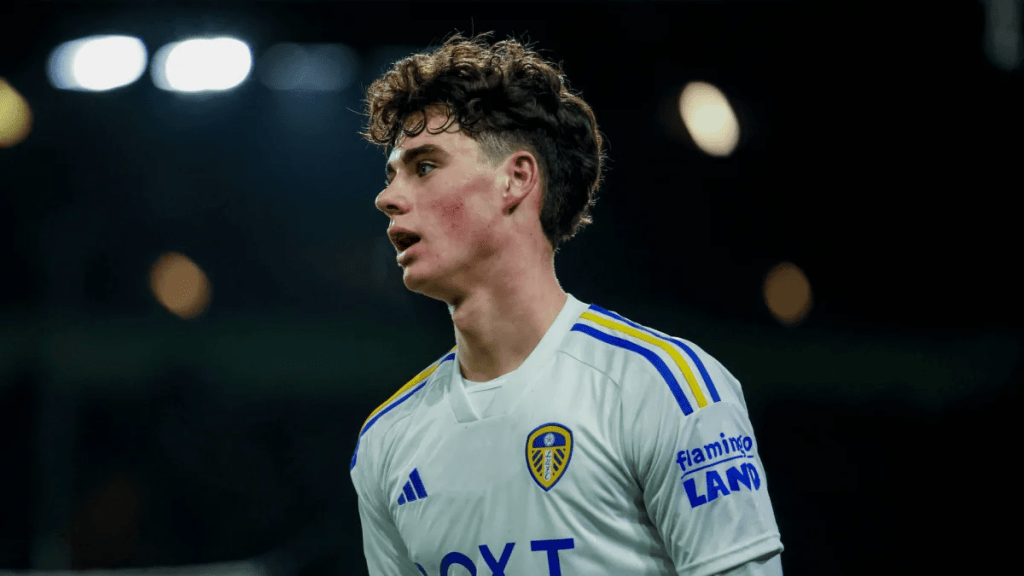
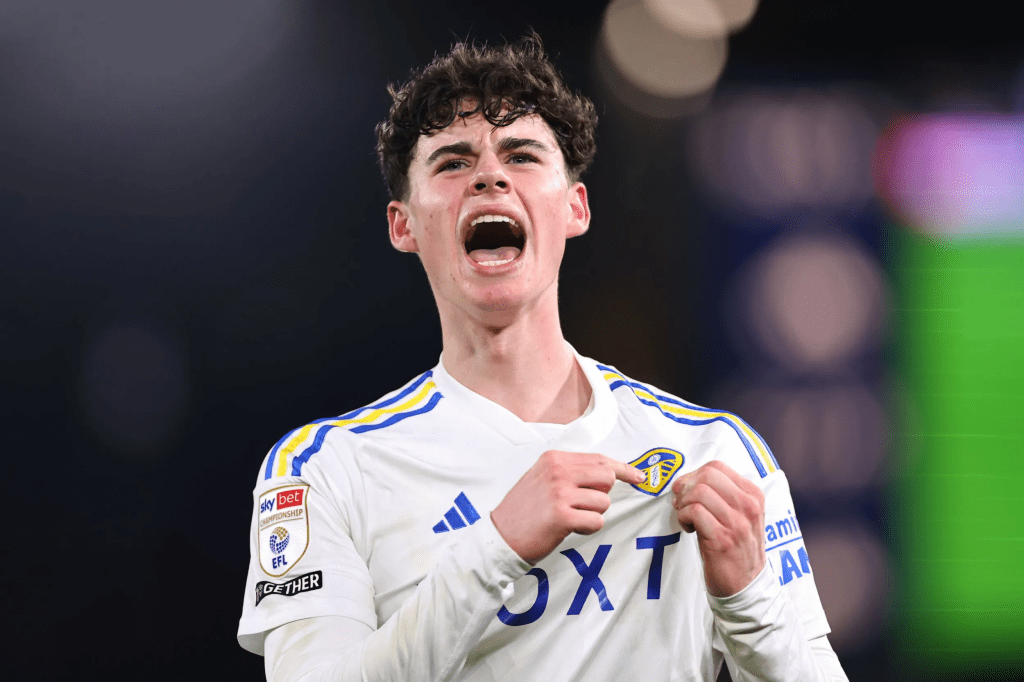
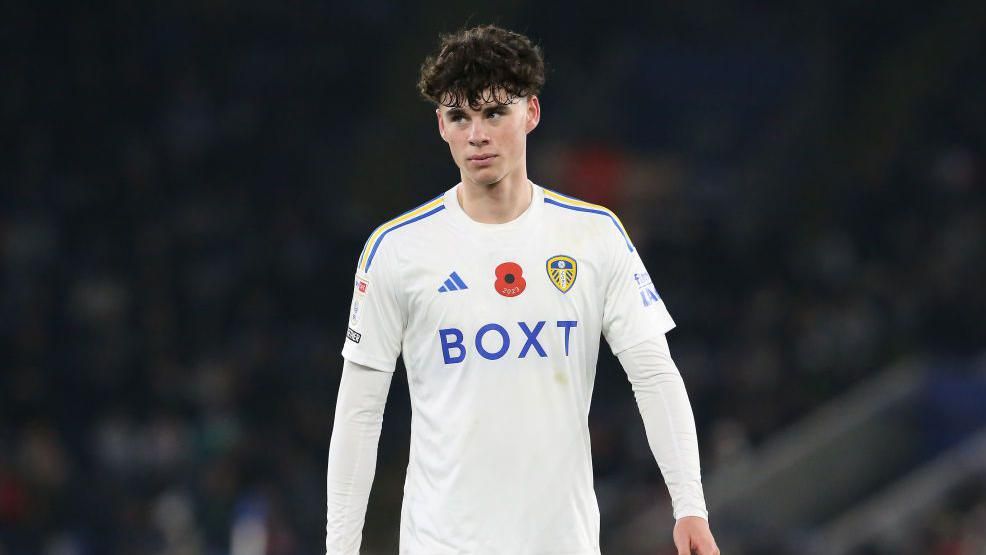
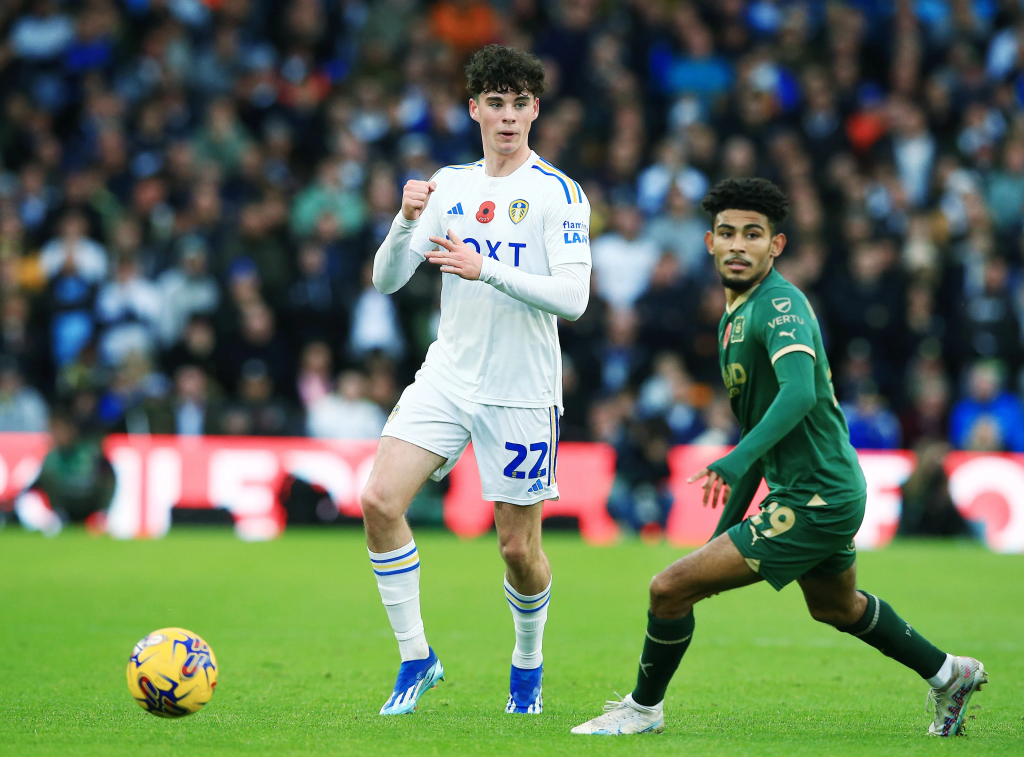
Son of former striker Andy Gray, grandson of ex-defender Frank Gray and great-nephew of club icon Eddie Gray, the 18-year-old is the latest edition of the renowned dynasty synonymous with the historic West Yorkshire club.

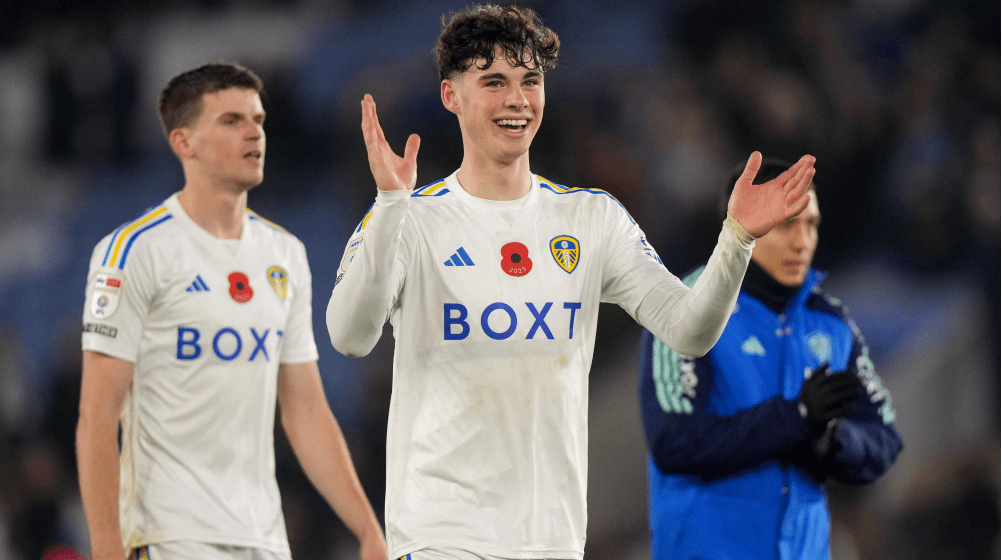
Certainly, Archie has a long way to go before he’s matching the heights of his decorated bloodline. Indeed, he’s only 18 and not even a year of first-team football at Elland Road has passed. However, the way he’s performing consistently for Leeds United right now, Gray is on his way to writing his own story and fulfilling his own glowing destiny.

After 40-odd games for the first team, the young Englishman has catapulted himself to become one of the country’s most exciting and highly-regarded teenage talents, leading to plenty of interest from the likes of Liverpool, Newcastle United, Everton and Crystal Palace in the recent past.

The Whites moved swiftly to quell all the noise regarding his future when they tied him down to a new long-term contract in January, putting pen to paper on a deal running until 2028 (LUFC official website, 16 January).

It’s no surprise that he’s been named in Goal.com’s annual NXGN list for 2024 which was released last week and he only went and followed that up with his first cap and goal for the England Under-21s against Azerbaijan on Friday (22 March) – making him the fourth youngest goal scorer in Three Lions under-21 history.

So how has Gray got to this lofty position so early in his relatively short career? Let’s delve in.

Who is Archie Gray?

Born in Durham, North-East England, Gray joined Leeds United at under-9 level.

He is the fourth Gray across three generations to represent the club, with his father, Andy Gray, having come up through the Leeds Academy and enjoyed two stints as a player at Elland Road.

Archie is the grandson of Frank Gray, who played for the club in the 1970s and 1980s, and he is the great-nephew of Eddie Gray, one of the finest players in the club’s history, who also went on to manage the team. Archie’s brother, Harry Gray, is also currently associated with Leeds’ youth academy.

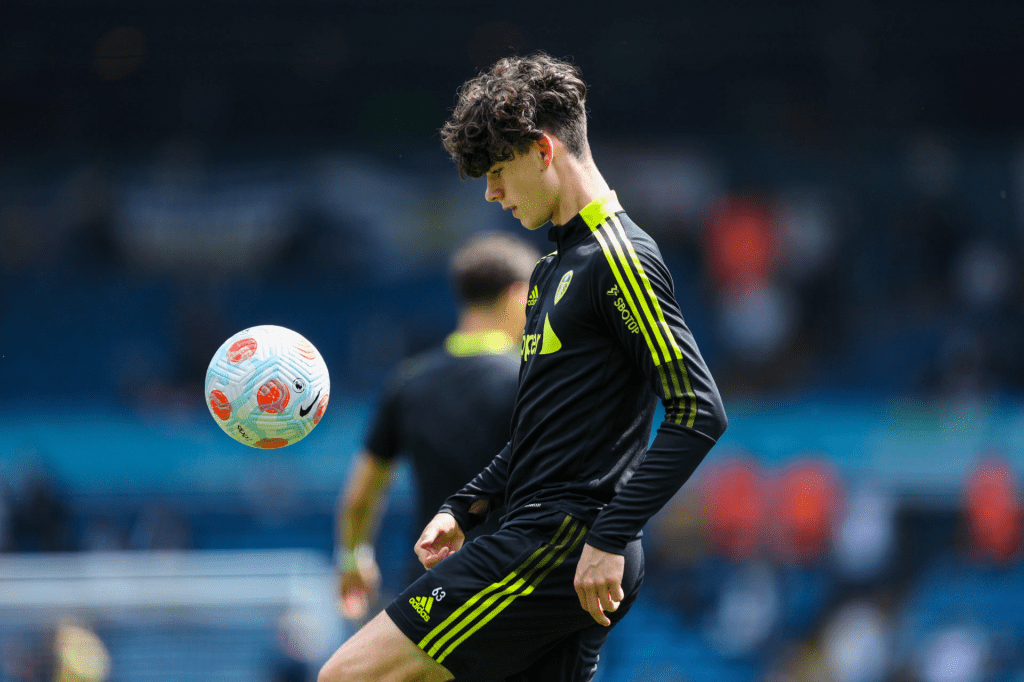
He advanced quickly through the academy, and at the insistence of then-manager Marcelo Bielsa, an arrangement had to be reached between Leeds United and Gray’s school, the St. John Fisher Catholic High School in Harrogate, for Grey to miss classes so he could to practice with the senior squad.

For a 15-year-old experiencing an unexpected advancement in his development, Gray’s weekends balanced GCSE revision with a place on a Premier League substitute bench; mock exams during the day, and 35-yard strikes against Manchester United U23s by night.

The midfielder boasts an impressive record in youth competitions for Leeds, featuring in 37 matches, finding the net in 5 instances, and providing 7 assists along the way.

Grey was added to the squad for a Premier League match against Arsenal on December 18, 2021, at 15. If he had featured that day, he would have surpassed Peter Lorimer’s 1962 milestone as Leeds United’s youngest-ever player.

In the 2021–22 campaign, he was on the bench five more times but failed to play. The following campaign, then manager Jesse Marsch gave him his first-team bow in pre-season, featuring in a 4-0 win over Blackpool in July 2022, just a few weeks before he received his GCSE results.

It was a display of intent from the teenager and the following 70 minutes reinforced the belief within the squad at Thorp Arch: he is no passenger in senior football.

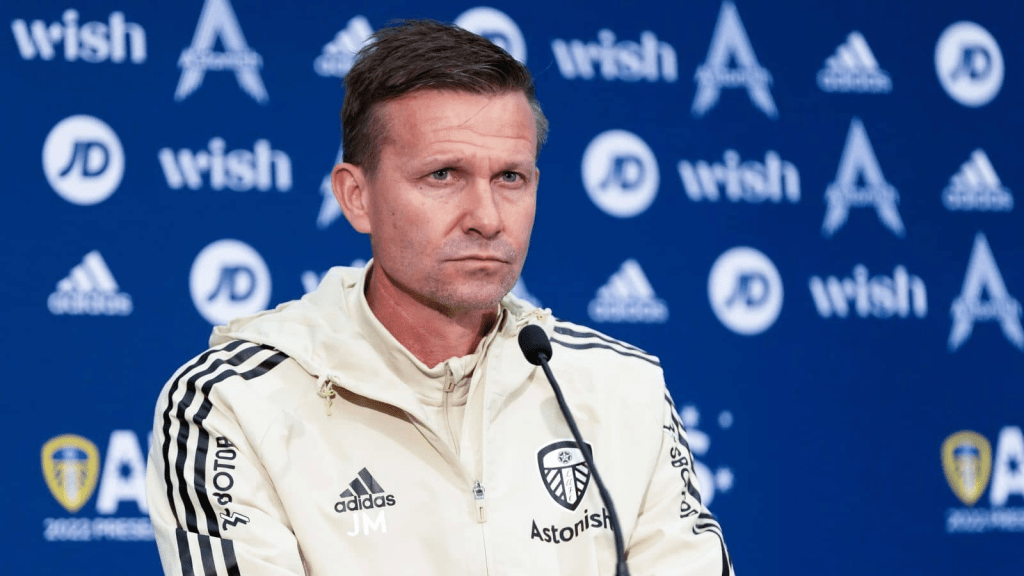
Former Leeds United manager Jesse Marsch

Marsch thought as much, giving the teenager high praise afterwards:

“I consider Archie a first-team player at 16.”

“He has cleverness, the flexibility to play in multiple positions, he can run, he sees things quickly, he’s aggressive against the ball and he’s fearless. I think he’s got the full package.”

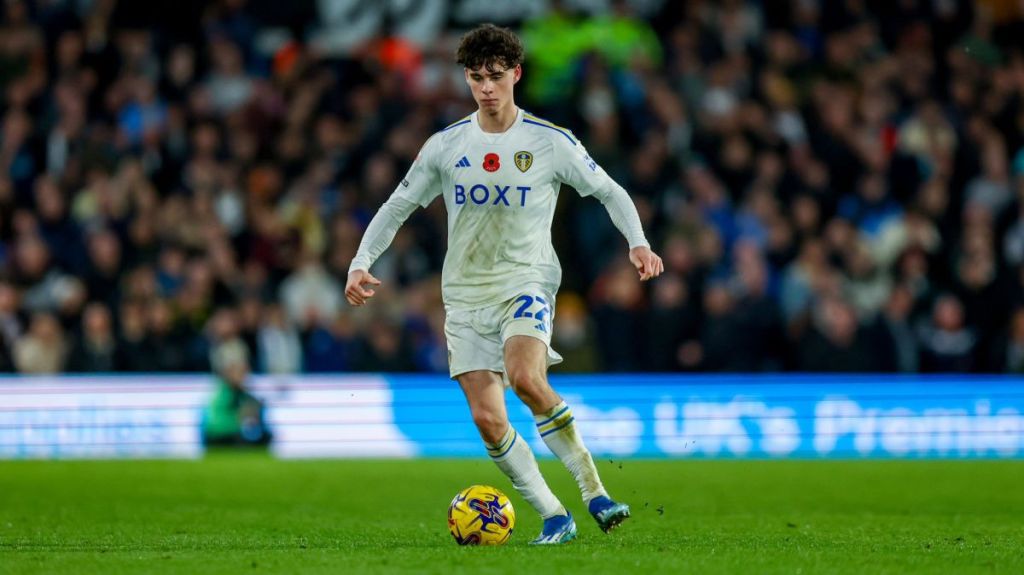
His senior debut came at the onset of the 2023/24 season, and since then, he has become a consistent name in Daniel Farke’s starting lineup, featuring in an unfamiliar role at right-back – a position he has now brilliantly made his own and an experience which will certainly aid his development and learning once he does take on a midfield role full-time at Elland Road.

Gray has represented England at every youth level and now under-21 level as of Friday 22 March 2024 but is still eligible to represent Scotland who have previously been interested in touting his services.

The Thorp Arch academy graduate featured in every game for the Young Lions at the UEFA European Under-17 Championship over the summer, as England bowed out at the quarter-finals stage. He would then go on to grab his first international goal in a 4-2 World Cup play-off win against Switzerland.

Having already stepped up to the England U19 squad, Gray made his U20 debut on 16 November 2023 during a 3–0 defeat to Italy at the Eco-Power Stadium before being fast-tracked to the under-21s and it only took him five minutes to grab his first goal in a 5-1  2025 UEFA European Under-21 Championship qualification win over Azerbaijan in Baku.

The striker made him the youngest Leeds United player to score for the England U21’s (18 years, 10 days), breaking the record of Alan Smith in October 1999 against Denmark (18 years, 345 days).

What is Gray’s style of play?

This is a footballing talent with a plethora of strings to his decorated bow and it is why he should go on to become one of the most prestigious and complete midfielders of his generation.

The likes of Liverpool haven’t been hot on his trails for no reason – this is a kid destined for great things just like his historic bloodline.

When Gray looks back on his career in future, he’ll look back on the 2023/24 Sky Bet Championship campaign as the season that provided him with the springboard he needed to flourish into becoming the complete and all-round central midfielder he was destined to be when he made the grade at Thorp Arch.

One manager he’ll greatly appreciate for his early development in Daniel Farke and the sole reason for that was the decision to deploy him regularly as a right-back rather than his customary midfield role.

In fact, the young Englishman was handed his first team debut at the start of the season playing alongside Ethan Ampadu at the heart of the Leeds United midfield against Cardiff City and Gray performed like a seasoned professional.

The teenager was assured and assertive with his passing whilst also thriving without the ball in a thrilling 2-2 draw at Elland Road.

Since then, Farke’s utilisation of Gray has not only been intriguing but incredibly meticulous, not only benefitting Leeds United’s tactical flexibility but with Gray’s development and learning very much in mind.

German tactician and Leeds United boss Daniel Farke has significantly aided Archie Gray’s development this season.

First and foremost, it was never Farke’s intention to deploy Gray as a full-back.

The Whites had three senior and capable options in the role once the campaign kicked off with veteran Luke Ayling, Djed Spence, signed on loan from Tottenham and another addition Sam Byram – who could also fill in a left-back – all quality options for Farke to choose from.

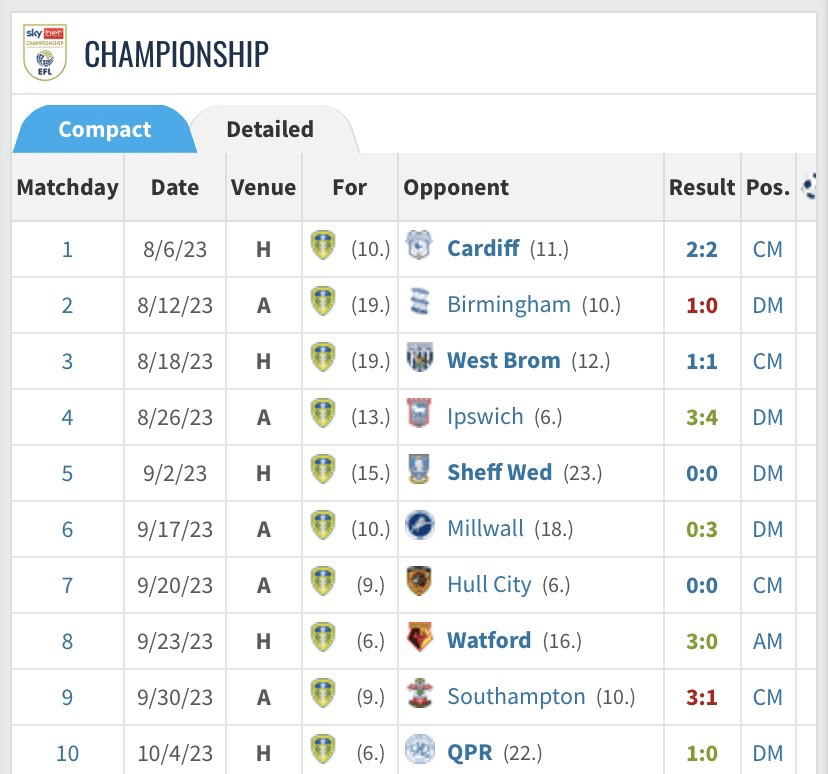
It looked as if Gray would be a regular in his usual midfield role, especially from the first ten games of the campaign:

Image provided by Transfermarkt

However, due to recurring injuries and the departures of Spence and Ayling in the January transfer window, Farke thought it’d be best to deploy Gray as part of his back-line and the 18-year-old has rarely looked out of place ever since.

Before picking out Gray’s influence and progression in the position, it’s important to pick out his most impressive and unique attributes which have made him one of the most hugely coveted teenagers in the country.

Such characteristics have elevated him to become an instant success story in what’s been a brilliant campaign under Farke’s guidance, with the Whites currently maintaining a strong push for automatic promotion back to the Premier League.

When watching Gray, you’d find that he is very well suited to the defensive midfield or #6 role – but also possesses the attributes to strut his stuff higher up the pitch.

The tools and attributes of a deep-lying playmaker revolve around controlling the game or “pulling the strings” if you’d like. This involves dictating the tempo and maintaining possession so that the team is always managing the game in their favour.

These attributes include; a high footballing IQ, confidence with the ball, a range of passes, technical dribbling and vision – all of which Gray possesses in his weaponry.

However, nowadays the role transcends beyond the understanding of just dictating the tempo of a team’s style of play, they are also expected to receive the ball well under pressure from goalkeepers or centre-backs, play with their back to where their team is shooting as well as screening their back four and protecting it.

Gray can certainly hold his own when receiving under pressure or operating amidst relenting pressure from his opponents.

In the image below, Gray receives a pass in his own penalty area from goalkeeper Ilan Meslier, with two opposition players aiming to win the ball with a high press:

It’s important to note that Meslier doesn’t hand possession to Gray amidst the opposition press just to get rid of it. No, the French goalkeeper plays it to Gray in a pressurised area, confident in the teenager’s ability to evade it and drive Leeds up the pitch, and that he does.

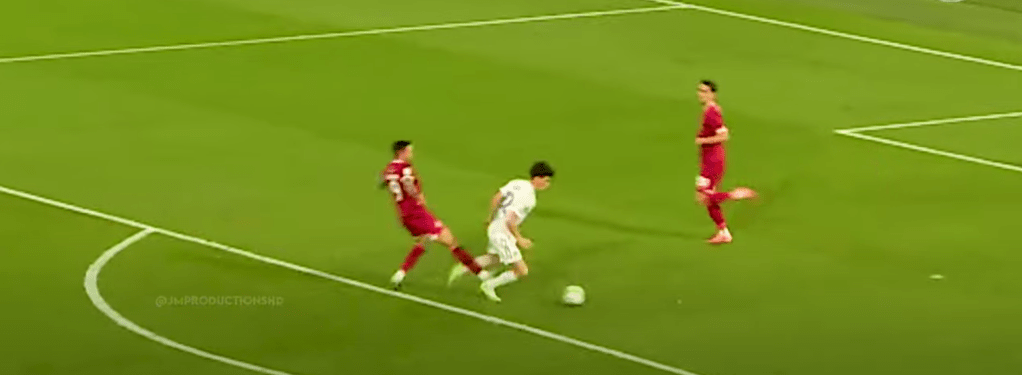
The teen sensation displays superb deceptive movement with his body to fool the player behind him, feinting one way with his right foot over the ball before forcing the ball with the outside to advance the opposite way:

With this nimble and deceptive manipulation of his body and the ball, Gray evades the pressure and is able to progress the ball into midfield with excellent ball-carrying and close control:

Despite having a lanky frame, Gray possesses quick feet which enables him to wriggle out of tight spaces, creating room, to increase his passing options and progress play, manoeuvring his way out of pressure and advancing possession.

He performed similar actions against Premier League outfit Chelsea in their FA Cup fifth-round tie at Stamford Bridge in a 3-2 defeat on 28 February (see tweet below).

Gray superbly evaded Mykhailo Mudryk’s and Nicolas Jackson’s pressure to progress the ball up the pitch for his team, ultimately leading to the Whites’ equaliser from fellow academy graduate Mateo Joseph.

To become an elite operator in the role, all of the above characteristics must be performed to a consistent and measured level. While Gray still has some way to go before matching those elite levels, his qualities are those of a player who embodies such unique attributes.
A technically gifted central midfielder who is efficient and assured on the ball but also possesses a hunger and drive to win the ball back for his team, Gray is a special player with a very high ceiling, boasting an immense passing ability.

He’s a great ball carrier who is aggressive in physical duels and holds his own in terms of keeping his side compact out of possession, and whilst he is capable of being moulded into a #6, #8, or #10, he could even perhaps be best suited to a left-sided #8, an interior midfielder.

As stated previously, Gray possesses stunning vision to see passes before everyone else. With all the passes or through balls you’d expect from an advanced midfielder, the 18-year-old can also perform with superb efficiency.

Take his assist for Crysencio Summerville against Blackburn Rovers in Leeds United’s 2-0 win in December, in the image below:

Before the assist, Gray possessed the mind and intricate attributes to get out of a tight spot by playing a lovely one-touch pass and move with Georginio Rutter, buying him the room and the opening of a passing lane, disrupting Blackburn’s defensive line to thread a perfectly weighted pass for Summerville to finish.

While the above pass may seem easy to the untrained eye, it really isn’t. Many players of Gray’s age and profile may take an extra touch which could allow defenders to block the space, or they could perform an overweighted or under-weighted pass which Summerville can’t run onto.

For Gray, he knows the exact time to play the pass and the weight needed for Summerville to take just two touches to score.

The 18-year-old’s mental fortitude, maturity and unbelievable technique are of elite potential. The way he carries himself on the pitch even in unfavourable situations for Leeds is quite staggering. Such characteristics and mentality coupled with his level of understanding as a deep-lying midfielder have allowed him to perform expertly as a right-back.

Credit must go to Farke for identifying the role for Gray to refine and mature his game even further and it’s worked to such tremendous aplomb.

While performing in defence, Gray has been able to work on his positioning, defensive concentration, and marking but also the ability to problem-solve in possession, identifying different angles for a pass – attributes which will make him an even better midfielder once he’s deployed there permanently.

The role of a modern-day full-back has evolved massively.

Not only are they tasked with the responsibilities to defend well and guard against opposing wingers, they are now crucial and instrumental in many teams’ attacking play; providing width, final third penetration and are used as decoys in order for wingers and wide forwards to perform their best work in attacking scenarios.

Not only that, but elite coaches are now deploying their full-backs as auxiliary midfielders, taking up roles alongside a defensive midfielder when building up from the back in possession, overloading the opposition in the middle third and also providing an option in the half-spaces in the final third.

Because of Gray’s incredible technicality and understanding tactically, he can perform both responsibilities right down to a tee.

As pointed out earlier, Gray is press-resistant which means he can come inside from his right-back and consummately aid his side in progressing the ball into the final third but he’s also a tremendous outlet when Farke needs attacking width.

One of the biggest factors into why Archie’s so versatile/tactically flexible is his ability to play across all angles — while being receptive to his surroundings – it all leads to him becoming so ‘precise’ and meticulous with his actions.

The England under-21 international turns & spins so fluidly, but as addressed earlier in this piece, he’s able to manipulate and bend tight situations to his advantage through nimble footwork, close control and his rangy build.

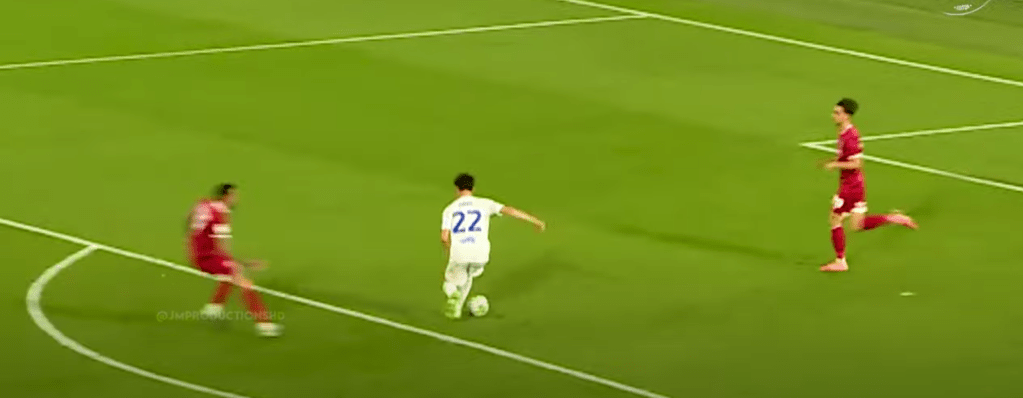
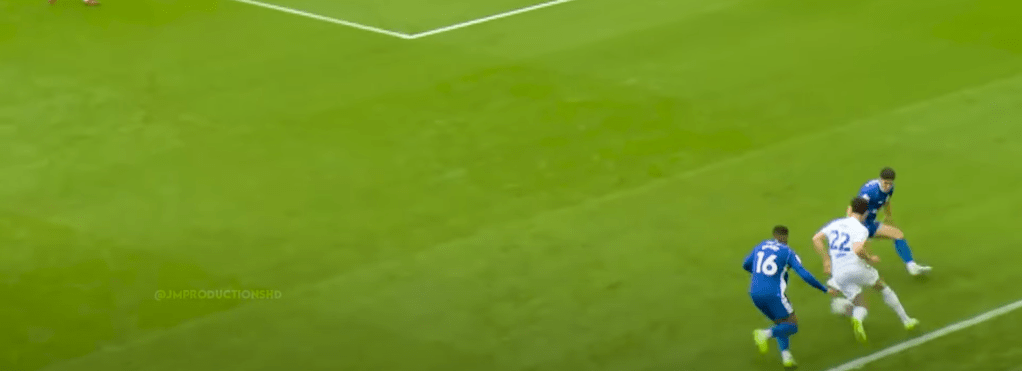
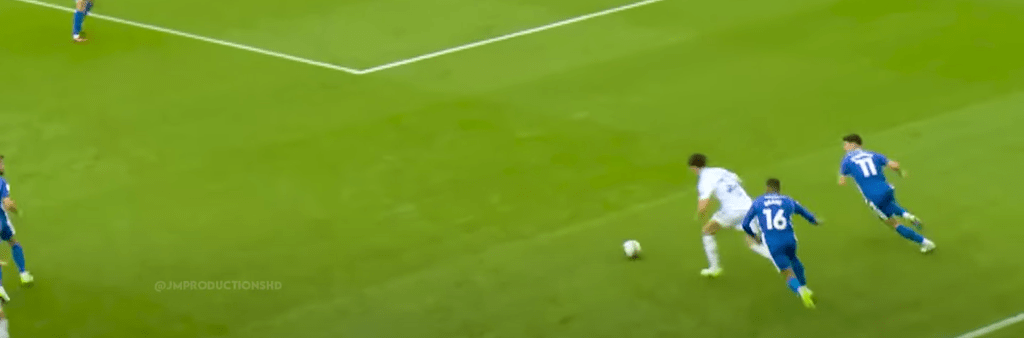
As seen in the image above, he comes up against two Cardiff City defenders, with the aim of forcing play into the final third for Leeds United.

It seems an impossible situation and a tight spot for plenty of right-backs to escape.

NOT FOR GRAY.

Gray’s dribbling and ball-carrying are of a quality standard and it is what will make him an elite midfield component in future – the Englishman holds a dribble success rate of 54% and also ranks in the top 19 per cent of midfielders for progressive carries outside of Europe’s top five leagues, whilst also ranking in the top 24 per cent for successful take-ons.

In a progressive and possession-orientated system, Gray will be handed the conditions to thrive consistently and his development and learning have been hugely boosted by Farke’s flexible, fluid and expansive style at Elland Road.

A standout trait of Archie’s is his passing.

The Durham-born wonder possesses a top variety of passing — whether that be slick 5-yard passes round the corner, a 20 yard passes to dissect the lines and locate players in the half-spaces or even ping a 40-yard cross-field ball, he can do it…

The 18-year-old talent is ambipedal – incredibly adept at distributing the ball with both feet. As seen in the image above, for the England under-20’s, he picks out an attacking teammate in space with a delicious left-footed cross-field pass, despite his penchant for using his right.

Another part of his game that makes him so complete already despite his tender age, is his tackling. He times his tackles very well, loves to be aggressive in winning the ball back and excels in slide tackles.
Defensive midfielders with rangy, long-legged attributes, supreme athleticism and physical attributes but also with the ability to be adept and assured in possession have become a dying art in recent years but will soon be coming back into fashion once more.

Gray is yet to reach that profile and still has plenty of time to grow into one but already, the way he performs, it won’t be long before he’s in that company of unique physical midfield profiles.

Championship football certainly is aiding that progression. His rangy frame and long legs boost his ball-winning attributes, and he’s become one of the best defensive full-backs in the division. Gray ranks third in the Championship for dribblers tackled (56) and ninth for tackles won (55) (FBRef).
The English talent, however, has been susceptible to the odd lapses in his defending this season.

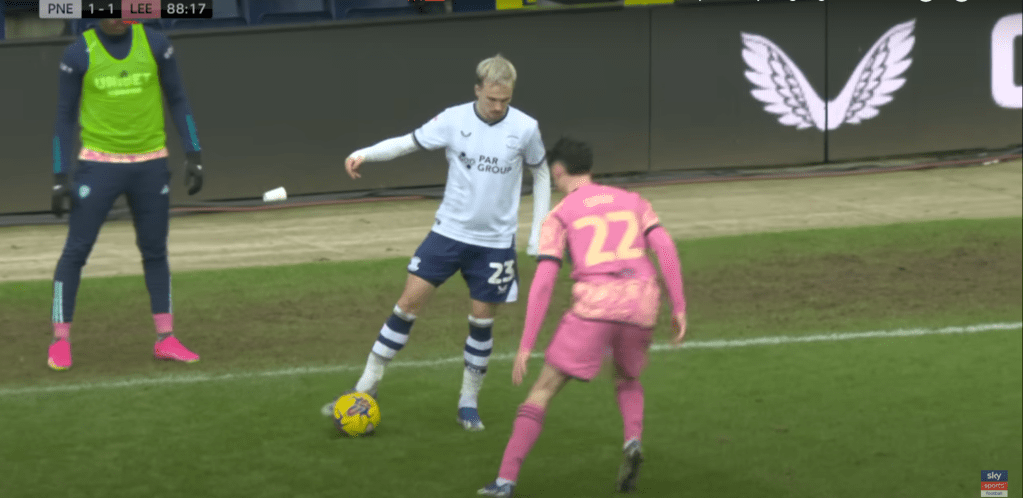
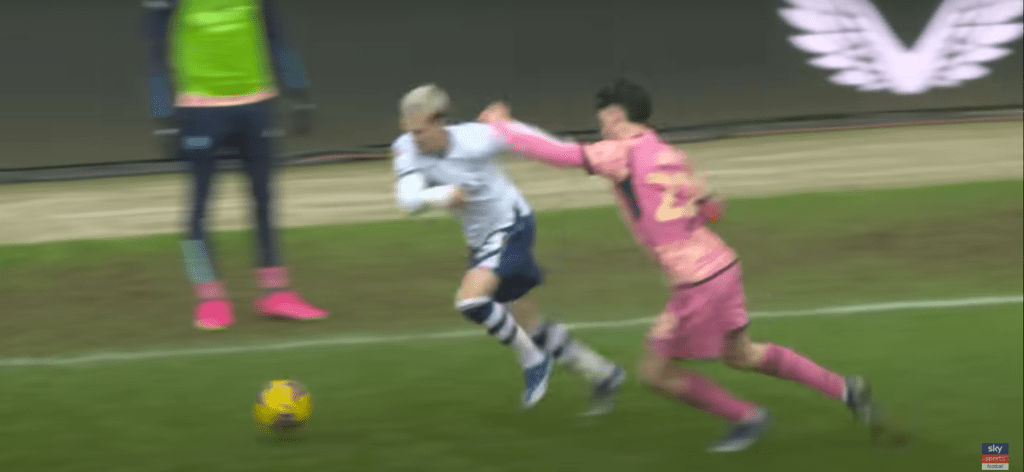
Take the game against Preston North End on Boxing Day. The Whites suffered a dramatic late 2-1 defeat at Deepdale, with Liam Millar grabbing the winner after being allowed to cut inside Gray before unleashing an unstoppable drive into the top corner.

As a full-back, you’re always taught when facing up against an inverted winger (wingers who work best when the player’s strongest foot is opposite to the side of the pitch he’s playing on), to ensure that they do not cut inside to perform a shot or a cross, but force them onto their weaker foot.

In this case, Gray’s positioning and standing frame up against Millar were all wrong.

Millar reads it and is allowed the freedom to cut inside onto his stronger right foot, which he does brilliantly but Gray allows him the room to do that when he should be using his body positioning to show him outside instead.

Because of his positioning, Millar takes advantage of the room and space to move onto his right foot and carry inside the penalty area, leaving the teenager in his wake…

It’s those small details and lapses that allowed the Preston winger to grab the winner. That was early into Gray’s reign as a right back but he has gone on to make significant improvement ever since. However, it is something he will face relentlessly as a midfield player in future – a probable weakness that could well crop up again.

Given Gray’s mental fortitude on and off the pitch, and his willingness to learn and improve, he will iron that out with minimal fuss – such is the talent England have once again at their disposal.

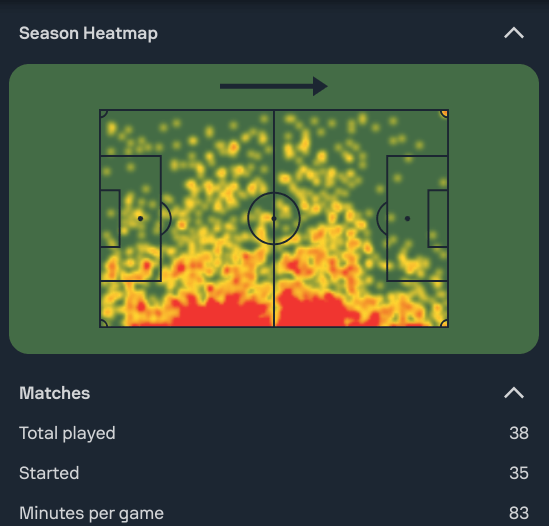
The 18-year-old is not only garnering a reputation for his technical ability and work off the ball but also his superb engine room. We’ve touched on his impressive athleticism for a player so young, but Gray is a player who can run for hours, and that is evident in his admirable versatility and assuredness in fulfilling multiple roles for Farke and Leeds United.

The stats certainly back it up in the image above (SofaScore). Gray averages a whopping 83 minutes per game and has featured in 38 of Leeds’ 40 games in the Championship so far.

Gray is one of the first names on the team sheet for Leeds United, even when he’s tasked with fulfilling duties in midfield from time to time – a true measure of his tremendous impact but unbelievable growth and maturity at just 18.

What does the future hold for Archie Gray?

There’s no doubt Archie will go on to fulfil his enormous potential but that may not be at Elland Road like his aforementioned bloodline, with plenty of the elite clubs around Europe already keeping watch over his stunning progression.

According to HITC journalist Graeme Bailey (2 April), both Real Madrid and Bayern Munich are currently scouting the Durham-born teenager. Not to mention, he’s already being watched – according to previous reports – by Liverpool and Newcastle United.

Whether those interests lead to a formal approach once the season comes to a close remains another matter, because should the Whites go on to claim their return to the top-flight next season – currently fighting both Ipswich Town and Leicester City for the Championship title – Gray will surely still be a Leeds United player.

It’s why the West Yorkshire outfit are hell-bent on fulfilling their ambitions, so they don’t lose their star players such as Gray, Crysencio Summerville, Wilfried Gnonto and Georginio Rutter.

Three of Leeds United’s most prized assets: Archie Gray, Crysencio Summerville and Willy Gnonto.

Premier League status means they won’t be under pressure to lose them, can claim hefty fees as well as those players being convinced that another season developing in the top-flight would be beneficial.

For Gray though, another season or two at Elland Road would do him the world of good. An opportunity to further refine his craft playing regular football rather than a development benchwarmer at a big club should be at the top of his future agenda.

The big clubs will always be there for him to choose from. For now, development is the name of the game for the 18-year-old sensation because the way things are looking right now, he could well become the best of his historic family line.

Nico Schlotterbeck – Scout Report 2021/22

Nico Schlotterbeck – Scout Report 2021/22

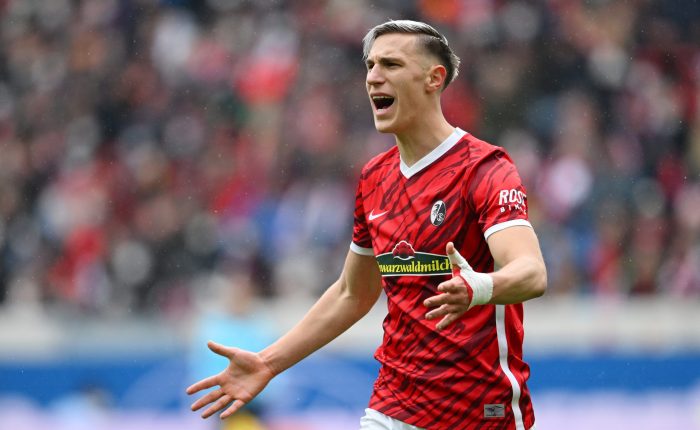
Germany international centre-back Nico Schlotterbeck has agreed a transfer to Borussia Dortmund from Bundesliga rivals Freiburg.

Schlotterbeck has undoubtedly been one of the star performers in his team’s push for European football this season, not only that but statistically he is amongst the top performing defenders in Europe’s top five leagues.

The 22-year-old, who has enjoyed a breakthrough season in 2021/22, has agreed terms on a five-year deal through to 2027 at Dortmund, where he is set to form part of a new-look back line alongside fellow centre-back Niklas Süle, who joins from Bayern Munich.

“Nico is a young Germany international who’s had great development. His profile is perfect for BVB,” said outgoing sporting director Michael Zorc.

His successor, Sebastian Kehl, added: “Nico’s journey reminds me of my own, coming as a young Germany international from Freiburg to BVB. I hope Dortmund becomes as much as a home for him as it did for me.

“Nico has huge potential. He’s chosen by no means the financially best offer from numerous interested clubs, but chose BVB to develop here.”

So, lets begin the profile of this extremely gifted young centre back:

Who is Nico Scholetterbeck?

It is easy to forget about Freiburg. Squirreled away in the south west corner of Germany, its population of 230,000 people is not even enough to push it into the top three cities by its size.

The same can be said of its football club; SC Freiburg is often the forgotten club when it comes to German football, regularly surviving, quietly going about their business mid-table or even overachieving relative to its not-so-huge financial resources, but not significant enough that it will make the neutrals sit up and take notice.

However, perceptions this season has been dramatically altered, as the club currently sit fifth, three points away from the Champions League places deeming it an outstanding season for Christian Streich’s men.

When it comes to player development, this area is curious. Known primarily for blooding goalkeepers, since Streich became head coach in 2011 there have also been a litany of centre-backs moving through the club on their way up the footballing pyramid.

The legacy of producing Robin Koch, Çağlar Söyüncü, Matthias Ginter, Ömer To­prak and Marc-Oliver Kempf shows it is a club who are in the business of developing quality centre-backs.

The latest player to emerge is indeed Nico Schlotterbeck.

Growing up in a suburb of nearby Stuttgart, Schlotterbeck arrived in Freiburg with his older brother, Keven, in 2017. Since then, both have had stints in the Freiburg youth teams, on loan at Union Berlin, and in the Freiburg first team.

Three years the junior, Nico has overtaken his brother in the Freiberg pecking order after putting up some of the best defen­sive numbers in the Bundesliga last season with a Union side that ultimately qualified for European competition. 

The 21-year-old’s performances in Berlin earned him reg­ular appearances in the Germany under-21 team and even­tually a senior international debut in March. With the younger Schlotterbeck now firmly ensconced in the Freiburg back line, it looks inevitable that he too will fol­low a similar step up to his prestigious predecessors amongst the elite clubs on the continent.

Why have Dortmund quickly moved for his signature? Is he any good?

No role in modern football is as difficult to perform as a center-back. For most teams, central defenders are the starting point of their attack and are required to be accomplished and effective on the ball both through dribbling and passing.

As more and more teams across the continent adopt high-pressing systems, they need to be capable of resisting pressure from an opposition press when building from the back, mobile enough to cover in behind if the press is broken, and aerially dominant to stop the opposition from playing long raking balls over the top. 

Given the variety and difficulty of these tasks, talented center-backs who perform these actions in abundance are seemingly always in high demand. As such, it’s no doubt that various clubs were interested in acquiring Freiburg’s 22-year old Nico Schlotterbeck. 

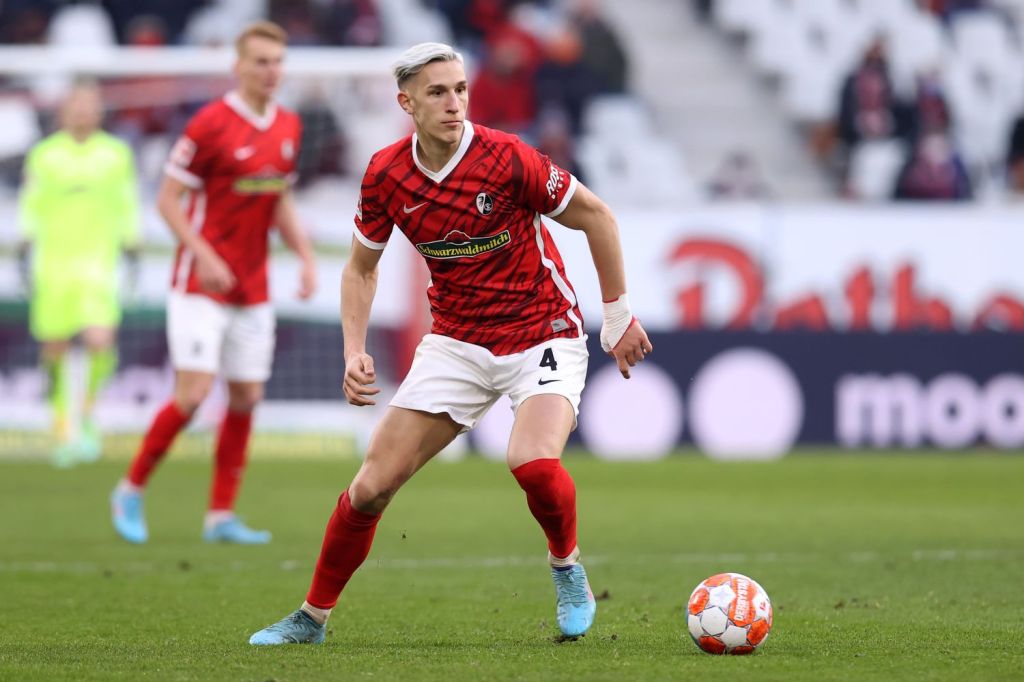
The £25.20m-rated colossus is the instantiation of a ball-playing centre-back. Primarily a ball carrier, he is good with both feet (the left being his dominant), exceptional at reading space around opponents when ball-carrying, and has the perfect physique to be a mobile and incredibly agile central defender. 

Largely deployed in Christian Streich’s system as an wide centre-back in a back three this sea­son, it is not unusual to see Schlotterbeck driving with the ball deep in the opposition half, attacking space opened out by his captain, the left wing-back Christian Günter.

This ability with the ball at his feet is reflected in his incredible numbers.

As per FBref, over the past 365 days, he ranks in the top eight percent of central defenders across Europe’s top five leagues for progressive passes per 90 minutes (4.52) and in the top 13th percentile for progressive carries (4.20) and the top three percentile for dribbles completed amongst his defensive counterparts highlighting that he is indeed amongst the best of the best when progressing the ball from deep.

In fact, within the German top-flight, he ranked eighth in the division for passes into the final third (137). Given his role for Freiburg this season, his dribble volume is through the roof: 1.17 per 90 with an impressive success rate of just over 58%.

It’s worth noting that Schlotterbeck is his team’s primary outlet for progressing the play and, in some instances, can even be a creative outlet.

Head coach Christian Streich provided him license to push forwards and underlap as a center-back, much in the way Antonio Rudiger does as a left center-back for Chelsea or what Sheffield United managed so successfully under Chris Wilder from 2016 to 2021.

If you can break a team’s first initial branch of pressure with your centre-back, you can surely pose problems for them in deeper defensive areas, unbalancing them structurally and opening gaps that can be exploited by more advanced team-mates.

When it comes to passing, there are some areas of poten­tial improvement. Schlotterbeck is by no means a bad pas­ser of the ball. With short, and sweet passes, he is comfortable using both feet, and in confined spaces, he is good at moving the ball out to a team-mate – an extension, no doubt, of his dribbling prowess – a very rare commodity amongst centre backs in Europe. 

But there is a lack of consistency in his game here which can lead to a breakdown in possession. As a perfectly capable ball carrier, he sometimes invites opponents towards him in or­der to beat them, but this makes any potential pass out of trouble more difficult. His long passing is good, especially when he has time on the ball, as evidenced through his impressive progressive passing metrics.

This blend of on-ball attributes might lead to questions of his defensive credentials, but within this area, the Waiblingen-born defender also excels tremendously. The athleticism that lends itself so well to ball-carrying is an important part of his game when facing opposition attackers. 

With the capacity to respond quickly to the on-ball move­ment of opposition players, the German is able to track op­ponents and pick his moment to make tackles.

Schlotterbeck’s defensive metrics must be understood within the context of Freiburg’s style. Playing in either a 3-4-3 or 4-4-2 setup, Streich emphasizes both vertical and horizontal compactness throughout the team, with the main objective of funneling the opposition’s possession out in wide areas to make it more easier to dispossess them.

His standout defensive attributes lie in his aggression.

Particularly when he plays as the left-sided center-back in a 3-4-3, Schlotterbeck exceled at stepping out to prevent strikers and other attackers from having time and space to penetrate Freiburg’s block through the center.

The 6 foot 3in powerhouse’s strength, tackling, and mobility to cover the space behind if needed means he can make the seemingly risky defensive approach extremely fruitful. 

The German international ranks well in his interception and tackle metrics: within the 81st percentile for interceptions per 90 (2.59) and also ranking eighth in the Bundesliga (80), and he also impressively ranks in the 91s percentile for tackles per 90 (2.52) whilst also being amongst the best in the league for tackles won, ranking sixth amongst all players (53).

Across the last two campaign, he has re­mained consistently above average when it comes to head­ers won by centre backs, picking up three aerials won per 90 last season and 4.17 aerials won per 90 so far this season, at a success rate of an impressive 74.1%.

Attackers rarely win their aerial duels against Schlotterbeck because of his excellent anticipation and giant leap, and as a result, he is amongst the best players for aerial duels won (103) in the Bundesliga, ranking sixth for % of aerial duels won (74.1), suggesting he is a fantastic reader of the game in the air also.

The two time German international has not only excelled within his defensive aspects but in the attacking sense too, he’s scored four goals so far this season contributing magnificently to Freiburg’s impressive European run in the Bundesliga. He’s certainly not afraid to get shots off, create chances for his teammates from deep. For attacking metrics over the past year, he ranks within top 15 percent for all metrics compared to other defenders in Europe’s top five leagues, apart from assists. For shots total per90, he ranks in the 99th percentile, the top one percent of defenders averaging 1.20 shots, and also in the 99th percentile for shot-creating actions per 90 (1.68).

These are all unique and extraordinary metrics. The ideology that defenders are supposed to defend do not ring true when analysing Schlotterbeck’s game. He is not just a conventional ball-playing center-back: he is unique in how rounded he can be as a creative weapon.

It is no wonder why, top teams across the continent have tracked his progress, his current readings suggest he is indeed one of the best young defenders on the continent and Borussia Dortmund have certainly got themselves an absolute gem.

What does the future hold for Schlotterbeck?

Having made the stark progress and step up to the German senior setup, Nico Schlotterbeck deserves his upcoming move to Borussia Dortmund.

There is also the added bonus that he has performed well in two different Bunde­sliga systems in separate seasons, meaning he is highly adaptable and reliable whatever system and responsibility is being asked of him.

In a current footballing market boasting a whole plethora of young talented centre-backs, Schlotterbeck enjoys two ad­vantages over some of his contemporaries. Firstly, he is predominantly left footed.

(Photo by Harry Langer/DeFodi Images via Getty Images)

As the build-up phase in possession becomes increasingly central to elite football clubs, the need for left-footed players has never been higher, given the benefit of having a dominant-footed centre-back on the left in your back line, hence why Dortmund needed a able-bodied left-footed centre back.

Secondly, Schlotterbeck is current employed at a club who are renowned for talent ID and player development, with a strong history of moving these players on for relatively affordable sums of money – exactly what Dortmund have made the most of, and will surely get an incredible return once he gets going again next season.

The sky’s is indeed the limit for Nico Schlotterbeck.

Different Manager, Same Bayern Munich; They Mean Business Once Again

Different Manager, Same Bayern Munich; They Mean Business Once Again

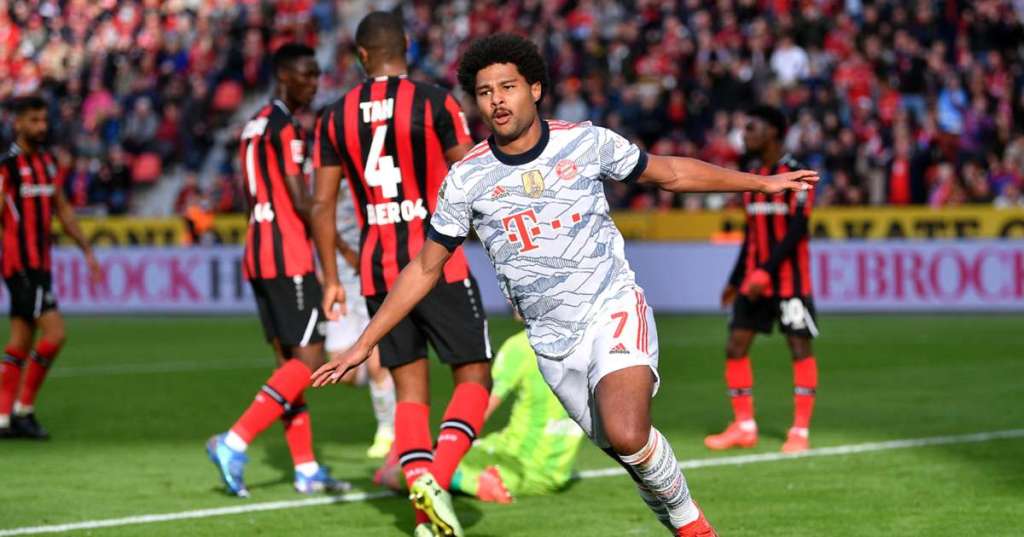
A full stadium, a warm autumnal shine, and an opportunity to take top spot in the Bundesliga: the stage was set for a thrilling and captivating battle between Bayer Leverkusen and Bayern Munich on Sunday afternoon. A match highly anticipated as one of the best spectacles of the campaign so far, between two teams in thrilling form in front of goal.

For just three minutes or so, the fan’s appetite for the game was truly satisfied.

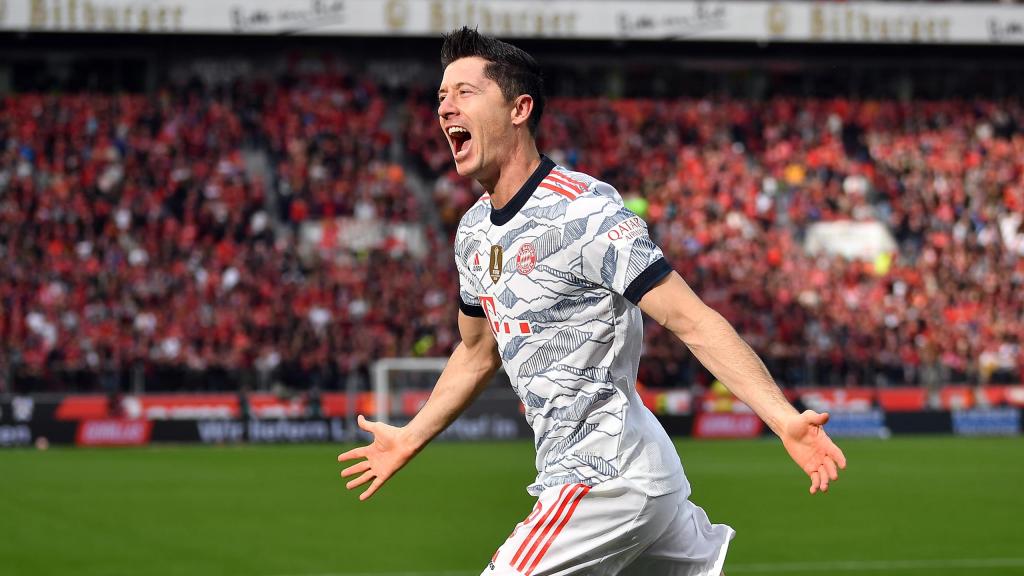
Until Joshua Kimmich found an unmarked Dayot Upamecano in the box from a superbly worked free-kick, who’s volley across the penalty box sublimely diverted past Lukas Hradecky with an exquisite flick by the man of the moment, Robert Lewandowski. His movement and timing to get on the end of the pass so effortless, so swift coupled with the mastery and brilliance to flick the ball home.

Is there anything Lewandowski cannot do?

A goal to make it eight goals in eight games for the Polish hitman. He ended the afternoon with nine in eight, a striker simply strutting his business on another planet blessed with a pure striker’s instinct.

The rest was history. All of about ten minutes later, Bayern Munich once again ripped through Leverkusen when Leroy Sane struck a sweet strike on to the post.

It was simply too easy for Nagelsmann’s ruthless attacking arsenal consisting of the stunning quartet of Lewandowski, Thomas Muller, Serge Gnabry and Sane who’s quickly discovering his best form once again.

A Leverkusen side thin on midfield muscle and stability — with Robert Andrich, Charles Aranguiz, Exequiel Palacios and Julian Baumgartlinger all deemed unavailable before the match — pushed further upfield in chase of a swift reply, leaving gaps between the lines that Bayern’s attackers tore through at will. 

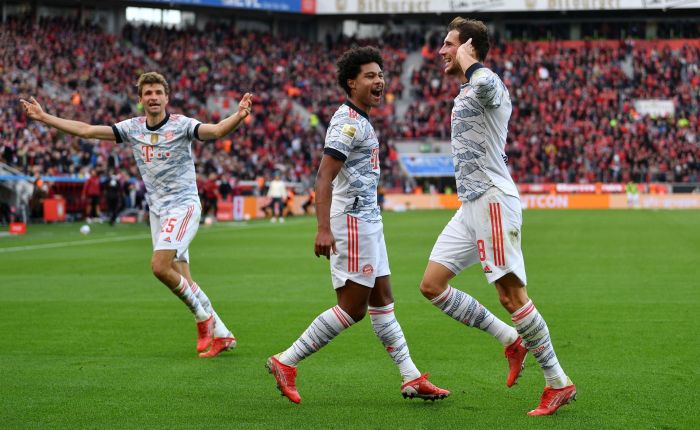
It took just seven minutes for Nagelsmann’s men to hit four goals in such ruthless and clinical fashion – Lewandowski (30th minute), Thomas Muller (34th), Gnabry (35th) and Gnabry again (37th) – simply killing any hopes and expectations fans and the media had of a closely-contested spectacle. The fourth and fifth goals scored by Gnabry was simply stunning and relentless, football played out of elite-level territory.

The cross from Thomas Muller for Gnabry’s fourth was truly mesmerising, the deft touch from Gnabry to slot home past Hradecky was even better. The fifth, Leverkusen simply could not live with as Gnabry played a quick one-two with counterpart Leon Goretzka before coolly slotting his fifth Bundesliga goal of the campaign.

Remember when Bayern had that stuttering patch all of about a month ago? With Julian Nagelsmann’s head ready to be handed on a silver platter just about two months into his tenure as Bayern boss. Well, those doubts have been well and truly dismantled.

Yes, they suffered an unexpected and historic home defeat at the hands of Eintracht Frankfurt before the international break but Nagelsmann before the contest at the BayArena, simply made sure that it was only a miniscule blip in a machine that simply cannot help blitzing their rivals on their way to domestic supremacy.

The win at Leverkusen made it 10 wins from 12 for Bayern Munich, highlighting a side showing no signs of letting up.

All Gerardo Seoane’s Leverkusen side could do was to adopt a more defensive 5-2-3 system to try and control Bayern’s rampant display in attack and hope the champions would switch into preservation mode, conserving energy for Wednesday’s UEFA Champions League group-tie trip to play Benfica in Lisbon. 

Fortunately for them, Nagelsmann’s men allowed them a dot on the scoreboard when the extraordinary wonderkid Florian Wirtz executed a sumptuous through ball for Patrik Schick to score.

Seasoned Bundesliga watchers will not have been surprised at the state at which Bayern laid their rivals to rest. From defence to attack, Bayern were dominant, ruthless, relentless and merciless. Even with Niklas Sule playing at right-back, Leverkusen simply did not have the bravery to trouble Nagelsmann’s makeshift backline.

It was men against boys, but most of all it was a strong statement from Bayern that they are not growing tired of capturing more Bundesliga gongs even with a different coach in the dugout. We’ve mentioned the brilliance of Bayern’s scary quartet in attack but we cannot leave here without mentioning the industry, efficiency and controlling nature that is the reliable midfield duo of Joshua Kimmich and Leon Goretzka showcasing a midfield masterclass.

Nadem Amiri, and Kerem Demirbay simply could not get near them as they both disheveled and dismantled the Leverkusen midfield and defence with their passing, movement and swift interchanging with the attackers.

The superlative class of the first 14 or 15 players in this Munich squad is a given. Combined with the sky-high intrinsic motivation levels of the players and new coach Nagelsmann’s nerdish and admirable attention to detail, it makes for a truly frightening package, and it is reflected throughout the whole starting XI.

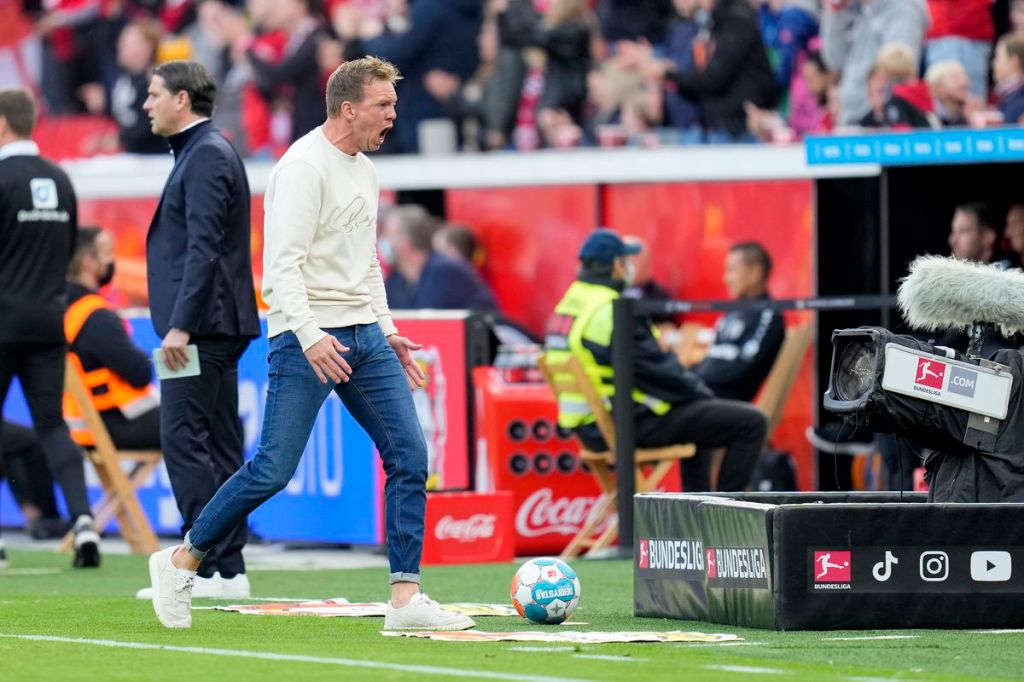
In training, the former Hoffenheim and Leipzig coach had his team specifically rehearse the overload of the central areas, with Thomas Muller and Leroy Sane taking up spaces between the lines to create opportunities. It proved the perfect preparation for Leverkusen’s drafty set-up. “It might sound strange but we could have scored more goals in the first half,” Nagelsmann smiled contentedly in a cream-coloured Boss sweatshirt.

Take away their astounding 12-0 cup triumph over fifth division Bremer SV in August and Bayern have still scored 40 times in 11 outings so far this season. Unstoppable firepower in attack.

Bayern look more hungry, more refined, more matured and ready to fire in all cylinders this season. It’s not just the whole of Germany who have to sit up and take notice, but Europe too.

It may be a different head in the managerial dugout, but Bayern are out for blood yet again.

Jesse Marsch possesses an exciting Leipzig squad at his disposal, can he deliver the unthinkable?

Jesse Marsch possesses an exciting Leipzig squad at his disposal, can he deliver the unthinkable?

New RB Leipzig head coach Jesse Marsch believes his side have “probably the most strength in depth in the (German) Bundesliga” ahead of the start of the 2021/22 season.

A bold claim made by Red Bull Salzburg’s former boss, but a claim that could well prove true in the context of Leipzig’s summer business. While supposed ‘title rivals’ Bayern Munich and Borussia Dortmund have arguably grown weaker this summer, Leipzig have taken advantage through another period of steady growth, recruitment & development.

Ever since their rapid emergence on the scene in the German Bundesliga in 2016/17, Leipzig have been a breath of fresh air providing a huge sense of euphoria, energy and optimism around the country. The brand of football introduced by the Red-Bull has allowed the Bundesliga to now become one of the most entertaining leagues in the world.

The club didn’t earn their place into the Bundesliga just to make up the numbers. They have more than made their mark, only finishing outside the top four, once in the last five years, finishing sixth in 2018. In the last five years, they’ve finished second, third, sixth, third, third and last year finished second 13 points behind the ever-dominant Bayern Munich.

This season, they aim to go that one step further – towards an unprecedented first German Bundesliga triumph, ending Bayern Munich’s nine year dominance. Leipzig won’t be doing it with Nagelsmann though, who departed to their title rivals in May.

However, they’ve introduced a familiar face.

Arguably the club’s greatest capture this summer, American tactician Jesse Marsch returned to Leipzig, where he had been assistant to Ralf Rangnick in 2018/19, following a successful two-year stint in charge at Red Bull Salzburg.

Known for his fresh, vibrant and exciting style to management, especially his high-energy, intensity and counter-pressing attacking approach which will almost certainly give the Leipzig faithful more reason to be optimistic so soon after Julian Nagelsmann’s departure to Bayern Munich.

This summer, Bayern continued its long-held practice of snatching up top talent from its biggest German rivals, nabbing Nagelsmann and also star center back Dayot Upamecano after the 12-year-old club finished second in the Bundesliga last season. Bayern might not be done raiding either, with recent reports linking them to influential Leipzig midfielder Marcel Sabitzer.

Jesse Marsch left an exciting squad in Austria, soon after winning league and cup double to join an even much more exciting squad at Leipzig.

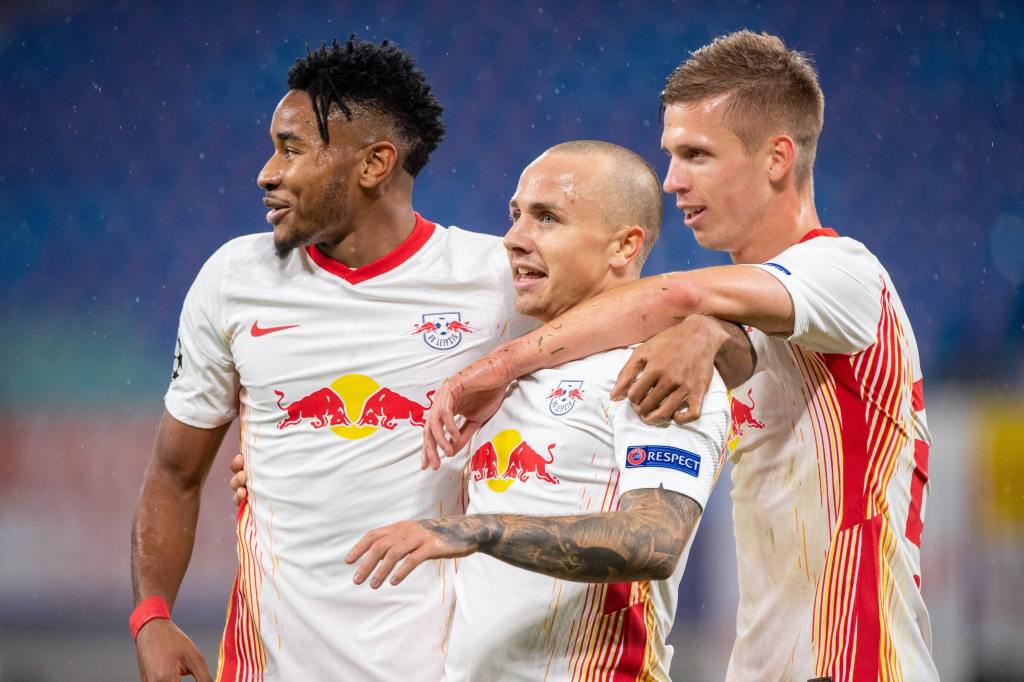
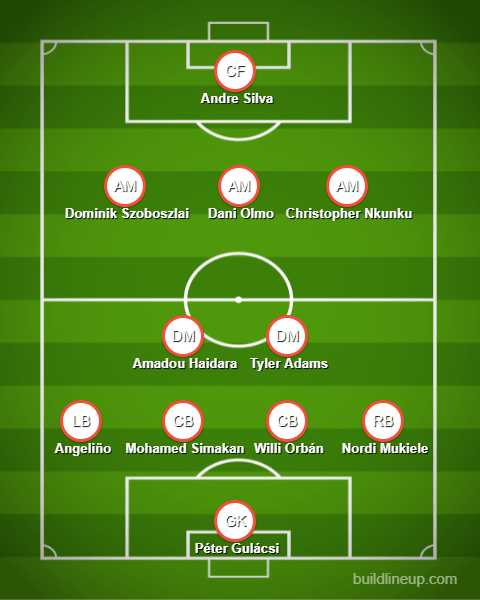
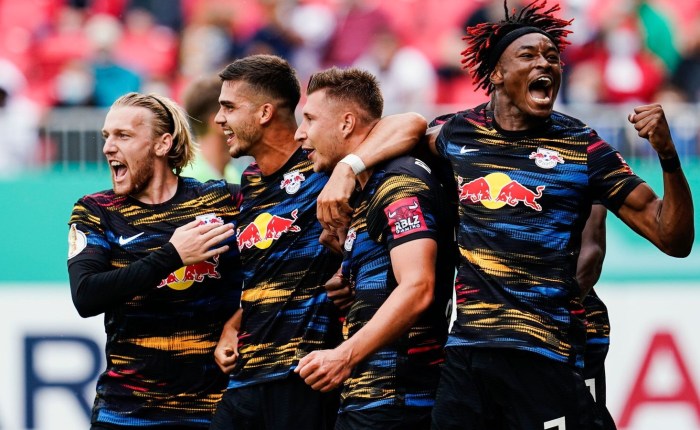
The American coach will be taking the reins of a side currently brimming with thrilling talent, including Dani Olmo, Emil Forsberg, Christopher Nkunku, Josko Gvardiol, Marcel Sabitzer (who could be on the move to Munich), Dominik Szoboszlai, a player Marsch previously worked with at Salzburg, and also Tyler Adams.

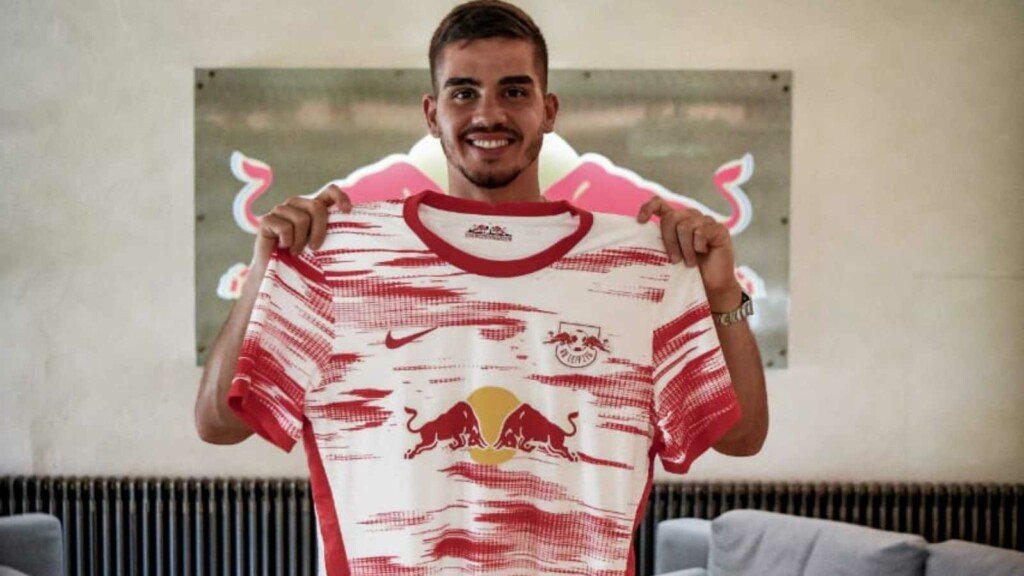
To add to that the new signings brought in certainly brings an added touch of sprinkle dust on a refreshingly built squad. Brian Bobbey, Mohamed Simakan, Josko Gvardiol & devastating goalscorer Andre Silva were brought in, while deals for Angeliño and Benjamin Henrichs were made permanent following their fine loan spells last season.

Such signings mean RB Leipzig are well equipped to push on and challenge former coach Nagelsmann at Bayern Munich for the league title.

“The players have tremendous potential,” Marsch told rblive.com. “I think we probably have the most strength in depth in the league. Theoretically, we could send out two Bundesliga teams. If we’re able to fully unlock that potential, we can have a lot of fun together.”

Indeed, the club and its fans are surely due a bit of fun, entertainment and huge optimism heading into their opening game away to Mainz.

In particular, the signing of Eintracht Frankfurt’s Andre Silva, who finished second top-scorer last term with 28 goals in 32 Bundesliga appearances – an astonishing goalscoring record. A move which addresses an area of the squad that had been lacking since Timo Werner’s move to Chelsea in the summer of 2020.

Silva’s unexpected signing is a move which will help bolster what was just the Bundesliga’s sixth most prolific attack in 2020/21 with 60 goals (compared to Bayern’s 99 and Borussia Dortmund’s 75). The Portuguese showed his extraordinary qualities in front of goal last year as Frankfurt narrowly missed out on a Champions League spot.

Silva felt a move to a Champions League playing team was an opportunity he could not turn down. Leipzig will be expecting the forward to continue his goalscoring hot-streak, especially with such superb and dynamic creative players behind him in Dani Olmo, Christopher Nkunku, Marcel Sabitzer and Dominik Szoboszlai.

The latter will be returning from a long injury lay-off , and will be eager to finally get started at his new club after being kept out since his move to Leipzig from Salzburg in the January transfer window.

Szoboszlai as Jesse Marsch already knows, is a player blessed with tremendous creative qualities, and could prove yet another difference maker in a side filled with players with the so-called X-factor.

In Jesse Marsch’s only full season working with Szoboszlai in 2019-20 at Red Bull Salzburg, the Hungarian international was instrumental in helping his side win the domestic double after the mid-season departures of Erling Haaland and Takumi Minamino and throughout his time working with Marsch, he scored 21 goals in 62 appearances.

As well as creativity, Leipzig are also blessed with much needed energy, dynamism and cutting thrust in midfield. Players like Amadou Haidara, Tyler Adams, Konrad Laimer, Kevin Kampl along with their talisman Marcel Sabitzer. Midfielders bagged with so much quality, certainly allows Marsch room to rotate in what will be a demanding season.

Possessing such midfielders means Leipzig will be a destructive team to play against, with their usual high-intensity, pressing and counter-pressing style, but with more need potency and creativity in attack. A perfectly balanced unit.

Leipzig will be looking to be within a shot of winning the league title when the time comes.

For the future, Brian Brobbey was signed on a free from Ajax – something Jesse Marsch heavily vouched for, even admitting that he visited the player in Amsterdam and told him that he was keen to work with him after the young Dutchman had doubts about joining following Julian Nagelsmann’s departure.

Additionally, Leipzig once again used the Red Bull connections to agree a deal for highly-rated midfielder Caden Clark in the winter transfer window from the New York Red Bulls. Overall, a busy but effective window, and there could still be another more accomplished centre-half coming through soon.

Despite the departures of Dayot Upamecano, and Ibrahim Konate, RB Leipzig find themselves well stocked at centre-back with new captures Josko Gvardiol who impressed at the Euros for Croatia, Mohamed Simakan, – touted one of Ligue 1’s most talented young centre-backs last term – Nordi Mukiele and the vastly experienced Willi Orbán.

Staying true to the Red Bull philosophy, the average age of their seven signings this summer is just 21.4-years-old, proving once again that they’re focusing on the future. It fits in with the kind of model Jesse Marsch desires to work with, young and vibrant footballers who are willing to learn and improve, with real bags of potential.

There are real expectations for Marsch and the club to perform well this season. A top-four finish and another Champions League berth are the minimum requirements. But whose to say they can’t challenge Bayern Munich, and even go on win the gong? The squad is certainly good enough and capable.

This season may see Bayern Munich possess their most weakest squad in a long time, and its an opportunity Leipzig will be looking to take advantage of.

They’ll be playing under a coach who knows what it takes to win trophies – unlike his predecessor.

In a short space of time, Jesse Marsch has become one of the most highly regarded managers in Europe after an impressive two-season stint with RB Leipzig’s sister-club in Austria, Red Bull Salzburg. Over the two seasons, he won the league and cup double twice, but more impressively, took Salzburg to the Champions League group stages – something they never achieved previously in the Red Bull era, starting in 2005.

There will be plenty of eyes on him, especially from an American perspective. American coaches haven’t always carried the torch well in Europe, and Marsch joins Stuttgart’s Pellegrino Matarazzo as the Bundesliga’s second American head coach. Matarazzo has impressed in recent years, taking Stuttgart up from the second division and keeping them there, and Marsch will hope to excel at a higher level in the table as well as in the Champions League.

Marsch has been open about his desire to press higher and harder than Leipzig did under Nagelsmann, telling reporters last month that the team “will be aggressive to win balls in the attacking part of the field and will be aggressive to convert those turnovers into goals and big chances.” That all spells such exciting news for the Leipzig faithful, who will also be hoping that the club can continue to match it with the best clubs in Europe.

The UEFA Champions League will almost certainly test Marsch’s squad and resolve given that they’re still a Pot 3 team for the group stage, things are unlikely to be smooth sailing. Above them are teams like Chelsea, Manchester City, a star-studded Paris Saint-Germain team now including Lionel Messi, Real Madrid, Barcelona, Inter, Juventus and others, meaning there’s a good chance Leipzig will be drawn in a bumper group come September.

Nagelsmann took the club to the Champions League semi-final in the 2019/2020 campaign, a feat that Marsch can only dream of, but its certainly within his remit to have a go at matching.

With his focus on mentality, building a true team and fitness, it would be easy to label Marsch as a stereotypical American type figure; one who places emphasis on team morale, camaraderie and togetherness than tactics. But that is very futher from the truth. Jesse Marsch is a true tactician and technician. The American is intense and very much knows his tactics. He conducts all team business in German. He’s been in the Red Bull family for years.

Jesse Marsch also knows that most of his team already knows his system — it’s essentially what they played for years prior to Nagelsmann’s arrival. He just feels getting Leipzig past Bayern and to an unprecedented Bundesliga title will require a little something more.

Can he deliver?

How RB Leipzig could line-up under Jesse Marsch