Meet Konstantinos Koulierakis: The Highly Coveted VfL Wolfsburg Defender Already Turning Heads Around Europe

Meet Konstantinos Koulierakis: The Highly Coveted VfL Wolfsburg Defender Already Turning Heads Around Europe

In the last few years, VfL Wolfsburg has masterfully cultivated a reputation for their savvy manoeuvres in the transfer market, where they have consistently showcased their skill in identifying and developing talent. Their most remarkable achievements lie in the profitable sales of centre-backs, where they have adeptly turned promising players into lucrative transactions.

With a keen eye for potential, the club has not only strengthened their own squad but has also capitalised on the high demand for skilled defenders, earning impressive sums and reinforcing their status as a shrewd player in the transfer market.
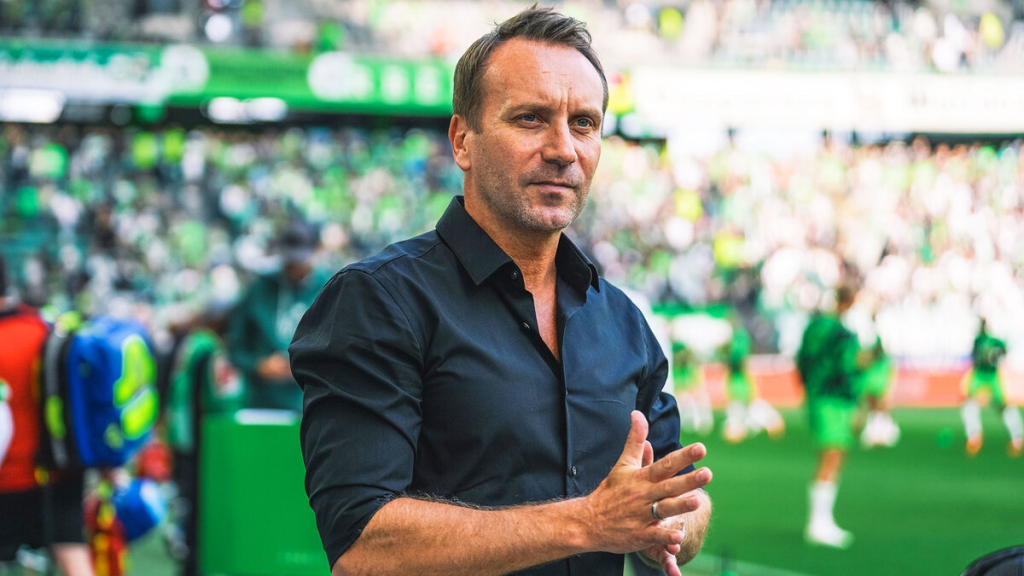
VfL Wolsburg’s sporting director Sebastian Schindzielorz

The German Bundesliga outfit have overseen the rise and profitable sales of both Micky van de Ven and Maxence Lacroix, both of whom developed from unknown quantities to burgeoning defensive talents over the course of a few years, and were rewarded with big moves abroad to the Barclays Premier League.

At the start of the 2023/24 campaign, Die Wolfe sold van de Ven to Tottenham Hotspur for 40m (£34.6m), their second-highest sale after Kevin De Bruyne, when he joined Manchester City in 2015.

Spurs defender Micky van de Ven (when fit) has garnered a reputation as one of the best centre-backs in England

At the start of last season, they sold Maxence Lacroix to Crystal Palace for 18m (£15.6m). At the time of writing, both players have not only firmly established themselves as pivotal cogs at their respective clubs but have also developed into two of the best of their position in the Premier League and in Europe.

This positive trend for Wolfsburg could well have continued into the summer transfer window for a third consecutive year, after yet another of their promising young defenders in Greece international Konstantinos Koulierakis, who only joined the club in August 2024 from PAOK FC, attracted significant interest from Liverpool and Real Madrid throughout the off-season.
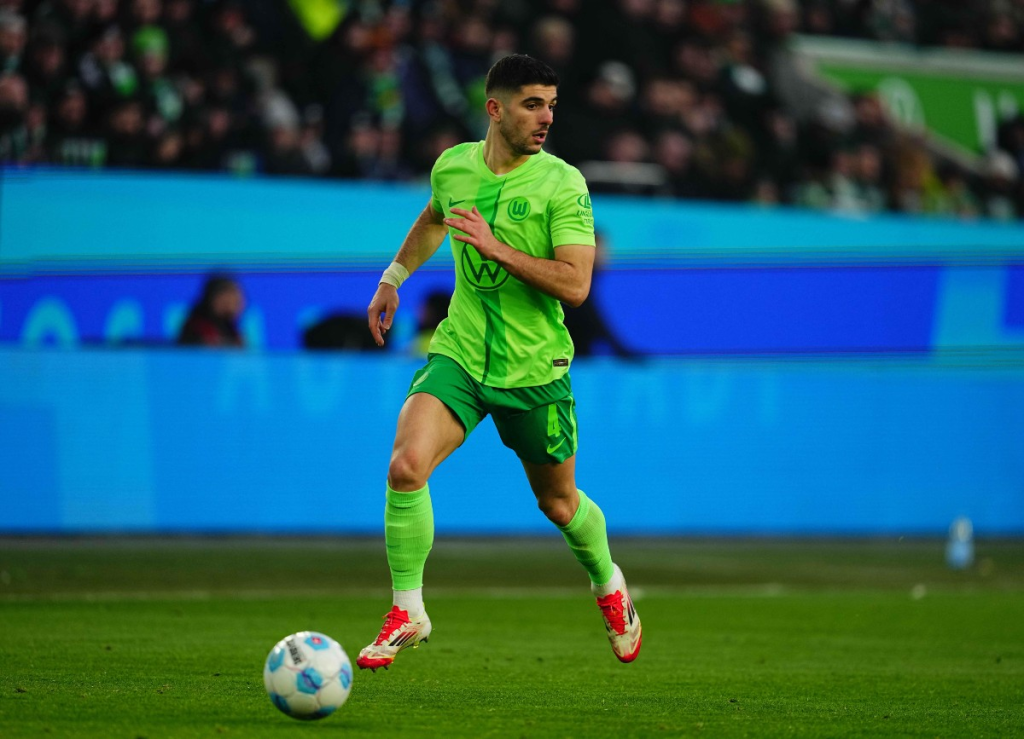
Wolfsburg should be applauded for their brilliant scouting and recruitment.

In 2021, they gambled on a 20-year-old Van de Ven from the second tier of Dutch football, sanctioning the €8m (£7m) signing from FC Volendam. It seems like the risk will also pay off with Koulierakis. It is simply a question of how quickly the £10m fee they paid to PAOK turns into yet another £36m+, not a matter of when.

To ask the usual #AnthonyScouts analysis questions: How good is Koulierakis, how has he gotten to this pre-lofty position in his career, and what does the future hold for him, even if it is not only bright but potentially immediate?

Who is Konstantinos Koulierakis?

Born in Chania, Crete, Greece. Koulierakis joined the PAOK academy as a 13-year-old in 2017. It wouldn’t be long before top European clubs sent scouts to watch and inquire about this impressive young centre-back, who was dominating in PAOK’s academy. The club quoted a price tag of around €15m.

After spending a successful year with the B team, Koulierakis was allowed to join the first team, and he never looked back, making 31 appearances in the 2022/23 season, including being named to the league’s official team of the season at the end of the campaign.
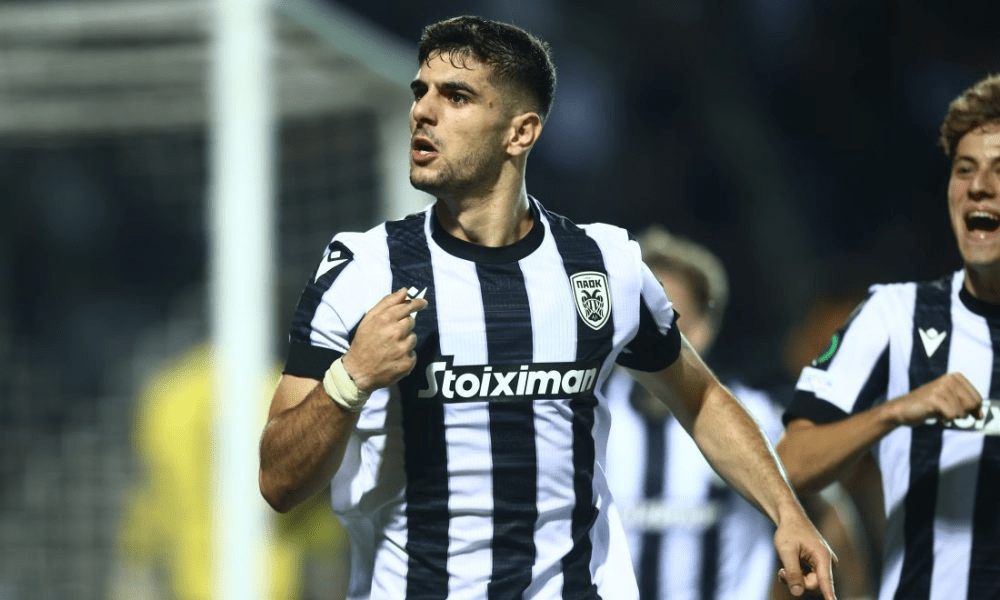
The Greek talent was the subject of interest from Italian Serie A side Fiorentina during the summer window, which was knocked back by PAOK.

While it may have unsettled many other talents his age, not being given the opportunity to chance his arm at a club in a top European league, Koulierakis used that as fuel to better himself and develop further.

He would follow that up with yet another impressive campaign in 2023/24, helping PAOK to the league title and scoring key goals in their run to the UEFA Conference League quarter-finals as well.

After a successful season, both individually and collectively, he would be handed the opportunity to make the move across Europe in the summer of 2024. Wolfsburg officially came calling, and the Greek defender would put pen to paper on 20 August, but PAOK delayed the transfer for Koulierakis to help them qualify for the Europa League via the play-offs.

Nine days later, the deal was completed.

Across 73 appearances for PAOK, Koulierakis scored nine times and assisted four times, underlining his importance not just as a defender but also as an impact-maker in the opposition box.
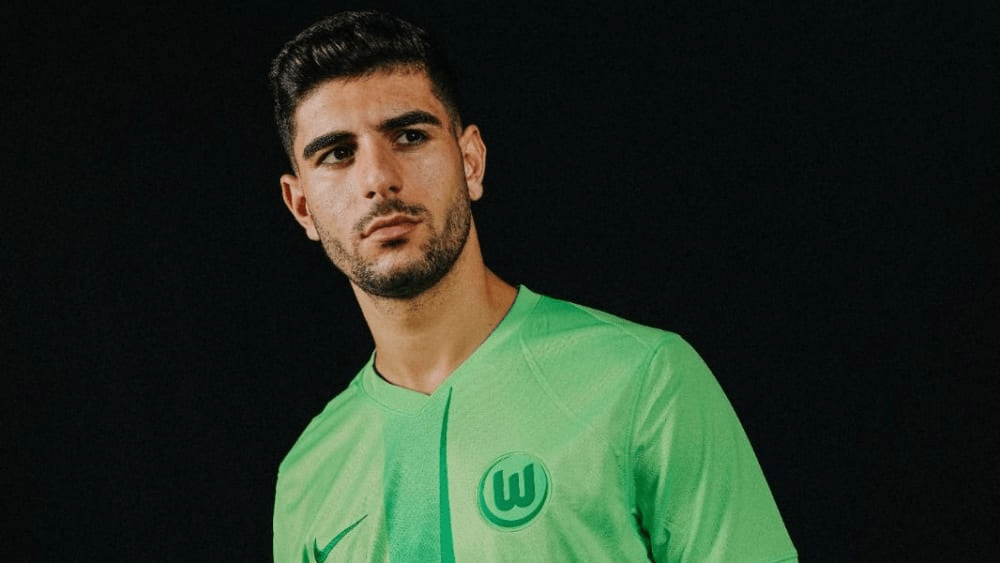
Since his arrival in Germany, the 21-year-old has continued his stunning upward trajectory, quickly establishing himself as one of the best young defenders in the Bundesliga and in Europe.

The 2024/25 campaign would prove a hugely successful one for him individually, even if it was a mixed bag for the club as a whole.

Under manager Ralph Hasenhuttl, he quickly cemented himself as an undisputed starter in a Wolfsburg team aiming to push for the European places, which proved fruitless, finishing in 11th place and ultimately costing the former Southampton coach his job towards the end of the campaign.

Koulierakis’s crucial importance to Die Wolf has carried straight through into the new Bundesliga campaign, featuring in all six of their games so far at the time of writing.

On the international stage, the Chania-born talent has also become a vital figure in a hugely refreshing and rejuvenated Greek national team, possessing such highly coveted young stars such as Koulierakis himself, Konstantinos Karetsas, Christos Zafeiris, Christos Tzolis, Giannis Konstantelias and Christos Mouzakitis.

After just 16 caps for his country, Koulierakis has already become a real focal point and leader at the heart of the defence alongside West Ham United defender Konstantinos Mavropanos.

A fine example of the understanding and strength of that partnership would certainly be evident in arguably the highlight of his international career so far, the memorable 2-1 win over England at Wembley in October 2024.

Koulierakis looked at home on the biggest stage, a composed, measured and immovable presence up against the likes of Harry Kane and Jude Bellingham.
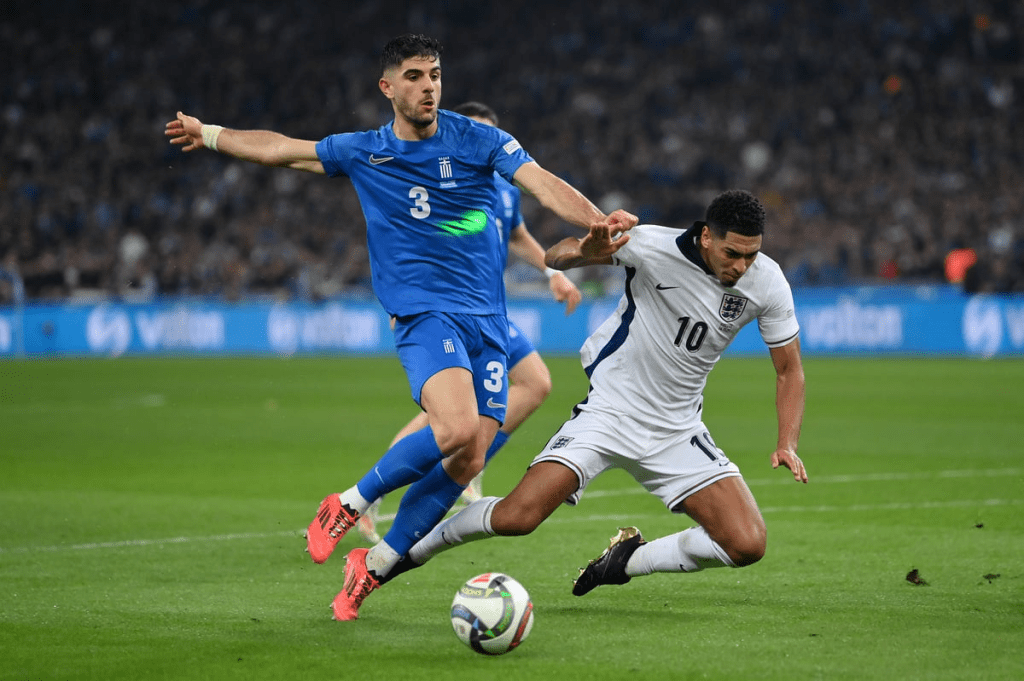
Such performances and characteristics are what made him an attractive prospect for the elite European clubs over the summer, with Juventus, AC Milan and Borussia Dortmund also joining Liverpool and Real Madrid in admiring his profile.

The PAOK academy graduate is certainly an intriguing and exciting defensive profile, one who could blossom into a generational superstar, especially within the context of his nation. But why?

How good is Konstantinos Koulierakis?

Standing at 6’1″, Koulierakis evokes memories of a former graceful young Bundesliga defender who has since established himself at the highest level: Manchester City’s Josko Gvardiol.

Much like Gvardiol, Koulierakis possesses an imposing presence, characterised by his impressive athleticism and striking physical attributes that suggest he was crafted for the sport. His powerful build allows him to dominate both his aerial and ground duels, showcasing remarkable leaping ability and strength.

As a Greek international, he approaches his defensive responsibilities with a fierce intensity, often disrupting opposing attackers with his relentless pursuit and aggressive tackling. This combination of skill, size, and tenacity makes him a formidable force at the heart of defence.

But, he can make telling contributions the other way.

Attacking outlier
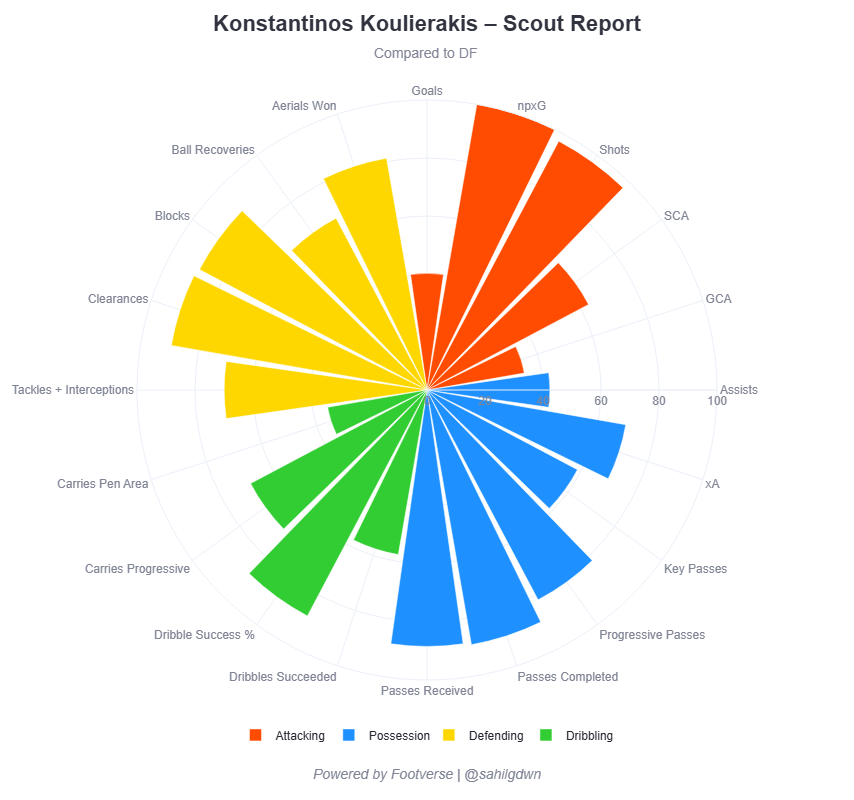
The above graphic, which compares his performance across different data metrics in attack, defence and in possession among other players in his position in the Bundesliga over the past year, certainly paints a picture of Koulierakis’s unique and impressive profile.

First and foremost, despite him being a defender, his attacking metrics certainly stand out at first glance, particularly in shots per 90 and touches in the opposition penalty area per 90, ranking in the 90th and 76th percentiles, respectively.

This highlights that he is one of the most threatening centre-backs in the German Bundesliga, even though he is yet to score a single goal in Wolfsburg colours so far.

However, he did bag an impressive seven goals during his last campaign in Greece, six of which came in European competitions, which suggests that he does and will have the propensity to crop up with the crucial goals when the time comes.

Ultimately, though, where he’s judged is in how he keeps the ball out of the net at the other end, and as is the case for centre-backs in the modern game, his ability and comfort in possession. So let’s address the latter first.

Progressive Line-Breaking Passing

In the modern game, the role of the centre-back has evolved dramatically. These defenders are now not just stalwarts of the backline; they are pivotal playmakers who initiate attacks from deep within their own half. The expectation is to exhibit exceptional passing abilities, allowing them to seamlessly transition from defence to offence.

In addition to technical prowess, modern centre-backs must possess keen tactical awareness, demonstrating the ability to read the game and make split-second decisions, even under immense pressure when their team is building from the back. They must exhibit keen confidence in possession, composure and good pass selection to seamlessly get their team into the attacking phase of play.

Wolfsburg are not known for being one of the possession-focused teams in the German Bundesliga. Last season, they ranked 12th in the league for possession percentage (FBRef) as a collective unit, and so far this season, they still remain around that ballpark after six games. Therefore, evaluating Koulierakis’s passing ability may not provide a complete picture.
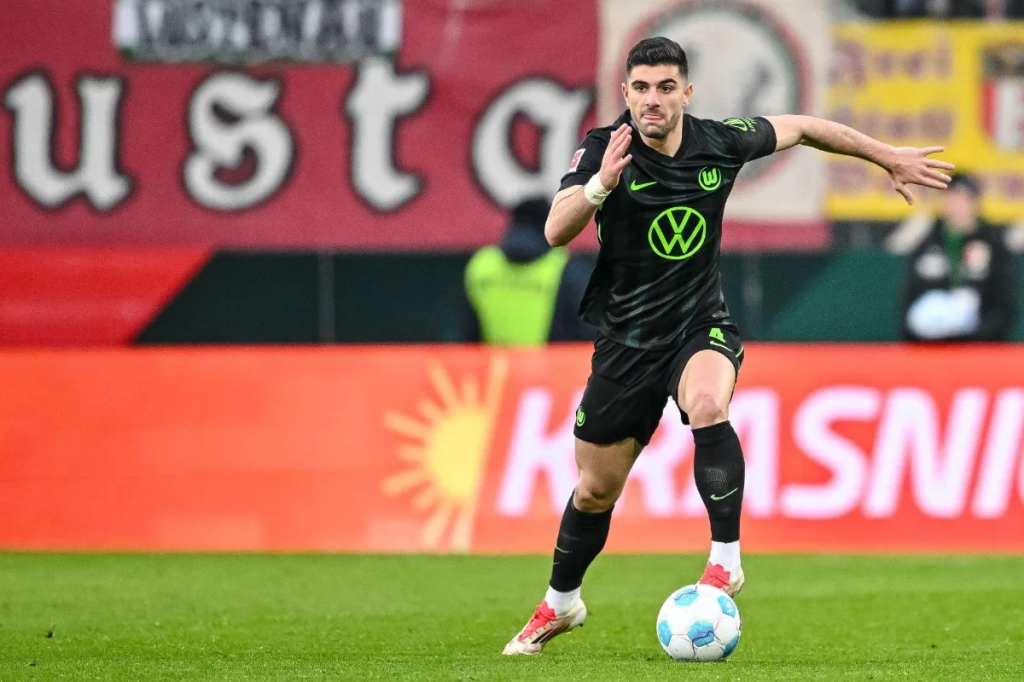
However, statistically, he is amongst the best in the Bundesliga amongst his positional peers when it comes to passing and bringing the ball out of defence.

As per Footverse, Koulierakis ranks in the 86th percentile for passes attempted, 85th for passes completed, 86th for passes into the final third and in the 82nd percentile for progressive passes. All of these metrics certainly show the 21-year-old’s progressive intent in possession, and he isn’t afraid to hit the long, risky pass too. The Crete-born centre-back ranks in the 97th percentile for long passes attempted and 96th for long passes completed.

Some might argue that these impressive metrics are due to Koulierakis being used as the main progressive hub when building from the back. Both Wolfsburg and Greece prefer to initiate their build-up play through him rather than his defensive partners. This is further supported by his ranking in the 88th percentile for passes received and the 95th percentile for touches in the defensive third.
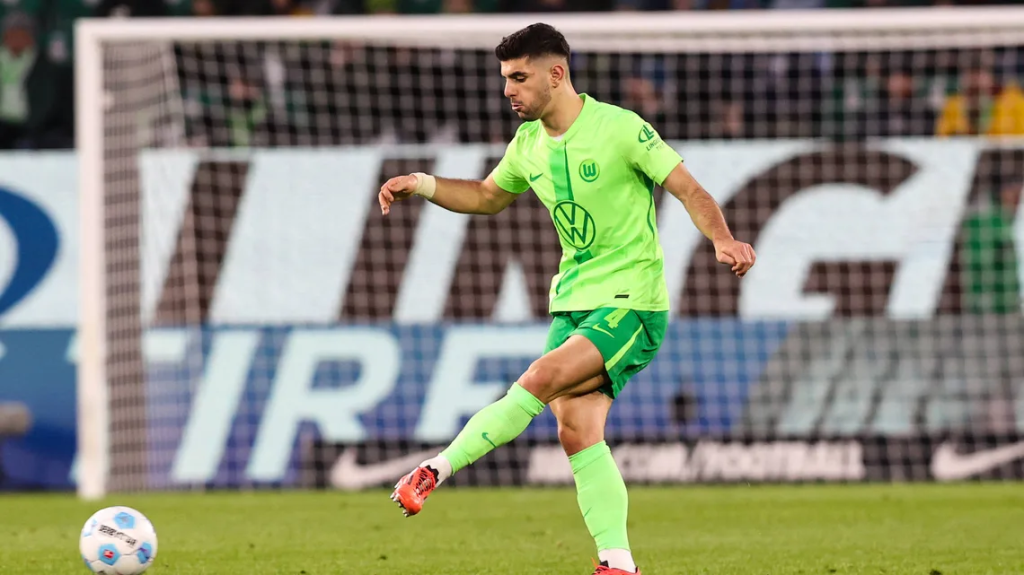
Regardless of this argument, which the numbers seem to validate, the 21-year-old demonstrates an ability to take on this responsibility effectively. He consistently shows reliable ground technique with precise, crisp, and sharp passing, executed with a keen understanding of his teammates’ positions.

He can penetrate and break opposition lines, often finding his more advanced teammates in creative and dangerous areas, whether in the left half-space, central zones, or setting up his deep-lying midfielders for simple wall passes.

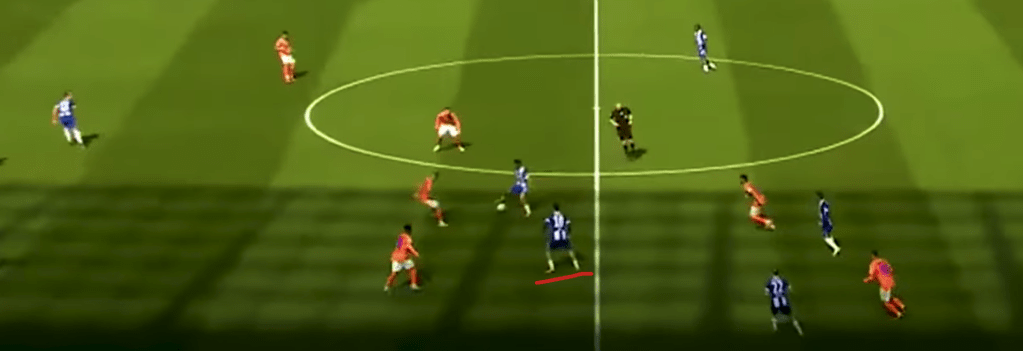
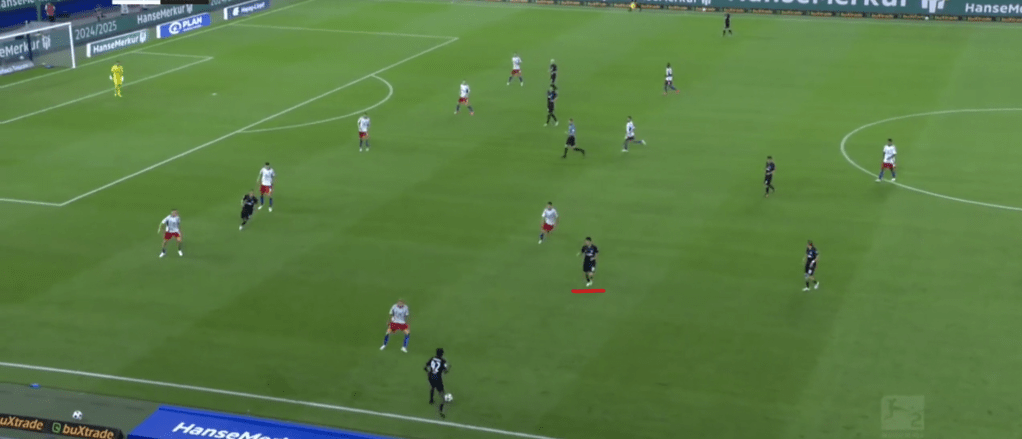
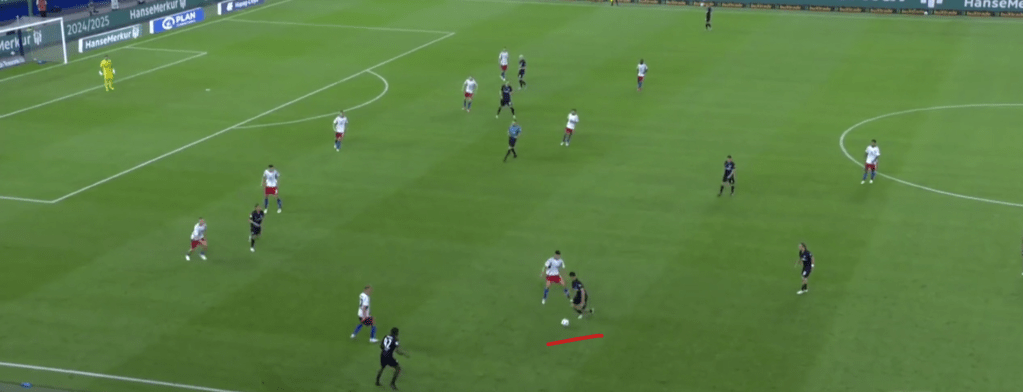
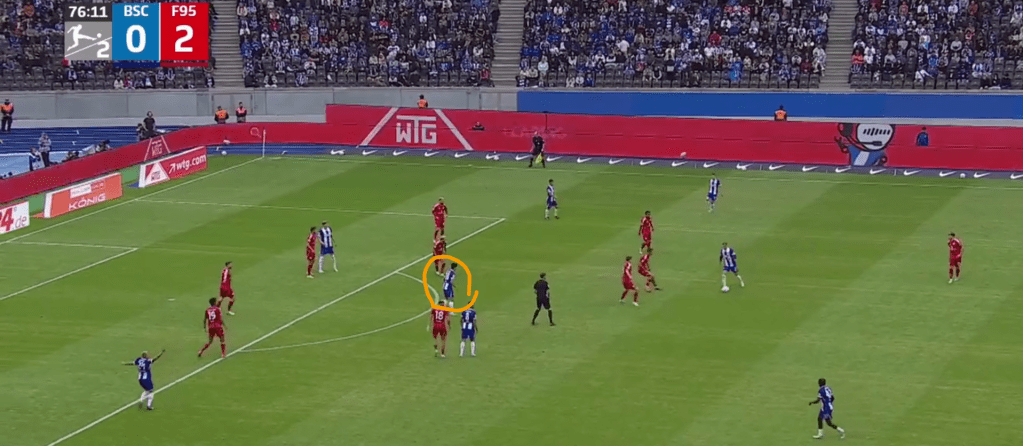
For example, in the image below, Koulierakis receives the ball from his defensive partner, Denis Vavro. He looks up to scan and find a teammate in an advanced zone…
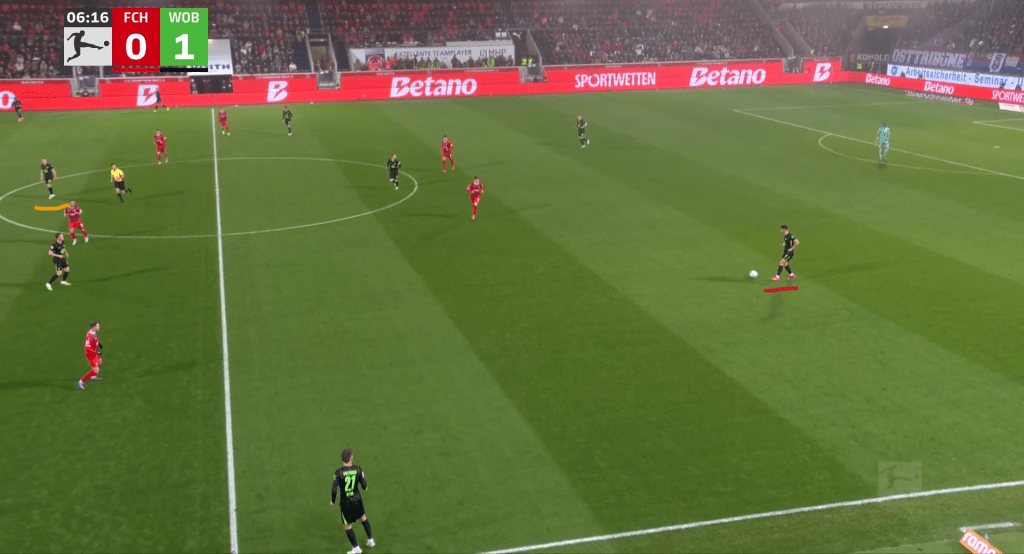
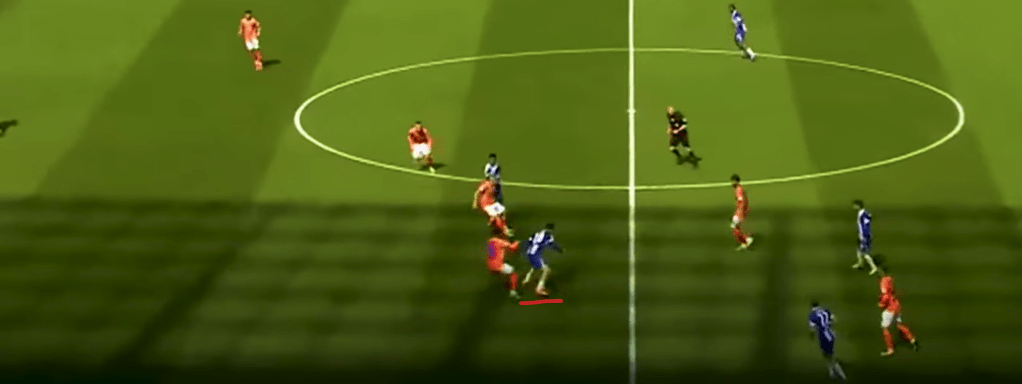
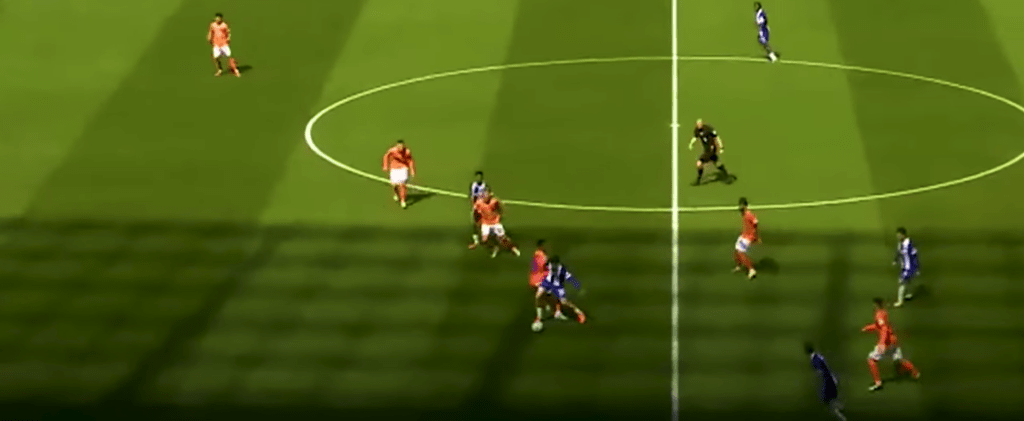
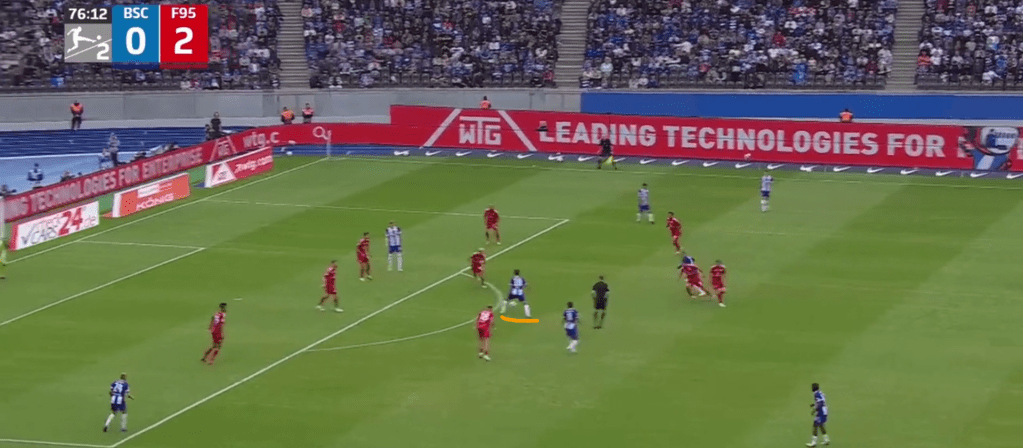
…before executing a sublime line-breaking pass for him in a bit of space…
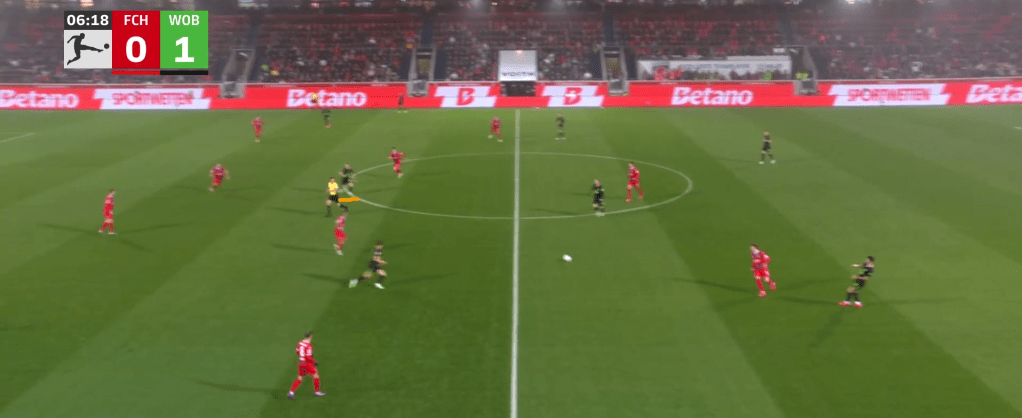
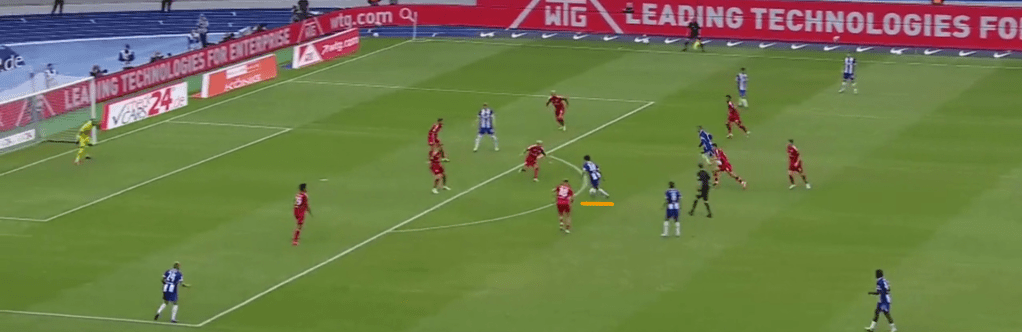
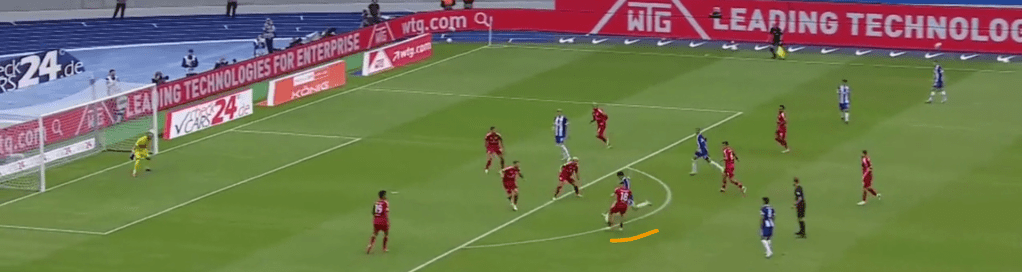
…but it comes to nothing due to his teammate failing to control the pass. However, it’s a fine example of Koulierakis taking responsibility and his intent in progressing the ball for his team.

In another instance, we see the talented centre-back taking on the responsibility, this time for Greece, against England at Wembley back in October. However, this time, he’s in the left centre-back position in a back three tasked with finding a teammate from a totally different angle…
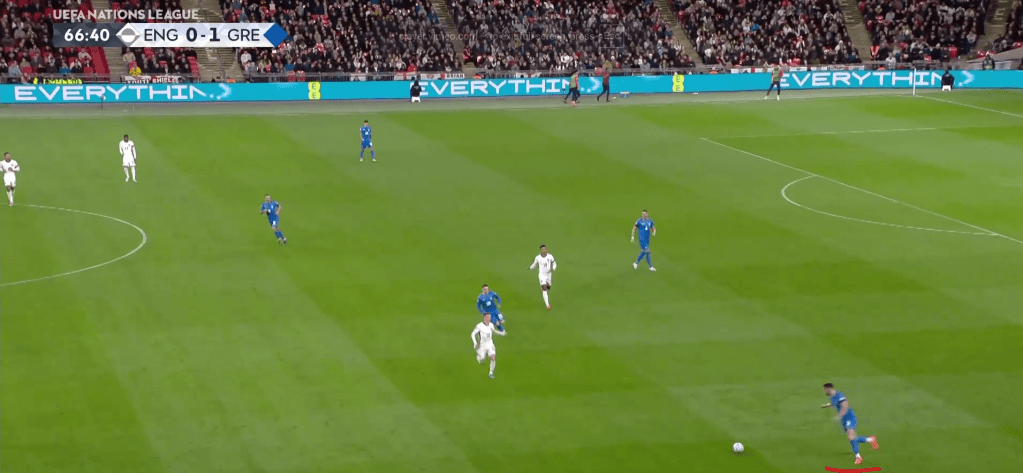
With Phil Foden bearing down on him and Ollie Watkins following, he has to make a snap decision to bypass that line of pressure and get the ball to a teammate in space.

In the image below, it may look like the Greek defender is just hoofing the ball up the pitch to avoid the danger of losing possession under pressure…
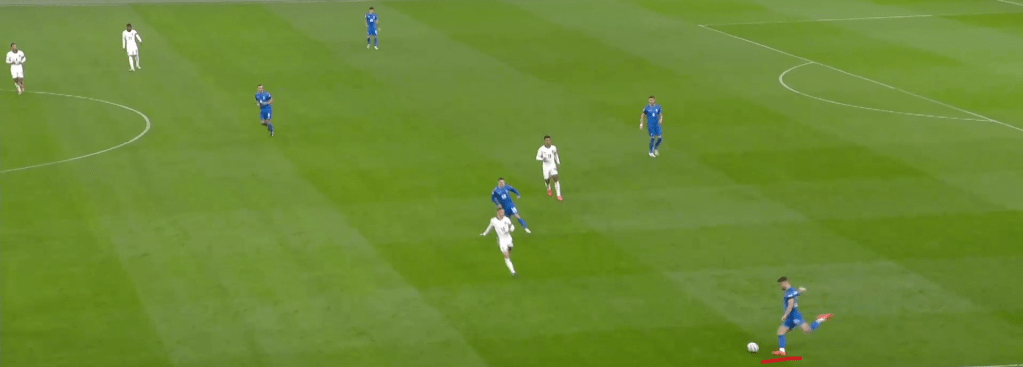
…but that’s not Koulierakis’ style.
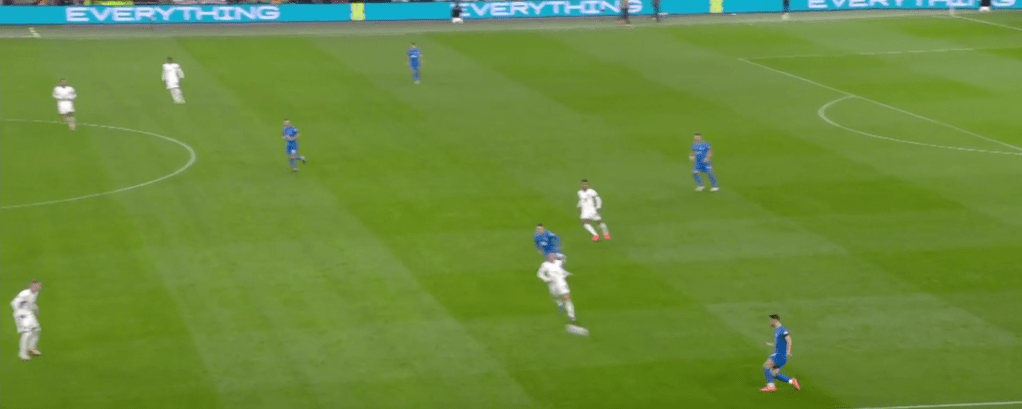
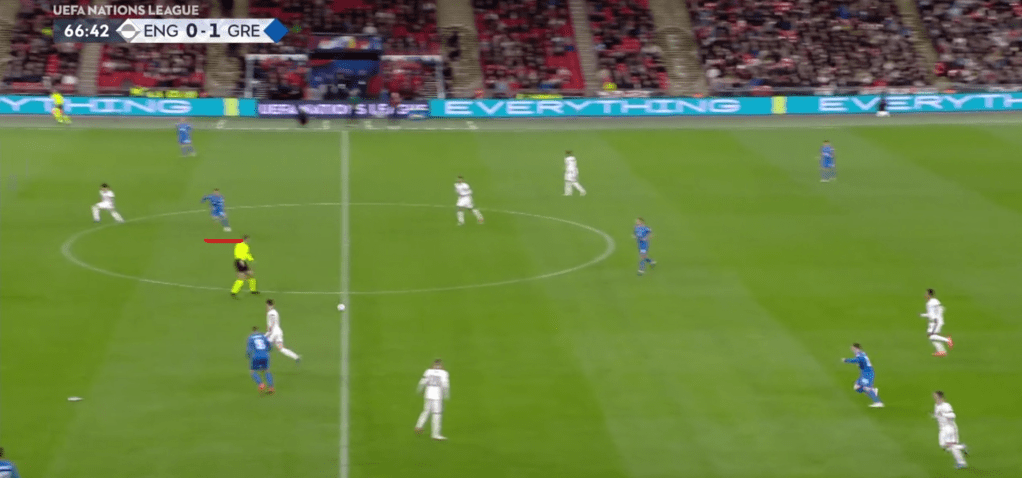
He excellently picks out his teammate in space to run at the opposition defence, completely dissecting England’s gaping midfield.

While England’s press and shape leave a lot to be desired in this scenario, giving Koulierakis ample opportunity and ease to exploit it, there is no discounting, once again, his intent and purposeful passing in order to progress play for his team. He completely turns a near-awkward situation for his team into one filled with goalscoring opportunities.
Front-footed proactive defender

While the Greek international’s passing ability has quickly become one of his greatest assets, it is his defensive nous that will face the most scrutiny. Much of Koulierakis’ evolution this past year, and the reason he is certainly turning heads in Europe, is a result of his stark improvement in defending.

First and foremost, just because he’s a smooth operator in possession does not detract from his bullish, aggressive, and immovable nature when defending.
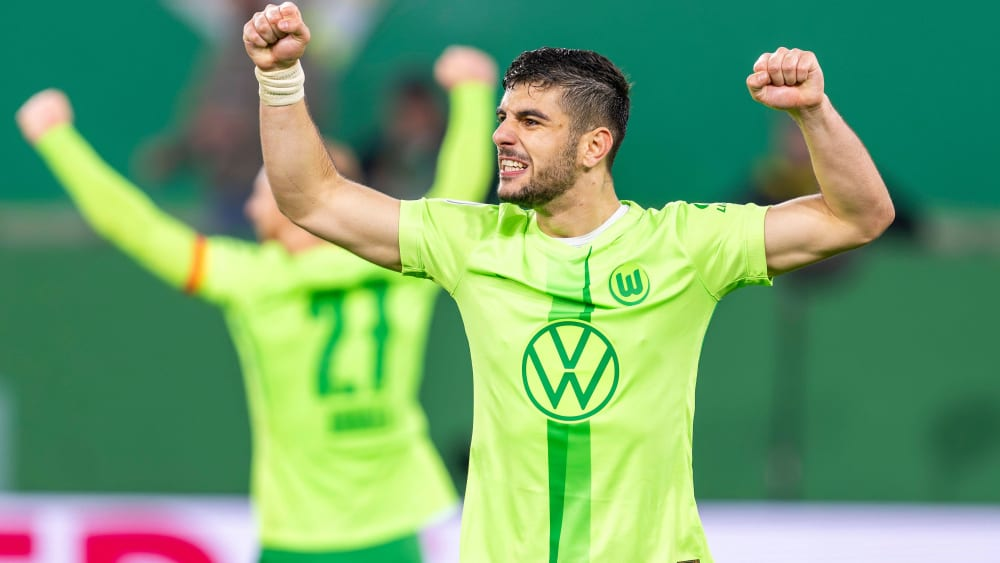
Standing at nearly 6’2″, Koulierakis commands attention with his impressive physique and striking presence. He is exceptional physically, possessing excellent athleticism and flexibility when covering ground within his defensive zones or engaging in duels.

You can almost categorise him as a stopper-type. A no-nonsense centre-back who takes no prisoners when duelling, isn’t afraid to do the dirty work when sweeping, in clearing the ball out of danger and engaging attackers on the ball even before approaching his zone.

Koulierakis shines as a proactive, front-footed centre-back. His timing in challenges and reading of situations is consistently precise, and as highlighted previously, he approaches duels with aggression and unwavering conviction.

He frequently positions himself strategically to win possession in advanced areas of the field, either through skilful interceptions or by stepping into action when his midfield is breached. This readiness to act as a defensive ‘firefighter’ creates opportunities for his team to initiate swift and efficient counter-attacks, turning defensive situations into moments of offensive advantage.

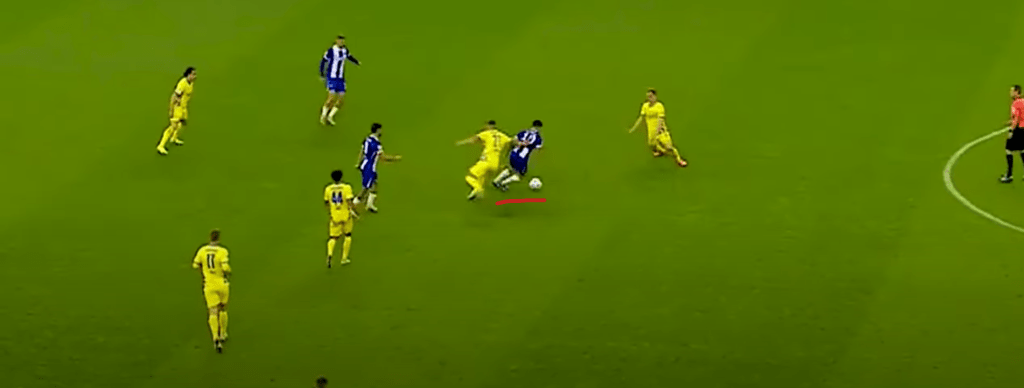
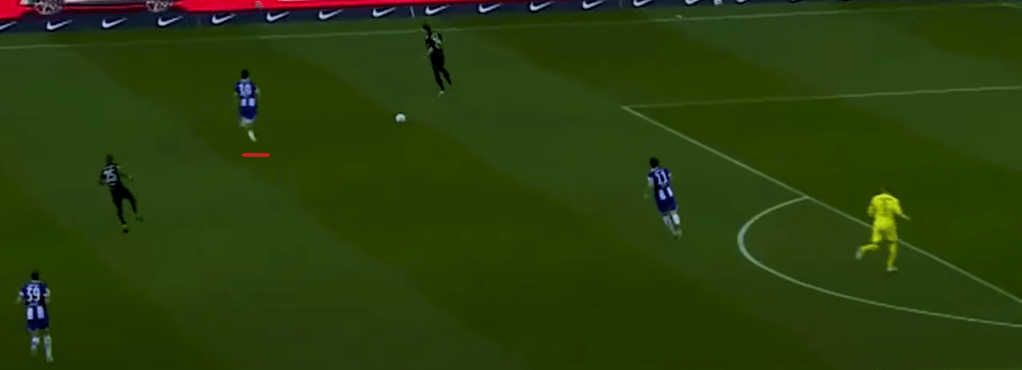
For instance, in the image below, the opponent attempts to progress the ball to his teammate in the attacking third…
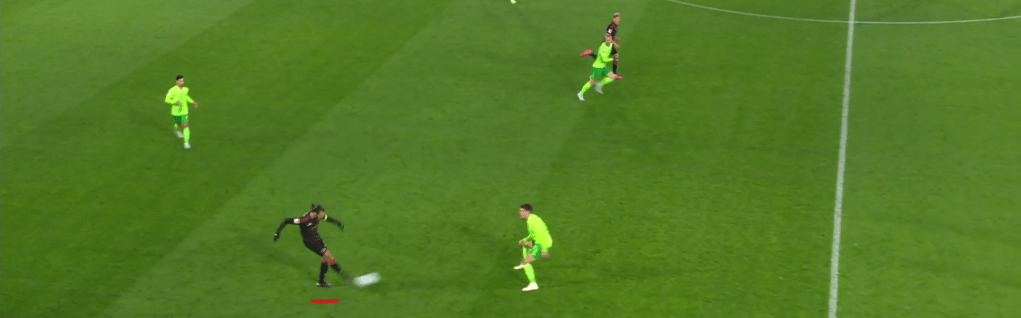
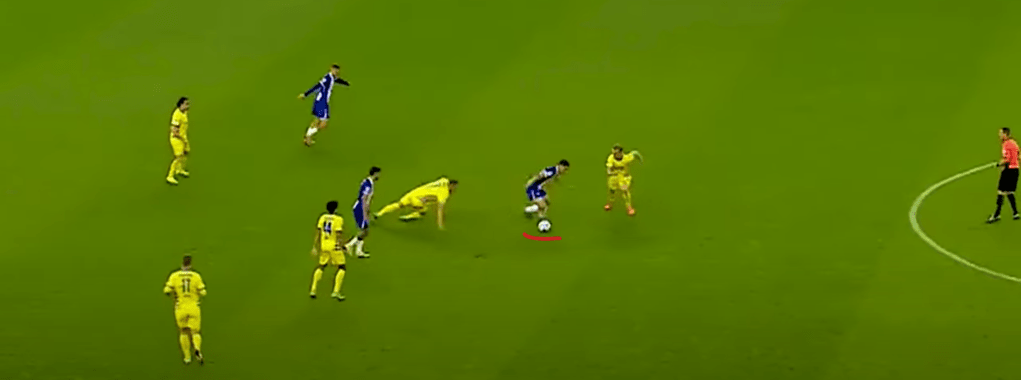
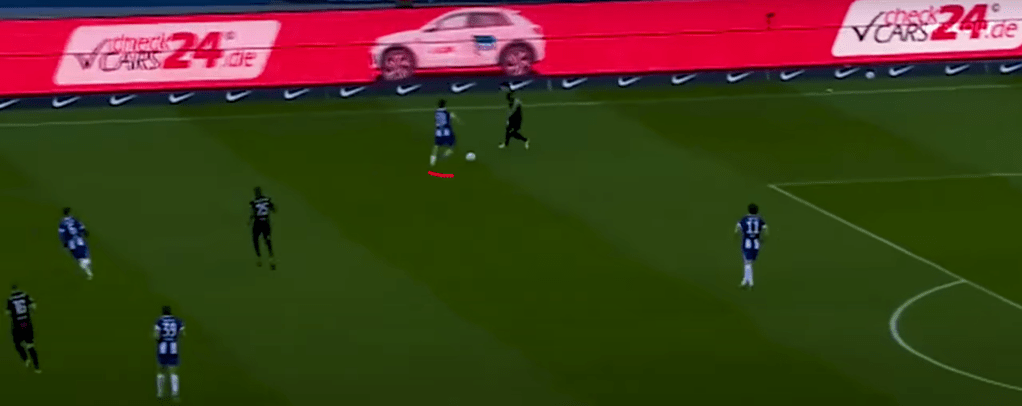
The pass turns out to be a bad one, but Koulierakis still takes responsibility in stepping out of his defensive line,…

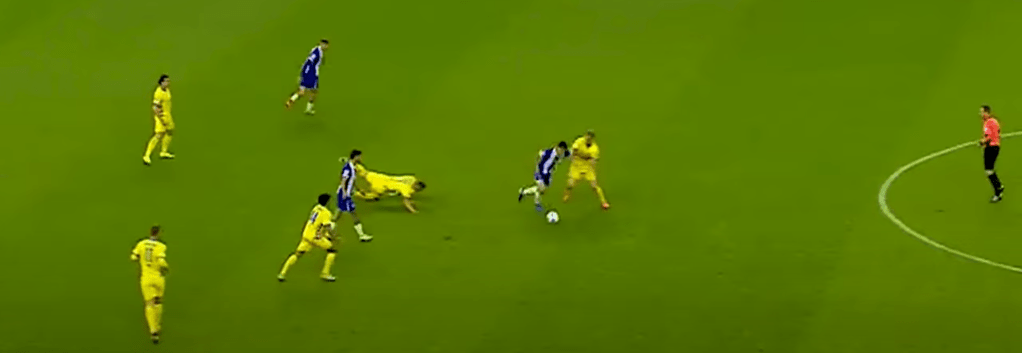
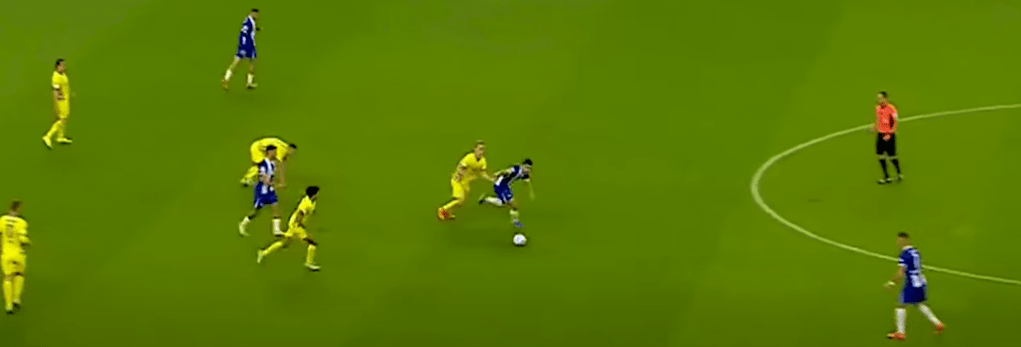
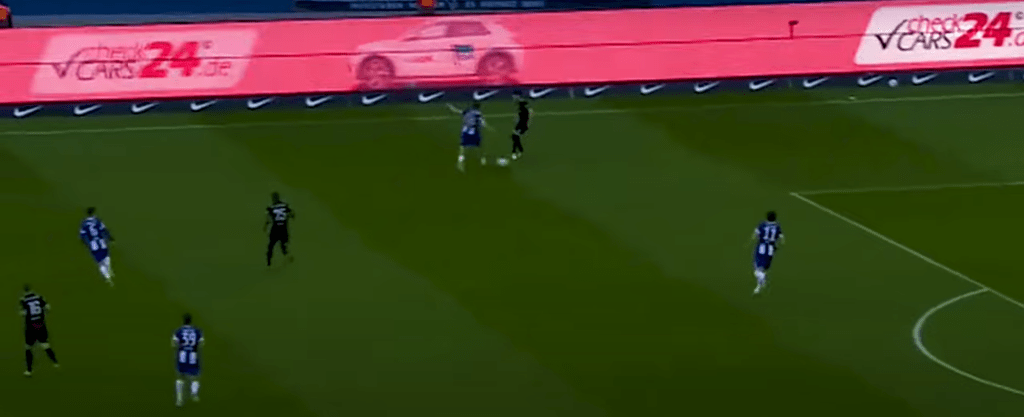
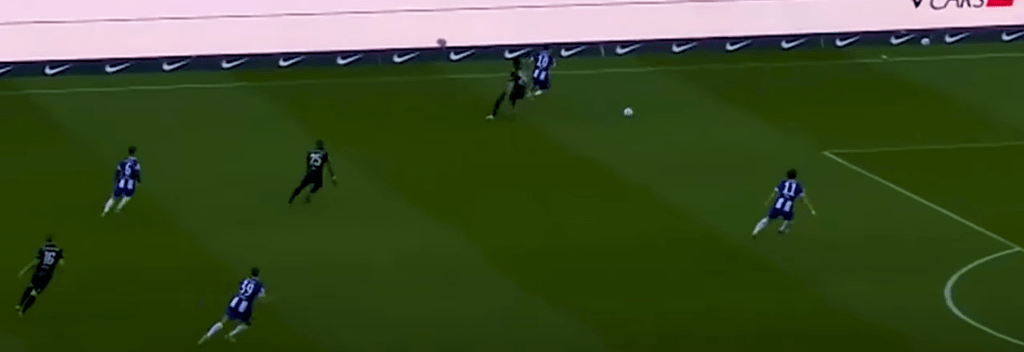
…intercepts the pass before launching a swift counter, going past his man and progressing the ball to an advanced teammate in space…
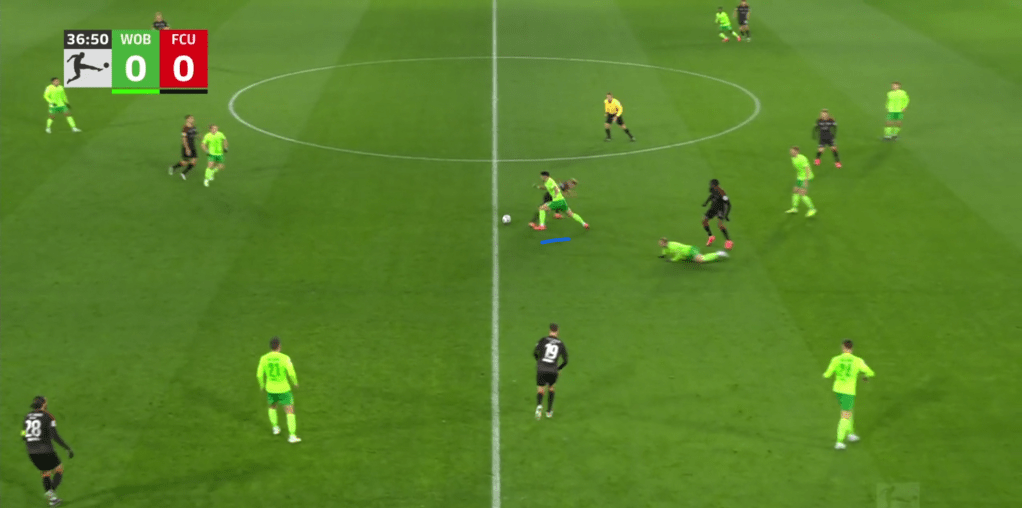
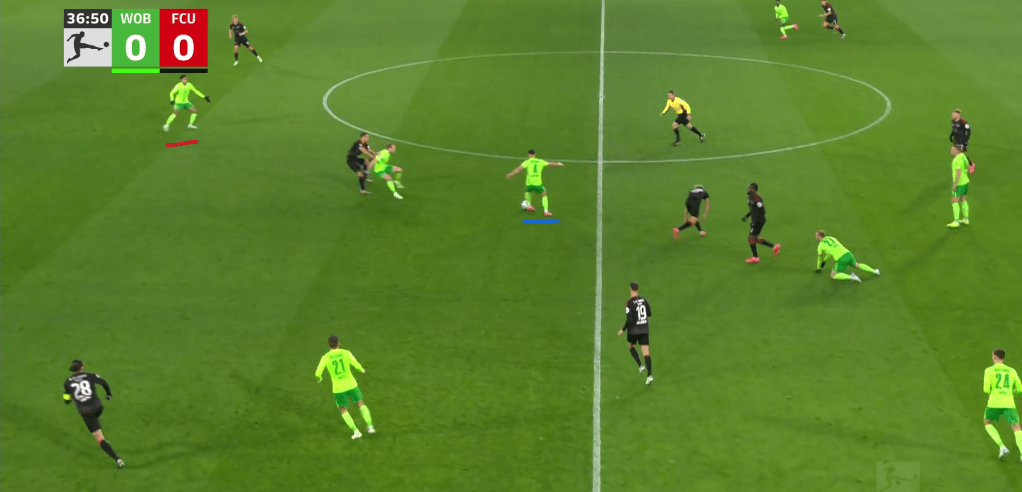
This instance certainly exemplifies the centre-back’s proactive and progressive nature all in one scenario.

He even joins the attack, following his pass.
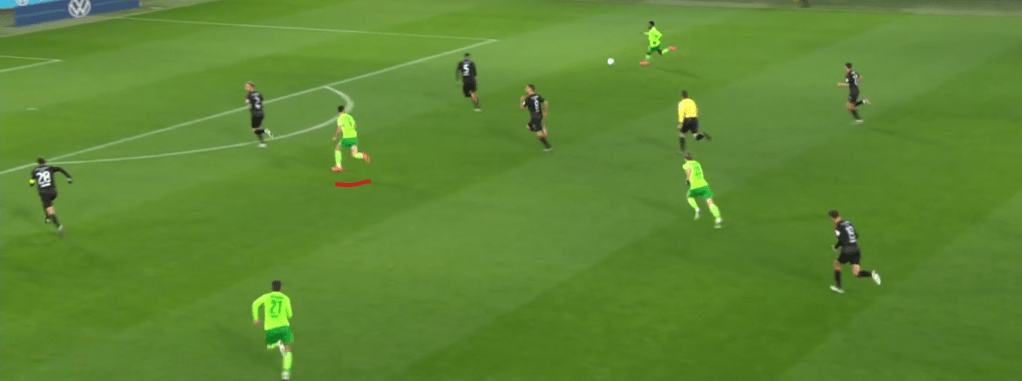
Had his teammate Maximillian Arnold intercepted the initial pass while on the ground, Wolfsburg would not have had the chance to launch a counter, as once the German midfielder got back up with the ball, Union Berlin would have retreated quickly into their defensive shape or, more crucially, pressed Arnold and exploited the gap in Wolfsburg’s defence.

It was imperative Koulierakis take responsibility in that particular moment.

In another fine example of the Greek international’s excellent proactive approach, the opponent receives the ball with his back to goal, with Koulierakis tracking him into midfield as soon as he controls the ball.
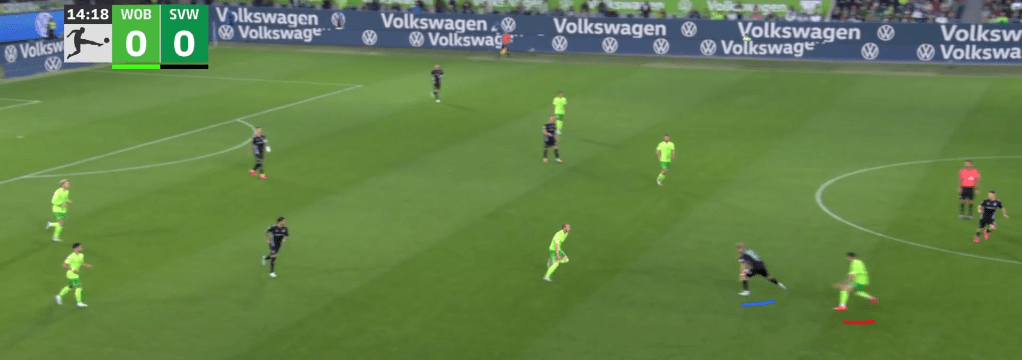
The Werder Bremen player attempts to bypass the surrounding pressure, but has nowhere to turn given Koulierakis’ excellent positioning, anticipation and his nearby teammates covering each direction…
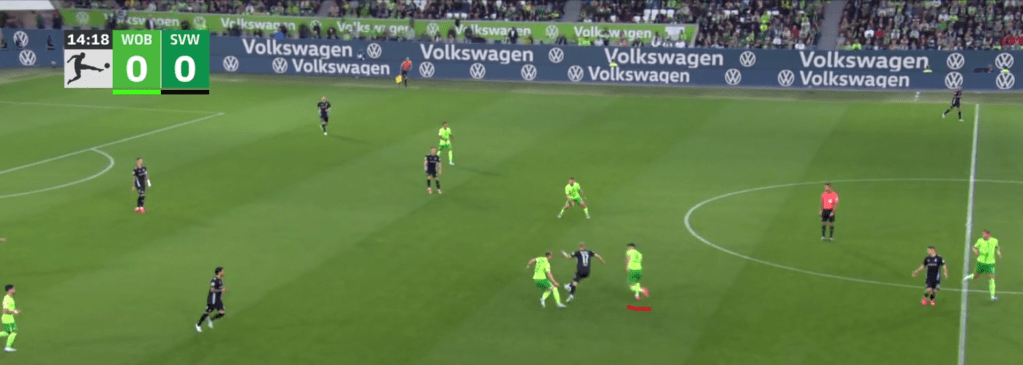
As a result of the pressure, the Greek colossus reads the situation…
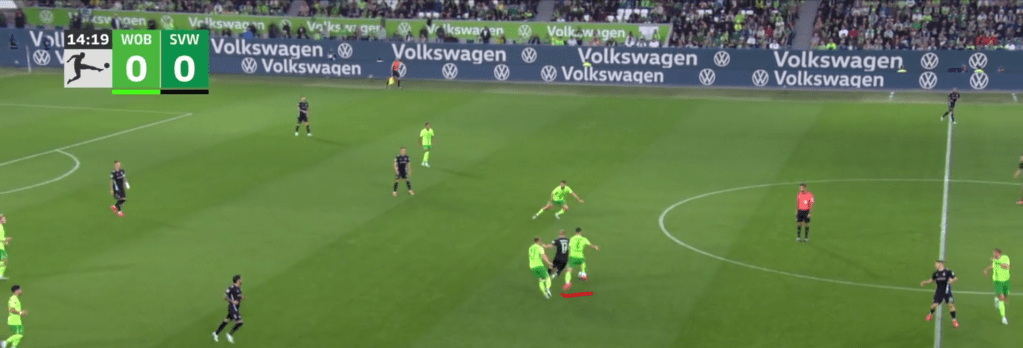
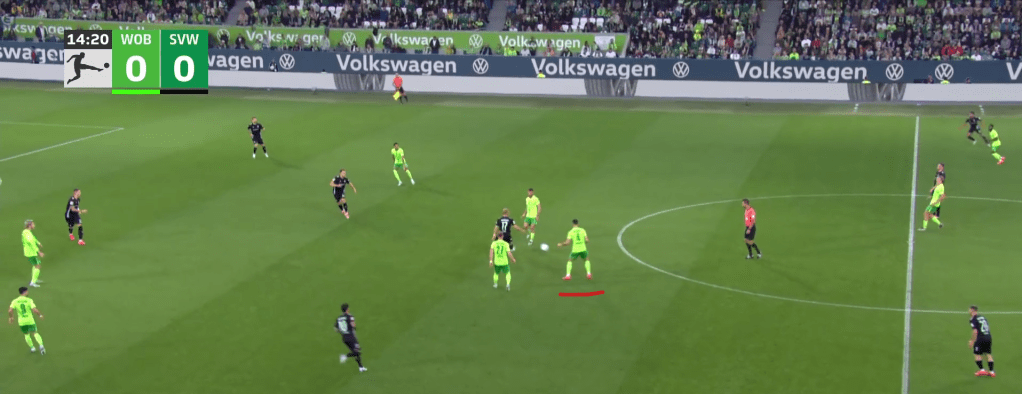
and wins the ball back for his team.

While many centre-backs have the ability to track their markers into midfield, they frequently fall short in terms of aggression and anticipation. They often miss the chance to use their imposing stature and commanding presence to encircle the opponent and reclaim possession. Consequently, the gaps left behind can be gracefully capitalised on by the opposing team, creating dangerous opportunities.

That isn’t the case for Koulierakis. The defender’s imposing stature and freakish athleticism mean he almost always holds the advantage in those risky situations, not allowing his forward marker the opportunity to turn and progress towards his goal.

Koulierakis exhibits very good defensive intelligence, not only in his proactive duelling but also across all phases of defence. He consistently anticipates play, positioning his body optimally to neutralise incoming threats and shut down dangerous situations with great awareness.

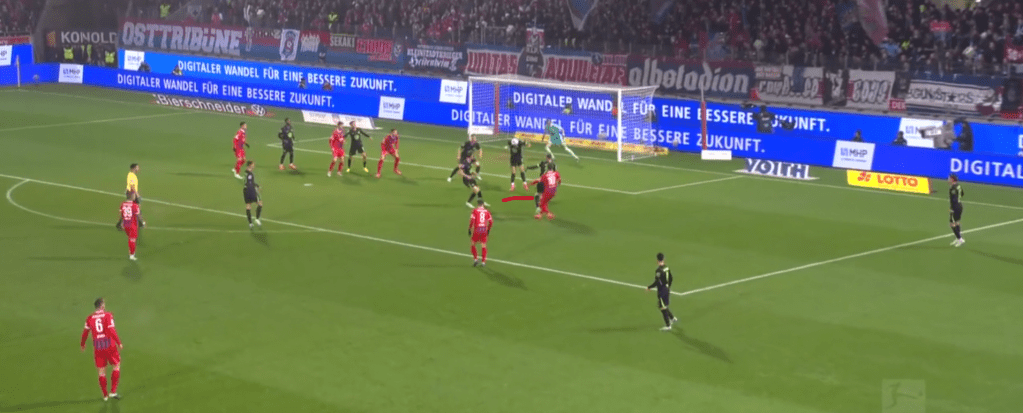
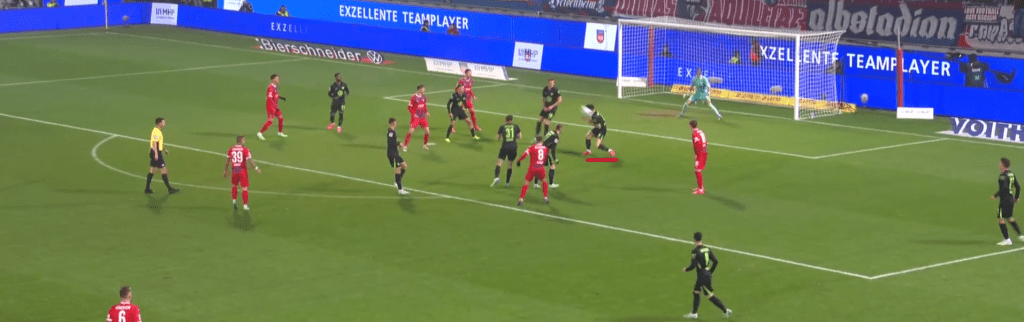
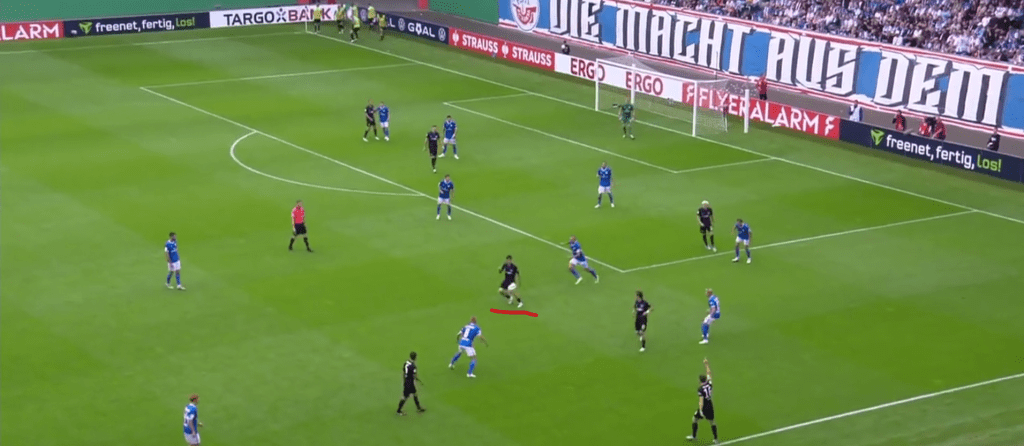
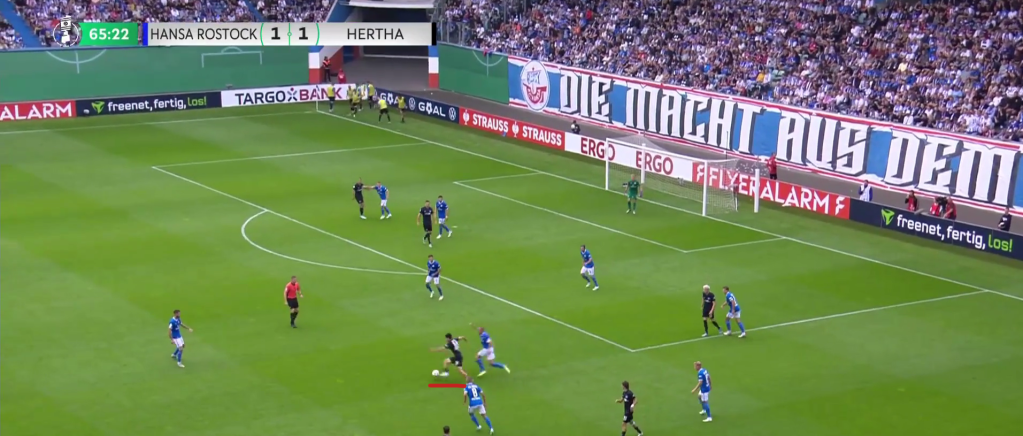
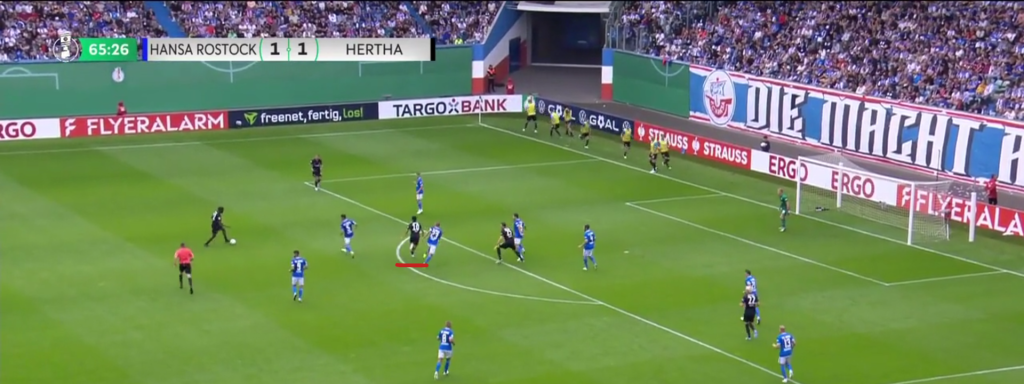
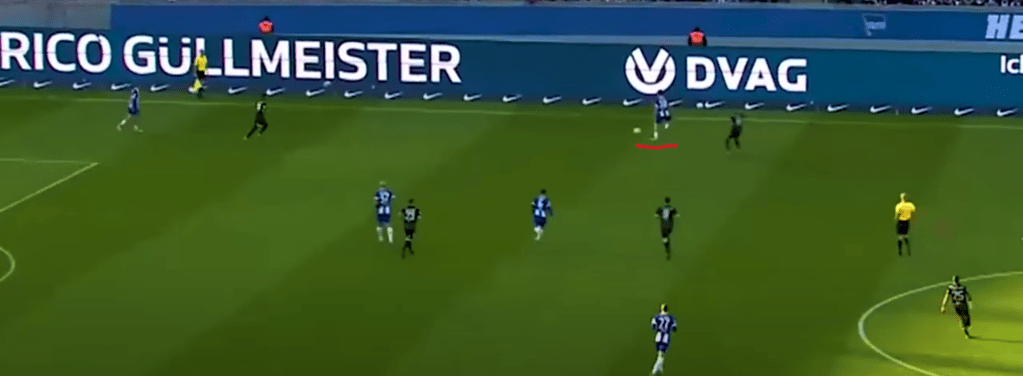
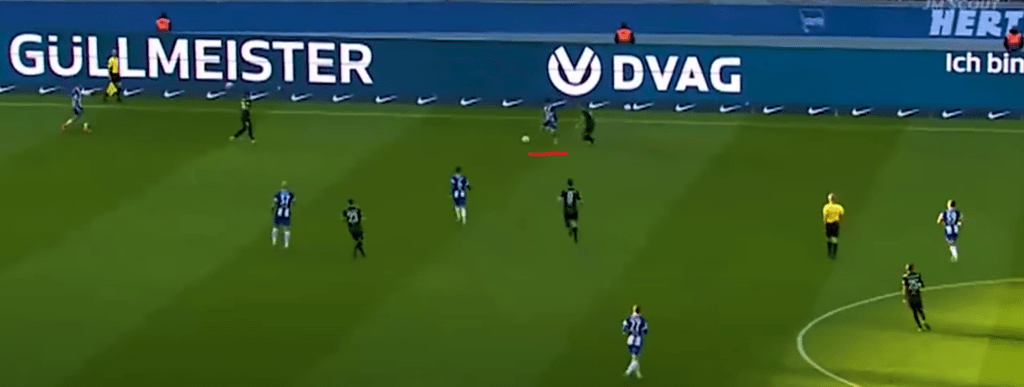
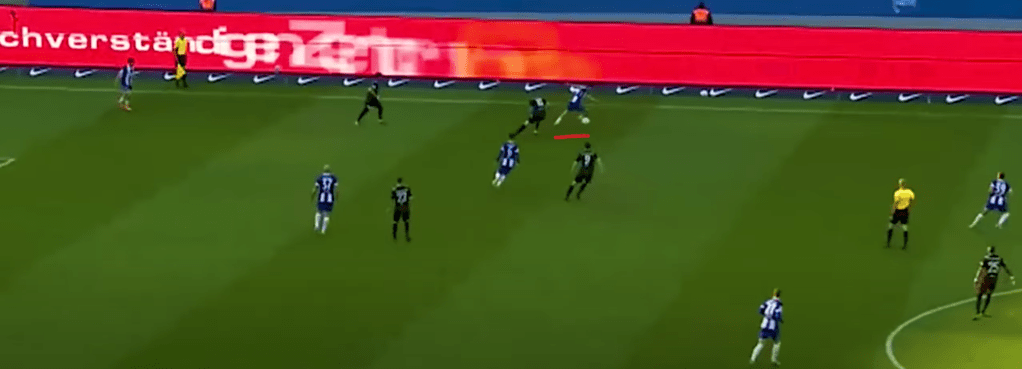
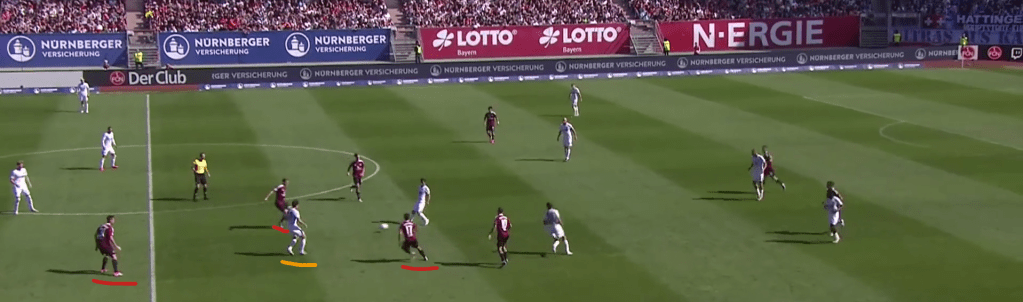
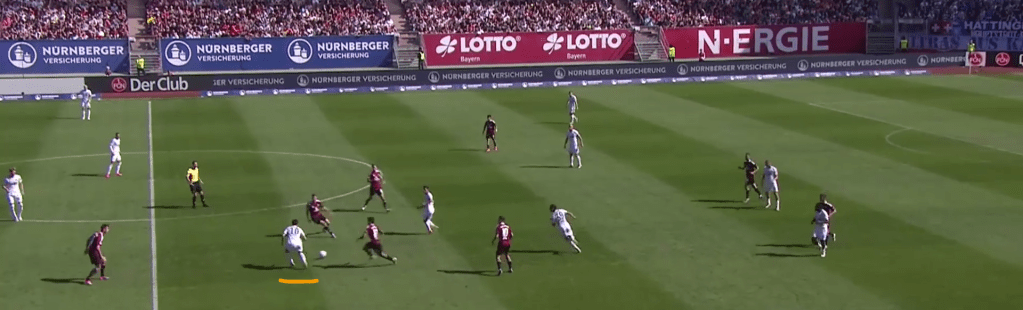
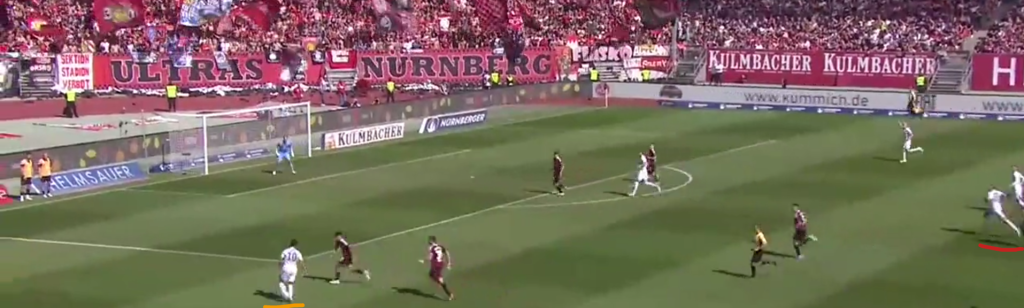
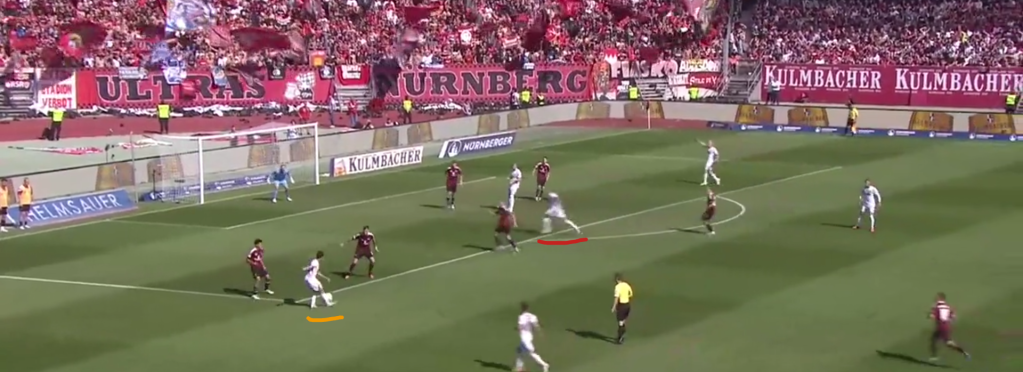
For example, in the image below, the FC Heidenheim player in possession attempts to punch a pass into the feet of his teammate at the edge of the penalty area. It certainly seems Koulierakis (RED) won’t be able to intervene…

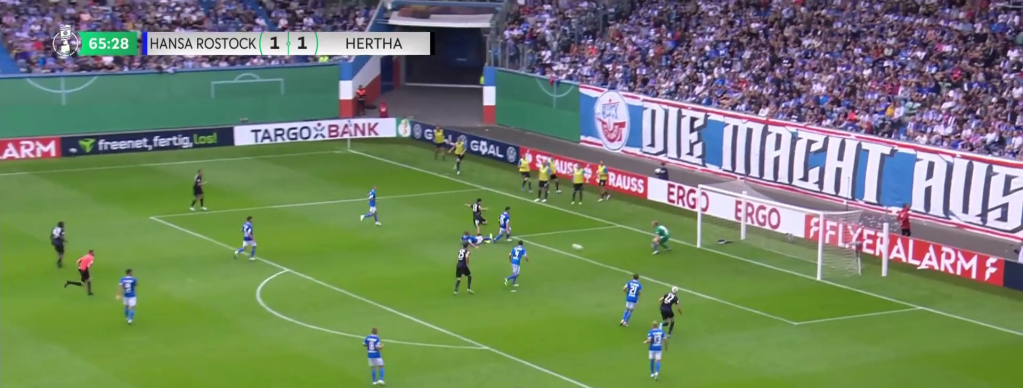
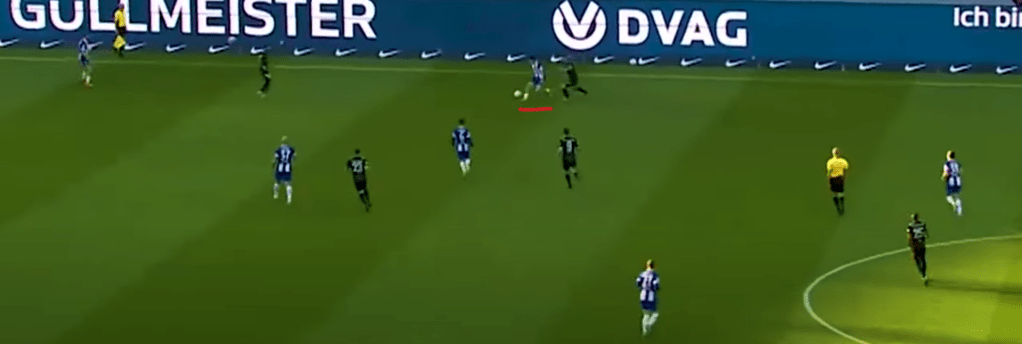
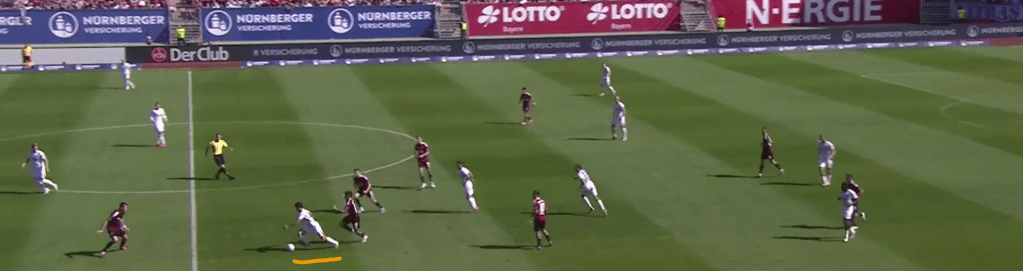
…but once again, the 21-year-old’s presence of mind, athleticism and flexibility mean he is very well capable of snuffing out the danger, getting across before the ball arrives…
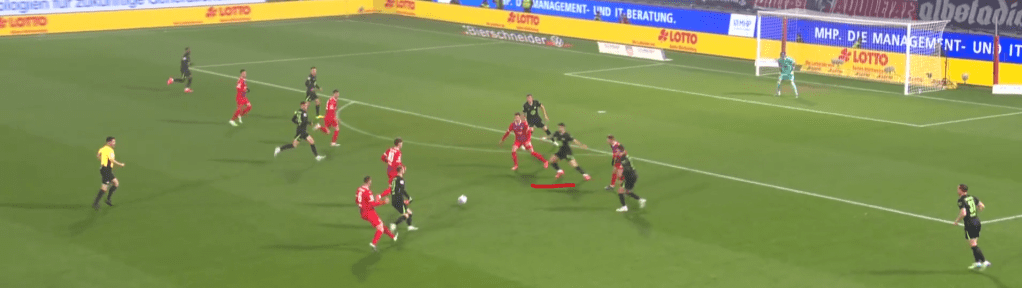
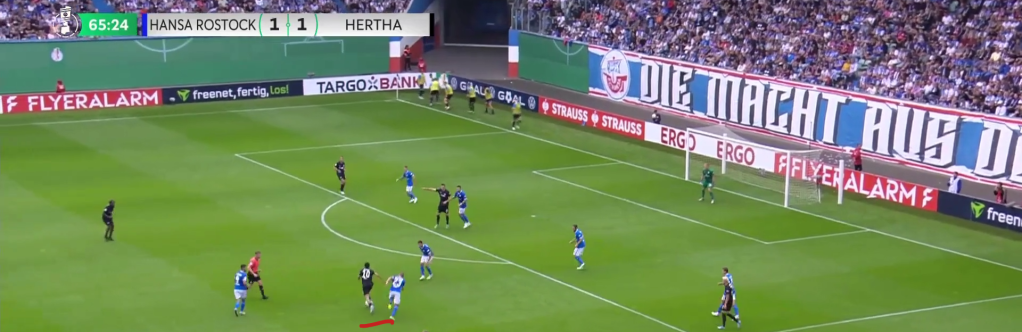
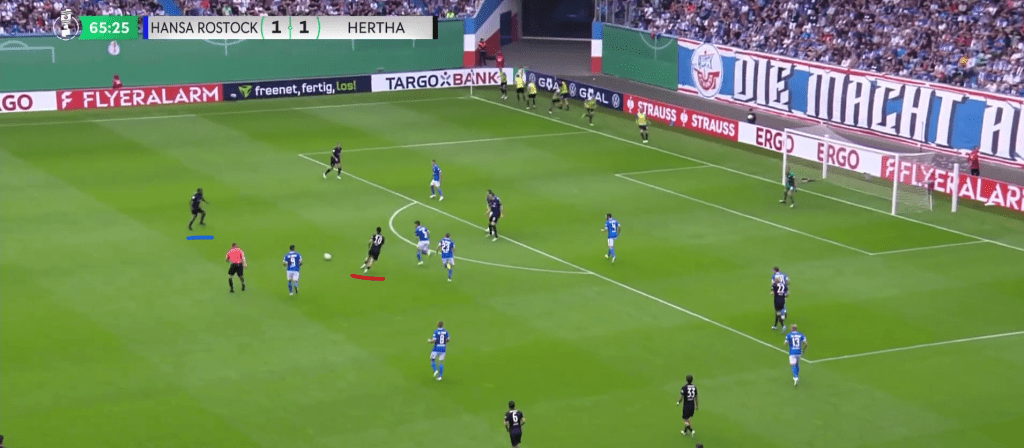
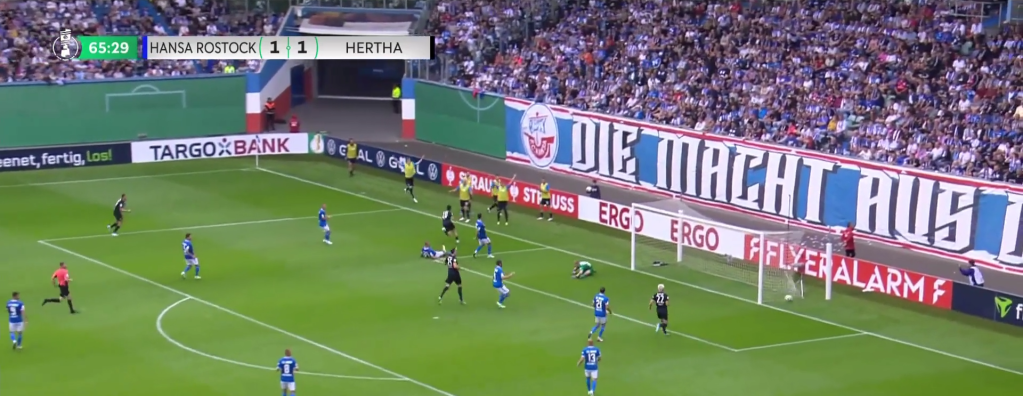
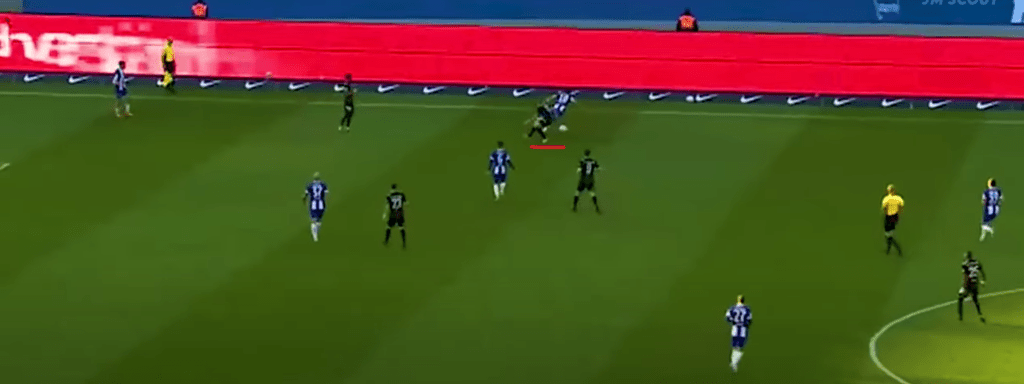
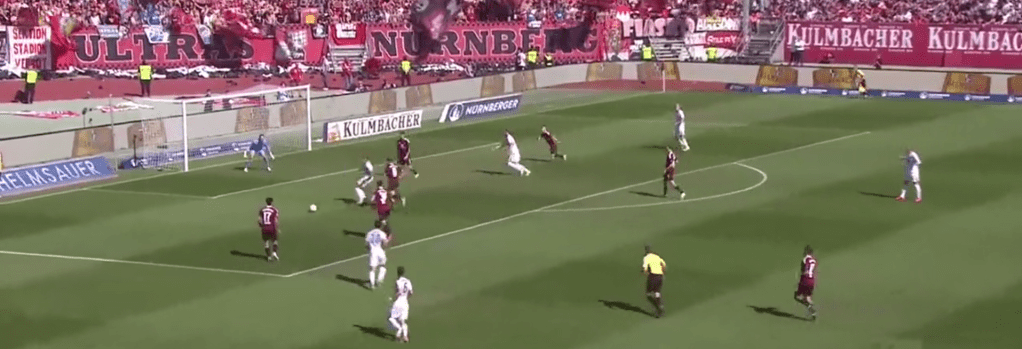
…before reaching a leg out to intercept. Not only did he intercept it, given the volume of danger around him,…
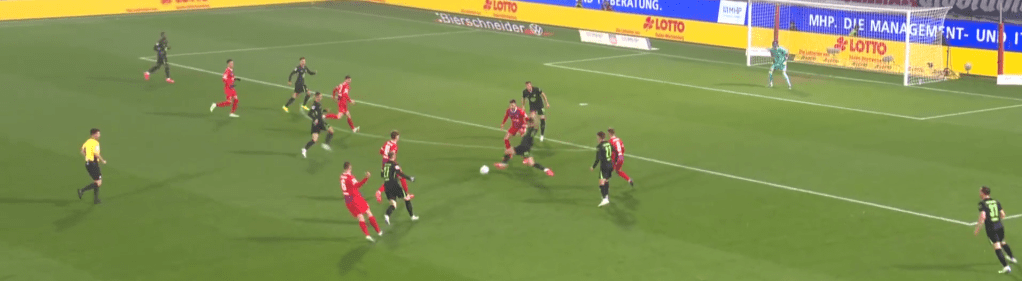
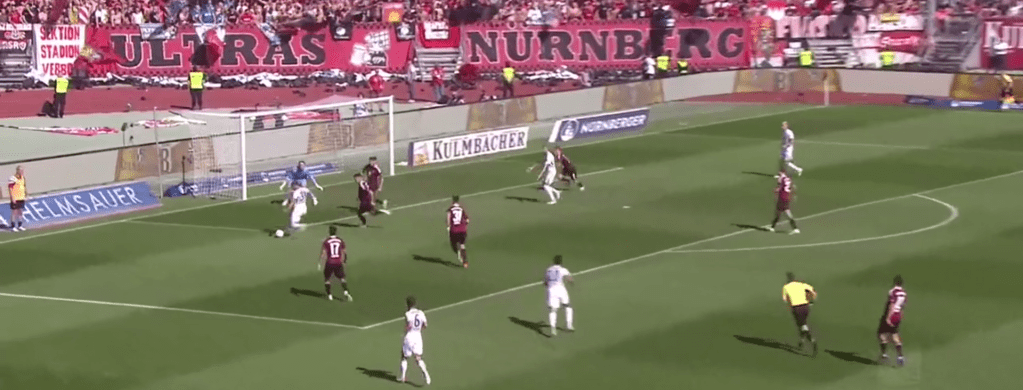
…but he manages to clear it out of the immediate danger too, in the same motion.
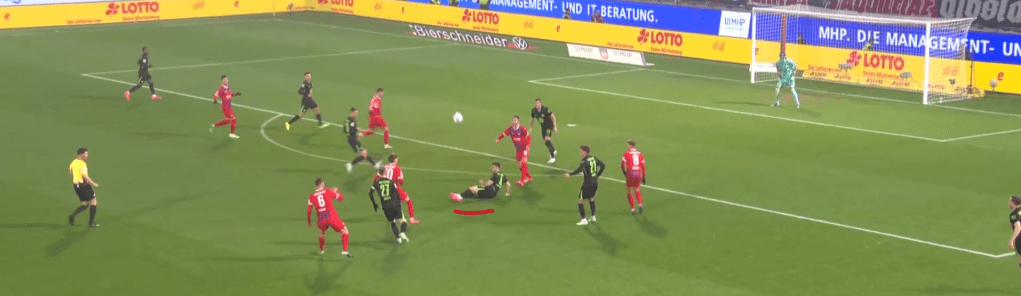
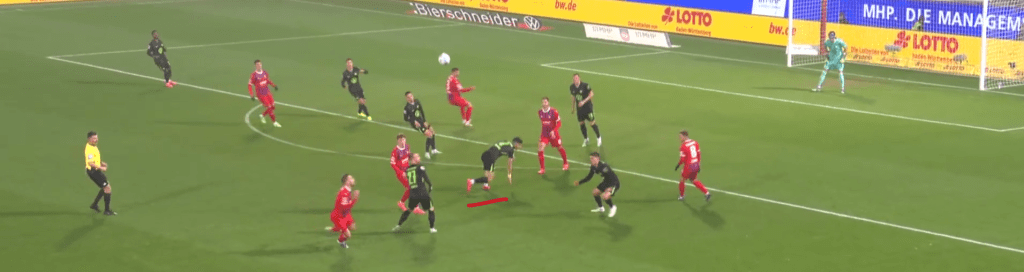
Defenders who possess the presence of mind and consistency to read situations before they become dangerous are a rarity in the modern game.

Koulierakis certainly possesses this in abundance, and it’s easy to see why he’s becoming an attractive proposition for the elite clubs in Europe, including Liverpool.

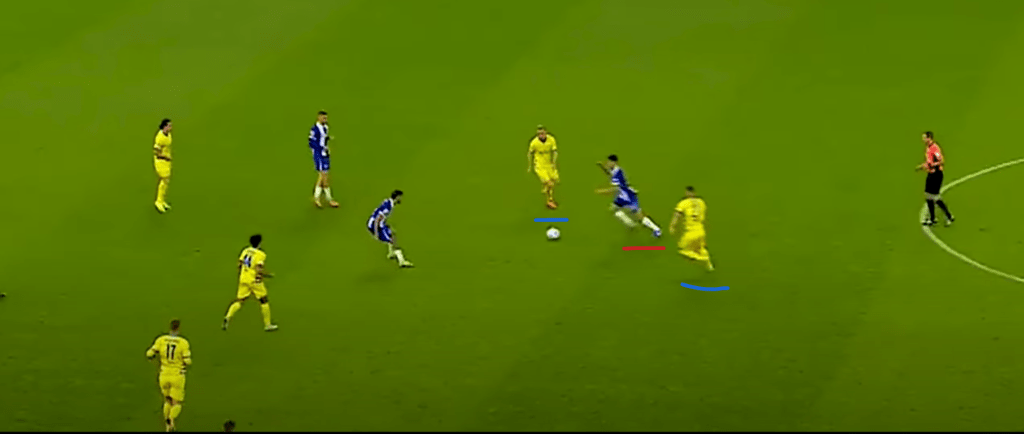
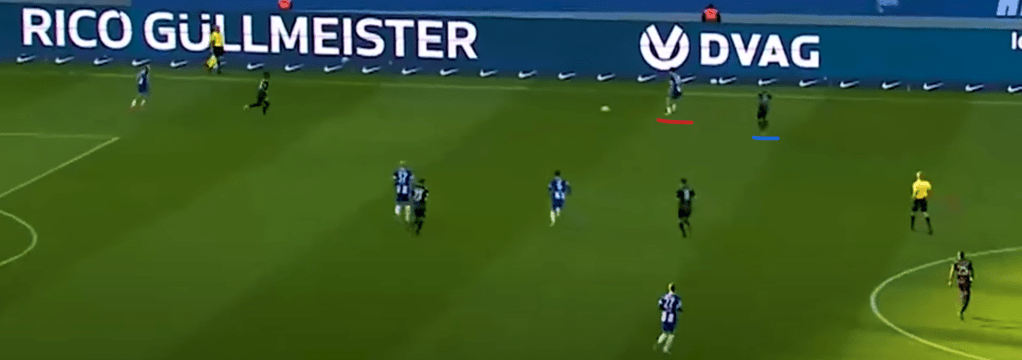
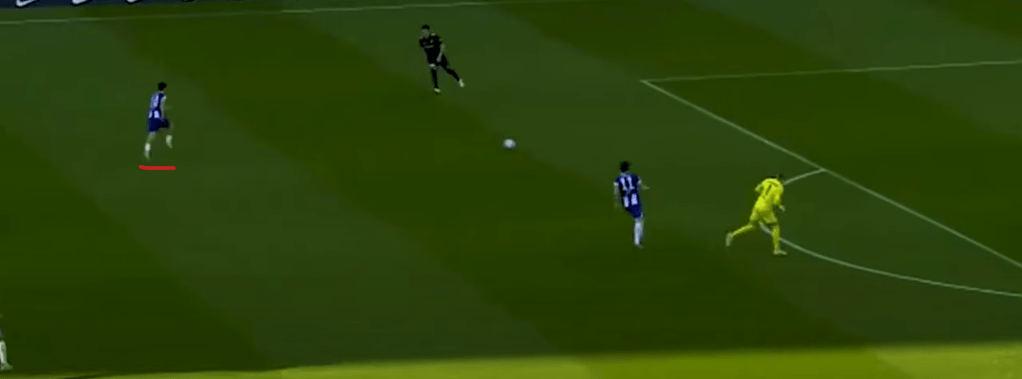
Another stunning example of this comes up against one of the best strikers in Europe over the past year, Borussia Dortmund’s Serhou Guirassy (BLUE).
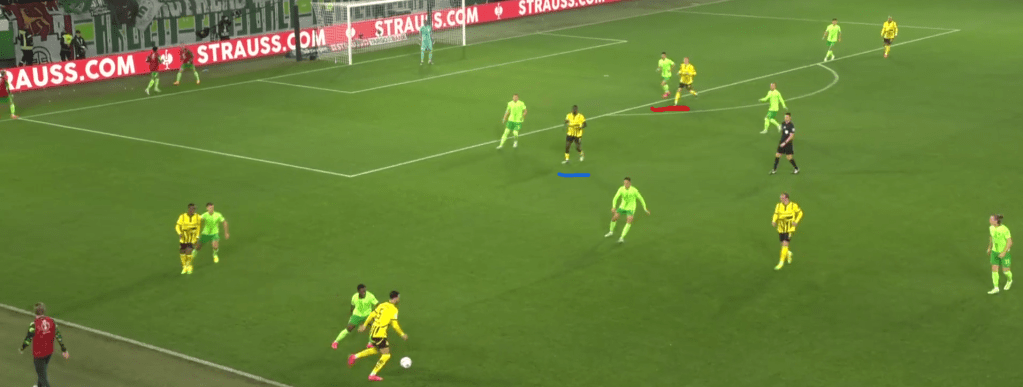
To start with, Koulierakis’ positioning (RED) in this situation is excellent.

He’s goal-side of his marker, in perfect view of the action in front of him, allowing him ample time and opportunity to engage any situations that come in his zone.

However, as the play progresses, one piece of skill from the intelligent and cunning predatory instincts of Guirassy attempts to disrupt it all.

The ball is played to the Guinea international…
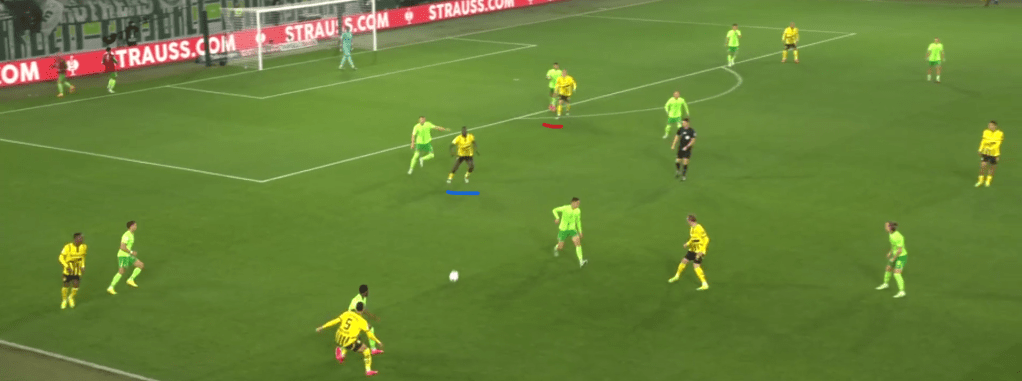
… but Guirassy is aware of what’s immediately behind him, Koulierakis’ marker. Which means the Greek international will need to instantly engage and read whatever occurs…

Guirassy brilliantly dummies the pass, fooling Koulierakis’ defensive partner, taking him out of the game and expecting the return…
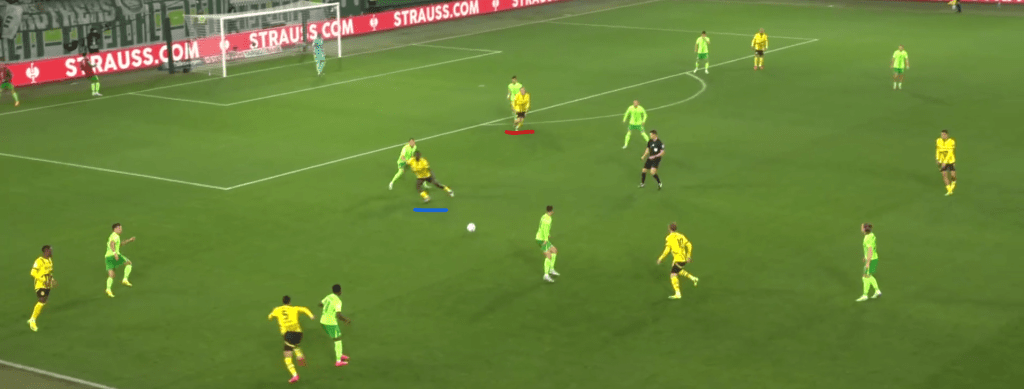
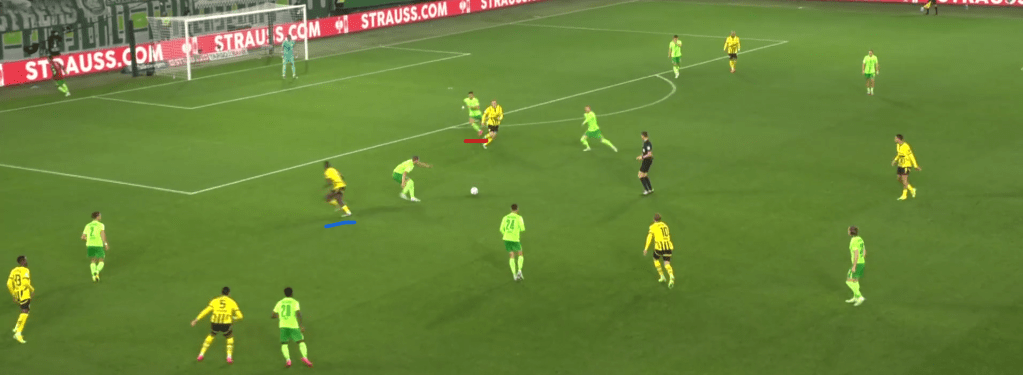
As a result of Guirassy’s smartness, Wolfsburg’s defensive line has been instantly dissected, with Koulierakis their only hope of avoiding being breached.

In this instance, it would be easy for Koulierakis to follow his initial marker towards the ball. However, he excellently reads what Maximilian Beier is intending to do, return the pass to Guirassy, who is through on goal once executed.

Rather than follow Beier, Koulierakis once again is tremendously aware of what’s coming and instantly attempts to engage Guirassy’s run, knowing that the run is more dangerous than Beier’s positioning.
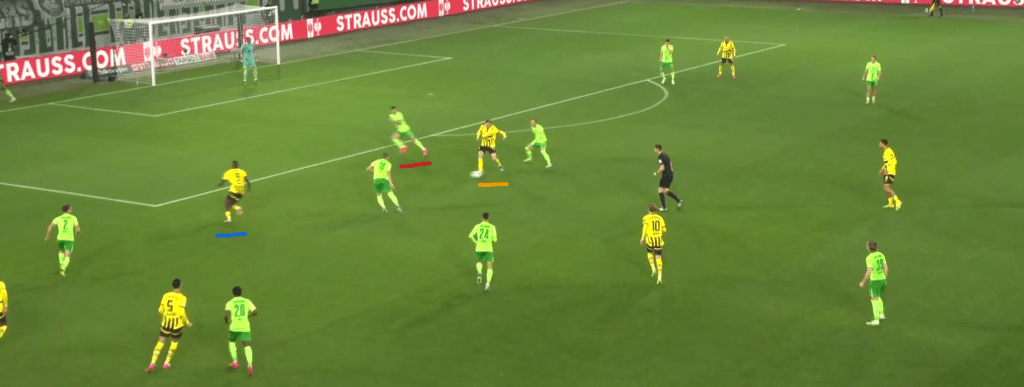
As a result of his excellent awareness and reading of the situation, he’s able to meet and stand up to the tricky Guirassy once he receives the return pass and snuff out the danger…
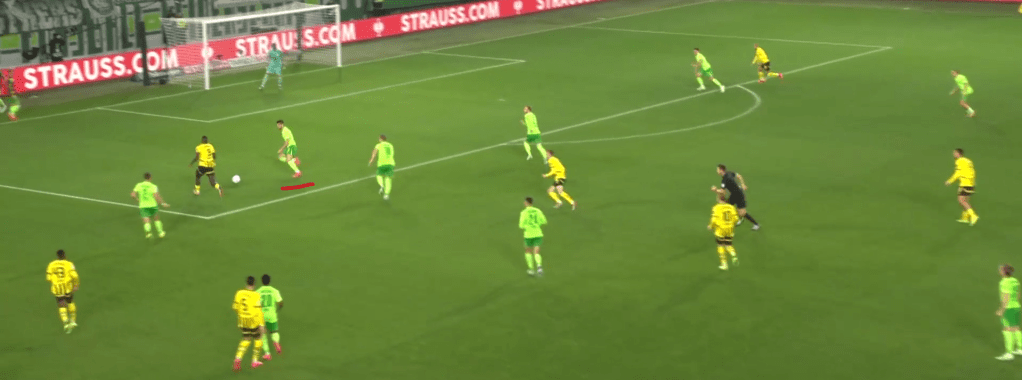
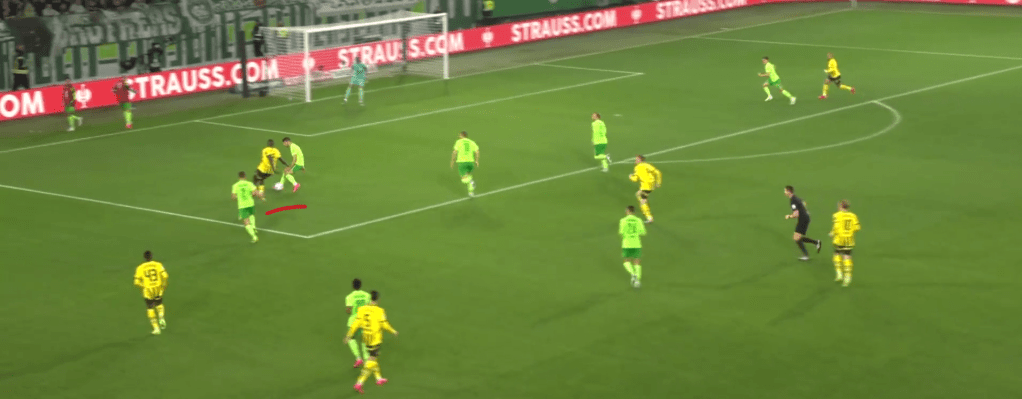
The above scenario also paints a picture of Koulierakis’ wide defending and coverage. When faced with an attacker who’s exploiting wide spaces left by his full-backs, he’s more than capable of matching that opponent for pace and engaging at the right time to dispossess and stop the attack from progressing further.

Koulierakis demonstrates exceptional agility and explosive power over short distances, enabling him to cover ground quickly and recover from dangerous situations not only for himself but also for his teammates, as illustrated in the above example.

A backline leader & shield

Another defining facet of the Greek international’s game is his fearlessness, leadership and bravery in defensive situations, embodying qualities of a dominant defender but more importantly, a backline leader.

He’s a defender who constantly takes responsibility and initiative, and that is shown in his willingness to make first contact for every cross into his own penalty area, his fighter’s mentality to winning crucial duels in the 18-yard box, and his no-nonsense approach to getting rid of danger.

If a loose ball demands a swift, unglamorous and unrefined clearance to safety – a rare commodious trait in centre-backs in the modern game – he’ll execute that task with swift decisiveness, ensuring that no threat lingers in his zone.

The former PAOK defender is also incredible at putting his body on the line to stop opponents’ shots at goal. In fact, the underlying stats certainly paint a picture of his no-nonsense approach when defending.

Amongst centre-backs in Europe, the Greek international ranks in the 98th percentile for blocked shots, 94th percentile for blocks, 89th for clearances and 84th for passes blocked and dribblers tackled per 90 [Footverse].

Koulierakis commands the penalty area with authority, decisiveness and immense bravery. For instance, in the scenario below.
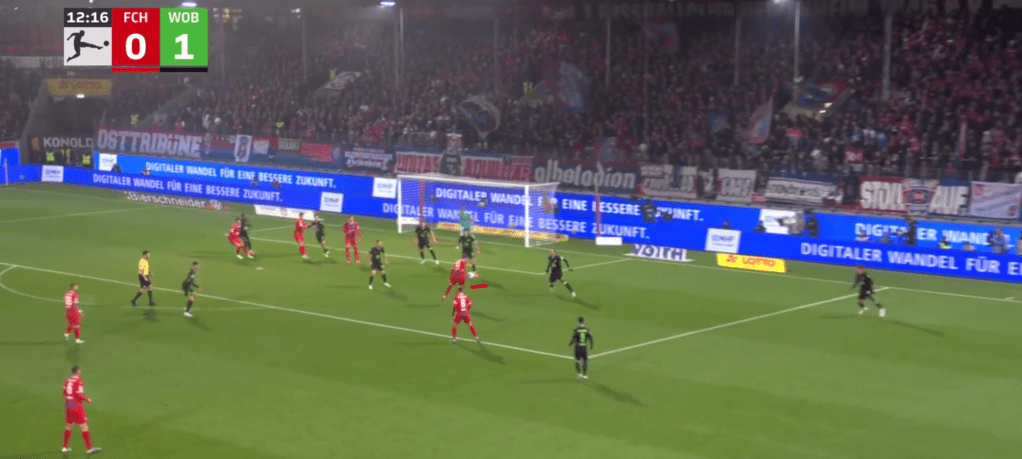
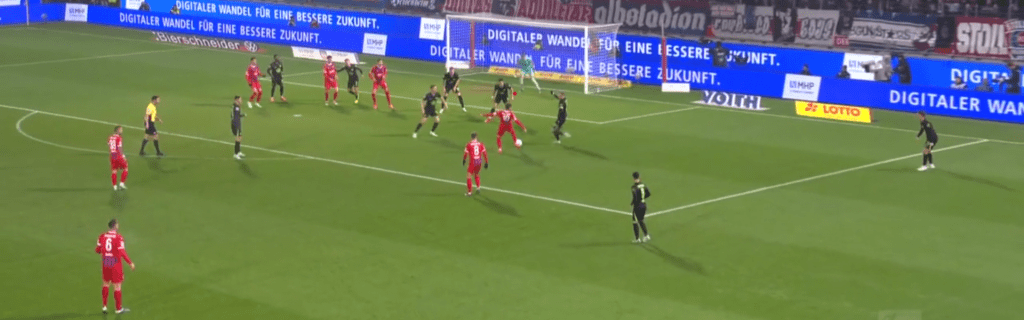
With his side camped in their own box, desperately defending an early lead, it’s Koulierakis who puts himself on the line to keep his opponents at bay.

He excellently and bravely anticipates an incoming shot, positions himself in front of it to block, albeit with his head. Immediately afterwards, another shot is lined up, but Koulierakis gets in the way once again, this time with his shoulder.

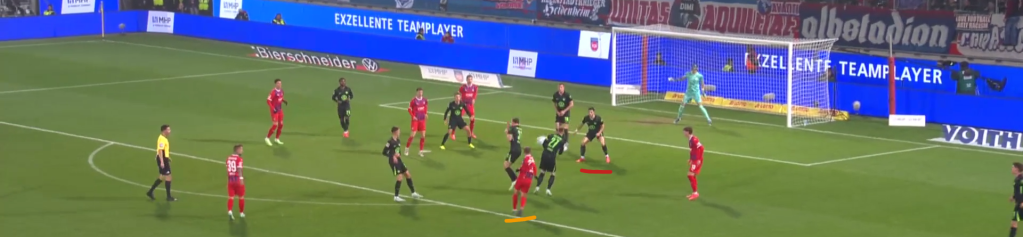
Certainly, it’s unconventional, but we’re talking about a “by any means necessary“-type centre-back, always willing to put his body on the line to ensure his side has the best chance of winning. More crucially, it’s his reading of dangers before they occur that allows him to stand out.

Areas of Improvement

Aerial duelling

He’s always alert and ready through his body positioning and defensive awareness to engage at any moment, but that will also have to aid him in his aerial duelling, which, as stats show, needs some work.

Standing at 1.88m, Koulierakis may not be the tallest centre-back, and the way he oozes confidence going in for ground duels and putting himself on the line for blocks and clearances, as we’ve highlighted, the numbers show he’s not as authoritative in the air.
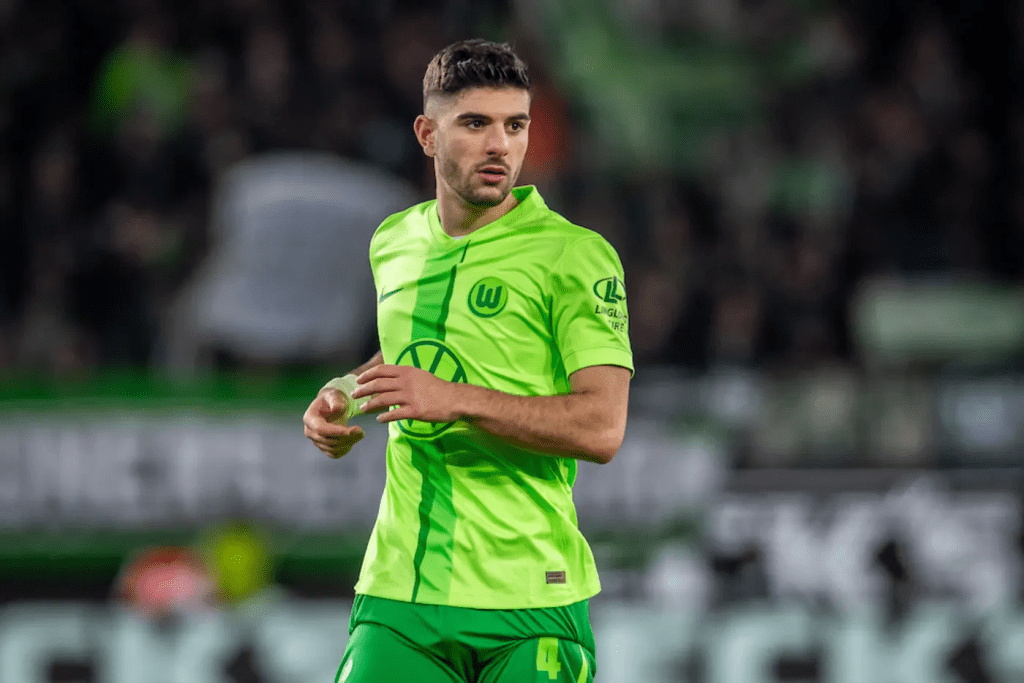
As per Footverse, he ranks in the 69th percentile of centre-backs in Europe’s top five leagues for aerials won. By no means does that make for terrible reading; in fact, it’s decent. However, his leaps and the timing of them are very good, which raises an expectation that he should win most of his aerial duels.

According to SofaScore, he has a win rate of 44% so far this season, which again, isn’t bad but could be better given the authority he exerts in his duels and the sheer presence he possesses amongst his teammates.

Turning radius & mobility in tight situations

We pointed out Koulierakis’ weakness in playing out from the back when faced with an opponent’s press, and another facet of that is his inability to play with his back to goal in certain situations, due to his lack of turning radius and mobility.

While those kind of scenarios are rare for a club like Wolfsburg who aren’t well-versed in a possession-based and fluid back-to-front style, should he make the big move to a Liverpool, Madrid or another elite side, for that matter, those skills will certainly come in handy.

The Greek talent boasts impressive agility and vertical explosiveness, but he faces some limitations when weaving his way out of tight areas. His imposing, athletic and powerful frame can occasionally hinder the fluidity and flexibility required for such tight and pressurised scenarios.

Decision-making in possession, and the quality of pass amidst pressure

While Koulierakis’ line-breaking and progressing passing have become a notable calling card in his game, there are some elements in his decision-making with the ball at his feet which could use more refining. One of those is his pass selection and accuracy, or even the timing of his long passing. He can often try to force the play too prematurely and look to choose the more difficult option in going long rather than playing it short and keeping things simple for his team.

Also, the on-ball scenarios highlighted in this piece show the Greek defender with time to pick a pass, but at times, he can lack the composure needed in certain situations when pressed by an opponent, which leads to those hurried and inaccurate long balls mentioned, ceding possession back to the opposition.

Possessing the ability to retain the ball under pressure is an essential attribute for any player performing in key sensitive areas of the field, especially the zones which centre-backs take up in the build-up phase, where losing the ball can lead to dangerous consequences.
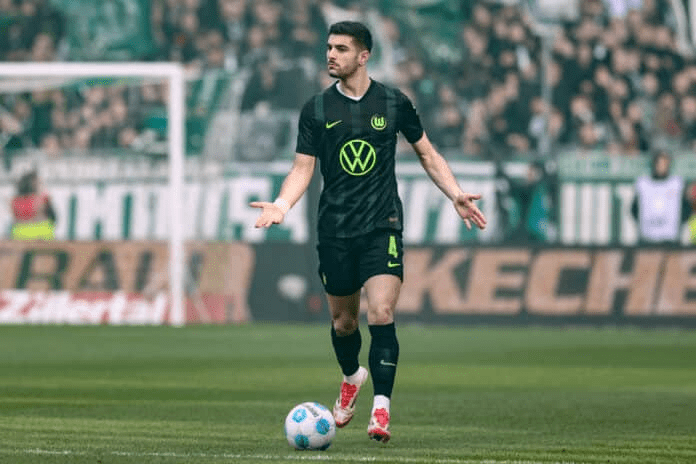
Given that the big teams that are hunting down major silverware are also high-possession-based sides and place a lot of demands on their centre-backs on the ball, this is certainly something the Greek defender will need to develop and improve on if he is to make that expected big jump in the near future.

The issue is not so much with his technical acumen as we’ve pointed out, but more with his decision-making and quality control when pressed, which requires more learning and improvement, but these aspects are crucially addressable with the right coaching and environment.

What does the future hold for Koulierakis?

Konstantinos Koulierakis is an exceptionally versatile defender, embodying all the qualities that modern elite clubs covet in a centre-back.

His game is a masterful blend of technical finesse and precision passing, seamlessly combined with an impressive athleticism characterised by speed, strength, and agility.
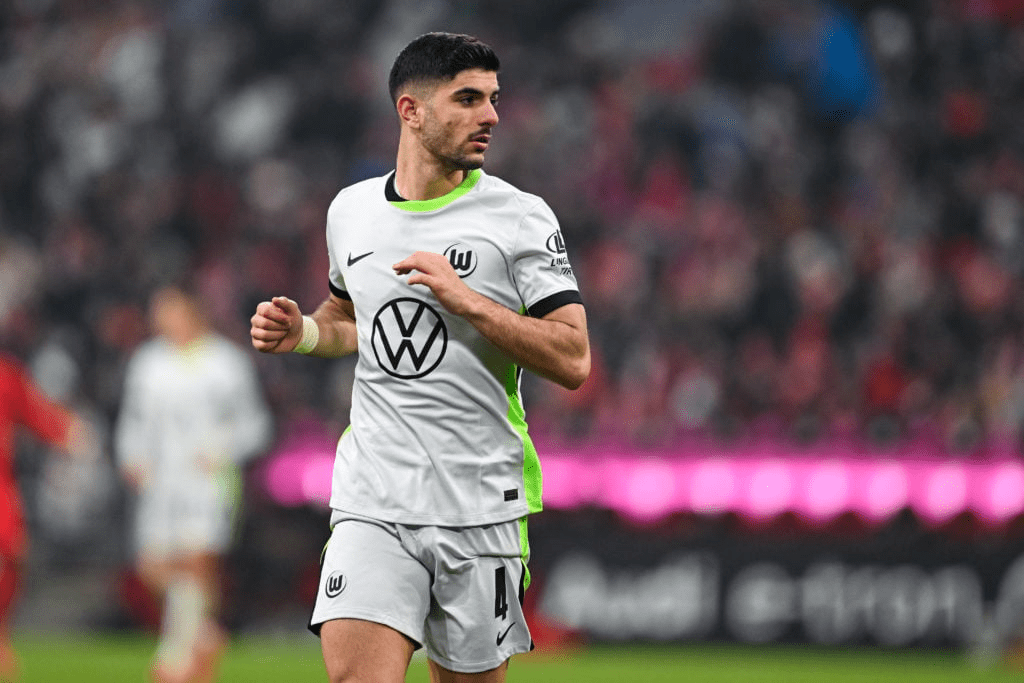
Koulierakis exhibits sharp defensive instincts through his astute tackling, impeccable positioning, and eagle-eyed anticipation of opponents’ moves. Moreover, he adds an exciting dimension to the attack during set pieces, making him a constant double threat on the pitch. This comprehensive skill set leaves no room for concern; there are no glaring weaknesses in his performance.

Given these attributes, he stands out as a prime candidate for a significant transfer to a club vying for glory at the highest levels of competition.

However, the pivotal question now hovers around timing. Despite the absence of a blockbuster move during the summer transfer window, speculation lingers about whether powerhouse clubs like Liverpool, Real Madrid, AC Milan, or Borussia Dortmund will circle back to him next summer or even as soon as January. Yet, such uncertainties are beyond Koulierakis’ influence.
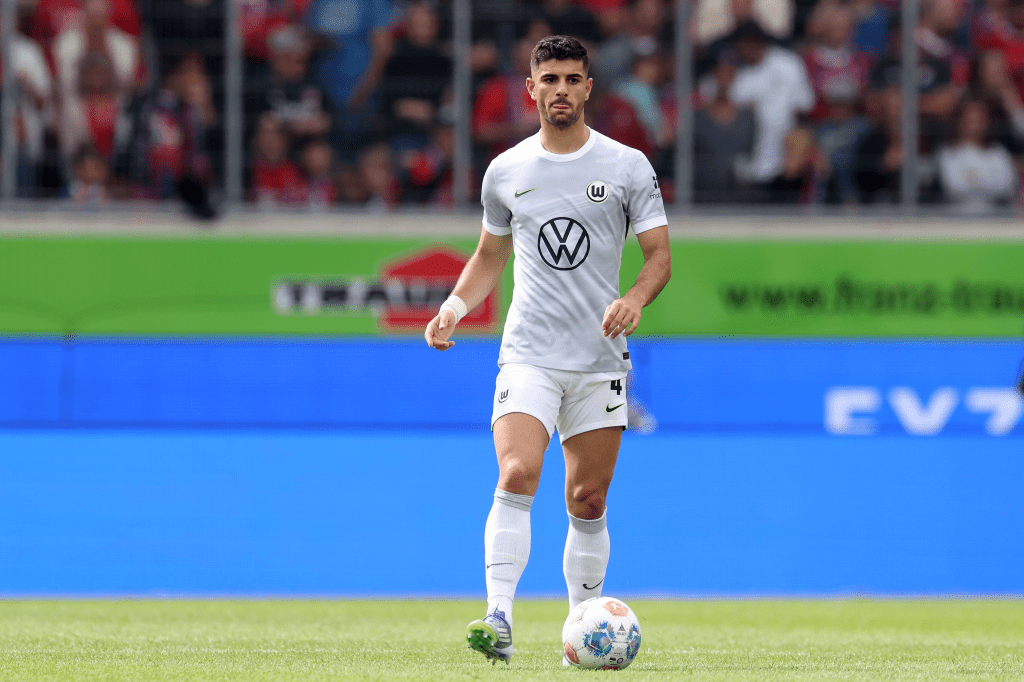
What he can control is his commitment to excellence, focusing on delivering outstanding performances and relentless development. He must continue to shine for Wolfsburg and his national team, just as he has consistently done over the past year.

If he sustains this upward trajectory, there’s every reason to believe that the aforementioned elite clubs will soon line up to present formal offers for his exceptional talents in the near future. Nonetheless, he is ultimately in charge of his destiny.
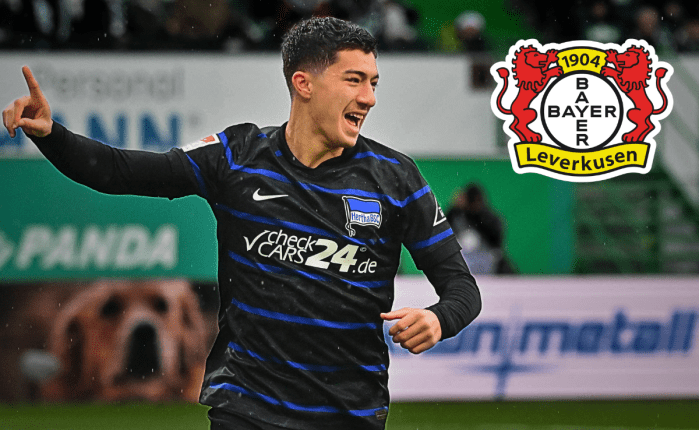
Meet Ibrahim Maza: Florian Wirtz’ Ideal Successor at Bayer Leverkusen?

Meet Ibrahim Maza: Florian Wirtz’ Ideal Successor at Bayer Leverkusen?

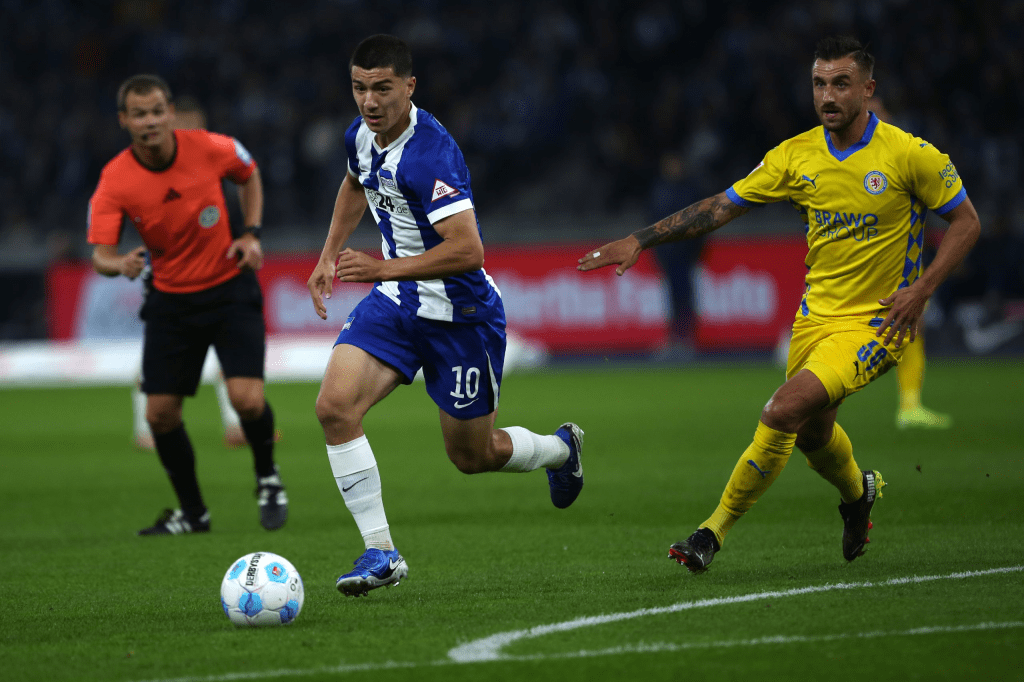
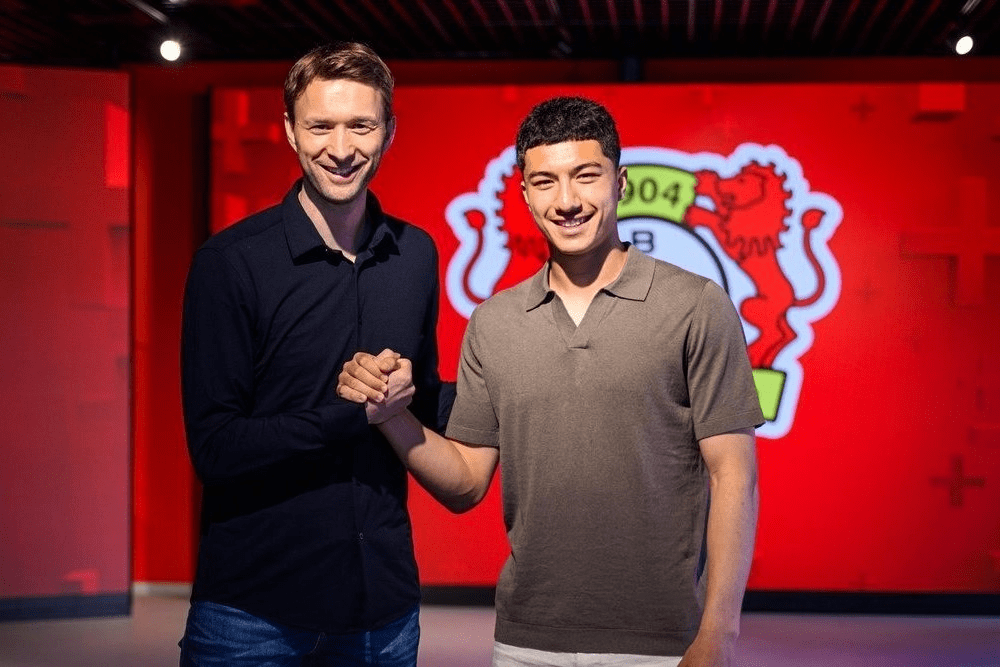
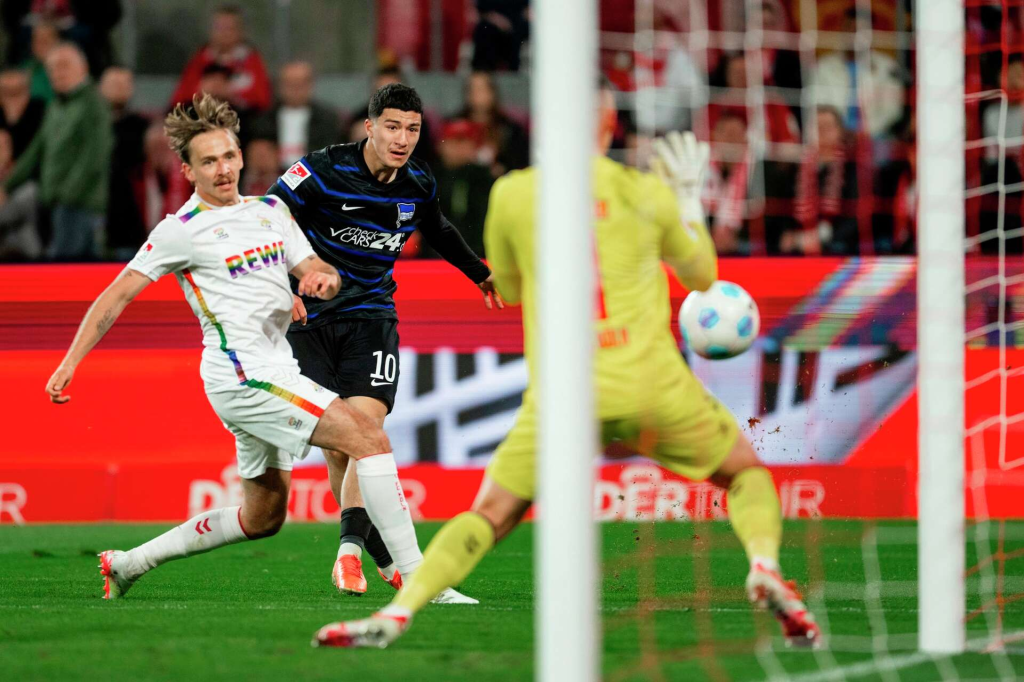
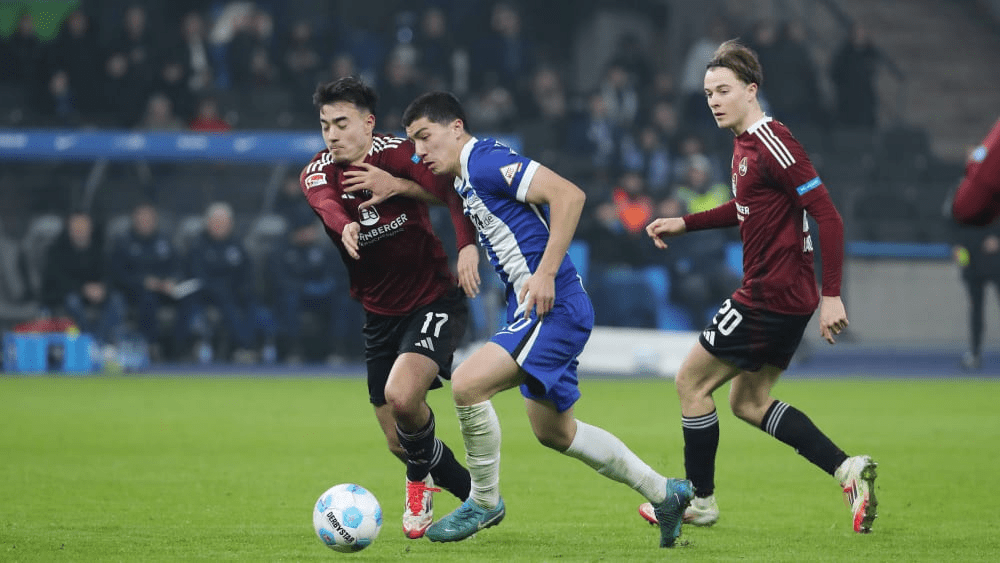
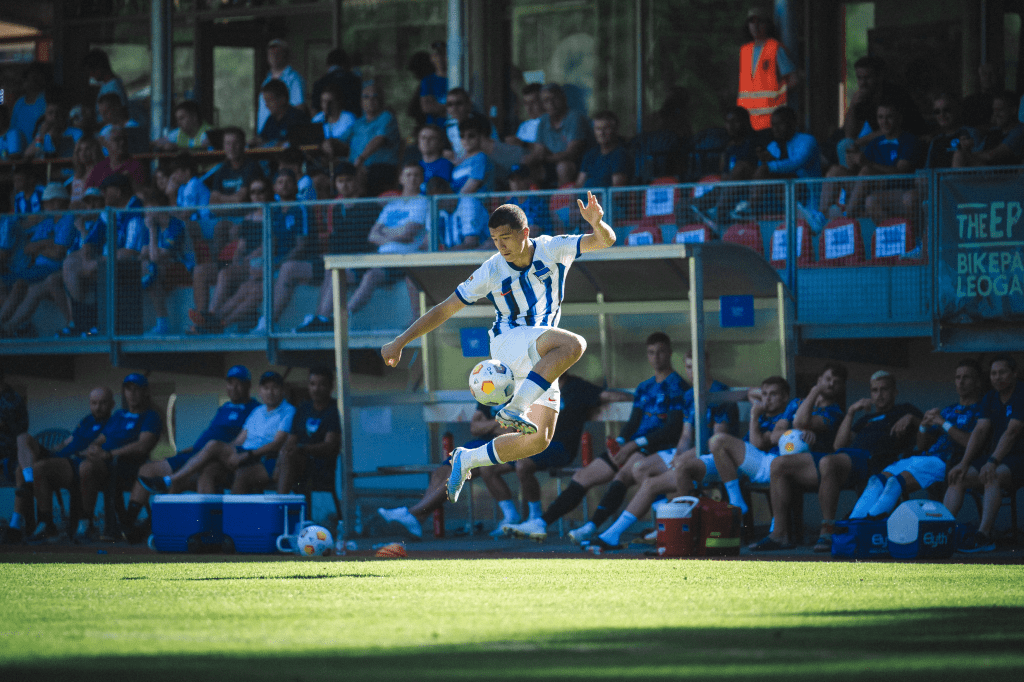
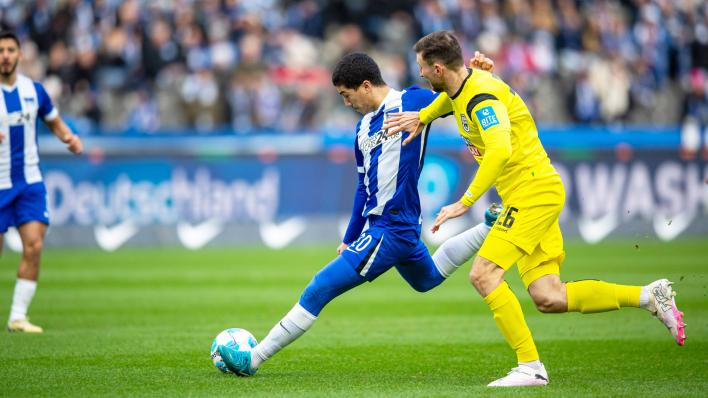
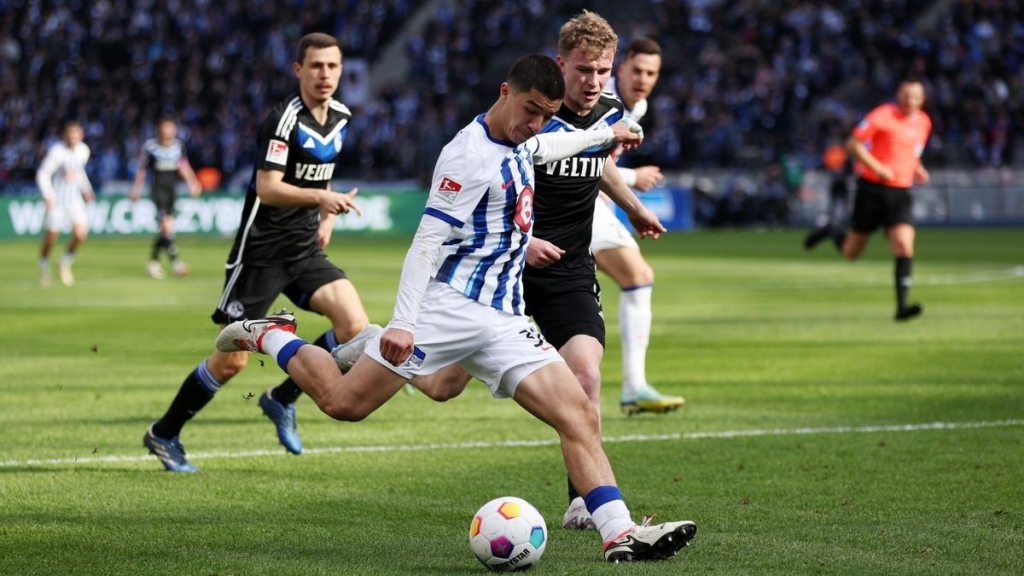
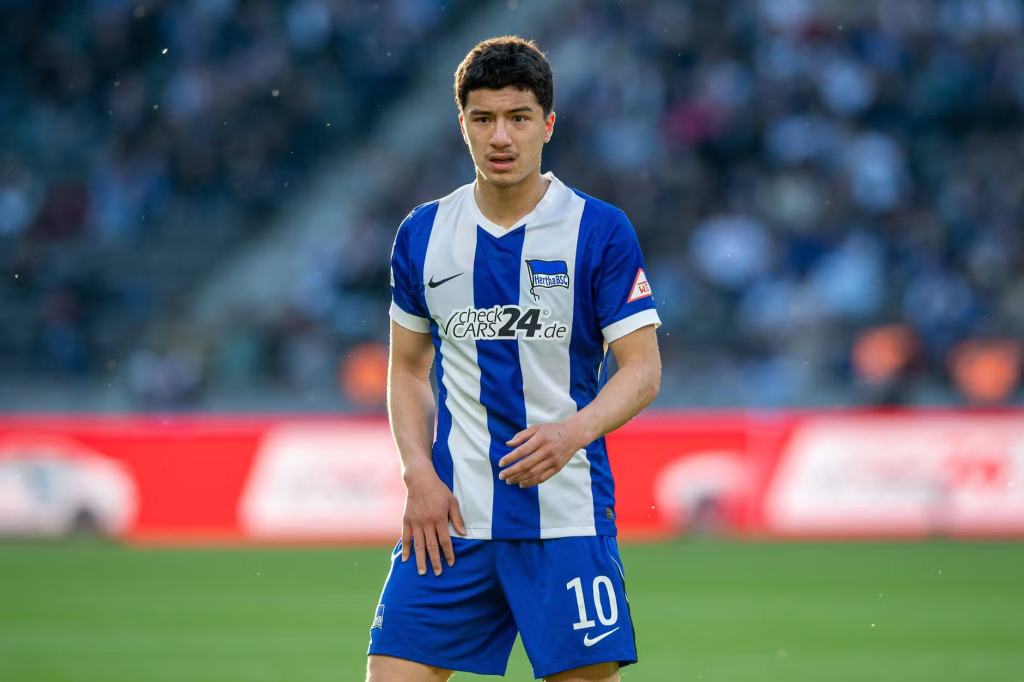
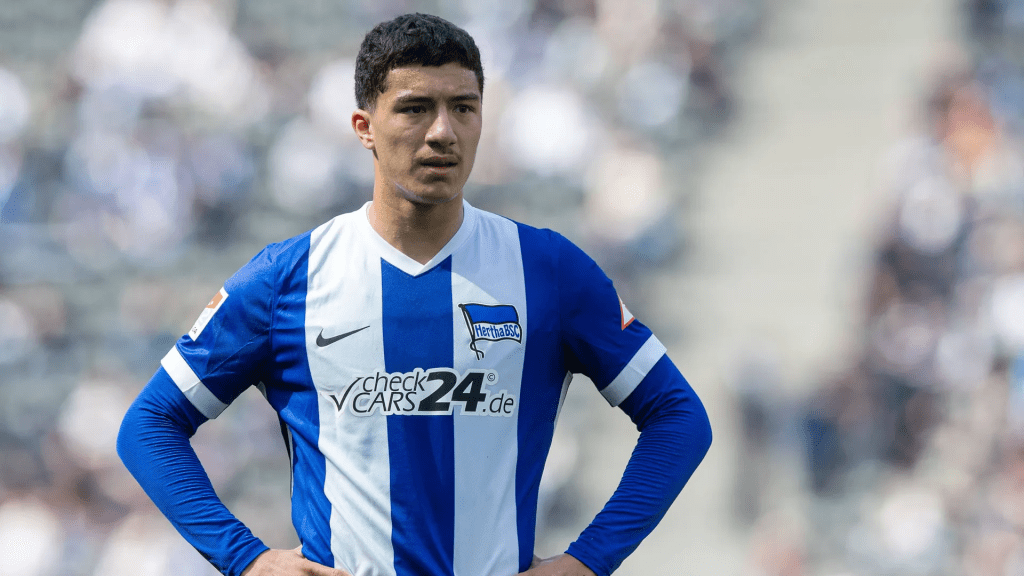
After emerging as one of the brightest young talents in Bundesliga 2, Hertha Berlin’s Ibrahim Maza has joined 2023/24 Bundesliga champions Bayer Leverkusen from next season.

The highly rated 19-year-old, enjoying an impressive campaign for the capital club, signed in at the BayArena until 2030, with reports suggesting Leverkusen will pay a fee of approximately €12million for Maza, who recorded five goals and 3 assists in 33 2. Bundesliga games last season.

As the vibrant summer transfer window commenced, Die Werkself found itself at a pivotal crossroads filled with anticipation and potential upheaval.

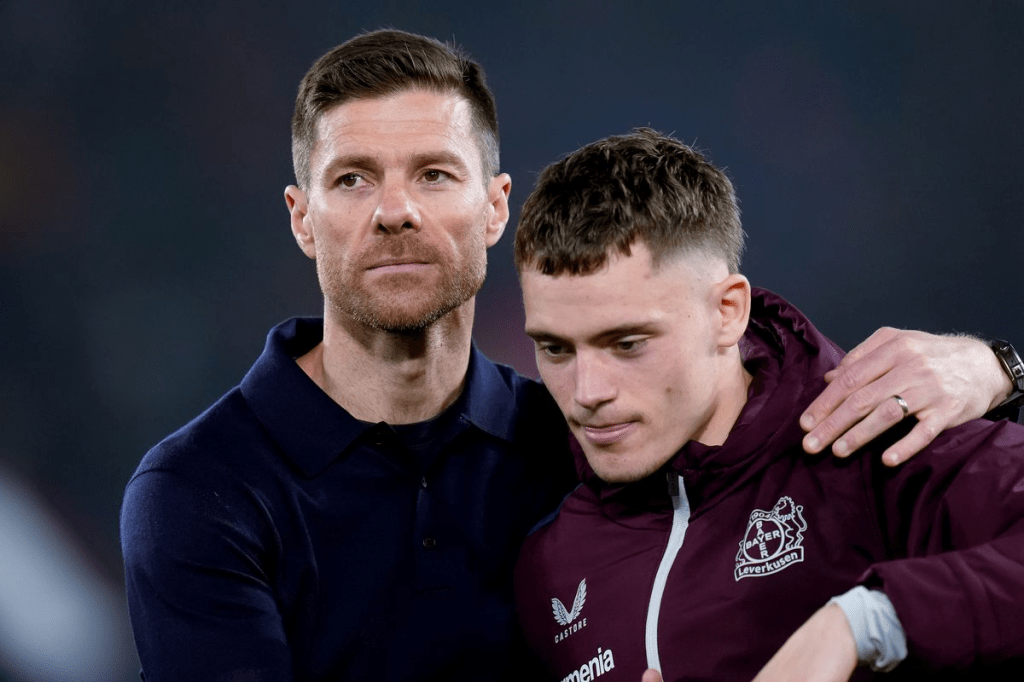
Former Leverkusen boss Xabi Alonso and superstar Florian Wirtz have formed a formidable player-manager partnership in the German Bundesliga, but have both departed the club this summer.

Manager Xabi Alonso, with his charismatic leadership and tactical acumen, left the Bay Arena to join the lofty heights of Real Madrid. Adding to the intrigue, seasoned defender Jonathan Tah, known for his commanding presence in the backline, and phenomenal young talent and star man, Florian Wirtz, who has dazzled fans with his unbridled creativity and goal-scoring prowess since his breakthrough in May 2020, have also exited to Bayern Munich and Liverpool, respectively.

In light of these departures that had unsettled the squad’s balance, the club took decisive and proactive action with their search for Alonso’s successor, with former Manchester United and Ajax coach Erik ten Hag taking the reins.

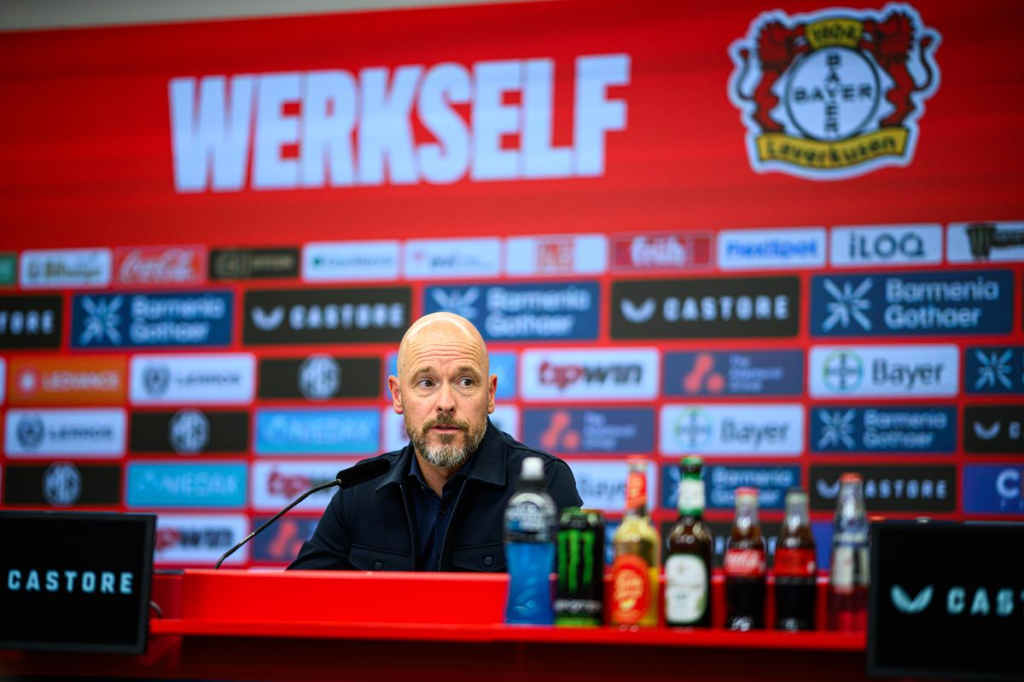
Erik ten Hag undertaking his first press conference as the new Bayer Leverkusen head coach

Maza is not only seen as an exciting market opportunity given his age profile and unique playmaking qualities, but also as a replacement for the departing Wirtz, whilst they also added PSV Eindhoven’s highly-rated midfielder Malik Tillman.

That may indeed seem like a tall order given the joy and success the German wonderkid had provided the Leverkusen faithful. Still, as history has shown, the club aren’t afraid to replace its superstars with young unknown quantities who will be handed the room and resources to grow, develop and become potential world-beaters in their own right, which is certainly what Wirtz had been moulded into.

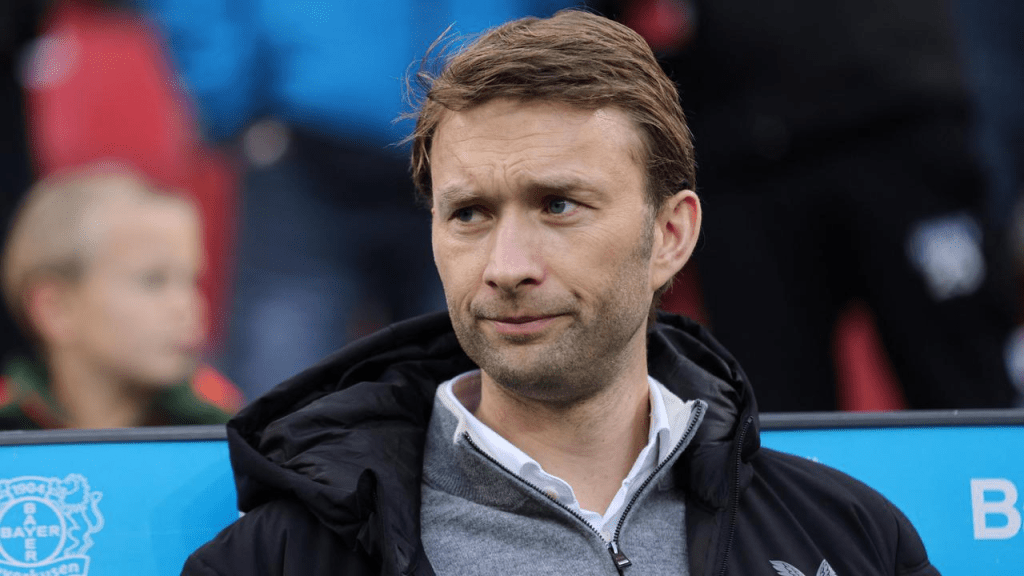
Bayer Leverkusen sporting director Simon Rolfes

The sad case is, Leverkusen are a selling club. They will mould these young talents, but also not stand in their way should an elite club come calling and the money is right.

That will almost certainly be Maza’s case in the next few years. The Algerian international possesses all the tools to reach the same calibre and level as his predecessor.

It’s no wonder Leverkusen pulled out all the stops to snap him up even before the summer transfer window opens, with the likes of Atletico Madrid and AC Milan also both reportedly tracking him.

Such a level of clubs tells you all you need to know about Maza’s qualities and potential, so let’s delve deeper into his origin, his style of play in Berlin, and his potential fit at the BayArena next season and beyond.

Who is Ibrahim Maza?

Born in Berlin, Germany, Maza is of Algerian and Vietnamese descent. Before becoming a midfield mainstay for Hertha, Maza was on the books of local side Reinickendorf Füchse.

It wasn’t long before the Alte Dame spotted him, and he joined the club’s academy at the age of 11.

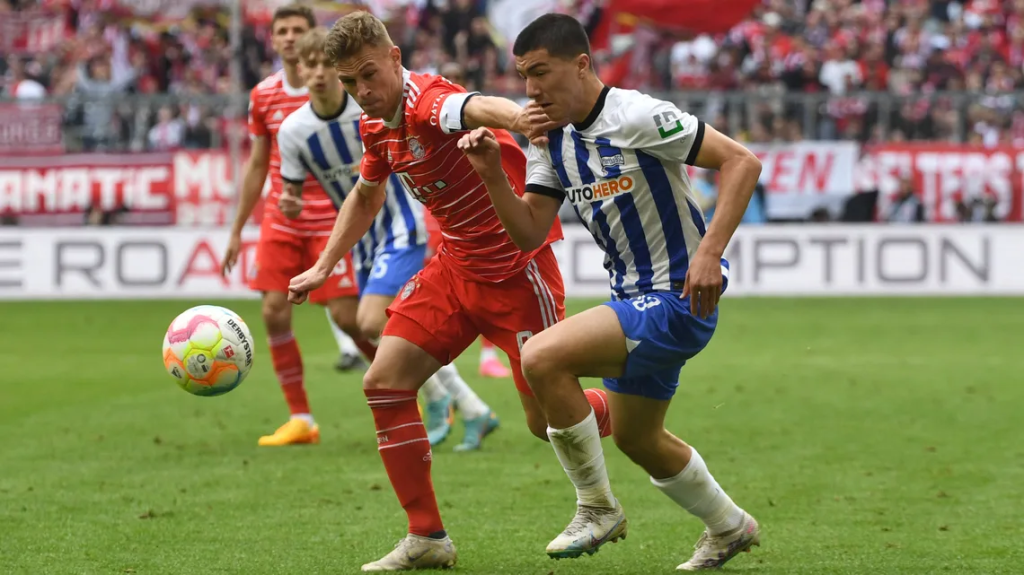
Six years later, Maza completed the transition from the park fields of Berlin to the bright lights of the Bundesliga, coming on as a late substitute against Bayern Munich at the end of the 2022/23 season.

A month later, the German-born wonderkid scored the first goal of his professional career, netting against VfL Wolfsburg on the last day of the Bundesliga season, becoming the club’s youngest goalscorer in its rich history, aged 17 years, six months and three days.

Hertha tasted their first relegation from the Bundesliga since the 2009/10 campaign in 2023, and Maza who was expected to be their shining light on a possible route back to the German top flight, struggled with a knee injury that forced him to miss over half the campaign before returning on Matchday 21 against Greuther Fürth.

The Algerian couldn’t get his footing in the Hertha first team since his return, which was expected. However, the 2024/25 campaign has proven a much different story. Maza has started all but one game of the 32 so far (due to suspension), registering five goals and three assists and currently eighth of all players in the division for individual duels, both in attack and defence.

Naturally, Maza’s quality caught the eye at international level as well as those in charge at Leverkusen. He represented Germany’s U18, U19 and U20 sides before pledging his allegiance to Algeria, his father’s homeland, given the difficult competition he faces from talents like Jamal Musiala, Florian Wirtz, and Paul Wanner, which may have influenced his decision. 

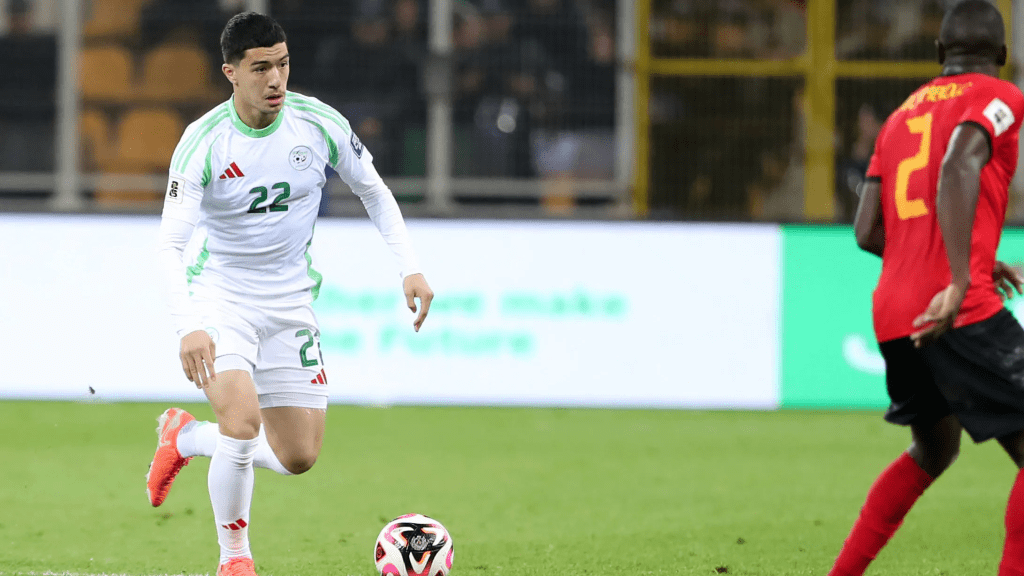
In October 2024, Maza was called up to the Algeria national football team for the first time for a pair of 2025 Africa Cup of Nations qualifiers against Togo, featuring alongside Riyad Mahrez and Bundesliga stars  Ramy Bensebaini, Farès Chaïbi and Mohamed Amoura.

As he embarks on this thrilling journey, it’s evident that Maza is on the brink of transforming into a household name in football. With an exhilarating move to Bayer Leverkusen anticipated in June, the path ahead is not just bright—it promises to be brilliant for this rising star.

How good is Ibrahim Maza? What’s his style of play?

Leverkusen’s swift pursuit and acquisition of Ibrahim Maza signal an ambition that transcends merely finding a potential successor to Florian Wirtz.

Maza embodies the youthful exuberance and electrifying skill that the club actively seeks in the transfer market. His playing style mirrors that of the German international, forging a partnership with the club that looks, on the surface, a perfect fit.

Much like Wirtz, Maza dazzles with extraordinary game-breaking abilities, showcasing a flair that can turn the tide of a match.

With his remarkable talent and skillset, he holds the potential to single-handedly clinch victories, making him a thrilling addition to the team’s dynamic.

Modern day #10 explanation

So, first and foremost, Maza is a number ten in every sense of the word.

A highly technical and creative orchestrator in the final third, embodying the unpredictability, creativity, and confidence typically associated with this role.

The role of a #10 has massively evolved in the modern game, and it’s much to do with such profiles becoming all-rounders in the middle third as well as a destructive and decisive force in the final third.

They are now tasked with working as hard off the ball as they do on it, but more crucially, not just doing their best work to create goal-scoring opportunities, but also facilitating play in build-up patterns and locating space within the full width of the pitch or in central pockets to disrupt an opponent’s high press or defensive block.

Football is increasingly resembling a game of chess, with coaches now placing much emphasis on positioning and tactical acumen to outmanoeuvre their opponents.

#10s have somewhat become a dying art in that respect. No longer do we have those profiles that do all their work creating magic in attack. If there are such profiles now, they are expected to work within the parameters of the team setup/collective rather than the individual.

Does Maza fit the modern-day bill?

In Maza’s case, he certainly fits these characteristics, not just taking on creative responsibilities in the final third but also playing with intensity, aggression and possessing a tremendous work ethic all across the pitch.

His defensive numbers throughout the 2024/25 campaign make for an impressive and surprising reading, somewhat.

Maza ranked in the 82nd percentile among attacking midfielders in 2.Bundesliga for defensive duels won as a percentage, and in the 65th percentile for aerial duels won as a percentage.

His defensive positioning rank is also good, ranking in the 63rd percentile.

The Algerian’s lowest-ranking metrics are goal contributions per 90 and accurate passing percentage of 78%, suggesting that his overall end product could well have been much better last season.

However, his strong showing in defensive and dribbling metrics, along with his output of 10 goals and assists, suggests that there is an exciting offensive talent who is also willing and capable of putting in the graft and hard work when his team does not have possession of the ball.

The Algerian international is a player with a great work ethic and dedication, but is also endowed with several exceptional, distinct qualities that have made him an attractive candidate for Bayer Leverkusen.

Ball-Carrying and Dribbling

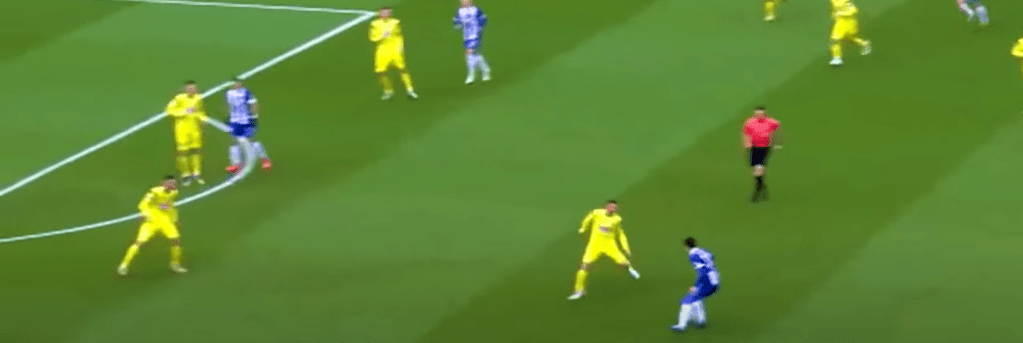
Maza is a player who primarily stands out for his fine technical acumen. This is prominently featured in his ball carrying, where the soon-to-be Leverkusen superstar showcases an exceptional ability to retain tight control & slick technical shifts at high speeds.

When the Algerian pierces through opposition defences with his incredible close control and acceleration, it is simply an exceptional sight to behold, and that is down to his ability to withstand contact and maintain balance while at high speed, but also create separation quickly and precisely.

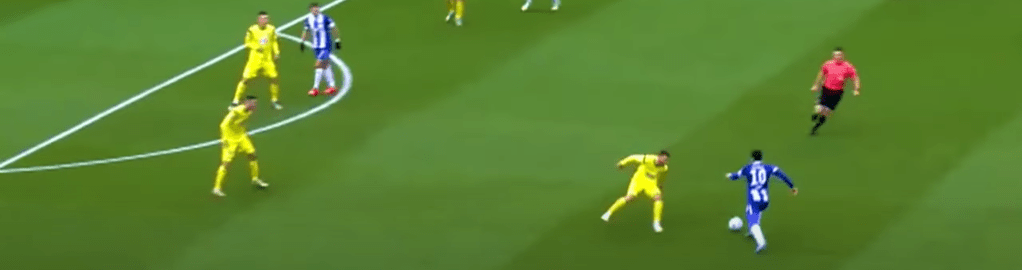
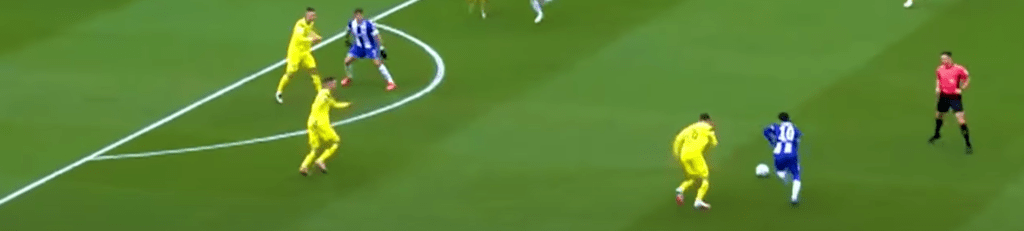
The above clips paint a perfect picture of what Maza is about. Even in the tightest of situations, every touch from the Algerian wonderkid is meticulous, carefully considered and with clear intention.

For example, in the first of the two clips, he allows the ball to come across to his right foot because he is aware that if he controls it with his left, it will get intercepted by the nearby defender.

In the same swell movement, he shifts the ball behind him and then beats a second man with a close dribble, taking two players out of the game in the span of two seconds before moving into the open space and attempting a lob pass to his teammate in the box, which comes to nothing.

The second clip showcases Maza’s exceptional change of direction even when in tight spaces or when pressed by the opposition. He possesses tremendous athleticism, flexibility and turning radius when dribbling in the most impossible scenarios.

He controls the ball and brings it onto his right foot, but realises two Greuther Fürth players are also converging in that direction. Maza then cleverly manages to turn just as the nearby marker attempts to move in and intercept the ball from him, using his body and right foot well to spin around him and not only get himself out of danger, but to get the ball moving forward towards the attacking half again.

Such scenarios showcase Maza’s unique ability to problem solve under pressure, similar to the man he is replacing in Florian Wirtz. While it’s important to give these profile of players tactical discipline, it’s just as crucial to allow them freedom of expression, especially when operating in central areas.

Possessing unpredictability and creativity within a tactical framework is essential.

For instance, if a team is able to read and understand what Erik ten Hag is trying to implement tactically for Bayer Leverkusen in a match, having a player like Ibrahim Maza—who possesses skill, elegance, and the ability to deceive and outmanoeuvre defenders with his exceptional close control, unpredictable movements, and quick decision-making—can be a game-changer.

With this kind of brilliance on the pitch, teams will undoubtedly find themselves at a loss when faced with this dynamic play, making them a formidable force that is difficult to defend against.

This dynamic is why elite clubs across Europe are fervently acquiring players of this calibre—those who can navigate out of tight situations and take charge in creating opportunities, whether for themselves or their teammates.

Look at Manchester United’s signing of Matheus Cunha, Liverpool’s acquisition of Wirtz from Leverkusen, and Manchester City’s talent grabs of Rayan Cherki and Tijani Reijnders from Lyon and AC Milan, respectively. Not to mention Real Madrid’s capture of the South American wonderkid Franco Mastantuono.

These players embody the future of football, masterfully balancing tactical discipline with spontaneous bursts of brilliance. They can not only operate within a structured game plan but also transform the flow of the match with their creativity and unpredictable nature. It’s this unique combination that makes them invaluable assets to their teams and forces opponents to rethink their strategies. Investing in such silky players has already redefined the game as we know it.

Maza is certainly a profile in that mould. The Algerian recorded a dribble success rate of 55% in the 2.Bundesliga last season, and ranked third in the division for dribbles with a rate of 2.3 per game [WhoScored].

Again, the below set of clips certainly highlights as much.

In the first clip against FC Koln, the Algerian’s intelligence in where to pick up the ball in the half-space and drive up the pitch is evident. He offers himself as a progressive passing option for his defender in the deep build-up phase.

As the pass is played towards him, his nearest opponent at the top of the pitch senses an opportunity to nick the ball off him as it comes to his feet, but Maza cleverly utilises his exceptional and swift change of direction to allow the ball to run across his body, deceiving his opponent, thus allowing him to advance into the opposition half and carry the ball forward.

Ball-striking

The second clip, against Ulm, showcases his tremendous ball-striking abilities.

But again, it’s his intelligence of where to receive the pass, his boldness in taking responsibility to create chances or goalscoring scenarios. He receives the pass from his teammate, initially controlling it with his left before switching it back to his right as the defender approaches to cover him.

With the swift turn and change of direction, he takes him out of the equation before unleashing a fierce strike into the back of the net.

While Maza’s dribbling abilities are the focal point of his unique weaponry, his ability to strike a ball clean from long range should certainly be taken into account, also.

The goal against Ulm, as pointed out above, is the perfect example of both attributes coming to the fore in one swell move.

Once he receives the ball, his only thought in mind is to get in the best position to shoot, and he performs that with such class and panache.

The Algerian is tremendous at creating separation due to his speed of thought and quickness of feet.

Once he receives the pass, his opponent believes he’s got him where he wants, but Maza’s first touch is pure deception, touching it the opposite way his body is positioned, giving the opponent absolutely no chance of halting his progress.

What truly sets Maza apart, however, is his remarkable proficiency in taking shots almost immediately after a dribble, which is seen in the above goal.

He seamlessly transitions from manoeuvring around defenders to unleashing a powerful strike on goal, often before the goalkeeper can react. The combination of speed and precision in his shooting is a rare talent. Such skills are seldom found among players, especially on the continent.

Such a skill found in Maza will be beneficial to Leverkusen and Ten Hag. When they are faced with teams not giving much away in terms of chances, having a player capable of bending a game to his will because of his long-range shooting is sure to be a tremendous luxury.

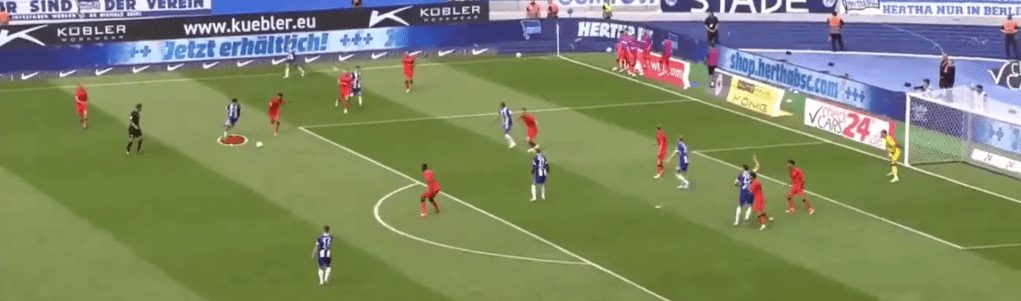
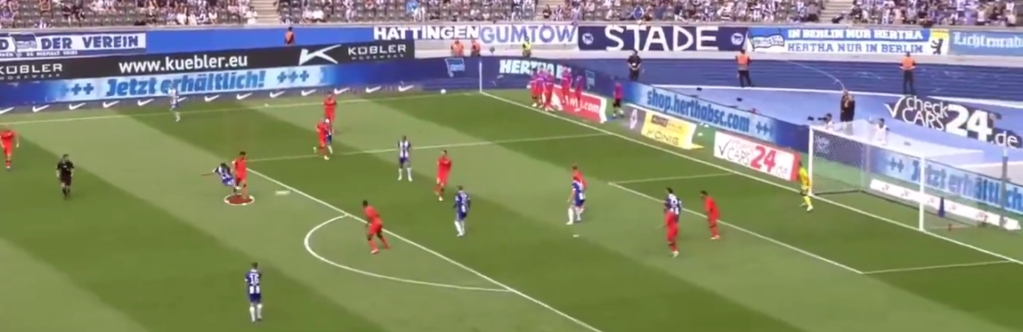
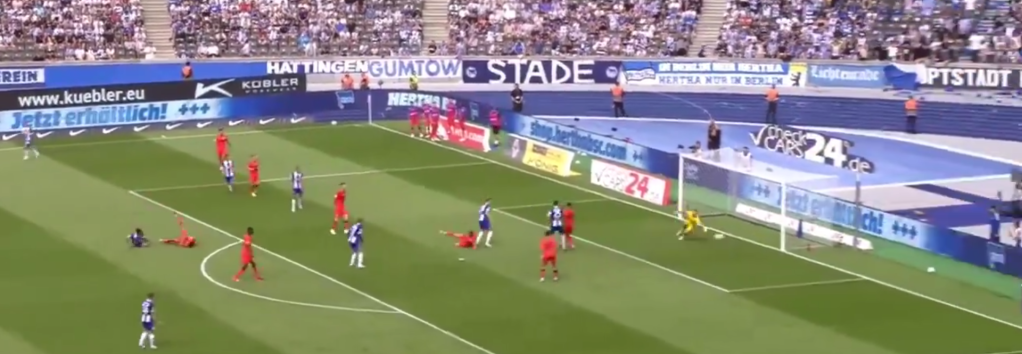
Another example of his long-range shooting was his goal against Paderborn at home.

Once again, Maza allowed the pass to come across his body, which allows him to begin his turn early while creating enough separation from the nearby defender.

He cuts infield on his strong foot and places a low strike into the bottom corner from just outside the penalty area.

Maza demonstrates a natural instinct in these situations, rarely hesitating or overthinking his options, which enables him to strike the ball with confidence and precision.

Well-timed off-ball movement/Box-Crashing

Despite all this, Maza isn’t just blessed with ingenuity outside the box, though. The Algerian wonderkid also possesses the presence of mind at times to ghost into the penalty area and wreak havoc.

If he continues to hone this crucial and unique element of his play, he could very well rise to the level of Frank Lampard, becoming a master of the elusive late-arriving runs into the box.

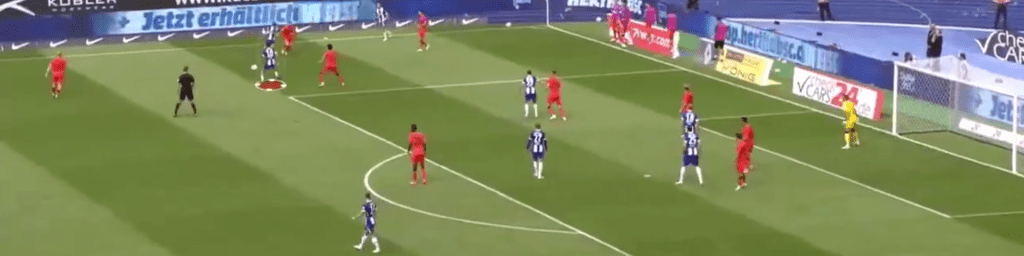
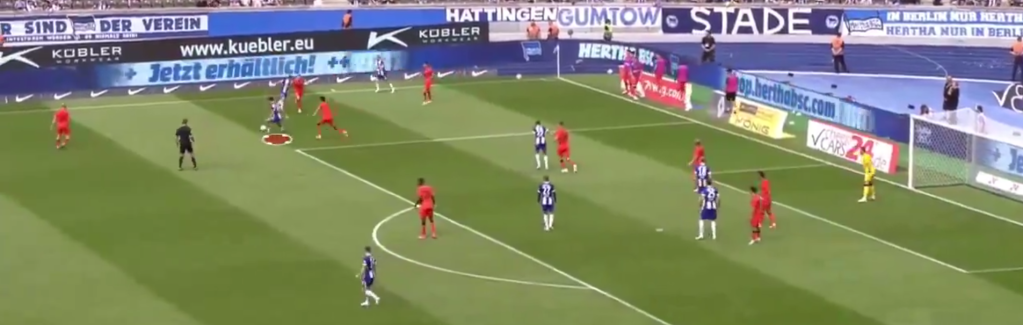
Once again, we see Maza tremendously making the ball do the work, receiving the throw-in on the half-turn, allowing the ball to run across his body and fooling his marker to create some separation…

The Algerian continues his run across the width of the 18-yard box…

…before finding his teammate deep in the half-space {BLUE}…

Following the pass, Maza then ghosts into the penalty area, demanding the return pass…

He receives the pass right into his path in the penalty area…

…before taking the first time shot from a tight angle into the bottom corner…

A goal which epitomises Maza’s invention and imagination in the final third. He is a penetrative outlet, always looking to identify the best zones or areas in the attacking third to cause the opposition harm.

Furthermore, his off-ball movement is nothing short of exceptional; with a blend of agility and intelligence, he deftly navigates through the opposition’s defenders.

Maza possesses an uncanny ability to spot and exploit gaps in the defensive line, weaving through opponents with finesse and agility. His sharp awareness of his surroundings creates a wealth of opportunities for his teammates, leaving defenders in a constant state of uncertainty. With remarkable precision, he times his runs impeccably, ensuring he occupies the ideal position just as the play unfolds.

The Algerian maestro acts like a chameleon in these situations. He becomes involved in the play during the final third, blending in with the action before suddenly bursting into space beyond the defensive line to take a shot or create a chance for a teammate.

The instance above is a perfect example of his ability to ghost in behind midfield or defensive lines to exploit gaps, but there are certainly more ways in which Maza can cut through defences.

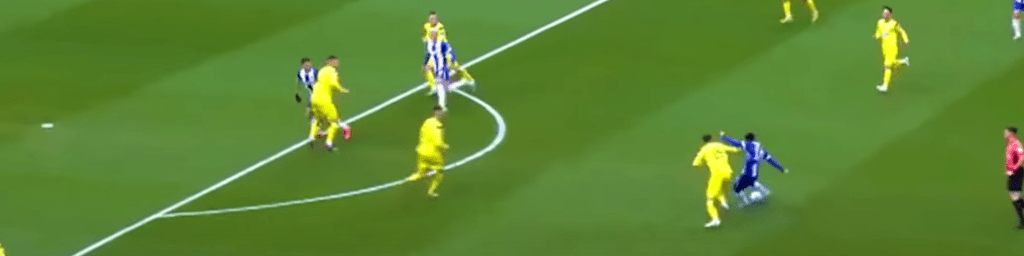
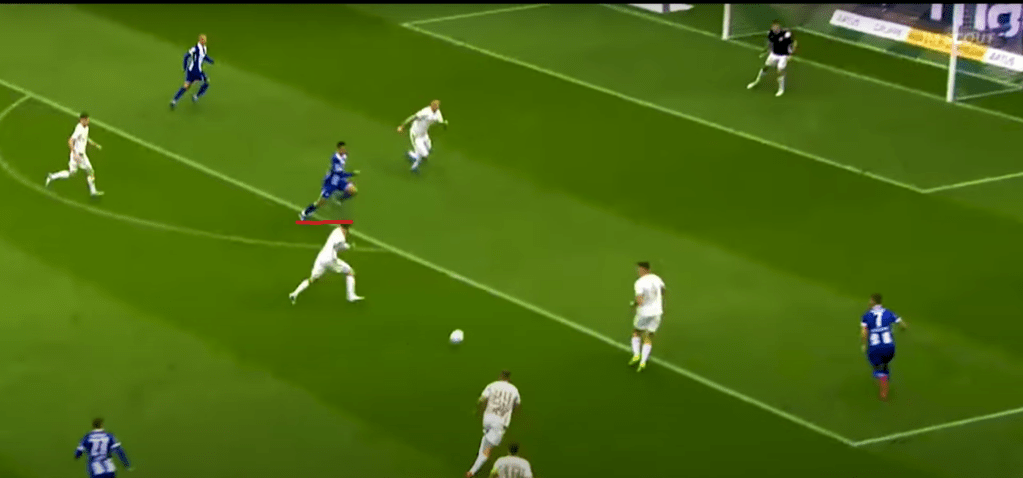
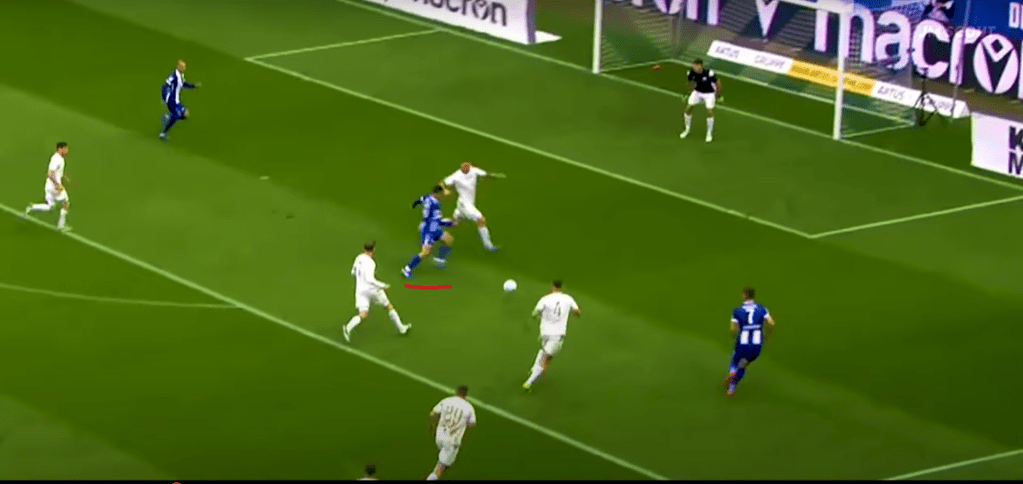
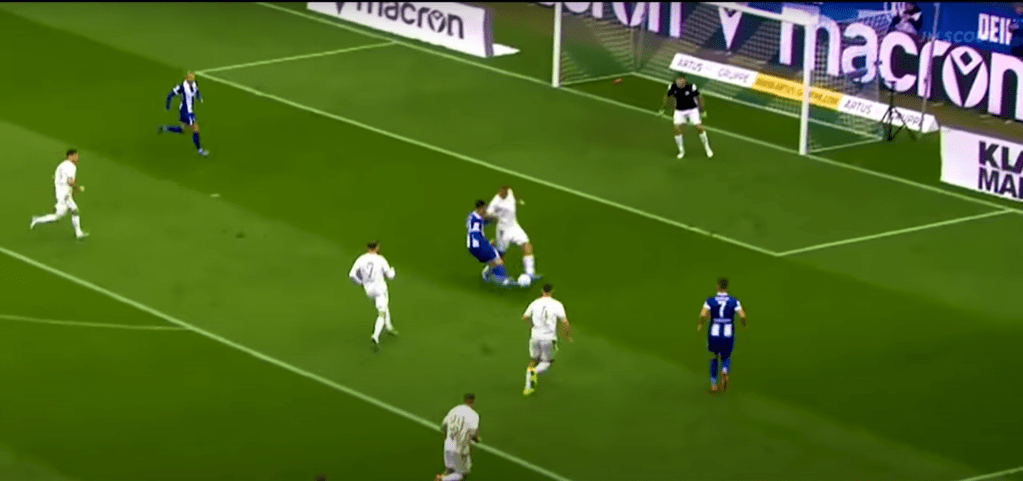
In the image below, Maza swiftly runs into the penalty area onto a lovely through ball. However, the situation looks difficult in order to get a shot off…

… not for Maza, though.

The Algerian anticipates the onrushing defender on his blindside, getting a shot off first time, albeit colliding with his opponent.

However, Maza still gets a toe on the ball, directing it past the goalkeeper into the bottom corner.

The Algerian always seems to have that small yard of pace on his opponents, and that is all down to his excellent quickness and explosive edge, but more crucially, his anticipation and problem-solving, especially when in tight spaces or under pressure.

Tight-space manipulation/ball-retention under pressure

Despite his slight build and unassuming height of 1.80 meters, Maza demonstrates remarkable strength and agility in retaining possession and maintaining balance under pressure from opponents.

While he needs to continue developing physically to meet the demands of senior football, especially at a prominent club like Bayer Leverkusen, he should be cautious about gaining excessive muscle mass.

Sacrificing his exceptional balance and nimble movement could hinder the unique qualities that make him effective in tight spaces.

What sets him apart from his peers is his unpredictability, marked by superb quick changes of direction and subtle body feints when pressured.

If he were to bulk up significantly in an attempt to adapt to the physical demands of his new environment, he risks losing the very attributes that make him such a unique asset.

As stated previously, the Berlin-born playmaker is so smooth and deceptive when operating under pressure. His subtle feints, swift changes of direction, and exceptional ball control are so reminiscent of his predecessor, Florian Wirtz.

A brief observation of Ibrahim Maza’s playing style reveals exactly why Leverkusen was so eager to secure his signature once it became clear that Wirtz would be departing the BayArena.

Both players excel in the #10 role, weaving intricate plays and orchestrating the attack with a finesse that captivates fans and dumbfounds defenders.

In the image below, two opponents fall victim to Maza’s intricacy and superb deception in small spaces.

Maza initially takes a ball down from the air into his control and is immediately surrounded by two opponents…

The Algerian is certainly aware of the threat behind him and proceeds to evade the pressure without any fuss.

He controls the ball with his outstep, shielding from the opponent on his blind side…

…before performing a smooth pirouette, faking to go one way but having the speed of thought and presence of mind under pressure to go the other, deceiving his opponent expertly.

Maza leaves him on the floor as a result and then speeds away from the second defender with consummate ease.

In another instance, Maza receives a square pass from his teammate with an opponent converging in on him…

…but again, it is not a problem for the Algerian wizard as he allows the ball to roll across his body…

…then smoothly rolls the ball in via his right foot in perfect tandem with his body positioning around his opponent before speeding away into the final third.

Maza isn’t just a high-tempo ball carrier with technical finesse; he also possesses exceptional agility and an extraordinary ability to turn sharply and smoothly, especially when pressed.

Another example, once again, highlights his sensational ability to manipulate defenders to evade tight situations and advance up the pitch with excellent confidence. But this time, with his back to goal.

His nimble body shifts allow him to effortlessly create space from defenders. This time, Maza receives the ball but pushes the ball forward while feinting to go one side.

As the defender approaches closely, Maza skilfully puts his right foot over the ball and drags it to his opposite side, turning and deceiving the defender.

His quick acceleration enables him to maintain that separation, leaving opponents trailing behind as seen in the images above.

However, Maza still has considerable room for improvement in his body positioning when receiving possession. He often adopts a closed stance at times, which forces him to play back into pressure or take his first touch toward the direction from which he received the ball.

He will favour his dominant side over his non-dominant, which we know he can perform, given his tremendous flexibility and body deception. At times, that stops him from getting a full view of proceedings…

For example, in the image below, he receives the ball from his teammate with an opponent converging behind him..

Rather than performing a full swivel via a drop of the shoulder to open up angles, he takes his first touch in the direction of where he receives it, halting him from progressing the play. He gets dispossessed as a result.

Final third responsibilities/output

Nonetheless, Maza’s silky smooth operation in tight spaces, quickness of thought and invention under pressure made him a crucial tool for Hertha Berlin last season.

If not for it, the capital club could well have been in the midst of an arduous relegation battle – although they did finish the season nine points from the relegation play-offs.

Had it not been for the Algerian and a few of his attacking teammates, such as Fabian Reese, Michaël Cuisance and Derry Scherchant, it could well have been a completely different story for Die Alte Dame.

Maza celebrates a goal with Hertha Berlin’s second top-scorer last season, Derry Scherhant.

Given the attacking quality around him, Maza certainly took creative responsibility last season, and the numbers certainly reflect that.

Maza recorded three assists, created nearly ten big chances, and averaged 1.5 key passes per game [SofaScore]. However, it’s the way in which he carried himself about the pitch that certainly made him the creative hub of Stefan Leitl’s side.

Despite his age, he demonstrates a remarkable ability to take personal responsibility for influencing matches, especially considering he was performing for one of the most historic clubs in Germany.

At times, it was down to the positions he picked up in the final third, for which you could immediately tell he knew he was the main man.

For example, in the image below, Maza picks up a crucial position in front of Fortuna Düsseldorf’s defence and smack bang in the centre of their dissected low block.

The Algerian, once again, possesses that presence of mind and the positional intelligence to pick out a pocket of space he feels can hurt the opposition.

Even if the opponents on either side quickly converge on him, he possesses the ability to turn on a sixpence…

… and either beat his man, find a pass or get a shot off.

He chooses the latter, which hits the post.

But, it’s a perfect example of his intelligence in finding the right pockets and having the maturity to take responsibility to create goalscoring opportunities/scenarios.

There’s also the unique facet of his teammates having that knowledge that if they get the ball to Maza, even in pressurised scenarios, he will create something out of nothing.

Maza [ORANGE] is still given the ball here by his teammate, despite being surrounded by three opponents…

…but such is the Maza trademark when under pressure…

…he allows the ball to roll across his body, immediately taking two defenders out of proceedings.

And, look where he drives the ball to, deep into the opponent’s defensive third, but things don’t end there…

… he waits for his teammate [RED] to run into the box, but has two defenders surrounding him once more. Again, it’s not a problem for the Algerian.

He manages to cut inside onto his right foot, looking for the pass…

…which he executes to perfection, providing an assist for his teammate who finishes the move off.

This goal is a true reflection of the trust and confidence Maza’s teammates had in him, giving him possession in a tight area and trusting him to work his magic, which the Algerian delivers to such tremendous aplomb.

Defensive output

What will always mark Maza out from his peers is the sheer athleticism and intensity with which he performs. He simply doesn’t stop running, and that is certainly evident in his defensive contributions.

Arguably, the most improved area of his game over the last year or so has indeed been defending his own goal, showcasing tremendous dedication and commitment to pressing, disrupting opposition build-up and dispossessing opponents as a result of his incredible intensity and ability to cover ground to remarkable effect.

In the 2.Bundesliga last season, Maza averaged a whopping 1.9 tackles, 0.5 interceptions, and 3.9 balls recovered per game, whilst also winning 54% of his ground duels.

While it’s not the most outstanding numbers, it still certainly represents his superb effort and application in trying to win the ball back for his team.

In the scenario below, the opponent receiving the ball from his goalkeeper feels he has time to get rid before Maza gets near…

The defender even shapes his body positioning to kick the ball long, with Maza still converging on him.

The defender eventually takes too long and allows complacency to get the best of him, for which Maza nicks the ball…

From there, Maza is able to create a goalscoring scenario for his teammate. And, it’s all down to his excellent commitment and application, chasing down a lost cause for the team.

Areas for Improvement

Set-pieces/crossing

One area Maza should address, most especially given his penchant for taking responsibility, is his crossing and set-piece deliveries.

He certainly boasts an impressive technical skill set, but his crossing and set-piece delivery leave much to be desired. He frequently overhits crosses or underhits them into low-impact positions when targeting teammates in good positions in the penalty area. Last season, he recorded a 15% success rate from his crossing, highlighting the need for significant improvement.

It’s unclear where Bayer Leverkusen & Ten Hag plan to utilise him for the forthcoming campaign, whether he will be deployed as a winger or a half-space occupying #10. If it is the former, his deliveries will certainly need addressing.

Constant dropping into low-impact areas

Another area Maza will need to improve or address is his knack for dropping deep when it’s not necessary.
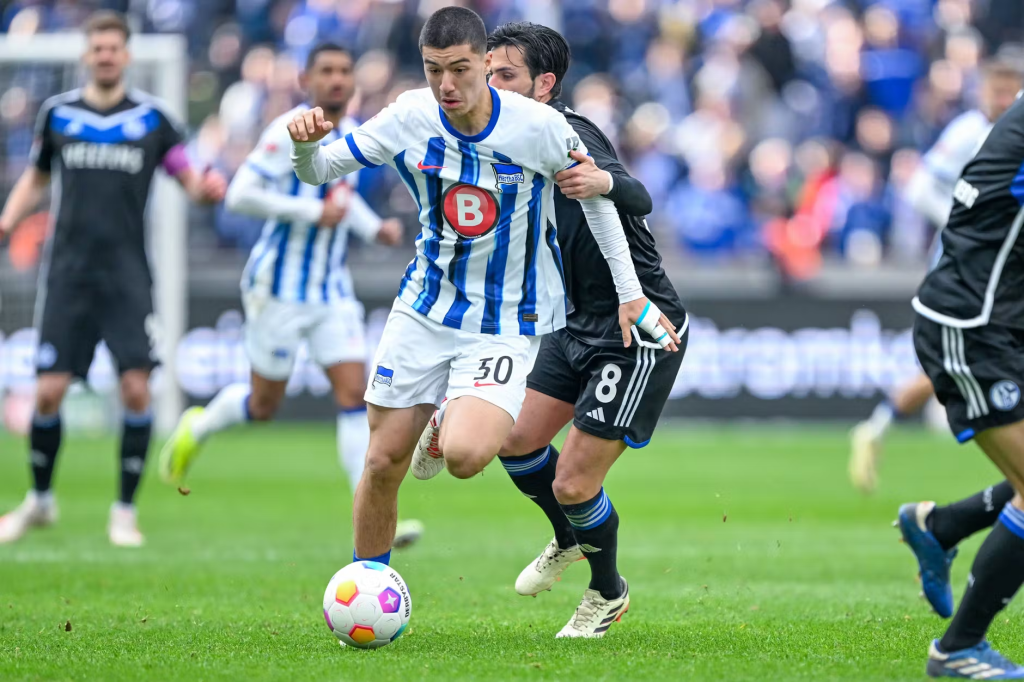
Maza’s constant desire to impact the game is commendable, but this assertiveness and over-exuberance can sometimes work against him.
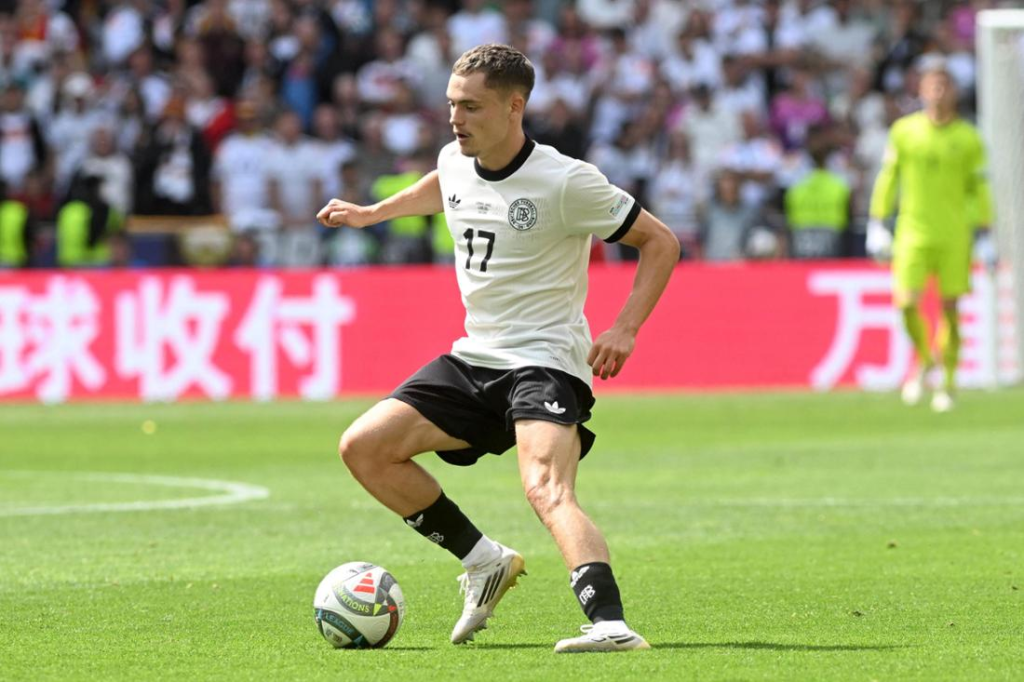
He often displays a lack of patience when waiting to receive possession, causing him to drop into deeper positions or drift wide to get on the ball. Unfortunately, this tendency leads him into low-impact areas of the pitch, where he is less able to influence the game effectively. 
It’s challenging to distinguish whether Maza’s positioning at times is a result of a personal decision or a tactical directive from the coaching staff, but it’s evident that he has the greatest influence when receiving the ball in half-spaces or central channels in the final third.
It is a strong tendency of his that will certainly have to be coached out of him. He will be performing in a tougher league this season where teams are more tactically advanced and aware, so he will certainly need to choose his moments carefully when to get involved in the deep-to-middle phase of build-up.

Composure in possession

Furthermore, another area of improvement is his composure in possession.

We’ve highlighted his incredible operation in tight spaces and unique imagination, and keenness in the final third, and while Maza’s extreme verticality and creativity make him a really unique prospect, his decision-making can still be erratic and as stated previously, overexuberant.

He often resorts to unnecessary one-touch passes under pressure or attempts overly ambitious creative passes, which can disrupt good attacking patterns.

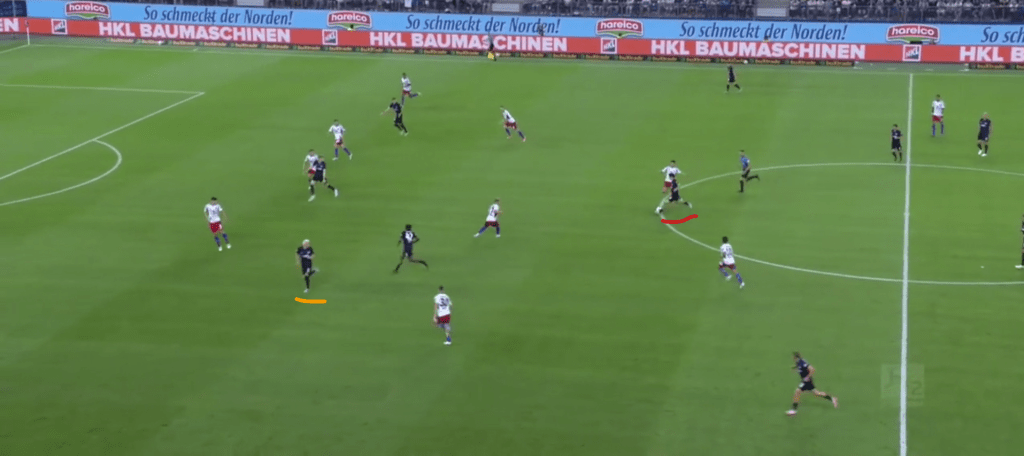
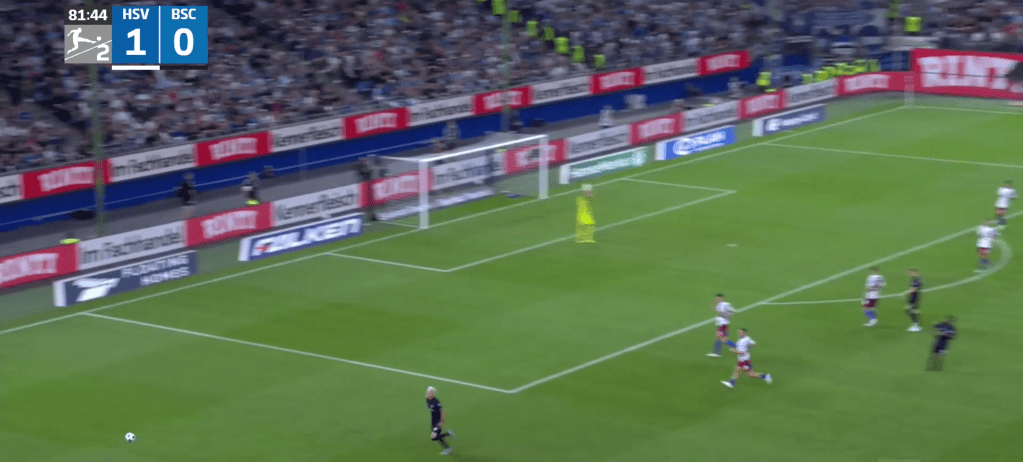
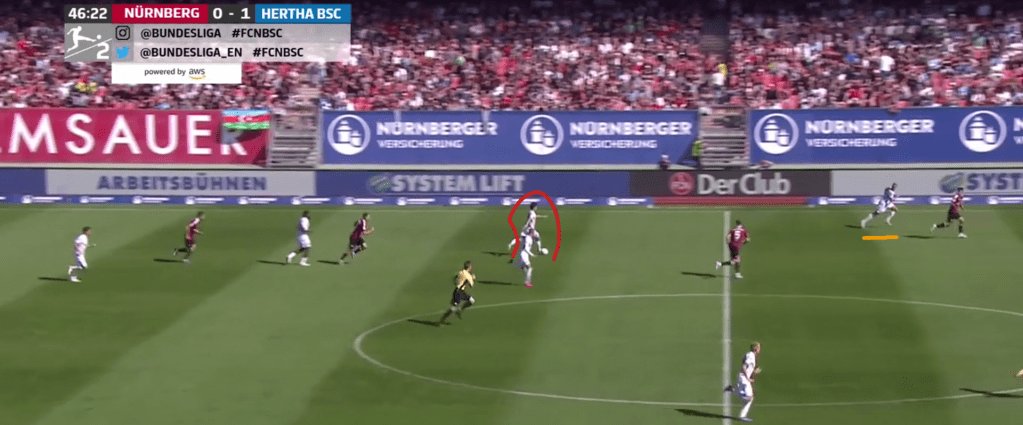
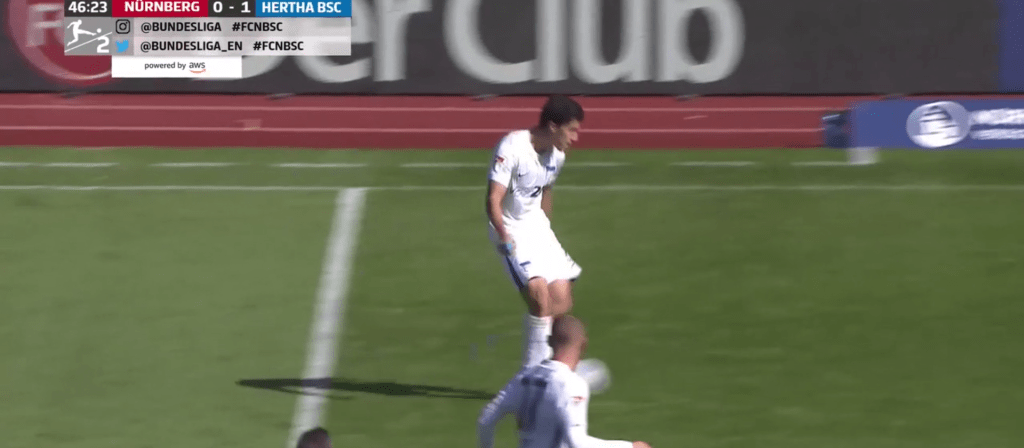
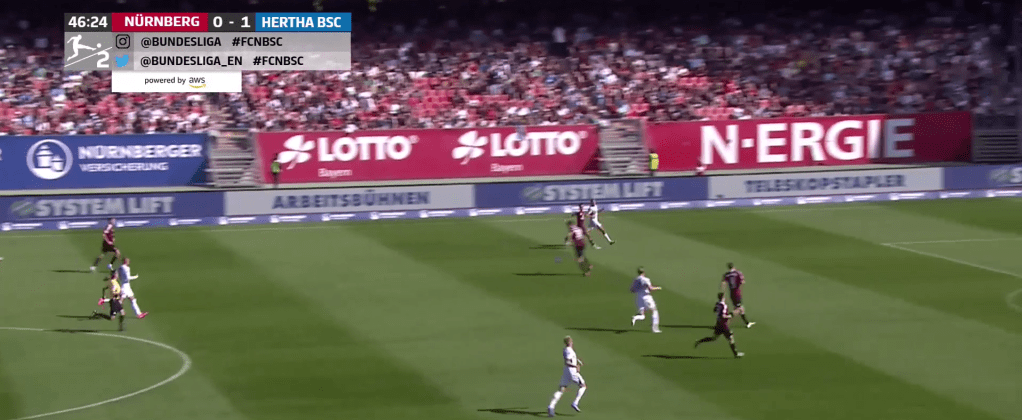
For example, in the image below, Hertha are a goal down with under 10 minutes left on the clock. Maza is in a good position with a full lay of the final third ahead of him…

Instead of driving forward with the ball at his feet, as we’ve seen he can do, to gain a better perspective of the sequence ahead, he attempts an audacious lobbed through ball to the player on the left…

…but he overhits it and the ball goes out for a throw-in, ruining a very opportune scenario for Hertha to score an equaliser.

In another scenario, Maza finds himself in a promising attacking transition…

…and attempts to play a chipped through ball to his teammate [ORANGE] who is on the run beyond his full back marker and the opponent’s defensive line…

…but the pass is underhit, nowhere near its intended target and easily cut out by the retreating centre-back…

Rather than driving with the ball to commit defenders and open up space for his teammates, or better yet, slow the game down to gain greater control, Maza is once again overambitious with his approach, which halts a very good attacking opportunity.

These moments of over-eagerness highlight areas where Maza will need to make significant improvements at Bayer Leverkusen, in order to maximise his considerable potential.

Forecasting Maza’s Immediate Future

Ibrahim Maza is certainly one of the most exciting young attacking talents to emerge from the German youth football system in recent years, and he will finally get to showcase his talent on the big stage next season as a Bayer Leverkusen player.

Leverkusen are going through a transition phase right now, with new manager Ten Hag replacing Alonso, and Wirtz joining Liverpool in the Premier League. The comparisons between the two are there, and while it’s way too early to make such judgements, the 2024 German champions certainly did sign him alongside Tillman, so the creative responsibilities in Wirtz’s absence will be keenly felt.

Maza only featured in his first pre-season game for the club during their 2-0 win over VfL Bochum on 27 July, a cameo role from the bench, and his first start on 1 August against Fortuna Sittard, so it may take some time for him to establish himself as a first XI regular.

How he’ll fare making the step up to the Bundesliga remains to be seen, but the potential is there, given his diverse and unique offensive attributes, including his dribbling, passing range, and ability to score from long range.

It is essential for Bayer Leverkusen fans to give Maza the time he needs to settle into his new environment and adapt to the roles and responsibilities assigned to him by Ten Hag.

With Leverkusen’s state-of-the-art training facilities, which are designed to hone the skills of emerging talents, Maza will have access to everything necessary for his development.

The vibrant, competitive atmosphere within the team is known for fostering growth among young players. Given these exceptional circumstances, it is highly likely that Maza will not only adjust quickly but will also establish himself as one of the club’s most valuable assets, proving to be one of their best investments in recent memory.

Watch this space.


#AnthonyScouts 2022 – Joško Gvardiol

#AnthonyScouts 2022 – Joško Gvardiol

Croatia has been a decorated hub for some of the world’s most prestigious and classy footballing talents. The 2018 World Cup finalists have been excellent in producing world-class players consistently. Luka Modric, Matteo Kovacic, Marcelo Brozovic, Ivan Perisic and Ivan Rakitic are some of the most heralded names of this generation.

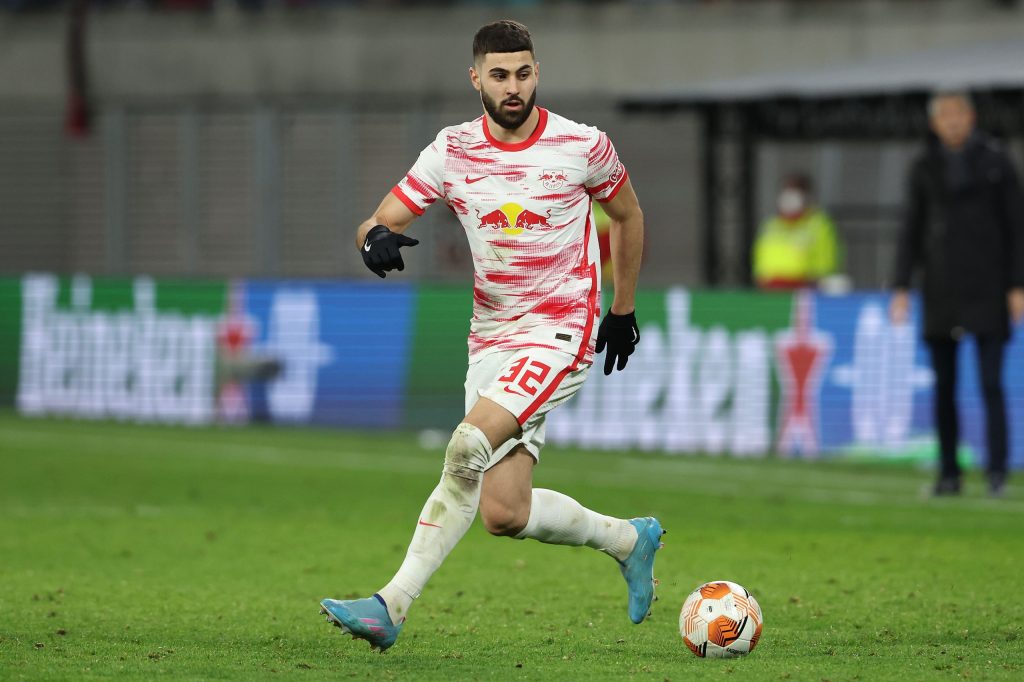
Their talent hub isn’t showing any signs of slowing down too with the likes of Lovro Majer and Luka Sucic placing themselves as two of Croatia’s most exciting young stars. But arguably the biggest and most brightest of the lot, already garnering much attention and plaudits for his abilities and performances is RB Leipzig’s Josko Gvardiol.

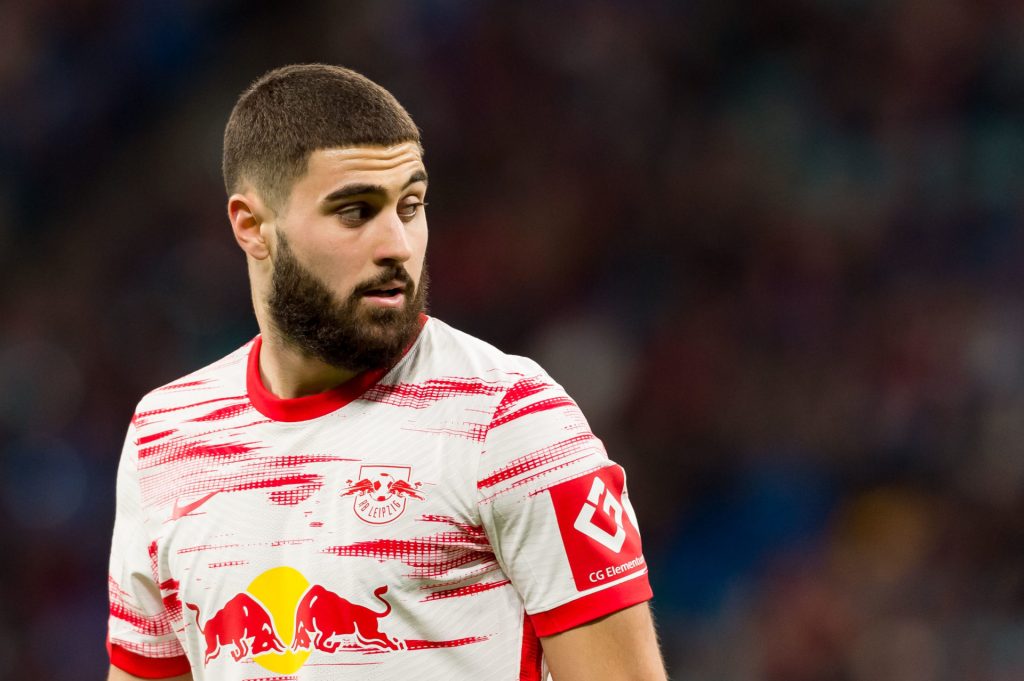
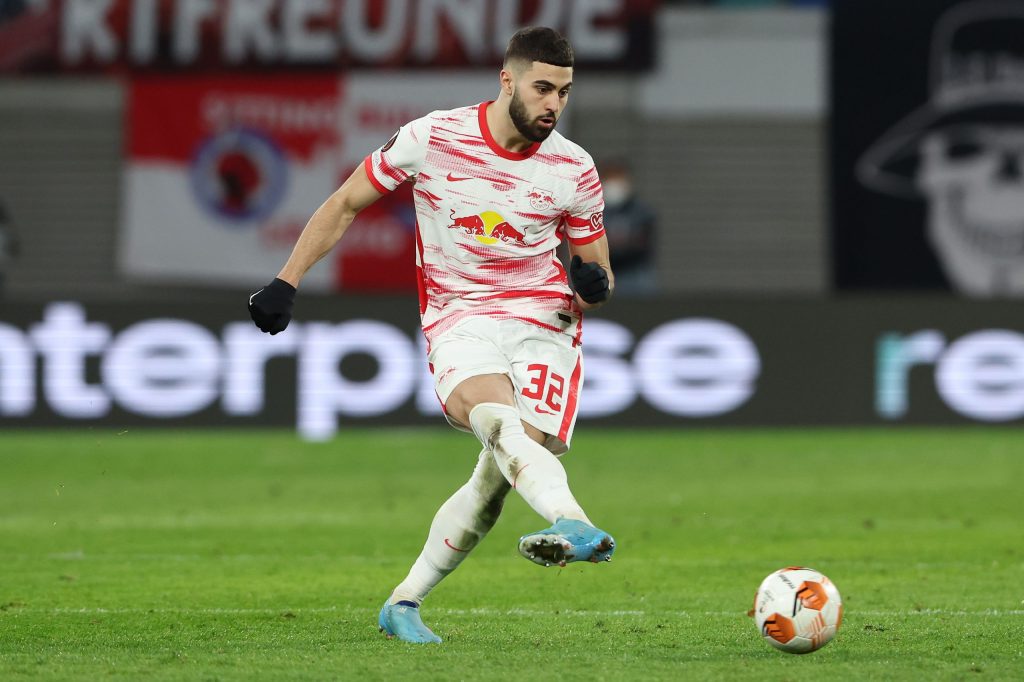
(Photo by Nico Paetzel/vi/DeFodi Images via Getty Images)

Even though he’s only just completed his first full campaign in one of the major European leagues, he is already one of the most in-demand young defenders on the continent.

The centre-back colossus is just 20-years-old but is already an established player for club and country. Gvardiol has been excellent ever since bursting onto the scene with Dinamo Zagreb in 2019.

The past few months have already seen him linked with some of Europe’s most prestigious names, with Chelsea showing a strong interest before the summer window’s conclusion. With his current deal at Leipzig now taking him right down to 2027, he certainly won’t come cheap and considering his stunning potential and importance to their cause, his potential hefty price tag seems justified.

So how has Gvardiol gotten to this position?

Who is Joško Gvardiol?

The 6’1″ defender started out at NK Tresnjevka as a seven-year-old, where he was taken by his father Tihomir, an amateur footballer himself. A year later in 2010, Croatian giants Dinamo came calling, and he stayed there for over a decade until his switch to Leipzig in summer 2021.

Over the course of the 2018/19 season, 17-year-old Gvardiol helped Dinamo to the UEFA Youth League quarter-finals – where they lost on penalties to English side Chelsea – and lifted the Croatian youth league title.

He was then promoted to the second team the following campaign but, after making just two appearances, was promptly called up for first-team duty and made his Zagreb debut in October 2019. Having represented Croatia since starting out with the U14s in 2016, Gvardiol also made his U21 debut a month later against Lithuania.

Gvardiol – named as one of The Guardian‘s 60 Next Generation European footballers ahead of the 2019/20 campaign – featured in a total of 11 times in the league the season before last as Dinamo clinched the title. He also got his first taste of UEFA Champions League football at the start of 2020/21, with two qualifying matches as Zagreb were knocked out in the third round by Ferencvaros.

His move to Leipzig in July 2021 seems the perfect one for his development, and his debut season in Germany was a sensational one, the youngster seamlessly adapting to life at the top level and swiftly securing a regular spot in the Leipzig line-up under previous manager Jesse Marsch. In total he made 29 Bundesliga appearances, scoring twice, while he also featured a further 17 times across the UEFA Champions League, Europa League and DFB Cup.

Head coach Domenico Tedesco previously hailed the centre-back’s “mental strength” as among his chief attributes, while he also became a deserved full Croatia international over the course of last season, going on to make 10 caps for his nation at the time of writing.

What’s so special Gvardiol? Why is he highly-coveted?

Gvardiol is really the complete package of a modern day centre-half.

His ability to progress the ball, range of passing, excellent carrying and dribbling skills, no-nonsense tenaciousness, and fantastic 1v1 defending, among other traits, make Joško one of the best young centre-backs in the world, and one of the best defenders in the Bundesliga, full stop.

The most intriguing and unique aspect of Gvardiol is that he is a left-footed centre-back, and a truly decorated one at that. Those are very rare to find in the modern game, and when a team does possess one, you’d easily spot why they are so crucial in a team’s tactical setup both positionally and in possession.

The role of a centre-back has evolved significantly over recent years. From just being the player who would put out fires and clean up damage imposed upon them on opposition attackers, centre-backs are now fundamental to their team’s buildup play and sustaining of attacks, and Gvardiol has swiftly proven that he is amongst the best in possession.

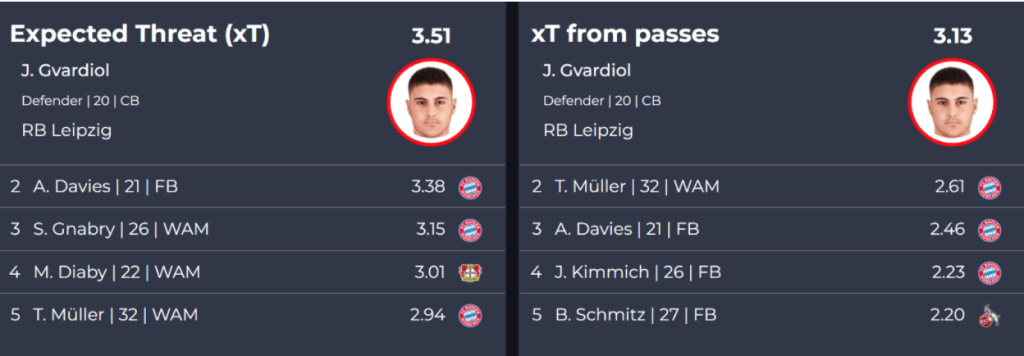
In fact, amongst all players in Bundesliga last term – ALL PLAYERS, not just defenders – he ranked first for expected threat (xT) (3.51) and xT (3.13) from passes. He is a phenomenal and influential outlet on the ball.

The Zagreb-born colossus is nowhere near a traditional centre-back. One look at his numbers suggests that this is a player who loves getting high up the pitch and advancing the ball.

He averaged 5.31 progressive passes per 90 last season along with receiving 0.67 progressive passes per 90. He ranks in the top 3% of centre-backs amongst Europe’s top five leagues for progressive passes and in the top 6% for progressive carries (5.45) and top 1% for dribbles completed (0.89) showcasing that he loves branching out from his defensive line and dribbling his way through opponent’s press in order to get his team up the pitch, or open up passing lanes for his midfielders.

Being able to move the ball up the pitch is paramount to a team’s success, especially possession-heavy teams; as previously stated, the modern-day centre-back must be very good at progressing the ball, by means of either passing or carrying and the £31.5m-rated juggernaut is superb at both attributes, as highlighted by the numbers above – it is the Croatian’s calling card when he is not engrossed in shepherding opposition attackers away from his own goal.

He is supremely confident when performing both actions, heavily reliant on his aggression, impressive ball-control and wonderful vision in being able to spot his more forward-thinking teammates within dangerous areas in the attacking third.

Gvardiol’s propensity to always try to make the penetrative pass, even when under pressure, greatly allowing his team to have more positional freedom in buildup. Once he receives possession, he holds the knack of constantly scanning his surroundings, looking up and deciding which players to pick out.

Moving the ball into the opposition final third, locating attackers in dangerous positions, is another key element in being a modern-day centre-back. 

Whether it be through solo runs like Gvardiol often does, or brilliant switches of play to forwards that allow them to carry into space, rapidly getting the football into the last third of pitch is a great skill, and benefits team attacks massively.

It’s incredibly vital to remember, that last season was his first campaign playing top-level football, so all the stats seen in this report must be taken in with much awe and inspired looks. In the Bundesliga, amongst all outfield players he ranked 5th for passes into the final third (165), sixth for through balls (8), 10th for progressive carrying distance (4455) and sixth for pass targets (1722) which means the number of times a player was the target of an attempted pass. That coupled with his sensational passing success rate of 91%, he is an astute, decisive and accurate passer of the ball.

Even though he is so adept in attack, a Gvardiol scout report is very incomplete without mentioning his defensive work. He applies 11.75 pressures per 90, pitting him in the top 16% of centre-backs in Europe’s top five leagues, which allows him to close attackers quickly often. Moreover, Gvardiol has recorded 2.19 tackles, and 2.03 blocks per 90.

Given how far up the pitch he likes to venture into, the true mark of his defending lies in his interceptions. He averages 3.22 interceptions per 90, putting him in the 98th percentile amongst defenders across Europe and 5th amongst all Bundesliga players (89). He is a stunning reader of the game, but also combative and aggressive presence as he is expected to be considering his frame and size, at just the tender age of 20 too.

Gvardiol is extremely quick on his feet, meaning he covers ground rapidly to diffuse any threatening situations. Therefore, it is no surprise why Gvardiol has been a supreme fit at Leipzig and more importantly a consummate figure at the highest level. His tackling ability is top-notch and combined with his excellent recovery pace, he is a very good active defender and often comes out on top when he engages in duels. 

Though, his aerial abilities is one he must work on, he only wins 2.46 aerial duels despite his 6 foot 1 frame, which doesn’t make for pleasing reading. The game is evolving at such a rate nowadays that centre-backs have got to be as proactive in the air as they are on the ground, but with more maturity and develop, that weakness isn’t one for much pressing concern.

What’s impressive of the 20-year-old defender is how quickly he’s become an impactful presence in the Leipzig back-line alongside Wili Orban and Mohamed Simakan. He’s quickly become a leader, and is very vocal when he wants to be. Not just barking orders at his fellow defenders, but to his experienced midfielders in front too, such as Kevin Kampl and Konrad Laimer. That’s all part and parcel of the impressive and complete package that the Croatian rock-solid star offers.

What does the future hold for Joško Gvardiol?

Gvardiol is in for a truly decorated and successful future both at club level and international too. It’s no secret that he is one of Europe’s most coveted centre-back out there right now, which means there are no shortage of suitors for his signature, with Chelsea and Manchester City specifically lurking.

However, it is vital that the £21k-per-week star continues his rapid progression at a steady and progressive side like Leipzig who can continue to offer him much room to grow, mature, develop and most of all, the room to make mistakes that doesn’t bring much scrutiny and criticism as a more enhanced and elite club side may pour on him.

Again, he’s still only 20 years of age, and while he’s of course taken giant strides over the past 12 months, there is still much more for Gvardiol to learn as he continues his upward trajectory. Certainly, his numbers may be inflated due to Domenico Tedesco’s insistence in playing a back three at Leipzig.

Just how will Gvardiol fare in playing week-in, week-out in a back four? That is one possible flaw that top sides will take into consideration when scouting him. It is unclear whether Tedesco will change his system next season, but trying out the Croatian in a back four could really help develop him further.

With the World Cup looming this winter – in which Gvardiol is currently guaranteed a spot on the Croatian plane barring any injuries – the Zagreb-born juggernaut must stay in Leipzig where he is loved and appreciated in order to continue his incredible trajectory.

Different Manager, Same Bayern Munich; They Mean Business Once Again

Different Manager, Same Bayern Munich; They Mean Business Once Again

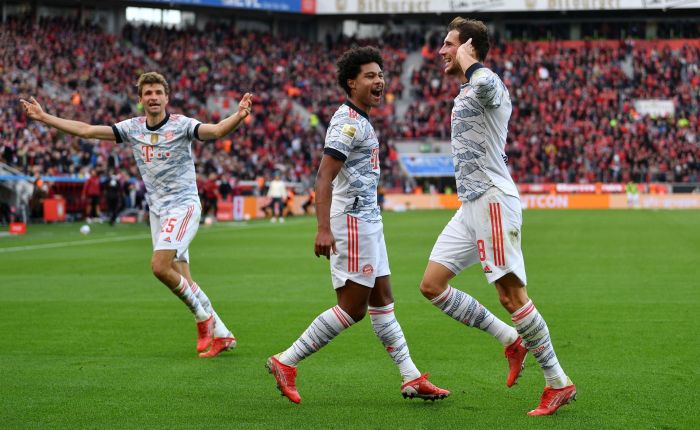
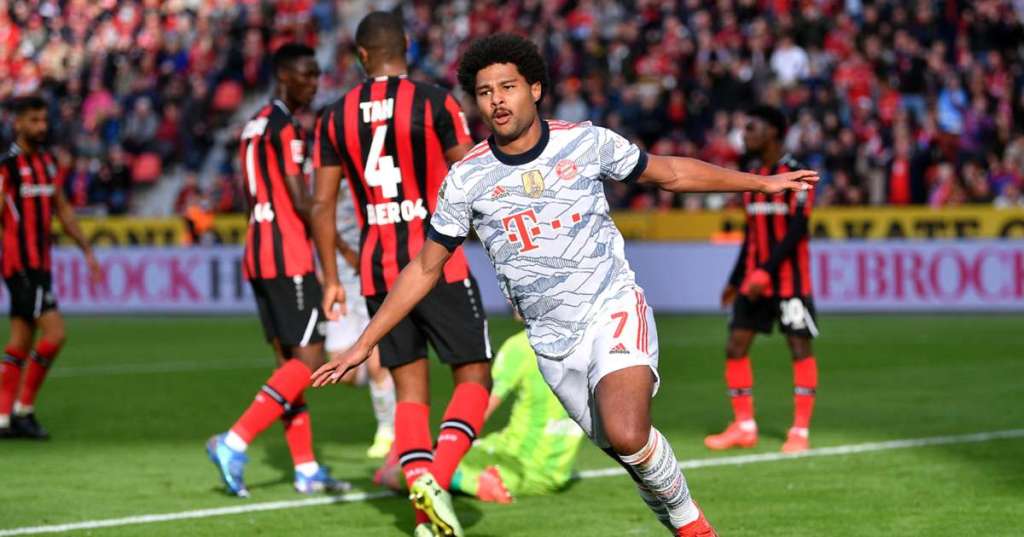
A full stadium, a warm autumnal shine, and an opportunity to take top spot in the Bundesliga: the stage was set for a thrilling and captivating battle between Bayer Leverkusen and Bayern Munich on Sunday afternoon. A match highly anticipated as one of the best spectacles of the campaign so far, between two teams in thrilling form in front of goal.

For just three minutes or so, the fan’s appetite for the game was truly satisfied.

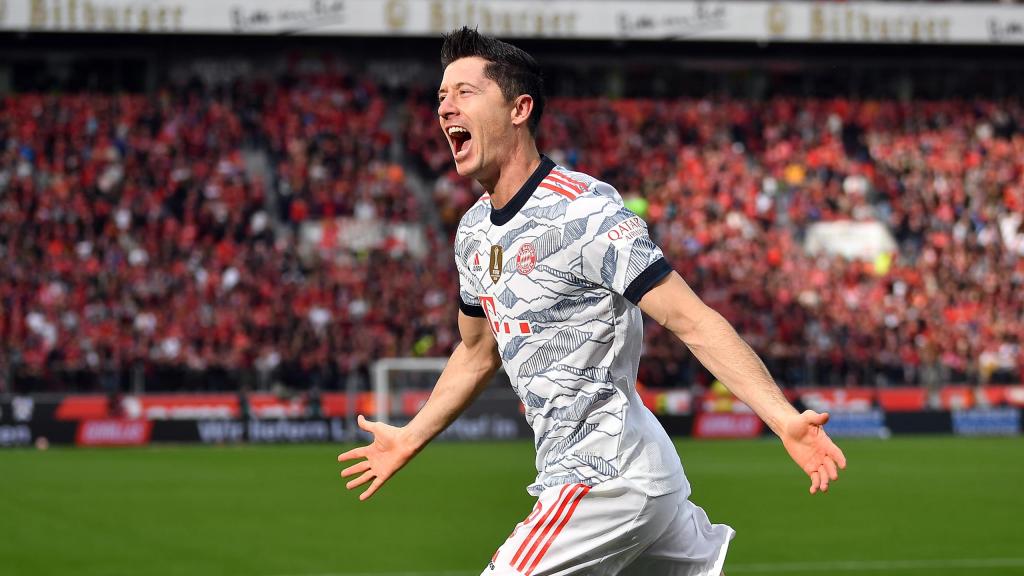
Until Joshua Kimmich found an unmarked Dayot Upamecano in the box from a superbly worked free-kick, who’s volley across the penalty box sublimely diverted past Lukas Hradecky with an exquisite flick by the man of the moment, Robert Lewandowski. His movement and timing to get on the end of the pass so effortless, so swift coupled with the mastery and brilliance to flick the ball home.

Is there anything Lewandowski cannot do?

A goal to make it eight goals in eight games for the Polish hitman. He ended the afternoon with nine in eight, a striker simply strutting his business on another planet blessed with a pure striker’s instinct.

The rest was history. All of about ten minutes later, Bayern Munich once again ripped through Leverkusen when Leroy Sane struck a sweet strike on to the post.

It was simply too easy for Nagelsmann’s ruthless attacking arsenal consisting of the stunning quartet of Lewandowski, Thomas Muller, Serge Gnabry and Sane who’s quickly discovering his best form once again.

A Leverkusen side thin on midfield muscle and stability — with Robert Andrich, Charles Aranguiz, Exequiel Palacios and Julian Baumgartlinger all deemed unavailable before the match — pushed further upfield in chase of a swift reply, leaving gaps between the lines that Bayern’s attackers tore through at will. 

It took just seven minutes for Nagelsmann’s men to hit four goals in such ruthless and clinical fashion – Lewandowski (30th minute), Thomas Muller (34th), Gnabry (35th) and Gnabry again (37th) – simply killing any hopes and expectations fans and the media had of a closely-contested spectacle. The fourth and fifth goals scored by Gnabry was simply stunning and relentless, football played out of elite-level territory.

The cross from Thomas Muller for Gnabry’s fourth was truly mesmerising, the deft touch from Gnabry to slot home past Hradecky was even better. The fifth, Leverkusen simply could not live with as Gnabry played a quick one-two with counterpart Leon Goretzka before coolly slotting his fifth Bundesliga goal of the campaign.

Remember when Bayern had that stuttering patch all of about a month ago? With Julian Nagelsmann’s head ready to be handed on a silver platter just about two months into his tenure as Bayern boss. Well, those doubts have been well and truly dismantled.

Yes, they suffered an unexpected and historic home defeat at the hands of Eintracht Frankfurt before the international break but Nagelsmann before the contest at the BayArena, simply made sure that it was only a miniscule blip in a machine that simply cannot help blitzing their rivals on their way to domestic supremacy.

The win at Leverkusen made it 10 wins from 12 for Bayern Munich, highlighting a side showing no signs of letting up.

All Gerardo Seoane’s Leverkusen side could do was to adopt a more defensive 5-2-3 system to try and control Bayern’s rampant display in attack and hope the champions would switch into preservation mode, conserving energy for Wednesday’s UEFA Champions League group-tie trip to play Benfica in Lisbon. 

Fortunately for them, Nagelsmann’s men allowed them a dot on the scoreboard when the extraordinary wonderkid Florian Wirtz executed a sumptuous through ball for Patrik Schick to score.

Seasoned Bundesliga watchers will not have been surprised at the state at which Bayern laid their rivals to rest. From defence to attack, Bayern were dominant, ruthless, relentless and merciless. Even with Niklas Sule playing at right-back, Leverkusen simply did not have the bravery to trouble Nagelsmann’s makeshift backline.

It was men against boys, but most of all it was a strong statement from Bayern that they are not growing tired of capturing more Bundesliga gongs even with a different coach in the dugout. We’ve mentioned the brilliance of Bayern’s scary quartet in attack but we cannot leave here without mentioning the industry, efficiency and controlling nature that is the reliable midfield duo of Joshua Kimmich and Leon Goretzka showcasing a midfield masterclass.

Nadem Amiri, and Kerem Demirbay simply could not get near them as they both disheveled and dismantled the Leverkusen midfield and defence with their passing, movement and swift interchanging with the attackers.

The superlative class of the first 14 or 15 players in this Munich squad is a given. Combined with the sky-high intrinsic motivation levels of the players and new coach Nagelsmann’s nerdish and admirable attention to detail, it makes for a truly frightening package, and it is reflected throughout the whole starting XI.

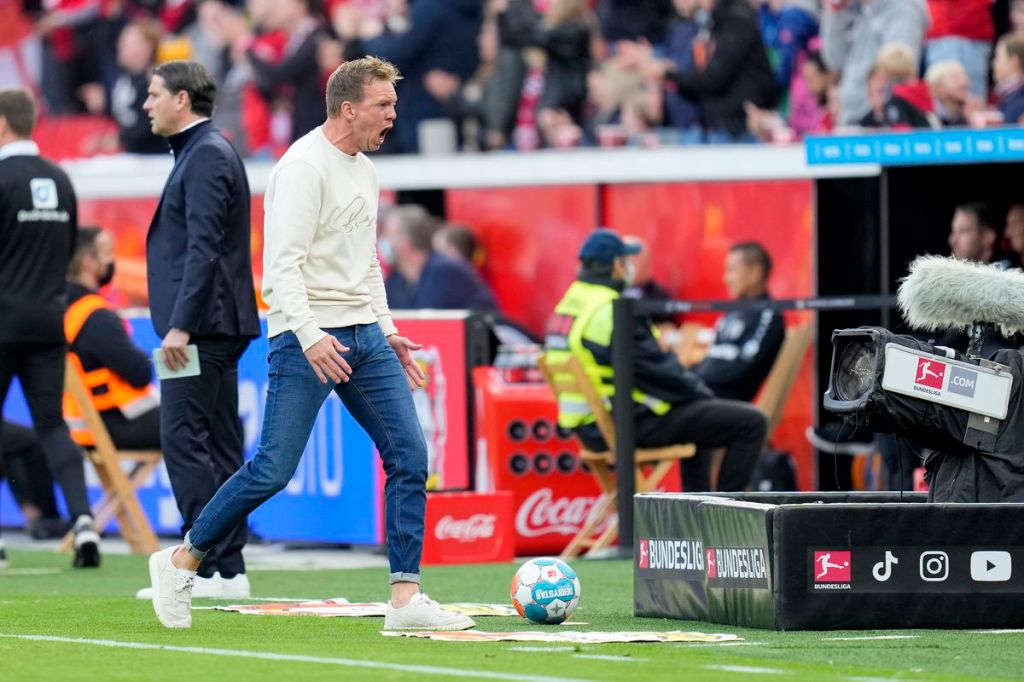
In training, the former Hoffenheim and Leipzig coach had his team specifically rehearse the overload of the central areas, with Thomas Muller and Leroy Sane taking up spaces between the lines to create opportunities. It proved the perfect preparation for Leverkusen’s drafty set-up. “It might sound strange but we could have scored more goals in the first half,” Nagelsmann smiled contentedly in a cream-coloured Boss sweatshirt.

Take away their astounding 12-0 cup triumph over fifth division Bremer SV in August and Bayern have still scored 40 times in 11 outings so far this season. Unstoppable firepower in attack.

Bayern look more hungry, more refined, more matured and ready to fire in all cylinders this season. It’s not just the whole of Germany who have to sit up and take notice, but Europe too.

It may be a different head in the managerial dugout, but Bayern are out for blood yet again.

Christopher Nkunku, RB Leipzig’s shining light

Christopher Nkunku, RB Leipzig’s shining light

If RB Leipzig can take any solace from their quite below-par start to the season under new boss Jesse Marsch, its the form of their supremely gifted talismanic French midfielder Christopher Nkunku.

The 23-year-old was terribly unlucky that is tremendous hat-trick against Manchester City in their UEFA Champions League group stage curtain raiser came at a disastrous cost as Leipzig were cut to shreds at the other end as City triumphed 6-3 at the Etihad.

While much of the headlines on the night will have been about their shambolic defending against Grealish and co. Christopher Nkunku’s stock rose considerably providing hope for Leipzig in an otherwise dour evening in Manchester.

Photo: REUTERS/Craig Brough

The 23-year-old took his goals superbly, despite all three of them drawing Leipzig back into the game whilst City ran riot, but all three goals were a true reflection of the remarkable growth he is showing under Jesse Marsch so far this season.

The former Red Bull Salzburg coach has already stated his admiration and joy at working with the Frenchman, “Christopher has no weaknesses. He’s young and still want a lot more. Working with him is a lot of fun as he’s really intelligent and has a lot of potential.”

Indeed, Nkunku is an incredibly intelligent player and that isn’t just reflected in his goals – he’s got 7 goals and 2 assists in eight games at the time of writing – it’s the way he’s setting about scoring them. Getting himself into the right positions to take his chances but also provide the whole team with the onus to go and express themselves in attack.

Against Hertha Berlin at the weekend, Nkunku scored two beautiful goals – a dink over the keeper and a finely taken free-kick right into the top corner – and provided two assists in Leipzig’s 6-0 rout over a very poor Hertha BSC side to become the hallmark of Leipzig’s instant rejuvenation.

In their second Champions League group stage game against Belgian outfit Club Brugge – in yet another European defeat for Jesse Marsch and his side – he bagged his fourth goal in the competition latching onto a through ball to put Leipzig ahead in a 2-1 defeat.

It’s important to note that Nkunku has always provided the admirable and telling consistency in his game that makes him such a uniquely gifted performer for Leipzig. It’s only now, his performances are reaping its rewards.

Last season, he registered the highest combined non-penalty expected goals (npxG) and expected assists (xA) for attacking midfielders/wingers domestically (0.73 per game). How does that rank amongst his peers? Very high in fact. Over the course of the past year, he ranks in the 96th percentile in Europe’s top five leagues and international club competition for the same category (0.64 per game).

NpxG and xA are combined with “shot creation actions”, meaning “the two offensive actions directly leading to a shot, such as passes, dribbles and drawing fouls”, highlighting involvement in Leipzig’s attacks. Once again, his overall contribution was only bettered by a handful of the world’s top midfielders/forwards, including Neymar and Lionel Messi.

However, due to poor finishing by himself and his teammates meant that his extraordinarily positive influence on the team’s attacking output was getting somewhat overlooked because he wasn’t registering the goals and assists that is expected from attacking midfielders.

His Bundesliga npxG of 0.37 and xA of 0.36 per 90 only produced six goals and six assists from 28 games. In fact, his underlying numbers suggest Nkunku should really have notched around 10 goals and 10 assists last season. His end product appeared above-average rather than excellent, unlike his debut campaign where he hit five goals and 13 assists.

Also, his positional versatility proved his undoing under former boss Julian Nagelsmann last year. He was seen as a very useful utility player rather than the technically gifted up-and-coming star he should have been perceived as.

Nkunku performed in a variety roles mostly as one of two narrow attacking midfielders behind a striker or false nine which hampered his understanding of his role and value in the team and also the opportunity to work efficiently and effectively with his fellow attackers such as the equally gifted Dani Olmo.

In Jesse Marsch’s 4-2-3-1 system, by contrast, he’s been utilised as more of a winger.

When Marsch changed his set-up in response to his team’s run of poor results ahead of the Hertha BSC game and reverted to Nagelsmann’s 3-4-3 system, Nkunku was back in the right-sided No 10 role but crucially given licence to make roam and make deeper runs as his abilities warrant.

From there, he’s able to provide his strongest assets: his pace, off-the-ball movement and superb understanding of space in between the opponent’s defence and midfield. Against Hertha, Nkunku clocked an outstanding 35.5 kilometres per hour during the game.

Defensively, Nkunku is just as quick off the mark and without the ball. 8.69 pressures in the final third put him in the 99th percentile in the top five leagues for players in his positions.

The midfielder is so dangerously creative too. Once he gets the ball in the final third, its incredibly hard to stop him expressing himself. He’s always on the move, always willing to receive the ball in the most difficult areas in the half-space but more important he is very competent and consistent in attempting the extraordinary eye-of-the-needle through balls. He’s averaged an incredible 5.27 shot creating actions, 2.41 key passes, 2.22 passes into the final third whilst also averaging the same amount of passes into the 18-yard-box per90 minutes. Again, he is so vital to Jesse Marsch’s team.

He is indeed a uniquely gifted performer.

Now, we are finally starting to see Nkunku reap his rewards. He’s always worked hard as the above stats show, he’s always been a willing player both in attack and defence but he hasn’t had the numbers to show for it.

At Leipzig, they’re not surprised at his extraordinary start to the season.

After returning from the summer break with more muscle having worked with a personal trainer on his stability and speed, putting in extra shifts on the training ground in his ball-work, Marsch and his coaching staff were expecting him to be one of the key performers in this campaign and Nkunku has repaid their faith so far.

He is one of the first names on the team-sheet this season, after finding his spot limited under Naglesmann last year.

Born in Lagny-sur-Marne, the same Paris suburb that produced Paul Pogba, Nkunku cut a rather slight if confident figure among fellow Clairefontaine academy students Marcus Thuram (now at Borussia Monchengladbach), Allan Saint-Maximin (now at Newcastle United) and Amine Harit (now at Marseille).

As was often the case of young stars playing in Paris, opportunities were limited for players from the PSG academy. If you need any examples, just ask players like Odsonne Edouard, Tanguy Nianzou, Boubakary Soumaré or Timothy Weah, the list is endless.

Nkunku understood that he needed to find regular game time hence his move to Leipzig in 2019. A club well placed to provide him with the development and learning his game deserved.

Shortly before leaving Paris, Arsenal head of recruitment Sven Mislintat had attempted to bring in the player on loan in the 2018-19 winter transfer window but PSG didn’t approve. He was sold to RB for €13 million and made it to the semi-finals of the Champions League in his first season.

“It was the club I needed,” Nkunku explained at the time. “I’ve rediscovered the pleasure of playing. I feel that I’m blossoming on the pitch, that I’m a bit more liberated. The more time goes on, the better I am. Now I can say that it is better to leave your comfort zone to grow taller.”

The 23-year-old has grown considerably since then, his game has matured and his intelligence and understanding of the tactically has soared through the roof, and its a testament to his hard-work and willingness to learn and improve. Nkunku is only going to get better and that’s a scary sight for Leipzig’s opponents this season.

His existing contract runs until 2024 but just like Dayot Upamecano, Ibrahima Konate, Naby Keita, Timo Werner and Marcel Sabitzer before him, he’ll almost certainly become too good a player to stick around at Leipzig for much longer.

The club will have to enjoy him while they can, because Christopher Nkunku is on to much bigger things in the near future.

Jesse Marsch possesses an exciting Leipzig squad at his disposal, can he deliver the unthinkable?

Jesse Marsch possesses an exciting Leipzig squad at his disposal, can he deliver the unthinkable?

New RB Leipzig head coach Jesse Marsch believes his side have “probably the most strength in depth in the (German) Bundesliga” ahead of the start of the 2021/22 season.

A bold claim made by Red Bull Salzburg’s former boss, but a claim that could well prove true in the context of Leipzig’s summer business. While supposed ‘title rivals’ Bayern Munich and Borussia Dortmund have arguably grown weaker this summer, Leipzig have taken advantage through another period of steady growth, recruitment & development.

Ever since their rapid emergence on the scene in the German Bundesliga in 2016/17, Leipzig have been a breath of fresh air providing a huge sense of euphoria, energy and optimism around the country. The brand of football introduced by the Red-Bull has allowed the Bundesliga to now become one of the most entertaining leagues in the world.

The club didn’t earn their place into the Bundesliga just to make up the numbers. They have more than made their mark, only finishing outside the top four, once in the last five years, finishing sixth in 2018. In the last five years, they’ve finished second, third, sixth, third, third and last year finished second 13 points behind the ever-dominant Bayern Munich.

This season, they aim to go that one step further – towards an unprecedented first German Bundesliga triumph, ending Bayern Munich’s nine year dominance. Leipzig won’t be doing it with Nagelsmann though, who departed to their title rivals in May.

However, they’ve introduced a familiar face.

Arguably the club’s greatest capture this summer, American tactician Jesse Marsch returned to Leipzig, where he had been assistant to Ralf Rangnick in 2018/19, following a successful two-year stint in charge at Red Bull Salzburg.

Known for his fresh, vibrant and exciting style to management, especially his high-energy, intensity and counter-pressing attacking approach which will almost certainly give the Leipzig faithful more reason to be optimistic so soon after Julian Nagelsmann’s departure to Bayern Munich.

This summer, Bayern continued its long-held practice of snatching up top talent from its biggest German rivals, nabbing Nagelsmann and also star center back Dayot Upamecano after the 12-year-old club finished second in the Bundesliga last season. Bayern might not be done raiding either, with recent reports linking them to influential Leipzig midfielder Marcel Sabitzer.

Jesse Marsch left an exciting squad in Austria, soon after winning league and cup double to join an even much more exciting squad at Leipzig.

The American coach will be taking the reins of a side currently brimming with thrilling talent, including Dani Olmo, Emil Forsberg, Christopher Nkunku, Josko Gvardiol, Marcel Sabitzer (who could be on the move to Munich), Dominik Szoboszlai, a player Marsch previously worked with at Salzburg, and also Tyler Adams.

To add to that the new signings brought in certainly brings an added touch of sprinkle dust on a refreshingly built squad. Brian Bobbey, Mohamed Simakan, Josko Gvardiol & devastating goalscorer Andre Silva were brought in, while deals for Angeliño and Benjamin Henrichs were made permanent following their fine loan spells last season.

Such signings mean RB Leipzig are well equipped to push on and challenge former coach Nagelsmann at Bayern Munich for the league title.

“The players have tremendous potential,” Marsch told rblive.com. “I think we probably have the most strength in depth in the league. Theoretically, we could send out two Bundesliga teams. If we’re able to fully unlock that potential, we can have a lot of fun together.”

Indeed, the club and its fans are surely due a bit of fun, entertainment and huge optimism heading into their opening game away to Mainz.

In particular, the signing of Eintracht Frankfurt’s Andre Silva, who finished second top-scorer last term with 28 goals in 32 Bundesliga appearances – an astonishing goalscoring record. A move which addresses an area of the squad that had been lacking since Timo Werner’s move to Chelsea in the summer of 2020.

Silva’s unexpected signing is a move which will help bolster what was just the Bundesliga’s sixth most prolific attack in 2020/21 with 60 goals (compared to Bayern’s 99 and Borussia Dortmund’s 75). The Portuguese showed his extraordinary qualities in front of goal last year as Frankfurt narrowly missed out on a Champions League spot.

Silva felt a move to a Champions League playing team was an opportunity he could not turn down. Leipzig will be expecting the forward to continue his goalscoring hot-streak, especially with such superb and dynamic creative players behind him in Dani Olmo, Christopher Nkunku, Marcel Sabitzer and Dominik Szoboszlai.

The latter will be returning from a long injury lay-off , and will be eager to finally get started at his new club after being kept out since his move to Leipzig from Salzburg in the January transfer window.

Szoboszlai as Jesse Marsch already knows, is a player blessed with tremendous creative qualities, and could prove yet another difference maker in a side filled with players with the so-called X-factor.

In Jesse Marsch’s only full season working with Szoboszlai in 2019-20 at Red Bull Salzburg, the Hungarian international was instrumental in helping his side win the domestic double after the mid-season departures of Erling Haaland and Takumi Minamino and throughout his time working with Marsch, he scored 21 goals in 62 appearances.

As well as creativity, Leipzig are also blessed with much needed energy, dynamism and cutting thrust in midfield. Players like Amadou Haidara, Tyler Adams, Konrad Laimer, Kevin Kampl along with their talisman Marcel Sabitzer. Midfielders bagged with so much quality, certainly allows Marsch room to rotate in what will be a demanding season.

Possessing such midfielders means Leipzig will be a destructive team to play against, with their usual high-intensity, pressing and counter-pressing style, but with more need potency and creativity in attack. A perfectly balanced unit.

Leipzig will be looking to be within a shot of winning the league title when the time comes.

For the future, Brian Brobbey was signed on a free from Ajax – something Jesse Marsch heavily vouched for, even admitting that he visited the player in Amsterdam and told him that he was keen to work with him after the young Dutchman had doubts about joining following Julian Nagelsmann’s departure.

Additionally, Leipzig once again used the Red Bull connections to agree a deal for highly-rated midfielder Caden Clark in the winter transfer window from the New York Red Bulls. Overall, a busy but effective window, and there could still be another more accomplished centre-half coming through soon.

Despite the departures of Dayot Upamecano, and Ibrahim Konate, RB Leipzig find themselves well stocked at centre-back with new captures Josko Gvardiol who impressed at the Euros for Croatia, Mohamed Simakan, – touted one of Ligue 1’s most talented young centre-backs last term – Nordi Mukiele and the vastly experienced Willi Orbán.

Staying true to the Red Bull philosophy, the average age of their seven signings this summer is just 21.4-years-old, proving once again that they’re focusing on the future. It fits in with the kind of model Jesse Marsch desires to work with, young and vibrant footballers who are willing to learn and improve, with real bags of potential.

There are real expectations for Marsch and the club to perform well this season. A top-four finish and another Champions League berth are the minimum requirements. But whose to say they can’t challenge Bayern Munich, and even go on win the gong? The squad is certainly good enough and capable.

This season may see Bayern Munich possess their most weakest squad in a long time, and its an opportunity Leipzig will be looking to take advantage of.

They’ll be playing under a coach who knows what it takes to win trophies – unlike his predecessor.

In a short space of time, Jesse Marsch has become one of the most highly regarded managers in Europe after an impressive two-season stint with RB Leipzig’s sister-club in Austria, Red Bull Salzburg. Over the two seasons, he won the league and cup double twice, but more impressively, took Salzburg to the Champions League group stages – something they never achieved previously in the Red Bull era, starting in 2005.

There will be plenty of eyes on him, especially from an American perspective. American coaches haven’t always carried the torch well in Europe, and Marsch joins Stuttgart’s Pellegrino Matarazzo as the Bundesliga’s second American head coach. Matarazzo has impressed in recent years, taking Stuttgart up from the second division and keeping them there, and Marsch will hope to excel at a higher level in the table as well as in the Champions League.

Marsch has been open about his desire to press higher and harder than Leipzig did under Nagelsmann, telling reporters last month that the team “will be aggressive to win balls in the attacking part of the field and will be aggressive to convert those turnovers into goals and big chances.” That all spells such exciting news for the Leipzig faithful, who will also be hoping that the club can continue to match it with the best clubs in Europe.

The UEFA Champions League will almost certainly test Marsch’s squad and resolve given that they’re still a Pot 3 team for the group stage, things are unlikely to be smooth sailing. Above them are teams like Chelsea, Manchester City, a star-studded Paris Saint-Germain team now including Lionel Messi, Real Madrid, Barcelona, Inter, Juventus and others, meaning there’s a good chance Leipzig will be drawn in a bumper group come September.

Nagelsmann took the club to the Champions League semi-final in the 2019/2020 campaign, a feat that Marsch can only dream of, but its certainly within his remit to have a go at matching.

With his focus on mentality, building a true team and fitness, it would be easy to label Marsch as a stereotypical American type figure; one who places emphasis on team morale, camaraderie and togetherness than tactics. But that is very futher from the truth. Jesse Marsch is a true tactician and technician. The American is intense and very much knows his tactics. He conducts all team business in German. He’s been in the Red Bull family for years.

Jesse Marsch also knows that most of his team already knows his system — it’s essentially what they played for years prior to Nagelsmann’s arrival. He just feels getting Leipzig past Bayern and to an unprecedented Bundesliga title will require a little something more.

Can he deliver?

How RB Leipzig could line-up under Jesse Marsch

Konrad Laimer 2019/20 – Scout Report

Konrad Laimer 2019/20 – Scout Report

In his third year in the German Bundesliga, RB Leipzig and Austrian midfielder Konrad Laimer has established himself as a regular starter for the club and as one of the most influential midfielders in the whole division.

Timo Werner may be considered the most influential player for his goalscoring exploits or Dayot Upamecano, for his literal brick wall presence in defence, and while Leipzig’s remarkable success this season has largely been attributed to Nagelsmann’s system and the performances of the two aforementioned starlets at both ends of the pitch, Konrad Laimer’s consistency in the middle of the park has largely gone unnoticed.

It’s time to shed some light on a truly decorated performer.

images

He maybe an unknown quantity to a few of you, but in last months Champions League victory over Tottenham Hotspur, the Austrian put in a showstopping performance, also putting his name on the map. Here’s a bit of his backstory:

Who is Konrad Laimer?  

Born in Salzburg, Laimer is a youth product of the much acclaimed RB Salzburg academy but made his senior debut at FC Leifering in 2014 before becoming a prominent and ever-present part of Salzburg’s league winning side in 2016/17 – contributing to seven goals from midfield winning the Austrian Bundesliga’s Player of the Season.

Like many before him, he was rewarded for his efforts with a switch to East Germany, arriving at the Red Bull Arena for a fee of £6.3million. One that is presently looking a bargain. On first look, Laimer was brought in to be a long-term replacement for the departing Naby Keita who joined Liverpool – with Laimer’s shrewd and aggressive characteristics making him the ideal fit to fill the Guinean’s shoes.

However, opportunities were hard to come by for the Austrian due to the fierce competition in midfield – Keita, Diego Demme, Kevin Kampl and veteran Stefan Ilsanker were all fighting for places in Ralph Hasenhuttl’s midfield pivot with Demme and Keita establishing themselves as the trusted pair.

That didn’t stop Laimer’s hunger to impress, he ensured he made his mark appearing in 22 games, albeit mostly at right-back. A position unfamiliar to him, but one which he performed admirably in.

Fussball Bundesliga FC Bayern München - RB Leipzig 0:0 Robert Lewandowski wird von Dayot Upamecano (links) und Konrad La

Under Ralf Rangnick the following season, the Austrian was granted further opportunities in his preferred midfield role. He started 20 of Leipzig’s 34 Bundesliga outings that year – often lining up in a ‘shuttler’ role in Rangnick’s high-energy 4-1-2-1-2 diamond setup – as they finished third in the table, improving significantly on their sixth place finish the previous campaign.

Despite he’s increased game time, its fair to say that Laimer was just another cog in Rangnick’s well-oiled machine. Under Nagelsmann, however, the Austrian has proven to be indispensable, a key component in a side now aiming to knock Bayern Munich off the top.

What’s his style of play? Why is he so key for Nagelsmann? 

At the beginning of the campaign, the coach nicknamed ‘baby Mourinho’ experimented a variety of systems for his players. However, the defeat to Freiburg in October led to a shift to a 4-2-2-2 formation, its now their typical and trusted shape. One which has allowed key players like Laimer to thrive. Though it hasn’t stopped Nagelsmann’s flexibility. Against Tottenham in the Champions League, he lined up in a 3-4-3 shape. Domestically, a handful of games have seen Leipzig line up in a 3-1-4-2.

Formation in league game against Wolfsburg, (3-1-4-2):

lineup (12)

Formation in 3-0 Champions League win over Tottenham, (3-4-3):

lineup (13)

In fact, the last time Leipzig in a 4-2-2-2 shape was in the 3-1 win against Augsburg before Christmas. Since then, Nagelsmann has continued to experiment with much success. 4-2-3-1, 4-3-1-2, 3-4-2-1 and a 4-3-3 have all been used sparingly since then. What’s been a regular feature despite the constant changes in system is the astuteness, solidarity and professionalism shown in Konrad Laimer. The midfielder has been a ever-present force.

The Austrian has lined up as a defensive midfielder 13 times this season, whereas in a customary centre-midfield, he’s lined up there 18 times. His role in the midfield rarely changes though. When Leipzig build from the back, he’s almost fulfilling the role of a ‘quarter-back’ one who dictates possession from deep, picking up pockets of space between his position and his back-line and spraying passes in between the lines.

When the team advances into the final third, the industrious midfielder makes himself available for a ‘safe’ passage of play, also providing such great protection if they are in danger of a counter-attack. He’s also not afraid to burst into the penalty area and add to Leipzig’s numbers in the box. Against Tottenham, it was his fantastic energy and movement on the right hand side – a position he used to play earlier in his Leipzig career, as a right-back – that led to Leipzig’s first goal.

For a defensive midfielder, his goal output is pretty decent, and there is the added fact that Leipzig do score a lot of goals, so he’s bound to contribute to their prowess in front of goal. 2 goals and 6 assists in 29 league outings. But that’s only a small measure of his massive influence in an industrious and exciting Leipzig side.

Per 90 minutes in the Bundesliga, the 22-year-old Austrian completes 4.05 passes into final third, averages a pass success rate of 81.5%, and completes almost 50 passes per game. He’s the dictator in possession and destructive force without the ball, a role he totally excels in averaging 3.4 tackles per game, winning 3.13, 1.75 interceptions, committing 2.2 fouls. Laimer has won a total 110 tackles in the Bundesliga this season, more than any other player in the competition, he’s also quite adept in the air despite his short frame, winning 28 duels. He’s also an effective dribbler too, averaging 1.5 successful dribbles per90 {WhoScored, FootballSlices}. He’s an effective ball-carrier, one is very efficient in transitioning from defence to attack in an instant, a regular trait of Leipzig’s attacking qualities.

It’s stats such as these that make him one of the most well-rounded and complete defensive midfielders in Europe.

Will he fit in the Barclays Premier League?

Certainly, Laimer can almost walk into any of the top sides in English football. It’s worthy to note that sides such as Manchester City, Arsenal, Manchester United and Tottenham Hotspur are all in the market for an effective defensive midfielder.

Konrad Laimer fits the criteria of your typical DM perfectly. He loves defending, loves a tackle and he won’t shy away from committing a few cynical tackles here and there. These are all traits highly praised in the English game. Very few defensive midfielders are thriving in the league so far. Only Wilfried Ndidi, Fred, Fabinho, Douglas Luiz and Oliver Norwood of Sheffield United have performed on a consistent basis from deep this season.

images

Konrad Laimer will almost certainly stand out as one of the most effective and decorated in his position if he was to move to the Premier League. However, he only recently signed a new deal at Leipzig, and with the club currently on a upward curve to success, it will be difficult to see him jumping ship at this time. It may take a huge outlay to prize him away from Leipzig, but for now…

The future certainly is bright for the Austrian international.