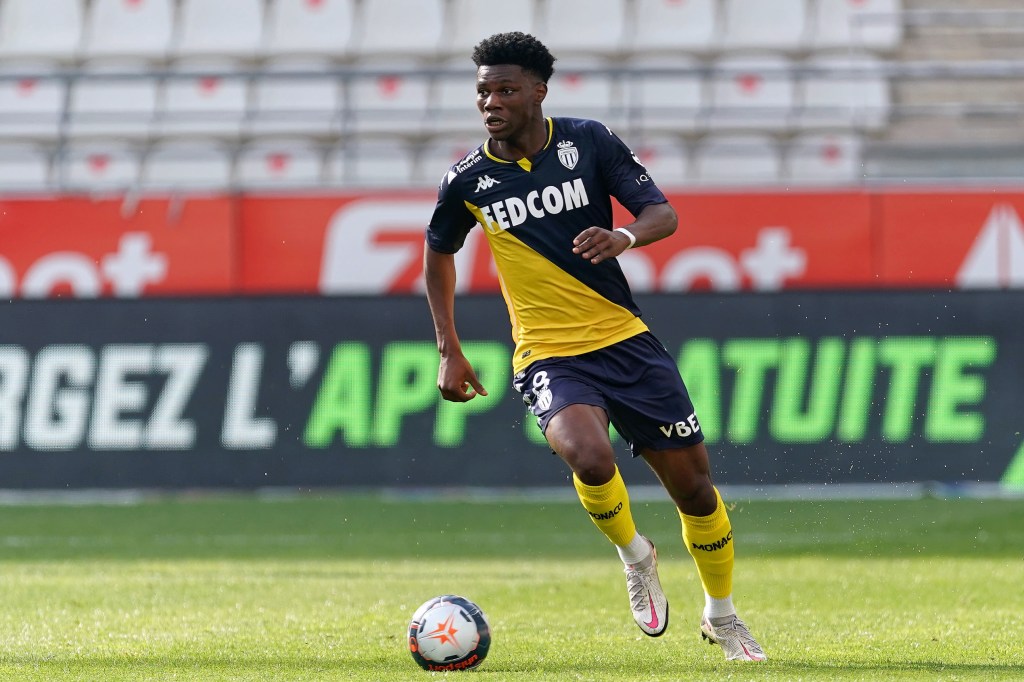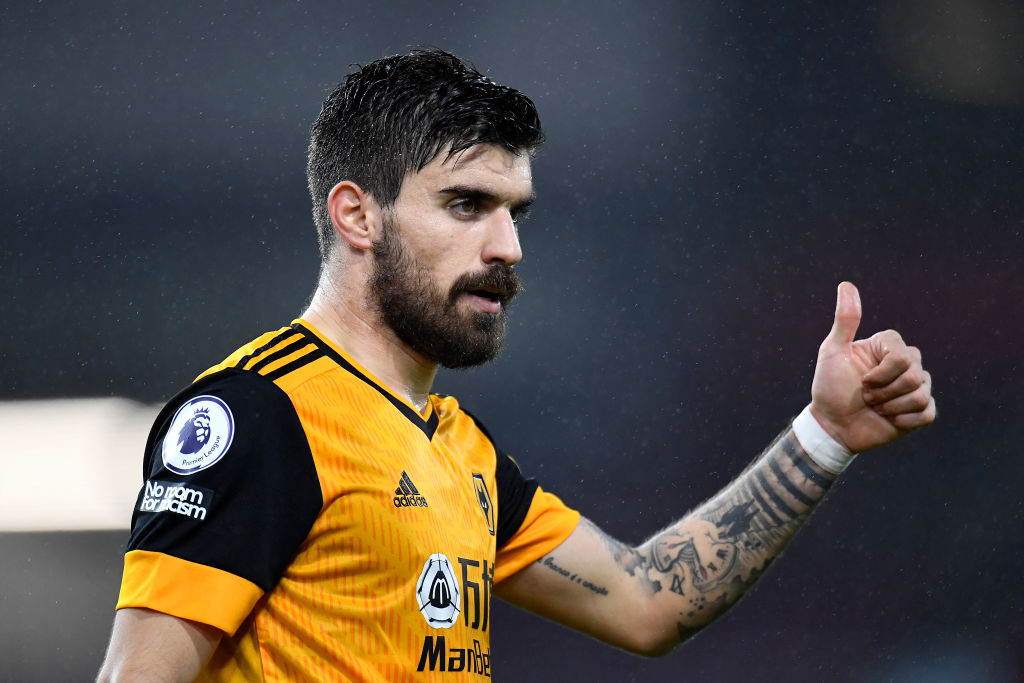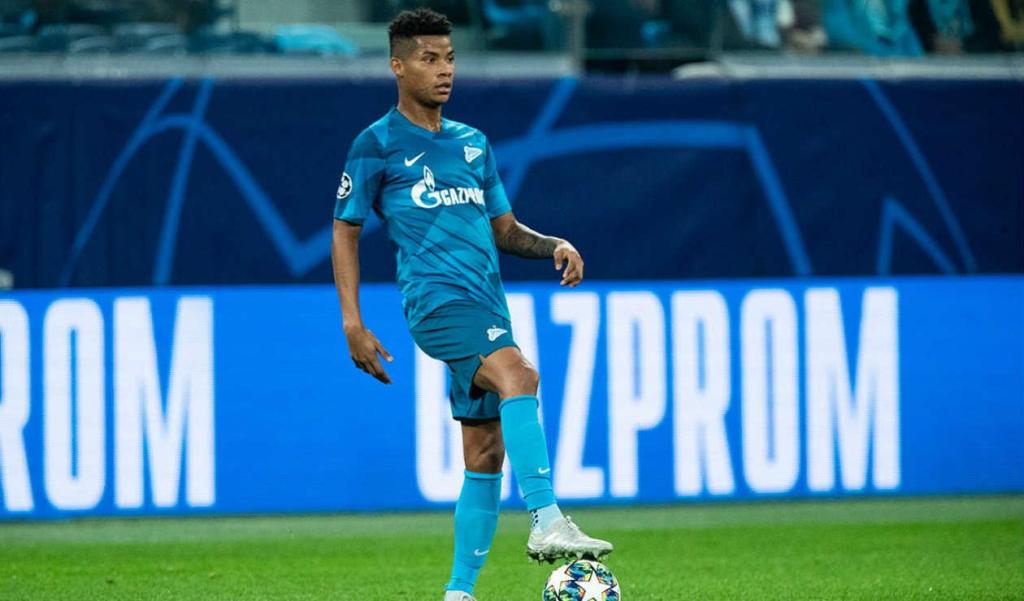
5 creative midfielders Arsenal MUST consider to address final third issues

5 creative midfielders Arsenal MUST consider to address final third issues

The new Premier League season kicks off this weekend, and Arsenal still haven’t addressed their pressing need of acquiring an elite attacking midfielder armed in providing them with the creative abilities to take their game under Mikel Arteta to the next level.

Their pre-season friendly defeat to rivals Tottenham Hotspur was a game which showed a lot of promise, especially the new signings Ben White and Albert Sambi Lokonga who both put in dominant and assured performances as they continue the acclimatization into their new surroundings.
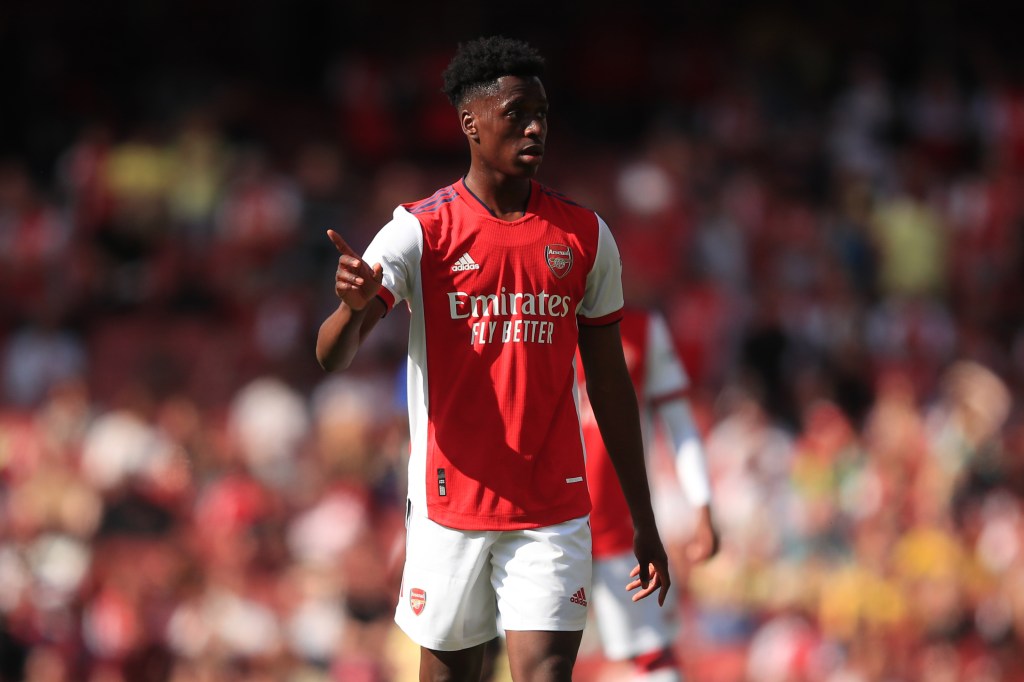
(Photo by Marc Atkins/Getty Images)

However, it was a game which looked all to familiar for Arsenal’s supporters, a lot of nice intricate passing around the final third without some real penetration to complement it. Emile Smith-Rowe has been a lovely sight for Arsenal fans, and a welcome one too. A very talented and fresh addition straight from the academy, but he cannot be relied upon to drive Arsenal into that brand new era, its too much responsibility and weight on his shoulders.

Both he and Bukayo Saka need help in those areas.

How the Gunners need the qualities of Mesut Ozil (in his prime), Cesc Fabregas or even Santi Cazorla again, players who were blessed in creating the unthinkable.

You hand them the ball in those dangerous areas, and its as if time stands still. That’s what Mikel Arteta needs right now, its what Arsenal need in order to challenge for those top four places again, or to go even further.

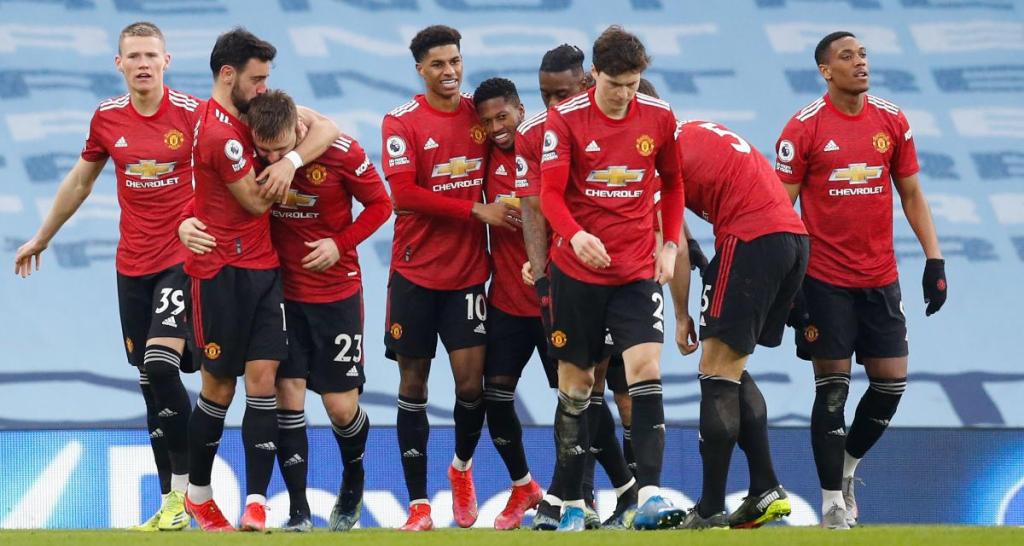
Arsenal are arguably in the same position Manchester United were before January 2020, lacking that incision and precision in the final third before they went out and ferociously addressed that burning desire, signing Bruno Fernandes from Sporting Lisbon. Since then, Ole Gunnar Solskjaer’s fortunes as Manchester United boss has dramatically changed – they’re on the upward curve.

Mikel Arteta needs to go out do the same, regardless of the potential risk and cost. Leicester City’s James Maddison is reportedly a top target, however Brendan Rodgers is in no pressure to sell and it would take in the regions of £70m to prize him away from the King Power.

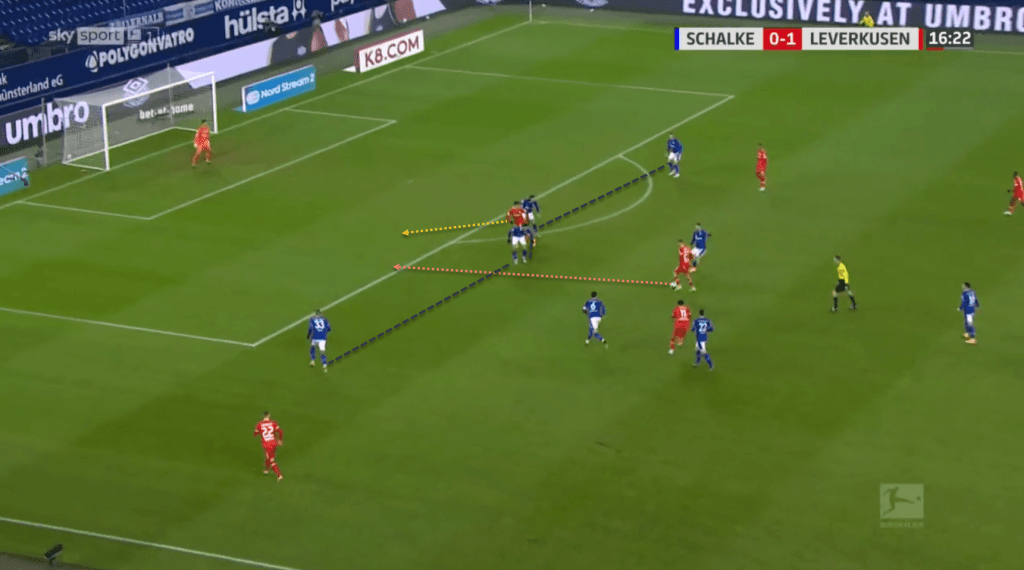
It is a costly risk, one which could very much address Arsenal’s pressing need. Maddison is indeed one of the Premier League’s most reliable creators, especially in those final third areas, as shown above. But, Leicester City are unlikely to sell one of their most prized assets, especially so close to the start of the new season, and without a readied replacement.

Alternatives will need to be considered at the Emirates, quality ones too. So here’s a few cheaper, more attainable and arguably more acquired tastes that could blend in with Arsenal’s game perfectly:

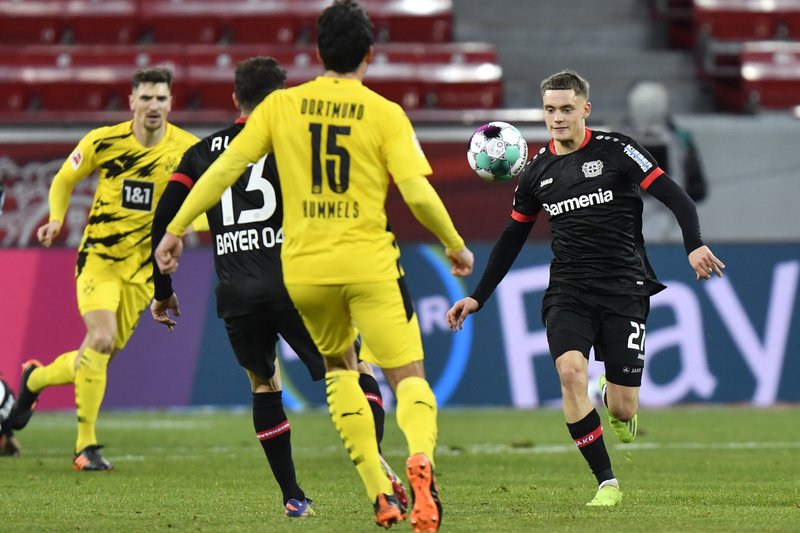
Daichi Kamada, Eintracht Frankfurt

Arguably the best performing Asian footballer in Europe over the past year. Eintracht Frankfurt’s Japanese magician Daichi Kamada is a stunning footballer, an efficient workhorse and a creative maestro.

Have a look at Frankfurt’s attacks and you’ll see how pivotal Kamada is, he is at the centre of almost everything.

His movement, the positions he picks up, the space he occupies and the passes he delivers is simply sublime and a testament to his extraordinary understanding and nous when it comes to creating chances for his teammates.

The Japanese international may be something of an unknown quantity to some Arsenal supporters, but he’s a player who currently deserves some rich acclaim and attention right now.

5 goals and 12 assists in the Bundesliga last season, as Frankfurt narrowly missed out on an unprecedented Champions League place on the last day of the season. However, it was a stunning campaign for the club and for Kamada personally, and the Japanese is sure to be on a number of top club’s list of targets this summer.

Mikel Arteta would do exceptionally well to consider targeting the source of Frankfurt’s goals.

Kamada is one of those players who manages to be technically impressive without being flamboyant. Carries the ball neatly, with some sumptuous little touches and swift shifts in direction, and he exploits passing angles and lanes in the attacking third in a way that’s so clever, intricate but unusual.

He’s a unique player, and another one who deserves to test himself at the highest level. 2.90 final third passes, 1.8 key passes and an astonishing 4.05 shot-creating actions per 90 highlights his incredible efficiency and effectiveness in the final third. Kamada has so much to offer, not only in his skill, tenaciousness and technical qualities but in his application and willingness to learn and improve.

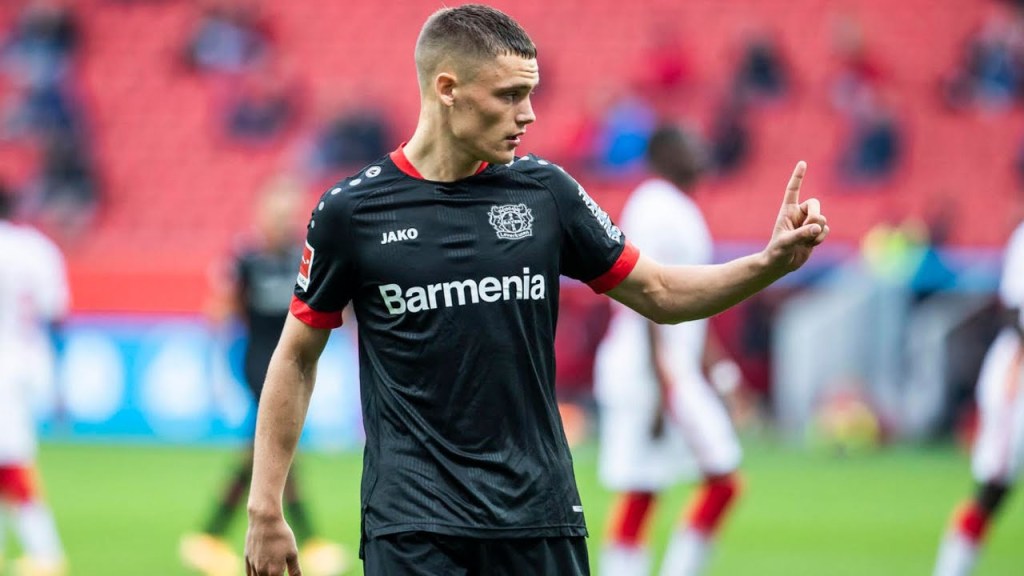
Lorenzo Pellegrini, AS Roma
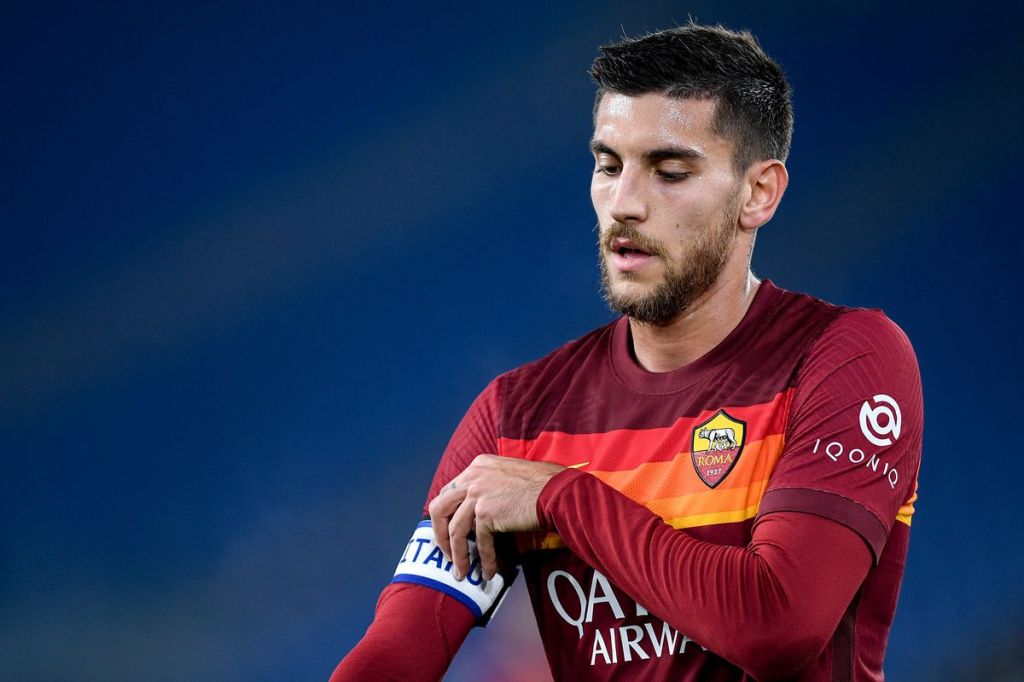
Yet another uniquely gifted midfielder who surprisingly still graces the Stadio Olimpico.

Lorenzo Pellegrini is a Champions League-quality midfielder, who deserves to be playing at the highest level for one of Europe’s most prestigious clubs. It’s a shocking surprise that no top club in Europe has managed to trigger his relatively low release clause which stands at around €30million.

Lorenzo Pellegrini would represent an outstanding acquisition for Mikel Arteta simply because of his devastating abilities in the final third. Pellegrini is a creative magician, a technically savvy orchestrator.

The 25-year old would be Arsenal’s very own ‘Bruno Fernandes-type signing’. A player who will fit in swiftly and seamlessly without no bedding-in period, without no teething issues because he is simply that intelligent, classy and decisive.

Traditionally an attacking midfielder, Lorenzo Pellegrini holds all the tools necessary to play anywhere across the midfield. As a deep-lying no.6, a roaming no. 8 and a play-making, creative no.10.

In Paulo Fonseca’s system, he played the attacking midfield role, as a no.10 in their 4-2-3-1 shape or 3-4-2-1, operating just behind Edin Dzeko.

This role allowed him to become the team’s main source of creativity and a hub in which every attacking player can link with. While teams in the current age, have their main creative hubs in the deep-lying positions in front of the defence, Roma’s orchestrator is Lorenzo Pellegrini at no.10.

As well as possessing the qualities to perform in a traditional no.10 role, he’s a more unorthodox attacking midfielder, regularly drifting into the wide areas or half-spaces. It keeps defensive midfielders and the back-line guessing, also causing a state of disruption and panic in their defensive shape.

Arsenal regularly deploy the 4-2-3-1 shape, in which Pellegrini could easily slot in behind the lone frontman. It could well mean Pierre-Emerick Aubameyang returns to the role up-front, simply because of Pellegrini’s superb ability to pick the unthinkable eye-of-the-needle passes.

The Italian would have been another key figure for European Champions Italy this summer had he not picked up an injury just before the tournament got underway, but he’s a player many cannot ignore.

2.18 key passes, 3.98 final third passes, 4.36 progressive passes and 1.42 passes into the 18-yard box per 90 just highlights Pellegrini’s astonishing abilities to dissect opposition defences at will. A no-brainer acquisition for Arsenal.

Houssem Aouar, Lyon
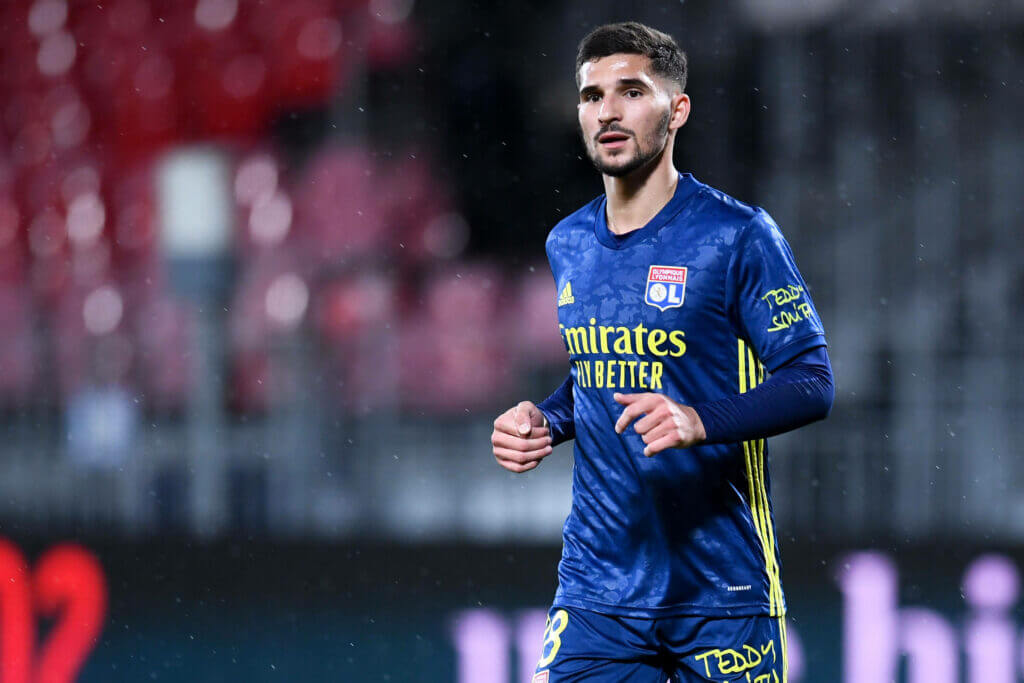
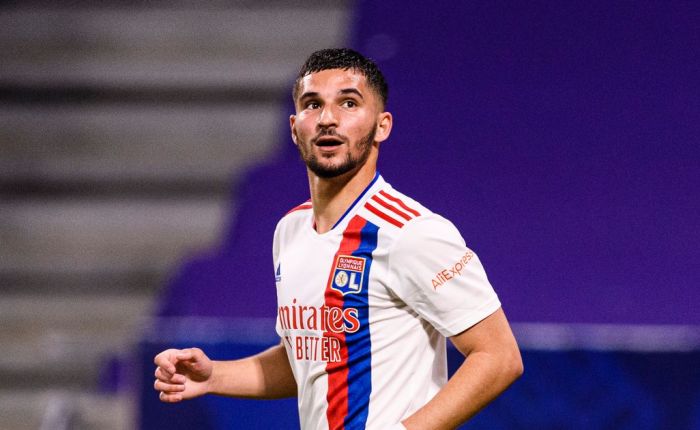
How Houssem Aouar is not on Arsenal’s list of priorities to fill that no.10 position is simply baffling, even to the Arsenal faithful. It may well be in part because of his latest disciplinary issues at Lyon, however, it is clear the player desires a new challenge elsewhere and Lyon are indeed resigned to losing him in the the near future.

It is an opportunity Arsenal cannot afford to pass up on. Houssem Aouar is a player blessed with such extraordinary technical qualities.

A meticulous ball-player, harnessing the uniqueness of when to hold on to the ball, and when to release it. His amazing sense of gravity and close control means its difficult for his markers to have an understanding of where he’s going or when to dispossess him.

Mikel Arteta craves a player who goes about performing risks in the final third, or taking people on to create space for himself and his forwards. Aouar possesses those unique qualities. He averaged 7.00 progressive carries and 2.47 carries into the final third last season, better than all of Arsenal’s attacking options.

The midfielder also holds such fantastic spatial awareness and capacity to switch directions in an instant. If he finds there’s nowhere to go when dribbling, he’ll instantly change direction with a swift drop of the shoulder and such crisp close control.

Whenever, the ball is at Aouar’s feet, his teammates know something special is about to happen especially within the attacking third. Per 90 last season, he averaged 6 passes into the final third meaning he plays risky passes with such considerable regularity. Stats serving as a true indication as to his incredible expertise in creating chances, further shown through his 5.10 shot-creating actions per90 too.

The 23-year-old only recorded three assists in Ligue 1 last year which is very surprising considering his invention and imagination in the final third, but he’s importance and influence in those areas for Lyon were very stark.

As soon as he picks up the ball, he already has a picture of what he’s going to do, whether to dribble past opponents, or dissect an eye of the needle pass to his forwards. No matter the amount of opponents around him, Aouar holds the balance, silky footwork and quickness of thought required to conjure up magic despite being under pressure.

His ball-carrying capabilities could prove vital to Arsenal’s system, allowing them to get out of trouble but most importantly in creating opportunities and openings in the final third.

Houssem Aouar is also a meticulous and imaginative number 8, and if 4-3-3 really is Arteta’s preferred formation then the French international will potentially fit in seamlessly.

Marcel Sabitzer, RB Leipzig
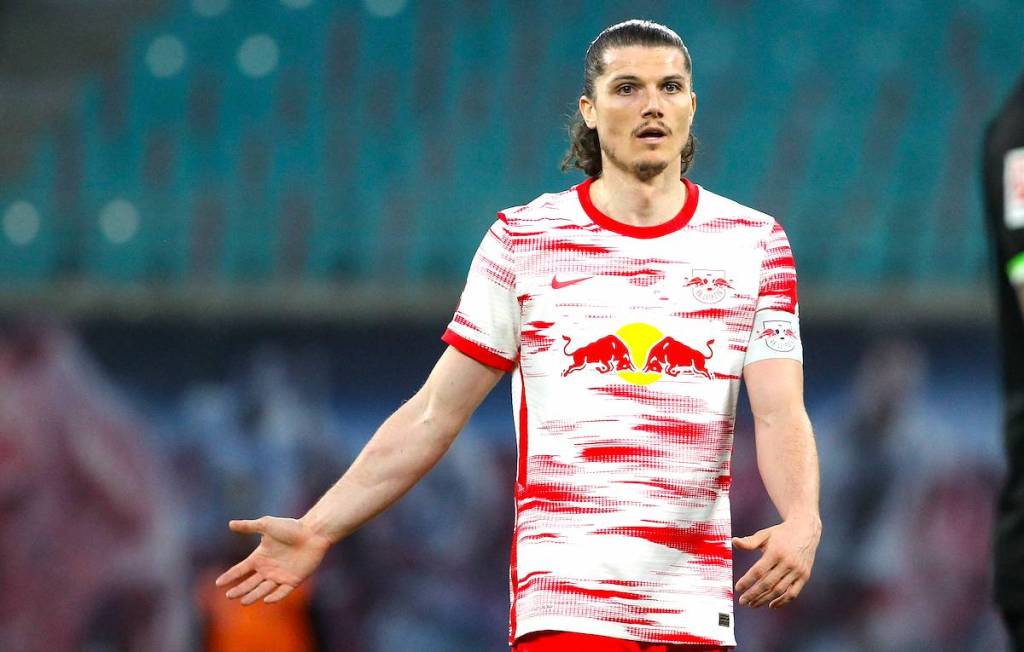
RB Leipzig’s new coach Jesse Marsch admitted that midfield dynamo Marcel Sabitzer’s future will lie away from Leipzig in the near future, and considering the price the Austrian is currently valued at, Arsenal would do very very well in recruiting his services.

The 26-year-old is available for a cut-price deal at just €18million, an extraordinary bargain, and whoever captures him could well be rewarded with the ‘smartest buy of the summer’ gong.

Marcel Sabitzer is a wonderful midfield performer, but a very orthodox one. To the eye, he’s your regular midfielder who is energetic, technically very good and has a good eye for the pass, but what stands him out so well is that he performs such roles with great application, professionalism and a real cutting edge that even the best teams on the continent would kill for.

He’s very versatile, capable of playing at no.10. at no.8, as a no.6 or even as a left-winger. Sabitzer is so good to watch. No matter where you put him on the pitch, he’ll give you his best.

Capable of cutting defences with such unerring vigour and precision, also capable of running at defences, linking well with his teammates and also holds the unique qualities of picking out the top-corner from all of about 35-yards. He is a jack-of-all-trades type player, and its no wonder new Bayern Munich boss Julian Nagelsmann is so desperate to reunite with him, after possessing his qualities for Leipzig.

Not only will be brilliant for Bayern Munich, who also desperately need his services but he’d be brilliant for Mikel Arteta. He’s very cheap, attainable and arguably a better player than James Maddison – more consistent in fact. The midfielder averaged 5.38 passes into the final third per90 despite playing in a variety of positions under Nagelsmann, but that owes to his tremendous technical acumen in creating chances no matter where he is on the pitch. Sabitzer also averaged 2.13 passes into the 18-yard box and an outstanding 7.07 progressive passes per 90.

He is not afraid in conjuring up the most outrageous, if you need any evidence, just check out his extraordinary assist for Austria at the Euros, setting up Stefan Lainer with a ridiculous long-raking pass.

It’s that sort of audaciousness in the final third that Arsenal so desperately crave.

Carlos Soler, Valencia
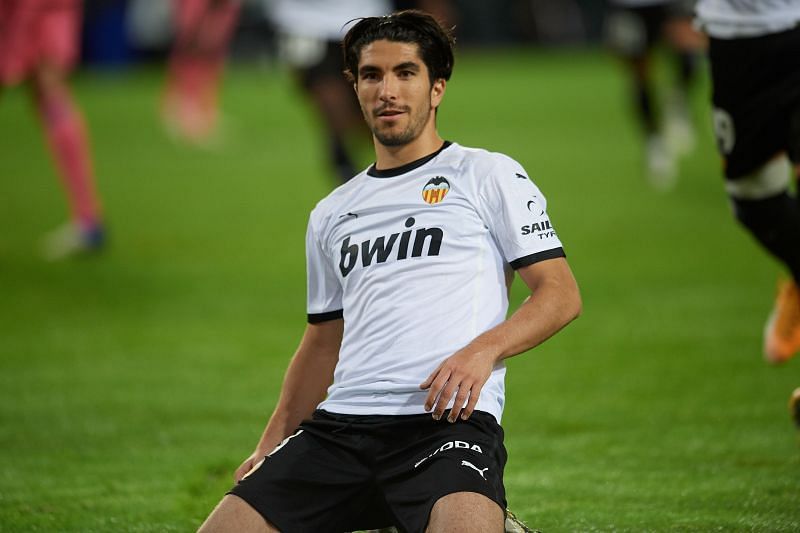
Mikel Arteta will almost certainly be silly if he doesn’t try and recruit a player who is his splitting image on the pitch; Valencia’s Carlos Soler.

Valencia’s creative orchestrator has been due a big move for a long while and Soler is a player ready for the big leagues.

The club are in a bit of a free-fall right now both on the pitch and off it, and are reportedly willing to listen to offers for some of their big names at cut-price deals.

If that is indeed the case, Arsenal should roll the dice and prioritize the signing of Carlos Soler. A tremendously consistent performer, even if his club isn’t registering the points they need.

It’s clear Soler deserves a club who matches his qualities and ambitions. He’s simply too good a player to not be performing on the biggest stages in Europe, whether that is Europa League or the UEFA Champions League.

Despite Valencia’s struggles last season, Soler still managed an astonishing 11 goals and 8 assists in La Liga highlighting his significance to the team, but also his extraordinary abilities.

A wonderfully gifted midfielder who always gives his all in every match he’s involved in. Soler is incredibly versatile too, capable of playing at no.10, no.8 on the flanks and a deep-lying orchestrator, he’d offer so much variation and tactical flexibility when needed.

Soler is as creative as all of the names on this list, providing eight assists last year. He is simply a superb player to watch, and has been on Arsenal’s radar before. He outperformed his expected goals and expected assists, as well as providing 0.26 assists per 90 minutes which means he is one of Europe’s most consistent creators. 1.45 key passes and 5.20 final third passes only highlights his efficiency and nous in those dangerous areas.

Where Valencia would be without Carlos Soler is a matter for another day, but it is about time he moves on from the Mestalla and embarks on a new challenge elsewhere.

Arsenal could certainly prove the most telling environment for him to thrive in.

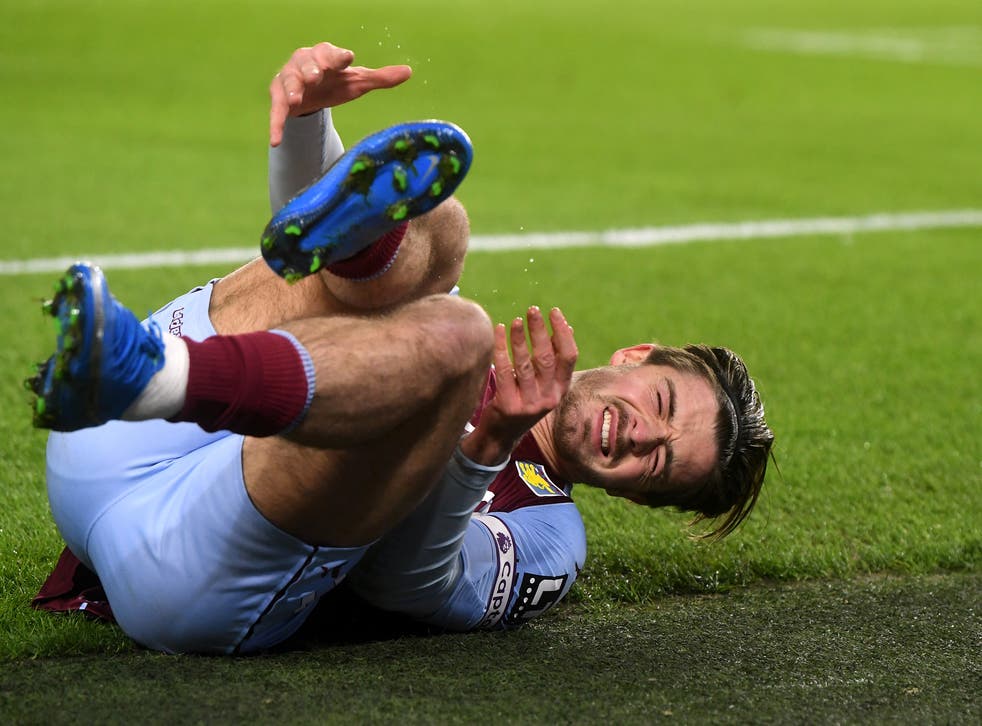
How Jack Grealish could fit in at Manchester City

How Jack Grealish could fit in at Manchester City

Manchester City have completed the signing of Jack Grealish from Aston Villa for £100m in the biggest deal in English football history.

The 25-year-old midfielder joins on a six-year deal after the Premier League champions activated the £100m release clause in his Villa contract on Friday.

The transfer fee also breaks the previous record in English football held by Paul Pogba when he re-joined Manchester United for £93.25m from Juventus in 2016.

It’s a deal which also makes Jack Grealish the most expensive British footballer in football history, surpassing Gareth Bale when he joined Real Madrid from Tottenham in 2013 for £85million.

The deal marks a stunning statement of intent from Pep Guardiola and Manchester City as the Premier League champions embark on retaining their crown next season.

Jack Grealish has proved one of the most creative players in the Premier League since Aston Villa’s promotion three years ago, whether through his passing, his unerring dribbling with the ball, and his sheer will and bravery to take opponents on, its no surprise Pep Guardiola feels he is the right man to refresh his star-studded squad.

The Aston Villa faithful will of course, be gutted and disheartened at this move, after all Grealish has achieved with the club, not least his remarkable gifts and talents that have rescued them out of various difficult situations since his emergence in the first team.

Grealish has indeed become an iconic figure at his boyhood club, but certainly now feels the move to Manchester City, one of the best clubs in Europe and the best in England is one he cannot turn down, especially the lure of playing in Europe’s most prestigious competitions, the UEFA Champions League.

Also, playing under one of football’s most decorated coaches ever in Pep Guardiola is an opportunity many footballers right now would certainly kill for.

At 25 years of age, its an opportunity that doesn’t come around too often, so you’d almost forgive Grealish for making such a huge career decision.

While Aston Villa lick their wounds at the sight of Grealish’s departure, Manchester City and Guardiola will be licking their lips at the sight of possessing one of the best creators in the country and one of the most talented players this great nation has had to offer.

Now, Guardiola will be contemplating with both joy and anguish at how Grealish will fit in at such a talented and world class squad. How do you fit in both Kevin de Bruyne and Jack Grealish in the same XI? How will Guardiola look to improve Jack Grealish? What qualities will Grealish bring, and how will it complement Guardiola’s style?

First and foremost, the 25-year-old will add more of a cutting edge to Manchester City’s play. Guardiola’s side scored 83 goals last season, the most of any team in the division, and possessing someone of Grealish’s ilk will only increase that figure even further.

They do say in a title winning team, that adding more quality to it and improving the following year means even more greatness and sustained success, than just sticking with the same batch of players. The whole squad becomes hungrier, competitive and more vibrant and Guardiola is doing just that with the capture of Jack Grealish.

Aston Villa’s great loss, is Manchester City’s great gain.
Without Jack Grealish last year, Villa only won three of the 12 games he sat out injured. He is a player of great reward, incision, precision, dynamism, cutting thrust and a skill set that proves so unique and masterful in comparison to his fellow English counterparts.

Grealish’s talent is obvious.

In terms of total chances created, chances created from open play and assists, Grealish is right in the midst of the Premier League’s most devastating creators.

Grealish created 70 chances from open play last season, second only to Manchester United’s Bruno Fernandes (77). He also formed 81 opportunities following ball carries in the last two Premier League seasons as shown above. This is all from just 26 Premier League games last year, even. 6 goals and 10 assists from 26 games is mightily impressive.
3.42 key passes, 3.46 final third passes, 6.91 progressive passes, 6.18 shot-creating actions (the two offensive actions leading directly to a shot, through passes, dribbles or drawing fouls) and 12.6 progressive carries per 90minutes all highlight how effective and influential Jack Grealish was to the Aston Villa cause.

All of those stats may increase at Manchester City, which poses such a scary thought for City’s rivals this coming season.

Many of the chances Grealish creates come after he’s dribbled with the ball, and he led the Premier League standings for 2020/21 in that particular field. Only Harry Kane, Hueng-Min Son and Bruno Fernandes had more assists following a carry and only Son, Marcus Rashford and Harvey Barnes scored more following a carry.

Grealish played far fewer minutes than any of those players, apart from Harvey Barnes, which only goes to show how dangerous Grealish is and just how much he runs with the ball. Progressive carries usually occur in the opposition half, are greater than five metres and move the ball at least five metres towards the opposition’s goal.

Grealish is absolutely devastating at performing such roles. Only three players – Adama Traore, Callum Hudson-Odoi and Pablo Hernandez – completed more per 90 than Grealish last season, but none of them were as devastating and as decisive with their carries as Grealish was.

Last season, Grealish carried the ball into the opposition penalty area a staggering 80 times, 3.29 times per 90mins. 18 more than Raheem Sterling, 32 more than Riyad Mahrez and 48 more than Bernardo Silva, already highlighting how much he offers more than Manchester City’s current options. Again, all of these staggering statistics despite Grealish only playing 26 games. He also ranks third in terms of passes into the box per 90 (2.96), behind his future teammate Kevin De Bruyne (3.56).

Grealish compared to City attackers (2020/21)GrealishSterlingFodenMahrezSilvaDe Bruyne
Games played263128272625
Goals6109926
Assists10756612
Chances created813936442780
Dribbles completed656638454148
Fouls won1104134301831
Provided by BBC Sport

Interestingly, Manchester City were the team who performed the most carries into the penalty area last season with 68, more than second-placed Chelsea. When City players get into the box, they are expected to make things happen, effect the game and Grealish, Foden, Sterling, Silva and Mahrez are all in the top 10 for passes attempted and completed inside the opposition’s penalty area last season.

The ability to carry the ball at long distances, evade pressure, beat opponents at will as well as drawing so many fouls is a trait that appeals so much to Guardiola and the City faithful. Manchester City will be getting a player who will vastly improve their football next season. However, there is a caveat to Grealish’s game that Guardiola may look to alter.

As journalist Miguel Delaney so correctly points out, Grealish is allowed so much freedom and warranty at Villa, in that his game is expressed individually, being able to perform so many actions on his own which drives his team and gets them out of difficult situations. That won’t be the case at City, Guardiola calls on a more structured approach to his attacking play, its all about the collective rather than the individual, and that’s something Grealish will have to adapt to.

He may not be able to just get the ball and dribble all he likes – as he did at Villa – he’ll be asked to keep up the tempo in City’s passing, with breaking opposition lines and carving out opportunities in the penalty area. It will certainly be interesting to see how Guardiola may adapt to Grealish’s style or teaching the Villa talisman to adapt and adhere to his own.

Grealish will need to release the ball quicker than he does, and to be more attentive when working with the likes of Kevin De Bruyne and Raheem Sterling. A major part of City’s superb approach was their ability to slow the game down with their subtle, intricate and decisive passing only to then speed it up at particular moments, taking advantages of spaces when they open up.

Defenders will be drawn to Grealish like he was at Villa, which means him winning free-kicks across the park could frustrate City’s build-up, with opposition teams reverting quickly back into a defensive shape. What’s so devastating about Grealish is his huge decisiveness once dribbling with the ball, which means City will only benefit, but they’d benefit even greater if he works on his game releasing the ball much more efficiently and more sooner.

The question on everybody’s lips will certainly be where Jack Grealish could line-up next season. Sources close to Guardiola say that Grealish could be deployed as a creative no.8 alongside Kevin De Bruyne in their customary and fluid 4-3-3 shape. With Raheem Sterling regularly deployed on the left, Grealish’s regular spot will be occupied, but there’s always a chance for rotation and flexibility.

Grealish in more central areas, as we’ve seen before is of course a devastating sight to behold. As soon as he picks up the ball, its incredibly difficult to get him off it – unless fouling him. At City, he may well be given more space to roam, with opposition midfielders occupied with Kevin De Bruyne’s ability to dissect opposition defences at will. If this is the case, Guardiola will be capable of breaching the most combative of defences from not just one area in the half-space, but two.

Both Grealish and Kevin De Bruyne are both destructive in those areas which gives the opposition much more danger than they bargained for.

Of course, Grealish could also expected to be deployed on the left side of City’s attack, his most common position, although with Sterling and Foden already on that side (and given the left-footed Foden finished last campaign on that flank) it is a very competitive area of the pitch for City.

The prospect of a Grealish and Foden partnership will be mouthwatering for any Manchester City fan, and there’s certainly been flashes of the pair when the two are on duty for England. Their superb ability to combine through delicious first touch passes and swift interchanging of movement could really aid City in cutting through opponent’s steep defences.

They would have no problems switching roles temporarily too.

How about Grealish and Sterling together? Southgate has tried that partnership with ruthless aplomb before, if you need any evidence just ask the Czech Republic.

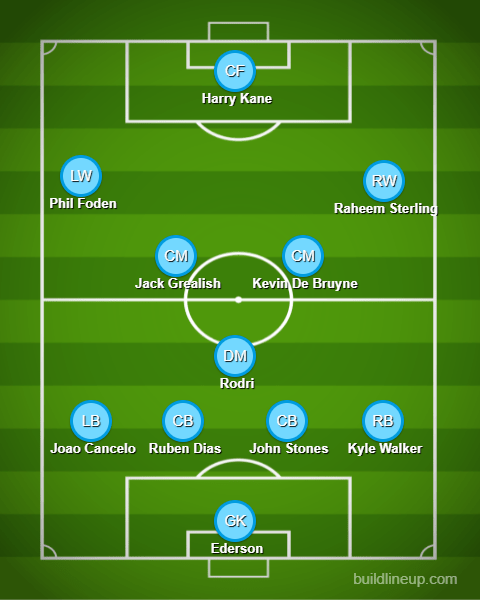
If City don’t get in Harry Kane this summer, and Guardiola opts for a false nine setup, then Grealish could be unleashed in midfield alongside Gundogan with Kevin De Bruyne coming off the front-line. Why not Grealish operating in those false-nine areas too?

The imperious quality at Guardiola’s disposal leaves a lot of room for rotation and flexibility certainly, which means Jack Grealish will be thrust into a much more competitive and much testing dynamic than at Aston Villa.

Some will argue that the grass isn’t always greener, but its a move and challenge that Grealish will relish and be excited by. It will be incredibly intriguing how Guardiola mixes and meshes his various attacking options, especially if they do manage to get in both Jack Grealish and Harry Kane this summer.

Jack Grealish’s move certainly raises as much questions as answers as to how City could line-up next season and how his game could complement the team’s and vice-versa. It’s an exciting headache for Pep Guardiola to have. However, what’s certain is that Jack Grealish will improve City considerably, and on a more personal measure, Grealish’s game may well be taken to a whole new level under Guardiola’s tutelage.

This is a call to Manchester City’s Premier League rivals (not just the red half of Manchester)… be very afraid.

How City could line-up next season with both Kane and Grealish

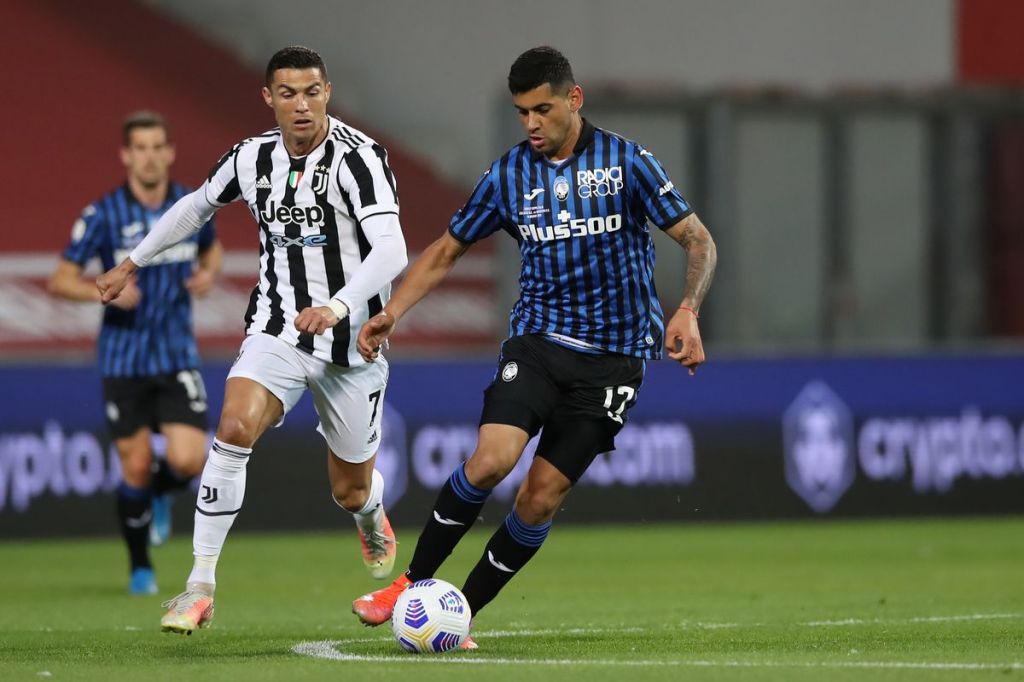
What will Cristian Romero bring to Tottenham Hotspur?

What will Cristian Romero bring to Tottenham Hotspur?

Tottenham have agreed a deal with Atalanta to sign highly-rated defender Cristian Romero.

Spurs increased their offer to £42.7m (€50m) plus bonuses, making a total package worth £47m (€55m) for the Argentina centre-back.

The Argentinian international and Copa America winner, 23, is Spurs’ primary target to strengthen the heart of new coach Nuno Espirito Santo’s defence for the start of the season in mid-August.

Romero, 23, will fly to London to complete his move, before agreeing personal terms on a five-year deal.

Club sporting director Fabio Paratici, who’s already making his mark in his new role, knows the player from his time at Juventus and sees him as a player who would suit the Premier League.

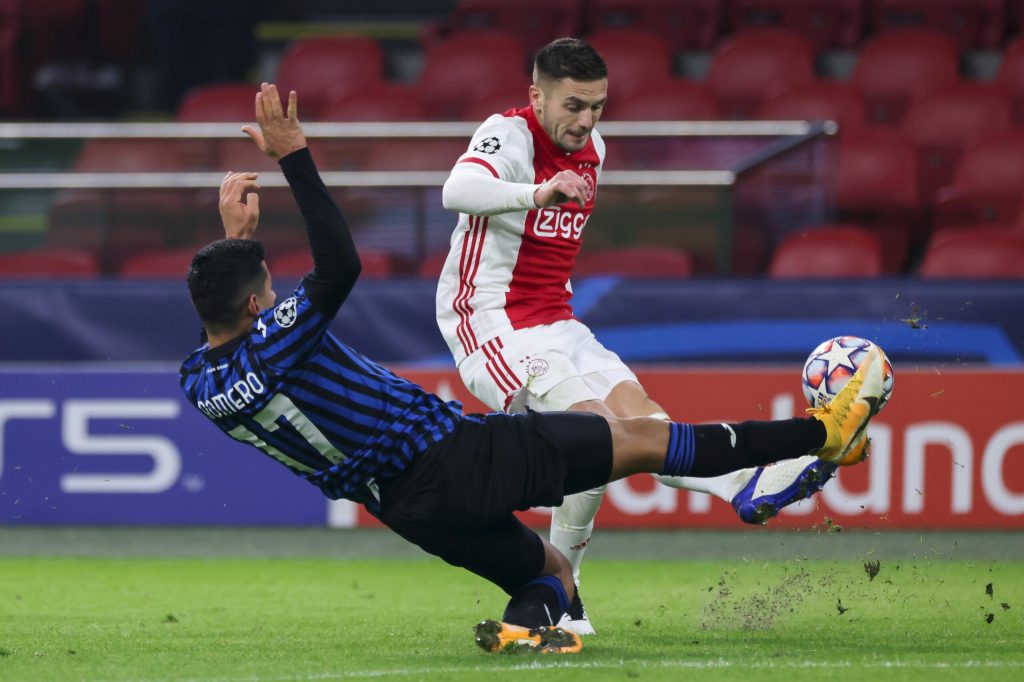
Cristian Romero is already being touted as one of the most prestigious young centre-backs on the continent, and rightly so. The 23-year-old enjoyed a superb campaign for Atalanta, being named the Serie A defender of the year last season.

In fact, he’s been an outstanding performer in the last three years after starting in Serie A with Genoa and getting loaned back there for a second season after Juventus bought him, which was a deal on Paratici’s watch.

The defender enjoyed a promising maiden Champions League campaign while on loan at Atalanta, also while helping them to a stunning third placed finish as a regular and commendable presence at the heart of Gian Piero Gasperini’s defence.

Spurs are in desperate need of a fresh input in their back-line, with the ageing Toby Alderweireld’s Spurs future uncertain, Eric Dier’s game declining, and Davinson Sanchez struggling to make a name for himself so far during his time in North London.

Cristian Romero provides the perfect solution to address the stark decline and underperformance in defence.

A tremendous breakthrough year, becoming a key figure for Argentina in their Copa America this summer, at the heart of their defence alongside veteran and former Manchester City defender Nicolás Otamendi.

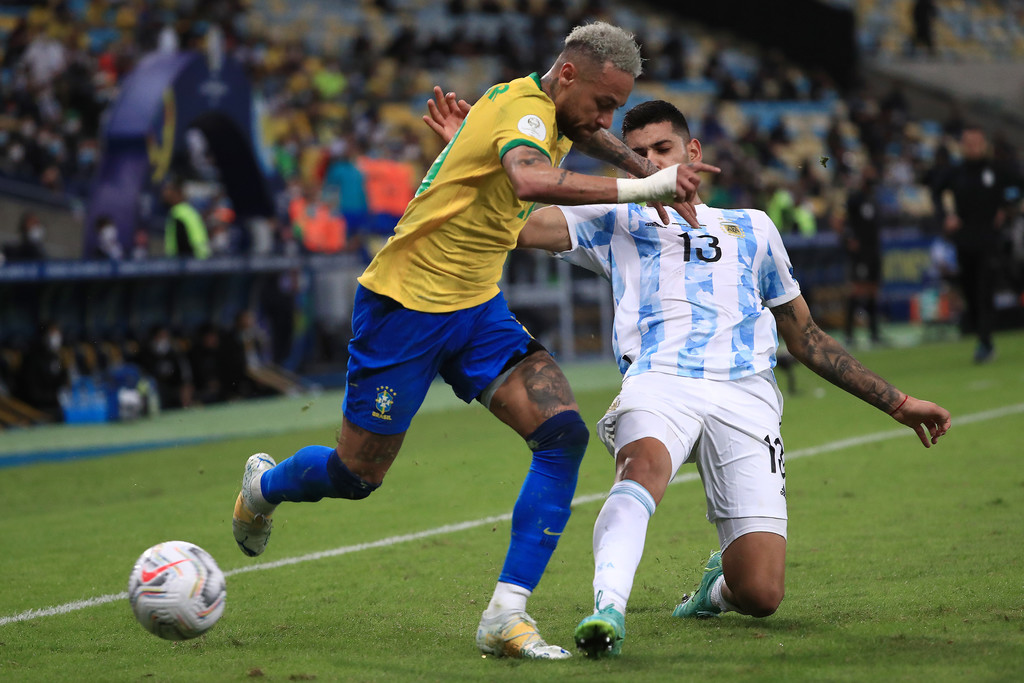
Despite featuring in three of Argentina’s six games during the tournament, he played and dominated in the most important game of them all, in the final against fierce international rivals Brazil. The 23-year-old was fearless against Neymar and co. not giving any of them a sniff as Argentina performed one of their most impressive shut out against fellow South American giants.

Cristiano Romero was simply unstoppable, standing guard against the likes of Richarlison, Neymar and Lucas Paqueta, and showcasing why he is indeed one of Europe’s most impressive young centre-backs.

So what will Tottenham be getting?

First of all, Nuno Espirito Santo will be recruiting a defender who simply loves to defend. A no-nonsense type.

Cristian Romero holds an intriguing skillset. Elements of his game are true relics of a bygone era: he looks impressive as a sweeper, mopping up loose passes and breaking up attacks that threaten to get behind his defensive line. 

He is no-nonsense, combative, aggressive tackles hard, picks up too many yellow cards (36 and three reds in three Serie A seasons) however, an element of his game which will be tested heavily in the Premier League.

However, with some quality coaching adding to maturity and high levels of exposure and experience, that part of his game will be more refined as he gets older.

As a sweeper, the 22-year-old is extremely alert to the play developing in front of him. In fact, he is so good at reading play that he made the third-most interceptions (81) of any player in Serie A last season, whilst also recording 5.51 tackles + interceptions per90 making him the best around performing such defensive actions.

He is happy to sit back, waiting to clean up loose balls or cover runs behind the defensive line, but he plays on the front foot too, stepping up to pressure attackers that take a loose touch, highlighted by the above per 90 tackles and interceptions figure.

The Argentinian centre-back also averaged 6.11 successful pressures per 90, meaning he isn’t afraid to step out of his defensive line to engage on-rushing attackers. He is quick, strong and agile but more importantly confident enough to win the duel. Already, he reads a much better upgrade on Eric Dier and Toby Alderweireld, who aren’t as forthcoming and proactive in their approach.

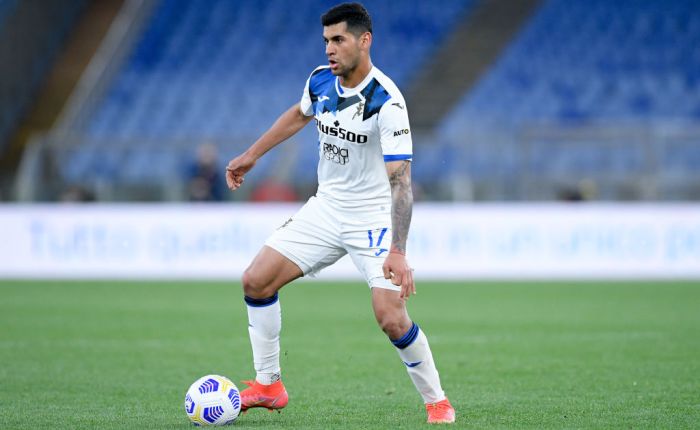
(Photo by KENZO TRIBOUILLARD/AFP via Getty Images)

Romero is aided by a superb athletic profile – he is 6’1”, incredibly agile, has an enormous leap (won 67% of his aerial duels last season), and covers the ground quickly.

The Argentine defender typically plays either in the centre or on the right of a three-man defence. It’s unclear as of yet to predict how Santo will set up his Spurs back four, but Romero will prove a valuable and unique addition no matter the defensive setup.

He thrived in a two-man back four at the Copa America against some of the world’s best attackers, so he’d be right at home in the Premier League.

Though, the creativity of the central defender in a three-man defence is often integral in kick-starting attacks, but Romero sometimes lacks the willingness to take on such a burden, often playing too safe – slowing down potential attacks in the process and allowing teams to set up their defensive structure. 

He completed 90% of his short passes, whilst also averaging 2.40 progressive passes. As shown through Conor Coady under Nuno Santo, the England international regularly took the responsibility in instigating attacks with his swift long-raking passes for Wolves.

That’s not to say Romero can’t perform them, but to do it at an increased regularity will take some quick learning and maturity in his game if he is to perform Nuno Espirito’s Santo’s instructions to the letter. Who knows, Eric Dier may be asked to fulfil that role in the middle of the back three instead.

It is an element Romero can gradually learn.

In terms of his build-up play, Romero has been known to be very simple, safe but astute. In fact, last season his final third passing average and progressive passes shown some considerable improvement. 1.77 final third passes per90, and 2.40 progressive passes, from 1.57 and 2.10 the following campaign at Genoa.

Whether that’s because of the step up in quality between Genoa and Atalanta could well be a strong factor, though it shows that Romero is capable of stepping up his game when playing with much more quality players around him, as he did at the Copa America.

At Tottenham, that quality will only increase which also means the quality of his performances will increase too. At 23 years of age, Cristian Romero has so much room to improve and grow.

Assuming Tottenham get their man it could well prove to be one of the most astute pieces of business Spurs complete in a long while.

What will Ben White bring to Mikel Arteta’s Arsenal?

What will Ben White bring to Mikel Arteta’s Arsenal?

Arsenal’s pursuit of Brighton’s highly-rated centre back Ben White has caused a bit of a stir amongst the Arsenal faithful.

For a side who surprisingly finished as the Premier League’s third best defence despite their lowly conclusion in eighth place, many are discussing whether the reported £50m fee would be better spent in other areas of the squad.

That is indeed true, but for a player of Ben White’s qualities, potential impact on Arteta’s team and current market value, its an opportunity the club could not afford to pass up on.

For Arteta, like many of the top coaches in the modern era – especially his managerial mentor at his former club Manchester City – a centre-back’s job description isn’t just to defend their own goal, but to be as effective and influential in distributing the ball upfield, and in doing so become the starting point of team’s attacking play.

Arteta regards playing out from the back as a key tenet of his philosophy, but progressing the ball from one end of the pitch to the other has been a persistent problem during his tenure as coach – particularly when without David Luiz, whose departure this summer has left a ball-playing void in the heart of Arsenal’s defence.

Brazilian and former Lille defender Gabriel does indeed have the qualities to perform the role, averaging 2.39 progressive passes per 90, and 3.69 final third passes with a 91% short pass accuracy, which is impressive data from his first campaign in English football, but he will need someone alongside him to add to that dynamic and provide Arsenal with various modes of building from the back.

Many supporters have wanted to see the returning William Saliba given a chance to fill that void, only for the defender to join Marseille on a season-long loan, his third during his spell as an Arsenal player.

Brighton’s Ben White fits the mould perfectly, and is just the player Mikel Arteta needs to provide an added dimension to his possession-based style.

There can be no disputing Ben White’s calibre and propensity to perform such a key role.

Throughout his time at Leeds United and Brighton, and even during his first international cap for England, Ben White has shown he isn’t afraid in taking on new challenges, and a move to the Emirates represents the perfect step up for him.

The 23-year-old took in the demands and rigours of the Sky Bet Championship with much assuredness and maturity under the tutelage Marcelo Bielsa, he acclimatized brilliantly during his first full campaign in the Barclays Premier League, so who’s to say he wouldn’t immediately capture Arsenal hearts this coming season?

Ben White is a tremendous footballer and defender.

He showed it at Brighton last season, starting all but two of their Premier League games under Graham Potter having made a similarly positive impression on Marcelo Bielsa a year earlier.

The Argentinian was desperate to sign him permanently after he played every minute of their promotion-winning Championship campaign, but the club’s offers – worth as much as £25m – were knocked back. White’s value has swiftly doubled ever since.

Potter and Bielsa, like Arteta, are committed to building from the back and the same is true of Gareth Southgate, who fast-tracked White into the England squad ahead of Euro 2020 and is said to regard him as a key figure in the future of the national side, and rightly so.

White’s burgeoning reputation has a lot to do with his outstanding technical ability and versatility.

He is excellent on the ball and boasts a fine range of passing. His composure and confidence in possession are such that Potter and Bielsa have even used him in central midfield. He is also capable of playing at right-back or at wing-back.

Most of all, he is an excellent and efficient ball-progressor, and distributor – elements of which Mikel Arteta value so highly. Last season, he averaged 3.13 final third passes, 3.27 progressive passes from 41 passes per game with a 90% accuracy.

Arsenal previously looked to David Luiz to initiate their attacks from that position, playing through opposition lines and picking out attacking players in dangerous areas. But it will now fall to White to take on that responsibility and he is well equipped for the task.

Ben White is the composite, modern day centre-back. His smooth transition from League Two level football to the Championship and the Premier League has seen him maintain his unique trait of performing so coolly in possession, and its further helped by the fact that Bielsa, Potter and Southgate’s philosophies are hell-bent on progressive play from the centre-backs. He is steadfast in style, which is perhaps why he is such a good fit for such tactics; he is fast-paced and fearless at times, stepping out to open passing lanes, but equally considered and meticulously calculated.

In fact, despite averaging fewer passes per game than his Arsenal counterparts last season, White played a notably higher percentage of his passes forward reflecting his willingness to send his team on to the attack rather than simply recycle possession.

White contributed handsomely to Brighton’s attacking play not just through his passing but his dribbling too. At times last season, you’d find him running with the ball at full throttle trying to disrupt organised midfield shapes in the opposition or to carry his team up the pitch when there are no options in front of him.

He recorded 0.68 successful dribbles for Brighton last season, better than any of Arsenal’s current options with Pablo Mari coming a distant second with just 0.30. He averaged 3.08 progressive carries per 90 (carries that move the ball towards the opposing goal at least 5yards or into the penalty area) and also recorded 1.04 carries into the final third of the pitch.

White’s dribbling is one of his most unique qualities, recording the most dribbles (24) by a central defender in the Premier League last season, and completed the most carries with take-ons (18) than any other centre back.

Ridiculously impressive.

It’s a testament to his admirable bravery, maturity and ball-playing abilities. It doesn’t stop there, Ben White boasted considerable numbers defensively in comparison to his future Arsenal teammates. More interceptions per90 (1.75), and coming a close second in terms of tackles (1.38) to Rob Holding who recording 1.51 tackles per 90.

White’s dribbling is facilitated by his athletic profile as well as his technical skill. The defender is strong in the duel and boasts impressive pace and acceleration. Together with his close control, those attributes help him glide past opponents with ease and assuredness.

As well as being an astute and capable passer of the ball, he’s a warrior and a rugged defender when he needs to be.

Arteta favours a high line, much like his mentor Pep Guardiola, but a lack of pace among his existing centre-back options leaves Arsenal vulnerable in behind. White’s recovery speed will dramatically improve that.

So too could his ability to read the game. White is relatively inexperienced at 23, but he is always alert to danger – he averaged more interceptions per 90 minutes than any of Arsenal centre-backs last season – and always aware of what’s going on around him. White is also decent aerially, winning 53% of his aerial duels last season.

Ben White may not look the most physically dominant player, but his image is not the whole picture. He is consummate when shepherding out the most physically built players, and standing up to them. His match intelligence is there for all to see when facing up to his opponents, allowing him to position himself well to coax forwards away from threatening positions and make blocks. He times his tackles very well too and a very fine and adept reader of the game.

White’s been dribbled past on average only 0.9 times per game meaning he is so difficult to get past due to his brilliant positional sense and understanding of the differing defensive phases of play.

Brighton finished 16th in the Premier League but defensively they were one of the best sides in the division, keeping 12 clean sheets – the same number as Liverpool and Arsenal – and conceding 46 goals – only two more than second-placed Manchester United. All with White playing more minutes than any other player.

His potential partnership with Gabriel next season looks very enticing as Arteta will possess two capable possession-based, imposing, quick and efficient centre-backs who could potentially be Arsenal’s long-term defensive pairing for a whole number of years to come, and a solid base that Arteta could build for future.

He is ever-so reliable, a silent leader and a consummate professional. At 23-years of age, White already looks somewhere close to the full defensive package. Mikel Arteta will hope his thrilling development continues along the same trajectory at the Emirates Stadium.

£50m in the next few years will look a very worthy investment.

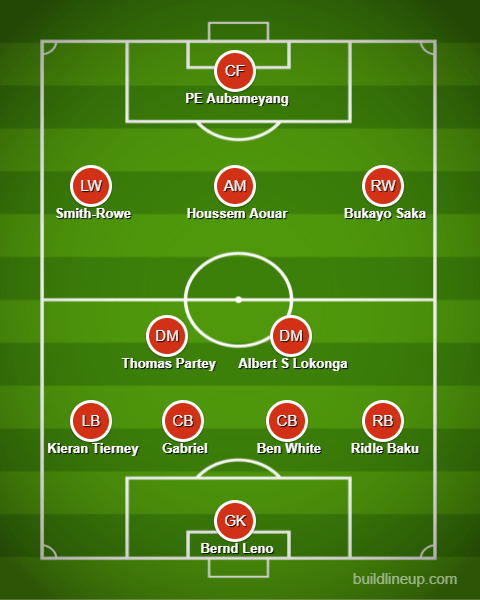
How I Would Like to See Arsenal Line-Up Next Season?

Defining campaign for Manchester United; so what does Solskjaer need to maintain a strong title push?

Defining campaign for Manchester United; so what does Solskjaer need to maintain a strong title push?

According to The Telegraph, Manchester United boss Ole Gunnar Solskjaer has signalled his intention shift to a more forward-thinking and attack-minded approach for his team in the forthcoming season. A move which could disband the McTominay and Fred midfield pivot that has served the Norwegian well during his time as United boss.

Solskjaer has told those players who have returned to pre-season training that he is eager to implement a more adventurous 4-3-3 formation next term as he bids to end the club’s eight-year title drought.

Solskjaer favoured a double defensive midfield pivot of Fred and McTominay last season and invited criticism at times for being too cautious and defensive. Despite the success of such a setup, United fans will of course be expecting a change of formula next season, hence Ole Gunnar Solskjaer’s reported shift in formation and mentality.

The Norwegian’s thinking of a more mobile, dynamic and energetic duo of ‘McFred’ could well have been influenced in part by United’s 6-1 hammering by Tottenham in early October, when a midfield trio of Bruno Fernandes, Paul Pogba and Nemanja Matic were easily bypassed as Spurs ran riot at Old Trafford, and a desire to afford his central defenders more protection against pace.

However, Solskjaer and his staff are understood to have discussed playing two more forward-thinking midfielders ahead of a single defensive midfielder next season and have raised that possibility with the players this summer.

With the arrival of Jadon Sancho, and hopeful signing of Real Madrid centre-back Raphael Varane adds pedigree, and additions which are of high quality and perfectionists in their individual roles. For too long United have been made to fill round pegs in square holes, which has hampered their pursuit of the Premier League title, a trophy that has eluded them since 2013.

Ole Gunnar Solskjaer has been excellent in fixing those issues, but there is indeed more work to be done on a squad that is progressively improving and is also steadily on its way to ideally fitting the Manchester United DNA.

It remains to be seen how adventurous Solskjaer proves to be but he is eager for United to play on the front foot more at home especially, with Old Trafford expected to welcome back capacity crowds next season.

To do that, United do of course need a quality, assured, dynamic and dominant defensive midfielder who is also very good on the ball – similar in the mould of Michael Carrick or Paul Scholes – and is able to progress the ball expertly too, whilst also perfectly fulfilling his screening and shielding duties in front of the back four.

The club have been linked with West Ham captain and England international Declan Rice, however, West Ham continually insist he is not for sale, even a potential swap deal for Jesse Lingard will not be entertained. United also retain an interest in Rennes’ exciting teenage wonderkid Eduardo Camavinga, though his preference is to remain in France, or play in Spain for Real Madrid.

Nemanja Matic, Fred and Scott McTominay have indeed served the club well, but its time for United to go out an address a serious need in that defensive midfield role. All three unfortunately don’t possess the ability or nous to fulfil such a role.

Whether Manchester United have the funds to sign a quality defensive midfielder is unclear, but there is no doubt Solskjaer realizes that in order for his team to progress further this coming season, they must acquire an elite one.

So which players could potentially fit the mould at Old Trafford?

Teun Koopmeiners, AZ Alkmaar

Unquestionably, one of the most exciting and talented young midfielders in Europe right now, Teun Koopmeiners has been one of the hot topic of transfer rumours over the past few months.

Linked with a whole host of top clubs, including Arsenal, Liverpool, AS Roma, Atalanta, Leeds United, Inter Milan, Everton and AS Monaco, the man who joined AZ Alkmaar at 11 appears destined to leave his beloved club. AZ are reportedly resigned to losing him this summer, even for a relatively low fee of around £20million which is pretty much a snip for a player of his stunning qualities.

Having gained so much experience in Europe and domestically over his 150 appearances, there’s no doubting he’s now ready to make the step up to one of the top five European leagues.

First and foremost, Koopmeiners is a leader, a talker and an impressive authoritative figure on the pitch for AZ, and those are the type of players Manchester United need, especially where they are in their evolution under Ole Gunnar Solskjaer.

The 23-year-ol will bring an assured and dominant presence in front of the back, giving Solskjaer a very very strong spine in his starting line-up. As well as his measured and sturdy characteristics on the pitch, its his qualities on the pitch that makes him the complete package.

Adaptable and familiar with a range of systems, the 23-year-old’s primarily deployed as a central midfielder, but is perfectly capable of dropping back to act as a central defender, where his quality on the ball helps massively during AZ Alkmaar’s build up play.

United require a player who can effortlessly progress the ball and break the lines of play, and Koopmeiners is amongst the best midfielders in Europe in doing just that.

Koopmeiners is a true metronome on the ball, controlling possession, dictating the tempo of games and providing his team with the rhythm they need to breach opposing defences. He also hit an impeccable 17 goals and 7 assists last season with 7 of them from the penalty spot owing to his admirable versatility, technical excellence and a cool head when needed.

So comfortable and composed in possession, his exceptional distribution ensures he’s proficient at dictating passing passages and breathing life into attacks. Such an expert at helping his team beat the press with his penetrative line breaking passing, this means he can remove multiple opponents with a single pass. Not only is he a superb passer of the ball and is hugely reliable off it too.

Combative in the tackle, and a really strong presence when standing up to attackers, averaging 2.7 tackles per game.

How Paul Pogba and Bruno Fernandes would love to play with such a player behind them.

Koopmeiners is a low-risk, low-fee acquisition and is a perfect candidate to fulfil that gaping hole in defensive midfield. He provides security, composure, assuredness and a self-belief that few players in his age bracket could match. He’ll be a very sensible addition for Manchester United, a no-brainer.

Aurelien Tchouameni, AS Monaco

Arguably Ligue 1’s breakout star of the 2020/21 campaign, Monaco’s French under-21 international Aurelien Tchouameni is on his way to worldwide acclaim. He’s been recently talked up by club teammate and Arsenal legend Cesc Fabregas, who said on Twitter that Tchouameni: “has the potential to become the complete midfielder.”

Indeed he is, Tchouameni is an unstoppable force both on and off the ball, and proved a key figure in Monaco’s tremendous first campaign under Niko Kovac where they finished third five points off new champions LOSC Lille.

Tchouameni ranked second in Ligue 1 last season for successful tackles (142), and ranked fourth for interceptions (64). Per 90 minutes, the French wonderkid registered an astonishing 6.06 tackles + interceptions highlighting his dominant and combative defensive contributions. He is an elegant but also a sturdy midfield destroyer, also averaging a tremendous 7.06 successful pressures per 90.

Manchester United need a destroyer, Fred and McTominay have succeeded as a pair performing that demanding role, but none of them can fulfil that role on their own. Tchouameni holds the ability, energy, defensive positioning, and understanding required for the role, despite his tender age of just 21. He would be incredibly much cheaper than main target Declan Rice and will provide Solskjaer with the reliable solid base needed in front of United’s back four.

Not only is he a imposing figure defensively, he’s also a fine progressor of the ball both in his dribbling and in his passing. Capable of breaking lines, to evade pressure and drive his team up the pitch. He averaged 4.06 progressive passes, 4.44 progressive carries, 1.38 carries into the final third and 4.53 final third passes. His key passes is relatively low in comparison to his counterparts (0.50) but that is not a weakness, but is a result of the position he takes up on the pitch, sitting deep and dictating play as well as breaking it up. He does however, contribute much in the attacking sense, recording two goals and 4 assists in Ligue 1 last season.

He would likely cost around £40 million and at the age of 21 he is a prospect worth pursuing, seeing as he’s also reportedly a target for Chelsea. Tchouameni is a future world star, and would represent a quality addition, especially if Manchester United don’t acquire his international teammate Eduardo Camavinga.

Ruben Neves, Wolverhampton Wanderers

Ruben Neves, has reportedly attracted interest from Arsenal over the past few weeks of the window, but now according to TalksSPORT, Manchester United have reportedly stolen a march on the Portuguese midfielder, with international teammate Bruno Fernandes pushing for the club to sign him this summer.

The Portuguese midfielder is Premier League proven, and sometimes doesn’t get the credit he deserves. A few United fans could well state their reservations over signing Neves, which doesn’t make sense. The midfielder is simply good enough to be playing for a top six Premier League club.

Ruben Neves has become a serial leader and a key figure since his move to Wolves in 2017 and he’d be a tremendous capture for Ole Gunnar Solskjaer. Superb long-raking passes, vision, technical qualities, good positional awareness, tactical understanding and a desire that so few midfielders can match.

Rather than signing a player with no Premier League experience, Neves will provide a ready-made Premier League quality acquisition and a reliable presence in the face of the demands of the English top-flight.

The 25-year-old ranked fifth across the Premier League for tackles won (66) in 2020/21 and also averaged a stunning 6.84 passes into the final third. He would be a welcome upgrade in central midfield for Solskjaer. A player capable of the unimaginative long-raking and eye of the needle passes as well as his scorching efforts from outside the box.

Ruben Neves is certainly ready for that next step in his impressive career.

Yves Bissouma, Brighton

Yves Bissouma has quickly transformed into one of the Premier League’s most destructive midfielders, and any of the top six clubs would do incredibly well in recruiting his services in the near future.

If Solskjaer wasn’t impressed by Bissouma’s performance against his side at Old Trafford earlier this year, then what did he take from that game in April? Yves Bissouma was absolutely tremendous despite Brighton’s close-run defeat, completing six interceptions and winning three tackles.

However, that performance is a reflection of his growth, maturity and dominance all throughout last season. Bissouma is unquestionably one of the best defensive midfielders in the English top-flight. The Malian international made the 2nd most tackles (114), won the 2nd most tackles (74), the seventh most interceptions (60) and committed the fourth most fouls (54) in the Premier League.

You don’t need to read into that too much to understand his important and decisive defensive contributions. He is simply outstanding. He is, like the other players on this list, so good on the ball as well as he is off it. Bissouma averaged 3.55 final third passes, 3.29 progressive passes, completing 88.7% of his distributions. Bissouma is also a unstoppable freight train when moving with the ball at his feet, evading opposition pressure and providing a much needed outlet for Brighton’s build-up play, averaging 4.54 progressive carries, whilst also recording 1.45 successful dribbles.

Bissouma has swiftly morphed into the complete midfield package in the Premier League, and its equally impressive considering how he started out in the English game. How Manchester United could do with his destructive presence in midfield. The 24-year-old looks primed for a big move and passing up on him could be a mistake.

Boubacar Kamara, Olympique de Marseille

The Red Devils’ search for a quality number six has been well documented, and Marseille’s talented 21-year-old defensive midfielder Boubacar Kamara could provide the ideal solution to the McFred pivot problem. He betters both this season in terms of goal-creating actions (seven), press success rate (35%), progressive dribbles (128) and aerial duel win rate (63%). 

Of course, team style and its influence on player outputs must be accounted for, but given he is younger than both and currently statistically outperforming them, the potential long-term value in this signing is huge. It also is valuable that he clocked considerably more minutes than both, as player availability is key currently, and avoiding injuries/burnout in a congested season speaks volumes about the resilience of a player.

United’s problem this season just gone was certainly keeping goals out – Spurs (45) were the only of the super league clubs to conceded more than Solskjaer’s side (44), and they ranked in the bottom six Premier League sides for tackles and pressures in the midfield third, an area where Kamara thrives. StatsBomb data also has United as the third most dispossessed side in the league last season, so the Frenchman could offer some much needed security in-possession.

A superb ball-winner in multiple forms – a presser, dueler and interceptor – but also as comfortable against the press as he is when pressing himself. The 21-year-old is typically Marseille’s deepest midfielder in-possession, comfortable in drawing opponents in through ball retention, then bypassing them through silky footwork or combinations with teammates.

He’s certainly the most risky, outside bet on this list of potential solutions for Manchester United’s lack of a capable defensive midfielder, but he’s a player worth looking at to fill the void. He’d be very cost-effective too, considering his remarkable potential and room to become one of the best in Europe in his position.

Wimar Barrios, Zenit St Petersburg

Every top club in Europe needs a defensive midfielder who just loves to screen and protect, to do the dirty work, to be destructible. Manchester United have not possessed a player of that ilk since the legendary Paul Scholes or even Roy Keane.

It was the hallmark of Sir Alex Ferguson’s teams, to have that perfect balance between defence and attack, someone who can destroy in the middle of the park, and then allow his more forward thinking teammates to run amok in attack. What was it that Sir Alex famously said back then? “Attack wins you games, defence wins you titles.”

Ole Gunnar Solskjaer is indeed looking to address that lack in his squad for next season, with the pursuit of Raphael Varane, and a quality, elite defensive midfielder will do to, and that brings us to Zenit St Petersburg’s tremendous Columbian destroyer Wilmar Barrios. The 27-year-old is the archetypal midfield destroyer and more.

Barrios has arguably been Columbia’s most important player since his international debut in 2017 and has been a dominant and destructive presence in Zenit’s team, one which has triumphed in the Russian division for three seasons in a row. Much of that has been down to Barrios’ consistency, leadership, and complete performances in front of his back four. It’s a shame, his high levels of consistency has somewhat gone under the radar for too long, and its only right he is placed on this list as a man who could solve United’s deficiencies in the middle of the park.

Barrios is a player with such unerring, wiry strength, great recovery pace and a pure destroyer in midfield. He is indeed a modern day Roy Keane. According to Wyscout, Barrios averages an astonishing 13.4 successful defensive actions per90, whether its a tackle (2.3 per game), an interception (1.8 per game), a pressure or an aerial duel, also he only gets dribbled past 0.6 times per game meaning he is incredibly difficult to get past when attacking. He is a defensive machine.

He also wins 66% of his defensive duels, which is second amongst any defensive midfielder in Europe’s top five leagues. Barrios, as well as his defensive contributions, is also a good ball-progressor too either with his passing or his line-breaking runs evading pressure and operating in tight areas, he is unstoppable when performing these actions making him a perfect Premier League defensive midfielder.

At 27, he’s entering his prime years but also has such prestige experience and history in his career already, winning titles with Boca Juniors and Zenit St Petersburg throughout his impressive career. He’s the perfect candidate, at the perfect age to drive United forward once again.

Wilmar Barrios is a must-have.

Maxence Lacroix – Scout Report

Maxence Lacroix – Scout Report

Having just conceded 29 goals from 29 Bundesliga games, VFL Wolfsburg possess the second best defensive record in the league at the time of writing, level with RB Leipzig (23) and have conceded 9 less than giants Bayern Munich.

Oliver Glasner’s men have been incredibly solid if not spectacular in their defending this season and coupled with such a reliable defence, they are also getting the impressive results. dragging themselves back amongst the Bundesliga’s elite side after a number of years in the wilderness.

They currently sit third in the league and may be far off a title tilt, 14 points off Bayern Munich but they are well on course to finish in the Champions League places, appearing in Europe’s flagship competition for the first time since 2015 where they knocked out a Manchester United side managed by Louis Van Gaal in the group stages.

They are eight points ahead of Dortmund in 5th. At this stage last year, Wolfsburg conceded 30 goals. So what has changed in Glasner’s team? Why have they suddenly established themselves as one of the best defensive outfits in the division?

Well, its very hard to look past the the rock and heartbeat of Wolfsburg’s tremendously built back-line, French youngster Maxence Lacroix.

The 20-year-old has formed into the bedrock of Wolfsburg’s defence, becoming not just a huge defensive presence but a steady and assured leader at such a tender age. He only moved to The Volkswagen Arena last summer in a €5 million deal. Paying such a fee for a player with just one campaign of Ligue 2 football to his name will of course raise a few eyebrows, even for financially stable clubs like Wolfsburg.

However, Sochaux did concede only 22 goals in 19 games with Lacroix in the starting line-up – not bad for a team that finished in 14th place last term as the division was brought to a premature end due to the coronavirus pandemic.

A little over a year on, Lacroix has propelled himself to become one of Europe’s most sought-after young defenders with a whole host of top European clubs reportedly preparing to secure his signature this summer.

So how has Maxence Lacroix built himself to this position? How has he developed so much in the German Bundesliga and what does the future hold for a player reportedly already ready to take on much bigger challenges?

Who is Maxence Lacroix?

Having left home at the age of 13 to pursue his dream of becoming a professional footballer, it is perhaps no surprise that Maxence Lacroix is already showing a maturity beyond his 20 years at the heart of a sturdy Wolfsburg defence.

Standing at a towering 6’3” (190cm) and weighing 88kg (194 pounds), Lacroix certainly has the physique to handle the toughest of challenges football can throw at him, but his path to the top has been by no means a straightforward one.

Born in Villeneuve-Saint-Georges on the outskirts of Paris, he began playing at the age of four, and by the time he was 13 he was deemed good enough to join the youth academy at Trellisac, over 300 miles away to the south-west.

Two years later, Lacroix was on the move once again, this time over 400 miles to the east to the youth set-up at French second-tier side Sochaux. There, “it all went very quickly,” as the centre-back recalled, and he signed professional terms at the age of 17, making his first-team debut for the club at the age of 18 in the Coupe de France at the end of 2018.

A further 27 appearances for the side followed over the next season and a half as he established himself as a regular in the team, before Wolfsburg came calling in summer 2020.

The right-footer has continued to progress rapidly in the Bundesliga. He wasted little time in establishing himself as first-choice partner to John Brooks in the heart of the Wolves’ defence, starting 22 of the team’s first 24 league outings.

Lacroix has impressed at so many extraordinary levels. he has already clocked the 17th-fastest speed of any player in Germany in 2020/21 at 21.70 mph (34.93 km/h), with RB Leipzig’s Dayot Upamecano the only centre-back quicker on his feet, while as of Matchday 21 he is 11th in the overall tackle-winning stakes with 226, and 15th in aerial duels (62).

No wonder Wolfsburg have one of the most solid and well-organised defences in the Bundesliga this term, and that’s predominantly down to his superb defensive partnership with American international John Brooks.

What is Lacroix’s style of play?

Maxence Lacroix has already drawn many comparisons to Manchester United legend Rio Ferdinand simply because of his build, power, composure and abilities on the ball, and if you analyse his game in detail, you’d be amazed at how similar he is to one of the greatest defenders ever to grace the game.

The 20-year-old possess several strong and unique attributes, including his intelligence of knowing when to step out of the defensive line or not, putting pressure onto attackers and forcing them to face away from goal, and his calmness in possession. Standing at a well built 6’3”, Lacroix possesses a good leap which is supplemented by his strong positioning.

Still only 20 years old, in this stage of his career, it is so vital in pointing out which features of his game are strong, and which of the areas he needs to work on in order to discover how he will aid his side in winning matches and what sort of player he’ll mature into in the future.

So, what is Lacroix’s strengths and what is indeed, his playing style? He is an incredibly strong player, owing to his incredibly athletic and imposing build and its why he’s so good at ushering forwards away from dangerous areas in order to hurt his team.

Once he steps out of his back-line to halt onrushing attackers, they are immediately alerted to his imposing presence which of course causes hesitation in the opposition and swiftly the attack loses its sting. While this element has become one of the hallmark of Lacroix’s game, its his passing and build up play that deserves the praise first and foremost.

The French under-20 star possesses such unique technique and acumen when he’s on the ball. His first touch is pleasing and prefers to mainly pass with his strong right foot, from which he displays a great range of passing, though his decision making in this regard has room to improve. However, his passing stats this season reflect their importance to Wolfsburg’s build-up play.

Like Ferdinand, Lacroix displays great understanding in the kind of passing he needs to make and how to execute to his more forward teammate’s liking, whether in to space or to their feet.

He averages over 60 passes per game with a success rate of 82.9%. Certainly, this figure may not seem high considering the amount of short passes Lacroix is tasked in performing but he isn’t a centre-back who passes to his fellow centre-back or defenders like most do, he always looks for the forward pass which is further highlighted in his 3.70 progressive passes per90, and 2.94 final third passes.

Lacroix is so well versed in the art of forming goal-scoring opportunities from defence just like Rio Ferdinand so often did for Manchester United. He also attempts a high volume of long passes in order to bypass the oppositions press or to catch opposing defenders off guard. The 20-year-old averages 4.5 long balls per game with a success rate of 70% which is decent considering where he is in his development, yet still there is much for the defender to pick up and learn for the future.

Lacroix is a right-footed centre-back who played as part of a four-at-the-back system at Wolfsburg, capable of playing in a deep defensive block and a high line. His speed, athleticism and quickness on the ground owes Wolfsburg the opportunity to play risky high-lines, he’s more than capable of eating up ground to recover and stop even the quickest of forwards.

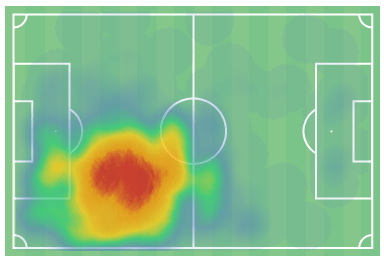
He has spent much of his playing time in the right half-space, but his clever defensive positioning means he is adept at defending wide spaces too. When he picks up the ball in these areas, he is all about finding a forward with an attempted long ball. He has found a good balance and understanding with John Brooks, his defensive partner, who typically stays back to cover Lacroix stepping out of the defensive line.

Lacroix’s heatmap 2020/21

In terms of Lacroix’s ability in the air, he has laid down the foundations to be really strong in this regard. He is 6’3” and possesses a great leap, if unspectacular compared to some of his fellow defenders in the league. He wins 2.2 aerial duels per game reflecting his sound ability in the air, but on average this season he’s won just over 50% of those per 90 minutes and can be susceptible in this area of his game. For a player of his build and stature, he needs to find the consistently if he is of course to challenge the best of defenders in Europe if Wolfsburg are to secure Champions League football for next season. Though, like all footballers his age, its important to remember that Lacroix is still only 20 years of age which is staggering considering all he’s achieved so far in his first season at top level football.

Lacroix groundwork defensively though, is remarkably impressive. He is a defending freight-train, a man mountain and that’s further highlighted his ground duels. He averages 2.37 blocks, 1.14 tackles won, 2.13 interceptions as well as 5.64 clearances. For a player who’s still gradually developing, these are very good numbers, and its one of the telling reasons why Wolfsburg currently have, not only one of the best defensive records in the German Bundesliga, but in Europe’s top five leagues too.

What does the future hold for Maxence Lacroix?

Lacroix’s performances for Wolfsburg so far this season have already attracted attention from more established outfits. Fellow German giants Borussia Dortmund are reportedly keeping an eye on the talented defender, however Wolfsburg currently stand in third place six points off Borussia Dortmund in sixth, and the way Oliver Glasner’s team are performing so far this season, there is cause to believe that his team could pip Dortmund to a Champions League place so why would Lacroix leave a club in such a promising position for their future?

There’s still a couple months left in the season so who knows + Marco Rose will be due in the hot seat next summer and working under such a renowned coach currently could sway Lacroix’s thinking. However, that shouldn’t be his focus right now.

He’s developing nicely at Wolfsburg, so why bring a stop to that now? Lacroix has built himself a steady reputation as one of Europe’s most highly coveted young defenders at this moment and he must keep his head in check. It is so easy for defenders his age to fall off the wayside.

The next step for him is of course a taste of Champions League football which will do his rapid development the world of good and possibly a call-up to the France squad. There is plenty of outstanding talent for Didier Deschamps to choose from at the back – Raphaël Varane, for example, is a four-time Champions League winner, while Upamecano is expected to be Europe’s next great defender after signing off on a move to Bayern. However, if Lacroix continues to perform as he has done until now, he will become a hard man to ignore.

Dušan Vlahović – Scout Report

Dušan Vlahović – Scout Report

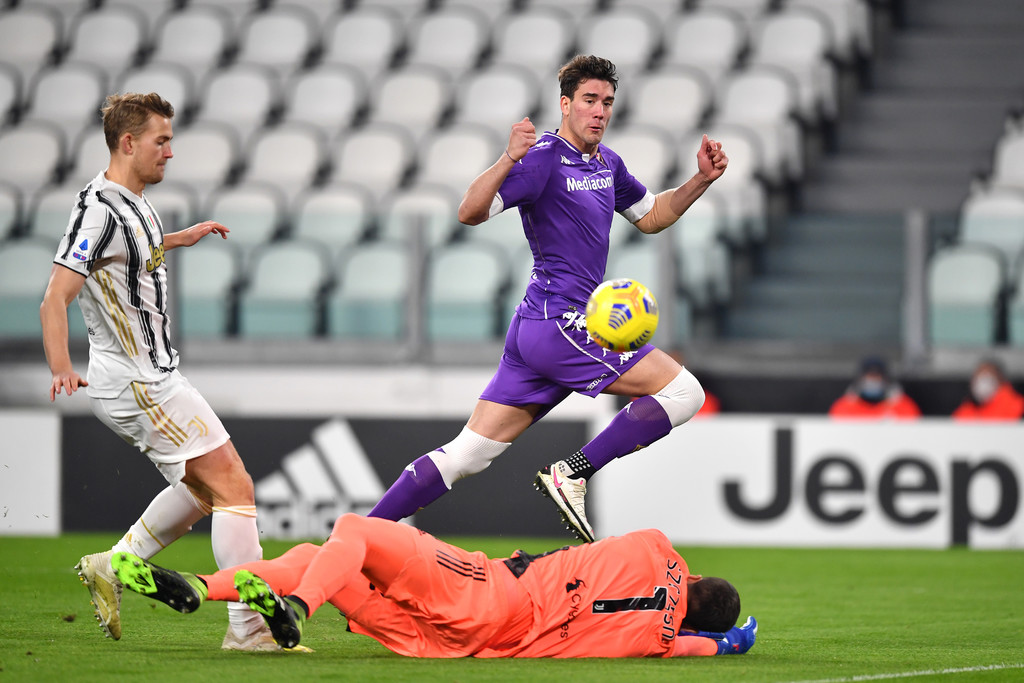
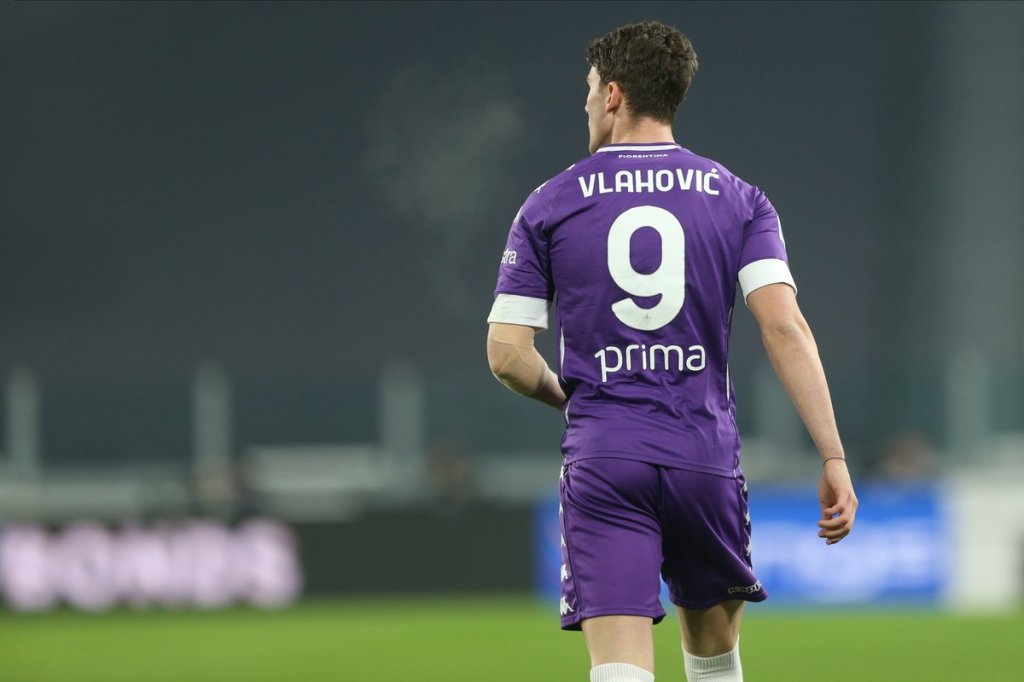
If there’s a single positive that Fiorentina can draw out from a largely frustrating campaign in Serie A its the rise and superb form of their 21-year-old wonderkid forward, a player formerly known in some quarters as the Very Large Teen, is Serbian striker Dusan Vlahovic.

In more ways than some, Vlahovic’s trajectory over the past year has been the polar opposite of Fiorentina’s. While the club have flat-lined into a complete demise both on the pitch and on the managerial front, the 21-year-old’s credibility and standing amongst the some of the elite young forwards in Europe has risen considerably.

Fresh off scoring his second international goal for his country, and becoming such a matured and complete forward just as many have expected he would all along. It’s only right, the rest of Europe have finally taken notice of his unique and predatory instincts within his role and personal acumen.

Arsenal, AC Milan, Roma, Tottenham Hotspur, Real Madrid and Atletico Madrid are all rumoured to be interested in investing in the player’s future which makes perfect sense, as to the almost strange comparisons to arguably Europe’s most hottest property right now, Erling Braut Haaland.

21 goals and 3 assists from 34 Serie A starts for Fiorentina, Vlahović is among the leading marksmen in Serie A for goals, but not only that, his sheer desire and passion when performing is certainly of a unique and hugely promising style.

Vlahović has forced his way into the Serbia National team spotlight, almost pushing Luka Jovic out of the picture in the process. Where many thought Jovic could singlehandedly take the country to the next level, Vlahovic has made his own case for the limelight, and he’s reaping his rewards so far.

So what’s the narrative on Dušan Vlahović? How has he risen to such huge acclaim so early in his career?

Who is Dušan Vlahović?

At 21 years old, Dušan Vlahović has been one of the leading lights of Fiorentina’s youth revolution. Born in Belgrade, the Serbian attacker was also highly rated as a youngster, signing his first professional contract with FK Partizan when he was just 15-years-old.

He was brought into the first team and given the number nine shirt when at just the tender age of 16, make of that what you will, Vlahović was considered a serious prodigy even then.

From there, his progress has been rapid plus his list of personal achievements stacking up too: becoming the youngest debutant in the club’s history, youngest player to feature in the Eternal Derby against FK Crvena Zvezda, youngest scorer in the club’s history and last but not least, scoring in both the semi-final and final as Partizan won the prestigious Serbian Cup.

It did not take long, for top scouts around Europe to stand up and take notice, though Partizan were determined to keep hold of their prized asset for as long as they could. But their resistance did not last long, and eventually wavered when the following summer a deal was agreed for the Serbian forward to join Fiorentina, albeit on his 18th birthday in January 2018.

Fiorentian’s sporting director Pantaleo Corvino, had something of a reputation for signing young Balkan players, with Nikola Milenkovic making a similar move from Belgrade to Florence in the same season. Former Manchester City defender Matija Nastasic also made the same move years earlier.

Upon his arrival in Florence, Dušan Vlahović somewhat found himself on the fringes of the first team picture. He featured for both the Primavera side and occasionally featuring in the first team, but his importance within the club progressively grew. Fiorentina have suffered a tumultuous few years on the managerial front with Stefano Pioli failing to impress, followed by Vicenzo Montella’s disastrous return and the appointment of Guiseppe Iachini.

However, the now-departed Prandelli decided to put his faith in the 21-year-old Serbian this campaign, and the clinical forward rewarded the coach for his faith in him. Though that faith has ended abruptly with Prandelli choosing to depart the club for personal reasons in March.

Though, you’d back Vlahović to carry on his fine form for the remainder of the 2020/21 campaign, and that he has with such devastating aplomb.

What is Vlahović’s style of play?

One of the first striking elements of Dušan Vlahović’s characteristics is his striking size. At 6’3”, he stands quite literally, head and shoulders above others, especially some defenders who are tasked with taming him during a game. This has all the makings of a familiar fairytale story when it comes to young prodigy’s especially strikers, that their size immediately strikes fear into their opponents.

Like Erling Braut Haaland, Dušan Vlahović is built of a similar ilk.

First thing you must take into consideration when analysing Dušan Vlahović’s game, is that just because he is of an imposing figure does not make him those stereotypical ‘big man up front’ calibre of strikers, like a Olivier Giroud, Romelu Lukaku or an Edinson Cavani. He is hugely effective when it comes to a direct approach, however his game isn’t merely confined to it. There’s more to Dušan Vlahović than meets the eye.

Rather than holding up the ball and bring a more dynamic player into play, Vlahović is often the dynamic forward creating opportunities out of nothing for Fiorentina. That’s not to say he can hold up the ball and link-up with his teammates, he is brilliant in that aspect. However, his game is more centred around him picking up possession in between the lines of play and linking with the likes of Frank Ribery or Christian Kouamé, leaving space for another runner in behind, while also being more than capable of moving into wider positions to the same end.

For most of the campaign, Fiorentina have opted for a 3-5-2 system, with Vlahović and Ribery as the two forwards. It’s a pairing which offers dynamism, flair, creativity and a real clinical edge. Most of Vlahović’s goals this season have stemmed from the Serbian’s superb movement in the box, and finding himself in the right spaces at the right time.

Vlahović is a potent and clinical penalty box presence, a devastating finisher and his 19 goals in Serie A this season showing that at the tender age of just 21, he’s got so much to give in goal scoring situations. 6 of those 21 goals have come from the penalty spot, scoring 6 from 6 in fact, meaning that he is ever-so reliable in those situations.

His movement is a key element in the promising partnership he has formed with Frank Ribery, before it was Federico Chiesa who is now lighting up the camp at Juventus, but of course both players have moved on and that hasn’t stopped Vlahović continuing his fine progression.

As Fiorentina aim to progress the ball from deep, it is normal to see Vlahović hold his position in order to pin the opposition back into their box, before swiftly making a movement into the channels as his team look to locate areas within the final third. While Vlahović possesses the frame and tenacity to impose himself, he is certainly not short of pace, in fact, the quickness at which he reaches top speed is superb, and that element coupled with a fire in his belly is a frightening sight for even the best defenders in Serie A.

He offers such a dynamic threat in behind. For a striker of his stature and presence, his movement is surprisingly very effective. Intelligent and varied, and it is certainly possible that he learns to adapt his movement to suit the demand that derives from Fiorentina’s attacking play. He is so skilled at timing his runs beyond the defensive line to keep himself onside. He is a real danger when he is through on goal too, and is very content to shoot once the opportunity presents itself – his xG per 90 (0.56) is truly indicative of a forward who gets into dangerous areas, as one would expect from a player with such incisive movement.

Good movement, clinical finishing – Vlahović already looks the complete young package. As a bonus, he works hard off the ball too, he is tenacious, and plays the game like his life depends on it. He is not the type of player to be around when you have the ball, he will hustle and bustle until he regains possession, a real terrier-like performer. He averages 2.44 successful pressures per 90 while also recording 0.62 tackles + interceptions which highlights his abilities without the ball. However, he must learn to channel his energy more profusely as much as possible, as referees will be well inclined to book him in some instances due to his tenacious edge.

Though, that should not be a stick we should use to beat him with. Fans and managers love players who perform on the edge, who give their all in every aspect of their game and Vlahović is that calibre of footballer. His energy, enthusiasm and determination is hugely contagious and rubs off on the rest of his teammates. Without him in the team, Fiorentina often look lost, lacking in imagination and direction and that’s down to Vlahović’s dynamic presence up-front.

Moreover, Vlahović is a very efficient ball carrier. He has a decent turn of pace and, understandably given his size, he is not easy to stop once he gets going, and possesses the close control and technical acumen to create space for himself. He completes 0.89 dribbles per 90 which may seem relatively low, but Vlahović performs them only when he needs to, driving his team up the pitch or getting out of tight areas, and he is more than capable to fulfil these aspects. His carries and progressive distance numbers have decreased in comparison to his previous two campaigns playing top-level football, though that should be deemed as a positive thing as his game has incredibly matured as of late.

Vlahović has no problems holding off his marker, beating him for pace to move into an open area, and looking to find a more progressive pass.

What does the future hold for Dušan Vlahović?

All things considered, Vlahović has quickly morphed into a well-rounded forward, one well suited to the demands of the modern game. He holds a lot of rawness in his game for managers to work with, whether at Fiorentina or elsewhere. While there is a lot of hype surrounding his future at the top-level, one should in fact wonder how well he would transition at this stage to a more stringent and methodical tactical framework.

Fiorentina have not been a stable proposition this season and there is so much uncertainty surrounding the future of the club after Prandelli’s abrupt departure, which could reflect badly on Dušan Vlahović’s own future. Regardless, it is imperative for Dušan Vlahović that he doesn’t allow the upheaval at the camp to derail his superb progress.

He is indeed on his way to the top. If utilised properly, he should be able to cement a reputation for himself as a reliable but exciting top level goalscorer, because of the variety of strengths within his game.

That must be the blueprint for when he does indeed move on. Which club will provide him with the framework to thrive, and also does he remain in Serie A, a league he is already thriving in or does he risk it all and move to a foreign land? He is still only 21-years of age and has much to learn in order to make it at the top-level. Certainly, the next step will also be getting into the Serbia squad for the Euros and thriving as well as joining a club in the Champions League in order to test himself against the most elite defenders in Europe.

While its vitally important not to pick the cart before the horse, Dušan Vlahović certainly holds the tools, abilities, characteristics and desire in his game to one day challenge for some of European football’s most prestigious trophies.

Amine Gouiri – Scout Report

Amine Gouiri – Scout Report

The likes of Erling Braut Haaland, Kylian Mbappe and Andre Silva are gaining all the plaudits right now across Europe for their tremendous goal-scoring exploits in recent weeks.

These are the next generation of top calibre strikers aiming to write their name amongst the best in the world, and while those are three of the most notable in-form strikers across the whole of Europe, there’s still quite a few forwards quietly going about their business under the radar and also trying to grab the same levels of acclaim for the throne.

One of those forwards who deserves to be spoken in the same bracket right now, arguably becoming the sole goal-scoring threat for his club is the supremely gifted and exciting young French striker Amine Gouiri. The former Lyon academy graduate, currently plying his trade at mid-table French outfit Nice is enjoying a sparkling remarkable breakthrough season scoring 15 goals and laying on 6 assists in all competitions.

The 21-year-old is the one true spark in an otherwise bleak Nice attack, making a name for himself while his French counterpart Kylian Mbappe is gaining all the plaudits. Amine Gouiri is yet another French hope for the future, a uniquely gifted forward who’s talents and abilities deserves much more plaudits than he’s getting.

It takes a lot of bottle and courage to leave a club as decorated as Lyon and join a club still trying to find their purpose within France’s top division. There was a need from Gouiri to try and find his own purpose, to go on and get the game time his talents warrant and crave. Despite Nice’s struggles this season, Gouiri is the one thing out of that club inspiring hope within its fanbase.

Facing competition from the likes of Memphis Depay, Karl-Toko Ekambi, fellow young superstar Rayan Cherki and the departed Moussa Dembélé, Gouiri never really got a look in at Lyon. 

He amassed just 10 substitute appearances for the club he’d called home for the best part of a decade, and decided he deserved better. Gouiri found refuge at Adrian Ursea’s Nice, and since his arrival for €7 million at the Allianz Riviera it’s fair to say those who criticized his risky move have been truly silenced.

So how has Gouiri gotten to this stage of his career, how is he pulling up trees at Allianz Riviera and what does the future hold for this terrific young superstar?

Who is Amine Gouiri?

Born and raised in Bourgoin-Jallieu, France. Gouiri joined the Lyon academy at a pretty late age of 13. He signed his first professional contract at the club once he turned 17 for three years.

An internationally renowned prospect at the time, he made the Lyon first team bench at the age of just 16 without appearing but he however did enjoy a steady and progressive rid in the Lyon B team scoring 14 goals in 33 appearances.

Gouiri went on to make his first team bow in November 2017, in a 0-0 home draw against Montpellier in Ligue 1, coming for the final 15 minutes replacing Tanguy Ndombele.

Despite also impressing in front of goal in the UEFA Youth League this term, scoring four goals in three games for Lyon, and delivering some impressive goalscoring performances at international youth level, scoring five in six appearances for the France U20s, Gouiri didn’t get many first-team minutes at Lyon, making just five appearances in all competitions for the club during the 2019/20 campaign. 

Gouiri took the onus upon himself to further his development elsewhere, and Nice came calling for his services, he duly obliged. On 1 July 2020, Gouiri joined the club signing a four-year contract for for a fee of around €7 million. Almost a year on, and Gouiri has not looked back, catapulting himself to become of the league’s most deadliest forwards and arguably its finest young prodigy.

The 21-year old has also made a name for himself at youth international level, he’s appeared for every France youth level and is currently also bagging the goals for the Under-21s too. It surely won’t be long before he’s rewarded for a first international cap for the French first team. If he carries on at the rate he’s under, he may even earn a surprise call-up for the Euros taking place this summer.

What’s all the hype surrounding Amine Gouiri? What’s his style of play?

Amine Gouiri has lined-up in various positions for Nice this season under the tutelage of previous manager Patrick Vieira – sacked in December – and current manager Adrian Ursea. At right-wing, left-wing, behind striker and even had a spell in central midfield but its up front where his superb abilities come to the fore.

However, he isn’t your average striker, a Erling Haaland or Adrien Silva per say, he’s more a Roberto Firmino type player but one who consistently finds the net when the opportunity arises. He’s joint seventh in the Ligue 1 goal-scoring charts with 11 goals and has also registered six assists meaning he’s an all-round forward capable of creating goals just as he is scoring them.

Amine Gouiri this season, has propelled himself in becoming the complete footballer. A player blessed with tremendous skill, a lovely first touch and a determination and bravery in his game that is almost unmatched amongst his peers. You want your strikers, however role they are tasked in fulfilling to score goals and Gouiri has done what is asked with such fine maturity and at a devastating rate.

Blessed with a combination of pace and power that any forward in world football would envy, Gouiri is a predator in the box, and he finds space as if a seasoned veteran. If you need any indication as to his unique talents, you’d only need to check his goal against Nimes, a true beauty. A superb first touch to take himself inside the last defender from a Morgan Schneiderlin long ball, eliminating the defender out of the game before clinically rolling the ball past the Nimes goalkeeper.

In his last six games for Nice, he’s registered 5 goals and 2 assists. Simply stunning.

What makes Gouiri so effective in this Nice side is the freedom at which he is given to express himself.

The goal against Nimes came about because of his great understanding when coming off the left-hand side. As a right-footed player deployed on the left, Gouiri is extremely effective at cutting inside and even delivering a wicked cross.

For a perfect example, see his assist for Dante’s goal away to Montpellier, or opting for a curling effort into the far corner; he’s found his trademark at just 21. Not only is Gouiri Nice’s top scorer, he’s also their top creator, with five Ligue 1 assists. The attack doesn’t exist without him; take him out of the equation and they’d cease to become effective.

Because of his expert talent in front of goal, Gouiri’s xG (expected goals) stands at 12.4 in Ligue 1, a stat he is well on his way to matching and beating considering he continues his wonderful run in front of goal. He’s most notably surpassed his xA (expected assists) of 3.0 with 5 assists in Ligue 1. He’s a cultured creator, albeit through a dribble past his marker or a fine pass or cross. Gouiri averages 3.69 shot-creating actions per 90 which is an offensive action that leads to a shot. He also averages 1.27 key passes per90. He possesses a tremendous understanding of the role he is tasked to play.

When its up front, he often comes deep to receive the ball dragging his marker out of position, which is of course what a customary false-9 should do. Not only that, but he’s excellent qualities when in possession of the ball is such a unique skill-set especially for the role he plays. It’s also important to note that Nice’s forward players are offered the freedom to swap positions so Gouiri will ideally come inside the left in order to be an effective presence. However, most of Nice’s chances are provided through Gouiri. Either he’s involved or there are no chances at all.

Photo: Footalgerian.com

This tells us a lot about the kind of player that the 21-year-old Frenchman is. He isn’t the type of player who only becomes visible inside the final third, rather, Gouiri is active off the ball in the early stages of his team’s attacks and can be seen making an effort to aid his team during the build-up by offering his movement and ball-progressing qualities to help his team to advance up the pitch.

During Nice’s build-up, Gouiri likes to occupy this type of position between the opposition’s defensive and midfield lines. If a teammate can find him in between the lines, either in a central position or in the half-space, then the attacker can provide a significant threat to the opposition because of his ability on the ball. His intelligent movement, however, plays an important role in helping his team to progress into much more dangerous positions in the final third.

His dribble success rate reads at 50% from 3.19 attempts per 90 minutes, it may seem low for a player of his qualities but rather it shows the bravery and courage at which he operates. He isn’t afraid to try something audacious or out of the ordinary, he still completes 2 dribbles per 90 minutes. While this is something he will certainly improve on in future, the role he is given at Nice allows him to express himself and that is reflected in his 21 goal contributions at the time of writing.

With four goals in the Europa League, Gouiri has shown he can perform on the European stage, and his tally of 21 goals and assists (G/A) in all competitions holds up extremely well in comparison to other wide forwards across Europe. Players like Sadio Mané has 18 G/A, Harvey Barnes has 17, Raheem Sterling has 21, Serge Gnabry and Leroy Sané have 27 combined and Jadon Sancho has 28; whilst Gouiri is fulfilling different roles, this is equally as impressive. Gouiri’s numbers in comparison to some of his counterparts are exceptional.

It shows that he has to be spoken about in the same bracket as those who receive them week in, week out. Gouiri registers more key passes (1.4) than Kylian Mbappe (1.2). And while many may argue that he mustn’t be placed on a similar pedestal, this is of course his first full season playing professional football, so his number must also be highly regarded.

Amine Gouiri’s forecast for the future?

If rumours are believed to be true, Gouiri is already on the radar of many top clubs around Europe. Liverpool, are rumoured to be holding a particular interest in Gouiri as they seek to find a replacement for the declining Roberto Firmino, according to The Athletic.

Photo courtesy of DZfoot.com

While its certainly an indication of how far he’s come so far this season, its important Gouiri keeps firmly on the ground. This is his first full year playing professional football, a move to a club Liverpool with much increasing pressure to perform, especially after their poor title defence this season may not be ideal for Gouiri’s development. Staying and furthering his game at Nice for a year or two will of course do his career some good, despite the club’s struggles this campaign.

Gouiri is still only 21. Many players his age, jump at the chance to move onto the next level without considering the potential ramifications it may bring. The French under-21 international must not become a victim of that. This is a tremendously talented forward, one who is of course going to achieve greatness in future, that’s why these early years are so key, for any footballer.

Florian Wirtz – Scout Report

Florian Wirtz – Scout Report

When Kai Havertz left Germany for Chelsea last summer, many of the Bayer Leverkusen faithful will have been forgiven for doubting where the club will be heading in the future. A club that holds aspirations to become a top four regular in the German Bundesliga and an underdog feature in the Champions League every year, can’t be letting one of their prized assets leave every single time a bigger club comes calling.

However, its a deal that had to happen, not just for the financial benefits – a staggering €85m us bonuses sale – but because Leverkusen are a club that is traditionally built around its promising youth academy setup and a club who always seem to recruit very well in response to a big sale, allowing fans the luxury of having a greater optimism than before the departure of a star player.

Additionally, as has been the case with most top German teams over the years, the departure of one top talent is made up for by the arrival of yet another highly-rated young player making the step up to the senior side. Borussia Dortmund have become something of an expert at this, with a glut of extremely promising young players at their disposal at the moment, and Die Werkself are not too far behind that model.

(Peter Steffen/dpa via AP)

Havertz had to depart, to make way for yet another promising young starlet, and arguably the Bundesliga’s most promising teenager, a player in the mould of 17-year-old German Florian Wirtz.

A player who has already broken a few age-based records in the Bundesliga, becoming Leverkusen’s youngest ever player when he made his debut against Werder Bremen in May 2020 and also became the youngest ever goal-scorer in the Bundesliga history when he netted against Bayern Munich in June 2020, although that record has since been broken by Borussia Dortmund’s very own wonderkid Youssoufa Moukoko in December.

Florian Wirtz has already drawn notable comparisons to his predecessor often dubbed ‘the new Havertz’, and although these comparisons are premature seeing as he only made his debut under a year go, he has already managed to secure a regular place in Leverkusen’s impressive team. It’s no mean feat for a player still in his tender years at 17, but Wirtz has been a revelation since his debut, deserving the rapturous acclaim he’s currently received.

This scout report will detail Wirtz’ come up through the ranks, his player profile, how he fits in in Peter Bosz’ system and what the future holds for this incredibly gifted teenager.

Who is Florian Wirtz?

Born and raised in Brauweiler, just north of Cologne – where he lives with his family – Wirtz joined local club FC Köln in 2010 as a seven-year-old. He’s been famously described by the local newspaper as “the best midfielder to come through the club in 30-years” and almost a year into his professional career, those bold claims doesn’t seem so overly superstitious right now.

Wirtz played an integral role in the FC Köln U17 team’s charge to the German Championship in 2019. Potential suitors, believed to be Bayern Munich, Borussia Dortmund, RB Leipzig and Liverpool, all made swift inquiries for his talented services.

Wirtz scored eight goals in ten U17 games in the 2019/20 campaign before Leverkusen came calling, a club Wirtz felt would provide him with the opportunity to flourish and significantly aid his development. Almost a year on, and Leverkusen are doing just that. The club secured his signature in January 2020.

Wirtz blossomed immediately after his move, hitting two goals and three assists in his first four games for the U17s. He was deemed too good for such a level at just 16 years of age, and was rewarded with his first game for the Leverkusen first team against Werder Bremen in May 2020.

In so doing, he became the club’s youngest-ever debutant and the Bundesliga’s third-youngest player ever, at the age of 17 years & 16 days. 

“He was important to us, that’s why I’m making an exception to speak about one player specifically. He played well right from the off, kept the ball well and pushed forward well too. It’s always something special when you make a debut, especially when you’re 17. All in all, it was a good performance by him, he wasn’t nervous.”

– Leverkusen head coach Peter Bosz on Wirtz’s debut. 

Wirtz has gone on to make 26 Bundesliga appearances for Leverkusen and is already being touted as one of Germany’s biggest talents currently. It’s a huge claim for a 17-year-old but the right one as Wirtz has shown such remarkable maturity and development within his unique abilities.

Why is Wirtz so highly regarded? What’s his style?

Florian Wirtz has already drawn many comparisons to German’s established attacking-midfield pair Kai Havertz and Julian Brandt so far this past year. There’s no reason why Wirtz can go on and enjoy a much bigger and better career than both of those players. Certainly, it may seem an excessive claim, but Florian Wirtz is that good.

The 17-year-old is a dynamic, mobile, agile and creative midfielder. He’s a diminutive player, standing at just 5’9″, although he still has considerable time to grow and develop physically and mentally. In terms of his position, he’s primarily an attacking midfielder, and has been deployed as such under Peter Bosz at Leverkusen, although he has also lined up in central midfield, as a winger and even as a false-nine at times pointing to his incredible versatility and understanding of each role.

Clip provided by MShow on YouTube

He is indeed quite comparable to Havertz in that the Chelsea playmaker also fulfilled various roles for Leverkusen, but both these players are undoubtedly at their best when playing as playmakers, or number 10s.

As shown through the heatmap below, he is incredibly adept at fulfilling many different roles and positions to the best of his ability. That says a lot for a player who’s only been in the game just under a year.

Most of Wirtz’ game is centred just before the opposition penalty in between the lines, as well as in the half-spaces. He is certainly not averse in roaming across the attacking third and linking up with his teammates as well becoming so effective and dangerous when provided with the space and opportunity to manoeuvre out of tight spaces, turning his marker in order to create opportunities or fashion out chances for himself.

At the time of writing, Wirtz has featured in 29 games for Leverkusen this season, and in terms of raw goal-scoring and assisting numbers, he’s been playing above expectations providing Leverkusen with the platform to become so dangerous and devastating on the counter as well as trying to break down low blocks.

The teenager has so far netted six times, with a further six assists, four in the Bundesliga and five assists which in per 90 minutes terms, that counts to 0.22 goals per 90 and 0.27 assists per 90, providing him with an excellent goal contribution ratio of 0.49/90.

Wirtz is amongst the best and most effective creative attacking midfielders in the Bundesliga. He is extremely influential in possession, and his passing stats show this too. The 17-year-old averages around 42 passes per game owing to Peter Bosz’ possession based system deployed at the BayArena.

Wirtz’ passing accuracy reads at 78.74% which may be seem low for a central midfielder but if you take notice of Wirtz’ game, you’d realise that he is of course given the license to express himself with his passing, attempting high-risk passes in order to form goal scoring chances. So in actual fact his accuracy is at an impressive rate, especially for a player his age.

Wirtz attempts around 11 forward passes per game, at an accuracy of 61%, illustrating the fact that he often likes to play the risky passes as a creative midfielder should do.  Of course, he does need to at times improve his decision-making, since he often ends up losing possession through such risky attempts, but this will come with time and experience – its vital remember that he will not even turn 18 for nearly four months yet, at the time of writing. 

What is so impressive about Florian Wirtz is the incredible bravery and courage at which he operates for Leverkusen, and credit should be given to coach Peter Bosz’ who holds such high belief and faith in Wirtz’ abilities and the German wonderkid is repaying that faith. Already, Wirtz holds the vision, intricacy and abilities to attempt such audacious passes as well as linking up with the likes of Leon Bailey and Moussa Diaby in such tight areas. It is exciting to watch at full throttle and much of that is down to Wirtz’ determination, flexibility and enthusiasm.

The 17-year-old is an incredibly skillful player. It doesn’t matter whether two or three players surround him at a time, he is still incredibly adept at overcoming such obstacles. Wirtz attempts 3.61 dribbles per 90 and boasts a success rate at 71% highlighting his impressive ball-carrying technique and the knack of trying to get by his marker. Wirtz possesses very quick feet, and can get away from opponents with a quick burst of speed when needed. This, along with his composure, allows him to be able to get out of opposition challenges on occasion and then drive into space.

He is extremely comfortable both on the transition as well as in established phases of possession, although it must be said that he is quite good at finding runners into space. Leverkusen possess such inventive and quick players in Leon Bailey and Moussa Diaby and Wirtz loves to use them to his advantage. Leverkusen are devastating in counter-attacking scenarios, and Wirtz is central to that. The 17-year-old is also quite capable of picking locks and threading passes through the eye of the needle:

Exhibit A:

Exhibit B:

Wirtz averages 1.97 key passes per 90 minutes and 3.33 final third passes. For a 17-year-old, this is incredible. So many players his age are hesitant in these sorts of areas, and tend to overplay their passes or do not play them at the right time to beat an offside trap, but Wirtz knows when to pass and executes them at such an impressive rate.

Wirtz is perfectly capable of finding teammates in space, whether on the counter-attack or in more established phases of possession, trying to break down defences who defend deep. He does indeed need to cut down on his frequency of attempting such passes to improve his ball retention, but this is a requirement for Peter Bosz’s style of play, which focuses on verticality and rapid attacks. 

The teenager is very knowledgeable and plays to his managers instructions. especially in the final third, right down to a tee.

Arguably, his biggest strengths lie in his movement and are big markers in his ability to get past his markers. Despite being just 17-years-old, the German wonderkid is extremely intelligent in terms of the space he finds in the attacking areas. He knows which space he needs to take up in order to hurt his opponents, and that’s what sets him apart from his peers. Once he receives the ball in such areas, he holds the nous and the bravery to drive at the defence as well as laying on his teammates.

Wirtz also possesses a unique tendency to roam in to deep areas, and pick up passes from his defenders or last midfielder in order to drag his marker at out of their area, in order for either Leon Bailey, Nadem Amiri or Moussa Diaby to exploit. It’s why Leverkusen are so destructive when attacking vertically, and Wirtz’ positioning and spatial awareness is evidently effective in Bosz’ system.

Another valuable trait that Bosz’ attacking players must possess is the energy and tenacity to press his opponents high up the pitch. Yet again, Wirtz performs this role with such consummate professionalism and expertise. Like mentioned before, the teenager is brilliantly energetic, tenacious as well as enthusiastic especially when counter-pressing or pressing. Once he loses the ball, he immediately goes and chases it back. Wirtz averages 6.67 successful pressures, 0.87 interceptions and performs 0.66 tackles per game. It’s not the best, but it shows that he does indeed fulfil his task well.

No wonder Peter Bosz is so excited by his abilities. Wirtz’ willingness to learn, improve and take on each tasks will indeed stand him in such grand stead for the future. This is a ridiculously talented player, one who could go on and become arguably the best of his generation. Who needs Kai Havertz when Leverkusen are now blessed with the ability and talents of Florian Wirtz.

What does the future hold for Florian Wirtz?

Florian Wirtz, despite being only 17 years, has managed to hold his own in the dazzling lights of the Bundesliga, to the extent that Leverkusen have not been hurt too hard by the departure of Havertz to Chelsea.

The young playmaker has shown a maturity, understanding and match intelligence beyond his years so far at Leverkusen, and yet he still has so much to learn and improve physically and mentally under Peter Bosz’ tutelage. Leverkusen are currently five points away from a Champions League place in 6th at the time of writing and will need to step up their game in the coming weeks if they are to secure a Champions League spot.

Wirtz will be central to their ambitions, not just for the now but in future too.

Of course, it will not be too long before Wirtz is snapped up by a much bigger European outift in the future, but any talk of him moving from a stable and ever-improving Leverkusen team is incredibly premature. It will be imperative that the midfielder focuses on improving and sharpening his game, because he is well on course to acheiving greatness if he can remain hard-working and humble.

The 17-year-old has also made the step up to the German U-21 side in the last year, so do not be surprised to see him turning out for Die Mannschaft sooner rather than later. You may well see him in Germany’s final squad for the Euros this summer. He certainly deserves the opportunity.