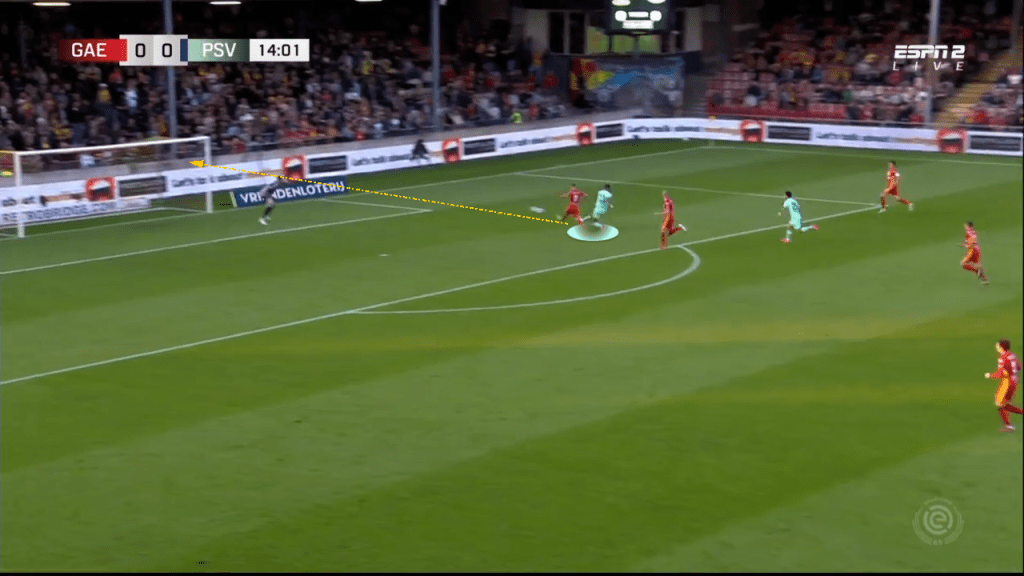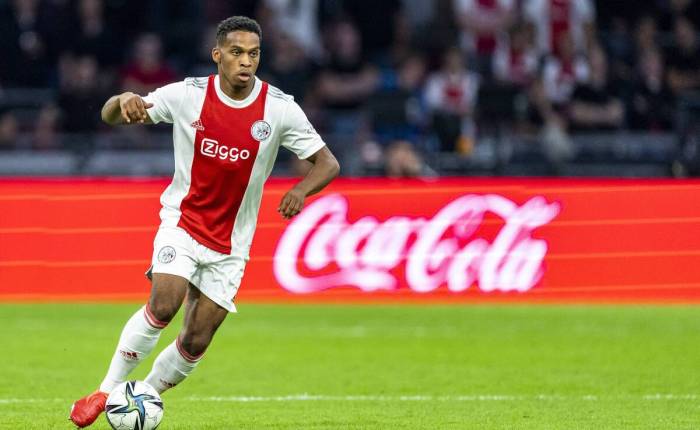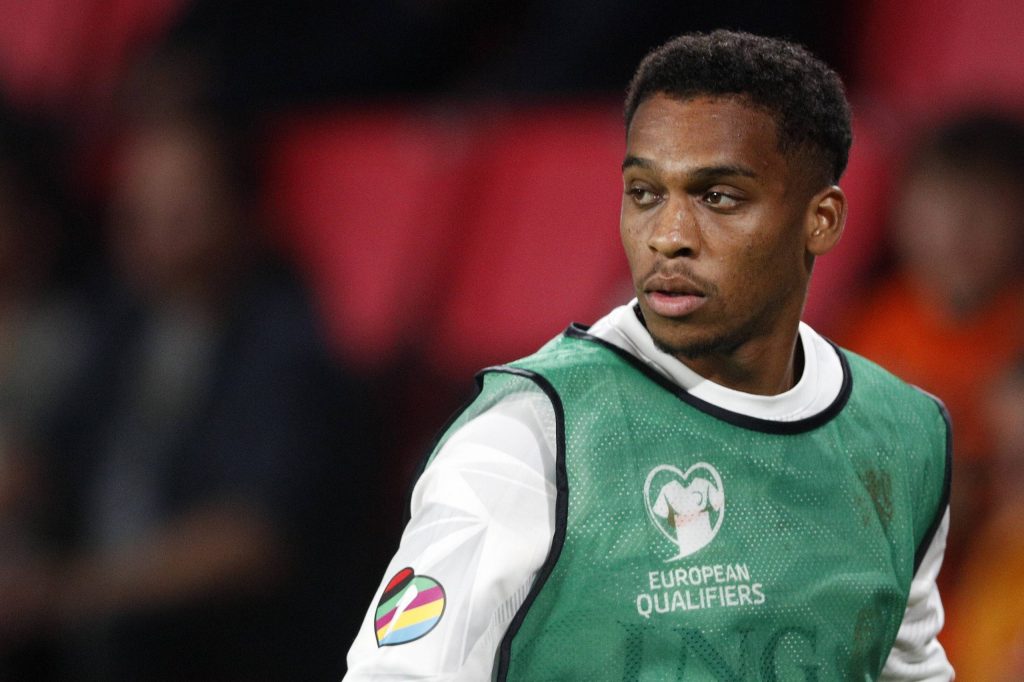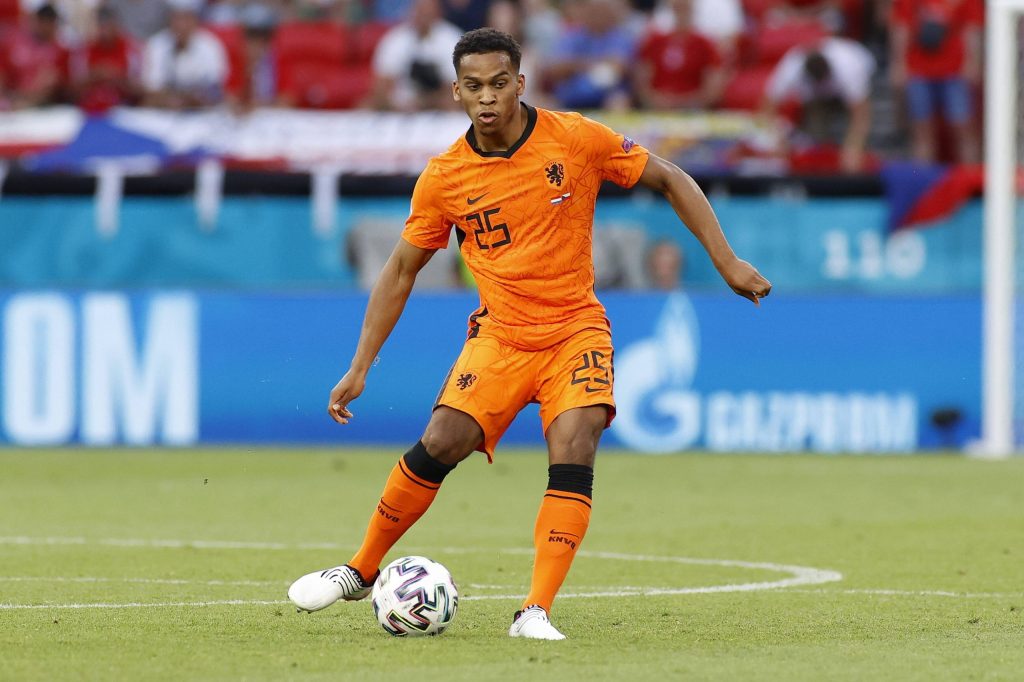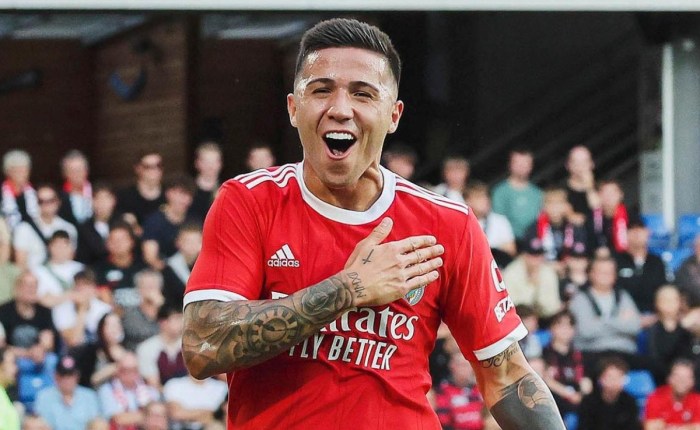
#AnthonyScouts2022 – Enzo Fernández

#AnthonyScouts2022 – Enzo Fernández

Argentina has long produced some of the continent’s most established and decorated footballing stars in recent memory, and it’s no surprise to see the South American giants still producing some of the best young and exciting stars for the future.

The list of names of the talents they’ve produced over the past two decades alone really won’t be enough to fill this whole article and we wouldn’t be doing Argentina’s homegrown success without naming a few of their established superstars and the players making a real name for themselves right now; Lionel Messi, Angel Di Maria, Paulo Dybala, Nicolás Otamendi, Rodrigo De Paul, Leandro Paredes and the list goes on.

What about the some of the new emerging stars on the block? Lisandro Martinez, Cristian Romero, Thiago Almada, Alexis MacAllister, Julian Alvarez.

Though one player turning a whole lot of heads across the continent right now after his recent move from southern half of South America at River Plate and is currently being considered as one of the most coveted and exciting young midfielders to emerge from the country is Benfica’s Enzo Fernández.
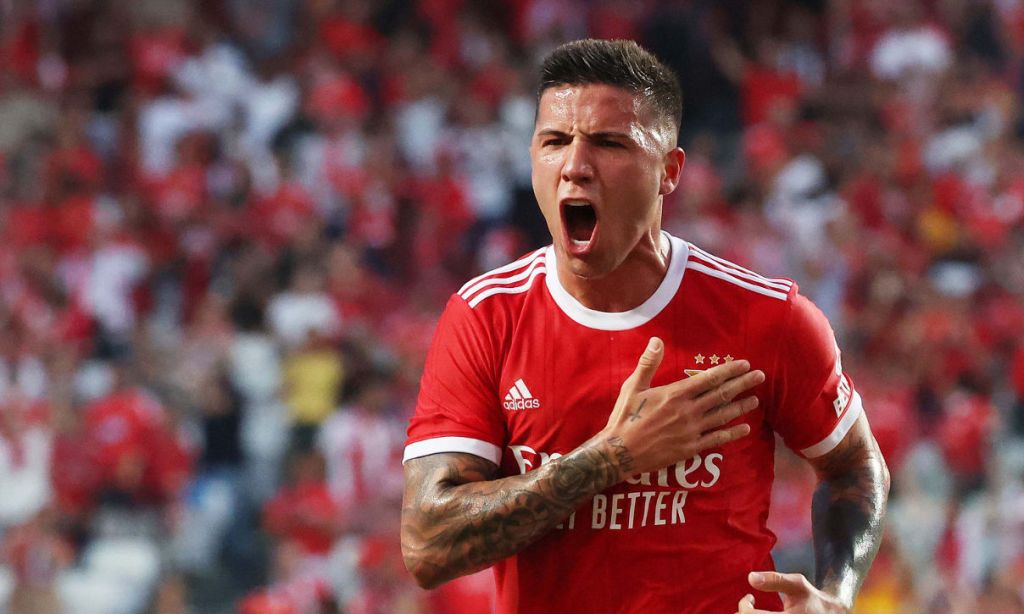
The 21-year-old midfield dynamo has only been in Europe three months, and he’s already making a real splash both in the Portuguese Primeira Liga and the UEFA Champions League, and long may it continue because Enzo Fernandez is certainly on the right path to become one of the most complete midfield weapons of his generation.

So let’s get stuck into his profile and analysis.

Who is Enzo Fernández?

Born in San Martin, Argentina. Fernandez along with his five brothers started playing football at the age of six for their local side Club La Recova for most of his childhood years before joining the famous River Plate academy.

After 13 successful years progressing through the ranks in the youth setup, he was deservedly promoted to the first team by manager Marcelo Gallardo in January 2019 in what was a 3-1 home defeat to Patronato in the Argentinian Primera División, in which Fernandez remained on the bench.

He eventually made his maiden start for the decorated outfit in March 2020, before the Covid-19 pandemic, replacing Santiago Sosa in the 75th minute of a 3–0 loss to L.D.U. Quito in the Copa Libertadores.

After being used sporadically in the River Plate first team, Fernandez was advised to leave the club on loan ahead of the 2020/21 campaign, in order to continue his development. In August 2020, Defensa y Justicia came calling and he was loaned to the Argentinian club for that season. He was given his debut for the club in 3-0 win over Delfín in the Copa Libertadores by footballing legend and manager Hernan Crespo.

Despite not featuring regularly for the club, his performances impressed Crespo which ultimately earned him a place in the team, aiding the club in their triumphant pursuit of the 2020 Copa Sudamericana, starting the 3-0 win over Argentinian side Lanús in the final, winning his first major trophy as a professional. He went on to feature 33 times for Defensa y Justicia, scoring once upon returning to his parent club, at the request of manager Marcelo Gallardo, in the middle of the season in July 2021.

Afterwards, he was immediately thrust into the River Plate limelight, featuring in the first leg of Copa Libertadores round-of-16, a 1–1 home draw to fellow Argentinian side Argentinos Juniors. Soon after, he notched his first goal for River Plate in August 2021, scoring once and assist one in a 2-0 win over rivals Vélez Sarsfield in the Primera División.

Fernandez’ swift impression in the first team picture meant he immediately became a guaranteed starter for Marcelo Gallardo’s side and agreed to a new contract extension till 2025. Following an encouraging start to 2022 season in which he recorded an impressive eight goals and six assists in 19 appearances, he was named the best active footballer in Argentina, which only heightened the amount of European scouts taking a note of his qualities.
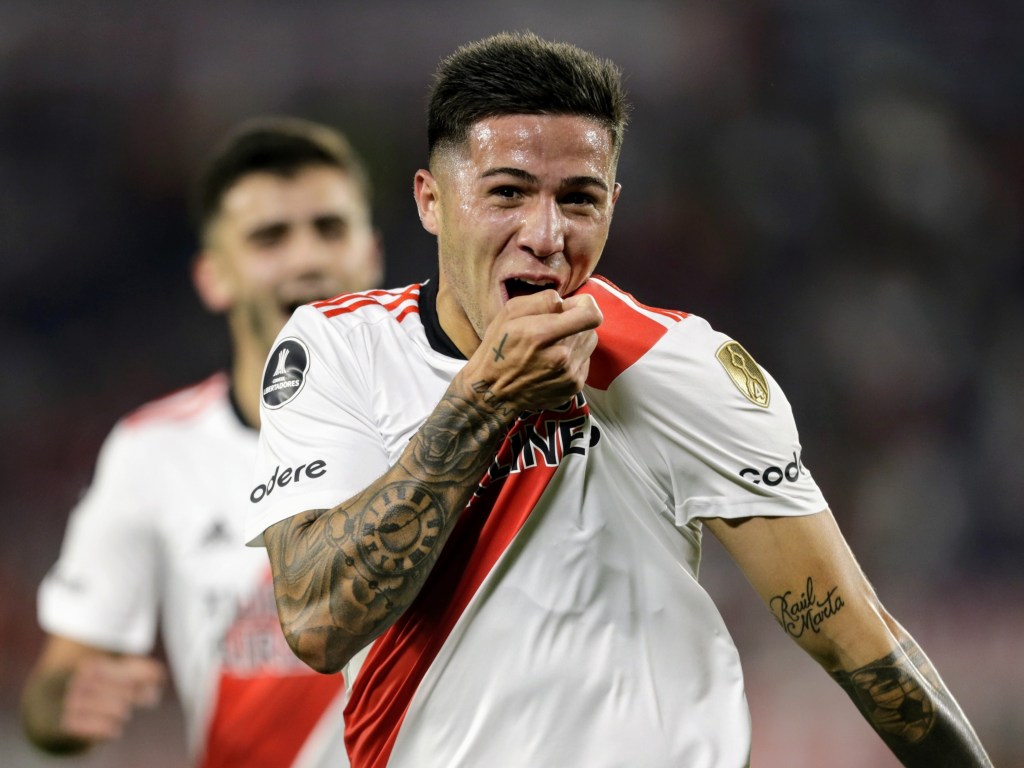
A few months later, and a dream move to a European outfit was immediately on the horizon as River Plate reached an agreement with Primeira Liga team Benfica for his  €10m transfer, a deal which has swiftly turned out to be an absolute bargain for the Portuguese giants.

The 21-year-old remained at River Plate for the remainder of their Copa Libertadores campaign, but following their exit from the competition, he was free to join up with his new teammates and Benfica confirmed the move in mid-July, being handed the famous number 13 shirt, which has been worn by club legend Eusebio.

Since then, the rest has become history. He is now a fully fledged member of the Argentinian senior national squad contingent and is certainly on course to feature alongside the likes of Lionel Messi and Paulo Dybala at the winter World Cup in Qatar having been rewarded with his first call-up by boss Lionel Scaloni senior cap in a 3-0 win over Honduras during the September internationals.

How good is Enzo Fernández?

In the matter of just a few months, the Argentinian maestro has quickly become one of Europe’s most highly coveted complete midfielders.

Capable of playing in a variety of roles across the midfield either at no.8 (as he was deployed regularly for River Plate), no.6, no.4 and even as a creative and influential no.10, the 21-year-old mixes excellent technical proficiency with tremendous levels of effort, endeavour and application + a highly intelligent tactical understanding to boot.

If you ever need a midfielder capable of performing just about every midfield duty to the best of his ability then Enzo Fernandez is certainly your man.

With every passing Primeira Liga performance, it is quite staggering – and no disrespect to Benfica – that the Portuguese giants was his next destination after River Plate, especially after former teammate and Argentinian counterpart Julian Alvarez moved to Pep Guardiola’s Manchester City a few months earlier.

Though, in this instance, several team’s loss is one team’s absolute pleasure and Benfica are currently reaping the benefits of acting swiftly and efficiently to secure Fernandez’s signature ahead of everyone else.

The £18m-rated midfield dynamo is your perfect archetypal midfield player. He is very combative in his midfield duels, protects the space and his backline incredibly well, a wonderful passer of the ball with excellent vision and high levels of accuracy, is very purposeful in his midfield actions and can dribble into dangerous territory or out of it to devastating effect.

During his breakthrough period at River, Fernández was usually deployed as a deep-lying midfielder, responsible for breaking up play, dictating the tempo and recycling possession. Typically averaging an 85% pass completion rate for the Argentinian giants, Fernández looked after the ball incredible well, always looking to show for the ball and make himself available to receive a pass. More uniquely, he thrives in receiving the ball in tight spaces and is very press resistant due to his wonderful low sense of gravity, balance and flexibility in his body movements.

He may not be the tallest or mightiest looking players, but that means little when he consummately carries the recurring Argentinian trait in being bullish, aggressive and exerting much flair when needed.

His bravery to assume responsibility for his team is demonstrated by the fact that no player in the Argentinian league registered more passes (1274) or received the ball more (52.72 per 90). Fernández possesses excellent vision and has proven his ability to progress the ball effectively, averaging 11.9 progressive passes per 90, whilst also topping the metrics for through passes (64), smart passes (43) and passes to the final third (295) last season.

Towards the end, Fernandez was regularly deployed at no.8 by Marcelo Gallardo, and as time progressed, his efficiency, influence and performance levels grew and grew.

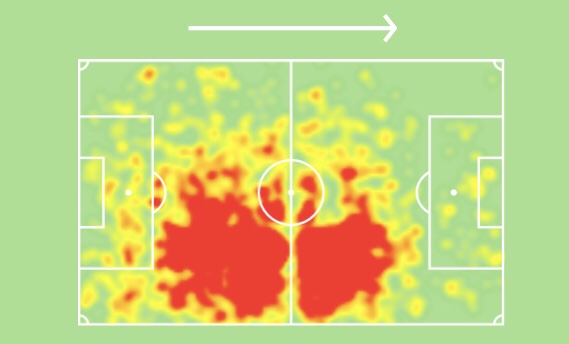
In such a role, the 21-year-old was tasked, at the right-hand-side of a three man midfield (as shown in the below heatmap) to be the side’s main creative hub, but not deterring from his defensive responsibilities coming back towards his own goal, or winning the ball high up the pitch.
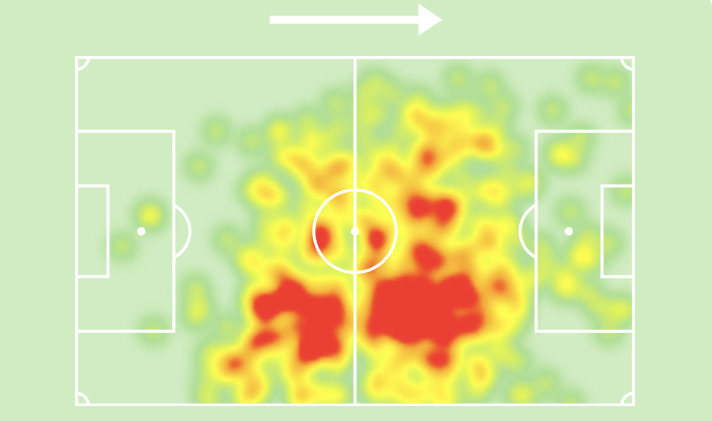
Enzo Fernandez’ heatmap at River Plate (2022)

He ended the 2021 season with three assists and two goals, but his all-round numbers made for more immaculate reading, averaging 67.3 touches per game, 1.5 key passes, creating five big chances in the attacking sense but also excelling defensively, registering 0.8 interceptions per game, 1.7 tackles and winning 52% of his total duels. He is proficient and an excellent all-round midfield player.

What made Fernández stand out from the rest was his excellent range of passing. He excels at quick short passes, passing to break lines or to play through attackers running to space, but also passing in the means of keeping possession to move around and tire opposition shapes.
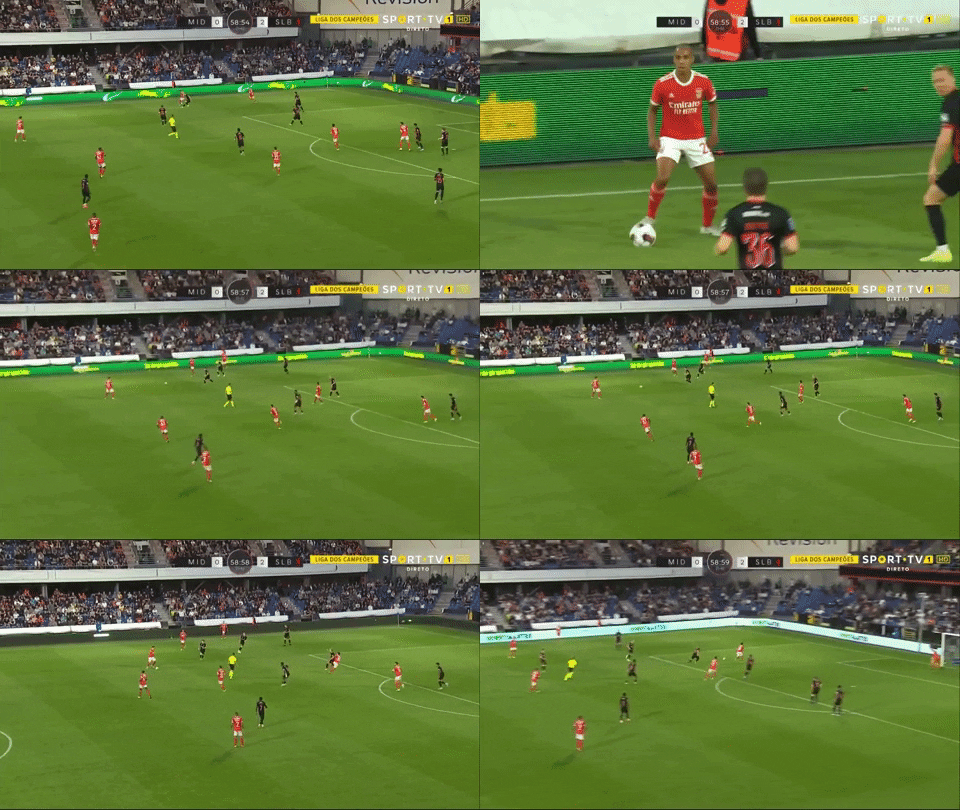
As stated previously Fernández is also an adept long-range passer, and he has carried that trait forward with Benfica, as shown in the clip below, picking up possession and expertly spreading the play into space for the full-back.

He’s also so far at the time of writing averaged the most accurate passes per 90 (100.4) of any player in the Portuguese top flight, and the most accurate long-balls (11.1) showing that he is the perfect component in Roger Schmidt’s possession-heavy system. More crucially, he’s created the joint-most (7) big chances also, again highlighting his all-round completeness in midfield.

The luxury Benfica have when utilising the Argentinian is whatever midfield role Roger Schmidt places him in, he’ll perform them perfectly. His career so far at the decorated club could not have got off to the perfect and ideal start.

It’s his first few months playing top level European football, and already the 21-year-old is outshining his peers, both domestically and in the UEFA Champions League too.

His most notable performance came against Italian giants Juventus, excelling in a deep midfield role where he brilliant broke-up attacking play as well as distributing the ball to great effect as Benfica famously triumphed 2-1 in Turin in mid-September. He was rewarded with a terrific average SofaScore rating of 7.7 for his performance, successfully completing 68 of his 71 passes, three of his four long balls, completing all three of his dribble attempts, whilst also winning 11 of his 16 ground duels providing a perfect picture as to the kind of all-round talents and endeavour he provides especially on the big occasions.

And there is evidence to show that the higher the level of football he is playing, the higher his own personal influence and performance. Looking at the heatmap below for Benfica so far, it shows he is involved in all phases of player for Roger Schmidt’s side who are currently unbeaten in all competitions at the time of writing.
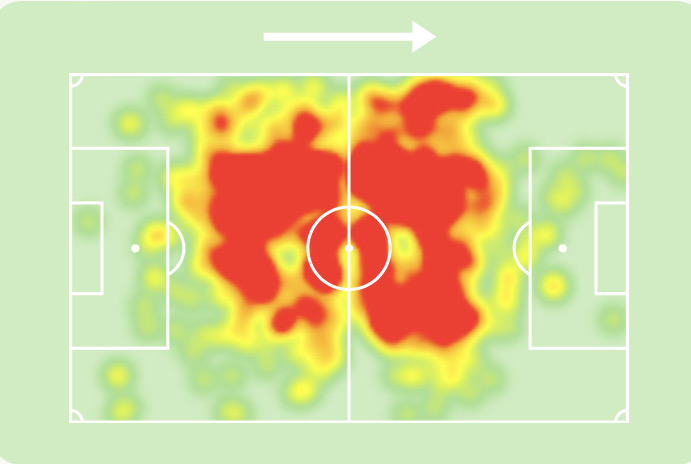
Fernandez’ heatmap for Benfica so far 2022/23

So far for Benfica, his numbers make for superb reading. In eight games, he averages 2.4 shots per game, 109 touches, created seven big chances, averages 1.8 key passes whilst also again being destructively effective off the ball, he’s averaging 1.1 interceptions, 1.9 tackles, and 0.7 possession won. Fernandez is a terrific reader of possession, always looking to get into the right positions to stop of opposition attacks, disrupting moves, whilst also being in the right place at the right time to intercept passes.
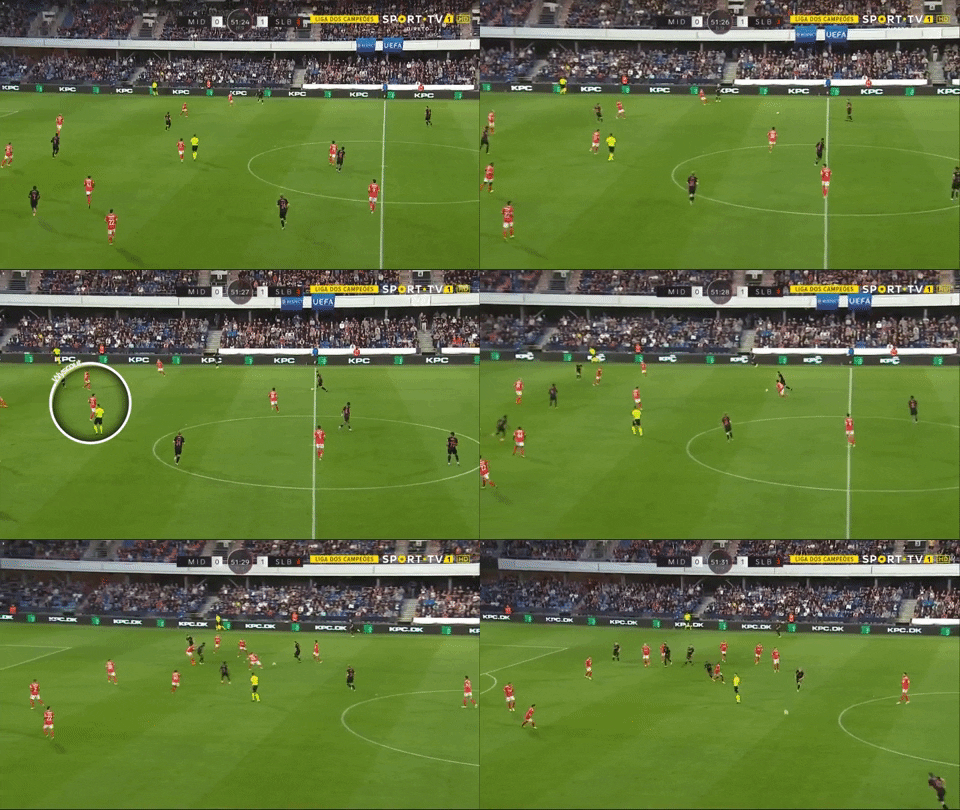
Feisty, mobile and energetic, Fernández is not afraid to put himself about. As per the stats from last season in the Argentinian division, he averaged 7.56 recoveries per 90 and is more than comfortable pressing the opposition in their own half, and making 2.18 recoveries in the final third.

For all his good work in deep-lying roles, 2022 has seen Fernández develop into a truly all-round midfielder, adding goals and assists to the less-heralded elements of his game.

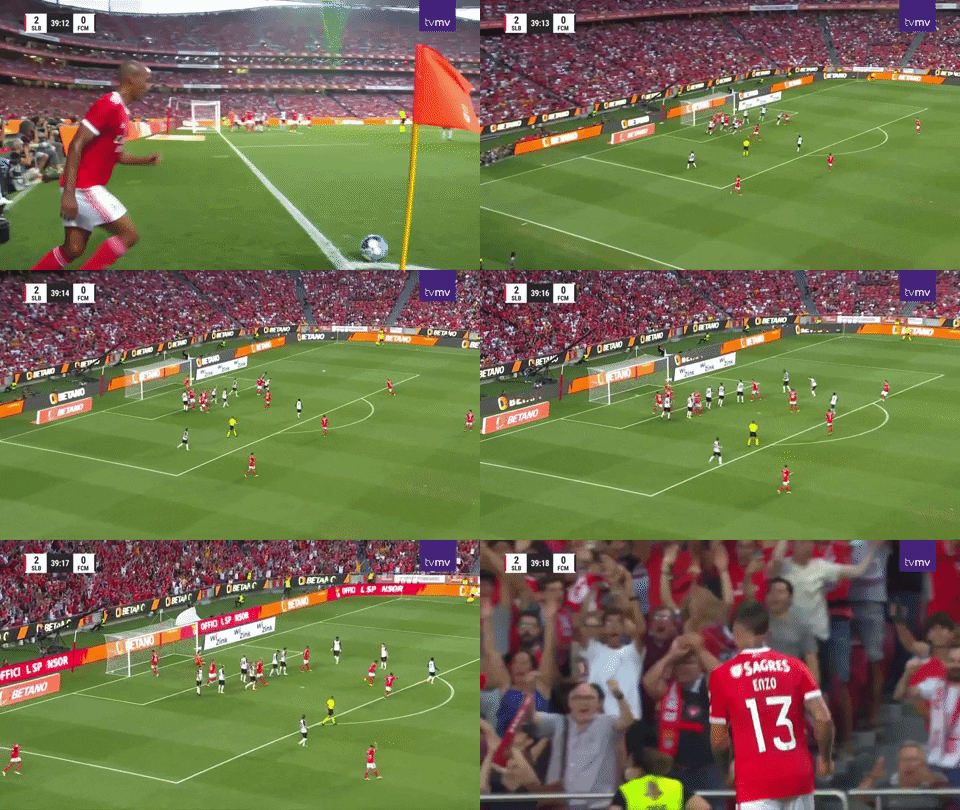
He’s only got the one league goal to his name for Benfica so far, and it was a rasping one at that, scoring an unerring strike in the 4-0 victory over Arouca in August, showcasing the composure to strike the ball the first time and hit the target.
In another spellbinding showing for Benfica against Rio Ave on October 8, the 21-year-old picked up a supreme SofaScore average performance rating of 9.0 after providing an assist, creating three big chances, 7 key passes and completing all of his 72 passes in Benfica’s 4-2 triumph.

Yet another stunning showing for the Argentinian maestro, who’s short career at Benfica so far is already proving one of the best career decisions Fernández may ever make.

Forecasting Enzo Fernández’ Future

Argentina are certainly a footballing country blessed with a whole host of hot and incredibly gifted footballing talents across the continent, and the latest emergence of a certain Enzo Fernández arguably looks to be the best of the lot, no doubt about it.

While there is the argument that many of Europe’s elite clubs should have secured his signature ahead of Benfica, it seems as though the 21-year-old made the correct and more mature decision to join a club as dedicated to its young players and very progressive in its footballing approach, and it is an entity which will provide Enzo Fernández with the ideal platform to further his game and development.

There is no doubt, Fernández will certainly cost an elite European club in the around the £50-60million mark, or even more with Benfica recouping a sizeable profit for his services. The 21-year-old is on his way to becoming the most complete midfielder of his generation.

Very soon, he’ll be the apple of many top club’s eye, it was the case for previous homegrown talents in Darwin Nunez, Joao Felix and Angel Di Maria but for now, Fernández game already seems to be taking that next level in the Primeira Liga, and long may it continue for a while yet, Benfica will be hoping and praying that is the case.

A consistent role at the World Cup this November for the tournament favourites Argentina may provide him with the perfect exposure he needs, and that may well be to Benfica’s detriment.
#AnthonyScouts 2022 – Davide Frattesi

#AnthonyScouts 2022 – Davide Frattesi

Written before the start of the 2022/23 Serie A campaign…

The 2021/22 Serie A campaign proved a mixed bag for US Sassuolo, finishing in 11th place on 50 points, 12 points less than their 8th placed finish during the previous campaign.

There were incredible triumphs against some of the division’s best sides including AC Milan, Juventus and Inter Milan, but could not replicate such heroics against the lesser teams, hence their 11th placed finish.

The loss of key figures in Manuel Locatelli and Francesco Caputo in 2021 were indeed huge blows, but their recruitment and the emergence of one Gianluca Scamacca was certainly a notable highlight in an otherwise average campaign, with 16 goals from 36 Serie A outings.

However, the Italian hitman wasn’t the only one writing his name in the Serie A headlines. Swiftly bursting onto the scene, Davide Frattesi showcased just why he is one of the Italian top flight’s most coveted young midfielders enjoying a sensational campaign.

Four goals, including one in a win away to Juventus, has been a strong return for the central midfielder, with his ability to arrive late in the box being one of the key barometers of his performance level.

As with his hugely talented clubmates Giacomo Raspadori and Scamacca, Frattesi is being tracked by all the big clubs in Italy, with rumours popping up all throughout the summers suggesting the likes of Inter Milan, Juventus and AS Roma are preparing an assault for his signature and it seems as if Jose Mourinho’s men may be welcoming back Frattesi to Rome with open arms, as they are close to sealing a move for the Italian star.

So let’s get cracking with the profile and analysis on one of Italy’s most decorated young products.

Who is Davide Frattesi?

Born in Rome, Italy. The 22-year-olds burst onto the scene has been seamless but arguably very sudden.

But after a succession of loan spells in Italy’s second division, the combative and dynamic midfielder has been earning his stripes waiting for the opportunity to emerge with his current club Sassuolo.

Since leaving his hometown club AS Roma in 2017 to join Sassuolo, Frattesi has consistently raised his level; moving from the Primavera to join Ascoli on loan, before spend­ing two seasons with promotion-chasing clubs in the form of Empoli and Monza.

Frattesi amassed over 100 Serie B ap­pearances over three seasons, winning the Premio Manilo Scopigno, Serie B’s player of the season award, the sea­son before last alongside Italian under-21 team-mate Samuele Ricci. 

Since 2015, Frattesi has also featured over 50 times for Italy at youth level as an ever-present from the under-17s to under-21s. All the graft and experience gained meant he was indeed ready for the 2021/22 campaign, and so it proved.

With the departure of key man Manuel Locatelli, it was time for Frattesi to step up to the mark and finally be exposed to the Italian top-flight. And the 22-year-old took to those demands with such admirable and excellent aplomb showcasing his dynamic, aggressive, high intensity and proactive style – from a slightly more reserved position on the right side of a double-pivot midfield with Maxime Lopez.

As if Italy needed any more impressive midfielders of high potential, they have now managed to pluck out and develop another. Such his fine attributes and characteristics have seen become a crucial figure in Roberto Mancini’s Italian national side, making his international debut in a 1-1 draw against Germany in the UEFA Nations League.

He’s gone on to make a further two appearances for Mancini’s men, and long may his featuring in such a decorated and talented group continue.

How Good is Frattesi?

If you’ve seen Frattesi in action, then you’d have no problems understanding why Italy’s top clubs are scouring for his signature, especially after just one full campaign in Serie A.

Frattesi is an exceptional midfielder that can perform almost any role in the midfield. As a no.6, no.8, a no.4 and as a no.10, the 22-year-old wonderkid can be claimed as the ideal embodiment of a complete midfielder.

The 3-time Italian international certainly though, possesses the qualities and skills to more or less be described as a “box to box” midfielder, that is, able to contribute to the team both in the offensive and defensive phases, allowing him to maraud forward with superb and lambasting runs from deep, whilst also winning his defensive duels and breaking up opponent’s attacking play.

With his 184cm frame, Frattesi is a very tough and combative midfielder blessed with very good physical endurance and attributes, even if he is not the strongest and tallest on the pitch, he will give all when fighting for the ball and has no problem trying to dribble in the open field, engage in shoulder-to-shoulder tackles.

Premier League commentators will absolutely love Frattesi. He brings pace, power, passion and desire to the game, and has been a consistent performer that rarely puts in bad shift. As stated previously, he isn’t the biggest or in the tall quota of footballers in Italy, but his dogged, aggressive and high intensity style makes up for those supposed physical weaknesses. He is big-bodied midfielder that throws his weight around, bruises the opposition and seeks to domi­nate within his sphere of influence. 

The former Italy U21 international is a nightmare to play against as he constantly snaps at the heels of opponents in his sometimes ambitious attempts to win the ball back. He’s almost like a kid in a playground, he just doesn’t stop until the bell/whistle sounds. And he is quick too, regularly demonstrating great recov­ery speed that makes him a very valuable asset when de­fending in transition – an important virtue in a ball-domi­nant team that wants to defend high up the pitch.

Four goals and three assists from midfield, in his first Serie A campaign, is an impressive feat to carry forward but with the amount of quality, dynamism and aggressive nature he brings, you could certainly say that Frattesi brings so much to the table.

In fact, in his attacking metrics for Sassuolo, he certainly proves an effective figure, ranking in the top 5% of midfielders within Europe’s top five leagues for xG (Expected goals) per 90 (0.21), top 3% for npxG (non-penalty expected goals) per 90 (0.21) and in the 76th percentile – top 24% of midfielders – for xA (Expected assists) per 90 (0.32). Frattesi is not afraid to get shots off too, ranking in the 96th percentile for shots total per 90 (2.08), and in the 95th percentile for shots on target per 90 (0.60).

At first, when watching him, he may be rough around the edges, but in a young Sass­uolo team that is not necessarily a bad thing. His grit, determination and passion brings a steely edge to a team that otherwise lacks it. That’s not to say, it won’t prove a key component in a much more bigger outfit when he does make the move in the near future.

his engine and gut-running makes him a con­sistent contributor at both ends of the field. Underlining that, Frattesi ranks in the 94th and 83rd percentiles amongst players in Europe’s top-five leagues for touches in the at­tacking and defensive penalty areas respectively. He is indeed the true embodiment of a box-to-box midfielder.

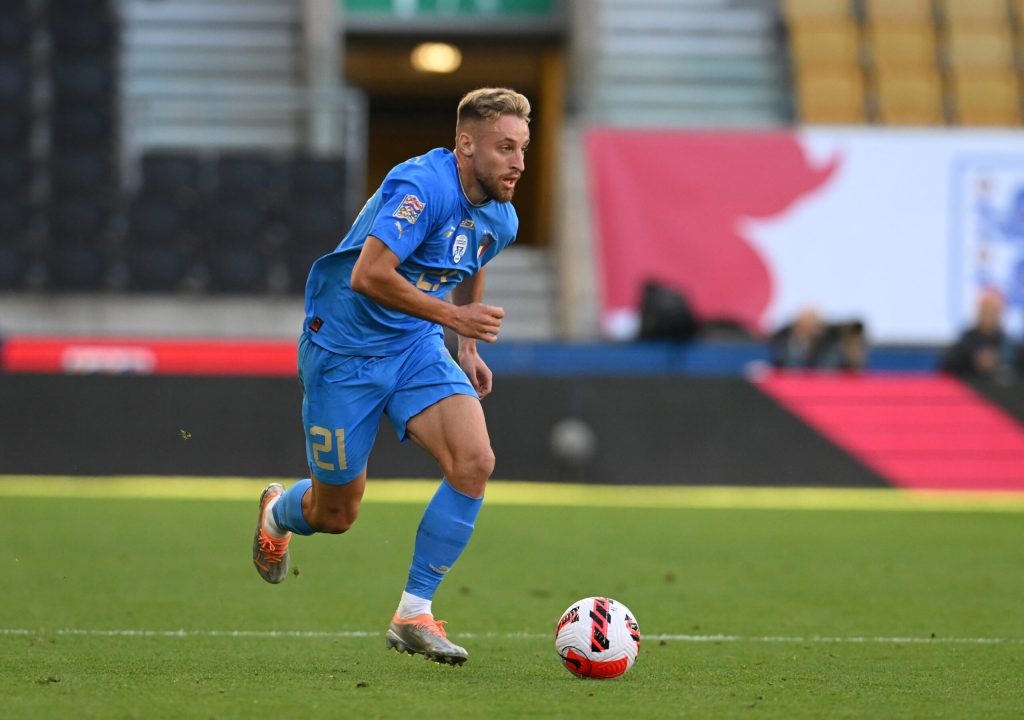
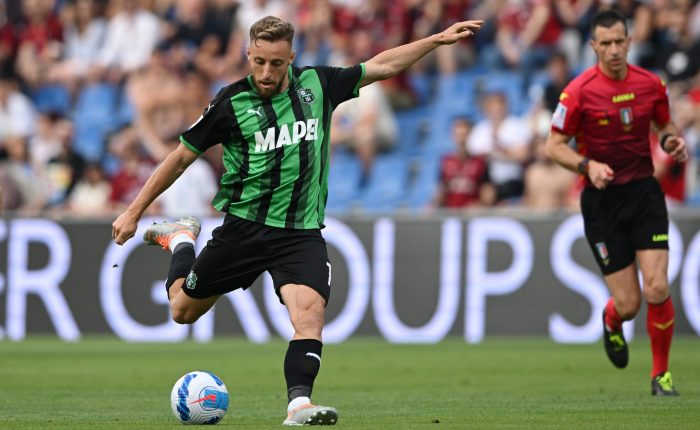
Frattesi in action against England in the UEFA Nations League (Photo by Claudio Villa/Getty Images)

One of Frattesi’s most striking characteristics, and one which will certainly make him perfectly suited to playing at the most elite level, his constant knack of receiving possession and running with the ball within an instant.

Once he smells an opening, or a lane of space to exploit he’ll ghost by his markers before they can even react. And he is devastating at it, simply because of his wonderful balance, low-sense of gravity, excellent ball control and spatial awareness.

But in a high possession team like Sassuolo, Frattesi is having to refine and develop his distribution and qualities in possession, as teams set up their blocks and restrict his ability to burst into spaces on the break. However, that doesn’t stop him as he so proved time and time again last season. His underlying numbers for effective carries highlight why he is so decisive ranking in the top 9% for carries into penalty area per 90 (0.41), the top 17% or the 83rd percentile for carries into the final third (1.89) and in the 75th percentile for progressive carries per 90 (4.82).

Frattesi’s rough exterior and work ethic belies a sur­prisingly strong technical skillset. Tasked with replacing a Manuel Locatelli-shaped hole in Sassuolo’s midfield, he has not allowed standards and expectations to drop.

His primary role with a possession-oriented team, has seen him shuffling the ball around short in midfield, with the occasional cross-field diagonal to mix things up. It is not the best use of his qualities in possession, but understandable given the club’s wealth of attacking options ahead of him, like Gianluca Scamacca, Hamad Traore, Gianluca Raspadori and Domenico Berardi.

The 22-year-old has shown that he is comfortable around the penalty area. With much box-to-box midfielders around the continent, they look awkward and unrefined when approaching the final third, but that just isn’t the case with Frattesi as his impressive underlying numbers read.

He is certainly capable of chipping in with a near-double-digit goal tally if given license to attack the box with regularity, and playing with much more accomplished stars and within a tactical framework that could complement and get the best out of his attributes, that will certainly become a regular occurrence.

What does the future hold for Frattesi?

Frattesi is at a great club with a strong overall project where he has vastly developed his impressive skill-set. Alongside Atalan­ta, Sassuolo are Serie A’s benchmark for smart recruitment, and pairing those players with forward-thinking coaches.

With clubs like Juventus, Inter Milan and AS Roma all keeping a close eye on the 22-year-old midfielder, it is incredibly paramount that is Frattesi is to move clubs, then he chooses one which will further aid his tremendous development, and more importantly provide him with the tactical style that will suit his game.

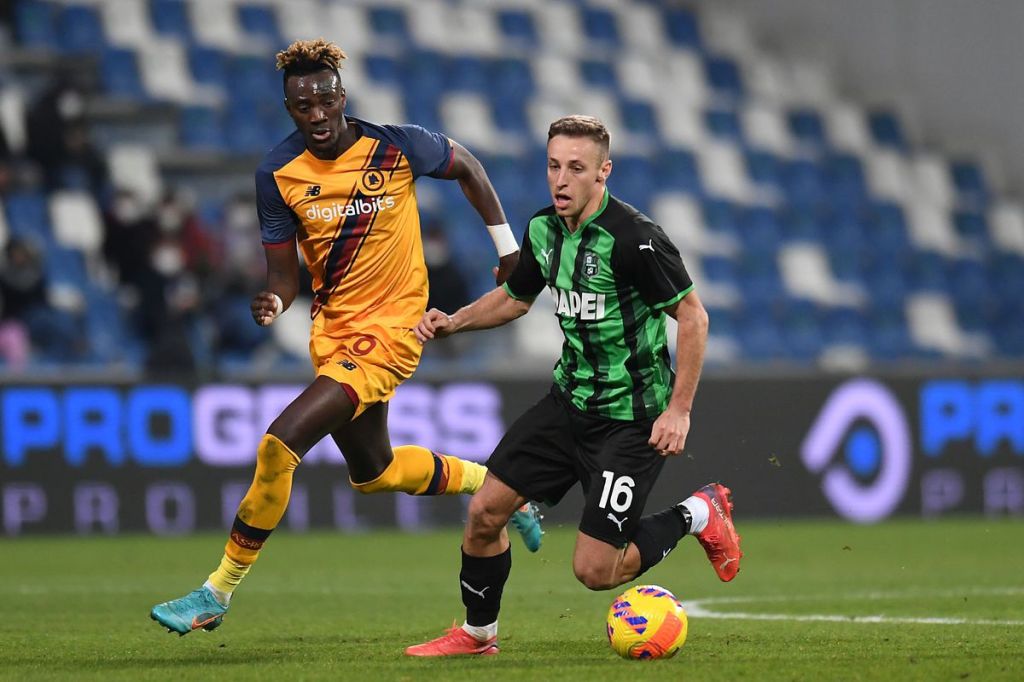
(Photo by Claudio Villa/Getty Images)

It’s unlikely whether that will be Jose Mourinho’s Roma, but certainly alongside more destructive and well-rounded outlets, and preferrably in a dynamic and counter-attacking system, he may be afforded the perfect conditions to thrive. He may be certainly swayed by a potential homecoming to the City where he started his path.

Frattesi’s athleticism and skillset has such enormous potential. In the last two seasons, we have seen the rise of Nicolò Barella at Inter as an excellent box-to-box terrier. Frattesi has the potential to be just as dynamic; a hard-working de­fensive presence with a clinical attacking edge.

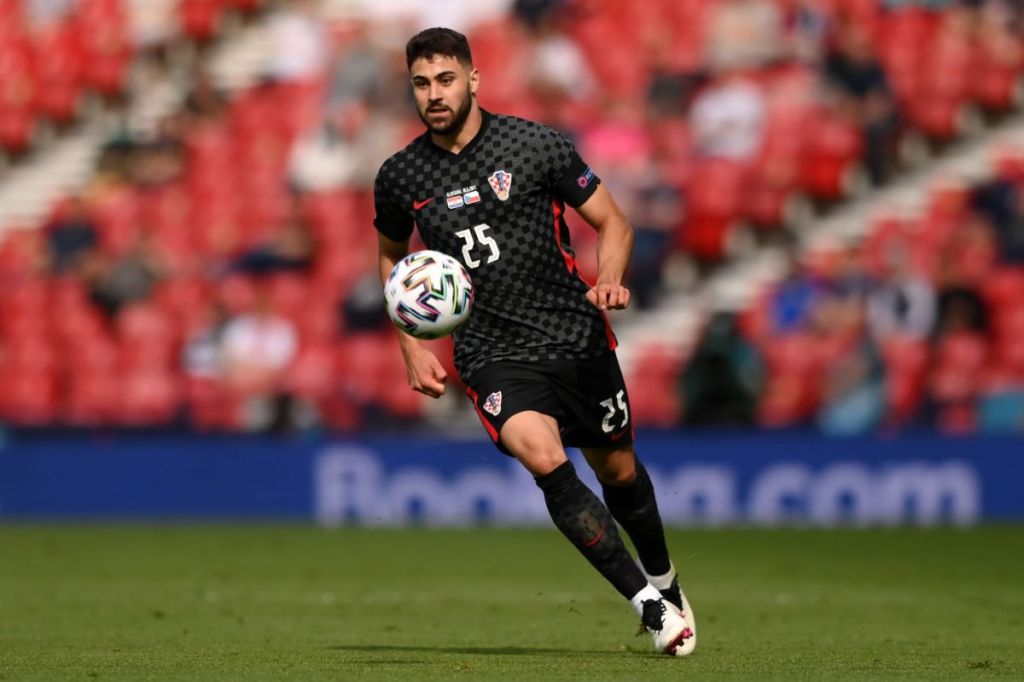
#AnthonyScouts 2022 – Joško Gvardiol

#AnthonyScouts 2022 – Joško Gvardiol

Croatia has been a decorated hub for some of the world’s most prestigious and classy footballing talents. The 2018 World Cup finalists have been excellent in producing world-class players consistently. Luka Modric, Matteo Kovacic, Marcelo Brozovic, Ivan Perisic and Ivan Rakitic are some of the most heralded names of this generation.

Their talent hub isn’t showing any signs of slowing down too with the likes of Lovro Majer and Luka Sucic placing themselves as two of Croatia’s most exciting young stars. But arguably the biggest and most brightest of the lot, already garnering much attention and plaudits for his abilities and performances is RB Leipzig’s Josko Gvardiol.

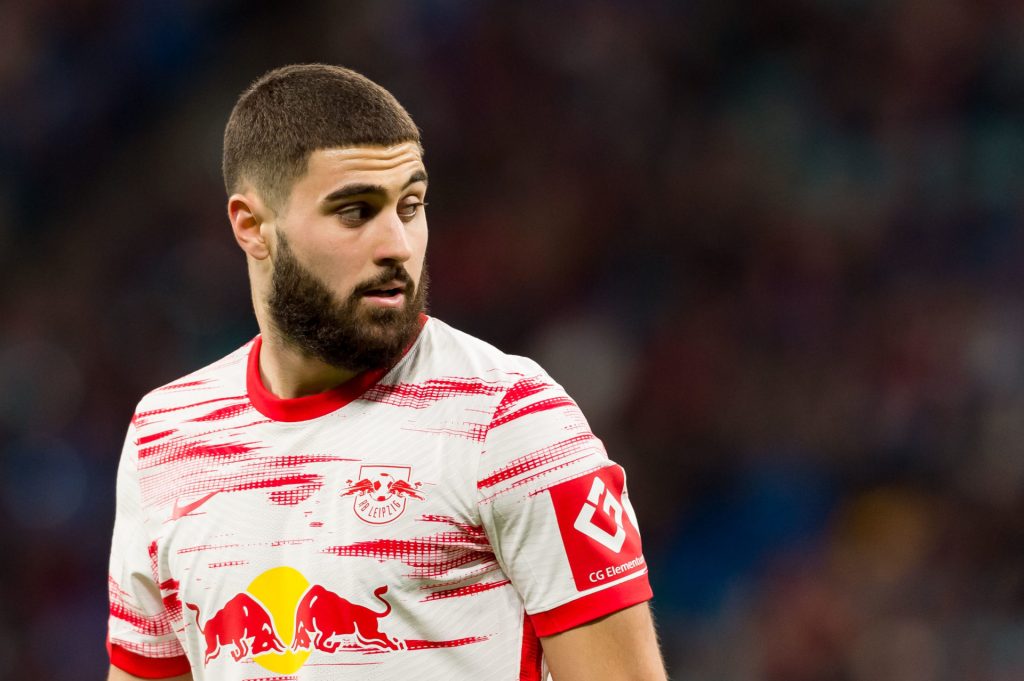
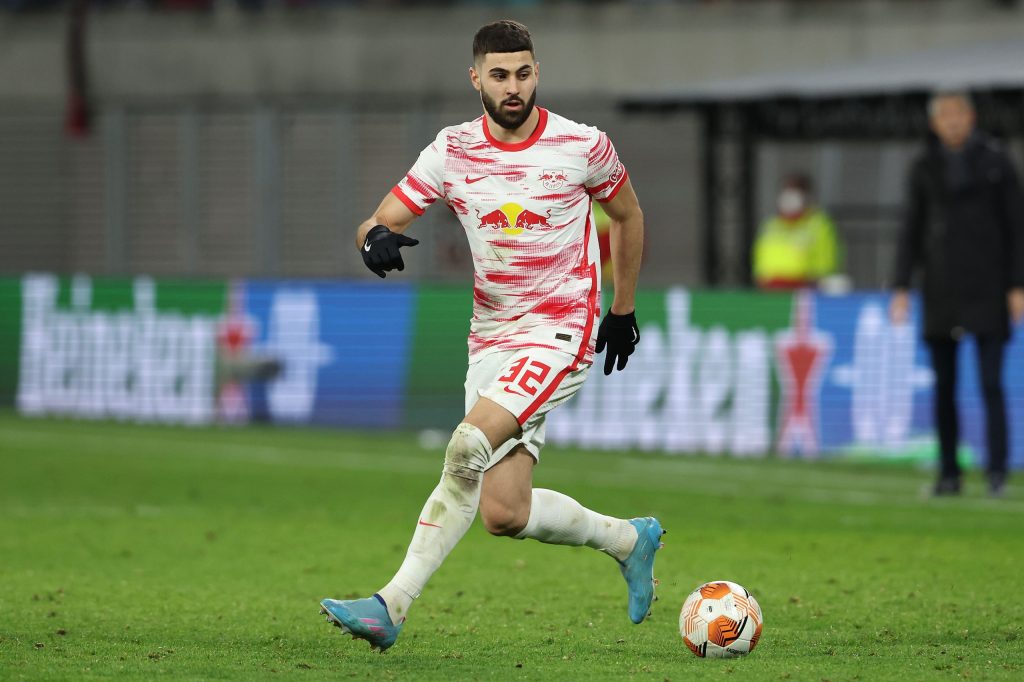
(Photo by Nico Paetzel/vi/DeFodi Images via Getty Images)

Even though he’s only just completed his first full campaign in one of the major European leagues, he is already one of the most in-demand young defenders on the continent.

The centre-back colossus is just 20-years-old but is already an established player for club and country. Gvardiol has been excellent ever since bursting onto the scene with Dinamo Zagreb in 2019.

The past few months have already seen him linked with some of Europe’s most prestigious names, with Chelsea showing a strong interest before the summer window’s conclusion. With his current deal at Leipzig now taking him right down to 2027, he certainly won’t come cheap and considering his stunning potential and importance to their cause, his potential hefty price tag seems justified.

So how has Gvardiol gotten to this position?

Who is Joško Gvardiol?

The 6’1″ defender started out at NK Tresnjevka as a seven-year-old, where he was taken by his father Tihomir, an amateur footballer himself. A year later in 2010, Croatian giants Dinamo came calling, and he stayed there for over a decade until his switch to Leipzig in summer 2021.

Over the course of the 2018/19 season, 17-year-old Gvardiol helped Dinamo to the UEFA Youth League quarter-finals – where they lost on penalties to English side Chelsea – and lifted the Croatian youth league title.

He was then promoted to the second team the following campaign but, after making just two appearances, was promptly called up for first-team duty and made his Zagreb debut in October 2019. Having represented Croatia since starting out with the U14s in 2016, Gvardiol also made his U21 debut a month later against Lithuania.

Gvardiol – named as one of The Guardian‘s 60 Next Generation European footballers ahead of the 2019/20 campaign – featured in a total of 11 times in the league the season before last as Dinamo clinched the title. He also got his first taste of UEFA Champions League football at the start of 2020/21, with two qualifying matches as Zagreb were knocked out in the third round by Ferencvaros.

His move to Leipzig in July 2021 seems the perfect one for his development, and his debut season in Germany was a sensational one, the youngster seamlessly adapting to life at the top level and swiftly securing a regular spot in the Leipzig line-up under previous manager Jesse Marsch. In total he made 29 Bundesliga appearances, scoring twice, while he also featured a further 17 times across the UEFA Champions League, Europa League and DFB Cup.

Head coach Domenico Tedesco previously hailed the centre-back’s “mental strength” as among his chief attributes, while he also became a deserved full Croatia international over the course of last season, going on to make 10 caps for his nation at the time of writing.

What’s so special Gvardiol? Why is he highly-coveted?

Gvardiol is really the complete package of a modern day centre-half.

His ability to progress the ball, range of passing, excellent carrying and dribbling skills, no-nonsense tenaciousness, and fantastic 1v1 defending, among other traits, make Joško one of the best young centre-backs in the world, and one of the best defenders in the Bundesliga, full stop.

The most intriguing and unique aspect of Gvardiol is that he is a left-footed centre-back, and a truly decorated one at that. Those are very rare to find in the modern game, and when a team does possess one, you’d easily spot why they are so crucial in a team’s tactical setup both positionally and in possession.

The role of a centre-back has evolved significantly over recent years. From just being the player who would put out fires and clean up damage imposed upon them on opposition attackers, centre-backs are now fundamental to their team’s buildup play and sustaining of attacks, and Gvardiol has swiftly proven that he is amongst the best in possession.

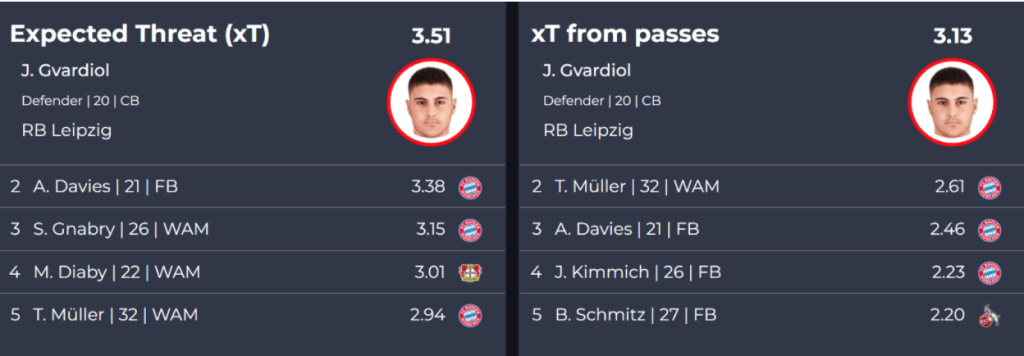
In fact, amongst all players in Bundesliga last term – ALL PLAYERS, not just defenders – he ranked first for expected threat (xT) (3.51) and xT (3.13) from passes. He is a phenomenal and influential outlet on the ball.

The Zagreb-born colossus is nowhere near a traditional centre-back. One look at his numbers suggests that this is a player who loves getting high up the pitch and advancing the ball.

He averaged 5.31 progressive passes per 90 last season along with receiving 0.67 progressive passes per 90. He ranks in the top 3% of centre-backs amongst Europe’s top five leagues for progressive passes and in the top 6% for progressive carries (5.45) and top 1% for dribbles completed (0.89) showcasing that he loves branching out from his defensive line and dribbling his way through opponent’s press in order to get his team up the pitch, or open up passing lanes for his midfielders.

Being able to move the ball up the pitch is paramount to a team’s success, especially possession-heavy teams; as previously stated, the modern-day centre-back must be very good at progressing the ball, by means of either passing or carrying and the £31.5m-rated juggernaut is superb at both attributes, as highlighted by the numbers above – it is the Croatian’s calling card when he is not engrossed in shepherding opposition attackers away from his own goal.

He is supremely confident when performing both actions, heavily reliant on his aggression, impressive ball-control and wonderful vision in being able to spot his more forward-thinking teammates within dangerous areas in the attacking third.

Gvardiol’s propensity to always try to make the penetrative pass, even when under pressure, greatly allowing his team to have more positional freedom in buildup. Once he receives possession, he holds the knack of constantly scanning his surroundings, looking up and deciding which players to pick out.

Moving the ball into the opposition final third, locating attackers in dangerous positions, is another key element in being a modern-day centre-back. 

Whether it be through solo runs like Gvardiol often does, or brilliant switches of play to forwards that allow them to carry into space, rapidly getting the football into the last third of pitch is a great skill, and benefits team attacks massively.

It’s incredibly vital to remember, that last season was his first campaign playing top-level football, so all the stats seen in this report must be taken in with much awe and inspired looks. In the Bundesliga, amongst all outfield players he ranked 5th for passes into the final third (165), sixth for through balls (8), 10th for progressive carrying distance (4455) and sixth for pass targets (1722) which means the number of times a player was the target of an attempted pass. That coupled with his sensational passing success rate of 91%, he is an astute, decisive and accurate passer of the ball.

Even though he is so adept in attack, a Gvardiol scout report is very incomplete without mentioning his defensive work. He applies 11.75 pressures per 90, pitting him in the top 16% of centre-backs in Europe’s top five leagues, which allows him to close attackers quickly often. Moreover, Gvardiol has recorded 2.19 tackles, and 2.03 blocks per 90.

Given how far up the pitch he likes to venture into, the true mark of his defending lies in his interceptions. He averages 3.22 interceptions per 90, putting him in the 98th percentile amongst defenders across Europe and 5th amongst all Bundesliga players (89). He is a stunning reader of the game, but also combative and aggressive presence as he is expected to be considering his frame and size, at just the tender age of 20 too.

Gvardiol is extremely quick on his feet, meaning he covers ground rapidly to diffuse any threatening situations. Therefore, it is no surprise why Gvardiol has been a supreme fit at Leipzig and more importantly a consummate figure at the highest level. His tackling ability is top-notch and combined with his excellent recovery pace, he is a very good active defender and often comes out on top when he engages in duels. 

Though, his aerial abilities is one he must work on, he only wins 2.46 aerial duels despite his 6 foot 1 frame, which doesn’t make for pleasing reading. The game is evolving at such a rate nowadays that centre-backs have got to be as proactive in the air as they are on the ground, but with more maturity and develop, that weakness isn’t one for much pressing concern.

What’s impressive of the 20-year-old defender is how quickly he’s become an impactful presence in the Leipzig back-line alongside Wili Orban and Mohamed Simakan. He’s quickly become a leader, and is very vocal when he wants to be. Not just barking orders at his fellow defenders, but to his experienced midfielders in front too, such as Kevin Kampl and Konrad Laimer. That’s all part and parcel of the impressive and complete package that the Croatian rock-solid star offers.

What does the future hold for Joško Gvardiol?

Gvardiol is in for a truly decorated and successful future both at club level and international too. It’s no secret that he is one of Europe’s most coveted centre-back out there right now, which means there are no shortage of suitors for his signature, with Chelsea and Manchester City specifically lurking.

However, it is vital that the £21k-per-week star continues his rapid progression at a steady and progressive side like Leipzig who can continue to offer him much room to grow, mature, develop and most of all, the room to make mistakes that doesn’t bring much scrutiny and criticism as a more enhanced and elite club side may pour on him.

Again, he’s still only 20 years of age, and while he’s of course taken giant strides over the past 12 months, there is still much more for Gvardiol to learn as he continues his upward trajectory. Certainly, his numbers may be inflated due to Domenico Tedesco’s insistence in playing a back three at Leipzig.

Just how will Gvardiol fare in playing week-in, week-out in a back four? That is one possible flaw that top sides will take into consideration when scouting him. It is unclear whether Tedesco will change his system next season, but trying out the Croatian in a back four could really help develop him further.

With the World Cup looming this winter – in which Gvardiol is currently guaranteed a spot on the Croatian plane barring any injuries – the Zagreb-born juggernaut must stay in Leipzig where he is loved and appreciated in order to continue his incredible trajectory.

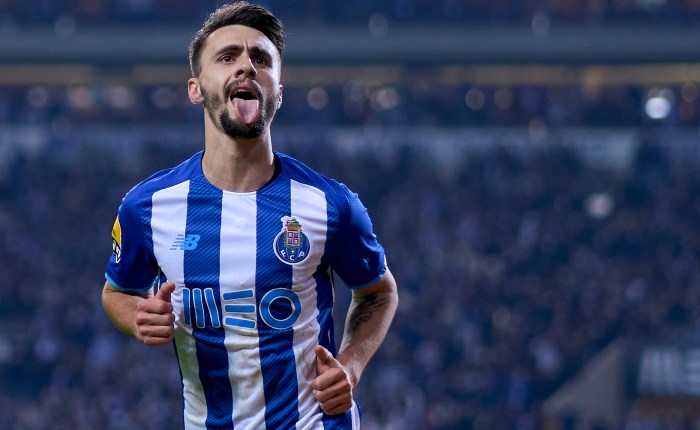
#AnthonyScouts 2022 – Fabio Vieira

#AnthonyScouts 2022 – Fabio Vieira

It is incredibly rare in modern day football for a signing to take almost everyone by surprise, due to its behind the scenes works and secretive talks.

We had a similar case before last season when Aston Villa caught fans off guard with the secretive signing of Danny Ings – a deal which not only shocked supporters but playing staff too.

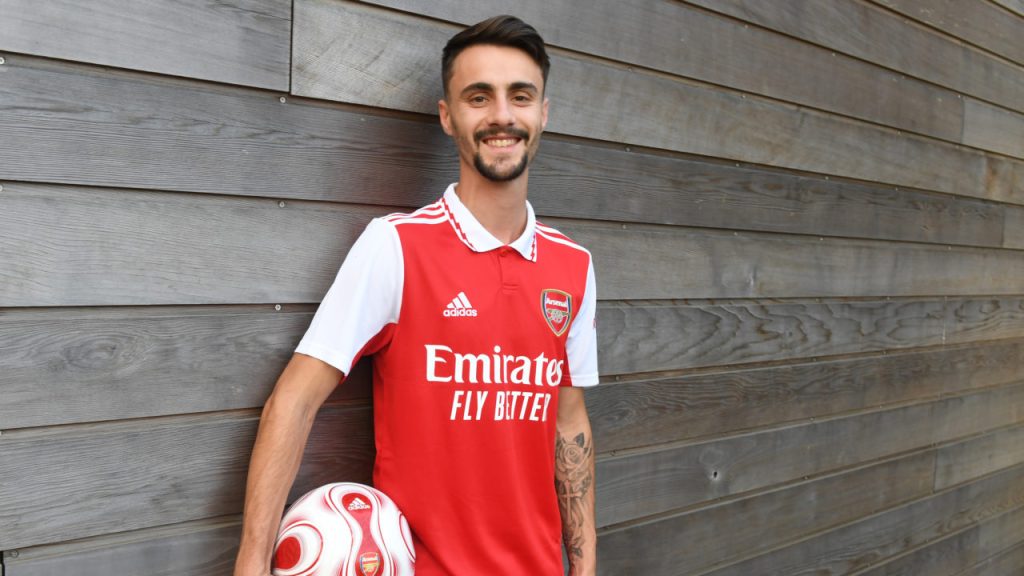
And in signing Fabio Vieira from Portuguese champions FC Porto, Arsenal and boss Mikel Arteta have pulled off their own major surprise too.

(Photo by Stuart MacFarlane/Arsenal FC via Getty Images)

After finishing fifth in the Premier League in 2021/22 losing out on a Champions League berth to fierce rivals Tottenham Hotspur, Arteta is aiming to considerably bolster his squad as they chase a return to the European elite. They’ve already brought in Gabriel Jesus from Manchester City, goalkeeper Matt Turner from New England Revolution and Marquinhos from Sao Paulo.

After being linked with a number of high-profile players, however, Vieira’s arrival came out of the blue.

It has been reported that Arteta pushed hard for a deal to be done, with the Arsenal manager having been impressed with Vieira’s performances as Porto won the title in Portugal.

In fact, with the Spaniard looking to build a squad similar to the one Pep Guardiola possesses over at his old club Manchester City, Arsenal now have their very own Bernardo Silva. A player blessed with unerring technical attributes and a creative weaponry that made him one of the most devastating attacking midfielders in Portugal last term.

So what will Arsenal be getting with the 23-year-old?

Who is Fabio Vieira?

Born in Santa Maria da Feira in the Aveiro District, Vieira started out for the FC Porto juniors, playing nine matches as won the 2018–19 UEFA Youth League, and scored in their 3–1 win against Chelsea in the final in Nyon in April 2019.

Vieira went on to make his senior debut with Porto B in February 2019, coming on as a 57th-minute substitute for João Mário in a 1–0 away defeat to Arouca in the LigaPro. Six months later, he scored for the first time with a penalty in a 3–1 away victory over Farense.

Vieira made his first team bow in June 2020, featuring for 19 minutes in the 1–0 Primeira Liga home defeat of Marítimo. Again from the bench, he scored his first goal in the competition the following month in July to help the hosts beat Belenenses SAD 5–0 and went on to feature in eight games at the end of the season for the eventual champions.

He found more space within the first team during the 2021–22 campaign, more significantly in the second half of the campaign following Luis Diaz’ winter transfer to Liverpool in January becoming a crucial figure in attack for Sergio Conceição’s side, replacing the Colombian’s goals and creativity.

The 23-year-old impressed internationally too in the 2021 UEFA European Under-21 Championship where he was named player of the tournament in the finals  in Hungary and Slovenia, featuring in all six games and netting once for the runners-up.

He provided two hat-tricks of assists against Moreirense and Belenenses SAD during the 2021/22 campaign totalling 14 assists – second-best in the league – and six goals to help his side to a domestic double of the league and Taça de Portugal.

How did Vieira fare last season? What’s his style of play?

While the 21-year-old only played a bit-part role for the Portuguese champions last season, he became a far more prominent figure in the first team after Luis Diaz’ departure to Liverpool.

Previously hailed as a “rising star“, he already has 11 goals in 19 games for Portugal’s Under-21 side, with his manager there, Rui Jorge, hailing the Porto starlet as “a very technically advanced player’ with a ‘great future“.

With 27 league games under his belt this season, the Portuguese wizard astonishingly recorded six goals and delivered 14 assists, which is more contributions any other Porto player. He also ranked as Liga NOS’ second-best assist maker for the 2021/22 campaign.

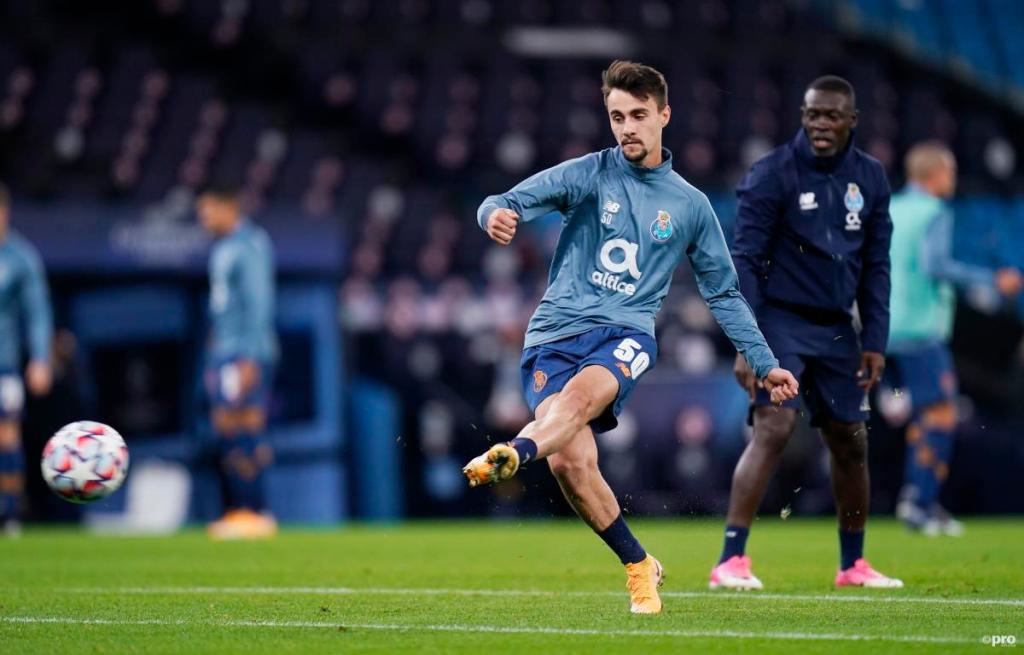
A left-footed attacking midfielder who does most of his work in central positions, though he also likes to drift into the right inside channel – just like his compatriot Bernardo Silva. Vieira’s main focus is in the creation of chances for his teammates, and he particularly stands out in that regard due to his wonderful left foot, vision, deftness and accuracy of pass and a tremendous knack for some astonishing defence-splitting passes, as evidenced in the image below.

Vieira is an incredibly intelligent footballer, but more precisely an intelligent and meticulous investigator of space, regularly scanning the pitch ahead of him to pick out pockets of space that he can exploit to hurt opposition defences. His constant positions in between the lines, in the half-space or centrally means he is an expert at operating in tight and congested areas. This is down to wonderful close control, spatial awareness and speed of thought when forming attacking moves or directly creating chances.

His constant scanning ahead helps him spot gaps in the opposition’s back line at an early stage; as he receives, he is aware of pitch ahead, carrying an image in his head of what he wants to target, and executes it to such sublime precision with an incisive pass, as shown above.

He also breaks the last line with passes over the opposition centre-backs. When he turns on the ball having received between the lines or between opposition midfielders, a centre-forward will set off on a direct run in behind. His type of through balls are constant, but differing in style, sometimes on the floor all in the air, and he is incredibly adept at them.

Vieira also has the ability to create chances from set-pieces, particularly when delivering outswinging balls from the left. He can also provide quality balls after receiving a short pass from a set-piece, delivering from a different angle which upsets and unnerves opposition defences.

To further highlight how much of a dangerous attacking figure he is, no other player at Porto has managed to equal the number of crosses that Vieira (95) has made throughout this campaign.

He was also listed in the top 10 for shots per 90 minutes in the Portuguese league last term, highlighting his courageousness in getting shots away.

His overall performances earned him a season rating of 7.45 from SofaScore, making him the fifth-best ranked player in the Porto squad.

This all shows why the midfielder has been likened to Mesut Ozil by football talent scout Jacek Kulig on Twitter, who also said that the player has a “left foot made of gold.” He’s also been stylistically compared by journalist Sam Tighe to Manchester City’s Bernardo Silva, who also held the same measured attacking approach before

Blessed with wonderful skill, technical excellence, a sumptuous left foot and the unique ability to operate consummately in the half-space and in between the lines, the Portuguese maestro could well offer much variation and flexibility to Arteta’s weaponry next term due to his versatility: capable of playing on the right-wing, at no.10, even as a false-nine or in an advanced central midfield role.

The 23-year-old maestro is also an adept ball-carrier especially when drifting wider from central areas. One of his most striking attributes is his ability to drive forward with the ball while targeting a specific defender to commit. He locks on to his target, knowing they will have to engage him at some point, while keeping an eye on teammates ahead of him who he can look to slip in behind the opposition.

As the opponent tries to engage with a tackle, Vieira times his release superbly well to supply a teammate through on goal. Last campaign saw him register a whopping 14 big chances created, along with his 14 assists whilst also averaging 1.3 key passes per game showcasing his majestic abilities in the final third.

With outlets such as Gabriel Jesus, Gabriel Martinelli and Bukayo Saka all capable of running in behind opposition defences, Vieira would well enjoy a field day when threading sumptuous through balls to play them through on goal.

Although he doesn’t dribble and attack opponents 1v1 as much as a winger, his ability to receive and drive forward helps progress play when passing options are initially limited. He times his bursts and decelerations to lose his opponent, before then looking for a penetrative pass.

Taking into account how Arsenal have racked up the eight-best goal-creating actions (82) in the Premier League this season, possessing the qualities of the £13.5m-rated playmaker could certainly propel Arteta’s gameplan at the Emirates.

Such an incredible influence and abilities in the attack means the Gunners could be one of the most exciting teams to watch next season, especially because of the wonderful blend of attacking qualities in the Spaniard’s brilliantly constructed squad.

#AnthonyScouts 2022 – Cody Gakpo

#AnthonyScouts 2022 – Cody Gakpo

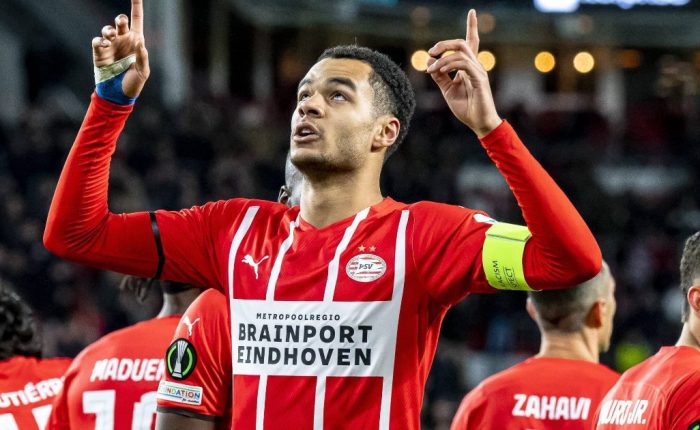
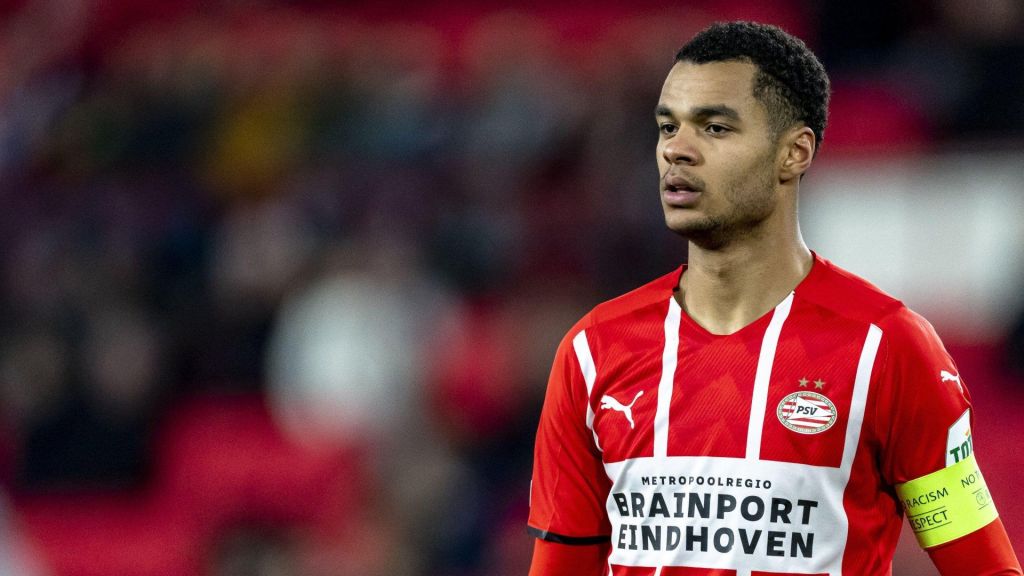
Cody Gakpo, PSV Eindhoven’s 23-year old attacking starlet, may well be on the move this summer.

Arsenal, Liverpool, Manchester United have all been reportedly linked with the Dutch sensation in recent months, and considering the thrilling campaign he enjoyed last season for his hometown club, it’s easy to see why he is so highly-coveted, but more importantly regarded as one of the most decorated young forwards on the continent.

The 23-year-old notched an astonishing 21 goals and 15 assists in 47 games in all competitions for the Eredivisie giants and according to the Daily Mail, he is priced between £30M and £40M, which seems an incredibly reasonable price and an attainable number for any potential suitors wishing to snap up his services for next season.

(Photo by ANP via Getty Images)

Instead of moving in January, Gakpo signed a new deal with PSV that runs through 2026, so the club won’t feel under any pressure to part with him. He recently said, “anything can happen this summer,” that he’ll assess his options, including staying in the Netherlands, and that it’s important to him to move to a club where he is going to play so that he can show well and have a shot at the Dutch World Cup team.

While times have changed regarding European Dutch supremacy, one thing has stayed the same — youth development. The Eredivisie is widely recognised for developing some of the world’s best footballers through thoughtful planning from clubs and astute coaching. In recent years, players such as Barcelona’s Memphis Depay and Frenkie de Jong have been able to propel into superstardom from their Eredivisie platform. 

Gakpo of PSV Eindhoven has been touted as the next young Dutch star to break into one of Europe’s top five leagues, and this piece will delve into why he is regarded as one of Europe’s best young attackers right now.

Who is Cody Gakpo?

Born in Eindhoven and raised in the district of Stratum. His father was born in Togo and has Ghanaian ancestry, while his mother is Dutch.

In 2007, he moved to the PSV Eindhoven academy, where he then progressed through the ranks within the decorated youth setup.

During the 2016/17 campaign, he was part of the reserve team Jong PSV for the first time, but mainly featured in the U19 side.

After impressing through the ranks at his hometown club, he was immediately thrust into the reserve first XI and made his debut in the Eerste Divisie for Jong PSV in November 2016 going up against Helmond Sport.

However, he only featured one more time for the reserves but the following campaign – an incredibly productive one – where he produced seven goals and five assists in 13 league outings, he was promoted to the reserves on a permanent basis.

His second appearance in the second-tier, in January 2017, he scored a brace in a 3-2 win against De Graafschap and also registered an assist. The 2017/18 campaign in the second tier yielded seven goals in 12 games.

In the 2018–19 season, Gakpo was able to further improve his performances. This was also noticed by first team coach, Mark van Bommel. He was selected several times for the matchday squad of the first team in the first half of the season. He would initially, however, remain an unused substitute.

Instead, he made his debut in a 4–0 away win against Excelsior Maassluis in the KNVB Cup on 26 September, where he also scored a goal. He notched his first hattrick for PSV and the first in his professional career in a 5-1 demolition of Go Ahead Eagles in December 2018.

After he scored a goal and got an assist in the 5–2 home win against Almere City on 21 December, he made his debut in the Eredivisie just one day later, in a 3-1 home win against AZ coming on as a late second half sub for Steven Bergwijn.

He scored nine goals in ten league games for Jong PSV by the end of the year and was subsequently promoted to become a regular member of the first team. On 3 February 2019, he scored his first league goal in his second appearance in a 5–0 home win over Fortuna Sittard and also assisted another goal. By the end of the season he made 14 league appearances, but without being able to record another goal.

In the 2019–20 season, he made his breakthrough in the Eredivisie and recorded seven goals and as many assists in 25 league games.

On the first matchday of the 2020/21 campaign, he scored his first brace for PSV, contributing to a 3-1 win over Groningen. He scored another two goals two weeks later, in a 5-1 UEFA Europa League victory against Slovenian side NS Mura. He finished the season with 29 appearances, in which he scored 11 goals.

However, this season he has taken his game to a whole new level, remarkably increasing his goals + assists record and becoming one of the most productive forwards on the continent.

Gakpo was called up to the Netherlands squad for UEFA Euro 2020 and made his debut in the third match of the group stage against North Macedonia as a substitute in the 79th minute for Frenkie de Jong becoming the first Netherlands player to make his international debut in a European Championship since 1980.

He’s gone on to make three more appearances for the Dutch team, scoring his first goal in a comfortable 4-0 win over Montenegro in September 2021 in a 2022 FIFA World Cup qualifier.

What’s so good about Gakpo?

When watching Gakpo, the first striking aspect you may notice about him is his large size and colossal frame, as the 23-year-old stands at 6’2. With his size, Gakpo obtains a powerful stride when running, while also being able to hold off players with incredible strength and burst past them with his searing pace.

Just as he gets going towards the opposition box, he is simply unstoppable and unbeatable, and it’s not only down to the speed, trickery and strength at which he exerts himself but the unerring courage, bravery and huge confidence levels he constantly performs at.

He is intelligent on the ball regarding his decision making because of his use of scanning, which allows the young forward to survey and interpret the surrounding space beyond him, and make telling decisions in the final third.

When the opportunity arises, Gakpo holds a tendency to make a forward action towards the ball before suddenly allowing the ball to roll across his body. When space is not afforded to him, he possesses the capability in creating space for himself by making inwards and outward runs off the ball to catch opponents off-guard.

The 23-year-old is quite versatile in his play, possessing a number of unique qualities that makes him arguably PSV’s most all-rounded and decisive outlet.

He can adopt different positions and techniques to progress play and attack. Deployed as a left-winger in Roger Schmidt’s 4-2-3-1 shape, he at times, will position himself high and wide against the byline. Alternatively Gakpo will be positioned within the left half-space and former Bundesliga full-back, Phillip Max will provide width on the left-hand side. 

These variations regarding his positioning are useful as it creates unpredictability as to where he will pick up the ball, which disrupts opposition marking while also creating space for his teammates.

Whether positioned in the half-space or out-wide, his tremendous link play is the key feature he expresses.

The Eindhoven-born wonderkid excels in 1-2 exchanges with teammates in his vicinity and exploits these scenarios to his advantage, constantly laying the ball off and bursting into the box. During these types of exchanges, Gakpo showcases his impressive composure as he is keen to move with speed, with or without the ball, but the young Dutch winger also has the capacity to know when to slow down play and keep the possession for his team.

While being able to trade quick passes with teammates and carve through defences with his off-ball movement, Gakpo can also create for others around him. As well as his astonishing 21 goals in all competitions, he’s also laid on 15 assists, 12 of them in the Dutch Eredivisie.

As per SofaScore, he averaged an outstanding 2.6 key passes in the Dutch top-flight last term as well as creating 11 big chances for his teammates. In just four appearances in the UEFA Europa League, he’s averaged 2.8 key passes, it may derive from considerably less minutes than that of the Eredivisie, but it still reflects just how creative and decisive he is in the final third.

With his excellent weight of pass, Gakpo holds the nous and qualities to thread an eye-of-the-needle ball and create a goalscoring opportunity. With this being said, when occupying positions out wide, Gakpo has shown crossing ability regardless of him not being a high-volume crosser, as he has only accumulated 1.6 crosses per game, which isn’t the best amongst out-an-out wingers in Europe, but it highlights his urge to create opportunities.

As stated previously, Gakpo is a hard man to stop when on the ball.

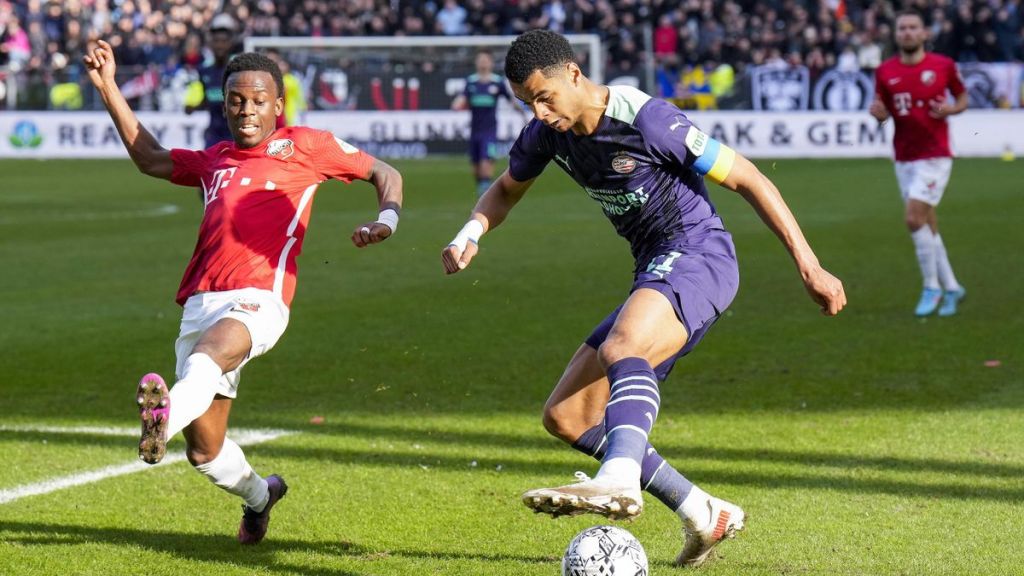
The Dutchman can beat opposition players with his astute ball manipulation and dribbling skills. When attempting to take on a player 1v1, Gakpo has a variety of ways to beat his man. When attempting a dribble, he jinks one way, inviting pressure on that side to then suddenly switch and manoeuvre to the other side – and defenders constantly get fooled by it.

He averaged 2.9 dribbles per game last season, with a tremendous success rate of 59% meaning he is more than capable of beating his marker in varying situations.

In addition, he makes good use of quick and clever touches into space with the ball to get around the marker, as well as dropping his shoulder and shifting the ball in any direction. If you need any example, check out his first strike against Feyenoord in the 2-2 draw at the start of May, taking the ball down expertly in his stride and past Lutsharel Geertruida before slotting the ball past Ofir Marciano at his near post. A mesmerizing goal.

One of Gakpo’s greatest qualities is the ability to create shooting opportunities off the dribble, and he can combine this with his superb ball-striking capability. He excels when connecting with the ball for a shot as he catches the ball sweetly and generates power when facing the goal.

Throughout last campaign, he masterfully showed that he can place the ball in any corner of the goal owing to his incredible striking ability.

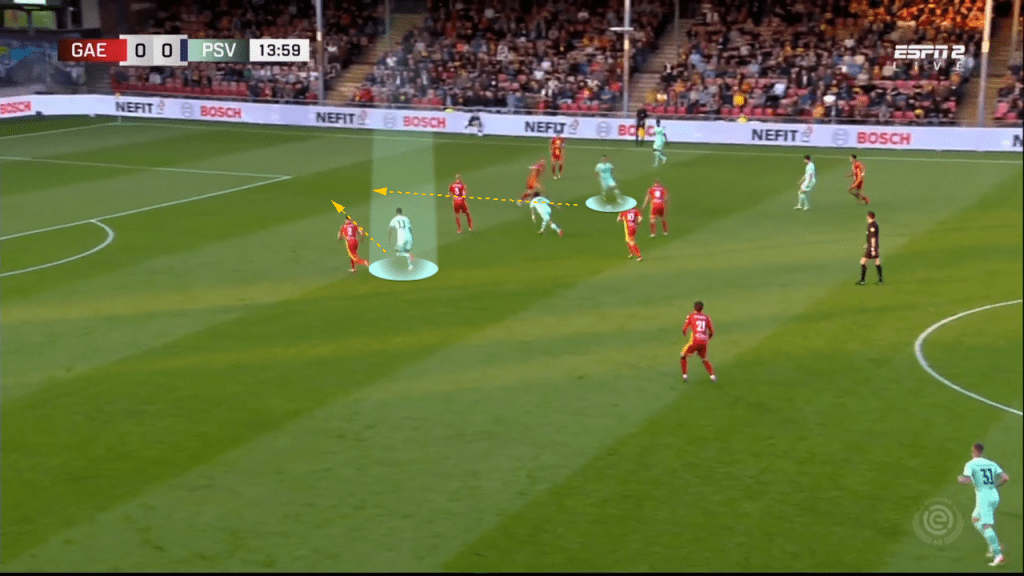
His goal against Go Ahead Eagles is an excellent demonstration of his ball-striking being used in difficult situations. Mario Götze is in possession and spots Cody Gakpo running into space which could lead to a promising attacking move.

The German international dissects the opposition defence with a lovely through pass and finds Gakpo running into space. His initial touch and the pressure of the defender forces him wider than intended and disrupts his balance. Nevertheless, while unbalanced, he still manages to connect well with the ball and finish in the top right corner.

Gakpo is an aggressive and assertive runner when in possession, which is a benefit and, at other times, a detriment and something he may improve on as time passes. He looks to run at the heart of opposition defences down the centre of the pitch and in some instances, he may lose the ball when battling through a congested area.

However, it shouldn’t be put down as a weakness in his game, but an instance which is a further highlight of his courage and bravery to create openings on his own, though, it will be better at times to use his teammates.

The young winger at full speed is a lot to handle, and his sprints can create space for teammates as he attracts the opposition towards him.

A critique of his, however, is a lack of defensive work. While his work on the ball has propelled him into the spotlight, some of the big teams touting for his services will strongly expect a work ethic without possession, and his 0.6 tackles per game shows it’s an area he falls short in.

At such a young age, however, this is a weakness that could turn to a strength in time with the right coaching and application.

He’s already started off the new 2022/23 campaign in such similar vein, notching a goal and two assists in PSV’s enthralling 5-3 Johan Cruijff Shield final victory over rivals Ajax, putting in two wonderful timed crosses for Guus Til’s double before clinically latching onto the end of a goalkeeping mistake to put PSV 3-2 up.

Gakpo is a player of tremendous goal contributing qualities, and with no disrespect to PSV Eindhoven, it is incredibly baffling that the 22-year-old still remains at the club, with no top elite club ready to take a chance on him as it stands this summer, heading into the new campaign.

What does the future hold for Gakpo?

The Dutch Eredivisie is synonymous with talented players and teams that are woven into the fabric of football. At the end of a stunning 2021/22 campaign, young Gakpo can without doubt be easily tipped to be the next big thing to come out of The Netherlands — and for good reason.

The £22.5m-rated sensation is tremendously versatile, agile, unpredictable and combines skills that make him hard to mark.

His spatial awareness and instinctive ball striking off dribbling are what set the young man apart from his other counterparts within the league and it is only a matter of time until he moves on, takes off and performs on the highest stage for the highest bidder beyond this summer.

#AnthonyScouts 2022 – Charles De Ketelaere

#AnthonyScouts 2022 – Charles De Ketelaere

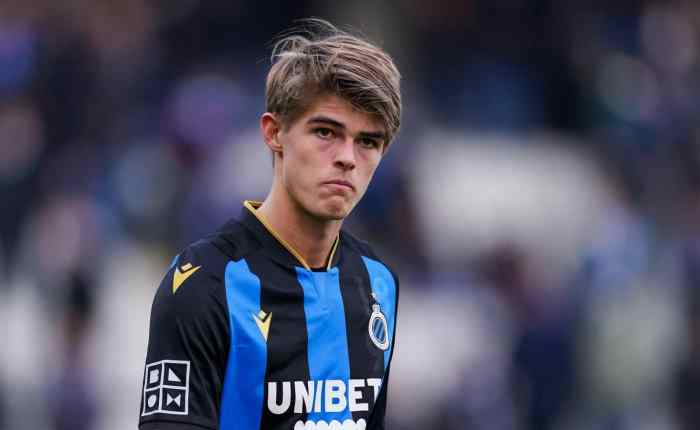
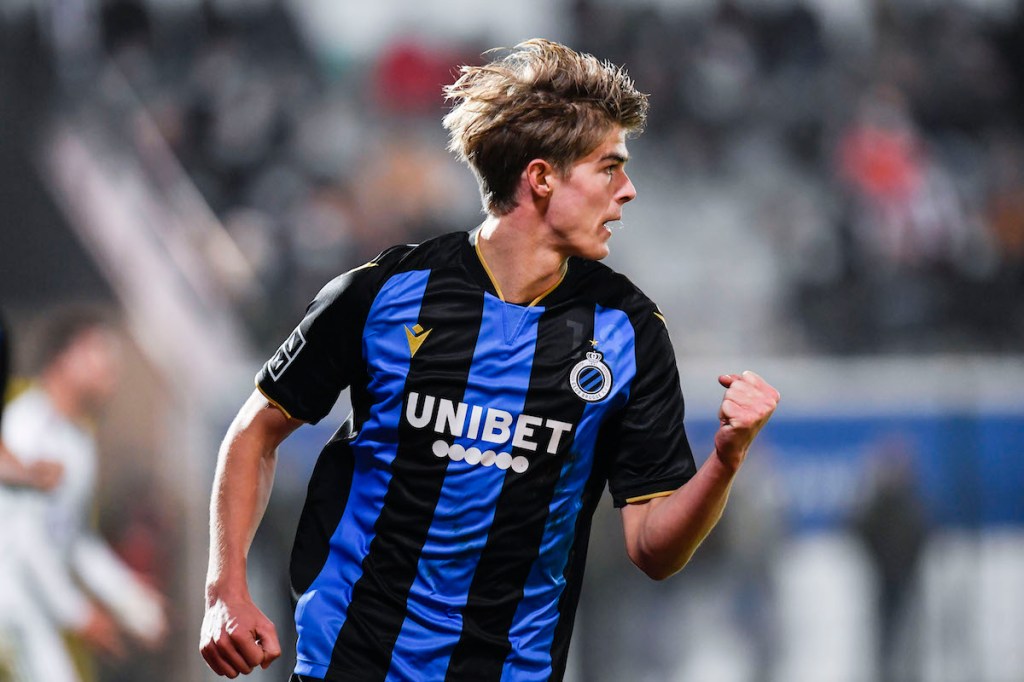
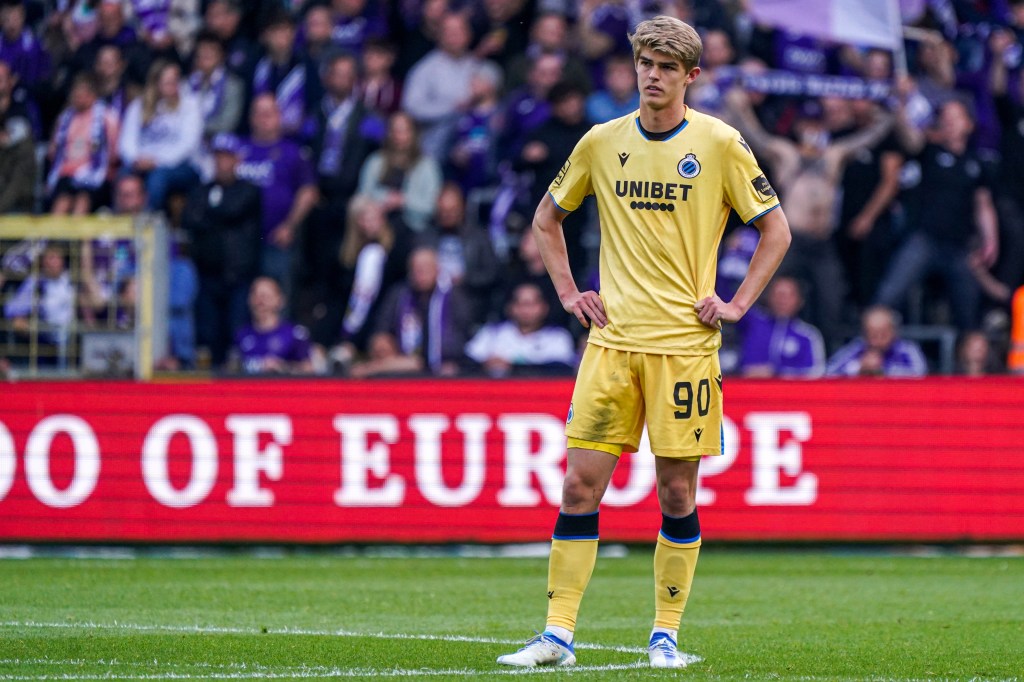
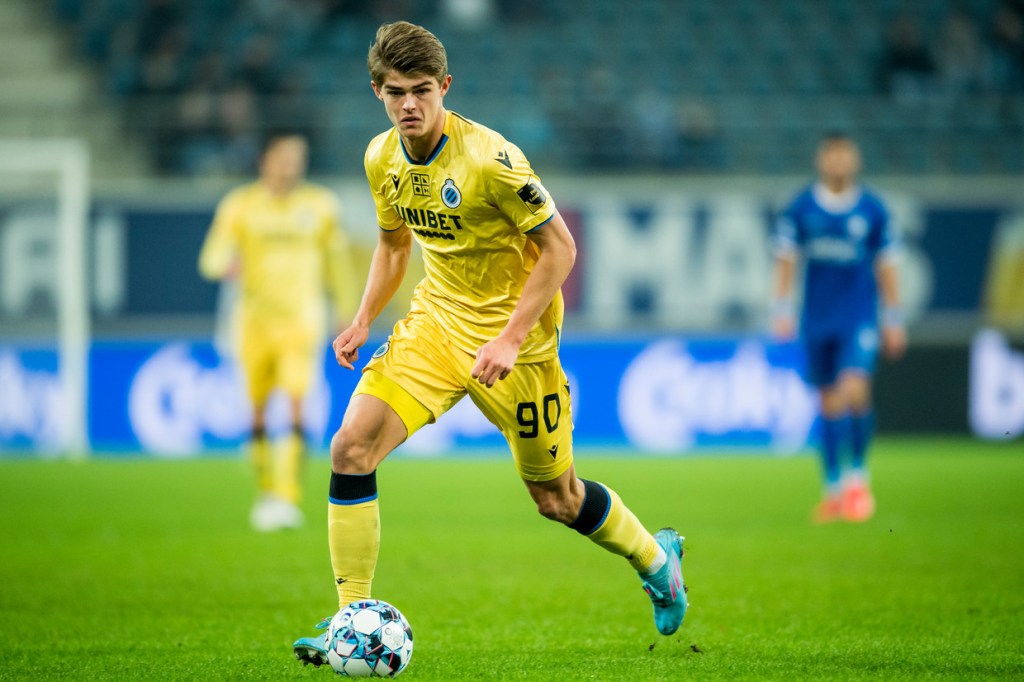
Arguably one of the most stylish names in European football, Charles De Ketelaere is a man in high demand this summer, the latest prestigious talent to roll down Belgian football’s long pool of highly regarded prodigies.

A player who could well become one of the biggest names in Belgian football over the past decade since Eden Hazard is soon to be one on the name of everyone’s lips as his future at Club Brugge comes to its expected conclusion.

(Photo by TOM GOYVAERTS/BELGA MAG/AFP via Getty Images)

The incredibly gifted 21-year-old is reportedly of interest to a whole host of clubs this summer, more specifically AC Milan – who appear to be frontrunners for his signature – Leeds United and Leicester City.

A product of Brugge’s youth system, this is a player well on his way to worldwide stardom let alone in Europe, hence why he’s so highly-coveted as of this moment. He enjoyed a yet another stellar campaign in the Belgian Pro League last term, as Club Bruges stormed to an 18th national title and their third gong in a row.
14 goals and 7 assists in 33 league games, and 18 goals and 10 assists in all competitions is no mean feat. In fact, it’s a sensational return for any player who’s position isn’t confined to that of a traditional centre-forward, however, he has been utilised a lot up front over the past year, but once you get to know De Ketelaere’s abilities and characteristics as a player, you’d fully come to an understanding as to why he pulled up such tremendous numbers last season.
So let’s get to it.

Who is Charles De Ketelaere?

The Brugge-born star started his career with KFC Varsenare, a boy’s football club local to where he grew up in Jabbeke – a municipality located in the Belgian province of West Flanders, not too far away from Bruges.

Since the age of 7, however, he has been with Club Brugge, making his way up their youth teams ever since. Perhaps owing to his rapid physical development, and maturity De Ketelaere had been playing above his age groups. 

In 2017, aged 16, he was promoted to the U17s, and only six months later was he promoted to their U21 squad, still just 16-years-old. He would make his first-team debut at 18-years-old, a 56-minute cameo against Paris Saint-Germain – a game Brugge would end up losing 5-0. 

He would then settle into the first-team fold filling in as a central-midfielder, such was the quality and intensity of his work off the ball that he could competently play in that position at a professional level while still so young. 

Standing at at 6’4”, the eight-time Belgian international is physical specimen. In the 20/21 season, he would find himself trusted to play in a position further up the pitch on a more regular basis, largely as a centre-forward, but also as a winger on both flanks owing to his incredible versatility, tactical understanding and awareness.

(Photo by Jeroen Meuwsen/Orange Pictures/BSR Agency/Getty Images)

He’s also been played as a defensive midfielder on a couple instances and at left-back too. A ‘Swiss army knife’ could never be a more fitting and ideal description for the Belgian maestro. 

The 2021/22 campaign saw him fill in most times as a centre-forward, and it’s in that position where the 21-year-old has enjoyed a sensational breakthrough campaign.

What’s all the hype surrounding De Ketelaere? How good is he?

If we’re in the business of comparing current European wonderkids to former world class stars and legends of the game, then De Ketelaere is a spitting footballing image of the Brazilian and AC Milan great, Kaka. Technically gifted, agile, quick off his feet, possesses a keen eye for a pass, silky on the ball and a player who really does know where the goal is even despite him not being an all-out number 9.

As well as his wonderful blend of technique’s on the ball, what makes the Belgian playmaker so special is his incredible versatility.

As stated previously, he’s not your typical number 9, but he’s shown throughout the 2021/22 campaign that he can fill in up front when required, but he’s played in every position across the front line for his current club — off the left, the right, as a second striker and then last season mainly as a central one; he has even played as a No 8 and at left wing-back, again owing to his tremendous tactical understanding and flexibility.

His 6’3″ frame is another bonus.

The 21-year-old uses his tall frame to burst past defenders, making him hard to stop fairly. Moreover, Club Brugge have not been been shy to use De Ketelaere as the linkup player, with Lang playing off the shoulder. Thus, they have both the bases covered in terms of attacking opponents.

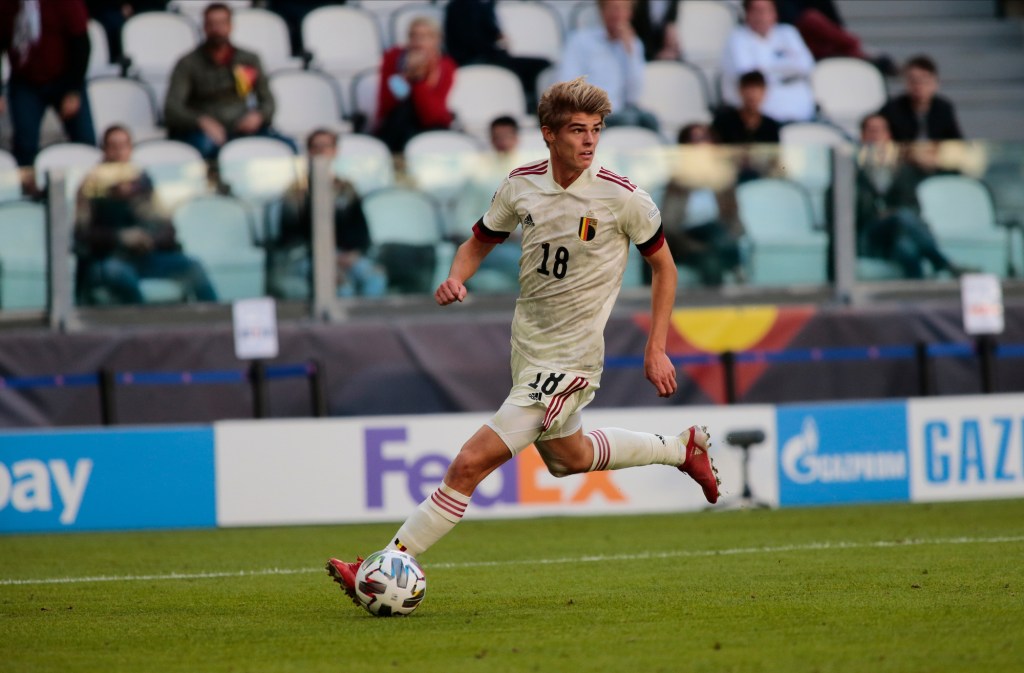
De Ketelaere in action for the Belgium national team (Photo by IPA/Sipa USA)

He’s a silky and wonderfully gifted outlet on the ball, capable of weaving past his markers but also possessing the vision, spatial awareness and awareness of those around to find the perfect body positioning to execute a line breaking pass or one in behind the opposition defenders.

28 goal contributions (18 goals, 10 assists) makes for phenomenal reading but also is a representation as to how influential and decisive he is. Though, it’s his efforts in the final third when linking up play and creating chances stands out. He created 16 big chances in the Belgian top flight, and 71 chances in all – the eighth best in the division. The £17k-per-week wonderkid also averaged 3.45 progressive passes per 90, which placed him in the top 96th percentile.

Additionally, he also had 8.89 progressive passes received per 90, pitting him in the 85th percentile but he is also an efficient shooter with a shot on-target percentage of 42.5%. His 14 goals in the First Division A came from just 31 shots on target, a brilliant record. Furthermore, he’s an excellent dribbler as explained previous, with 54.5% completed, out of 101 attempted.

His dribbling has seen a fantastic improvement. For such a tall player, he is very elegant on the ball. He possesses a good turn of pace and quick feet which allows him to both evade pressure and create separation from himself and his opponent.

De Ketelaere is also no slouch on the defensive end of things. According to FBrefhe applied 22.14 pressures and made 1.27 tackles per 90 in 2021-22. That put him in the 95th and 91st percentile amongst forwards in Europe’s top five leagues meaning his team can sustain a high level of pressing right from the attackers themselves. He has also become a fruitful and pivotal presence for Club Brugge on the field, recording a +/- per 90 of (+0.99), meaning the team performed better when he was playing.

Above all, he is an extremely hard worker. His work ethic is second to none, and as a result, deserves all the praises he will undoubtedly receive. You can put young CDK in any position on the pitch – he will give his all and likely thrive there.

Arguably De Ketelaere’s strongest characteristic – and what has always been his most striking one – is his movement off the ball. His awareness and know-how of where to be is that of a seasoned footballer. He is consistently able to find space in between the lines, but last term, as a centre-forward predominantly, he was able to get in behind the opposition defence more frequently.

Despite not being the quickest player (although not slow), the timing of his runs is often immaculate. Again, a trait giving off Kaka vibes who was absolutely sensational breaking past the opposition’s last line of defence to score goals.

While he can position himself between the lines, or running in behind a defence, at 6’4”, he has grown to become a player who can hold up the ball capably and bring teammates into the fold. When he broke into the first-team, he was sitting at more towards 6’1”, so this is a skill has developed (and is still developing) over time. He now possesses good hold up play, and he can utilise his frame smartly, which is impressive.

His well-rounded skill set, to run in behind, hold up the ball, or position himself between the lines, meshes well with a smart footballing brain. He has the ability to pull off all types of movement, but he also has the know-how of when to utilise which type.

As mentioned previously, he combines well with Brugge’s wingers, most notably his wonderkid counterpart Noa Lang, because he acts as a link man. He lacks an ego or superstar mind frame which means he does a lot of the thankless and underappreciated tasks in the final third that ego-fuelled dribblers might not do.

One area that the 21-year-old has improved upon over the past year is his ability on the ball, and it’s so no wonder so many clubs on the continent are reportedly trying to sign him this summer. He’s getting into the space to shoot more often, due to his aforementioned movement, he is becoming more ambitious and cleverer with his passing, and his dribbling is becoming more frequent, and not only when he plays as an attacking midfielder/winger. His dribbling in central areas has improved too. 

De Ketelaere has a fantastic brain, a very smart footballer and that’s down to his willingness to learn, to take on tactical instructions, but also when provided with the freedom to play his own game, he always finds new ways to innovate himself, especially when Brugge are in need of invention and imagination in the attacking third. How is he getting into positions to shoot so often, and very precisely? Well, his movement, as discussed before, but it is also moments where he’s stationery inside the area that generates him opportunities. He will often get into the area and place himself in the prime space for a cutback. He possess a superb understanding of where to be and when inside the penalty area, and that’s why he’s so influential.

Though, as a young forward still developing, De Ketelaere is not perfect. Of course, he isn’t. His finishing, at times, leaves much to be desired. From zones on the pitch that you expect the young Belgian to ripple the net, he can either miss the target entirely or just lack the composure to beat the keeper.

But, when he transitions into a better club over the coming months, you’d expect him not be a number nine as he was for Club Bruges for much of last season, so those weaknesses won’t be as worrying for his next coach. Though, with better coaching coupled with his fantastic willingness to learn, he’s sure to be a much more rounded player in the near future, and that is indeed a scary sight.

What does the future hold for De Ketelaere?

The incredible blend of talents, attributes and characteristics makes for an incredibly unique prospect.

You often get one or the other when it comes to hold up play, aerial ability, and defensive work rate, versus an ability to go past a player, have promising creative fundamentals, along with smart movement. To have all these assets in one player is something you don’t see often in world football and that’s why De Ketelaere is so highly-coveted.

AC Milan are reportedly frontrunners for his signature, and to be fair, he’d be perfect for Stefano Pioli’s exciting project at the San Siro. The Serie A champions picture him as a player that can kill several birds with one stone should he join them. They would like to upgrade in the right-wing and No 10 positions because head coach Stefano Pioli typically uses a 4-2-3-1 formation, and De Ketelaere has superbly filled in there for Bruges.

Leicester City and Leeds United are also strong on his heels and under fascinating and up and coming managers in Brendan Rodgers and Jesse Marsch, De Ketelaere could well become one of the cornerstone’s of their respective projects.

The 21-year-old is in no shortage of suitors for his signature, but it is a decision he cannot take lightly. With the World Cup on the horizon, does he go to a team where he’s guaranteed starts, but comes at the expense of playing top level football in the Champions League or does he join the likes of Milan where he may not be one of the first names on the teamsheet every week which may risk his position in Roberto Martinez’ thoughts?

Playing time is a key component. Regular performances and scoring consistency will decide his game time in Qatar. Nonetheless, De Ketelaere is the next big thing coming out of Belgium and is certainly on his way to becoming a household name.

Nico Schlotterbeck – Scout Report 2021/22

Nico Schlotterbeck – Scout Report 2021/22

Germany international centre-back Nico Schlotterbeck has agreed a transfer to Borussia Dortmund from Bundesliga rivals Freiburg.

Schlotterbeck has undoubtedly been one of the star performers in his team’s push for European football this season, not only that but statistically he is amongst the top performing defenders in Europe’s top five leagues.

The 22-year-old, who has enjoyed a breakthrough season in 2021/22, has agreed terms on a five-year deal through to 2027 at Dortmund, where he is set to form part of a new-look back line alongside fellow centre-back Niklas Süle, who joins from Bayern Munich.

“Nico is a young Germany international who’s had great development. His profile is perfect for BVB,” said outgoing sporting director Michael Zorc.

His successor, Sebastian Kehl, added: “Nico’s journey reminds me of my own, coming as a young Germany international from Freiburg to BVB. I hope Dortmund becomes as much as a home for him as it did for me.

“Nico has huge potential. He’s chosen by no means the financially best offer from numerous interested clubs, but chose BVB to develop here.”

So, lets begin the profile of this extremely gifted young centre back:

Who is Nico Scholetterbeck?

It is easy to forget about Freiburg. Squirreled away in the south west corner of Germany, its population of 230,000 people is not even enough to push it into the top three cities by its size.

The same can be said of its football club; SC Freiburg is often the forgotten club when it comes to German football, regularly surviving, quietly going about their business mid-table or even overachieving relative to its not-so-huge financial resources, but not significant enough that it will make the neutrals sit up and take notice.

However, perceptions this season has been dramatically altered, as the club currently sit fifth, three points away from the Champions League places deeming it an outstanding season for Christian Streich’s men.

When it comes to player development, this area is curious. Known primarily for blooding goalkeepers, since Streich became head coach in 2011 there have also been a litany of centre-backs moving through the club on their way up the footballing pyramid.

The legacy of producing Robin Koch, Çağlar Söyüncü, Matthias Ginter, Ömer To­prak and Marc-Oliver Kempf shows it is a club who are in the business of developing quality centre-backs.

The latest player to emerge is indeed Nico Schlotterbeck.

Growing up in a suburb of nearby Stuttgart, Schlotterbeck arrived in Freiburg with his older brother, Keven, in 2017. Since then, both have had stints in the Freiburg youth teams, on loan at Union Berlin, and in the Freiburg first team.

Three years the junior, Nico has overtaken his brother in the Freiberg pecking order after putting up some of the best defen­sive numbers in the Bundesliga last season with a Union side that ultimately qualified for European competition. 

The 21-year-old’s performances in Berlin earned him reg­ular appearances in the Germany under-21 team and even­tually a senior international debut in March. With the younger Schlotterbeck now firmly ensconced in the Freiburg back line, it looks inevitable that he too will fol­low a similar step up to his prestigious predecessors amongst the elite clubs on the continent.

Why have Dortmund quickly moved for his signature? Is he any good?

No role in modern football is as difficult to perform as a center-back. For most teams, central defenders are the starting point of their attack and are required to be accomplished and effective on the ball both through dribbling and passing.

As more and more teams across the continent adopt high-pressing systems, they need to be capable of resisting pressure from an opposition press when building from the back, mobile enough to cover in behind if the press is broken, and aerially dominant to stop the opposition from playing long raking balls over the top. 

Given the variety and difficulty of these tasks, talented center-backs who perform these actions in abundance are seemingly always in high demand. As such, it’s no doubt that various clubs were interested in acquiring Freiburg’s 22-year old Nico Schlotterbeck. 

The £25.20m-rated colossus is the instantiation of a ball-playing centre-back. Primarily a ball carrier, he is good with both feet (the left being his dominant), exceptional at reading space around opponents when ball-carrying, and has the perfect physique to be a mobile and incredibly agile central defender. 

Largely deployed in Christian Streich’s system as an wide centre-back in a back three this sea­son, it is not unusual to see Schlotterbeck driving with the ball deep in the opposition half, attacking space opened out by his captain, the left wing-back Christian Günter.

This ability with the ball at his feet is reflected in his incredible numbers.

As per FBref, over the past 365 days, he ranks in the top eight percent of central defenders across Europe’s top five leagues for progressive passes per 90 minutes (4.52) and in the top 13th percentile for progressive carries (4.20) and the top three percentile for dribbles completed amongst his defensive counterparts highlighting that he is indeed amongst the best of the best when progressing the ball from deep.

In fact, within the German top-flight, he ranked eighth in the division for passes into the final third (137). Given his role for Freiburg this season, his dribble volume is through the roof: 1.17 per 90 with an impressive success rate of just over 58%.

It’s worth noting that Schlotterbeck is his team’s primary outlet for progressing the play and, in some instances, can even be a creative outlet.

Head coach Christian Streich provided him license to push forwards and underlap as a center-back, much in the way Antonio Rudiger does as a left center-back for Chelsea or what Sheffield United managed so successfully under Chris Wilder from 2016 to 2021.

If you can break a team’s first initial branch of pressure with your centre-back, you can surely pose problems for them in deeper defensive areas, unbalancing them structurally and opening gaps that can be exploited by more advanced team-mates.

When it comes to passing, there are some areas of poten­tial improvement. Schlotterbeck is by no means a bad pas­ser of the ball. With short, and sweet passes, he is comfortable using both feet, and in confined spaces, he is good at moving the ball out to a team-mate – an extension, no doubt, of his dribbling prowess – a very rare commodity amongst centre backs in Europe. 

But there is a lack of consistency in his game here which can lead to a breakdown in possession. As a perfectly capable ball carrier, he sometimes invites opponents towards him in or­der to beat them, but this makes any potential pass out of trouble more difficult. His long passing is good, especially when he has time on the ball, as evidenced through his impressive progressive passing metrics.

This blend of on-ball attributes might lead to questions of his defensive credentials, but within this area, the Waiblingen-born defender also excels tremendously. The athleticism that lends itself so well to ball-carrying is an important part of his game when facing opposition attackers. 

With the capacity to respond quickly to the on-ball move­ment of opposition players, the German is able to track op­ponents and pick his moment to make tackles.

Schlotterbeck’s defensive metrics must be understood within the context of Freiburg’s style. Playing in either a 3-4-3 or 4-4-2 setup, Streich emphasizes both vertical and horizontal compactness throughout the team, with the main objective of funneling the opposition’s possession out in wide areas to make it more easier to dispossess them.

His standout defensive attributes lie in his aggression.

Particularly when he plays as the left-sided center-back in a 3-4-3, Schlotterbeck exceled at stepping out to prevent strikers and other attackers from having time and space to penetrate Freiburg’s block through the center.

The 6 foot 3in powerhouse’s strength, tackling, and mobility to cover the space behind if needed means he can make the seemingly risky defensive approach extremely fruitful. 

The German international ranks well in his interception and tackle metrics: within the 81st percentile for interceptions per 90 (2.59) and also ranking eighth in the Bundesliga (80), and he also impressively ranks in the 91s percentile for tackles per 90 (2.52) whilst also being amongst the best in the league for tackles won, ranking sixth amongst all players (53).

Across the last two campaign, he has re­mained consistently above average when it comes to head­ers won by centre backs, picking up three aerials won per 90 last season and 4.17 aerials won per 90 so far this season, at a success rate of an impressive 74.1%.

Attackers rarely win their aerial duels against Schlotterbeck because of his excellent anticipation and giant leap, and as a result, he is amongst the best players for aerial duels won (103) in the Bundesliga, ranking sixth for % of aerial duels won (74.1), suggesting he is a fantastic reader of the game in the air also.

The two time German international has not only excelled within his defensive aspects but in the attacking sense too, he’s scored four goals so far this season contributing magnificently to Freiburg’s impressive European run in the Bundesliga. He’s certainly not afraid to get shots off, create chances for his teammates from deep. For attacking metrics over the past year, he ranks within top 15 percent for all metrics compared to other defenders in Europe’s top five leagues, apart from assists. For shots total per90, he ranks in the 99th percentile, the top one percent of defenders averaging 1.20 shots, and also in the 99th percentile for shot-creating actions per 90 (1.68).

These are all unique and extraordinary metrics. The ideology that defenders are supposed to defend do not ring true when analysing Schlotterbeck’s game. He is not just a conventional ball-playing center-back: he is unique in how rounded he can be as a creative weapon.

It is no wonder why, top teams across the continent have tracked his progress, his current readings suggest he is indeed one of the best young defenders on the continent and Borussia Dortmund have certainly got themselves an absolute gem.

What does the future hold for Schlotterbeck?

Having made the stark progress and step up to the German senior setup, Nico Schlotterbeck deserves his upcoming move to Borussia Dortmund.

There is also the added bonus that he has performed well in two different Bunde­sliga systems in separate seasons, meaning he is highly adaptable and reliable whatever system and responsibility is being asked of him.

In a current footballing market boasting a whole plethora of young talented centre-backs, Schlotterbeck enjoys two ad­vantages over some of his contemporaries. Firstly, he is predominantly left footed.

(Photo by Harry Langer/DeFodi Images via Getty Images)

As the build-up phase in possession becomes increasingly central to elite football clubs, the need for left-footed players has never been higher, given the benefit of having a dominant-footed centre-back on the left in your back line, hence why Dortmund needed a able-bodied left-footed centre back.

Secondly, Schlotterbeck is current employed at a club who are renowned for talent ID and player development, with a strong history of moving these players on for relatively affordable sums of money – exactly what Dortmund have made the most of, and will surely get an incredible return once he gets going again next season.

The sky’s is indeed the limit for Nico Schlotterbeck.

What will Erik ten Hag bring to Manchester United?

What will Erik ten Hag bring to Manchester United?

Manchester United are a club in crisis, an institution that has been steeped in mediocrity for the best part of the last nine years and change is strongly required at Old Trafford.

According to The Athletic, Manchester United have reached an agreement in principle with Erik ten Hag to become their next permanent manager.

It is believed to be a verbal agreement. He is expected to join on a contract to run for up to four years.

This article will aim to analyse Ten Hag’s principles of play, and how it will fare in line with United’s squad and expectations:

Ten Hag’s rise to arguably the biggest job in football might feel fairly swift but his progress has been steady, meticulous and thoughtfully planned in order to maximize his impressive skill-set. At 52, he has been a youth coach and head of education, an assistant coach at home and abroad, and a manager at various other levels.

Erik ten Hag has impressed during his time at Ajax. He’s picked up two Eredivisie titles and historically reached the semi-finals of the UEFA Champions League during the 2018/19 campaign for the first time since the 1996/97 season.

That campaign, he comfortably overcame the giant challenge current holders at that time Real Madrid 4-1 at the Santiago Bernabéu in round 16, and also played Juventus off the par in the quarter-final before their unfortunate defeat to Tottenham Hotspur in the semi-final.

Since his appointment in 2019, he has had an extremely impressive win percentage of over 70%, a true sign of the significant impact and transformation he’s embarked on that the club since he became manager in 2017.

Considering the change in philosophy, identity and impact he’s made in Amsterdam, the former Utrecht coach could oversee a long-term rebuild at Old Trafford, providing the much-maligned Manchester United hierarchy allows him the opportunity to do so.

So what will Ten Hag bring to Old Trafford?

Erik ten Hag has typically lined his Ajax side up with a possession-based 4-3-3 system.

erik-ten-hag-ajax-formation-lineup

The practices most widely associated with his team are width, verticality (for example counter-movements), decoy runs and manipulation of opposition presses and deep blocks.

From goal-kicks, Ten Hag’s Ajax build from a deep position with the keeper plus two centre backs. This setup offers a conventional build-up structure with which the centre-backs are required to be typically comfortable in possession, and have the capabilities to be progressive with their passing.

The centre-backs and goalkeeper, and of one of the fullbacks dropping in, Ajax can regularly enjoy positional dominance in build-up against an opposition block; particularly if the opposition uses a front one or two – both of which are very common in the Dutch Eredivisie.

Ajax often drop one of the fullbacks – either Daley Blind or Noussair Mazraoui – into a deeper and more vertical position to aid their build-up play. It allows either of the fullbacks to become a deep-lying orchestrator as they are allowed the ample time and space to find the vertical options on their side of the pitch.

This is very similar to how Pep Guardiola uses his fullbacks in the 4-2-4 build up positional setup, where either Cancelo on the left-flank or Kyle Walker at RB are at times tasked in sitting alongside Rodri when City build up in possession, allowing them to be more accessible against an opposition’s defensive shape, but also providing the team with an extra body in midfield when in possession.

Ajax also frequently stagger their deep midfielders too, pushing one higher, to create a single pivot. The single pivot (Lisandro Martinez) acts as an anchor, holding the opponent’s front line to a narrower berth, and distributing play, again similar to how Pep utilizes Rodri, or how he used Busquets at Barcelona.

Ajax are currently the best defensive performing team in Eredivisie with just 15 goals conceded all campaign at the time of writing, displaying high awareness, composure and consistency. The team’s well-measured actions and anticipation skills result in a high success rate in almost every aspect.

They are proficient in winning their challenges clearly, despite actually having the highest challenge intensity (duels, tackles and interceptions per minute of opponent possession) in the league.

The foundations of Ten Hag’s build-up are very solid, free-flowing and really quite conventional. But where the value lies, is not only how Ajax are able to progress the ball and begin to create, but how they can utilise well-coached movements and problem solving to adapt against various opposition shapes.

In terms of ball progression, the keys, once in settled possession, are: opening up passing lanes to exploit, having time and space to make the pass and lastly, allowing the receiver to consistently receive in an optimal manner.

When Ajax form their conventional build-up structure, the fullbacks tend to drop into a narrower position. To oppose this, the wingers move wider to open a diagonal lane.

This means the wingers (who are typically inverted) such as Tadic and Antony can receive in a consistent manner, back to touchline providing them the full view and width of the pitch so they can create freely and move into areas (in half-spaces) where they feel they can affect attacking phases of play and hurt the opposition.

Antony & Mazraoui share a strong relationship on the right-flank, with the full-back knowing when to leave the winger in a 1v1 situation against the opposition.

Within Ten Hag’s system, every player holds the confidence in themselves and in their teammates when creating chances, and that is proved in how each component works in tandem to disrupt a deep opposition block.

Rather like Pep, his teams look to open up the pitch and penetrate opposition lines by exploiting the sides of the pitch. United are currently lacking in the winger department, with Jadon Sancho arguably being the only out-and-out winger the team possesses at the moment, this is something ten Hag will be looking to address providing he is confirmed as the United head coach.

Jadon Sancho could play a key role in Ten Hag’s Old Trafford revolution (Photo by Aitor Alcalde/Getty Images)

Possessing a player of Antony’s qualities could be incredibly useful at Old Trafford, seeing as he is not only an effective out-an-out winger, but an extroadinary creative force via his wand of a left-boot and his ability to link-up effectively with his teammates. So far this season, the forward has registered eight goals and four assists in the Dutch top-flight, building up from his nine goals and eight assists last term.

Like Raphinha at Leeds United, he is just as good creating and forming chances out of nothing than he is scoring them, a unique weapon and surely one which Ten Hag will be looking to add to dramatically improve United’s attacking play.

Ajax often play so the Brazilian can receive 1v1 in a deep and wide position. His distribution from here is excellent – particularly his in-swinging crosses. He also enjoys being in a 1v1 scenario regardless of whether Mazraoui is overlapping or standing off.

Whist in these systems the attacking threat comes from the wings, the midfield also helps out and are positioned quite high up the pitch in attack.

The three central midfield players all have their own unique roles; the central midfield player, previously occupied by United outcast Donny van de Beek and now performed by Steven Berghuis, always maintains a higher position on the pitch in support of the attack.

The two remaining midfield players generally have more defensive responsibilities: the other midfielder – nominally operates in a box-to-box role helping out both in defence and attack, with the remaining midfielder – the single pivot tending to be more composed in possession and confident on the ball.

Edson Alvarez and Ryan Gravenberch have been Ten Hag’s go-to midfield pairing

The overarching point regarding creating chances, is that the distortion through movement and width facilitates the individual quality, which ultimately adds another layer to the level of attacking threat ten Hag’s Ajax produce. They are not based off on individual quality alone, but on the system incorporated, qualities Manchester United just cannot claim to possess currently.

In terms of defensive transitions, Ajax generally perform reasonably, despite a system which makes having a consistent shape rather tedious. They often pack areas near the ball, thus, upon losing possession they are able to nip transitions in the bud with a counter-press.

However, this is where their weakness could lie: their reliance on their full-backs. Blind and Mazraoui are not only vital to build-up, progression, and (decoy) overlaps/underlaps in the final third, but are also integral to their defensive play.

Erik ten Hag’s team is a tactically complete side, evidenced by their impressive performances on the pitch throughout his reign. The opposite can be said of United: The Theatre of Dreams has at times this season become nightmarish. The club must act quickly and decisively and have a manager in place as soon as the season finishes, so the rebuild can commence as soon as possible.

If the Dutchman was named manager, it remains to be seen if any of the current starting XI would fit the bill for such a free-flowing system. Many suspect a large majority of the current squad would be moved on at the end of the season.

Providing Ten Hag moves to Old Trafford, we can expect a strong brand of possession-based football, where the players have a high level of clarity in terms of their role and how to break down the opponent, systematically, as a team – a far cry from what’s been produced by the team in recent years.

AND IN OTHER NEWS, check out this scout report on a tremendous young talent excelling under Ten Hag’s tutelage

Jurriën Timber 2021/22 – Scout Report

Jurriën Timber 2021/22 – Scout Report

The famous and well-renowned Ajax academy has been home to some of the world’s greatest footballing talents throughout the years and still stands as an example of a club possessing a classy and productive working model in player development.

The Dutch giants are not only known for developing their academy products and providing them with the opportunity in the first team but they are also renowned for creating a successful business model when allowing those talents to depart and also bringing in new players from the academy.

A player well versed and moulded in the Ajax strategy, currently taken the Dutch Eredivisie by storm is 20-year-old £27m-rated centre back, Jurrien Timber.

The wonderkid has rightfully earned Erik ten Hag’s trust and confidence with his stunning performances and maturity as well as his composure, vision and defensive understanding that fits perfectly with Ajax’s strategy.

His impressive displays has granted him a regular berth in Ajax’s starting XI which he has grabbed the opportunity with open arms, becoming one of the finest and most trustworthy cogs in Ten Hag’s well-oiled machine.

While they have always been successful in attack, this term their defensive performance has been exceptional. At the time of writing, Ajax have only conceded 13 goals goals in 27 games, a remarkable record underlying the importance and sheer resilience of their defensive players.

Reports are already emerging regarding much interest in his services with Chelsea and Tottenham previously rumoured to be keen on signing him.

With the way Timber has been developing at club and international level, there’s no reason why he can’t make the steady transition to Premier League-level football in the near future.

Who is Jurrien Timber?

Born in Utrecht, Netherlands. Timber and his twin brother Quinten Timber, who is also a footballer plying his trade at FC Utrecht, are of Aruban and Curaçaoan descent. Their mother Marilyn is from Aruba and their father is from Curaçao, both part of the ABC Islands in the Dutch Caribbean.

After impressing scouts for his hometown club, the 20-year-old was snapped up Feyenoord. However, Ajax’s famed history of developing and nurturing young talent was too great for him to ignore, so he joined the club at the age of 13 for the formative years of his footballing education.

Timber has only just recently emerged as the hot prospect everyone is raving about.

After making his debut in the last league game before lockdown, he returned from the enforced break with an even more important role in the first-team squad. The following summer, he was part of the Dutch team at the delayed EURO 2020.

Ajax coach Erik ten Hag, was impressed with what the youngster showed on his debut. “He has proven himself, and I will take that into the new season,” Ten Hag had said after the season abandonment was confirmed. 

The Ajax boss was true to his word and the 2020-21 campaign proved a true breakout year for Jurrien Timber. He took every chance that came his way enroute to making 20 appearances in Eredivisie, with 16 coming from the start. He added another five appearances in the Europa League as he gained some continental experience, never once looking out of his depth, a testament to his strength of character.  

On the international scene, he has appeared for Netherlands age group teams, from U15s to U21s. Timber has even made his international debut for Netherlands.

The 5 foot 10 defender has won six caps for his country at the age of just 20. Therefore, he is well on his way to matching his esteemed colleagues at the international level, in de Ligt and Van Dijk.

What’s so special about Timber?

Ajax are currently the best performing team in Eredivisie with just 13 goals conceded all campaign so far, displaying high awareness, composure and consistency. The team’s well-measured actions and anticipation skills result in a high success rate in almost every aspect. 

Ten Hag’s men are proficient in winning their challenges clearly, despite actually having the highest challenge intensity (duels, tackles and interceptions per minute of opponent possession) in the league.

Timber has contributed immeasurably to Ajax’s defensive success this season, where he has been rewarded with an impressive SofaScore rating of 7.40 from his performances in the Eredivisie.

Despite the lack of experience, the youngster possesses impressive composure in defence which puts him ahead pf his peers despite his lack of physicality and height. His technique and confidence on the ball allow him to dive into challenges and escape pressure through dribbling which helps the team in retaining possession.

His composure results in winning over 70% of his defensive duels this season, which puts him considerably alongside more experienced stalwarts in Ten Hag’s side such as Lisandro Martinez.

What makes him successful defensively, though, is his positional sense. Timber’s ability to read the game helps him in anticipating the oppositions’ movement and move into spaces so he can pressurise his opponents and block their attacking efforts.

The Dutch wonderkid has won 69% of his ground duels so far this campaign, as well as averaging 2.1 tackles per game and 1.5 interceptions highlighting his impressive defensive resilience and ability when halting his opponent’s progress with the ball.

The key qualities that have led to his valuable contribution are his concentration and work ethic. The 20-year-old is constantly aware of his surroundings and it is difficult to catch him out of position and unprepared.

Timber’s defensive work is often forthright and aggressive in his dueling. His positioning during final third attacks often puts him in good stead to press onto forwards immediately. When he has free reign to attack opposition ball-holders, he’s capable of timing his challenges from behind and finding the right space to reach through to nick the ball well.

As you watch him closely, you’ll find that this element of his defensive dueling is his calling card when battling against opposition attackers.

However, it’s all a different matter when Timber is tasked with marking someone.

When pressing from behind against a direct opponent, Timber is at fault for not establishing the sort of technique that can back up his constant aggression. He pushes into his opponent square-on, and will continue to jab towards the ball but without much care or effectiveness, so sharp turns and layoffs past him can easily catch him flat-footed.

It’s area of his game he will need to work on to become much more efficient and well-rounded on a consistent level like his compatriots de Ligt or Virgil van Dijk.

What favours him in many defensive situations though, is his ground coverage and physicality. At below 6ft and not being particularly stocky, Timber doesn’t appear to be much of a force, but it’s something he uses well to suffocate duels he’s engaged in. His height is a reason why he isn’t first to contest every aerial ball, but yet he’s managed to win 64% of his aerial duels. He’s proved himself to be capable of winning duels in plenty of mismatches thanks to his body-to-body strength on the ground.

Going forward, Ajax prefer to build up from the back, starting from circulating the ball laterally between Timber and Martínez. The team usually move into a more advanced position with the centre-backs right behind the central line and the full-backs often going past it to overload the opposition half and provide width. The team’s main strategy is to use high pass frequency and a lot of movement to bypass the opposition pressing structures and advance the ball to the final third.

Ten Hag’s men average over 600 passes per game and possess the highest pass completion rate in the whole division, underlying the players’ strong positional sense and connection.

Timber’s reliability and partnership with Martínez are key in possession. Due to his confidence on the ball and work under pressure, he is used for retaining possession and building up from the back by combining with his CB partner and the fullbacks too. 

One of the reasons for Ajax’s success in building up from the back is that both of their centre-backs are ball-playing defenders. Timber is actually one of the highest in the division in terms of pass frequency with his 82 passes per game on average which support the team’s efforts to deliver the ball to the final third.

As per FBRef, Timber ranks within the top 10 percentile amongst the defenders in Europe’s top five leagues for passing metrics over the past 365 days. He ranks in the 98th percentile for passes attempted per 90 minutes (82.34), the 99th percentile for pass completion percentage (93.9%), in the 97th percentile for progressive passes (5.39) and the 97th for progressive carries per90 (6.46) meaning he is indeed one of the best around in his build-up play and progressing the ball in the attacking areas for his team.

His positional sense and the team’s advanced position allow him to have a great contribution to their attack. He supplies the advanced areas with 15.51 passes per 90 which is the second-best record in the league and underlines his impact when progressing the play.

That, combined with his lack of height for a CB, are the reasons why Ten Hag has relied on him as a right-back on a few occasions. He can easily hold onto the ball and deliver it to the advanced areas and has a passing range that allows him to make combinations with his teammates and exploit spaces.

However, the only reason for him not being able to fully succeed in this position is his hesitancy to cross the ball. Due to his inexperience in this position, he has failed to be beneficial for the team in terms of supplying the box with balls and creating goalscoring opportunities.

Apart from that, he remains outstanding in his passing and ball retention as shown in the stats in percentile stats above.

Timber is incredibly patient and will use every second he’s given to manipulate the opposition in order to create alleyways elsewhere. He’ll slowly adjust his position with the ball so that he can create space for teammates to rotate into untracked and unseen. This all facilitates the freeing up of Ajax’s Argentine decisive ball-sprayer, Lisandro Martínez, who can look to maximise the directness and tempo of play.

Despite how smartly he shortens and slows his passes as part of the team’s overall ploy, the 20-year-old has only shown glimpses of potential in this respect. He can weight a long ball perfectly well and is very quick to play through the lines when appropriate, but his adjustments when undecided can kill his ability to play vertically.

It’s why he’s best positioned further towards the right as shown in the heatmap below, as the angles remain open for him even when doing this.

It won’t be a surprise if the Ten Hag temporarily employs him in defensive midfield, trying to use his passing range to orchestrate play, as he has previously said that a central midfield position might be suitable for Timber in the near future.

Indeed, within the Ajax system and footballing approach, their young products are expected to perform numerous roles within their designated positions, and Timber is yet another one of those hugely versatile products within their prestigious roster.

What does the future hold for Jurriën Timber?

The somewhat caged talents of Timber have shed a light on a player with great promise in possession of the ball. Combined with how seamlessly he applies himself to different roles within such concentrated setups, Timber should, right now, be a very desirable offensive prospect for many of those slightly lesser teams in the top leagues that are looking to be assertive, progressive and dominant with the ball.

Even a step up to clubs such as Champions League challengers in Serie A and La Liga could be the perfect platform for him to ramp up his rapid development but also provide him with the added platform to enhance his profile and impress.

Would a move to reportedly interested clubs Tottenham Hotspur and Chelsea be the right moves for him at this stage of his career? The former, much more plausible, but for a club like Chelsea who are faced with much pressure to win titles may not allow Timber the room to make mistakes and grow.

It’s a factor he will need to think thoroughly on if he is to embark on fulfilling the supreme and huge potential we know he possesses in abundance.