Ferran Torres 2019/20 – Scout Report

Ferran Torres 2019/20 – Scout Report

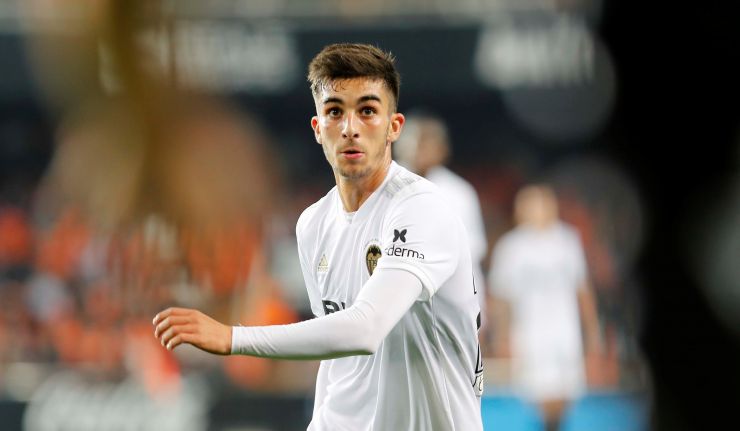
Valencia winger Ferran Torres is attracting interest from a whole host of top European clubs heading to the summer transfer window. Real Madrid, Borussia Dortmund, Liverpool, Manchester United, Manchester City and Juventus are all reportedly touting for his services.

Torres currently holds a contract at the Mestalla until 2021, with a reported release clause of around £92million. Valencia are believed to be open to selling the young superstar for much less if they decide to cash in this summer.

The Spanish under-21 winger has emerged as one of Europe’s most brightest attacking talents over the past year, and its no wonder why top clubs are scouring for his signature after this just his first full year in La Liga.

So without further ado..

Who is Ferran Torres?

Born in Foios, Horta Nord in the Valencian community, Torres joined the much acclaimed Valencia youth setup in 2006, at the age of just 6, progressing swiftly through the ranks before jumping to the Valencia B team at 16 years of age.

He made his debut, coming on as a second-half substitute in a 2-0 Segunda Division B home defeat to Mallorca B. He was formally promoted to the B team for the 2017/18 campaign. Torres scored his first goal for the side by netting the second in a 4-1 rout of Peralada-Girona B. That same year, after some impressive performances, he was strongly linked with the likes of Real Madrid and Barcelona even before featuring for the first team.

As a result, his contract was extended, including a release clause of around €25 million. He was swiftly promoted to the first team soon after, in the new year of 2018.
image

It wasn’t just domestically where he was making rapid waves, it was on the international scene too. He was part of the side which defeated England in the final of the UEFA European under-17 Championships back in 2017. It was a competition to remember for Torres, he also netting twice and also providing two assists in the Under-17 World Cup the same year. 

After the tournament, he then went on to make his first team debut for Valencia in November 2017, in a 2-0 win over Real Zaragoza in the Copa Del Rey. He then later became the first player born in the 2000s to feature in the La Liga, in a 2-1 defeat to Eibar at the age of 17.

Now a regular for Los Che, it was the 2018/19 season where the youngster made his real mark in the first team. He may have only netted three times in 37 appearances. However, it was his extraordinary performances, maturity and bravery that had fans quickly endearing to him.

Last summer also saw Torres net a brace in the final of the UEFA European Under-19 Championships against Portugal. He also scored his first Champions League goal in November 2019 against Lille in a 4-1 win – whilst becoming Valencia’s youngest goalscorer in the competition’s history.

What’s so good about Torres? Why is he so highly sought-after by Europe’s elite? 

While the modern day interpretation of a winger is one who cuts inside and becomes one of most influential components in an attack, Ferran Torres is one of the few players making exceptional strides as a traditional winger, one who is well versed in causing havoc in getting to the byline, and providing for his fellow forwards.

images

Torres is a speed merchant, an incredibly agile and a tricky winger with bags of showboating skills, pieces of movement and is fast becoming a much more potent force in front of goal with his decision-making and use of the ball. 6 goals and 6 assists in all competitions so far this season has propelled him to stardom.

Averaging a direct goal contribution every 188 minutes, Ferran Torres has also impressively equated 1.1 key passes per 90 minutes in the domestic top-flight and averaging 1.9 key passes in the Champions League. With his blistering pace and mazy dribbling skills, the winger is averaging 2.2 dribbles per 90 minutes at a success rate of 56%.

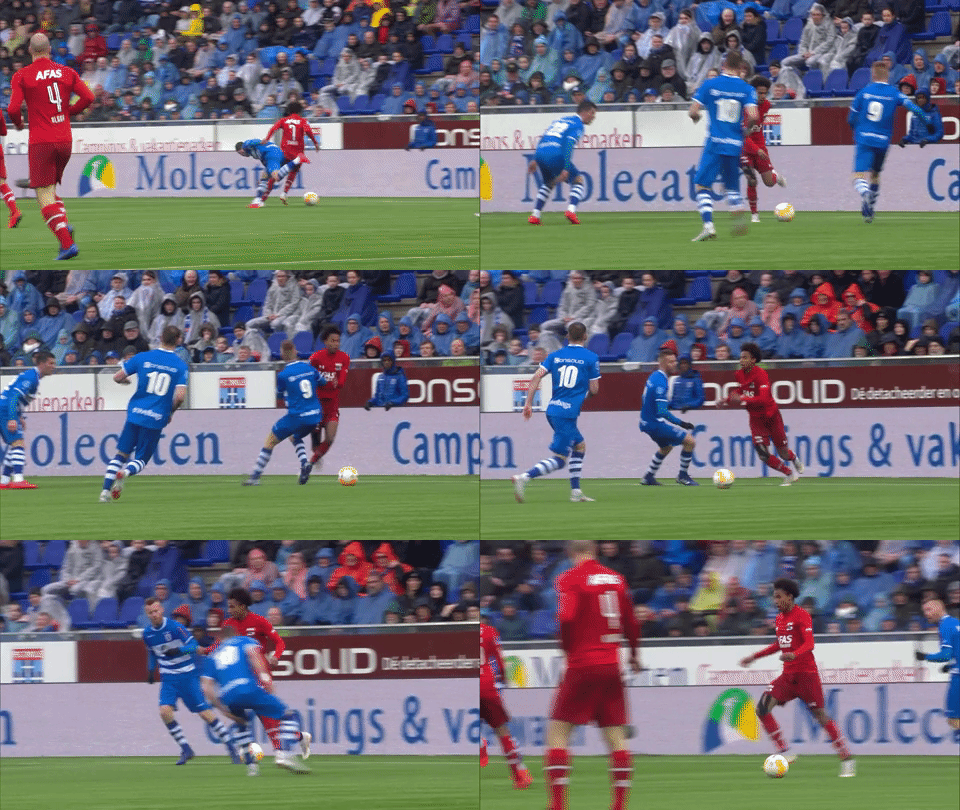
In Valencia’s 2-1 defeat to Real Betis in November, it was Torres ever-impressive mazy run which led to Moi Gomez’ opening goal. The Spanish winger certainly wasn’t afraid to take on two of his markers at the same time. It’s skills such as that allows him to become a key component in the team.

That same month, the winger scored a fantastic solo goal against Granada at the Mestalla. Picking up the ball on the right hand side he then drove right through the heart of the Granada midfield and defence unchallenged before unleashing an unstoppable left-footed drive into the top right hand corner.

images

His expected goals and assists stats make for telling reading too. His XG reads at 3.2, and his XA reads at 3.9 which means he’s almost guaranteed to contribute to a goal in one way or another. Per 90 minutes, his expected goals reads at 0.16, while his expected assists is at 0.18. Readings such as those shows why he’s so highly sought after. When Torres is on song, defenders are in for a difficult day. He’s massively decisive in the final-third and combative when driving to the byline and put in crosses whether its a floated one or a drilled cross, Torres holds a unique variety in his wing-play.

Another reason why he’s thriving, is defensive contributions too. Playing as a natural right-winger means he can’t shy away from his defensive contributions in behind him. Valencia’s rigid, but fluid 4-4-2 shape means that the whole team must become effective both as an attacking force and a defensive force, as a cohesive unit. In La Liga, Torres is highly effective in the defensive sense, regularly dropping back to pick up his marker, more than likely the opposing full-back, and helping out his own full-back.

The Spanish under-21 international registers 0.8 tackles per game in La Liga, 1.3 in the Champions League. 0.4 interceptions domestically and 0.8 in Europe which means he’s more than capable of fulfilling his defensive duties too.

Valencia don’t have the most effective attack in La Liga, but when they do score, Ferran Torres is more likely to be involved.

The 2019/20 campaign has been a breakout one with Torres emerging as one of Valencia’s team leaders in what’s been a pretty difficult season of late for the club. The winger never shies away in the big outings too, he was both eye-catching and dangerous as Valencia beat Barcelona and drew with Real Madrid and Atletico Madrid in recent months.

Had Euro 2020 gone ahead this summer, he would probably have made the final 23 with a Spain squad lacking the kind of inventiveness and decisiveness that Torres possesses in the wide areas. If he can continue on his rapid development throughout the next year, whether at Valencia or a new club, Torres would be a certain bet for the Spanish squad once the Euros finally comes around in 2021.

Where should he head to next? Which club can successfully further his development? 

Out of all the clubs currently keeping tabs on his exciting services, they all prove tasty next destinations for Ferran Torres. However, if he harbours any dreams or ambitions of becoming a Spain national team regular then he will need to head to a club which will certainly give him the freedom to expresss himself and a club in which could provide him the opportunity to grow at his own pace and with the room to make mistakes without much scrutiny.

images

Manchester City, according to various reports, are close to securing Torres’ signature this summer, and if Raheem Sterling’s growth and development under Pep Guardiola is anything to exemplify then Ferran Torres has potentially chosen the perfect destination to further his own horizon and progression.

With the departure of Leroy Sane to Bayern Munich, a space has opened up for a winger to join Guardiola’s setup and Torres represents the perfect replacement and solution. With such wonderful world class talents beside him, Torres’ creative and goal output could increase considerably.

He is player a blessed in the art of not just creating chances but scoring them too. Playing with the likes of Kevin De Bruyne, Phil Foden, Raheem Sterling, Riyad Mahrez and Sergio Aguero can only heighten Torres’ threat and capabilities down the wings. He will also be playing Champions League football yet again next season, as well challenging for the Premier League title. Ferran Torres could potentially be in for a joy ride if his supposed move to Manchester City materialises.


Eduardo Camavinga 2019/20 – Scout Report

Eduardo Camavinga 2019/20 – Scout Report

Arguably the most prestigious teenager in European football right now. Rennes midfielder Eduardo Camavinga is certainly turning a lot of a heads, grabbing the attention of a whole host of top European clubs through his excellent performances so far this season.

25 Ligue 1 outings this season at the age of just 17 is a strong indication of the kind of qualities Camavinga holds in his unique arsenal. His emergence came in the impressive victory over French champions Paris Saint-Germain last summer where he kept the likes of Angel Di Maria and Marco Verratti in his little pocket.

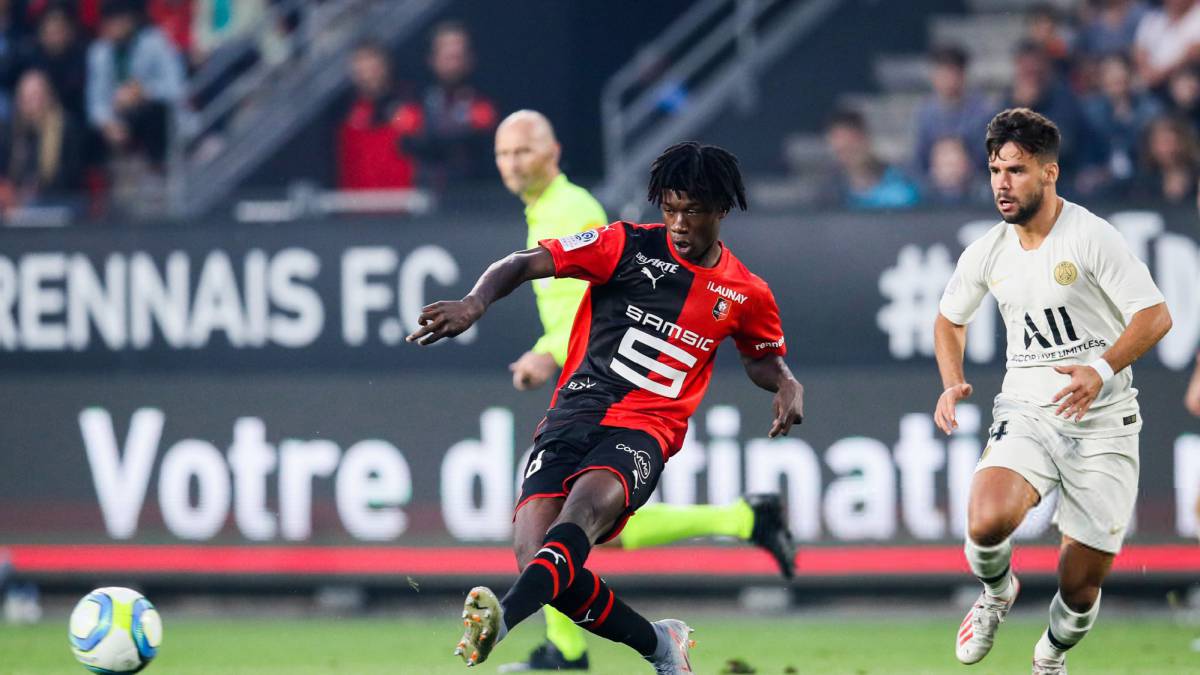
Paris Saint-Germain v Stade Rennais FC - 2019 Trophée des Champions

That specific game pointed him out as the next big thing in the country, not long after that, he was rewarded with a call up to the French Under-21 squad. Eduardo Camavinga captured the imagination of many before the Ligue 1 season was curtailed, putting in some mature, dominant and thrilling performances in the middle of the park at just the tender age of 17.

This scout report will provide a brief overview of his swift emergence on the scene, and how he’s contributed to the unprecedented success of Rennes this season.


Who is Eduardo Camavinga?

Born in Miconge, Angola. Eduardo Camavinga and his family migrated to France when he was two years old. Him and his five siblings grew up in Fougeres. Picking up a love for Judo at a young age, Camavinga decided to instead pursue a career in football. At the age of 11, he joined the Rennes academy.

He then went on to sign his first professional contract in December 2018, at the age of 16, becoming the youngest ever professional for the club. Camavinga emerged as a key figure for the reserve side, making 13 appearances, scoring 4 goals. It wasn’t long before he made his debut for the first team due to his fantastic maturity at such a young age, his abilities on the ball and positional understanding. His maiden appearance came against Angers in a 3-3 draw, becoming the youngest ever player to feature for the first team.

That game against Paris Saint-Germain placed him on the map, in what was an astute, composed and assured performance by the youngster. He was 16 at the time. However, his stats highlighted the performance of a player beyond his years. 41 passes made, with a staggering 97.6% accuracy. 1 key pass, and 3 tackles.

Camavinga’s growth and maturity didn’t stop there.

What’s Camavinga’s style of play? 

The 17-year-old has taken in his task like a duck to water. When he enters the pitch, nothing fazes him. Camavinga has stuck at his role and responsibility with a maturity beyond his years, with some impressive and controlled performances, week in week out showing that he certainly deserves the accolades and praises thrown at him.

Even though he’s earmarked to step into the boots of N’golo Kante, Blaise Matuidi and Paul Pogba in the future, he’s a blend between all three of them. Destructive in the tackle, a marauding box-to-box midfielder and an elegant, imaginative midfielder. Rennes have managed to win against some tough opponents this past year, both domestically and in Europe, with Camavinga playing a major part of those duels.

When analysing Camavinga’s game, its vitally important to focus on his maturity, understanding and sense for the game in terms of his potential. The youngster can become one of the best in his position if he keeps working hard and continuing his rapid progress.

The French midfielder is a true embodiment of the modern football control ideology in the middle area of the pitch. He’s a true metronome, building attacks for his team and organising and screening the middle areas the way he sees fit. He operates in the areas that a deep-lying playmaker would work in, but Camavinga offers so much more. He blends that role with a defensive-midfielder and a roaming playmaker.

He works all around the field, focusing his game in midfield but floating in areas of the pitch where he can be most effective, whether in the half-spaces or coming closer to goal.

Alexandre Lacazette - FootyRenders

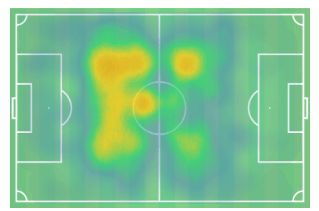
The above heat image shows his impact and contribution in front of the defence as a deep-lying player. His higher movements come when he is tasked with pressing his opponents and making runs in order to create passing lanes and options for his teammate.

His main job in this role, is to become the orchestrator, one who is well-versed in picking up the ball from his goalkeeper, or centre-backs in order to build attacks by finding team-mates in pockets of space or if he is given the opportunity, drive up the pitch which he is very well capable in performing.

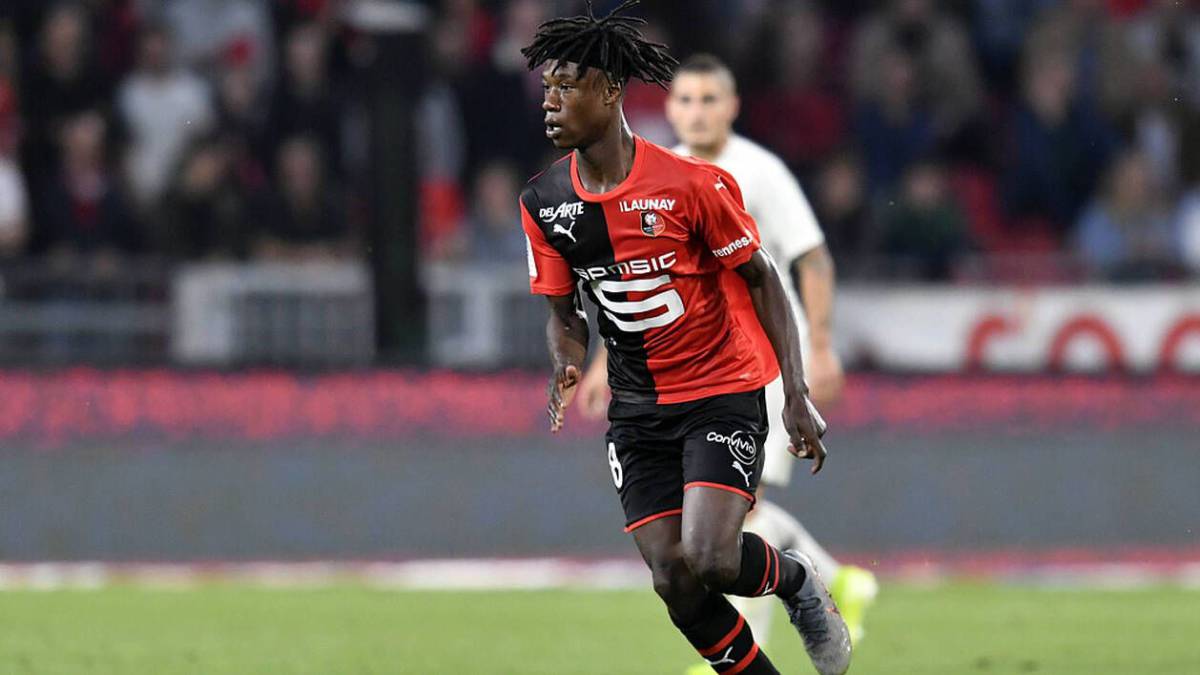
nintchdbpict000376471898

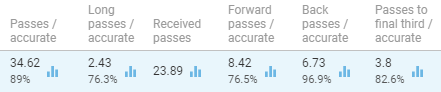
His body positioning, tactical understanding of his role and movement makes it easier for his team to play across the pitch when under-pressure. He constantly uses the blind spots of his opponents in order to move into space where he can get the ball to organise the progression of the team’s attacks. Camavinga averages 40 passes per game, with a passing accuracy of nearly 90%.

The French youngster is so adept for his age, a cold-blooded player who holds no fear when moving across the pitch. What’s also impressive is his incredible knack of beating the opposition’s press. His silky close ball control and technique allows him the freedom to take risks, becoming confident in the fact that he’s abilities on the ball will get him by his marker with ease. His stats for a defensive-minded player with an attacking attitude make for telling reading.

Alexandre Lacazette - FootyRenders

Camavinga’s vision and screening of play around him makes it possible for him to control the rhythms of matches as he is so adept at noticing the play around himself. His decision-making is excellent also, making passes into teammates well positioned to receive them and making well-timed tackles in order to win the ball back quickly. The wonderkid is a fantastic component in the counter-pressing system, capable of winning the ball back as soon as his teammates lose it.

To put it simply, Camavinga has it all. It’s staggering to note, that he is just 17 years of age. The way in which he expresses himself on the pitch certainly does not exert youth, but valuable experience. It’s no surprise that many of Europe’s elite are all fighting to secure his signature.


Is he ready to make a move now?

What Camavinga must avoid is making a career decision that will be detrimental to his rapid growth, and that certainly includes joining a club where he won’t get the game time needed or provided the opportunity and attention to thrive.

Big clubs such as Barcelona and Real Madrid won’t be good for him, as they are teams wanting success for the here and now. Camavinga must choose a side where a long-term plan to build a successful squad is in place, also a club who place huge emphasis on its youth, granting them much opportunities and allowing them room to grow.

nintchdbpict000376471898

Clubs such as RB Leipzig and Borussia Dortmund in Germany would suit him to a tee, however there is no reported interest from such clubs so maybe it will be best for Camavinga to stick it out at Rennes for a season or two and improve his game. The club have qualified for the Champions League for next season after their impressive third placed finish.

It’s so vital to remember that he is still 17, and while there is an excitement at his incredible potential, he must be given room to make mistakes without much pressure. Rennes will provide him with that opportunity, its experiences such as those which will stand him in good stead for a successful future.

No doubt about it, Eduardo Camavinga is indeed a prestigious young talent.

Jonathan David 2019/20 – Scout Report

Jonathan David 2019/20 – Scout Report

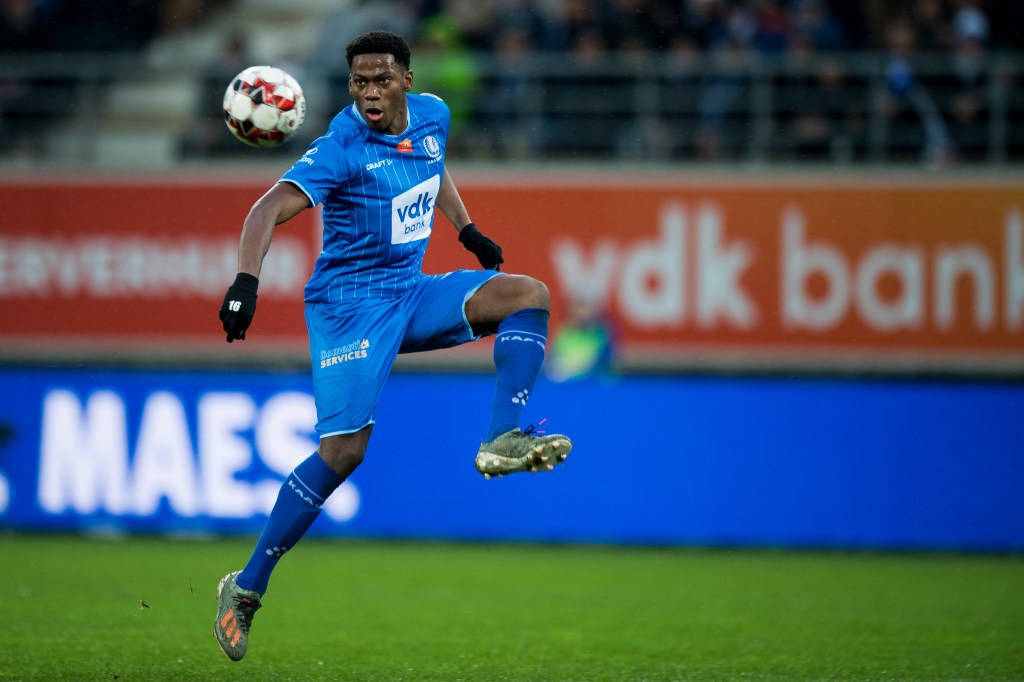
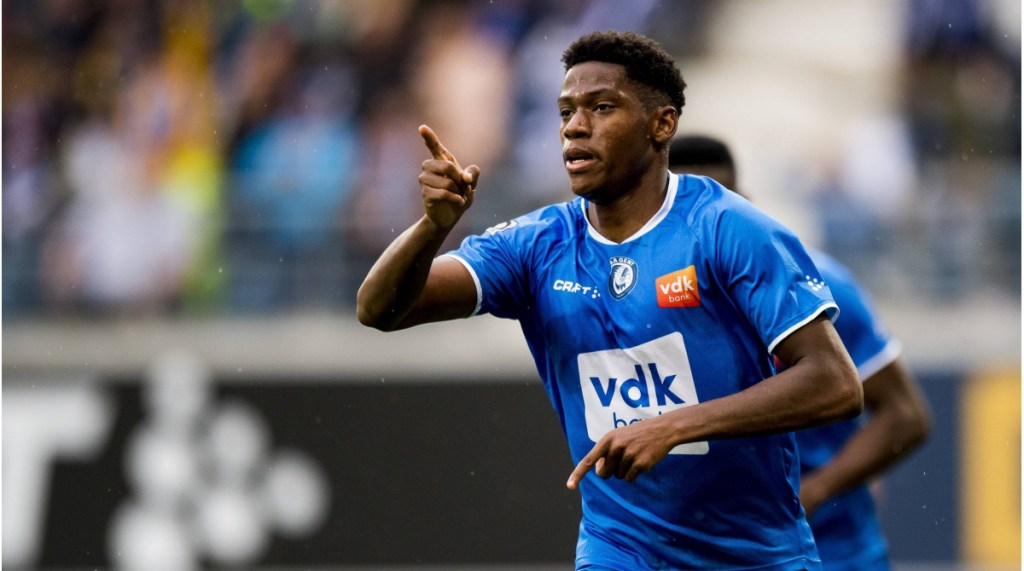
He’s only been plying his trade for a professional for all of over two years, but Gent and Canadian forward Jonathan David has quickly established himself as one of Europe’s hottest young properties.

The Canada international has been a lethal force in front of goal for Gent since his emergence in 2018, notching 35 goals in just 58 starts. It’s stats such as these that has propelled the forward into the spotlight around Europe and that is further highlighted in the number of clubs scouring for his services this summer.

Arsenal, Tottenham, Manchester United, Everton, Inter Milan, Ajax, Olympique Lyon, Borussia Dortmund and Bayer Leverkusen have all previously been rumoured to be interested in the 20-year-old.

However, recent reports have suggested that the forward is reportedly close to joining French outfit Lille, as a potential replacement for Nigerian striker Victor Osimhen. The Canadian’s performances and style means he could fit in at just about any top club in Europe.

So, how has David emerged on the scene, what’s his style of play and how has he impacted Gent’s attack this season?

Who is Jonathan David?

Born in Brooklyn, New York and raised in Haiti until the age of six. Jonathan David spent his younger years moving around, filled with much change. Moving to Ottawa, the capital of Canada, at that age presented quite the culture shift for him, it was a move that could have completely derailed his dream of becoming a professional footballer.

It was not until the age of 11, that his dream was kept alive, featuring for Ottawa Gloucester. While playing for his local club, David became the most highly sought-after youngster in the country, grabbing the attention of the Canadian Soccer Association. After attending several under-15 camps in 2015, David finally represented the country at under-16 level and during the Under-17 Concacaf Championship.

It was at these tournaments where he amazed the Gent scouts, and he began training with their youth sides towards the end of 2017. He officially joined them in January 2018, the month he turned a professional. He was promoted to the senior first team on a permanent basis. From then on, the rest became history. Jonathan David has been a key figure for Gent ever since.

At international level, he’s featured 12 times for Canada, scoring 11 goals. Not only is he a goal machine at club level, but on the international stage too. His first cap in September 2018 saw him score his first goals against the U.S. Virgin Islands in a Concacaf League qualifier. He even won the Golden Boot at the Concacaf Gold Cup in 2019.

Prior to the Coronavirus pandemic-induced cancellation of the Belgium Pro-league, David notched 23 goals and provided a further 10 assists across all competitions – a superb return for the forward.

What’s Jonathan David’s style?

An extraordinary forward, blessed with great pace, skill, tenaciousness, trickery and acceleration. The Canadian is tremendously versatile too, capable of playing anywhere in attack; as a no.9, right-winger, left-winger, and a no.10.

Throughout most of his time at Belgium though, David has developed mostly as a tireless and rapid second striker. If fast and speedy players are your type, then Jonathan David is your man. A player whose game is based on an exciting blend of technique, mental sharpness and physical attributes.

The 20-year-old has shifted across the front three throughout the season, but his most sparkling performances have been through the middle where his creative abilities and contributions are not restricted by space. David disrupts defensive structures with his rapid movement, speed, trickery and passes into the final third.

When Gent have possession in the wide areas, David will regularly pick up a position in the half-space, drawing defenders to him before shifting his body weight and quick movement to get way from them and drive into the centre. The Belgium regularly lines up in a fluid 4-3-1-2 shape with an attacking midfielder sitting behind the front two.

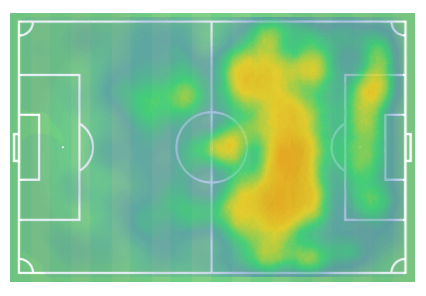
A position that David performs most of his work.

His role in that area are to create chances, disrupt defensive shapes and drive into the box. He’s picked up a very efficient knack of coming on the end of attacking moves and finishing them off.

David has had a hand in 44% of Gent’s goals this season. In fact, he’s been directly involved in more goals (25) than any other player in the 2019/20 Pro League campaign (18 goals, 7 assists) and that’s regularly down to the position and freedom he’s given.

His goalscoring record works out to 0.57 per 90, pretty much a goal very two games. Those are numbers you’d regularly associate with an out-an-out number 9, not an attacking midfielder. Alongside that, he’s also laid on 10 assists in all competitions, averaging 0.21 assists per 90.

Jonathan David has exceeded expectations beyond measure this season. His expected goals figure is at 0.42 per 90, and expected assists reads at 0.12 per 90.

Throughout this season, David hasn’t shirked away from his responsibilities of becoming the Gent’s primary source of creativity and goals. He’s regularly exhibited a remarkable gift of inventiveness and imagination when playing in an around the box.

The amount of goals isn’t just down to his finishing acumen but the positions he takes up, whether its ghosting in to surprise opposition defences or starting and creating rapid counter-attacks. He takes risks on the ball – a trait so few players can relate too – taking players on and moving defenders around with his positional understanding and individual threat. He’s also added characteristics such as turning defenders and dribbling out of tight spaces to his incredible weaponry, skills that enable him to be so effective in the final third.

What does the future look like for Jonathan David?

Jonathan David, as evidenced throughout the campaign is an extraordinary talent. The kind of player elite level clubs who focus their play on counter attacks and exciting attacking football regularly look for. His goal contributions tell its own story.

It’s safe to say, Jonathan David is clearly beyond the level of the Belgian Pro League. So, it will be incredibly beneficial for him to test himself at a much higher level. Preferably to a club which fit his rapid style, and will allow him the opportunity to become a sole creative force in their attacking arsenal.

Clubs like Borussia Dortmund, Bayer Leverkusen who are resigned to losing key players in the immediate future – Jadon Sancho and Kai Havertz respectively, to be precise – will really benefit from investing in the Canadian international. These are teams who would provide with the room to manoeuvre, improve and most importantly, make mistakes. A team who won’t place so much pressure on him to succeed.

Stylistically, David could eventually blossom into a top-level forward, an industrious and creative false nine. It’s his tremendous versatility and skillset that will allow him the chance to flourish at any side around Europe.

Sandro Tonali 2019/20 – Scout Report

Sandro Tonali 2019/20 – Scout Report

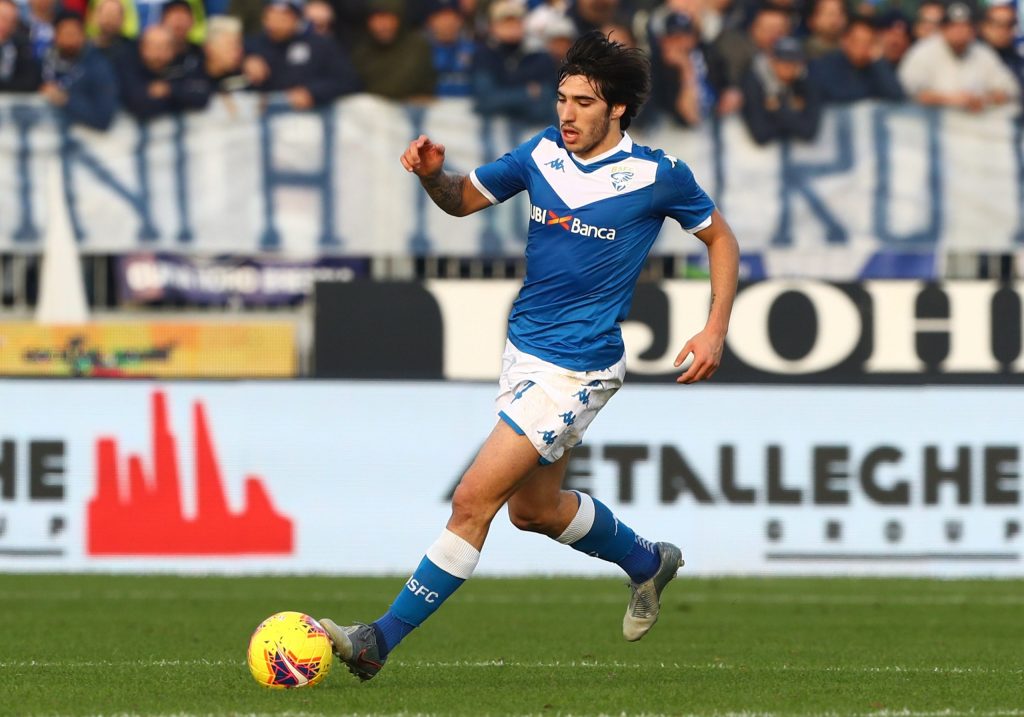
Currently one of the most prestigious, highly coveted defensive midfielders in European football. Brescia’s Sandro Tonali’s immediate future is pretty much guaranteed with Inter Milan, AC Milan and Juventus all challenging for his signature.

Brescia may be on the cusp of relegation to Serie B, but Tonali looks on course to be gaining a stark promotion to an elite level amongst one of Europe’s best.

The Italian midfield maestro has been a standout performer despite Brescia’s struggles this season, and he has repeatedly drawn comparisons to Italy & Juventus legend Andrea Pirlo because of his appearance as well as current Napoli coach Gennaro Gattuso.

In fact, the midfielder himself has self-proclaimed himself to be a mixture of both, such is the confidence in his own ability. Take a peak at his abilities on the pitch, and you’d begin to see the stark comparisons to such well-renowned greats.

Tonali is sure to be gracing Serie A next season, and possibly the Champions League but how has he established himself as one of the most talented midfielders around?

Who is Sandro Tonali?

Born in Lodi, a commune in Lombardy, northern side of Italy. Tonali spent his younger years at Piacenza before joining current side Brescia in 2012, aged just 12. After plying his trade for the youth sides, establishing himself throughout the ranks, he finally made his professional debut in August 2017, aged 17, coming on as a substitute in a 2-1 away loss in Serie B against Avellino.

Tonali scored his first pro goal in April 2018, appearing 18 times during his first season as a first teamer, scoring twice and assisting twice during the 2017/18 Serie B campaign. The following campaign saw Tonali lead Brescia to the Serie B title and promotion to Serie A, becoming a key figure even as a teen. The midfielder was rewarded with his first international call-up in November 2018, bypassing the under-21s in the process.

Previously, he had featured for the under-19s at the 2018 Under-19 European Championship. It’s through that competition that Tonali made a name for himself. There, he played a crucial role at the base of Italy’s midfield which saw them reach the final losing in a captivating 4-3 extra time defeat. He’s gone on to feature three times for Roberto Mancini’s Italy side and has regularly been backed to stake a permanent place within such a talented pool of midfielders.

What’s all the hype surrounding Sandro Tonali?

How the whole footballing world misses the remarkably gifted and genius of Italy legend Andrea Pirlo.

A quiet and measured artist on the ball, yet his abilities and influence on the pitch was clearly noticeable from deep in midfield. Football may have lost such a decorated player, but we may have a Pirlo reincarnation on our hands in Brescia’s Sandro Tonali.

Not only does he look like the Juventus legend, but he holds similar abilities too. He plays the same deep-lying playmaker role that Pirlo helped shape into prominence, and although his club are on the verge of relegation from Serie A, he always stands out in most games.

At 19 years of age, Tonali has it all. Fantastic range of passing, vision, robust in the tackle, a good spatial awareness of his role, positional and tactical understanding and an almost inspiring trait of leading his team despite his tender age.

He is so cool and calm on the ball, will play his way out of pressure, can dictate play with ease, scores the odd bullet from range and even holds the same long hair as the great Pirlo. He’s a bit stockier and more robust, though, and perhaps a little more mobile and two-footed, too.

His first campaign in Serie A has been a successful for him on a personal level. Brescia are indeed amongst the worst in the competition, but Tonali is the only real spice in their team. He’s scored once and assisted 5 goals which is decent numbers for a defensive midfielder. In fact, he’s the closest thing Italy have to Andrea Pirlo, a player who can easily slot in at the base of the midfield and dictate play from deep, almost like a quarter-back.

Like the former AC Milan and Juventus midfielder, Tonali loves to take up possession in between the two centre-backs and spray passes all over the field. The 20-year is indeed the glue which holds everything together in this Brescia team. Per game, he averages nearly 40 passes with a passing accuracy of 74% which may be relatively low considering his deep position, but its understandable when you consider the fact that Tonali doesn’t do the easy side-ways passes. He takes risks, and makes it look stylish.

In fact, per 90 he averages 2.1 key passes meaning he’s not afraid to do something extraordinary when Brescia look for opportunities. He’s also a sound dribbler as well as his passing, averaging 1.4 dribbles per 90. He regularly breaks the lines of play to give Brescia some inspiration when struggling to unsettle defences. When all else fails, Tonali sometimes takes the onus upon himself to conjure up some magic.

When he does finally join a top-level side, his numbers will increase considerably. Playing with world-class players means he will certainly also pick up such characteristics.

In the defensive phases of play, he brings such effectiveness too, despite Brescia being poor defensively. Per 90, he averages 1.2 tackles, 0.9 interceptions and 1.8 blocks, he’s not afraid to put his body on the line. When positioned in a slightly more advanced position, Tonali adequately closes down passing lanes, he’s averaged 4.28 successful pressures. He is quite willing defensively, which is a perhaps a result of his childhood admiration for Gennaro Gattuso. Tonali is robust when he wants to be, but also measured and composed at the same time. He is indeed the perfect blend between Pirlo and Gattuso.

Tonali’s services are better served elsewhere. The footballing world needs Andrea Pirlo back. But wait, we have the next best thing in Sandro Tonali.

What does the future look like for Tonali?

It seems perfectly inevitable that Tonali will move on this summer, and Inter Milan are reportedly leading the chase for his signature. The midfielder could represent the perfect foil for Antonio Conte and will aslo provide adequate cover for Marcelo Brozovic, a mainstay in Conte’s 3-5-2 system.

Tonali holds all the tools, characteristics and mental stability to thrive in Milan and his first taste of Serie A this season will indeed serve him well for the future. A leading midfielder for many years to come.

Theo Hernandez 2019/20 – Scout Report

Theo Hernandez 2019/20 – Scout Report

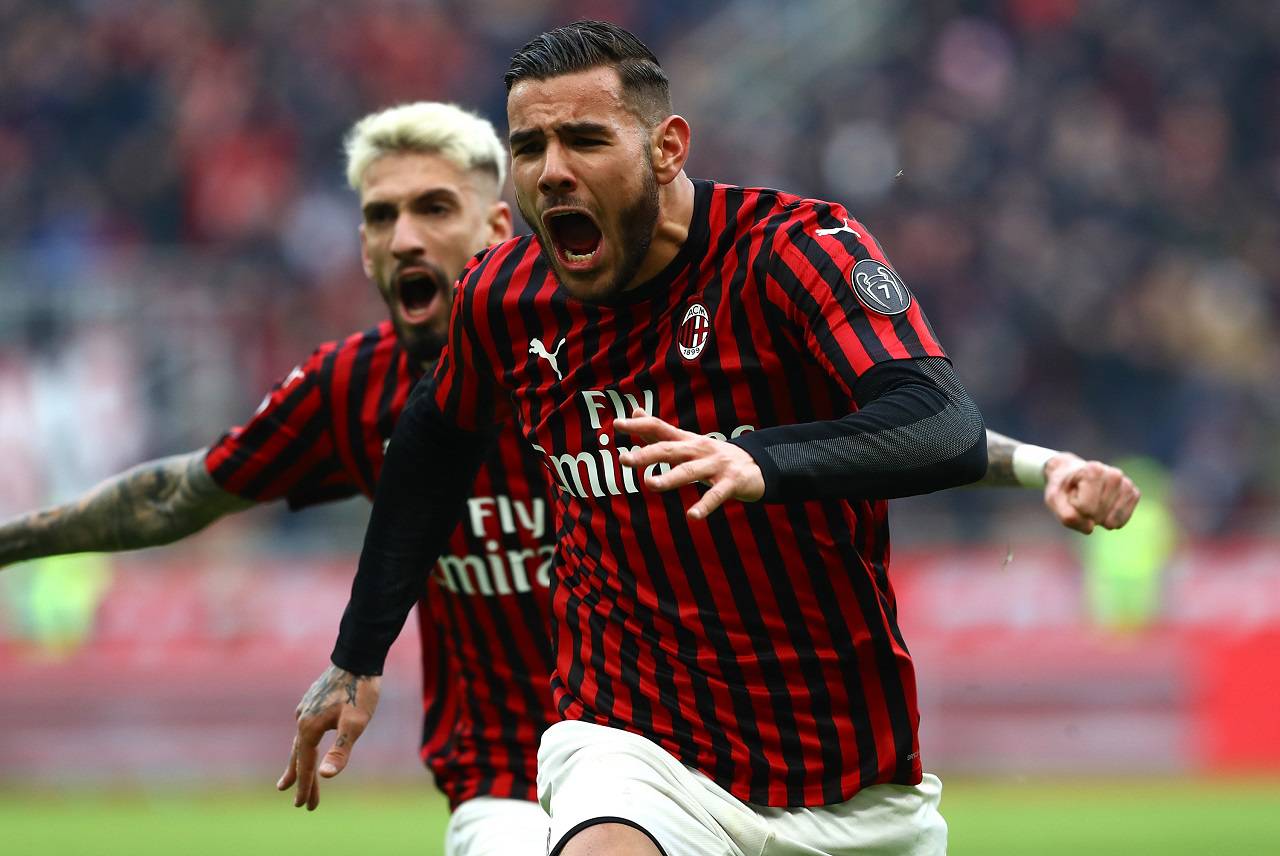
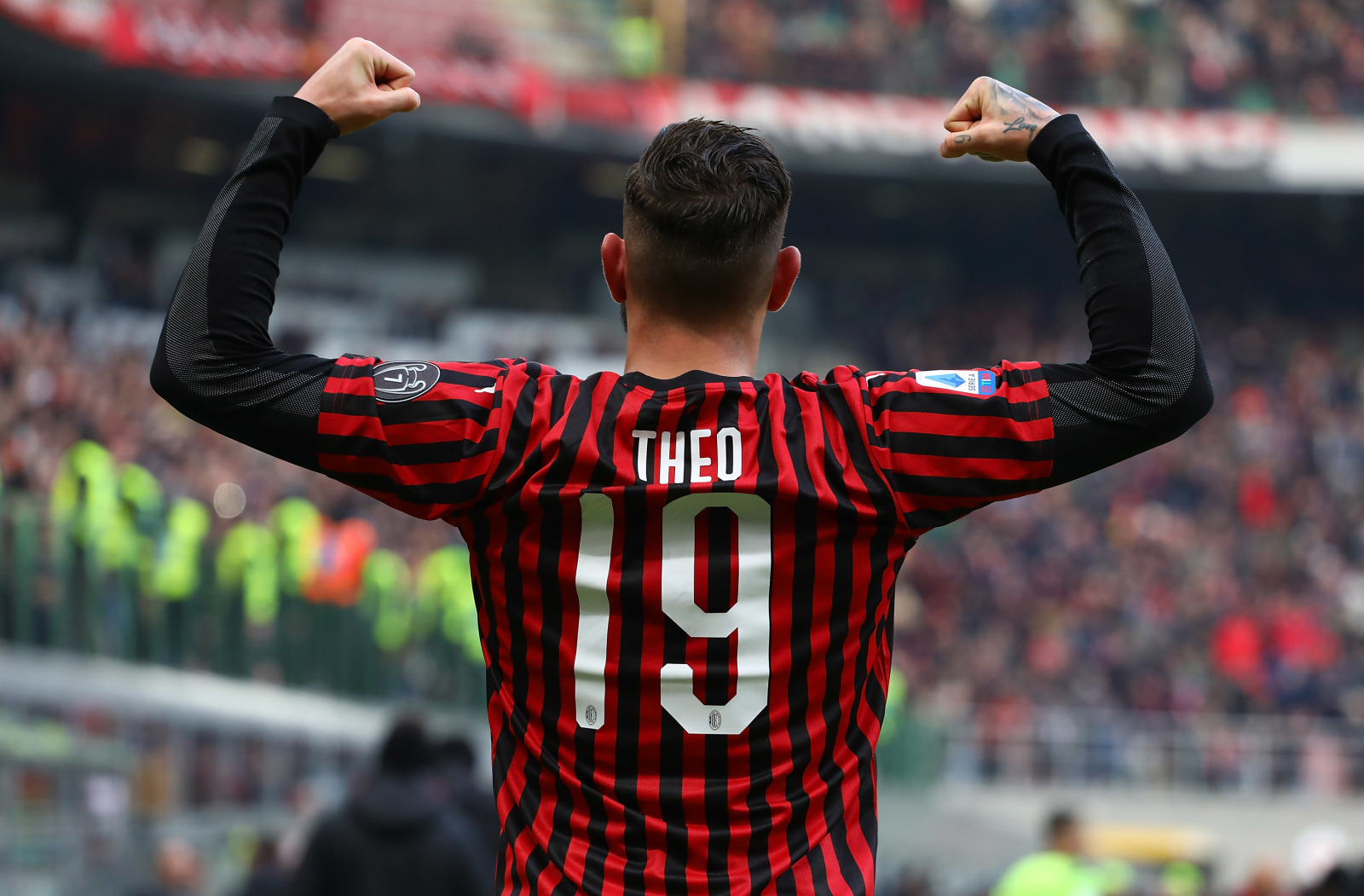
Left-back Theo Hernandez has rapidly emerged as one of Europe’s best left-backs this campaign. His form at AC Milan has certainly not gone unnoticed and the Frenchman now looks like the player he’s been primed to become ever since his move to the Santiago Bernabeu in 2017.

A few seasons on, the defender is reportedly attracting the services of Barcelona, Paris Saint-Germain and the Premier League trio of Liverpool, Arsenal and Manchester United. Whether these reports are true or not, his name being mentioned in the same breath as such clubs is a true sign of the growth, maturity and completeness in his overall game.

nintchdbpict000376471898

At 6ft, with raw pace, strength and skill, Theo Hernandez holds the makings of a complete full-back. After a failed spell at Real Madrid where he only featured in 13 appearances in his two seasons there, AC Milan finally took him out of his misery signing him for €20 Million in 2019. He has adapted quickly to his new surroundings, becoming a key figure in Stefano Poli’s side.

In this scout report, we will profile his career so far and a tactical analysis of how he has improved his game at AC Milan, also providing statistical insight.

Who is Theo Hernandez? 

Born in Marseille, France. Hernandez is in fact a product of Atletico Madrid’s academy along with his older brother Lucas, after moving to Spain during his early years. He joined the Madrid academy in 2007, aged 9. After progressing through the youth ranks, he was promoted to the reserves in the Tercera Division in the summer of 2015.

He renewed his contract at the club in 2016 and then shortly after he earned a call-up to the first team against Eibar due to injuries to key players, however he remained an unused substitute in what was a 3-1 win for Atletico.

The following summer, he was rewarded with another contract extension, till 2021, and then loaned out to fellow league club Deportivo Alaves on a season-long loan. He finally made his professional debut towards the end of August against Sporting Gijon in a match which ended 0-0.

images

In October, he was given his first sending off of his career after a destructive challenge on Ignachio Camacho. Luckily, Hernandez’ sending off had no unfortunate bearing on the result as the game finished 1-1. It was not until May 2017, that he scored his first goal, a 1-0 win over Athletic Bilbao. Hernandez was indeed a key figure for Alaves, especially in their run to the Copa Del Rey final, which they lost 3-1 to treble-winners Barcelona in 2017.

Hernandez scored the equaliser with a brilliant free-kick from all of about 25-yards from a tight angle 13 minutes before half-time. A moment he certainly wouldn’t forget despite the end result. The uncapped French left-back made 32 La Liga appearances for Alaves, scoring twice.

The summer of 2017 saw Hernandez join Real Madrid after they met his release clause of €24 million. The La Liga giants certainly saw something in him, to invest in him. He made his debut for the club, replacing Marco Asensio in a 2-0 home win against Barcelona in the Supercopa de Espana. Although, he helped Real Madrid to a Champions League triumph that year, making three appearances, it still turned out to be a difficult first spell at the European champions. He was then shipped on loan to Real Sociedad in August 2018, where he made 24 league appearances, scoring once.

The following summer, he joined AC Milan in a deal worth €20 million. Almost twelve months on, the Atletico Madrid academy product is playing the best football of his career.

What’s his role and style of play? 

In an age where full-backs are such a vital component to a team’s attack, Theo Hernandez on the evidence of this current campaign is a true representation of that trait. Most full-backs in the modern era have the propensity to go forward during an attacking scenario in order to provide width stretch opposition defences and to give options in attack.

When AC Milan have the ball, Hernandez is tasked with providing width and stretching the opposition defensive line. By offering that, not only is he effective in crossing into the box where he’s completed 69 passes/crosses into the final third but also he is very useful when a switch in play is necessary. When this happens, the strikers and attacking midfielders become narrow in order to engage the defenders which allows Hernandez to fill in wide left where he’s totally free.

nintchdbpict000376471898

Milan are fully capable of attacking in the middle areas, but when they possess such qualities as Hernandez’ they can’t afford to ignore them. The Serie A giants more frequently find themselves utilising the clever runs of their full-backs, primarily Hernandez. AC Milan’s main source of creativity has been through the wide areas. While their wide players, such as for example Ante Rebic, or Samu Castillejo would drift inside to create space on the flanks for the full-backs.

Theo Hernandez holds a fantastic understanding of his positioning in the attack and also when opponents have the ball. His creative stats this season, especially for a left-back prove telling. He is amongst AC Milan’s leading scorers in Serie A this season, with 5 goals, and it is largely due to his ability to make off the ball movements and find little pockets of space to hurt opposing defenders. He’s also provided two assists. His expected goals this season reads at 2.1 and expected assists is 3.0.

What’s also impressive about Theo Hernandez is his ability to drive up the pitch with his sheer pace and strength. Per 90, he averages 2 dribbles per game which means he’s not afraid to engage players and beat them. He also ranks fourth in Serie A this season for progressive carrying distances.

It’s vitally helpful to get Milan out of constant pressure, also in order to get his teammates up the pitch to support him. In addition to this Hernández takes 2.78 touches in the opposition penalty area per 90. A prolific dribbler, Hernández attempts 3.92 take-ons per 90 and, of his Milan teammates, only Ismaël Bennacer (four) attempts more.

His passing abilities are also a key reason why he’s so effective in the final third. With an average 50 passes per game and 1.2 key passes per game so far this season, his attacking involvement revolves primarily from his passing acumen.

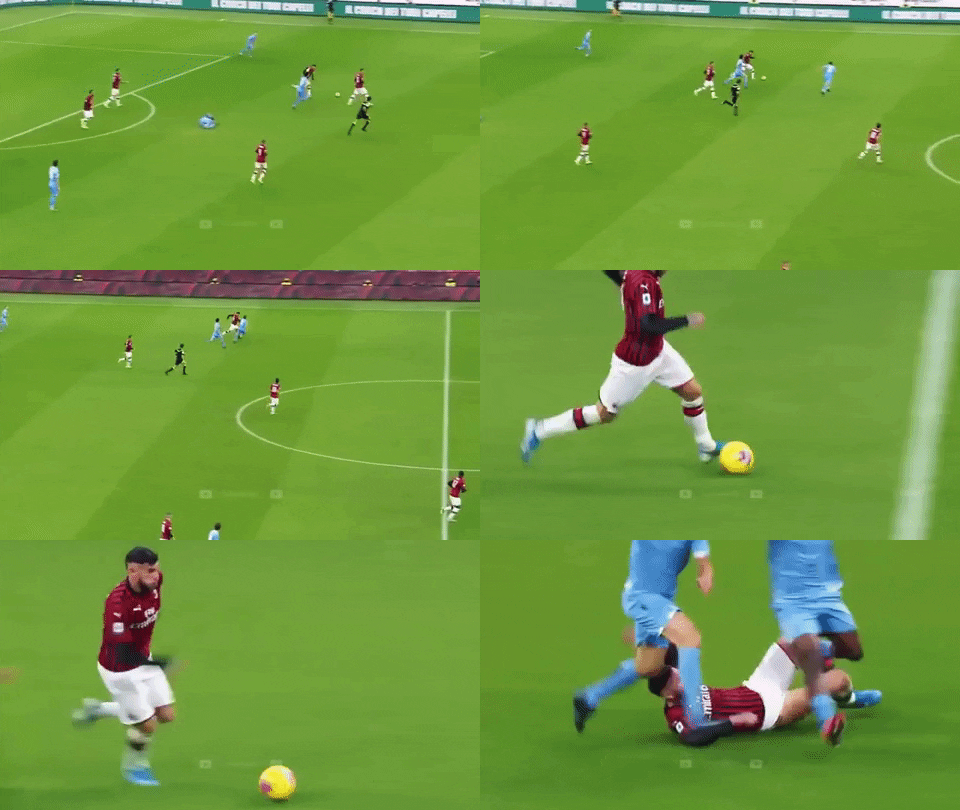
Hernandez’ ability to exploit spaces created by the attack complements teammates’ movement off the ball. His assist for Zlatan Ibrahimovic against Cagliari in January all starts from his clever run on the left flank, his awareness and decision making to find a teammate in a near-perfect position in the box. Passing is a key component of his game, whether he is starting attacking phases or finishing them off with precise assists or key passes.

The French youngster is also defensively sound. He excels at one on one duels. He also excels at stepping out of his defensive line to engage and press opponents as high as he can. Also holding such exemplary vision and reactions to make good decisions under pressure. Per90, he completes 11 passes under pressure. He rarely allows opposing wingers to get a cross and is equally adept at tackling with both feet which means he’s also capable of neutralising the threat of inside-forwards too. He makes 1.7 tackles per game, 1.2 interceptions and 1.5 clearances. Also, per90, he’s only dribbled past 0.7 times.

Despite his defensive potential, Hernandez also displays a knack of becoming too carried away, fouling too often and unnecessarily. Per 90 minutes, he is averaging 1.2 fouls and has received 8 yellow cards this season so far. This is one area where he needs refinement to avoid getting into trouble or putting his team in difficult positions.

AC Milan v Udinese Calcio - Serie A

Does he have what it takes to make it at the top?

Certainly. Theo Hernandez is almost the complete modern full-back. 5 goals and 2 assists this season so far highlights his vast maturity in the final third and impact in AC Milan’s attack. He’s got everything. Pace, trickery, strength, tenacity, hunger, drive, and is defensively sound when he wants to be. His proactive attacking and defending and the ability to make marauding runs from deep have been a crucial part of Stefano Pioli’s tactics this season.

He is certainly growing in zeal and confidence, his experience at AC Milan and beyond will certainly impact his massive future. The future is certainly bright for the young full-back.

Lorenzo Pellegrini 2019/20 – Scout Report

Lorenzo Pellegrini 2019/20 – Scout Report

One of Serie A’s top performers this season is reportedly attracting the interest of Everton, Manchester United and Paris Saint-Germain this summer. Roma’s Italian maestro Lorenzo Pellegrini has been a standout player from midfield this season, and his excellent performances have Roma sweating trying to tie him down to a new contract.

The 24-year-old has quickly established himself as one of Europe’s most coveted attacking midfielders with his well-rounded technical abilities and creative acumen. A player who is sure to be gracing the grandest stages in the near future.

nintchdbpict000376471898

This scout report will provide some background info, tactical analysis of the Italian midfielder, his role and impact on Paulo Fonseca’s Roma team.

Who is Lorenzo Pellegrini? 

Born in Rome, Italy. A product of the Roma youth academy since the age of 9. Pellegrini, in his younger years, also suffered from arrhythmia. However, it didn’t stunt his steady progression through the academy, representing the club in UEFA Youth League. It wasn’t long before he was handed his first team debut at the age of 18 by then manager, Rudi Garcia in March 2015, coming on as a second-half substitute in a 1-0 Serie A win over Cesena.

In June 2015, the club felt his development was better served elsewhere. He signed for Sassuolo for a fee of around €1.25 million. In what turned out to be a smart deal by the club, they retained a buy-back clause which afforded the club the opportunity to re-purchase Pellegrini in the future. He made his debut for the club in November against Carpi in a 1-0 win,after he was afforded time to properly bed into the team’s style. The first goal came the following month, netting in a 3-0 win over Sampdoria.

Frosinone Calcio v US Sassuolo Calcio - Serie A

He went onto make 20 appearances in the 2015/16 campaign, including one in the Coppa Italia, scoring three goals. The following season, was a defining one for the talented midfielder becoming the first youngster to have a hand in 10 goals in a single Serie A campaign, registering six goals, and four assists by April. Across the whole season, he made 34 appearances, scoring eight goals and registering seven assists in what was a breakout year for the midfielder.

It’s no wonder why Roma quickly signed him back for the following season, exercising the buy-back clause in his contract of €10 million which was the agreed fee, bringing him back to Rome on a five-year-deal.

Pellegrini certainly returned a much better, refined and well-rounded midfielder ready to grace the Stadio Olimpico. Three years on, after his return, the Italian has achieved just that. He’s also gone on to become a key figure in the Italy national side, featuring 12 times, scoring once.

What’s Pellegrini’s style of play? 

Traditionally an attacking midfielder, Lorenzo Pellegrini holds all the tools necessary to play anywhere across the midfield. As a deep-lying no.6, a roaming no. 8 and a play-making, creative no.10. In Paulo Fonseca’s system, he plays the attacking midfield role, as a no.10 in their 4-2-3-1 shape, operating just behind Edin Dzeko who is the lone frontman.

This role allows him to become the team’s main source of creativity and a hub in which every attacking player can link with. While teams in the current age, have their main creative hubs in the deep-lying positions in front of the defence, Roma’s orchestrator is Lorenzo Pellegrini at no.10. As well as possessing the qualities to perform in a traditional no.10 role, he’s a more unorthodox attacking midfielder, regularly drifting into the wide areas or half-spaces. It keeps defensive midfielders and the back-line guessing, also causing a state of disruption and panic in their defensive shape.

Pellegrini likes to drift wide drawing out defenders from their designated positions and then moves into the space he created centrally to pick up the ball and thread through balls and dictate play. The Italian holds great game intelligence beyond his years. His composure, passing ability, understanding of his role, vision, technical arsenal makes him such a fine attacking midfielder to watch. He positions himself so well in pockets of space making him two steps ahead of his marker.

With the Italian maestro taking up dangerous positions in between the lines, he regularly punishes them with his devastating defence splitting passes into the final third. The majority of Roma’s play all comes through Pellegrini, where he averages over 42 passes per game, which shows that he’s relatively comfortable on the ball, not afraid to have it tight areas and is very consummate in dictating play when need be.

The Giallorossi midfielder backs up his intelligence on the ball with an impressive 81.2 passing accuracy. Pellegrini doesn’t always look for the safe passes, but the penetrative ones, which hurt the oppositions and cuts them open. He makes an impressive 3.8 key passes per 90, the most of any player in Serie A this season.

Pellegrini is amongst the best – if not the best – performing midfielders in Italy. He ranks 1st for through balls (14) in Serie A this season, 6th for passes into the penalty area (49) and 7th for key passes (53).

nintchdbpict000376471898

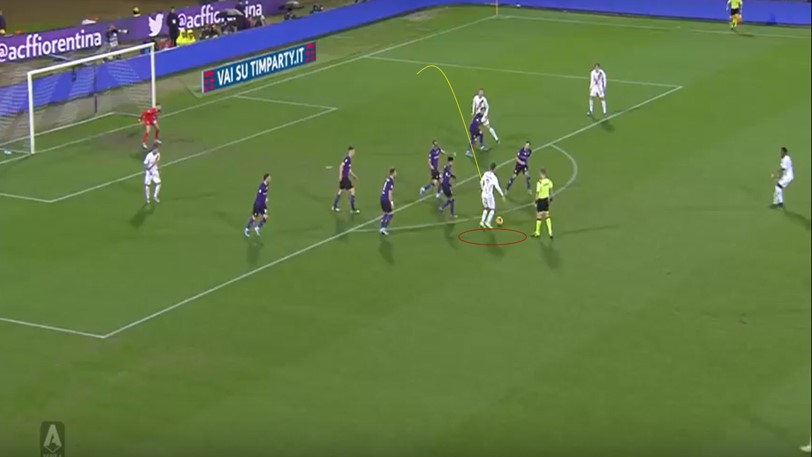
In the picture above, having being surrounded by a block of defenders, Pellegrini is still capable of threading a deft lofted ball into the forwards to create an opportunity. He holds the awareness, and vision to pick up Nicolo Zaniolo who squares it to Edin Dzeko to score. It’s because of instances such as above which makes him so dangerous in the final third.

This season he’s registered 11 assists, is apart of only a handful of midfielders this season to provide a hat-trick of assists in one single game. He’s completed 3.76 live-ball passes per90 that lead to a shot attempt. He’s also made 34.1 touches in the attacking third, making him such a decisive and dangerous attacking midfielder.

The 24-year old’s passes are so good, perfectly weighted for his team-mates sending them through on goal. His assist for Edin Dzeko away to Genoa in January was absolutely delightful, picking up the ball in a dangerous pocket of space before laying on a sumptuous weighted pass past the opposition defender for the Bosnian to score. He did the same for Dzeko once again, against Sampdoria in gameweek 27, lofting a delicious, perfectly weighted long ball into the path of the Bosnian to fire home with a sumptuous first time volley.

Picture perfect goal from a picture perfect assist. Just another reason as to why Pellegrini is one of the most decorated attacking midfielders in Europe.

nintchdbpict000376471898

Lorenzo Pellegrini is not just decorated in his passing, but his dribbling too. He doesn’t hold blistering pace but he’s so agile and adept in his ball control that allows him the calmness and composure to get by his marker or beat an oppositions press.

Just as he’s not afraid to make pass, he’s also not afraid to beat his marker. He’s made 1.3 dribbles per game in Serie A and has also made an impressive 9.04 passes per 90 while being pressured by an opponent. He’s able to manipulate the ball through a body faint or piece of trickery in a 1v1. It allows him some space to manoeuvre and leaves the defenders guessing in their attempts to stop his influence.

Lorenzo is also defensively sound too. In Fonseca’s high-pressing system, the Italian has excelled, looking to win the ball back high up the pitch through his energy and tenacity. He’s not always elegant, Pellegrini also holds a tenaciousness and an aggressive nature to his play. He wins possession back in the final third 1.1 times per game. He does not shy away from the tackle, winning 0.72 of his tackles, an attribute that is not regularly associated with a creative attacking midfielder.

Lorenzo Pellegrini in it’s simplest terms is a selfless performer.

Is Pellegrini ready to take the next step? 

Lorenzo Pellegrini is more than ready for the next step in his career. He’s only spent over three seasons playing regular football for Roma, but his whole experience in Serie A, even at Sassuolo has elevated him to become the complete midfielder.

The Italian has flourished under Paulo Fonseca this season. Extremely efficient and effective in the final third, its his understanding of his positioning and constant knack of picking up dangerous pockets of space in between the lines which allows him to be so decisive in the attacking areas. An expected assists reading of 5.8 is one which should be taken seriously.

nintchdbpict000376471898

Pellegrini is one of the most creative midfielders in Europe, directly being involved in a goal very 109 minutes which is truly outstanding from a player still in his younger years. The 24-year-old could become a exciting asset in the Premier League if a potential move is to materialise in future.

For now though, his immediate future lies in Roma, a team gradually progressing in Serie A under Paulo Fonseca. A move to one of the top clubs in Europe may just have to wait a little. He’s got more than enough time to make his mark amongst Europe’s elite.

Calvin Stengs 2019/20 – Scout Report

Calvin Stengs 2019/20 – Scout Report

In the Netherlands, the big three clubs, Feyenoord, Ajax and PSV Eindhoven have always stood out above the rest in their commercial success, fame and financial muscle. However, the 2019/20 campaign, despite its curtailment has seen AZ Alkmaar give the league table a breath of fresh air, breaking the expected league standings.

Conjuring up a second placed standing level on points with Dutch giants Ajax, AZ were there closest challengers and were on course to record their first league triumph since 2009, before the season was deemed null and void.

AZ’s Alkmaar’s emergence is certainly no fluke, in fact its a successful one and one that could leave a lasting impact on the big three Dutch outfits. If you look behind AZ’s success this season, you’d find that it is down to their impressive emphasis on their youth setup and one academy product arguably central to their efforts this season is bright young winger Calvin Stengs.

A product of the much famed academy since the age of 12, Stengs has rapidly emerged as a fundamental piece of the AZ Alkmaar jigsaw, along with Myron Boadu, Teun Koopmeiners and Owen Wijndal. Members of the first team squad have been together for many years.

Stengs is the one who has stood out, already attracting the interest of a number of top European outfits such as Barcelona, Bayern Munich and Juventus. His 25 outings in the Dutch Eredivisie has captured the imagination of his reported suitors.

Who is Calvin Stengs?

Born in Nieuw-Vennep, Northern Holland, Stengs joined the AZ youth academy at the age of 12, having formerly played for local side SV DIOS and HFC Haarlem.

Stengs was promoted to the reserve side for the 2016/17 season playing in the Dutch third division. That season proved a successful one for the winger, finishing the campaign with six goals and eight assists from 20-odd outings. His sparkling performances with the reserves rightly warranted the attention of then first team coach John van den Brom.

His promotion came at the end of the 2016/17 conclusion, playing in the Eredivisie Europa League play-offs. With two appearances under his belt, Stengs made an immediate impression scoring in both semi-final games against FC Groningen, before setting up two goals in the first of two legs against FC Utrecht. AZ suffered defeat on penalties, at the last hurdle, however, it was opportunity to look at their academy product Calvin Stengs, if they had gained anything from the experience is that they held a future star in their hands.

AZ Alkmaar possessed a player they could really build around, and that they did. Entering the following season with much anticipation, they acquired the services of Marco Bizot and Oussama Idrissi – supplementing the exciting group of homegrown talent that were ultimately fast tracked into the first team picture.

However, Stengs’ 2017/18 was cut short abruptly, a game where he was awarded his first start in a 3-2 defeat against PSV Eindhoven, twisting his knee and tearing his ACL in just the seventh minute. Stengs didn’t feature until October the following year, scoring his first goal for the club in a 3-0 victory over FC Utrecht in January 2019. The campaign proved a steady progression for him finishing the season with 3 goals and 4 assists from 21 appearances.

Stengs’ ever presence in the first team picture was a welcome sight and the matured nature of his return aided his development within the current campaign – one that proved his remarkable breakthrough as an outstanding young talent.

How has Calvin Stengs impressed this season? What’s his style?

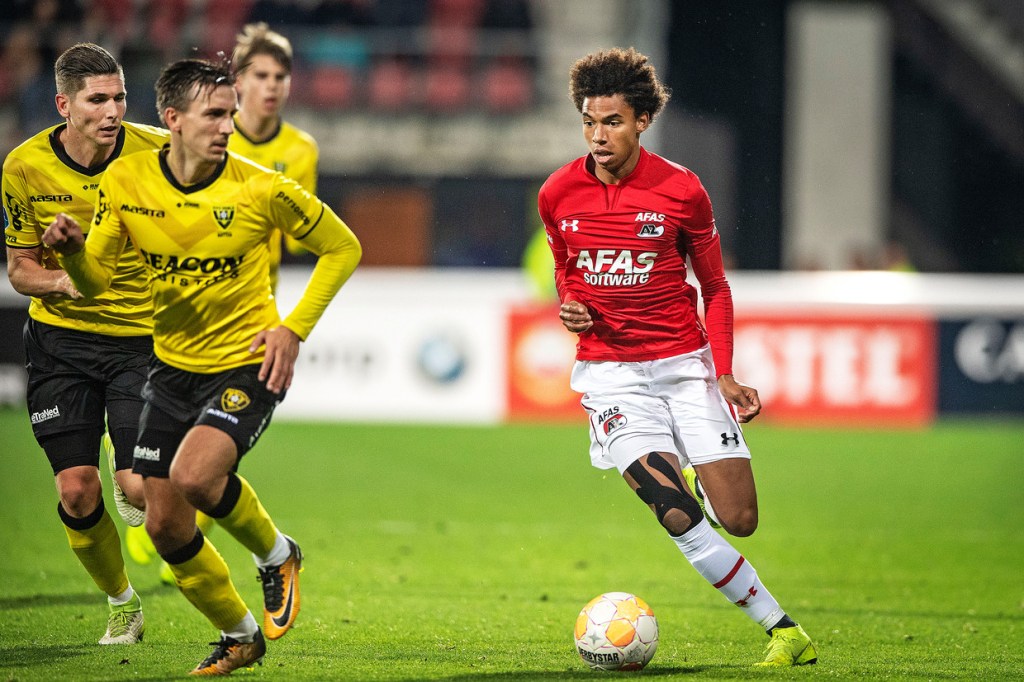
A jinky, tricky, remarkably gifted young forward, Calvin Stengs is a pain for defenders when he’s on the ball. Capable of easily getting by his markers with a silky drop of the shoulders, feinting one way then moving the other way. The way in which Stengs performs such moves is a joy to watch.

While Myron Boadu and Idrissi are seen as the explosive forwards blessed with such blistering pace, Stengs represents the more subtle and creative spark in the attacking trio. One such subtlety is his spatial awareness, and effortless knack of picking the right pockets of space in between the lines.

He typically lines up on the right of the AZ front free but is given the license to roam around in the attacking and middle third to create space and give the team more options when in possession of the ball. It’s through these areas where Stengs is at his most dangerous, capable of threading such delicate, fine through balls to his fellow forwards or to attempt shots with his stronger left-boot.

Calvin Stengs was directly involved in more shots (122) than any other AZ player in the 2019/20 Eredivisie campaign. He’s made 2.5 shots per game, 2.4 key passes and 2.4 dribbles highlighting his subtle but decisive impact in AZ’s exciting attack.

5 goals and 7 assists in the Dutch Eredivisie this season is simply impressive. Add that to his 2 goals and 2 assist through AZ’s Europa League run and you can see that Stengs was performing so close to his undoubted potential before the season was cut short due to the coronavirus pandemic.

Stengs can simply put in a reliable performance within any of the attacking positions. His flexibility, vision, trickery, ball technique and balance warrants such versatility even for a player who’s just finished his second full season as a professional footballer.

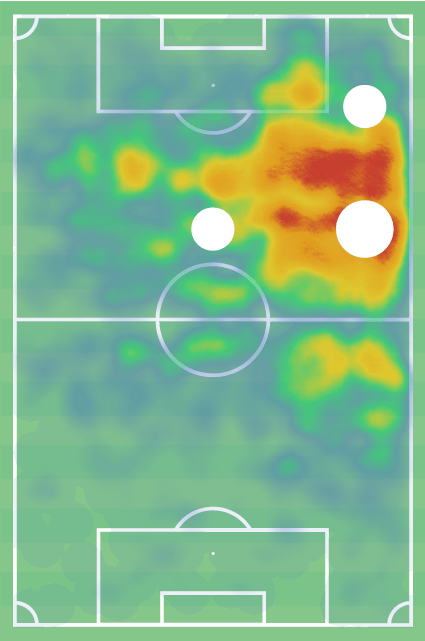
Stengs is an atypical modern forward but with a blend of silky attributes, as the above heat map shows, Stengs does most of his work coming in off the right, he also has no problem picking up the deep in midfield and finding his teammates in more advanced positions or even dribbling past a few opponents to drive his team up the pitch.

When he receives a pass, he already has an idea of what he’s going to do and even if that plan fails, he’s very adept in improvising, manoeuvring his way out of trouble. His posture is open to play, often on the half-turn, and he can take his first touch with either foot.

In tight spaces, he’s capable of shifting the ball between both feet to protect possession, a trait that so few players can perform. Yet, Stengs has mastered them which opens up more angles and creates more options for his next creative action.

Stengs isn’t your typical winger, one who is relatively goes to the byline and get crosses in. He can obviously perform such roles, but he performs at his best when being allowed the freedom to create within the final third areas. Per 90 minutes, he performs 5.42 passes into the penalty area, 8.32 progressive passes and 4 through balls. These numbers highlights that Stengs is twice as productive in creating chances.

The young Dutchman is second behind Ajax’s talisman Hakim Ziyech regarding forward passes. He’s got a remarkable understanding with Myron Boadu and its Boadu’s off the ball runs that allows Stengs the opportunity to thread through balls for him to run onto. He identifies runners expertly and often spots passes that most wingers can’t.

What does the future hold for Calvin Stengs?

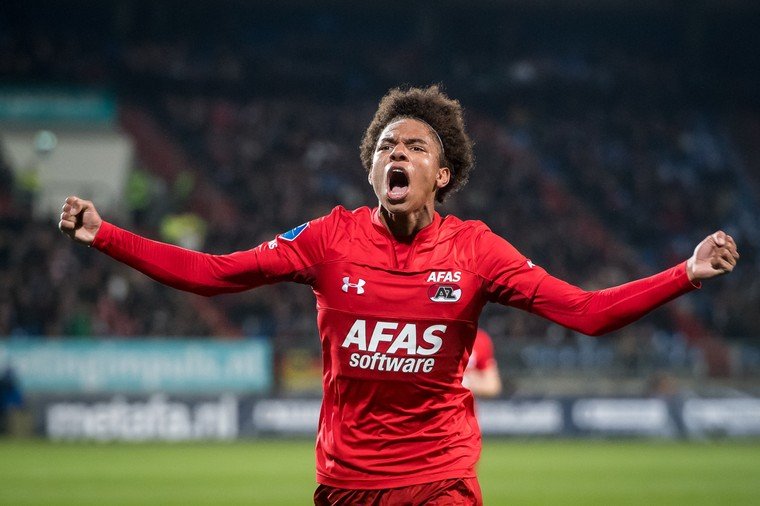
Calvin Stengs holds such distinctive features in his game; a tall, slender physique that so often glides around the pitch effortlessly facilitating attacks with his silky left foot, supporting a Leroy Sane-like afro. Indeed, he holds similar characteristics to the German international.

Stengs is indeed a unique talent, its no wonder why he’s so highly regarded in Holland and it won’t be long before he becomes a key component for Ronald Koeman at international level in the coming future after his debut last year. While Myron Boadu may have captured the attention because of his goal scoring exploits, Stengs is in fact the heartbeat of this exciting AZ Alkmaar side – the driving force behind their progressive team.

While it may be tempting for top clubs to move for him this summer, a couple more years leading AZ certainly won’t hurt his development. It’s his performances for the club that has Ronald Koeman excited about the prospect of having him in the national team. His attributes are seriously appreciated at AZ, and that may be the case for a while yet.

Though, there are a few Premier League sides who could do with his sublime attributes. Don’t be surprised to see a move to the English top-flight in the near future.

Pau Torres 2019/20 – Scout Report

Pau Torres 2019/20 – Scout Report

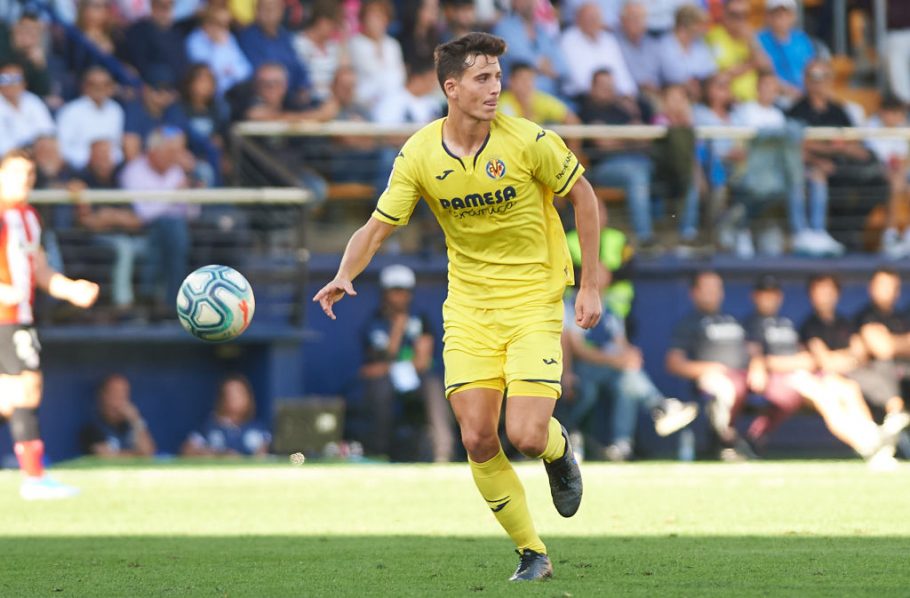
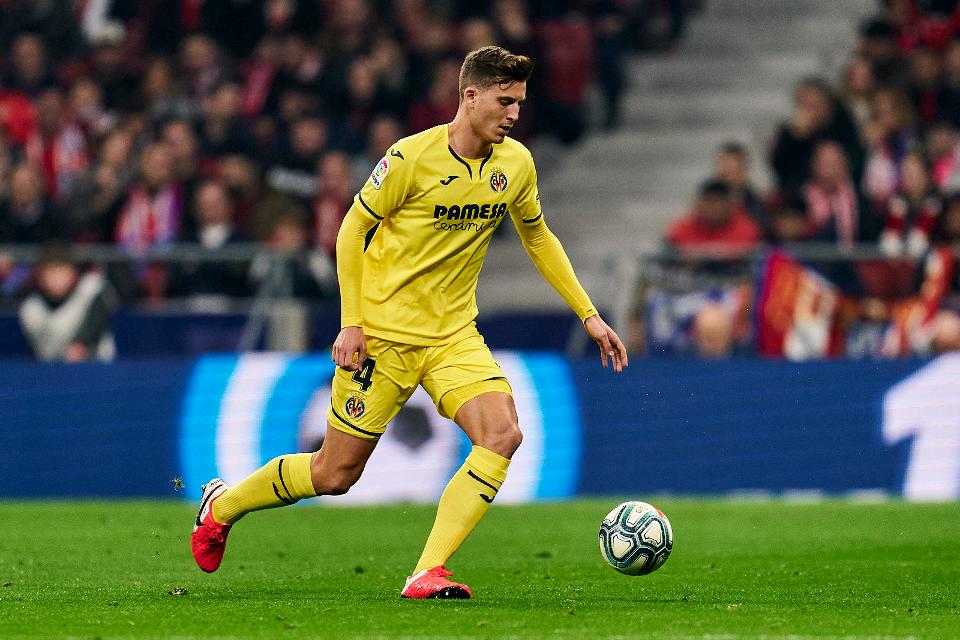
One of the most decorated young performers in his position, a player embarking on a rich breakthrough season in La Liga. Villareal centre-half Pau Torres has regularly been earmarked as the future of Spanish football.

Arsenal, Barcelona and Manchester City are all interested in securing his signature this summer, and if this season’s performances are anything to build upon, the Spanish international is on course to quickly fulfil his exciting potential at an elite level.

The lanky defender has been a revelation in La Liga this season. Torres may have emerged into Spanish football at a more latter stage than most players, but he’s adapted seamlessly, becoming a pivotal component in Villareal’s impressive campaign.

images

So, here’s a profile of the exciting young talent:

How has Pau Torres emerged on the scene? 

Born in Villareal, Spain. Torres has enjoyed most of his football playing through the ranks at the club. He made his league debut for the reserve side at the age of 19, starting in a 1-0 away loss in the Segunda Division B game against UE Cornella. He went on to make 56 appearances for the reserve side, becoming a key part of the team. He got the first of his two goals for them in October 2016, scoring in a 2-2 draw with CF Badalona.

Torres then made his maiden competitive appearance for the club in a 1-1 home draw with CD Toledo in the Copa Del Rey round of 32, becoming the first player born in the city to make his debut for the club in 13 years. A landmark achievement for the youngster.

In November 2017, Torres was then rewarded with his first game in La Liga coming on as a substitute for fellow academy graduate Manu Trigerous late into a 3-2 defeat to Sevilla. He also made his European debut in the Europa League ten days later, starting in the home group defeat against Maccabi Tel Aviv FC.

images

The following summer, the defender was then loaned out to Malaga CF to further his development, and it is a point in his career where he can look back on with much pride going forward. Just what Villareal loaned him out for, Torres achieved it with aplomb. He only missed four Segunda Division games that season as the club reached the promotion play-offs.

After his return to his parent club, all that Torres learned on his loan journey came to the fore, becoming a key figure in the Villareal team ever since his return. He’s played nearly every minute in La Liga this season, and was rewarded with a new contract back in October. In the same month, he notched his first goal at the top level, scoring against CA Osasuna in a 2-1 defeat.

While many taste a whole lot of action at under-21 international level before they make the step up to the first team. It didn’t take long for Torres to make a name for himself at senior level for Spain, scoring on his international debut in the UEFA Euro 2020 qualifying game against Malta, a 7-0 rout. He was called up for the previous encounters against Norway and Sweden but did not make an official appearance, until he came on as a substitute for Sergio Ramos against Malta before scoring his first goal for his nation.

What’s so good about Pau Torres? 

Pau Torres has established himself as one of La Liga’s most highly coveted young talents, and arguably the most promising centre-back.. He’s also brought on comparisons to former Manchester United and Barcelona centre-back Pique, due to his fantastic reading of the game, and constant knack of starting attacks with his fine long and short passes into his midfielders.

Left-footed centre backs are perceived as a rare but unique commodity in the modern game today because of the space they open up and what they offer in terms of distribution from the back. Pau Torres offers just that. He’s comfortable in receiving the pass and distributing it under pressure, as well as picking out riskier and almost impossible longer passes to wingers or forwards.

His range of passing can open teams up and also more importantly gives the team an added width in order to stretch the opposition and disrupt the shape of their midfield. Per 90 minutes, Torres has attempted 3.74 passes with travels longer than 40yrds of the width of the pitch, at a an average rate of 77.6%. He’s certainly not afraid to exert himself when trying to pick out a player in a more dangerous position.

He’s also adept at picking out his midfield players when being pressured, giving them control and freedom to roam up the pitch without pressure from opposition forwards. He’s made 6.57 passes per 90 while being pressed, highlighting his bravery and risk and reward characteristics.

It’s traits like these which is highly valued in possession heavy sides that places its importance in playing out short passes from the goalkeeper, being patient and building from their own defensive third.

Torres is a player who loves to defend, and he does the basics well, he’s made 4.7 clearances per game and wins 50.8% of his aerial dels, an aspect of his game which may need a bit of work, however.

The Spaniard is rarely dribbled past too, on average only 0.1 times per game. He’s positionally excellent and is very astute when standing his ground, and facing up to his opponent. He’s really not afraid to quickly engage the forward and knock the ball out for a throw if need be.

Although, he will have to battle the ever consistent Inigo Martinez for a spot alongside Sergio Ramos at the heart of the Spanish defence. Torres’ current form and improvement means that it won’t be long before he’s leading the back-line once Sergio Ramos hangs up his boots, even probably replacing him while he’s still playing.

images

Standing at 6’3 and capable of covering ground at a remarkable rate for a central defender, Torres holds all the attributes needed to stand out for a team playing out from the back. He’d easily slot into Barcelona’s back-line, and also Manchester City’s.

Will we see him in the Premier League anytime soon?

It won’t be a total surprise to see a host of English top-flight clubs scour for his services once the window opens. However, Villareal will command a heavy fee for the talented young defender and considering the financial impact of a number of top clubs in the Premier League, its unlikely to see them totally break the bank to secure Torres’ signature.

The decision for his next club is totally his one to make. Does he stay in Spain or try a totally different culture but play under a coach who will truly train him in becoming the best ball-playing defender he can be. Staying in his native Spain may be the most likely outcome in the immediate future, and Villareal are a team on a steady rise. Continuing his progression at the Estadio de la Cerámica won’t do his development any harm. The style of play suits him down to the ground.

In one-versus-one situations, he has the stature and speed to hold his own, but in possession is where he looks to be well-set for a successful career.

The sky really is the limit for the young defender.

Pau Torres, remember the name.

How Could Chelsea Line-Up with Timo Werner Next Season?

How Could Chelsea Line-Up with Timo Werner Next Season?

It’s official!

Chelsea have completed the signing of RB Leipzig striker Timo Werner, subject to completing a medical. The German international has agreed a five-year-deal at Stamford Bridge, becoming Chelsea’s second signing of the summer after swiftly moving for Hakim Ziyech from Ajax back in January.

Chelsea have agreed to part with €50m (£45m) triggering the release clause of Werner, who is set to earn more than €10m (£9m) per season in England.

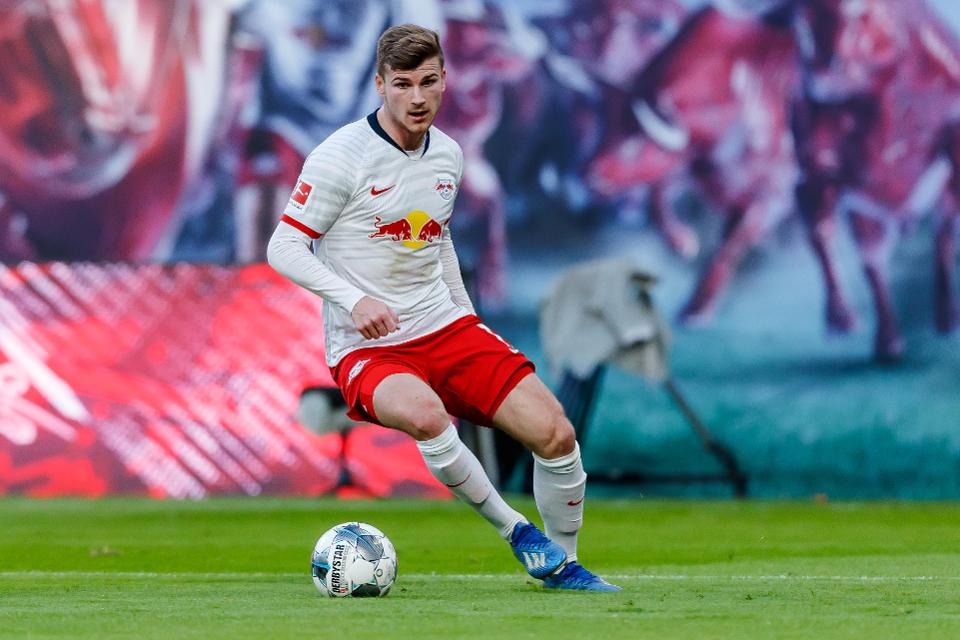
Timo Werner has enjoyed a truly scintilating season in front of goal in the German Bundesliga with 26 goals and eight assists, quickly becoming one of Europe’s most feared forwards.

The signing of Werner will certainly provide Frank Lampard with a ruthless edge in attack something they’ve desperately needed throughout the season, and a flexibility that so few teams can match. With the German capable of playing anywhere across the front four, Lampard now – along with the added creative impetus of Hakim Ziyech, and a few more additions – possesses an attack truly capable of mounting a serious challenge for the Premier League title next season.

Much of Chelsea’s issues this season, and the reason for their shortcomings in matching the likes of Manchester City and Liverpool is their lack of potency up-front. Despite this campaign being an impressive one for Tammy Abraham scoring 13 goals in the Premier League, the same cannot be said for the rest, with their next best scorer coming from midfield in Mason Mount who’s notched six Premier League goals.

It is a problem that will have lingered in Lampard’s thinking, with only Tammy Abraham reaching double figures for goals so far this campaign. The England international has also suffered a number of minor injuries, meaning Chelsea have lacked the necessary firepower to become a clinical force in front of goal. Michy Batshuyai and Giroud have provided cover but not bearing any fruit with only eight goals between them throughout the whole campaign.

How Timo Werner compares to Chelsea’s strikers

Timo Werner is a stark upgrade on Chelsea’s current options. One key aspect is that Werner rarely suffers injuries so he can offer Lampard a peace of mind on the injury front and a commitment and fitness required to play throughout the campaign, with a few rests here and there.

Werner has accumulated much more minutes than Abraham, Giroud and Batshuyai and more importantly offers so much more in the attacking and defensive sense. Within Lampard’s system, he requires his frontman to press from the front, play with energy and form a fluid understanding with fellow teammates.

While Abraham (5.62) and Batshuyai (4.11) have completed more successful pressures per 90 than Werner (3.76) as required, the German completes more dribbles, more passes into the box (1.42), more key passes (1.6), more touches in the opposition box (8.05) per 90 than his counterparts meaning he’ll offer Lampard so much more potency, threat and ruthlessness in the final third.

The German is a workhorse, defenders do not know how to stop him because the striker is constantly on the move, dropping deep in between the lines as well as running beyond the last defender. His pace and movement is the hallmark of his game, unsettling even the most tightest defences. A characteristic that Lampard will hold dear. Chelsea have been found wanting trying to break down deep defensive lines, its why they struggle to comfortably beat the teams in the bottom half.

The 24-year-old has outperformed his XG (Expected goals) of 21.4 in the German Bundesliga along with Tammy Abraham (12.2) who’s notched 13 goals. So Lampard now boasts a potential pairing that will of course score the goals needed to fire Chelsea to the next level. Blended with the imagination, creativity and inventiveness of Hakim Ziyech, Mason Mount and Christian Pulisic behind them, there’s no reason why Chelsea can’t challenge the likes of Liverpool and Manchester City next season.

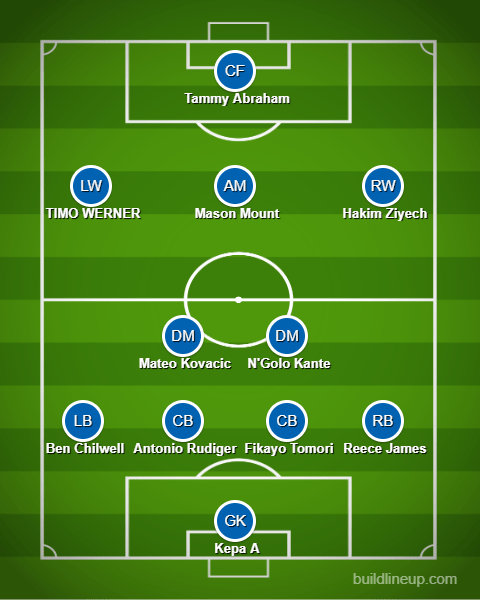
So how could Chelsea line-up with Timo Werner next season?

4-2-3-1

Timo Werner has indeed lined-up on the left for Julian Nagelsmann on a few occasions this season, and could offer Lampard that flexibility if needed. The German’s frightening pace, coupled with his positional understanding and willingness to cover defensively will certainly aid Chelsea’s fluid movement and pace in the wide areas.

What Werner also adds, is the ability to perform in the half-spaces, allowing space for the full-backs to push on – potentially Ben Chilwell if Chelsea manage to recruit him this summer – and create opportunities which could see Abraham improve on his goal return next season.

Chelsea have regularly struggled on the left-wing, Marcos Alonso and Emerson Palmieri, when called upon, have failed to provide the spark needed to give Lampard’s side the perfect balance. The reported interest in Ben Chilwell makes a lot of sense, coupled with the rapidly emerging talent in Reece James on the right could give Frank Lampard a much more free-flowing, expansive and exciting outlook in their attacking play.

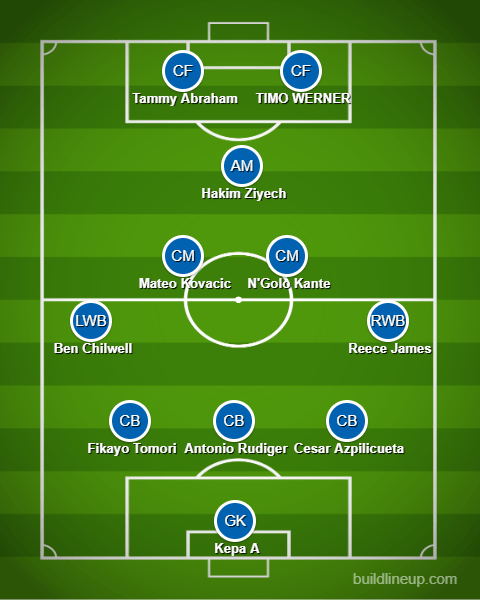
3-4-1-2

Throughout the season, Timo Werner has lined up next to a fellow target man in Patrik Schick and Youssef Poulsen who are both hard-working forwards, but can also hold up play allowing Werner to pick up loose balls around them and finish off attacks. The German works unbelievably well in a front-two and could just be the tonic for Lampard if he deploys a system which involves a front two. Providing Olivier Giroud stays at the Bridge next season, it could another quality option within the system.

The Chelsea legend has favoured a back-three system a few times this season and it won’t be a surprise to see him utilise the same approach in the coming future. It’s a formation that gives much fluidity and control in possession and organisation without the ball.

The addition of Werner and Ziyech allows Chelsea the flexibility to favour a counter-attacking approach or one that sees them take a more patient one when breaking down tight defences, especially those at the bottom.

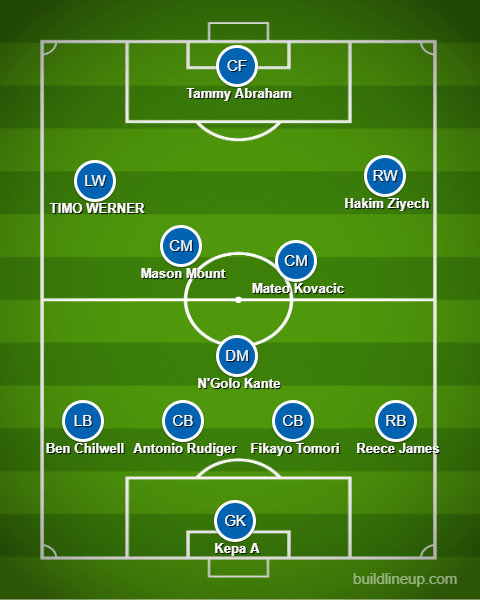
4-3-3

Wherever Werner lines up for Lampard next season, there’s a confidence now and an added incisiveness in Chelsea’s attack with the addition of the German. Lampard will surely be licking his lips at the prospect of possessing one of Europe’s most highly coveted and deadliest forwards.

Werner’s remarkable return of 33 goals in all competitions this seasons tells its own story. Chelsea have now potentially solved their potency issue. Timo Werner is just the tonic Lampard needs to lead his beloved club to the next level.