Aston Villa’s rather controversial decision to sack Dean Smith after five straight Premier League defeats is looking more justified and inspired by the day.
After all the former Brentford, and now current Norwich City boss built at Villa Park, it would have been perfectly understandable for certain sections of the Villa faithful to be insipid about the decision to relieve Smith of his duties considering how far he brought such a prestigious club.

But, nowadays we live in a results business. There’s others who could argue the writing was always on the wall for Dean Smith, after much of the excitement, optimism and hope at Villa grew stale and the general feeling, it was time for an inevitable change.
Soon after the sacking though, the reports of Steven Gerrard – Liverpool’s club legend – taking over was met with much anticipation and approval considering all he had achieved in Scotland at Rangers.
Two games into Gerrard’s tenure and the new man at the helm has tasted successive victories. It’s still very early days but it seems as though Aston Villa are back on the rise.
During Smith’s latter days, Villa had been disorganized, lacking inspiration, almost motionless and forgotten how to win. However, much of that has changed in such a short space of time.
After two games under Steven Gerrard, they’ve been more resilient, tougher to beat, resurgent, forming a new and aggressive way of approaching matches.

So, what can we put it all down to? Is it that expected new manager bounce or has it been Gerrard’s managerial and coaching excellence. On the surface, it seems a mixture of the two.
In training under the new regime, there’s reportedly been an increased emphasis on building up play through the central areas, with the attacking trio remaining compact, sturdy and linking up with each other with enthusiasm and efficiency.
This was put into action in the 2-1 win over Crystal Palace at Selhurst Park and so it proved effective.
Not only have Villa turned around their woeful form by making a change at the top, but they’ve also started to positively overhaul the playing style in just a matter of weeks. It seems as though Gerrard has reverted back to basics especially defensively as a unit.
That’s what worked last term where they stayed compact as a unit, every facet of the starting XI working together to close down open spaces, defending as one mixed and meshed with the added brilliance of former star man Jack Grealish, Ollie Watkins and John McGinn.
If those same foundations were proved in the hard-fought win over Brighton at Villa Park, then the follow up success over Patrick Vieira’s exciting Palace team was clearly more down to careful, intentional and considered planning.
According to reports week one under the new management involved staggered training sessions, individual talks, group meetings and taking in an under-23 game – the supposed definition of going back to simplicity and the basics. Some sessions were reportedly switched to the afternoon as Gerrard blitzed through other tasks in the mornings.
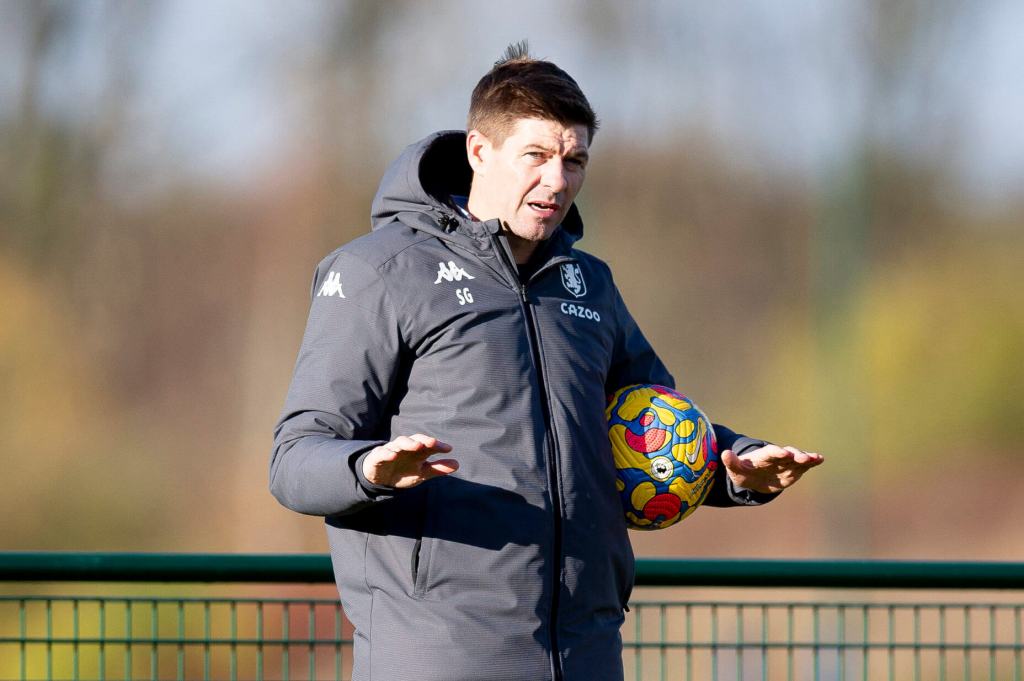
Week two involved more tailor-made and intentional work: extensive planning around a much narrower shape that would thwart Crystal Palace’s threat and stop opponents playing through central areas with ease.
Plus, it involved building blocks for a longer-term project to finally transform Aston Villa into a team that seeks to dominate much of the match territory through prolonged periods of possession.
Steven Gerrard has been looking to get his instructions and messages across to the players rather swiftly, even through the distraction of the international break. A schedule was reportedly devised for those who traveled with their respective countries and for those who stayed behind.
Also, club discipline and sets of rules increased especially in punctuality and player conduct. Within the canteen, items including desserts, table sauces and sausages were removed as closer attention turned to diet and nutrition.
It was made pretty clear that the form that had occured before the new regime would be put on the back burner, out of players minds and a chance to start their season again. Players have been reminded of their qualities and that they were much better than recent results and their disappointing standing in the league table had suggested.
The plan before the season started, with some exciting new additions in the transfer window was that the club were planning to take that next step and challenge for the Europa League places this coming campaign, and after an inspired start especially their tremendous win over Manchester United at Old Trafford much of that optimism was showing until results and form depleted rather rapidly.
Under Gerrard though, players have responded well. One man who has quickly caught the eye is former Manchester United player Ashley Young.

His drive, determination and experience has stood out amongst the adversity. So too did his running statistics and work-rate, which still stack up favourably — even as the one of the oldest players in the team. That he made a telling impact off the bench in the 2-0 win over Brighton also highlighted his value to the team.
Young set up Matt Targett’s opener against Crystal Palace, producing a superb display as one of the attacking three alongside Leon Bailey and Ollie Watkins. He has assisted more goals in the Premier League for Villa than any other player.

Players like Ollie Watkins have also responded well to Gerrard’s management, showcasing his fierce desire to improve especially in front of goal, and that desire to get better was highlighted through his expert and sumptuous finish against Brighton in Gerrard’s first game. That Watkins scored the first goal of the new era was fitting as a result of his style which Gerrard is very expectant of.
Captain Tyrone Mings was also reminded of his qualities and leadership when Gerrard first came in, and he’s already looked every inch the player Aston Villa rely on so heavily to lead them. John McGinn, with his “bubbly and infectious” character, but workhorse mentality and doggedness on the pitch has managed to maintain his rapid performance levels.
Another player who has increased his levels considerably looking every bit a Premier League player is Marvelous Nakamba. The midfielder showed glimpses of his combative qualities under Dean Smith but never enjoyed a sustained run in the team with Douglas Luiz and John McGinn Smith’s most trusted lieutenants in the middle of the park.
Against Palace, Nakamba put in a stunning showing in defensive midfield, and gained a number of plaudits for his performance. He won possession 10 times and broke up play in a way that provided the more forward thinking players the foundations to thrive in attack. “His performance for the team was massive,” Gerrard said post-match.

These are starting to feel like happy times again at Villa Park. And, if Gerrard and his staff can get Villa so organised and difficult to beat in just two weeks, then how good can they be in future when his plans and tactics are fully implemented?
Villa were certainly not attractive on the eye against Brighton but yet they found a way to win and if they are to challenge for those European places then winning when they don’t necessarily deserve it will have to be a common theme, though down at Palace, there was much more to appreciate.
It was in fact a tactical masterclass by Gerrard who outmaneuvered and outthought his former Premier League rival Patrick Vieira. Villa managed to reduce the gaps between defence, midfield and attack to stay tight and compact, not allowing the likes of Michael Olise, Wilf Zaha and Conor Gallagher the room or freedom to operate in.
Gerrard used the 4-3-2-1 formation to great effect at Rangers and has already been drilling his Villa side into a similar system. Off the ball, it’s all about dictating the game and protecting the middle of the pitch, and that’s what they did against Palace, springing traps in the wide areas trying to get their opponents to play through the middle then stifling their progress.
For example:

The wide players cut inside to play more like No 10s and the full-backs occasionally offer width in attack. With Olise, Eze and Zaha all looking to roam into half-spaces and create, Villa immediately closed down the areas they seeked to operate in, halting much of their attacking play.
Going forward, Gerrard has been specifically intentional working on particular patterns of play providing his team with an identity and a way of playing, forming a strong basis for the future. They largely consisted of building through central areas with McGinn and Jacob Ramsey supporting Young, Watkins and Leon Bailey in attack.
Rather than staying wide acting as proper wingers, both the players behind Watkins will at times alternate in dropping in those deep areas to pick up the ball and either drive with the ball or link with full-backs and fellow onrushing midfielders as shown in the image below:

Matty Cash and Matt Targett going forward under Gerrard’s tutelage will be tasked with more attacking responsibility as the weeks go by, offering width to allow the wide no.10s such as Bailey, Young, Buendia or El Ghazi to freely operate in the half-spaces just like Ryan Kent, Joe Aribo, Ianis Hagi performed for Gerrard during his time at the Ibrox.
Don’t be surprised to find either of those players in Aston Villa colours during 2022.
It was instances such as this that culminated in Villa’s second goal at Selhurst Park, a wonderful strike from McGinn on the edge of the area that sealed the win and sparked more wild scenes amongst Gerrard’s coaching staff.
Indeed Gerrard isn’t getting too carried away with his instant impact and progress at the helm. There are tough tests to come, not least a home game against Manchester City on Wednesday, but its clear that the former Rangers coach is laying the foundations for a bright future at Aston Villa.
Yes, the Villa players have been rejuvenated, a by-product of a new manager arriving but their recent form is also a product of Gerrard’s new rules and implementations on the training pitch and across the whole club.
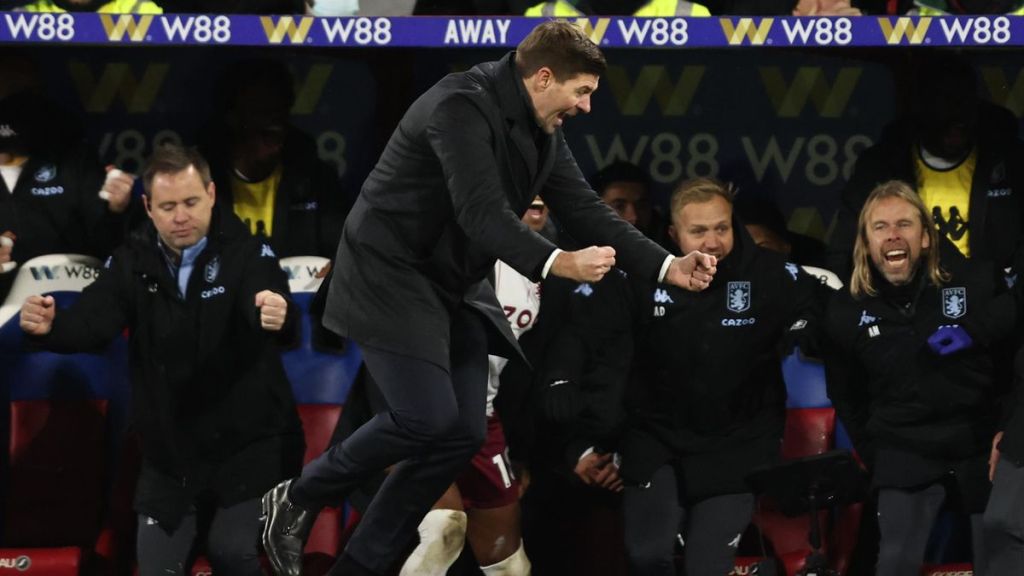
This seems like a new Aston Villa. One which Dean Smith had a big hand in forming and shaping, but its now time for a new man to carry on those efforts and lead the club into a new exciting era.
The first two wins is a perfect picture of the kind of team Gerrard wants to build at Villa Park, and the swift seeds he has planted in his few weeks in charge are already bearing fruit.
Steven Gerrard must be given much credit for Villa’s current rejuvenation.
 anthonyscouts.co.uk