The appointment of one of Europe’s youngest coaches, 32-year-old Julian Nagelsmann ahead of the 2019/20 campaign was met with much anticipation, excitement and widespread optimism after RB Leipzig had finished third in the Bundesliga under Ralf Rangnick – a well-renowned coach in his own right.
Nagelsmann, who made a name for himself after 4 impressive years at Hoffenheim – guiding Die Kraichgauer to their first Champions League campaign in 2017 – was seen by many, as an upgrade on Rangnick the perfect man to take RB Leipzig to the next level. 13 games into the new season and Leipzig find themselves second in the Bundesliga standings, a point behind Borussia Mönchengladbach.
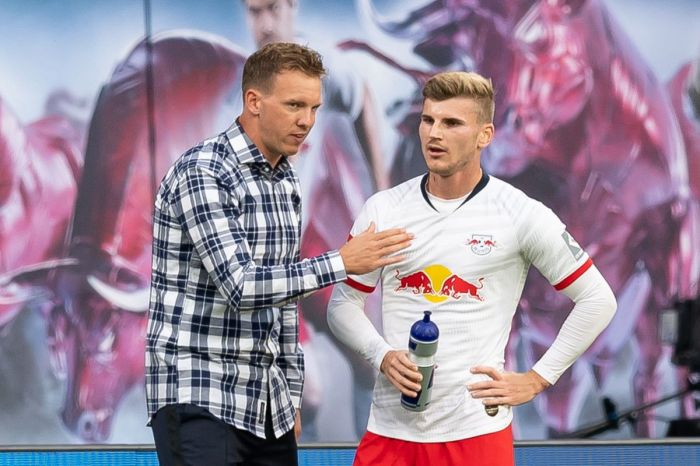
Leipzig are currently the league’s highest scorers, 49 goals from 14 matches, and have also the joint third best defence conceding just 16. During his spell at Hoffenheim, Nagelsmann adopted a similar style and philosophy to what Rangnick achieved at Leipzig; both sides were compact in midfield, operated within vertical lines in the middle, counter-attacked swiftly and also thrived off wining the ball back deep into the opposition half. While Rangnick preferred the counter-press, Nagelsmann is favouring an all out high intensity pressing philosophy.
The 32-year old coach managed to get the best out of the players he had available to him at Hoffenheim last year, working wonders with the likes of Florian Grillitsch, Kerem Demirbay, Andrej Kramaric and Nadem Amiri. In a team considered an average side at best, Nagelsmann transformed them into world beaters.
Now, Nagelsmann harnesses one of the most complete sides in the Bundesliga, blessed with immense talent all over the pitch.
Three months into his new post at the Red Bull Arena, Nagelsmann seems right at home within his new surroundings. The inconsistencies of German’s two giants Bayern Munich and Borussia Dortmund have allowed the others a shot at the top. Mönchengladbach and Leipzig have accepted the invitation with open arms.
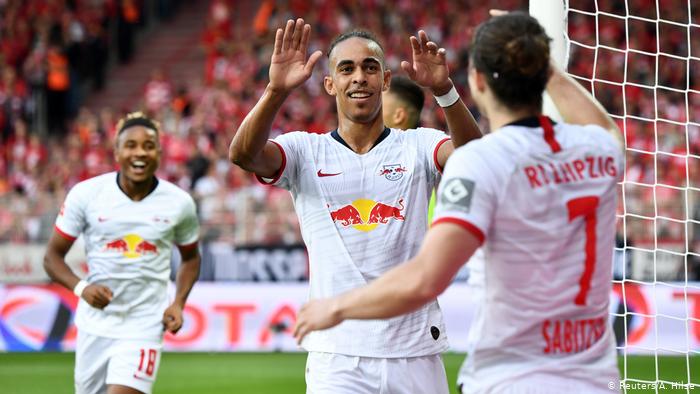
Now questions are being asked whether Leipzig are good enough to mount a serious threat to Bayern Munich’s Bundesliga dominance.
14 games in, and Leipzig are certainly playing like a side with the wind in its sails. However, it hasn’t always been plain sailing. They have endured their own blip from the end of September and throughout October. During that run, they lost to Schalke and Freiburg, drew twice and were also beaten by Lyon in the Champions League.
That drop in form came after such a rapid start to the season with five wins from six games, the only blemish was the inspired draw at home to champions Bayern Munich. A game which will have provided Nagelsmann much optimism for the season and a further reminder of their title credentials.
As of late though, Leipzig are enjoying a period of invincibility, since their 2-1 defeat to Freiburg at the end of October, they have won six in seven – scoring an outstanding 27 goals in the process. Also, they are currently top of their Champions League group with anything other than a defeat in the last group fixture enough to secure top spot.
Under their new boss, Leipzig have often lined up in a 4-2-2-2 shape, one that the players are familiar with.
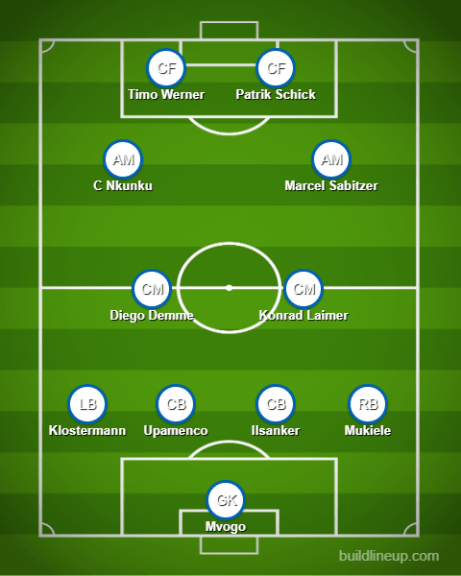
It is a shape that allows compactness, fluidity and an opportunity for them to press and counter press as a cohesive unit. Throughout this season, Leipzig have enjoyed the opportunity to exploit teams in between the lines, through overloading the wide areas of the attacking third and also through quick transitions. It’s no surprise that their fluid formation is fully in sync because of their awfully quick pawns. Players such as Timo Werner, Youssef Poulsen, Christopher Nkunku, Marcel Sabitzer all hold the speed and agility required to become so devastating on the counter.
Left-back Marcel Halsternburg is equally pivotal in their transitional play. It’s the constant rotation between him and the front four players that confuses defences and causes panic. For example, Mainz were forced to change their shape numerous times in order to counter-act Leipzig’s relentless fluidity. It proved fruitless as Nagelsmann’s side ran out 8-0 winners.
While Leipzig’s system has been dynamic, it has also gotten the best out of their front four. Whether its Werner, Poulsen, Schick, Sabitzer, Forsberg or Nkunku, Nagelsmann can be confident in the fact that his side will have no problems scoring goals. Sabitzer and Forsberg have been incredibly efficient this season, with the latter recapturing the sort of form that made him one of the best attacking midfielders during the 2016/17 season.
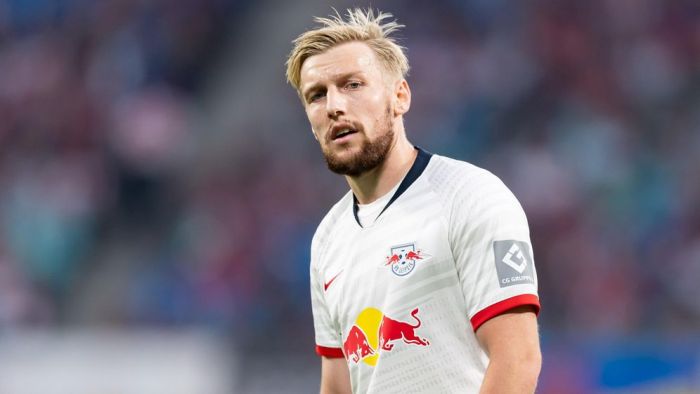
Forsberg has registered six goals and three assists both domestically and in Europe this season, while Sabitzer has registered an impressive eleven goals and three assists. Along with Nkunku, they have often proved deadly when operating in between the lines or the ‘half-spaces’. It allows Leipzig’s full-backs the opportunity to wreak havoc and occupy the space left by the opposition full-backs.
Then there’s the potent front-line of Timo Werner and Youssef Poulsen, a duo that has to be considered one of the best in Europe. Werner’s sheer speed, ability on the counter and Poulsen’s size, work-ethic and hold play makes the two strikers such a deadly force in attack. With the array of creative talents behind them, Poulsen and Werner have no problems scoring goals. The German striker already has 19 goals in all competitions this season, 15 in the Bundesliga, only second to Bayern’s goal machine Robert Lewandowski. His tally is all the more impressive when you consider that he does most of his work creating overloads in the wings rather than operating centrally.
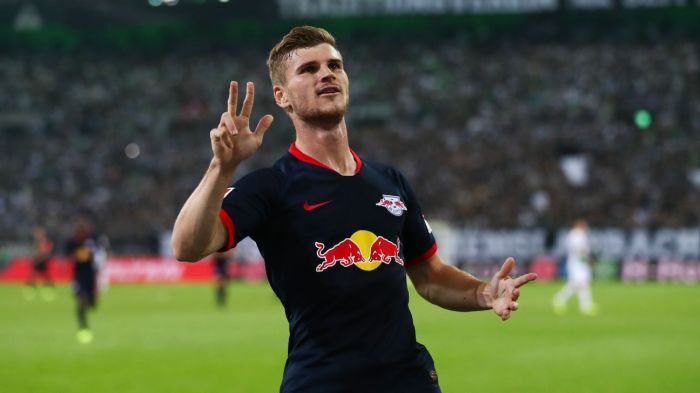
This is a squad packed with quality and its not only in attack where it all lies. Nagelsmann has also transformed the midfield and the back-line. No longer are Leipzig giving away cheap goals like they used to, you’d have to be really on form to breach such a well-knitted and well rounded unit. Diego Demme and Konrad Laimer are two unsung heroes for Nagelsmann, players that so often go unnoticed. Industrious, hard-working, bullish and at the same time awfully composed on the ball, a key reason as to why Leipzig are currently the second best defence in the league.
At the back, RB Leipzig harness a wealth of players who could become stars in the future. French duo Dayot Upamecano and Ibrahima Konate are two players built for the big time. You’ve also got the experience and know-how of Hungarian international Will Orban, versatile player Stefan Ilsanker and youngster Nordi Mukiele – a fine centre back but an ever better right-back.
A club intentionally built for progression and growth in its players, strategy, philosophy and remarkable fan base. Leipzig have achieved so much since its inception in 2009. Over a decade later, they could find themselves at the pinnacle of German football come May 2020.
Bundesliga title contenders? You bet!
 anthonyscouts.co.uk